
Development Design and Evaluation of a Polyherbal Topical Cream for the Management of Melasma
The aim of this research was to formulate and evaluate an herbal cream for the treatment of melasma containing prunus dulcis, poppy seed and cucumis sativus seeds. Melasma is a common skin problem mostly found in women. The condition causes discoloured dark patches on the skin. It is also called as chloasma, or the “pregnancy mask,” it commonly occurs in pregnant women. The condition is much more common in women than men, though men can get it too. In this study almond prunus dulcis, family rosaceae, poppy seed and cucumber, cucumis sativus seeds, family cucurbitaceae all the three were extracted separately with ethanol by maceration method. The ethanolic extracts were incorporated together to formulate a cream. The formulated cream was evaluated for pH, viscosity, spreadability, extrudability, stability, antimicrobial activity and skin irritation test. The pH and spreadability index were found to be the excellent, the stability was carried out in a stability chamber for 30 days with varying temperatures, and the product did not show any phase separation. The Polyherbal cream was free from microbial growth and there was no erythema or edema after skin irritation study. Hence a Polyherbal cream containing prunus dulcis, poppy seed and cucumis sativus seeds were prepared and evaluated for the treatment of melasma. The prepared cream can be an efficacious product for the treatment for melasma.
Introduction
Natural herbal products have been used by humans for medicinal purposes and to promote good health since the beginning of time. Formulations based on natural phytoconstituents are now widely accepted as therapeutic agents for the treatment of HIV, depression, anxiety, hyperglycemia, inflammatory disorders, infections, and other illnesses [1]. The recent development of polyherbal formulations has drawn more attention due to their historical significance, affordability, and patient compliance. Nowadays, a wide range of therapies using topical, biological, and systemic medications are accessible. While certain drugs help to reduce disease symptoms, they might have unfavorable side effects as well. In the interim, it is imperative to produce a drug with a high efficacy and minimal side effects.
When it comes to symptom relief, herbal remedies are safer and more efficient than allopathic ones [2]. A plant is said to be therapeutic if it contains substances that have medical qualities or that can be used as the basis for semi- synthetic medications. These non-nutrient substances called phytochemicals help plants defend themselves against microbial diseases [3]. In order to achieve optimal cutaneous and percutaneous drug administration, creams are used. They can stop acidic gastrointestinal conditions that cause problems with the absorption of medications in the gastrointestinal tract. Creams can stop the interactions between food and drink and medications and enzyme function. They can be used in place of giving medications orally when doing so is not appropriate [4].
It is frequently used in topical preparations because of its exceptional viscosity-building properties (even at low doses) and resistance to microbial growth. Since the psychological impact on patients must be addressed, the therapeutic approach to treating melasma is one of the more promising avenues. Topical drug administration is a safe way to treat skin infections. Current treatments for melasma include topical application of antibiotics and anti-inflammatory drugs as well as oral administration. First-line treatment for mild to moderate melasma is topical therapy. Topical therapies are based on the use of antibiotics, acids, benzoyl peroxide, retinoids, herbal remedies, or a combination of topical drugs. Topical treatments frequently have inadequate water solubility and insufficient free drug penetration across the stratum, although being less hazardous than systemic treatments.
It has several chemical components, such as flavonoids, phenolic acids, and organic acids, which are well-known for their anti-inflammatory, antibacterial, and antioxidant potential. Prunus dulcis almonds is an essential component of cosmetics. When making different topical treatments for skin diseases like burns, wounds, acne, rashes, psoriasis, cold sores, or dry skin, prunus dulcis is the recommended ingredient. In addition, burns, pigmentation, acne, and other skin conditions are treated with it as a carrier and emollient [5]. This study’s primary goal was to combine the aforementioned herbal components into a cream form that would provide an effective and secure topical dosage. The physical properties of the produced formulations were evaluated.
Materials and Methods
Chemical and Reagents
Stearic acid, cetyl alcohol, cetosteryl alcohol, glyceryl monosterate, bees wax, liquid paraffin, borax, glycerine, triethanolamine and other chemicals used were obtained from SD Fine chemicals, ltd., Mumbai, India.
Instruments and Equipments
Double Beam UV Spectrophotometer-Analytical technologies Limited, Model 212R RI, Centrifuge-R-8C REMI Instruments, Digital pH meter Systronics, Mumbai, Brookfield Viscometer Servewell Pvt. Ltd. Model Number. LVDVE, SUPERFIT ROTAVAP, Model-PBU-6. Servewell Instruments Pvt. Ltd. Stability Chamber REMI SC-19PLUS.
Plant Materials
Almond Prunus dulcis, poppy seeds and cucumber seeds were procured from local grocery stores, Tirupati. All the three plant parts (seeds) were procured from a local market and were authenticated by the Department of Botanical Survey, SV University, Tirupati.
Extraction of Plant Parts
Almond seeds were procured from grocery store and size reduced in a pulverizer into fine powder and macerated with ethanol. Poppy seeds were collected from a local market and washed with water dried and size reduced to fine powder in a mixer grinder and extracted with ethanol. Cucumber seeds were separated from cucumber and dried separately and the dried seeds were size reduced to fine powder, the size reduced cucumber seed powder was extracted with ethanol. All the three plant seed parts were concentrated in a rotary evaporator and stored in refrigerator for further studies for preparation of cream [6].
Determination of Antimicrobial Activity
The antimicrobial activity of the formulation against infectious agents were performed using the standard cultures of Staphylococcus aureus, Escherichia coli, Pseudomonas aeruginosa Candida Tropicalis and Candida albicans.
Antimicrobial Activity by Cup Plate Method
Mueller-Hinton agar medium was used to fill the sterile Petri dishes, and the test organisms (Staphylococcus aureus, Escherichia coli, Pseudomonas, Candida Tropicalis and Candida albicans) were added at the proper dilution. Using a sterile borer on each plate, five cylinders or cups were prepared in the media. After adding 0.2 mL of the solution consistently, the cup was incubated at 37°C for 24 hours. The research was repeated three times, and the mean inhibition in diameter (mm) of the results was reported [7].
Formulation of Cream and Optimization
The cream was prepared using various concentrations Table 1 were dispersed in an adequate quantity of oily phase.
Humectant or plasticizer was also added. The preservatives, rosemary oil and teatree oil, were transferred and blended. The pH was altered to neutral and the final weight of the cream was made up to 50 g with distilled water. The above mixture was kept at room temperature for 24 h to observe its stability and consistency [8].
| Evaluation | Almond seeds Prunus dulcis | Cucumber seeds Cucumis sativus | Poppy Seeds |
|---|---|---|---|
| Ash values | 12.40% | 7.60% | 15% |
| Water soluble extractive value | 15.50% | 13 .2% | 12.10% |
| Alcohol soluble extractive values | 22.80% | 20.20% | 18.10% |
| Ether soluble extractive values | 18.20% | 15.60% | 12.30% |
Table 1: Ash values and Extractive values.
Formulation of polyherbal cream containing prunus dulcis, poppy seeds and cucumis sativus: The polyherbal cream was prepared by incorporating the ethanolic extract of prunus dulcis, poppy seeds and cucumis sativus at various concentrations as per the formula mentioned in Table 1. The entire mass was triturated using a mortar and pestle and kept undisturbed for a day at room temperature [9]. Physical Characterization of the Formulated Cream: The polyherbal cream formulation was subjected to physical characterization, such as color, appearance, pH, viscosity, and spreadability.
Physical Appearance: The formulated cream was inspected for its organoleptic characteristics, viscosity, and homogeneity after being packed in the container and verified for the appearance and existence of any aggregates.
Determination of PH: About 1 g of the cream was mixed in 100 mL of deionized water. The determination of pH of individual formulation was determined using a digital pH meter (Digital pH meter Systronics) carried out three times to obtain triplicate readings.
Determination of Viscosity: The viscosity of the formulated cream was performed in a cup-and-bob type of rotational viscometer (Brookfield Viscometer Servewell Pvt. Ltd. Model Number. LVDVE) with spindle No.62.
Spreadability
The spreadability of the cream was calculated to anticipate how much of an area it would spread when applied to skin. A thin coating of 100 g of the cream was applied between two slides, which had a 6 cm border around them. The slides were then fastened to an undisturbed platform in such a way that only the upper slide could be released freely by the weight that was tied to it. A 20 g mass was attached to the upper slide. The amount of time it took for the upper slide to move a predetermined distance before being torn apart by the impact was noted [10].
Results and Discussion
Ash values
Ash values are helpful to determine the quality as well as purity of a crude drug, especially when the drug is present in powdered form. The object of ashing crude drugs is to remove the traces of organic matter which may be interferes in an analytical determination. The ash values of plant extracts are included in table 1.
Extractive Values
This method determines the amount of active constituents present in a given amount of medicinal plant material when extracted with a solvent. These values provide an indication of the extent of polar, mid polar and non-polar components present in the plant material.
Antimicrobial Activity of the Extract
The antimicrobial activity testing was performed by relating the diameter of zones of inhibition (in mm), which indicates the effectiveness of an antimicrobial agent. The extract of prunus dulcis, poppy seeds and cucumis sativus was observed for its antimicrobial property toward different organisms, such as Staphylococcus aureus, Escherichia coli, Pseudomonas aeruginosa Candida Tropicalis and Candida albicans. Its activity was also compared with the standards, Ciprofloxacin [11]. From the results, it was observed that the prepared cream showed a good zone of inhibition, although smaller when compared to the standards; the phytochemical analysis results are shown in (Table 2).
| Phytochemicals | Almond Seeds Prunus Dulcis | Cucumber Seeds Cucumis Sativus | Poppy Seeds |
|---|---|---|---|
| Alkaloids | + | - | + |
| Carbohydrates | + | + | + |
| Glycosides | + | - | + |
| Flavonoids | + | + | + |
| Phytosterols | + | + | + |
| Saponins | + | + | - |
| Tannins | + | - | - |
| Phenols | + | - | + |
| Amino acids | + | + | + |
Table 2: Phytochemical Screening.
Formulation of Polyherbal Cream
Because most plants are safe and have few to no side effects, they are considered a valuable source of components that may be useful for developing innovative therapeutic treatments. In terms of a quicker release of the medication directly to the site of action, creams have significant advantages over topical gels or ointments. It is currently common practice to administer drugs topically using creams. To offer even more benefits, this dosage form may contain plant and herb extracts with specific medicinal properties as active components. The polyherbal cream containing prunus dulcis, poppy seed and cucumis sativus seeds were incorporated into the optimized 2% cream base. Different concentrations of ethanolic extract of prunus dulcis, poppy seed and cucumis sativus seeds, including 1,1.5, and 2%, were also incorporated into the cream base. The formulations of the designed polyherbal cream are presented in (Table 3).
| Composition of Formulation % w/w | |||||
|---|---|---|---|---|---|
| S. No | Ingredients | F1 | F2 | F3 | F4 |
| 1 | Bees wax | 3.2 | 4 | 4.5 | 5 |
| 2 | Liquid Paraffin | 3 | 4 | 5 | 6 |
| 3 | Ethanolic extract of prunus dulcis | 1 | 1.5 | 2 | 2.5 |
| 4 | Ethanolic extract of Poppy seeds | 1 | 1.5 | 2 | 2.5 |
| 5 | Ethanolic extract of Cucumis sativus seed | 1 | 1.5 | 2 | 2.5 |
| 6 | Borax | 0.3 | 0.4 | 0.4 | 0.4 |
| 7 | Rosemary oil | 0.2 | 0.4 | 0.4 | 0.4 |
| 8 | Tea tree oil | 0.2 | 0.4 | 0.4 | 0.4 |
| 9 | Purified water | Q. S | Q. S | Q. S | Q. S |
Table 3: Formulation of polyherbal cream.
Evaluation of Polyherbal Cream Physical Appearance
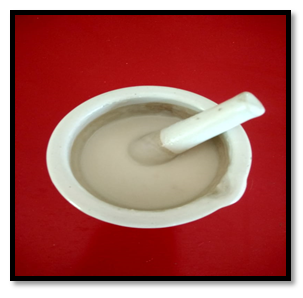
The color, appearance, and homogeneity of the formed cream were visually examined; these factors showed that there were no aggregates in F1 or F2, but there were slight aggregates in F3. This suggests that there is a homogeneity issue with F3. Figure 1 Cream Formulation.
PH Determination
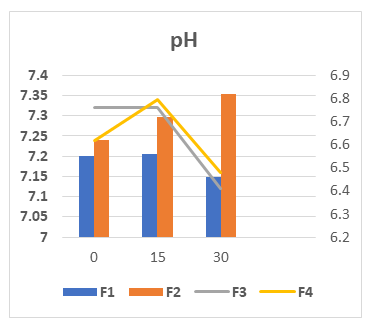
A good topical cream should have a pH between 4.2 and 6.5, which is suitable for skin. Overly alkaline creams will cause skin to become scaly. However, a too acidic pH will irritate the skin. The formulation had a pH of 5.7-5.9. The produced cream’s pH indicated that it was skin-compatible. Addition of stabilizers help bring the pH range down to 5.0, which is still below the optimum range but still appropriate for topical application and penetration [12]. Figure 2 pH of cream.
Determination of Viscosity
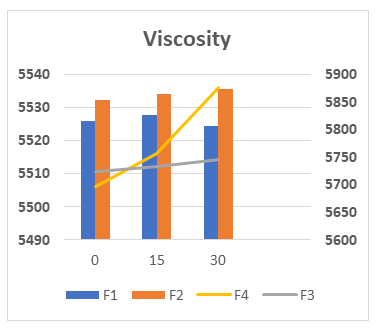
In general, a cream composition’s viscosity reflects its consistency. The rheological property influences the rate at which a medicine diffuses from a cream and aids in defining consistency. The benefits of more appealing cosmetic features and easier, more precise application across the skin due to improved flow and spreadability can be attained by keeping the viscosity below 15,000 cps. Furthermore, the cream’s low viscosity indicates its viscoelastic activity, which facilitates easy flow from the container to the application region and returns to the container following stress release [13]. The results are tabulated in Table 2. It can be observed that all formulations have low viscosity, which indicates promising applicability for skin administration (Figure 3).
Spreadability
Since the cream’s spreadability helps ensure that it is applied evenly to the skin, manufactured creams must meet the optimum quality requirements for topical application. Furthermore, it is believed to be a crucial component of patient adherence to treatment. The term “spreadability” refers to how easily a cream spreads when applied topically [14]. The various cream formulations’ spreadabilities were investigated. Compared to the other formulations, the spreadability of formulation F2 was superior. Table 4 displays the findings for the three physical parameters. The cream needs to have the perfect properties and stability over time to have optimum skin penetration. From the results obtained for the physical parameters, such as pH, viscosity, and spreadability, it can be seen that the formulation F2 is ideal; thus, it was chosen for further characterization, such as texture analysis.
Extrudability
When selecting, packing, and removing a cream from its container, this mechanical characteristic is crucial. It is necessary to quantify extrudability in order to evaluate the ease of removal and application of topical treatments, such as ointments, creams, and gels. Over a product’s shelf life, its consistency may change. Product manufacturers can examine these changes and adjust formulas as necessary. This enables manufacturers to assess how well a packing material and its design work together. When a product is applied to the skin, its rheological properties also affect its firmness, spreadability, and in vivo performance [14]. The resulting cream’s extrudability is ideal.
Preparation of Polyherbal Cream
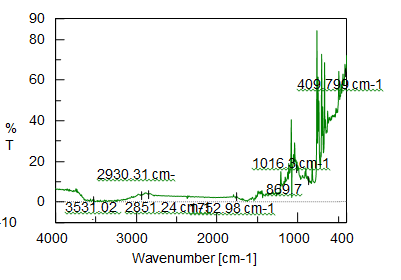
The oil phase was prepared by melting the oily phase at 75°C and mixing the ingredients uniformly. The aqueous phase was prepared by dissolving the water-soluble ingredients in deionized water. The water phase was warmed to 75–80°C until all ingredients were dissolved. When the water and oil phase were at the same temperature, the aqueous phase was slowly added to the oil phase with moderate agitation and was kept stirred until the temperature dropped to 40°C. The emulsion was cooled to room temperature to form a semisolid base. The contents were dissolved in warmed deionized water, and the solutions were added to the cream base using stirrer. The mixture was stirred for 15 min until the formulation became uniform. The drug-loaded cream was preserved with addition of preservatives. The exact concentration of each ingredient is shown in Table 4 and Figure 4 FTIR Spectra of Cream.
| Parameters | Days | Temperature | Formulations | |||
|---|---|---|---|---|---|---|
| F1 | F2 | F3 | F4 | |||
| PH | 1 | 4°C | 6.55 | 6.62 | 7.32 | 7.24 |
| 15 | 25°C | 6.56 | 6.72 | 7.32 | 7.34 | |
| 30 | 40°C | 6.46 | 6.82 | 7.12 | 7.16 | |
| Viscosity | 1 | 4°C | 5816 | 5854 | 5724 | 5506 |
| 15 | 25°C | 5826 | 5864 | 5734 | 5516 | |
| 30 | 40°C | 5806 | 5874 | 5745 | 5536 | |
| Spreadability | 1 | 4°C | Poor | Good | Poor | No |
| 15 | 25°C | Poor | Good | Poor | No | |
| 30 | 40°C | Poor | Good | Poor | No | |
| Extrudability | 1 | 4°C | Good | Excellent | Good | No |
| 15 | 25°C | Good | Excellent | Good | No | |
| 30 | 40°C | Good | Excellent | Good | No | |
| Homogeneity | 1 | 4°C | Good | Good | Good | No |
| 15 | 25°C | Good | Good | Good | No | |
| 30 | 40°C | Good | Good | Good | No | |
| Grittiness | 1 | 4°C | Good | Good | Good | No |
| 15 | 25°C | Good | Good | Good | No | |
| 30 | 40°C | Good | Good | Good | No |
Table 4: Physical Characteristics of formulated cream.
Fourier Transform Infrared Spectroscopy (FTIR) Sample was placed in the Potassium bromide plate of FTIR spectrometer and the interference pattern was detected by the infrared detector as variations in the infrared energy level, and the obtained spectral information was calculated.
Fourier Transform Infrared Spectroscopy (FTIR) Sample was placed in the Potassium bromide plate of FTIR spectrometer and the interference pattern was detected by the infrared detector as variations in the infrared energy level, and the obtained spectral information was calculated.
Microbial Enumeration Test and Absence of Specified Microorganism
The Microbial Stability of the Cosmetic Formulations was Evaluated for Microbial Contamination Test Antifungal Activity
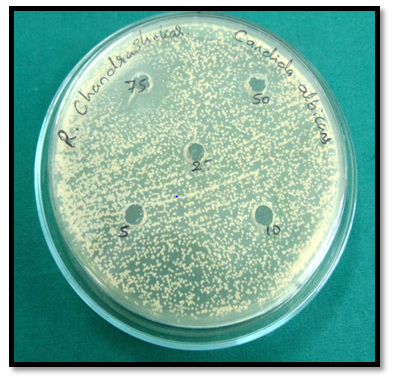
The agar diffusion or punch hole method was employed to assess the antimicrobial activity of cream. In the procedure, Petri dishes were filled to 5 mm depth with molten sterile agar and allowed to set. The Petri dishes containing the nutrient agar were each inoculated with the test organisms respectively by flooding the surface of the set agar plates with a suspension of the organisms in the subculture nutrient broth and the excess was discarded (Figure 5). A sterile cork borer was used to punch holes into the agar plates. The bottom of each well was sealed with a drop of molten agar. A sterile syringe was used to introduce 0.2 ml each of samples of cream into the wells. The agar plates were left for 30 min in order to allow for diffusion of the test samples into the agar. The plates were then incubated at 37°C for 7 days for the fungi, and the zones of inhibition were determined (Table 5). This procedure was repeated using different concentrations (0-50 % w/w) of cream in order to establish the minimum inhibitory concentrations (MIC) [15].
| Organism | 75µl/ ml | 50µl/ ml | 25µl/ ml | 10µl/ ml | 5µl/ ml |
|---|---|---|---|---|---|
| Candida Albicans | 25 mm | 23 mm | 20 mm | R | R |
| Candida Tropicalis | 28 mm | 20 mm | 18 mm | R | R |
Table 5: Microbial enumeration test and absence of specified microorganism.
Disc Diffusion Test
Media Used for antibacterial screening was Brain Heart Infusion agar, room temperature was used for the study (Figure 6). The inoculum was prepared by using a loop or swab, the colonies were transferred to the plates. The turbidity was adjusted with broth and the suspension was standardized with a photometric device. The agar plate was inoculated by adjusting the inoculum with a turbidity standard, a sterile cotton swab was dipped into the inoculum and rotated against the wall of the tube above the liquid to remove excess inoculum. The entire surface of agar plate was swabbed three times, rotating plates approximately 60º between streaking to ensure even distribution. Avoid hitting sides of petriplate and creating aerosols.
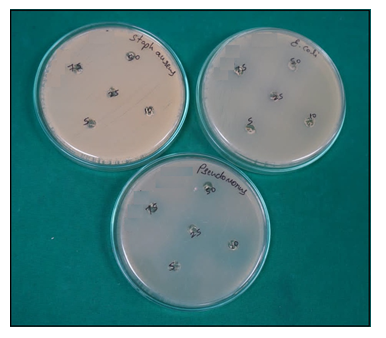
Allow inoculated plate to stand for atleast 3 minutes but no longer than 15 min before making wells. The stock solution was prepared by weighing 10mg of compound and dissolve it in 1ml of DMSO [16].
Addition of Compound into Plate
Take hollow tube of 5mm diameter, heat it. Press it on above inoculated Agar plate and remove it immediately by making a well in the plate. Likewise, make five well on each plate. With the help of micropipette add 75µl, 50µl, 25µl, 10µl and 5µl in each well. This will be done for one compound to know the quantity grading. To compare between different compounds then in one plate different compounds will be added with fixed quantity ie., 50 µl (Table 6).
| SL No | Organism | 75µl/ ml | 50µl/ ml | 25µl/ ml | 10µl/ ml | 5µl/ ml |
|---|---|---|---|---|---|---|
| 1 | S. aurues | 18 mm | 13 mm | 10 mm | R | R |
| 2 | E. coli | 13 mm | 12 mm | R | R | R |
| 3 | Pseudomonas | 18 mm | 15 mm | 13 mm | 12 mm | R |
Table 6: Microbial enumeration test and absence of specified microorganism. Note: R= Resistant **Incubation:** The plates were in
Reading Plates: The plates were read only if the lawn of growth is confluent or nearly confluent. The diameter of inhibition zone was measured to nearest whole millimeter by holding the measuring device.
Conclusion
The development of polyherbal formulations has gained popularity because of its historical basis, affordability, and patient compliance. An effective antibacterial activity of the extract against skin infections was found in the preliminary evaluation and antimicrobial investigation of cucumber, poppy, and almond seeds. There’s a growing trend toward creams. In contrast to other semisolid preparations such as gels, pastes, ointments, etc., they are more stable and have the ability to provide regulated release. Preparing creams can lead to better absorption, which enhances the bioavailability of prescription medications. The long-term stability properties of creams make it possible for patients to benefit from their application. Although creams are easy to develop, significant medication and excipient modification is needed to create a safe, secure, and stable product. The formulation of the polyherbal cream used in this investigation suggests that it could be a useful topical cream with additive effects. Furthermore, the precise mechanism of action of the cream on the skin may be investigated at the molecular level using sophisticated pharmacological models, making it a sensible and efficient method of use. In order to determine the safety, stability, and efficacy of the polyherbal cream, more research will be conducted with a range of novel formulations with varying dosage forms and strengths, as well as with distinct plant extracts, in order to define the pharmacokinetics of the product.
Competing Interest
Authors have declared that no competing interests exist.
Acknowledgements
Authors express their sincere gratitude to Seven Hills College of Pharmacy, Tirupati, for continuous motivation, support, and guidance for research activity and for providing all required facilities to accomplish the entitled work.
References
-
Chellathurai BJ, Anburose R, Alyami MH, Sellappan M, Bayan MF, et al. (2023) Development of a Polyherbal Topical Gel for the Treatment of Acne. Gels 9(2): 163.
-
Zhang Q, Tu Y, Gu H, Sun D, Wu W, et al. (2019) A cream of herbal mixture to improve melasma. J Cosmet Dermatol 18(6): 1721-1728.
-
Alobaidi AH, Hamad ES, Alsamarai AM, Kudairet KA (2015) Evaluation of Glycyrrhiza Glabra Cream as Treatmentfor Melasma. Evidence-Based Strategies in Herbal Medicine Psychiatric Disorders and Emergency Medicine.
-
Priyanka J, Joshi S, Rajani U, Semwal RB, Semwal DK (2021) Formulation and Evaluation of Polyherbal Cream and Lotion for the Treatment of Psoriasis Induced Secondary Infections. Current reviews in clinical and experimental pharmacology 16(1): 79-96.
-
Mpofana N, Chibi B, Visser T, Paulse M, Finlayson AJ, et al. (2023) Treatment of Melasma on Darker Skin Types: A Scoping Review. Cosmetics 10(1): 25.
-
Cerulli A, Masullo M, Montoro P, Piacente S (2022) Licorice (Glycyrrhiza glabra, G. uralensis, and G. inflata) and Their Constituents as Active Cosmeceutical Ingredients. Cosmetics 9(1): 7.
-
Gupta MK, Nagare S, Shrivastava B, Hyam S, Dhane K (2020) Development and Evaluation of Topical Polyherbal Formulations for their Antimicrobial Potential. International Journal of Research in Pharmaceutical Sciences 11(4): 8187-8193.
-
Sanju N, Vineet M, Kumud M (2022) Development and Evaluation of a Broad spectrum Polyherbal Sunscreen formulation using Solid Lipid Nanoparticles of Safranal. J Cosmet Dermatol 21(10): 4433-4446.
-
Liu T, Wang J, Gong X, Wu X, Liu L, et al. (2020) Rosemary and Tea Tree Essential Oils Exert Antibiofilm Activities In Vitro against Staphylococcus aureus and Escherichia coli. J Food Prot 83(7): 1261-1267.
-
Esmael A, Hassan MG, Amer MM, Abdelrahman S, Hamed AM, et al. (2020) Antimicrobial activity of certain natural-based plant oils against the antibiotic-resistant acne bacteria. Saudi J Biol Sci 27(1): 448-455.
-
Ajazuddin SS (2010) Evaluation of physicochemical and phytochemical properties of Safoof-E-Sana a Unani polyherbal formulation. Pharmacognosy Res 2(5):318-
-
Lukić M, Pantelić I, Savić SD (2021) Towards Optimal pH of the Skin and Topical Formulations: From the Current State of the Art to Tailored Products. Cosmetics 8(3): 69.
-
Chiarentin L, Cardoso C, Miranda M, Vitorino C (2023) Rheology of Complex Topical Formulations: An Analytical Quality by Design Approach to Method Optimization and Validation. Pharmaceutics 15(7): 1810.
-
Simões A, Veiga F, Vitorino C (2020) Progressing Towards the Sustainable Development of Cream Formulations. Pharmaceutics 12(7): 647.
-
Vanzuuren EJ, Fedorowicz Z, Christensen R, Lavrijsen A, Arents BWM (2017) Emollients and moisturisers for eczema. Cochrane Database Syst Rev 2(2): CD012119.
-
Halla N, Fernandes IP, Heleno SA, Costa P, Boucherit OZ, et al. (2018) Cosmetics Preservation A Review on Present Strategies. Molecules 23(7): 1571.
- Potential Medicinal Herbs and Secondary Metabolites in Combating Corona Virus
- Monkeypox and its Clinical Implications in Pregnancy
- Pharmacognostical Analysis of the Leaves of Important Nervine Medicinal Plant: Strychnos Nux-Vomica L
- Assessment of Antibacterial Activity of Various Solvent Extracts of Dictyota Dichotoma Against Multidrug Resistant Bacterial Strain
- An Insights of Bioactive Elements on Malignancy: Mechanistic Avenues
- Advances and Future Directions in Pharmacognosy and Chinese Medicine