
Determination of Total Phenolic, Flavonoid and Tartaric Acid Contents in Berberis Integerrima Bunge Fruits Collected from Badakhshan Province, Afghanistan
Introduction: Barberry is one of the important medicinal, edible and export plants of Afghanistan. The fruit of this plant contains a large amount of organic acids, phenolic substances, flavonoids and vitamins and has a special place in the traditional medicine of country. Badakhshan province is one of the major barberry producing provinces in Afghanistan. Objective: The purpose of this study is to standardize and determine the amount of tartaric acid, phenolic and flavonoid content in barberry fruit (BBFs22) collected from Badakhshan Province, Afghanistan. Methodology: BBFs22 was collected from the sellers of medicinal plants located in Kabul and kept in the freezer until the measurement and evaluation. After identification and pharmacognostic evaluation of BBFs22 the amount of tartaric acid, phenolic and flavonoid content in the fruit, was determined using UV- Vis spectroscopy. All experiments were repeated three times. Results: The studies conducted based on the available sources showed that the desired sample was Berberis integerrima Bunge. The results obtained from the pharmacognostic evaluation of the fruit indicated that the BBFs22 has 7.48± 0.13% moisture, 9.16± 1.3% foreign matter, 2.11± 0.05% total ash, 0.32± 0.05% acid insoluble ash, 28.15±0.19% water- soluble extractive content, and 23.77±0.97% methanolic extractive value. The result of phytochemistry studies showed that BBFs22 has flavonoids, alkaloids, tannins, phenolic substances, saponin and mucilage as its active ingredients. The methanolic extract of BBFs22 had 14.06±0.05 mg (w/w) of tartaric acid, 26.43±1.65 mg (w/w) of phenolics and 3.10±0.04 mg (w/w) of flavonoids. Conclusion: BBFs22 has shown lower values in terms of numerical norms, however, the results obtained from the pharmacognostic evaluation of fruit are consistent with the standard values available in pharmacopoeias. In addition, although different solvents can be used to determine the amount of phenolics, flavonoids and tartaric acid, the results obtained from this study indicated that methanol is a better solvent than water.
Introduction
Many countries have resources and reserves of medicinal plants. This is while the types and variety of plant species are different based on the conditions and geographical location of each region [1]. The increase in demand of different food sources, products and fruits of wild plants is considered very valuable and important in the food industry [2]. Plants and their various parts are very important in the traditional medicine of various countries, including Afghanistan, due to their multiple properties and medicinal properties [3].
The Berberidaceae family is one of the important plant families and includes many types of plants that are very important due to their important physiological effects. One of these important plants is Berberis. Berberis is very complex genus, which contains more than 500 species worldwide [4]. Of the included number of species Berberis integerrima, B. aristata and B. vulgaris can be mentioned [5]. In terms of geographical distribution, Berberis species are among the flora of Northern Europe, Mediterranean countries, Central Asia, Iran, Afghanistan and Himalayas [3]. In Afghanistan, 4 species namely; B. integerrima, B. calliobotrys, B. heterobotrys, B. eterobotrys, has been identified, and in general, their geographical distribution is established in the central areas of Badakhshan to Farah (B. integerrima), southeast and east (B. calliobotrys), southeast and northwest (B. heterobotrys), and northwest (B. heterobotrys) of the country [6].
Different parts of barberry have medical and nutritional value due to the presence of various chemical compounds. Various alkaloids have been obtained from its root, bark and fruit, the most important of which is berberine [7]. But the fruit of the plant does not contain alkaloids [8]. Ascorbic acid, alpha- tocopherol, and beta-carotene, which are considered as antioxidants, phenolic compounds, flavonoids such as catechin, chlorogenic acid, and gallic acid, and anthocyanins have been said to be among the most important secondary metabolites of barberry fruit [9]. Tartaric acid, malic acid, citric acid, and succinic acid are important organic acids of barberry fruit [10]. Several studies have proven the digestive, anti-inflammatory, antioxidant, anti-cancer and anti-microbial properties of barberry fruit [11].
Barberry fruit has high content of vitamin C and organic acids such as tartaric acid, which has shown good anti-fungal and antibacterial effects [12]. Also, the effects of its phenolic compounds on the nervous system and cardiovascular system have been proven, and it is effective in epilepsy and high blood pressure [13]. The amount of flavonoid content is not the same in different parts of the plant and it has shown anti-cancer, antioxidant, anti-inflammatory and antiviral effects [14].
Standardization and determination of the bioactive phytoconstituents of the medicinal plants collected from their main resources assist to increase the quality of desired items, to augment their acceptance rate as export goods in national and international markets, optimization of processing conditions and improvement of post harvesting treatment criteria. But unfortunately, some harvested medicinal plants in different provinces of our country not only do not get standardized but also illegally transported to neighboring nations and after some processing are sold as their exported items. So, in order to avoid the present scenario to certain content it is important to evaluate the quality of abovementioned plants collected from its main resources of Afghanistan and optimize their harvesting process, if possible.
Considering the medical, nutritional and export importance of barberry fruit and its wide use in traditional medicine of the country, it was decided to carry out research in the standardization and determination of the quality of the fruit collected from the country, and fortunately, we started as the first researchers in this field. The purpose of the present study was to standardize and determine the amount of tartaric acid, phenolic and flavonoid content in barberry fruit collected from Badakhshan province of Afghanistan. It is hoped that the results of this study will improve the production, exports and use of this medicinal plant in the country.
Materials and Methods
Collection of Barberry Fruit
Barberry dried fruit under the local names of Zerk, Red barberry and Zarafshani barberry was randomly collected from the sellers of medicinal plants in Kabul, Afghanistan on 24.09.2022. The collected sample was the red seeded barberry from Badakhshan province and was kept in the freezer at 4oC until further evaluation.
Identification Of Barberry Fruit
Since the correct identification of the test sample is a major and important part of a pharmacognostic evaluation, the collected samples were identified in accordance with the existing references and a portion of it was kept after labeling for storage in the laboratory.
Pharmacognostic Evaluation of Barberry Fruit
The pharmacognostic evaluation of the collected samples was done to prevent the existence of possible adulterants. For this purpose, the test sample was studied and analyzed in terms of organoleptic, macroscopic, microscopic properties and preliminary phytochemistry experiments.
Standardization of Barberry Fruit
After drying of herbal drugs, standardization is considered an important step of their processing. Standardization of herbal drugs means determining their quality and quantity, which is done according to standards (norms), national and international standards, pharmacopoeias or codex. Basically, prepared drugs should have very specific characteristics with accepted scientific and professional norms. In order to standardize barberry samples, numerical norms such as the percentage of foreign matter, ash value, moisture content, swelling index, extractive value using different solvents were determined [15].
Determination of Percentage of Foreign Matter in Barberry Fruit
100 grams of test sample was taken and evaluated for the presence of any possible types of organic and inorganic foreign matter using a lens with a power of 6X. After separation, the impurity present in test sample was weighed and the percentage of foreign matter in BBFs22 was determined [8].
Determination of Moisture Content of Barberry Fruit
The basis of the method of determining the moisture content of herbal drugs is to dry the drug sample in oven and obtain the weight difference between the dried biomass and the firstly weighed drug. Therefore, the petri dishes containing 2 grams of BBFs22 were placed in hot air oven at a temperature of 105 oC for 5 hours. Subsequently, the petri dishes containing the samples were placed inside the desiccator until cooling. After cooling the samples, weighed again, and its weight was noted (taking into account that it is not in contact with open air). The test samples were again heated for one hour in oven and weighed again. This process was repeated until the weight of the sample was fixed, then the moisture content of BBFs22 was calculated based on the obtained weight difference [16].
Determination of Total Ash Contact of Barberry Fruit
First, the crucibles were heated at a temperature of 500°C for one hour, and after cooling, it was accurately weighed. 3 grams of BBFs22 was placed in a crucible and was heated in a muffle furnace at 700°C for more than 4 hours (until no carbon remains in the ash). Then, the crucible containing the ash was transferred to the desiccator and weighed. This process was repeated until the ash weight was fixed and at the end the total ash value of BBFs22 was calculated based on the amount of ash obtained [2].
Determination of Acid Insoluble Ash Value of Barberry Fruit
The ash of BBFs22, which was obtained by the abovementioned method, was transferred in an Erlenmeyer and 25 ml of hydrochloric acid was added to it. Then it was boiled for 5 minutes and the insoluble material was filtered. The filter paper along with the remaining material was washed well with warm water and then dried. The dried filter paper was placed in a dry, pre-weighed crucible and placed in a muffle at 500°C for three hours (until all carbon was destroyed and turned into ash). The percentage of acid insoluble ash in BBFs22 was calculated based on the following formula [8].
Percentage of acid insoluble ash = 100 x weight of ash treated with acid / sample weight
Determination of Extractive Value of Barberry Fruit
Extraction
Different extracts (aqueous and methanolic) of BBFs22 were prepared by maceration. For this purpose, BBFs22 was completely crushed using mortar and pestle before mixing with the solvent, and then 3 grams of crushed fruit was mixed separately with 20 ml of the desired solvent (methanol and water) and was kept for maceration. The obtained mixture was stirred with a mixer (shaker) for 2 hours. Then the initial extract was obtained by passing the mixture through filter paper. This process was repeated by adding 10 ml of solvent to the remaining materials [17].
Determination of Methanolic Extractive Value of Barberry Fruit
5 grams of BBFs22 was extracted using methanol by the abovementioned method. The extract was heated until 75% of the solvent evaporated in water bath at 100°C and then heated at 76°C in hot-plate for complete drying. The dried extract was placed in a desiccator to cool and later weighed accurately. The methanolic extractive value of BBFs22 was calculated based on the dry weight of the extract.
Determination of Aqueous Extractive Value of Barberry Fruit
5 grams of BBFs22 was extracted using distilled water by the abovementioned method. The extract was heated until 75% of the solvent evaporated in water bath at 100°C and then heated at 90°C in hot-plate for complete drying. The dried extract was placed in a desiccator to cool and later weighed accurately. The aqueous extractive value of BBFs22 was calculated based on the dry weight of the extract [17].
Determination of Total Phenolic, Flavonoid and Tartaric Acid Content of Barberry Fruit
Preparation pf Stock Solution of Gallic Acid
To prepare the stock solution, 200 mg of standard gallic acid was dissolved in 200 ml of distilled water. Then different concentrations of gallic acid were prepared using the following formula (Table 1): N1* V1= N2* V2
| (%) Solution | 100 | 90 | 80 | 70 | 60 | 50 | 40 | 30 | 20 | 10 |
|---|---|---|---|---|---|---|---|---|---|---|
| Distilled water (mL) | 0 | 10 | 20 | 30 | 40 | 50 | 60 | 70 | 80 | 90 |
| Gallic acid Stock (mL) | 100 | 90 | 80 | 70 | 60 | 50 | 40 | 30 | 20 | 10 |
Table 1: Different concentrations of gallic acid stock solution.
Preparation of Stock Solution of Rutin
To prepare the stock solution, 200 mg of standard rutin was dissolved in 200 ml of distilled water. Then different concentrations of rutin were prepared using the following formula (Table 2). N1* V1= N2* V2
| (%) Solution | 100 | 80 | 60 | 40 | 20 | 10 |
|---|---|---|---|---|---|---|
| Distilled water (mL) | 0 | 20 | 40 | 60 | 80 | 90 |
| Rutin Stock (mL) | 10 | 20 | 40 | 60 | 80 | 100 |
Table 2: Different concentrations of rutin stock solution. Preparation of Stock Solution of Tartaric Acid To prepare the stock so
| (%) Solution | 100 | 90 | 80 | 70 | 60 | 50 | 40 | 30 | 20 | 10 |
|---|---|---|---|---|---|---|---|---|---|---|
| Distilled water (mL) | 0 | 10 | 20 | 30 | 40 | 50 | 60 | 70 | 80 | 90 |
| Tartaric acid Stock (mL) | 100 | 90 | 80 | 70 | 60 | 50 | 40 | 30 | 20 | 10 |
Table 3: Different concentrations of tartaric acid stock solution.
Determination of Total Phenolic Content (TPC) of Barberry Fruit
To determine TPC, 1 ml of BBFs22 extracts (aqueous and methanolic) mixed with Folin-Ciocalteu reagent and distilled water at a ratio of 20:1:1 (v/v) and kept for incubation for eight minutes. Then, 10 ml of 7% (w/v) sodium carbonate was added to it. After 2 hours, the absorption of mixture was observed at a wavelength of 750 nm. The TPC of test samples were read as equivalent to the standard curve of mg/ mL of gallic acid [18].
Determination of Total Flavonoid Content (TFC) of Barberry Fruit
The TFC of BBFs22 was determined by aluminum chloride assay. For this purpose, 1 ml of methanolic and aqueous extracts of BBFs22, 1 ml of aluminum chloride in 5% acetic acid solution in methanol was added. After 10 minutes, the absorption of the samples was read at a wavelength of 430 nm against the control sample. The results were read as milligrams equivalent to the standard curve of mg/ mL of rutin [17].
Determination of Tartaric Acid Content (TAC) of Barberry Fruit
In order to determine the tartaric acid content in BBFs22, 1 ml of methanolic and aqueous extracts of the fruit were diluted to a ratio of 1: 5 by its solvent (methanol and water) and its absorption was observed at 215 nm wave lengths. The obtained results were calculated as the standard curve equivalent of mg/mL of tartaric acid.
Results
Identification of Barberry Fruit
The collected BBFs22 were examined in accordance with the available resources and it was found that the test sample was Berberis integerrima Bunge.
Pharmacognostic Evaluation of Barberry Fruit
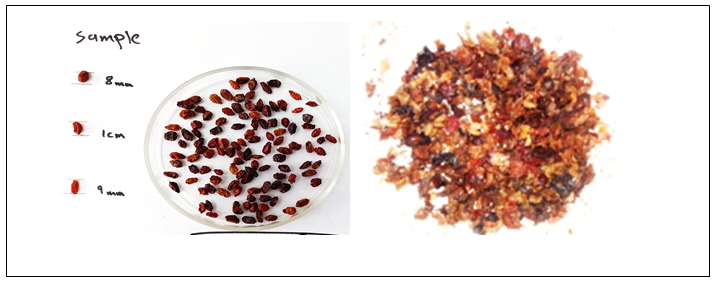
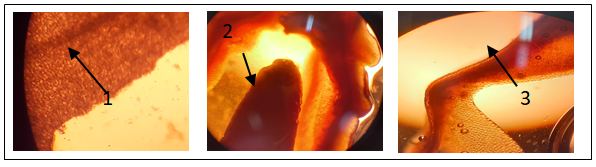
In order to better identification of possible adulterants in the composition of BBFs22, organoleptic (Table 4), macroscopic (Table 4), (Figure 1), microscopic (Figure 2) and preliminary phytochemical analysis (Table 5) were conducted and the results are stated briefly.
- Analysis of Collected Data
- The experiments were repeated in triplicates and the results were recorded as mean±SD. Microsoft excel 2010 was used in data analysis. Microsoft excel 2010 tool-pack was used for the calculations of mean and standard deviations.
- Organoleptic and Macroscopic Characteristics of BBFs22
- Color
- Odor
- Taste
- Shape
- Size (mm)
- Presence of Seed
- Dark red berries
- Slightly aromatic
- Sour
- Ellipsoid
- 9
- Large seed is present
Table 4: Organoleptic and macroscopic characteristics of BBFs22.
| No. | Type of Secondary Metabolite | Type of Extract | Test | Result |
|---|---|---|---|---|
| 1 | Flavonoids | Methanolic | Ammonia test | Yellow color |
| Shinoda test | Light red color | |||
| Vanillin HCL | Light red color | |||
| 2 | Alkaloids | Methanolic | Dragendorff’s test | orange-red precipitate |
| 3 | Tannins and Phenolics | Aqueous | FeCl3 | Bluish or black color |
| Vanillin HCL | Pink color | |||
| 4 | Saponins | Aqueous | Froth test | Foam production |
| Fontan_ Kendal | Foam difference | |||
| 5 | Mucilage | Aqueous | Swelling index | 0.16 |
Table 5: Phytochemical studies of BBFs22.
Standardization of Barberry Fruit
Determination of Percentage of Foreign Matter in Barberry Fruit
After evaluation of collected BBFs22 in terms of foreign matter it was found that the percentage of organic and inorganic foreign matter in test sample was 9.16± 1.3% and this value is the same as the value mentioned in standards (Table 6).
Determination of Moisture Content of Barberry Fruit
The evaluation of test samples showed that BBFs22 contains 7.48± 0.13% of moisture, which is within the standard range (Table 6).
Determination of Total Ash Contact of Barberry Fruit
As a result of standardization process it was found that BBFs22 contains 2.11±0.05% of total ash, which is within the standard range (Table 6).
Determination of Acid Insoluble Ash Value of Barberry Fruit
As a result of standardization process it was found that BBFs22 contains 0.32± 0.05% of acid insoluble ash, which is within the standard range (Table 6).
Determination of Extractive Value of Barberry Fruit
Determination of Methanolic Extractive Value of Barberry Fruit
After determining the methanolic extractive value of BBFs22, it was found that the test sample has 23.77±0.97% dry extract (Table 6).
Determination of Aqueous Extractive Value of Barberry Fruit
As a result of determination of the aqueous extractive value of BBFs22, it was found that the test sample has 28.15± 0.19% dry extract (Table 6).
| Numerical values (%) | ||||||
|---|---|---|---|---|---|---|
| Test Sample | Foreign matter | Water soluble extractive | Methanolic extractive | Acid- insoluble ash | Total ash | Moisture content |
| BBFs22 | 9.16±1.3% | 28.15±0.19% | 23.77±0.97% | 0.32±0.05% | 2.11±0.05% | 7.48±0.13% |
Table 6: Various numerical values of BBFs22 obtained after standardization.
n= 3, mean± SD Table 6: Various numerical values of BBFs22 obtained after standardization.
Determination of Total Phenolic, Flavonoid and Tartaric Acid Content of Barberry Fruit
Determination of Total Phenolic Content (TPC) of Barberry Fruit
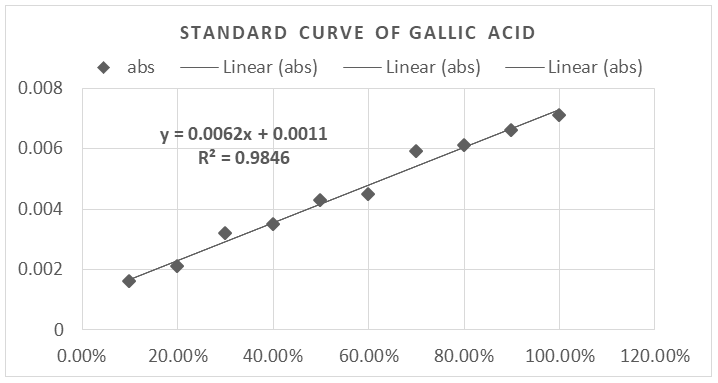
The TPC in the aqueous and methanolic extracts of BBFs22 was 22.29± 1.04 mg and 26.43± 1.65 mg in 3 grams of dry weight of BBFs22 equivalent to gallic acid standard curve, respectively (Figure-3, Table-7).
Determination of Total Flavonoid Content (TFC) of Barberry Fruit
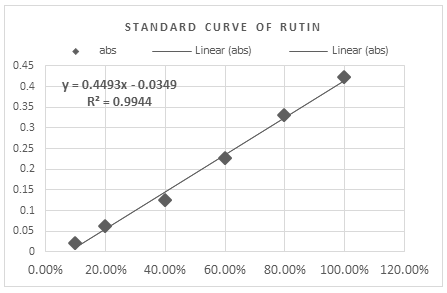
The TFC of BBFs22 in aqueous and methanol extracts was 3.03± 0.38 mg and 3.10± 0.04 mg respectively in 3 grams of dry weight of BBFs22 equivalent to rutin standard curve (Figure 4) (Table 7).
Determination of Tartaric Acid Content (TAC) of Barberry Fruit
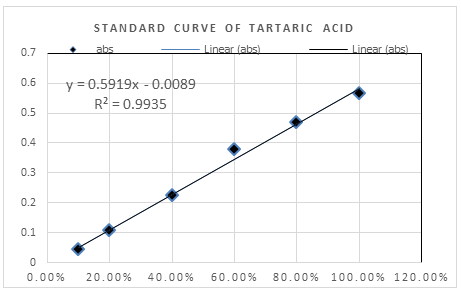
The amount of tartaric acid in aqueous and methanolic extracts of test sample was 17.78± 0.05 and 14.06± 0.05, respectively, in 3 grams of dry weight of BBFs22 equivalent to the tartaric acid standard curve (Figure 5) and (Table 7).
| Type of extract (BBFs22) | TPC (w/w) | TFC (w/w) | TAC (w/w) |
|---|---|---|---|
| Aqueous | 22.29±1.04 mg | 3.03±0.38 mg | 17.78±0.05 mg |
| Methanolic | 26.43±1.65 mg | 3.10±0.04 mg | 14.06±0.05 mg |
Table 7: ** TPC, TFC, and TAC of BBFs22.
n= 3, mean± SD Table 7: TPC, TFC, and TAC of BBFs22.
Discussion
Barberry fruit is a product, which is consumed fresh, dried or juiced [19]. In addition, the fruit is used in natural dye industry [20, 3]. Considering the importance of the barberry fruit in nutrition, traditional medicine, and as a major export item of the country, it is necessary to meet the standards and indicators set by WHO or other regulatory bodies in terms of quality control. For this purpose, it is necessary to investigate the organoleptic, macroscopic, microscopic properties, percentage of foreign matters, total ash value, moisture content, extractive values using different solvents etc [21].
The percentage of foreign matters in a drug indicates how it is collected. Based on the findings of this research, the amount of foreign matters in BBFs22 was 9.16 ± 1.3%. According to existing standards, barberry fruit should be free of impurities [8]. The amount of organic foreign matters in the composition of the fruit is considered less than 2% by WHO [22]. Considering the standard varieties and the variety obtained from the determination of BBFs22 foreign matters, it is clear that the BBFs22 may have been collected in a non- standard way. Although, the available standard values only indicates the percentage of organic foreign matters.
Humidity is one of the important factors in changing the physical properties of barberry fruit [23]. Based on the findings of this study, the moisture content of BBFs22 was obtained 7.48± 0.13%. Fathollahzadeh H, et al. [24] found the moisture content of barberry fruit to be about 24.78%. The findings of several tests on several varieties of barberry fruit reported different moisture values, including 89.23%, 70.11%, 53.11%, 38.09% and 12.64% [24]. During the study conducted by Dhanabal SP, et al. [25] the moisture content of barberry fruit (B. aristata) was found to be 5.32%. Also, during the investigation that has been conducted, in addition to the nature, environmental conditions, packaging and transportation also have a role in the moisture content of barberry fruit and can reduce the moisture content of the product by up to 20% [26].
The total ash content of BBFs22 was found to be about 2.11±0.05%. According to available standards, the total ash content of barberry fruit should not be more than 3% [8]. Sun J, et al. [27] reported the total ash content of barberry fruit as 1.31%. The amount of acid insoluble ash of BBFs22 was found to be about 0.32± 0.05%. The norm determined for acid insoluble ash of barberry fruit by WHO is less than 2% [22]. Also, some standards consider acid insoluble ash in barberry fruit up to 0.55% [8].
Barberry fruit has various compounds such as phenolic substances, tannins, flavonoids, anthocyanins, organic acids such as tartaric acid, malic acid, citric acid, vitamin A and vitamin C [28, 29, 30]. The flavonoids of barberry fruit include rutin, quercetin, and kaempferol, which are important antioxidants [31].
As per result of this study, the TPC in the aqueous and methanolic extracts of BBFs22 was found to be 22.29±1.04% and 26.43±1.65% equivalent to gallic acid, respectively. Sharifi F, et al. [17] reported that TPC in aqueous and methanolic extracts of barberry fruit as 48.98±0.49 and 12.18±1.56, respectively in 10 grams of fresh weight of barberry fruit. Behrad Z, et al. [32] described the TPC of B. integerrima fruit as 4.2 mg equivalent of gallic acid. Based on the findings of Sabahi Z, et al. [33], the TPC in the aqueous extract of B. integerrima fruit has been reported as 130.52 ± 0.42 mg/g (w⁄w), equivalent to gallic acid. During the study conducted by Yang L, et al. [9], the TPC of B. vulgaris was found to be 0.182 g kg−1. Furthermore, it has been found that the type of solvent and extraction time have a positive effect on the TPC of barberry fruit [34].
The TFC of BBFs22 was found to be about 3.03±0.38% and 3.10±0.04% (w⁄w) equivalent to rutin in its aqueous and methanolic extracts, respectively. In this way, a small difference between the amount of flavonoids in aqueous and methanolic extracts of barberry fruit has been observed, so that the methanolic extract has more TFC and methanol is a better solvent for flavonoids in BBFs22. Based on the findings of [35], the amount of TFC in methanolic extract of B. vulgaris fruit was found to be about 27.99 gr/100 gr. Similarly, Yang L, et al. [9] has documented the TFC of B. vulgaris as 0.073 g kg−1 equivalent to rutin. In addition, during the study conducted by Sabahi Z, et al. [33] TFC of B. integerrima fruit was reported as 52.35 ± 0.52 mg of quercetin/ gram of extract.
According to the result of our study, the tartaric acid content of aqueous and methanolic extracts of BBFs22 was found to be 17.78±0.05% and 14.06±0.05%, respectively. Yang L, et al. [9] reported the amount of tartaric acid in the aqueous extract of barberry fruit as 0.901 g kg−1. During the investigation conducted by Gundogdu M, et al. [36] the amount of tartaric acid in B. vulgaris was found to be 0.024 ± 0.702 g/kg.
The difference in TPC, TFC, tartaric acid and other numerical norms of BBFs22 compared to the findings of other studies in the same and/or different species of plant can be caused by differences in climatic conditions, cultivation and harvesting condition, storage, transport of product and other factors [37]. However, the results of this research indicated that the numerical norms obtained from the evaluation of BBFs22 have little difference with the findings of other researches in the same species of plant and it generally states that the quality level of BBFs22 is equal to the fruit of B. integerrima available in other countries [38, 39, 40, 41, 42, 43, 44, 45, 46, 47, 48, 49].
Conclusion
The investigation carried out to evaluate and determine the amount of BBFs22 compounds grown in Badakhshan province indicated that the lesser ash content of BBFs22 than the mentioned norm may reveal the power of converting B. integerrima fruit components into ash. In addition, the low moisture content of BBFs22 shows the stability of barberry fruits during storage. The aqueous and methanolic extractive value of BBFs22 was low compared to the available standard values, and this may indicate the low solubility of BBFs22 compounds in the used solvents. Although in most of the cases the values obtained from the pharmacognostic evaluation of BBFs22 were lower than the standard numbers, but nevertheless, the mentioned values are within the standard range and this may consider as good quality of test barberry fruit.
References
-
Yousef A, Moghadam ARL (2015) Check the chemical composition of essential oil of wild barberry(Berberis integerrima). Journal of plant biology and molecular 10(3): 45-53.
-
Eroglu AY, Çakır O, Sagdıç M, Dertli E (2020) Bioactive Characteristics of Wild Berberis vulgaris and Berberis crataegina Fruits. Hindawi Journal of Chemistry 2020: 1-9.
-
Amoui AM, Mujahid M, Mujahid M (2018) Business creation package for barberry prodution (39). Asrarelm, Tehran, Iran.
-
Breckle SW, Rafiqpoor MD, Hedge IC (2013) vascular plants of afghanistan an Augmented checkist. In: Dittmann A, et al. The Deutsche Nationalbibiothek, Bonn, Germany.
-
Martynov GE, Strov AE, Peskov DD (1984) polysaccharisdes of Berberis vulgaris. chemistary of Natusral Compounds 20: 98-101.
-
Keusgaen M, Breckle SW, Rafiqpoor MD, Fritsch R, Hedge IC, et al. (2020) Medical plants of afghanistan. Druk Center Meckenheim GmbH, Meckenheim, Garmany.
-
Hossein A, Heydari R, Nejati V, khanipour MA (2013) Preventive effect of aqueous extract of Berberis integerimma root on blood glucose levels and serum lipds diabetic rats treatd with straptozotocin. Journal of Fasa Unversity of Medical Sciences 2013: 148-150.
-
Dehkordi NG (2003) Iranin Herbal pharmacopoeia (2). Minisrty of Heath, Medicine and Education Deputy Food and Drug, Tehran, Iran.
-
Yang L, Zhang Z, Hu X, You L, Khan RAA, et al. (2022) Phenolic Contents, Organic Acids, and the Antioxidant and Bio Activity of Wild Medicinal Berberis Plants- as Sustainable Sources of Functional Food. Molecules 27(8): 2497.
-
Ardestani SB, Sahari MA, Barzegar M (2015) Effect of Extraction and processing Condition on organic acid of Berberis Fruit. Food Biochmistry 39(5): 554-565.
-
Moldovan C, Frumuzachi O, Babotă M, Menghini L, Cesa S, et al. (2021) Development of an Optimized Drying Process for the Recovery of Bioactive Compounds from the Autumn Fruits of Berberis vulgaris L. and Crataegus monogyna Jacq. Antioxidants Basel 10(10): 1579.
-
Tologlu S, Cenet M (2006) The methods used to determine antimicrobial activity of the plants and their application area. KSIU J Eng Sci 2006: 12-20.
-
Fatehi M, Fatehi TM, Fatehi-Hassanabad Z, Farrokhfal K, Jafarzadeh M, et al. (2005) The antihypertensive and vasodilator effects of aqueous extract from Berberis vulgaris fruit on hypertensive rats. Phytoth Res 19(3): 222-225.
-
Ullah A, Munir S, Badshah SL, Khan N, Lubna G, et al. (2020) Important Flavonoids and Their Role as a Therapeutic Agent. Molevules 25(22): 5243.
-
Baburi MO (2016) pharmacognosy of terpenoids and alkaloids. Samt, Tehran, Iran.
-
Behrad Z, Sefidkon F, Ghasemzadeh H, Rezadoos H, Balandar A, et al. (2021) Determination of Phenolic Compounds and Antioxidant Activities of 55 Iranian Berberis Genotypes. Journal of Medicinal Plants and By- products 12(2): 181-189.
-
Sharifi F, Pourakbar L (2015) Comparison of anti- oxidative properties of fresh Berberis (integerrima × Vulgaris) in Aqueous and alcoholic solvents. Iranian Food Science and Technology Research Journal 12(2): 296-307.
-
Ersoy N, Kupe M, Sagbas HI, Ercisli S (2018) Physicochemical Diversity Amonge Barbery (Berberis vulgaris L.) Fruits from Eastern Anatolia. AcademicPres 46(2): 336-342.
-
Farhadi MC, Aalami M, Maghsoudlou Y, Milani E (2017) Comparative Study on the Effect of Heat Treatment and Sonication on the Quality of Barberry (Berberis Vulgaris) Juice. J Food Process Preserv 41(3): e12956.
-
Mozaffarian V (2005) Trees and Shrubs of Iran. Farhang Moaser, Tehran, Iran.
-
Yadav R, Vijender MS (2018) The pharmacognostical studies of Berberis aristata DC. International Journal of Green Pharmacy 12(2): 148-150.
-
European Medicines Agency (2005) Directorate for the Quality of Medicines of the Council of Europe. European Pharmacopoeia, Strasbourg, France.
-
Vlayati E, Emadi B, Khojastapor M, Seyyed RMH (2012) Effet of moistuer content on some physical properties of baberry. Journal of Agricultural Machinery Engineering 2012: 8-11.
-
Fathollahzadeh H, Mobli H, Jafari A, Rajabipour A, Ahmadi A, et al. (2008) Effect of moisture content on some physical properties of barberry. American-Eurasian J Agric & Environ Sci 5(3): 789-794.
-
Dinesh KP, Dhanabal SP (2012) Standardization of berberis aristata extract through conventional and modern HPTLC techiques. Asian Pacific Journal of Tropical Disease 2(1): 136-140.
-
Alemardan A, Asadi W, Rezaei M, Tabrizi L, Mohammadi S, et al. (2013) Cultivation of Iranian seedless barberry (berberis integerrima ‘Bianeh’): A medicinal shrub. ScienceDirect 50: 267-287.
-
Sun J, Li Q, Li J, Liu J, Xu F (2022) Nutritional composition and antioxidant properties of the fruit of Berberis heteropoda Schrenk. PLOS ONE 17(4): e0262622.
-
Seeram NP (2008) Berry Fruits: Compositional elements, Biochemical activities, and the impact of their intake on human health, Performance, and disease. J Agric Food Chem 56(3): 627-629.
-
Srivastava S, Srivastava M, Misra A, Pandey G, Rawat A, et al. (2015) A review on biological and chemical diversity in Berberis (Berberidaceae). EXCLI J 14: 247-267.
-
Rezaei M, Ebadi A, Reim S, Fatahi R, Balandary A, et al. (2011) Molecular analysis of Iranian seedless barberries via SSR. Sci Hortic 129(4): 702-709.
-
Jiménez CDC, Flores CS, He J, Tian Q, Schwartz SJ, et al. (2011) Characterisation and preliminary bioactivity determination of Berberis boliviana Lechler fruit anthocyanins. Food chemistry 128(3): 717-724.
-
Behrad Z, Sefidkon F, Ghasemzadeh H, Rezadoost H, Balandari A, et al. (2021) Determination of Phenolic Compounds and Antioxidant Activities of 55 Iranian Berberis Genotypes. Journal of Medicinal Plants and By- products 12(2): 181-189.
-
Sabahi Z, Farmani F, Soltani F, Moein M (2018) DNA protection, antioxidant and xanthine oxidase inhibition activities of polyphenol-enriched fraction of Berberis integerrima Bunge fruits. Iranian Journal of Basic Medical Sciences 21(4): 411-416.
-
Hayouni A, Abedrabba M, Bouix M, Hamdi M (2007) The effects of solvents and extraction method on the phenolic contents and biological activities in vitro of Tunisian Quercus coccifera L. and Juniperus phoenicea L. fruit extracts. Food Chemistry 105(3): 1126-1135.
-
Berenji SA, Sahari MA, Barzegar M, Abbasi S (2013) Some physicochemical properties of Iranian native barberry fruits (abi and poloei): Berberis integerrima and Berberis vulgaris. Journal of food and Pharmaceutical Sciences 1(3): 67-69.
-
Gundogdu M (2013) Determination of Antioxidant Capacities and Biochemical Compounds of Berberis vulgaris L. Fruits. Advances in Environmental Biology 7(2): 347-350.
-
Moghadam MZ (2013) Ecophysiology of barberry. Environment of iran 49-52.
-
Penahad AA (2003) Submission of the important pests of fruit trees project. Mashad Faculty of Agricultuer, Mashad, Iran.
-
Balandri A (1996) Investigating the effect of ethfon on the ease of harvesting Berberis inegerimma. Sientific and industrial research organization, markaze khorasan.
-
Ebadi S, Rezaei M, Fatahi R (2010) Mechanism of seedlessness in Iranian seedless barberry (Berberis vulgaris L. var. asperma). Scientia Horticulturae 125(3): 486-493.
-
Rostai A (2018) Economic development possiblites of Badakhshan. Shamli, Germany.
-
Hakimi A (2018) Afghanistan Customs tarifa. Kabul puplic press, Kabul, Afghanistan.
-
Mirhaider H (1991) The use of plants in the prevention and treatment of diseases. Islamic cultuer publishing office, Tehran, Iran.
-
Shariet HS, Moatar F (1993) Medicinal and natural plants. Isfahan Mashal Publications, Isfahan, Iran.
-
Ang-Lee MK, Moss J, Yuan CS (2001) Herbal medcines and perioperative care. JAMA 286(2): 208-216.
-
Mokhber-Dezfuli N, Saeidnia S, Gohari AR, Kurepaz- Mahmoodabadi M (2014) Phytochemistry and Pharmacology of Berberis Species. PHCOG REV 8(15): 8-10.
-
Soleki RS (1975) Shanider IV, a Neaderthal flower burial in Northern Iraq. Science 190(4217): 880-881.
-
Farag RS, El-Baroty GS, Basuny AM (2003) The influence of phenolic extracts obtained from the olive plant (cv. Picual and Kronakii), on the stability of sunflower oil. International Journal of Food Science and Technology 38: 81-87.
-
Ardestani SB, Sahrai MA, Barzgar M, Abbasi S (2013) some physicochemical properties of Iranin Native Berberry Fruits(Abi and poloei): Berberis integerrima and Berberis vulgaris. J food pharmsci 1(3): 5-6.
- Potential Medicinal Herbs and Secondary Metabolites in Combating Corona Virus
- Monkeypox and its Clinical Implications in Pregnancy
- Pharmacognostical Analysis of the Leaves of Important Nervine Medicinal Plant: Strychnos Nux-Vomica L
- Assessment of Antibacterial Activity of Various Solvent Extracts of Dictyota Dichotoma Against Multidrug Resistant Bacterial Strain
- An Insights of Bioactive Elements on Malignancy: Mechanistic Avenues
- Advances and Future Directions in Pharmacognosy and Chinese Medicine