
Analysis of Dog Ownership Pattern and the Spread of Rabies Disease in Sierra Leone
How people own and manage dogs in Sierra Leone has significant implications for public health, animal welfare, and community safety. This study comprehensively analyzes dog ownership patterns and safety management standards in Sierra Leone to better understand the dynamics between human animals and dogs in Serra Leone. Objectives: This research aimed to determine the pet owners’ patterns in Sierra Leone to develop a standard, functional, and safe management for dogs based on peculiar social, economic, and cultural considerations. Methods: This research employs a mixed-methods approach, combining quantitative surveys and qualitative interviews. A stratified random sampling technique is used to select households. Surveys are conducted to collect data on age and patterns of dog ownership, tribes and religion, and awareness of responsible pet ownership. To explore safety management standards and challenges, in-depth interviews are conducted with key informants, including dog owners, farmers, hunters, women, men, public health officials, and community leaders. Results: Findings indicate that dog ownership is widespread among the Mende, Temne, and Limba in Sierra Leone. The age, sex, sources of dogs, purpose, tribe, and religion. Socio-economic factors, such as hunting security and income, influence the likelihood of dog ownership. The people lack knowledge regarding responsible pet ownership practices and zoonotic disease transmission. Safety management standards for dogs are inconsistent, with feeding, care, and treatment disparities. Challenges include limited access to veterinary services, inadequate public awareness, and a lack of enforcement of safety regulations. Conclusion: This study sheds light on the complex interplay between dog ownership, public health, and safety management in Sierra Leone. It underscores the need for targeted education and awareness campaigns to promote responsible pet ownership. Improving dog ownership practices can enhance community safety, protect public health, and ensure the welfare of humans and dogs in Sierra Leone.
Introduction
The dog (Canis Lupus Familiaris) is the first wild animal to associate with man and was later domesticated [1]. The man- domesticated dog is from ancestral grey wolves (Canis lupus) that are now extinct [2]. Archaeological evidence shows that this association started 33,000 years ago in Siberia [3], coinciding with when man lived by hunting and gathering [4]. Dog ownership has since increased with the increasing human population, expanding communities, and endless uses of dogs in the ever-improving human civilization [5].
Today, dogs are pertinent instruments of companionship and family entity. People use dogs for hunting, mine clearance, military service, crime investigation, and scientific experiments [6, 7]. Security reasons, the ownership mode could affect the use of dogs and the nature of care given [8]; APPA [9], which are different between the developed and the developing world [10].
In developed countries, there are ethical issues, welfare standards, and accepted principles for rearing animals. The five freedoms of animals, which include freedom from I) hunger, ii) thirst, iii) discomfort, iv) pain, injury, and disease (behavioral expressions), and v) fear and distress, implemented in developed countries and not the developing world [11].
In the developed world, individuals, organizations, institutions, and even government agencies can own dogs following established legal procedures, making it mandatory to care for dogs, including providing food, shelter, medication, recreation, and love. Reviews and interviews precede dog ownership, training, providing budgetary and shelter proof, and signing to agree to assimilate the dogs into the families. In the developing world, however, ethical issues locked in socio-cultural beliefs grant dog ownership to the male heads of households. Dog ownership by women and children is permissible but often very restricted. In West Africa, policies formulated on animal welfare issues during the colonial era remain obsolete by the current administration and, therefore, grossly undermined. Also, most governments must pay more attention to veterinary care for pets and the farm animal industry, resulting in an acute scarcity of qualified veterinary personnel to manage veterinary services, primarily in rural communities [12]. Because there is no standard for owning and caring for dogs, dogs are expected to cater for themselves by scavenging garbage dumps, backyard dustbins, street droppings, market droppings, and cattery leftovers; dogs in rural communities go to the extent of hunting rodents and other wild animals for food. This sometimes results in contracting diseases among the animals and spreads to dogs and the human population.
In Serra Leone, dog ownership varies from one region to another and from one community to another; how people own dogs sometimes leads to the spread of rabies. Factors contributing to this variation include demography, ethnicity, religion, culture, social status, experience, and occupation of the owners. These factors result in contracting rabies, which sometimes contributes to the spreading of the disease. Thus, dog owners in Serra Leone do not require formal education or procedures to own dogs, and the standard modes of dog ownership include gifts, friends, purchases, or street collections [8]. According to Reece [13], dog ownership in developing countries includes restricted (individual), semi- restricted (family), neighborhood (section), and community (feral) dog ownership. Individuals, households, families, teams, or communities can also own dogs.
The care provided after owning dogs depends on the reasons for holding them and various social, cultural, and religious factors. In Thailand, 74% of the people allow dogs to roam freely [14]. In such cases, dogs are not dependent on independent food [15]. Reynolds C, et al. [16] detailed and estimated five informal food waste disposal streams used in Australia. Households: home composting, sewer disposal, giving to charity, dumping or incineration, and feeding scraps to pets. The dogs can survive on garbage, eatery wastes, and feces in Sierra Leone Dogs survive on garbage, eatery wastes, and feces in Serra Leone. Dogs that fend for themselves are highly prone to accidents and diseases; 60% are zoonotic [17]. Other public health and social issues caused by dogs include night fights and noise, bites, defecation, and indiscriminate births [18].
OIE [19] proposed international guidelines that include the five freedoms of animal welfare that today constitute the world’s guiding principle of animal welfare. However, in Sierra Leone, the adoption has yet to take effect. There is, therefore, the need to develop a working model of dog ownership that ensures that the five animal freedoms are observed as stipulated by Barnett, et al. [20] declaration in England. This will minimize accidents, diseases, and other externalities like noise and community conflicts.
This research aimed to determine the pet owners’ patterns in Sierra Leone that lead to the spread of rabies and to develop a standard, functional, and safe management for dogs based on peculiar social, economic, and cultural considerations.
Materials and Methods
Study Area
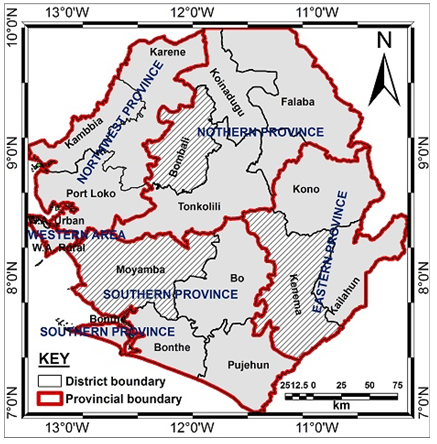
The researchers conducted the study in six chiefdoms in three districts — Kenema in the east, Moyamba in the south, and Bombali in the north of Sierra Leone (Fig. 1). Based on SLLL [21], the area population in each of the districts are respectively 7985 km2 (606 544), 6902 km2 (318 588) and 6053 km2 (609 891).
The annual rainfall varies in the three districts, with six months in Bombali, eight months in Moyamba, and nine months in Kenema [22]. The region has a tropical, humid, hot climate throughout the year, with distinct dry and rainy seasons. The monsoon rains occur from May to Oct., and the Harmattan dry spell is from November to April. Thus, the natural vegetation is grassland with forest patches in Bombali, grassland patches, secondary forest with mangroves in Moyamba, and forest with bush patches in Kenema. However, lumbering, slash-and-burn farming, and charcoal burning have reduced the primary forest vegetation in these districts to grassland or tertiary forest, particularly in Moyamba and Bombali Districts.
Economic activity includes agriculture, which involves growing rice crops for consumption by over 90% of the population. Other cultivated crops in the region include cassava, maize, groundnut, ginger, and vegetables. Kenema and Moyamba Districts export coffee and cacao for cash.
The other sources of farm income include ruminants (cattle, sheep, and goats.), which have monetary, socioeconomic, and cultural connotations in the region. There are 5332 cattle, 73 507 goats, and 50 980 sheep in Kenema; 11 629, 48 101, and 8411 in Moyamba; and 158 705, 66 72,3, and 51 831 in Bombali [23]. While people in Bombali and Kenema mined diamond and gold, Rutile, Zircon, and Bauxite were mined in Moyamba District.
In most districts, dogs scare off animals (domesticated and wild) and thieves from destroying/stealing crops and properties, especially at night. This exposes dogs to dangers and other zoonotic diseases, including rabies, with grievous public health implications. The first dog-reported rabies case was isolated from the brains of rabid dogs in 1949 in Teko, the headquarters town (Makeni) of Bombali District. The veterinary department declared Kenema endemic for rabies in 1953, and as recently as 2017, a rabies fatality occurred in Moyamba District. Rabies cases in the selected districts in Sierra Leone range from high in Kenema to medium in Moyamba and then low in Bombali. The above circumstances associated with the three sections influence the choice for this research on dog ownership patterns, spread of rabies, and standard management practices.
Data Collection and Processing
The team randomly selected Two hundred and seventy dogs from 270 dog owners-one dog per household, thirty dog owners per community, one community per chiefdom, and three chiefdoms per district. The three sections covered in the study included Bombali (in the North), Moyamba (in the South), and Kenema (in the East). Makeni, Makarie Gbanty, and Binkolo are covered in Bombali District; Moyamba, Taiama, and Mokonde in Moyamba District; Kenema, Tongo, and Bomie in Kenema District.
The team selected the districts based on past and present rabies outbreaks among the dog population in neighborhood sites. In contrast, the selection of household dog owners in each community was utterly random [24].
The research team designed a semi-structured questionnaire and administered it randomly among the defined samples of dog-owning households in the purposively selected settlements to solicit relevant information for the study. In addition to the questionnaire, the researchers conducted a literature review of published journal articles and government data. Researchers also acquired Pertinent information through informal engagement, including personal observation and interaction, group discussion, and opinion-leader engagement. They used the snowball technique to interview knowledgeable stakeholders about dog ownership and community management practices.
The questionnaire sought personal data and dog ownership patterns to collect quantitative, binary, continuous, and qualitative data. It was first pretested with forty-five dog-owning households (15 per community and five dogs per household), and lessons learned from pre-testing were incorporated into the final questionnaire. Thus, the final questionnaire included provisions for recording interactive discussions and on-site observations. This increased the scope of data capture for the survey. The high illiteracy (over 80%) necessitates binary (yes and no) data and the Likert scale data. The questionnaire also covered continuous data.
Data Processing
This processing technique readied the data for statistical analysis. The data processing included checks for errors (recording error and respondent error), encoding all collected information, and aggregating the data at community, chiefdom, and district scales—also, an outlier analysis to avoid undue skewing of the results.
Statistical Analysis
The team used descriptive statistics, including measures of central tendencies, to judge and interpret the collected data and conducted correlation analysis and test of significance at p < 0.05 significance level. Finally, the researchers used a stepwise multi-regression analysis to build a model of the critical factors that shape dog ownership patterns in the study area. For all the statistical analysis, the team used the statistical package for social Scientists (SPSS)
Results and Analysis
Dog Ownership Result and Discussion
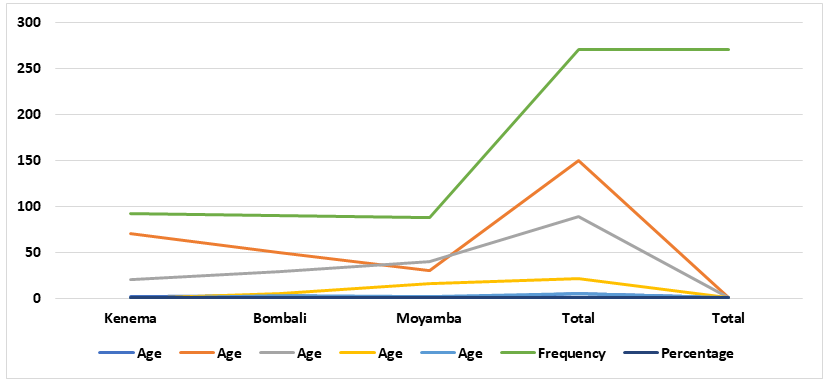
Most people who own dogs are the abled-bodied active population between the ages of 26 and 35, representing 55.56%. In contrast, eighty-nine people between 36 and 45 owned dogs, representing (32.96%). Respondents in Kenema and Bombali Districts own dogs between the ages of 26 and 35 (70 and 50). These districts have high crime rates and hence own dogs for security. The second age group, 36-45, is the actual farming population, whose main reason for owning a dog is hunting. The age range in Moyamba (40) and Bombali (29). Both districts are engaged in subsistence farming and get dogs to scare rodents from their farms. Bombali has mining companies that have experienced massive movement of people from other parts of the country looking for jobs. Those without employment engage in crimes to sustain themselves, which has led to increased use of dogs as security. The vast grassland in Bombali also accounts for rodent hunting, encouraging dog owners to hunt and sell bush meat to miners. The age at which people own dogs dictates their activities and helps spread rabies.
| Districts | Age | Frequency | Percentage | ||||
|---|---|---|---|---|---|---|---|
| 18-25 | 26-35 | 36-45 | 46-55 | >55 | |||
| Kenema | 2 | 70 | 20 | 0 | 0 | 92 | 34.07% |
| Bombali | 3 | 50 | 29 | 5 | 3 | 90 | 33.33% |
| Moyamba | 0 | 30 | 40 | 16 | 2 | 88 | 32.59% |
| Total | 5 | 150 | 89 | 21 | 5 | 270 | 100.00% |
| Total | 1.85% | 55.56% | 32.96% | 7.70% | 1.85% | 270 | 100.00% |
Table 1: Age and Sex of Dog Owners.
Males owned more dogs than females in the Kenema district, which is the direct opposite in the Moyamba district, where females dominate ownership of dogs more than their male counterparts. Similarly, in Bombali, females owned more dogs than males, except in Gbanti, where males owned more dogs than females.
In the Muslim-dominated Kenema district, men have more say than women, so the men bring the dog home for security reasons. In Bombali and Moyamba, the men are primarily hunters. The catch from their hunting activities reduces pressure on women to prepare food for the family, primarily in rural communities. It is, therefore, the women who bring dogs at home for their husbands. They take diligent care of the dogs and feed them well. Dogs spend their time with the women, looking after their children while collaborating with the farmers, fetching wood and water, creating a bond between the women and dogs. In the process, women give dogs whatever food they eat and only follow the males during hunting.
The few people who own dogs aged forty-five and above are widows or widowers who lost their partners during the war and now use dogs as companions and security. The age and sex of people who own dogs can lead to the spread of rabies. Women who own dogs take care of and have a reduced tendency to contract rabies because they stay with the women. On the other hand, men take dogs for hunting, thereby exposing them to rabies. Hence, the age and sex of dog owners can determine the rabies status of dogs.
| Tribes | Districts | Frequency | Percentage | ||
|---|---|---|---|---|---|
| Kenema | Bombali | Moyamba | |||
| Fulla | 1 | 0 | 1 | 2 | 0.77% |
| Kissi | 3 | 0 | 0 | 3 | 1.15% |
| Kuranko | 3 | 4 | 0 | 7 | 2.69% |
| Limba | 5 | 23 | 2 | 30 | 11.54% |
| Madingo | 5 | 3 | 0 | 8 | 3.08% |
| Mende | 60 | 14 | 81 | 155 | 59.62% |
| Temne | 12 | 32 | 5 | 49 | 18.85% |
| Kono | 0 | 1 | 0 | 1 | 0.38% |
| Maranka | 0 | 3 | 0 | 3 | 1.15% |
| Sherbro | 1 | 0 | 1 | 2 | 0.77% |
| Total | 90 | 80 | 90 | 260 | 100.00% |
Table 2: Ethnicity of Dog Owners.
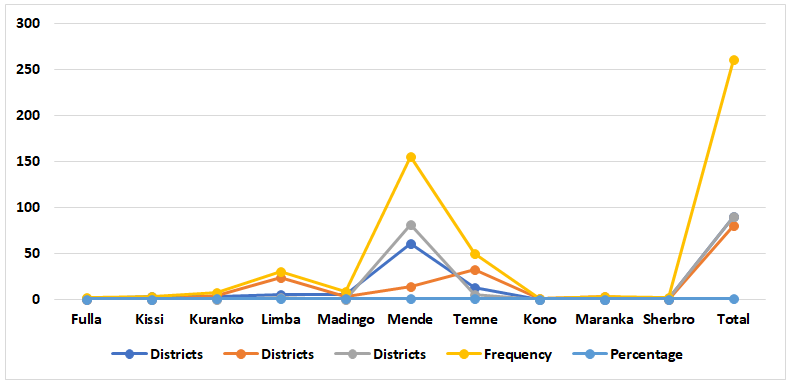
The Mende tribes in the Moyamba (81) and Kenema (60) districts care for their dogs 55.62%), followed by the Temne 18.85% (32) and Limba 11.54% (23) tribes in the Bombali district, respectively. In contrast, the least loving tribe is the Kono 0.38% (1). The Kissi and Kuranko tribes exhibit the same caring attributes as those of the Fulla and Sherbro
tribes (0.77%). The Kuranko2,69% and Mandingo 3.08% show a similar trend.
Although all tribes care for dogs in one way or another, some tribes provide more care than others. The Mende people in the Moyamba district are subsistent farmers who own dogs to scare away rodents from their crop fields. Moreover, villagers in this district often hunt in groups using dogs during the dry and rainy seasons. Hunting is a game for the Mende tribe, which they engage in to provide for their families during the dry season when work is less and during the rain when rice is at its booting or flowering stage. In This also confirms that rabies can spread to the human population based on ethnicity. This means that engaging in hunting exposes the dogs to rabies and thus spreads it to other dogs and humans.
the case of Temne and Limba, they hunt in groups or on an individual basis using a group of dogs. The massive grassland vegetation in the region provides a conductive ecology for this activity. The Mende in Moyamba and Kenema use dogs, and the Temne and Limba in Bombali district use dogs for hunting, which exposes dogs to rabies. They have more rabies cases in these districts than others in the country.
| Districts | Frequency | Percentage | |||
|---|---|---|---|---|---|
| Kenema | Bombali | Moyamba | |||
| Friends | 44 | 31 | 18 | 93 | 35.77% |
| Gift | 16 | 1 | 14 | 31 | 11.92% |
| Buying | 16 | 48 | 35 | 99 | 38.08% |
| Exchange | 2 | 2 | 16 | 20 | 7.69% |
| Others | 4 | 8 | 5 | 17 | 6.54% |
| Total | 82 | 90 | 88 | 260 | 100.00% |
Table 3: How people own dog.
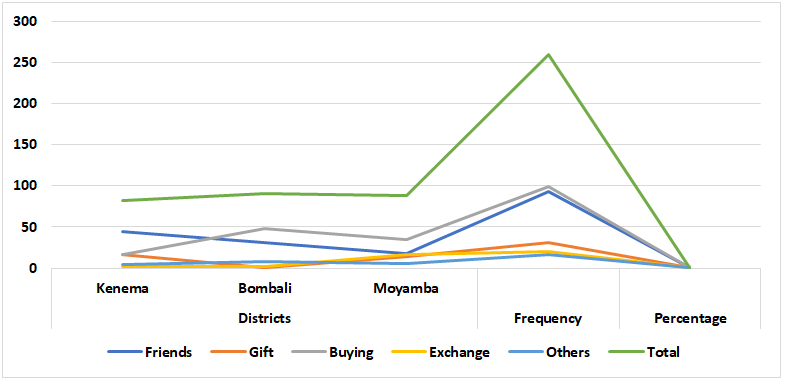
Dog owners in the three project districts acquire dogs by buying 38.08%, followed by those receiving them through friends (35.77%). More people purchased their dogs, with fewer people offering them as gifts (11.92%) in the Bombali district, while those through friends (35.77%) were in the Kenema district. Dogs acquired through exchange represented (7.69%) of other desired items, with the highest occurrence in the Moyamba district (16) across the regions. Other means by which people acquired dogs were the lowest at an average rate of 6.48% across the districts (Table 3). Due
to poverty, dog owners in the Moyamba district cannot afford the cost of dogs and, as a result, exchange them for rice, work for the dog owner, and other items that may interest the dog owner.
Other studies by Tesfom, et al. [25] indicated that acquiring a dog involves considering the decision to obtain a dog from a breeder and the seller’s selection. Although, this is not the case in this study. They also reported that most dog owners purchased their dogs from a pet breeder, while the next most common source was an animal shelter. Furthermore, their studies indicated that single people, couples, and parents preferred adoption from shelters, rescues, or people aiming to rehome their dog over sourcing from a pet store or a breeder.
The sources from which people obtain dogs can lead to the spread of rabies. Dogs obtained from garbage dumpsites and streets have a high chance of having rabies, which can spread to other dogs or people in their communities.
| Reasons | Districts | Frequency | Percentage | ||
|---|---|---|---|---|---|
| Kenema | Bombali | Moyamba | |||
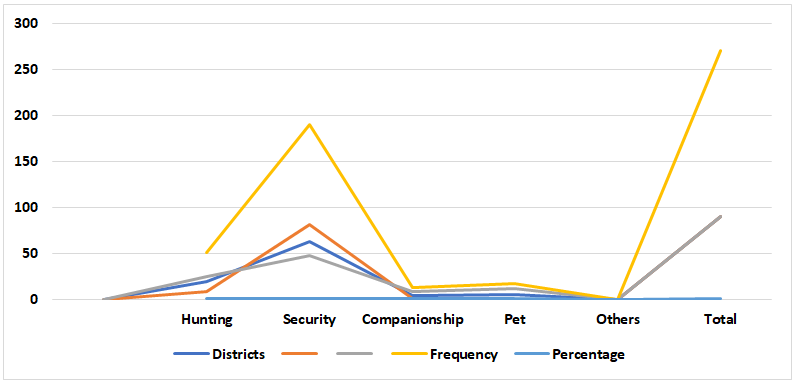
| Hunting | 19 | 8 | 24 | 51 | 18.89% |
| Security | 62 | 81 | 47 | 190 | 70.37% |
| Companionship | 4 | 1 | 8 | 13 | 4.81% |
| Pet | 5 | 0 | 11 | 17 | 6.30% |
| Others | 0 | 0 | 0 | 0 | 0.00% |
| Total | 90 | 90 | 90 | 270 | 100.00% |
Table 4: Reasons for Owning a Dog.
Security ranks first among the reasons people own dogs, with an average percentage of 70.37% across the districts, with Bombali being the highest (81) compared to Kenema (62) and Moyamba districts (47). Hunting ranks second with an average rate of 18.81%, with Moyamba having the highest number of respondents (24) that use their dogs for hunting. The average rate of people who owned dogs for companionship was the lowest at 4.81% (Table 4).
About 98% of people in African countries keep dogs for socio-economic reasons, including guarding livestock against predators, protecting households from intruders, protecting crops from wildlife, and hunting. They used them as pets, as income generation means, and as a protein source [26, 27, 28, 29, 30]. Keeping dogs for security is the crucial reason people own dogs in Sierra Leone. This is evident from respondents’ narratives stating that the 11-year-old civil conflict and the lack of adequate structures to safeguard properties within the localities have increased the security awareness among the sampling communities so that people have become conscious of their surroundings. Districts with a high percentage of security indicate a high crime rate, as evidenced in Bombali and Kenema districts. Moyamba district shows a lower crime rate, indicating a more stable and peaceful district.
provide food for workers on their farms when they hire labor, or scare animals away from their crops. The use of dogs in the study communities for hunting usually comprises low- income community members who may need more money to spend on vaccination or any form of health care and other management modes for their dogs. Older adults (above 71 years) who can no longer engage in active farm work use dogs as companions, particularly during the farming season when abled-boded men and women go to the farm. Using dogs for hunting exposed them to rabies, thereby spreading the disease among other dogs and the public.
Respondents in the Bombali and Moyamba districts are subsistent farmers who use dogs for hunting to get bush meat to meet the daily requirements in their households,
| District | Town | Religion | Occupation | |||||
|---|---|---|---|---|---|---|---|---|
| Christian | Muslim | Trader/Business | Teacher/Student | Housewife | Farmer | Others | ||
| Kenema | Kenema | 13 | 17 | 5 | 5 | 1 | 6 | 10 |
| Tongo | 13 | 17 | 9 | 9 | 0 | 4 | 11 | |
| Bomie | 7 | 23 | 2 | 2 | 1 | 12 | 5 | |
| 33 | 57 | 16 | 16 | 2 | 22 | 26 | ||
| Bombali | Makeni | 20 | 10 | 5 | 11 | 5 | 1 | 8 |
| Gbanti | 11 | 19 | 6 | 6 | 2 | 13 | 3 | |
| Binkolo | 22 | 8 | 7 | 11 | 2 | 9 | 1 | |
| 53 | 37 | 18 | 28 | 9 | 23 | 12 | ||
| Moyamba | Taiama | 21 | 9 | 14 | 7 | 4 | 2 | 3 |
| Mokonde | 16 | 14 | 17 | 5 | 4 | 4 | 0 | |
| Moyamba | 23 | 7 | 6 | 6 | 4 | 5 | 9 | |
| 60 | 30 | 37 | 18 | 12 | 11 | 12 |
Table 5: Religion and Occupation of Dog Owners.
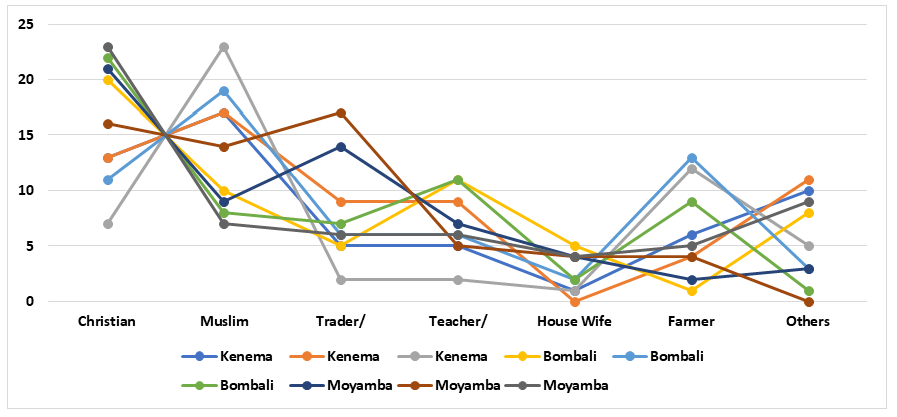
People-owned dogs in Serra Leone are based on their religion. Muslims believe dogs are unclean or haram, and a Muslim is forbidden to keep a dog. In this study, Bombali (53) and Moyamba (60) had more Christians owning dogs; in Kenema, more Muslims (57) owned dogs than Christians (33). The increase in Christians owning more dogs than Muslims in Bombali and Moyamba stems from the fact that more Christians owned dogs than Muslims, although both districts have more Muslims than Christians. Secondly, hunting is a significant source of income, and catch from hunting contributes to the household protein intake. As a result, people in Bombali and Moyamba take diligent care of their dogs, although hunting exposes them to rabies.
On the other hand, people in the Kenema district owned dogs for security, although some were engaged in hunting activities. As a result, dog owners in Kenema are careless about the welfare of their dogs, and the dogs scavenge for their food, thereby exposing them to rabies. Hence, Kenema has the highest reported rabies cases in Sierra Leone.
Although all three districts are engaged in Mining activities, they also engage in subsistence farming. However, people interviewed during this research were farmers in Kenema (22), Teachers and students in Bombali (28), and traders in Moyamba (37)
Conclusion
People own dogs based on their age and tribe. Abled- bodied men engaged in Subsistence farming and family household heads in districts where the crime rate is high obtain dogs to scare rodents from their farms and criminals from their properties and lives. Most Sierra Leoneans buy dogs from dog owners around their vicinity or villages when they visit friends or relatives, while others get dogs through gifts from friends and exchanges. The method of obtaining dogs is not standard, and as such, we do not get advice from trained canine specialists about the types of dogs, care required, attention, and treatment needed. Dogs find food for themselves by scavenging, exposing the dog to rabies. People owned dogs for security and hunting based on religious beliefs; Christians owned more dogs than Muslims, with little attention to care, feeding, and treatment. The method of owning dogs in Sierra Leone does not follow standard practices, which expose dogs to rabies, thereby justifying the increasing number of rabies cases around the country. Hence, the age of ownership, sources, purposes, religion, ethnicity, and dog care determine the country’s rabies status.
References
-
Morey DF (2006) Burying key evidence: The social bond between dog and people. Journal of Archaeological Science 33(2): 158-175.
-
Freedman AH, Gronau I, Schweizer RM, Ortega-Del Vecchyo D, Han E, et al. (2014) Genome sequencing highlights the dynamic early history of dogs. PLOS Genet. 10: 1e12.
-
Ovodov ND, Crock ford SJ, Kuzmin YV, Hingham TFG, Hodgins GWL, et al. (2011) A 33,000-Year-Old Incipient Dog from the Altai Mountains of Siberia: Evidence of the Earliest Domestication Disrupted by the Last Glacial Maximum. PLoS ONE 6: e22821.
-
Thalmann O (2013) Complete mitochondrial genomes of ancient canids suggest a European origin of domestic dogs. Science 342(6160): 871-874.
-
Axelsson E, Ratna Kumar A, Arendt MJ, Maqbool K, Webster MT, et al. (2013) The genomic signature of dog domestication reveals adaptation to a starch-rich diet. Nature 495: 360-364.
-
Monique AR, Wynne CDL (2008) A Review of Domestic Dogs’ (Canis Familiaris) Human-Like Behaviors: Or Why Behavior Analysts Should Stop Worrying and Love Their Dogs. journal of the experimental analysis of behavior 89(2): 247-261.
-
Thalmann O, Shapiro B, Cui P, Schuenemann VJ, Sawyer SK, et al. (2013) Complete mitochondrial genomes of ancient canids suggest a European origin of domestic dogs. Science 342(6160): 871e874.
-
Suluku (2012) Post-war Demographic and Ecological Survey of Dog Population and Their Human Relationship in Sierra Leone (A case study of urban freetown). Science Journal of Agricultural Research & Management 2012: 7.
-
(2018) American Pet Products Manufacturers Association. Industry statistics and trend trends.
-
FAWC (2011) Farm Animal Welfare Committee. UK Government.
-
Asebe G, Gelayenew B, Kumar A (2016) The General Status of Animal Welfare in Developing Countries: The Case of Ethiopia. J Veterinary Sci Techno 7: 332.
-
(1956) Ministry of Agriculture and Natural Resources Yearly Report.
-
Reece JF (2005) Dogs and dog control in developing countries. The State of the Animals III, In: Salem DJ, Rowan AN (Eds.), Humane Society Press, Washington DC, USA, pp: 55-64.
-
Kongkaew W, Coleman P, Pfeiffer DU, Antarasena C, Thiptara A (2004) Vaccination coverage and epidemiological parameters of the owned-dog population in Thungsong District, Thailand. Prev Vet Med 65(1): 105-115.
-
Butler J (2000) Demography and dog-human relationships of the dog population in Zimbabwean communal lands. Veterinary Record 147(16): 442-446.
-
Reynolds C, Mavrakis V, Davison S, Hoj SB, Vlahovics E, et al. (2014) Estimating informal household food waste in developed countries: The case of Australia. Waste Manag Res 32(12): 1254-1258.
-
Beck A (2000) The human-dog relationship: A tale of two species. In: Dogs, Zoonoses, and Public Health, Macpherson C, Meslin F, et al. (Eds.), CABI Publishing, New York, USA, pp: 1-16.
-
Jackman J, Rowan A (2007) Free-roaming dogs in developing countries: The benefits of capture, neuter, and return programs. In: Salem DJ, Rowan AN (Eds.), the State of the Animals 2007 Humane Society Press, Washington DC, USA, pp: 55-78.
-
(2016) Organization of International Animal Health (OIE).
-
Barnett SA (1970) Book Review: Animal Behaviour. Quarterly Journal of Experimental Psychology.
-
Statistics Serra Leone (2015) Population and Housing Census; Summary of Final Result.
-
Jones G (1979) Regional Geography of Sierra Leone.
-
(2016) Sierra Leone Livestock Census.
-
Karidjo BY, Wang Z, Boubacar Y, Wei C (2018) Factors Influencing Farmers’ Adoption of Soil and Water Control Technology (SWCT) in Keita Valley, a Semi-Arid Area of Niger. Sustainability 10(2): 288.
-
Tesfom G, Birch N (2009) Dog adoption decision: Relationship between Definition of Self and Dog Breeds Choice as Mediated by Dog Breed Categorization. Department of Management, Eastern Washington University.
-
Ratsitorahina M, Rasambainarivo JH, Raharimanana S, Rakotonandrasana H, Andriamiarisoa M, et al. (2009) Dog ecology and demography in Antananarivo, 2007. BMC Vet Res 5(1): 21.
-
Knobel D, Laurenson MK, Kazwala RR, Boden L, Cleaveland S (2008) A cross-sectional study of factors associated with dog ownership in Tanzania. BMC Vet Res 4: 5.
-
Yimer E, Mesfin A, Beyene M, Bekele A, Taye G, et al. (2012) Study on knowledge, attitude, and dog ownership patterns related to rabies prevention and control in Addis Ababa, Ethiopia. Eth Vet J 16(2): 27-39.
-
Aiyedun JO, Olugasa OB (2012) Identification and analysis of dog use, management practices, and implications for rabies control in Ilorin, Nigeria. Sokoto J Vet Sci 10(2): 1-6.
-
(1956) Ministry of Agriculture and Natural Resources Yearly Report.
- Mitochondrial Bio-Logistics: Steering Co-Enzyme Q10 and Lycopene Synergies within the Science 4.0 Bio-OS Framework
- Hymenoptera Specimens from the Caño Negro Wetland, of the National Museum Collection, Costa Rica
- Science 4.0: Comprehensive Architecture of the Biological Operating System (Bio-OS) A Framework for Systemic Resilience and Industrialized Bio-Governance
- Rabbit on, or Hare Back? Understanding Climate Change
- Clinical Validation of Science 4.0: Flow Steering and Epigenetic Drift Inversion on a 76-Year-Old Hybrid System
- Seeds Planted by another Mind