
Prospects for Livestock Nutrition in the View of COVID-19
Coronavirus Disease 2019 (COVID-19), caused by Severe Acute Respiratory Syndrome Coronavirus-2 (SARS-CoV-2), is a global pandemic. Remarkable negative impacts of the pandemic have already been observed in ecosystems, human civilization, food security and safety, and global environments. In addition, various sectors involved in the food production chain, particularly the agricultural and livestock sectors, also severely affect food production, food security, food safety, as well as cause economic loss. A sharp reduction in the production of meat, milk, eggs, etc., as a consequence of the global pandemic, has already been well documented. Movement restrictions were imposed locally and internationally as part of the COVID-19 control strategy. As a result, businesses related to the supply of raw materials to livestock, farmers, farm output, veterinary services, and farm workers have dramatically decreased. So has animal welfare. A few months have passed since the Centers for Disease Control and Prevention (CDC) officially announced the COVID-19 pandemic over and the food chain has not yet recovered. This review highlights the prospects of livestock nutrition in view of the COVID-19 crisis for global pandemic prevention.
Introduction
The world has been suffering from the devastating impact of the Coronavirus Disease 2019 (COVID-19) outbreak. The World Health Organization (WHO) has identified the disease as a pandemic owing to its global and ominous effects on health, the economy, and social life [1]. However, several months ago, the CDC announced that COVID-19 was no longer classified as a pandemic, and the last update on COVID-19 is provided in a Supplementary File [2]. This newsletter delivered updated information on the confirmed COVID-19 cases, deaths, and various variants of the virus recorded until now [https://conta.cc/3tQJDxH]. Severe Acute Respiratory Disease Corona virus-2 (SARS- CoV-2), the etiology of COVID-19, has circulated globally [3, 4]. COVID-19 has become more subversive owing to its zoonotic nature [1, 5, 6]. Within a few months of the outbreak, COVID-19 disrupted the traditional ways of life and broke down communities. In addition, it has influenced all key sectors supporting global food and feed security and safety, including people’s livelihoods and livestock nutrition. The COVID-19 pandemic had a massive effect on agriculture sectors globally [7, 8, 9] and Even after it formally ended, the adverse effects continued, but with less impact [2]. It also directly affected livestock production chains, particularly the egg, meat, and milk supply chains, trade, consumption, and so on. Livestock plays a substantial global role in many countries’ gross domestic product (GDP) [10]. The COVID-19 pandemic has negatively influenced food chains at every step (e.g., processing, logistics, production, and consumer behavior [11]. In this review, we highlight the prospects of livestock nutrition, in view of the COVID-19 crisis, for further global pandemic prevention.
Prospects of Animal Nutrition Under COVID-19 Conditions
Nutrition has played an essential role in maintaining and enhancing the health of living organisms for decades. Dietary modifications are a prospective tool to improve immune function but are costly [12]. Nutrition, in terms of quality and quantity, is an essential way to sustain the functioning of the immune system.
The importance of nutrition and its significant immune role emerged after the outbreak of COVID-19. Receiving proper nutrition before immunization is reached is essential, as immunity is the main line of defense against COVID-19 until specific vaccines and/or drugs are found. Its importance continued after the presence of vaccines, owing to the development of more variant strains of the virus. Therefore, food strategies must be considered when designing strategic plans for programs of control, protection from diseases, and healthcare for herds [13, 14, 15, 16, 17].
Passive and active immunity is affected by various factors, including nutrition, feed quality, and quantity (including not only fatty acids, proteins/amino acids, minerals, and vitamins, but also probiotics, prebiotics, synbiotics, phytogenics, plant extracts, and bioactive groups). These aspects play a vital role in augmenting the immunity and health of organisms (Figure 1) [18, 19].
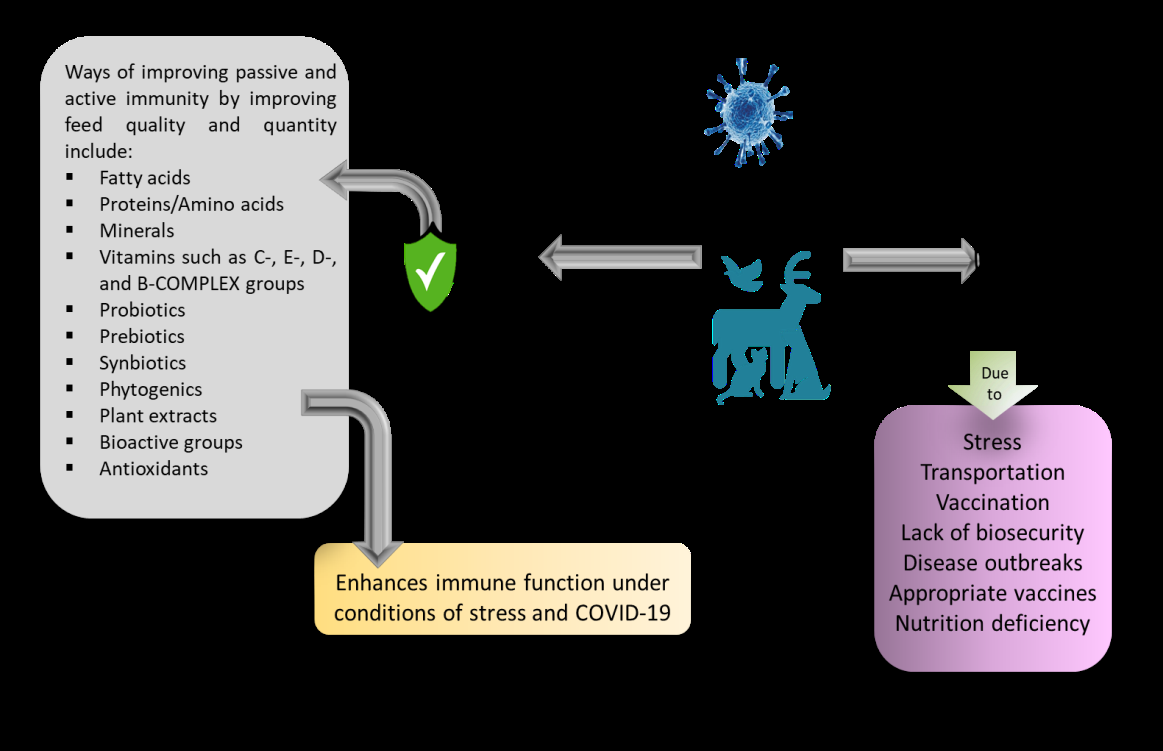
Immunity generally decreases under several conditions such as stress, transportation, vaccination, lack of biosecurity, disease outbreaks, appropriate vaccines, and nutrition deficiency. Therefore, strengthening protection, prevention, control programs, and health promotion should be considered a proper strategy for sustaining animal production and achieving reasonable returns [9, 12]. Several animal species have been cited to be affected by SARS-CoV-2, threatening humans and raising the risk of zoonotic disease transmission (Figure 1) [5, 9, 12, 13].
Based on current knowledge of the nutrition of different species after COVID-19, packed bioactive plant compounds, antioxidants, microelements (e.g., zinc and selenium), and vitamins such as C-, E-, D-, and B-complex groups are essential for enhancing immune function under conditions of stress and COVID-19. These additives have been used in their raw form to improve health and welfare for decades in folk medicine and may be applied to livestock nutrition under preventative treatments and/or protection to eliminate new strains of COVID-19 in animal species [18, 19, 20, 21, 22, 23, 24, 25, 26].
Nutrient deficiencies increase the risk of emerging diseases; therefore, fortifying the feed with additional amounts of vitamins C, D, E, and B-complex groups, and minerals such as zinc and selenium are beneficial for boosting immunity [27, 28, 29]. Other substances, such as phytogenic active substances [30], proteins, essential amino acids, energy, and essential fatty acids (in particular, omega-3 fatty acids) [12], can help boost immunity and improve tolerance to COVID-19 pre-infection, during infection, and post-infection. However, increasing the aforementioned supplements can increase the dietary cost; therefore, the cost/benefit ratio should be considered. The benefits may include increasing productivity, reducing the risk of disease and medication, and reducing morbidity and mortality [12]. They may also delay and/or protect humans and animals from developing a new variety of viruses and zoonotic diseases [1, 2, 12, 13]. The risks of nutritional deficiency, malnutrition, and gastrointestinal diseases lead to poor digestion and absorption, cardiovascular diseases, diabetes, obesity, chronic lung disease, and many other factors that increase disease susceptibility [18, 19, 20, 21, 22, 23, 24, 25, 26]. Therefore, enhancing immunity effectively improves health under conditions of stress and infection but has limited influence and does not replace treatment and immunization [27, 28, 29, 30].
Improve Animal Health Practices
New light has been cast on disease prevention and control, and interest in these areas has reawakened after the SARS-CoV-2 outbreaks due to the global health threat. This emphasizes the need to impose the One Health measure that reflects the unity of human, animal, and ecological health [2]. The One Health approach stresses controlling and limiting the spread of zoonoses and reducing the spread of infection from potential epidemic reservoirs to avoid direct and indirect dissemination of zoonotic pathogens [9, 12, 13]. In essence, the idea of One Health is the preservation of human health, the ecological balance, and animal health and production. It reduces the risk of developing new strains of pathogens because of mutations and changes of unknown origin [2, 13, 31].
All of this emphasizes the role of monitoring the infrastructure and occurrence of common infectious diseases in both humans and animals; coordination between various medical, veterinary, and other disciplines; the unity and effectiveness of institutional work; and stressing the inseperability of animal and human health in an effort to prevent and protect all from common diseases [32, 33]. In general, implementing the “One Health” approach varies from country to country, and is less implemented in developing countries. This must be addressed and coordinated globally for a global health strategy to be effective [34, 35, 36].
COVID-19 in Animals
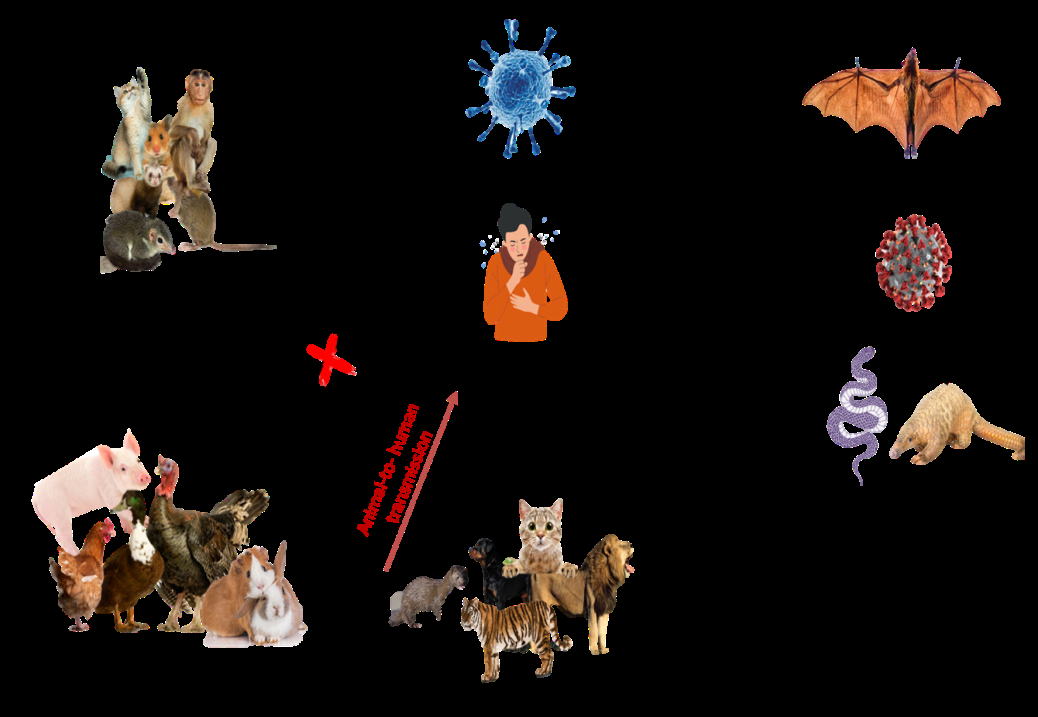
Some coronaviruses cause flu-like diseases in humans. In contrast, others cause diseases in certain animals such as camels, bats, and cattle. In addition, some coronaviruses, such as feline and canine coronaviruses, only affect animals [12, 13, 37]. The exact cause of the current COVID-19 outbreak is not well documented, but evidence shows that it originated from bats [4]. There is no evidence that animals are responsible for circulating SARS-CoV-2 (the virus that causes COVID-19-in humans), but we are uncertain about the future [2]. Based on published literature, the threat of animals transferring COVID-19 to people is minimal [9, 12, 13]. However, COVID-19 can spread from people to animals in some situations, particularly during close contact. Thus, patients with suspected or confirmed COVID-19 should avoid interacting with animals including livestock, wildlife, and pets. Further studies are required to elucidate how various animal species could be influenced by COVID-19 [35, 38].
Current knowledge indicates that SARS-CoV-2 can be transferred from humans to animals, particularly when in close contact. Animals such as dogs, cats, and big cats (tigers, lions, snow leopards, pumas, cougars, and minks) can be infected with SARS-CoV-2 [39]. Nevertheless, it is too early to declare all the animal species that can be infected with SARS- CoV-2. There is evidence that minks spread SARS-CoV-2 to people on mink farms, mainly in the Netherlands, Denmark, Poland, and the U.S.. One ferret in Slovenia was found to be infected with SARS-CoV-2 [40, 41]. It is suspected that these animals became ill after being exposed to animal keepers with COVID-19. In many circumstances, this is induced irrespective of wearing Personal Protective Equipment (PPE) and following COVID-19 protection guidelines by animal keepers [13, 38]. These results highlight the need to regularly test the genetic makeup of SARS-CoV-2 in vulnerable animal communities, such as minks, and the need for people to monitor viral mutations and jumps across species [42]. COVID-19 Infection in Animals is illustrated in Figure 2.
Conclusion
Considering the effects of the COVID-19 pandemic and the experiences we have gained, it is time to rethink existing animal diseases and pandemic controls, particularly those with zoonotic importance. We recommend focusing more on coordinated, unified activities that push toward a health model of disease surveillance and monitoring to detect newly emerging diseases and pandemics. Animal nutrition is essential to avoid nutritional deficiency, improve immunity, increase production, and enrich product quality and animal health. Nutritional concepts should focus on the nutrient balance, quantity, and quality. However, increased nutrient fortification above the recommended levels may increase dietary costs; therefore, cost/benefit analyses should be considered. In addition, smart livestock framing systems need to be adopted. A strong local, national, and international network is crucial for effective preparedness to prevent future outbreaks.
References
-
Rahman MdT, Sobur MdA, Islam MdS, Ievy S, Hossain MdJ, et al. (2020) Zoonotic Diseases: Etiology, impact, and control. Microorganisms 8(9): 1405.
-
Thompson C, Hetrick B, Franz B, Mazur M, Rowe Y, et al. (2023) COVID-19: A Review. Virongy’s Monthly Newsletter.
-
Helmy YA, Fawzy M, Elaswad A, Sobieh A, Kenney SP, et al. (2020) The COVID-19 pandemic: A comprehensive review of taxonomy, genetics, epidemiology, diagnosis, treatment, and control. Jouranl of Clinical Medecine 9(4): 1225.
-
Islam M, Sobur M, Akter M, Nazir K, Toniolo A, et al. (2019) Coronavirus disease 2019 (COVID-19) pandemic, lessons to be learned!. Journal of Advance Veterninary Animal Research 7(2): 260-280.
-
Salajegheh TS, Magalhães DP, Rahimi P, Shahabinejad F, Dhakal S, et al. (2020) Transmission of severe acute respiratory syndrome coronavirus 2 (SARS-CoV-2) to animals: an updated review. Journal of Translational Medcine 18(1): 358.
-
Nagy A, Basiouni S, Parvin R, Hafez HM, Shehata AA (2021) Evolutionary insights into the furin cleavage sites of SARS-CoV-2 variants from humans and animals. Archive of Virology 166(9): 2541-2549.
-
Barichello R (2020) The COVID‐19 pandemic: Anticipating its effects on Canada’s agricultural trade. Canadian Journal of Agricultural Economic s/Revue canadienne d’agroeconomie 68(2): 219-224.
-
Brewin DG (2020) The impact of COVID‐19 on the grains and oilseeds sector. Canadian Journal of Agricultural Economics/Revue canadienne d’agroeconomie 68(2): 185-188.
-
Rahman M, Chowdhury EH, Parvin R (2021) Small- scale poultry production in Bangladesh: challenges and impact of COVID-19 on sustainability. German Journal of Veterninary Research pp: 19-27.
-
Maliszewska M, Mattoo A, Van der Mensbrugghe D (2020) The potential impact of COVID-19 on GDP and Trade: A preliminary assessment.
-
Bekuma A (2020) Impact of COVID-19 on livestock production and best practices to devastate. Global Journal of Animal Scientific Research 8: 32-40.
-
Hafez HM, Attia YA (2020) Challenges to the Poultry Industry: Current Perspectives and Strategic Future after the COVID-19 Outbreak. Veterninary Sciences 7: 516.
-
Sharun K, Dhama K, Pawde AM, Gortázar C, Tiwari R, et al. (2021) SARS-CoV-2 in animals: potential for unknown reservoir hosts and public health implications. Veterinary Quarterly 41(1): 181-201.
-
Yellon SM, Teasley LA, Fagoaga OR, Nguyen HC, Truong HN, et al. (1999) Role of photoperiod and the pineal gland in T cell-dependent humoral immune reactivity in the Siberian hamster. J Pineal Res 27(4): 243-248.
-
Guchhait P, Haldar C (2000) Time and reproductive phase-dependent effects of exogenous melatonin on the pineal gland and ovary of a nocturnal bird, the Indian spotted owlet, Athene brama. Folia Biol (Krakow) 48(3): 91-96.
-
Brugliera L, Spina A, Castellazzi P, Cimino P, Arcuri P, et al. (2020) Nutritional management of COVID-19 patients in a rehabilitation unit. Eur J Clin Nutr 74: 860-863.
-
Brugliera L, Spina A, Giordani A, Iannaccone S (2021) Response to nutritional strategies for the rehabilitation of COVID-19 patients. Eur J Clin Nutr 75: 731-732.
-
Ahmed MH, Hassan A, Molnár J (2021) The role of micronutrients to support immunity for COVID-19 prevention. Rev Bras Farmacogn.
-
Alesci A, Fumia A, Lo Cascio P, Miller A, Cicero N (2021) Immunostimulant and antidepressant effect of natural compounds in the management of OVID-19 Symptoms. Journal of the American College of Nutrition 41(8): 1-15.
-
Azzolino D, Passarelli PC, D’Addona A, Cesari M (2021) Nutritional strategies for the rehabilitation of COVID-19 patients. Eur J Clin Nutr 75(4): 728-730.
-
Klasing KC (2007) Nutrition and the immune system. Br Poult Sci 48(5): 525-537.
-
Zabetakis I, Lordan R, Norton C, Tsoupras A (2020) COVID-19: The inflammation link and the role of nutrition in potential mitigation. Nutrients 12(5): 1466.
-
Barazzoni R, Bischoff SC, Breda J, Wickramasinghe K, Krznaric Z, et al. (2020) ESPEN expert statements and practical guidance for nutritional management of individuals with SARS-CoV-2 infection. Clin Nutr 39: 1631-1638.
-
Caccialanza R, Laviano A, Lobascio F, Montagna E, Bruno R, et al. (2019) Early nutritional supplementation in noncritically ill patients hospitalized for the 2019 novel coronavirus disease (COVID-19): Rationale and feasibility of a shared pragmatic protocol. Nutrition 74: 110835.
-
Cheng RZ (2020) Can early and high intravenous dose of vitamin C prevent and treat coronavirus disease 2019 (COVID-19). Medicine in Drug Discovery 5: 100028.
-
Grant W, Lahore H, McDonnell S, Baggerly C, French C, et al. (2020) Evidence that vitamin D supplementation could reduce risk of influenza and COVID-19 infections and deaths. Nutrients 12(4): 988.
-
Farshi P, Kaya EC, Hashempour-Baltork F, Khosravi- Darani K (2021) The effect of plant metabolites on coronaviruses: A comprehensive review focusing on their IC50 values and molecular docking scores. Mini Rev Med Chem 22(3): 457-483.
-
Nair MS, Huang Y, Fidock DA, Polyak SJ, Wagoner J, et al. (2021) _Artemisia annua_ L extracts inhibit the in vitro replication of SARS-CoV-2 and two of its variants. Microbiology.
-
Alagawany M, Attia YA, Farag MR, Elnesr SS, Nagadi SA, et al. (2020) The strategy of boosting the immune system of food-producing under CoViD-19 pandemic. Front Vet Sci 7: 570748.
-
Attia YA, Alagawany M, Farag MR, Khafaga AF, Abdel- Moneim AME, et al. (2020) Phytogenic products and phytochemicals as a candidate strategy to improve tolerance to COVID-19. Front Vet Sci 7: 573159.
-
Hemida MG, Ba Abduallah MM (2020) The SARS-CoV-2 outbreak from a one health perspective. One Health 10: 100127.
-
Kelly TR, Karesh WB, Johnson CK, Gilardi KVK, Anthony SJ, et al. (2017) One-Health proof of concept: Bringing a transdisciplinary approach to surveillance for zoonotic viruses at the human-wild animal interface. Prev Vet Med 137: 112-118.
-
El Zowalaty ME, Järhult JD (2020) From SARS to COVID-19: A previously unknown SARS- related coronavirus (SARS- CoV-2) of pandemic potential infecting humans - Call for a One Health approach. One Health 9: 100124.
-
Ruckert A, Zinszer K, Zarowsky C, Labonté R, Carabin H (2020) What role for One Health in the COVID-19 pandemic. Can J Public Health 111(5): 641-644.
-
Usca M and Tisenkopfs T (2023) The resilience of short food supply chains during the COVID-19 pandemic: a case study of a direct purchasing network. Front Sustain Food Syst 7: 1146446.
-
Tan SP, Ng LC, Lyndon N, Aman Z, Kannan P, et al. (2023) A review on post-COVID-19 impacts and opportunities of agri-food sup-ply chain in Malaysia. Plant Biology 11: e15228.
-
Decaro N, Lorusso A (2020) Novel human coronavirus (SARS-CoV-2): A lesson from animal coronaviruses. Vet Microbiol 244: 108693.
-
FAO (2020) COVID-19: Channels of transmission to food and agriculture.
-
Wong G, Bi YH, Wang QH, Chen XW, Zhang ZG, et al. (2019) Zoonotic origins of human coronavirus 2019 (HCoV-19 / SARS-CoV-2): why is this work important. Zool Res 41(3): 213-219.
-
Oreshkova N, Molenaar RJ, Vreman S, Harders F, Oude Munnink BB, et al. (2020) SARS-CoV-2 infection in farmed minks, the Netherlands, April and May 2020. Euro Surveill 25(23): 2001005.
-
Koopmans M (2020) SARS-CoV-2 and the human-animal interface: outbreaks on mink farms. Lancet Infect Dis 21(1): 18-19.
-
Elaswad A, Fawzy M, Basiouni S, Shehata AA (2020) Mutational spectra of SARS-CoV-2 isolated from animals. PeerJ 8: e10609.
- Mitochondrial Bio-Logistics: Steering Co-Enzyme Q10 and Lycopene Synergies within the Science 4.0 Bio-OS Framework
- Hymenoptera Specimens from the Caño Negro Wetland, of the National Museum Collection, Costa Rica
- Science 4.0: Comprehensive Architecture of the Biological Operating System (Bio-OS) A Framework for Systemic Resilience and Industrialized Bio-Governance
- Rabbit on, or Hare Back? Understanding Climate Change
- Clinical Validation of Science 4.0: Flow Steering and Epigenetic Drift Inversion on a 76-Year-Old Hybrid System
- Seeds Planted by another Mind