
Proximate and Physicochemical Analysis of Castor, Neem, and Waste Cooking Oils, and their Waste Seed-Cakes Post Oil Extraction as Potential Raw Materials for Biodiesel Production
In this study, proximate and physicochemical analysis of castor oil (CO), neem oil (NO), and waste cooking oil (WCO) is being investigated. The castor and neem seed oil were extracted using soxhlet extraction method with n-hexane as solvent with yields of 40.43% and 41.10% respectively. The results of the study indicated low moisture contents of 2.95% and 2.58% for castor and neem seed-cake/shell composite biomasses respectively. The castor seed-cake/shell composite biomass contained volatile matter (54.83%), ash content (7.85%), and fixed carbon (34.37%), while the neem seed-cake/shell composite biomass contained volatile matter (52.45%), ash content (12.74%), and fixed carbon (31.25%) respectively. The order of the proximate parameters in percentage for both castor and neem seed cake/shell composite biomasses is: Volatile Matter > Fixed Carbon > Ash Content > Moisture. Acid value is highest in the NO sample (14.95 mg KOH/g) than in the other two samples (CO (3.96 mg KOH/g) and WCO (3.93 mg KOH/g)). The NO sample had highest saponification value (198.17 mg KOH/g) and a low density (0.938 g/cm3) than the CO (181.48 mg KOH/g, 0.984 g/cm3) and WCO (184.29 mg KOH/g, 0.961 g/cm3) samples. The WCO (122.14 gI2/100g) sample had higher amount of unsaturated fatty acid compounds than NO (82.49 gI2/100g) and CO (80.39 gI2/100g) samples based on the iodine values obtained. The low moisture contents and significant amount of carbon contents in the two composite biomasses indicates that activated or carbonized carbon can be prepared using these composite biomass samples.
Introduction
The predomiant components of fats and Vegetable oils are triglycerides, consisting of longchain fatty acid esters of glycerol. They predominantly contian saturated and unsaturated fatty acids with straight aliphatic chains. A small amount of branched chain, cyclic, even number of other fatty acids and odd number straight chain acid may be present in some vegetable sources. Phospholipids (or phosphatides), sterols, vitamins and their precursors are the minor or non ester components of vegetable oils and fats. This portion is usually less than 2% of the total oil. About 95% fatty acids and 5% glycerol are contained in the glycerides. Vegetable oils differ only in the amount of fatty acid structures which determine their properties but have same amount of glycerol. The liquid oils are the glycerides composed mostly of unsaturated fatty acids at room temperature while the solid fats are those composed mostly of saturated fatty acids at room temperature. A high percentage of unsaturated fatty acids in the glyceride is common to most plant origin fats and oils [1].
Waste cooking oil contains water and free fatty acids; hence, advantageous conversion process is needed to overcome the pre-treatment capital and operating cost so as to provide technical and economical alternative. The Chemical Composition of waste cooking oil include Palmitic acid and stearic acid as the major saturated fatty acids found in waste cooking oil. The Characteristics or quality of Waste Cooking Oil is expressed in terms of the physio-chemical properties such as acid value, iodine value, and saponification value. The saponification value of waste cooking oil (WCO) was reported as 186.3 (mg KOH/g). The acid value of waste cooking oil was found to be 17.41 mg KOH/ gm. It has been reported that transesterification would not occur if FFA content in the oil were above 3 wt% [2].
The food versus fuel dispute makes biodiesel economically unfeasible as compared to petroleum-derived fuels since more than 95 % biodiesel are currently produced from edible oil feedstocks (such as sunflower oil, soya bean oil, rapeseed oil, sesame and palm oils). Non edible seed oils and waste cooking oils are used for commercial production of biodiesel to overcome this situation. The renewable and environmentally friendly nature of Vegetable oils makes them promising feedstock for biodiesel production, in addition to possibility of large scale production [3].
Some examples of edible oils are mustard, palm, sesame, groundnut, sunflower, soya bean, etc., and non- edible oils are castor, jatropha, mahua, neem, and karanja. A promising feature of castor oil biodiesel fuel is its low cold flow properties which can be used in winter temperature conditions. The Castor (Ricinus communis) is a herbal plant which is originated from Africa and India, capable of growing in drought and arid conditions for longer period in tropical and sub-tropical climatic conditions in the world [4]. This results in castor oils with different composition and physical– chemical properties. For instance, castor oil extracted from Nigerian castor seeds yield castor oil up to 48 % per dry weight with a saponification value of 178.00 mg KOH/g while the Malaysian castor reaches up to 43.3 % per dry weight and a saponification value of 182.96 mg KOH/g [5]. Also, the oil has relatively high specific gravity and viscosity, very low solubility in petroleum solvents but soluble in alcohols [5].
Azadirachta indica, commonly known as the neem tree, has been used since ancient times due to its potential applications in domestic, industrial and medicinal uses. The neem plant is mainly cultivated in several parts of the world such as Africa, Asia, Europe, and America. The solvent extraction process is generally preferred for the extraction of the neem seed oil due to its, higher oil yield, low operating cost and lower turbidity compared to other methods. The solvent mostly employed for the extraction of oils is n-hexane due to its stability, higher boiling point, low corrosiveness, non-polarity, and high oil yield [6].
Solvent extraction is the most commonly used technique for extraction of oil from seeds, hydraulic pressing and supercritical fluid extraction are the other two general methods. Solvent extracted oil is cleaner than the oil extracted by the pressing method since the latter contains gums and fibres even after centrifugation. Extraction capacity of oil depends on factors such as the extraction temperature, extraction time, type of oil and solvent, seed cleaning, moisture content, particle size, and heat treatment [4].
The primary aim of this research work is to carry out physicochemical analysis of castor, neem, and waste vegetable oils and also the proximate analysis of the cakes obtained from neem and castor seeds after oil extraction as potential raw materials for biodiesel production.
Materials and Methods
Sample Collection and Pre-Treatment
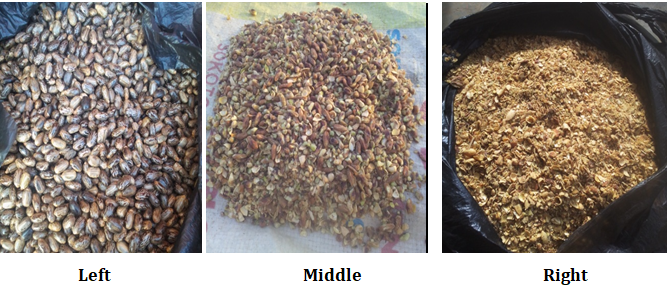
Waste cooking oil, Neem seed (Azadirachta indica) oil, and Castor (Ricinus communis L.) seed oil will be used as the oil feedstocks. The waste cooking oil (WCO) of groundnut oil will be obtained from fish sellers found in Aliero town, Kebbi State, Nigeria. The solid impurities in the feedstock such as particles of bones, sand, gravel, gum, dirt, and insoluble particles will be removed by filtration using a filter paper. The method of feedstock pretreatment process for water removal by Elgharbawy, et al. [7] will be adopted. The feedstock will be heated at 105 °C for 10 min to guarantee the evaporation of all water. It will then be allowed to cool to room temperature. The oil sample will be stored in a container for subsequent use. The seeds of Neem and Castor plants will be collected; impurities will be removed, washed with distilled water and dried. The seeds will then be grounded using mortar and pestle, sieved, and stored in a container (Figure 1).
Oil Extraction
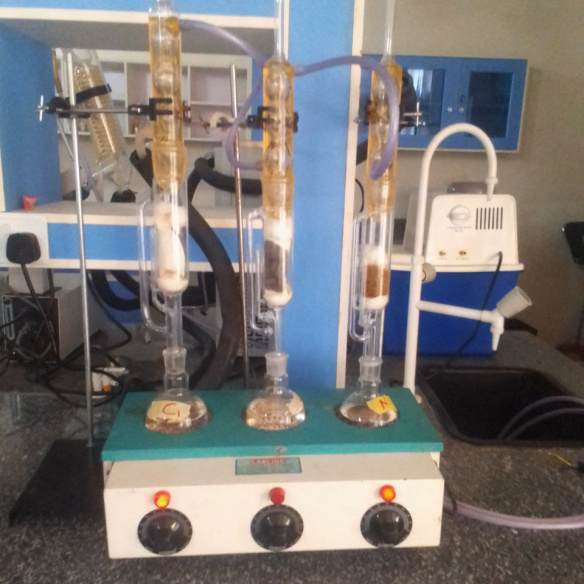
The oil from the powders of Neem (Azadirachta indica) and Castor (Ricinus communis L.) seeds will be extracted using n-hexane as solvent in a soxhlet extractor at a Laboratory. The solvent in the oil will then be evaporated using laboratory vacuum evaporator. The extracted oil will be stored in a container for subsequent characterization. The quantity of the extracted crude oil will be recorded at the end of the extraction process and the percentage extracted oil will be determined using equation (1) (Figure 2).
Mass of crude oil extracted % Oil yield = ×100 Total mass of seed kernel (1)
Physicochemical Analysis of Oil Samples
The physicochemical parameters of the waste cooking oil, neem oil, and castor oil which include density, acid value, iodine value, and saponification value will be determined according to the association of Official Analytical Chemists methods [8]. The density of a liquid is a measure of how heavy it is for the amount measured at a particular temperature. According to Hassan, et al. [9] oil with low density is an indication that it contains low molecular weight fatty acid; likewise it will have high saponification value which makes it suitable for soap production. The acid value of the oil is defined as the number of mg of potassium hydroxide required to completely neutralize 1g of the oil. It can also be defined as the number mg of potassium hydroxide neutralized by the free acid present in the 1g of an oil or fat. The value is informative on the amount of free acid present in oil under sturdy [9]. The iodine value of a fat or oil is the measure of the degree of unsaturation of the fatty acid present in the oil or fat [9]. The saponification value is expressed as the number of milligram of KOH required to completely saponify 1g of fat or oil. It is also defined as the measure of the mean molecular weight of the fatty acid present in the fat or oil [9]. Determination of density: The method of Hassan, et al. [9] was adopted. 10 cm3 of the oil was measured in a measuring cylinder of a known weight. The weight of both oil and the cylinder was also measured, and then the weight of the oil was then obtained by subtracting the weight of the cylinder from the weight of both the oil and measuring cylinder. The density of the oil is then obtained using the formula in equation 2:
( ) 1 o o Density of oil= W -W V (2)
where,W1= weight of measuring cylinder and the oil, Wo=
weight of measuring cylinder and $V_o =$ volume of the oil used.
Determination of pH value: The method of Sherif and Uthman [5] was adopted. About 2g of the castor oil was mixed with 13 ml of hot distilled water in a beaker with a slow stirring. Then, the emulsion was cooled in a cold-water bath up to 25°C. After standardizing the electrode using suitable buffer solutions, the electrode was immersed into the oil and its pH value was recorded.
Determination of Acid Value: The Acid Value measurement was carried out according to ASTM D664 method. The solvent consisting of 50 % ethanol and 50 % toluene (20 cm$^3$) was prepared in a beaker (250 cm$^3$). The sample (2.0 g) was added to the beaker followed by of phenolphthalein indicator (2 cm$^3$). The solution was titrated with KOH (0.1 M) until the color changed to pink. The acid value was calculated using equation 3 as shown below:
$$AV = \frac{56.1 \times M}{W} \times \text{TitreValue}$$
Where AV = Acid value; M = Molarity of KOH; 56.1 = Molecular weight of KOH; W = Weight of the sample.
Determination of Free Fatty Acids (FFA): The Free Fatty Acid (FFA) was calculated using equation 4 as shown below:
$$FFA = 0.5 \times AV$$
Where AV = Acid Value as above in section 2.3.3.
Determination of Saponification Value: The oil (2.00 g) was weighed into a distillation flask and Ethanolic Potassium Hydroxide (20 cm$^3$, 0.5 M) was added. The flask was heated under reflux for 30 minutes, and was allowed to cool to the room temperature. The excess potassium hydroxide was then back titrated with hydrochloric acid (0.5 M) using phenolphthalein indicator. A blank titration was conducted under the same condition without the oil. Saponification value was calculated using equation 5 as shown below:
$$Saponification value = \frac{28.05 \times (T_1 - T_2)}{Weight of sample}$$
Where $T_1 =$ Volume of hydrochloric acid used in blank titration $T_2 =$ Volume of hydrochloric acid used in the test sample titration $W =$ Weight of oil.
Determination of Iodine Value: The iodine value is determined according to the AOAC official method, 2000. 0.2g of oil sample was weighed into a 250ml conical flask and dissolved with 15ml CCl$_4$ and 25ml of wijs reagent was added to the mixture. The flask was then stopped and gently shaken and placed in the dark for 30 minutes. The excess iodine was determined by adding 20cm$^3$ of 10% (w/v) KI solution and 150cm$^3$ water and titrating this with 0.1 M sodium thiosulphate using starch as indicator. The titration was continued until blue colour just disappeared after a vigorous shaking. A blank determination was carried out without addition of oil and the iodine value was determined using equation 6:
$$\text{Iodine value (g/l/100g oil)} = \frac{12.69 \times C \times (V_1 - V_2)}{Weight of sample}$$
Where
$C =$ Concentration of sodium thiosulphate used
$V_1 =$ Volume of sodium thiosulphate used for blank
$V_2 =$ Volume of sodium thiosulphate used for oil sample.
**Proximate Analysis of Raw Biomass Wastes**
The Neem and Castor seed cakes (the residues obtained after oil extraction) will be analyzed for proximate parameters. These two biomasses will be used for subsequent studies. According to ASTM definition, proximate analysis is the determination by prescribed methods of moisture, volatile matter, fixed carbon, and ash contents [10]. The moisture content will be determined by standard oven method [8]. The volatile matter will be determined according to ASTM E870-82, 2013. Volatile matter of solid biomass is the product, exclusive of moisture, given off by a material as a gas or vapor when solid biomass is heated out of contact with air under standardized conditions that may vary according to the nature of the material. Ash and fixed carbon will be determined according to the method by Makavana, et al. [10] Fuels with high ash content impose slag/clinker formation problems. Ash content (AC) is expressed as the percentage of residue remaining after dry oxidation of biomass. The fixed carbon represents the non-volatile combustible component of the fuel.
Determination of moisture content: The 2 g each of the fresh biosolids were weighed in clean dried and pre-weighed crucibles. These samples were thinly spread in the crucibles. They were dried in air-circulated oven at 105°C overnight (for 24 hours). The dried samples were cooled in a desiccator for 30 min. To ascertain constant weight, the process was repeated in one hour interval. The percentage moisture content (% loss in weight) was calculated using equation 7.
$$\text{Moisture \%} = \frac{Wi - Wf}{Wi} \times 100$$
= (loss in weight on drying (g)/initial sample weight (g)) $\times$ 100 where, Wi, Wf are weight of sample before drying and after drying; respectively. Each analysiswas carried out in triplicate and the average is recorded as mean value.
Determination of volatile matter and ash content: The standard test method for ash content (ASTM D2866-94) was used. A crucible was pre-heated in a muffler furnace to about 500°C, cooled in a desiccator and weighed. The 2.0 g of biomass samples were transferred into the crucibles and reweighed. The crucibles containing the samples were then placed in a cold muffler furnace and the temperature was allowed to rise to 500°C until all the carbon has been burnt off. It was removed and allowed to cool in a desiccator to room temperature (30°C) and reweighed again.
( ) ( ) ( ) Volatile matter % = wt of volatile component g /oven dry weight g × 100 (8) where, weight of volatile component is = Wi – Wf (initial weight of sample – final weight after volatilization of sample). The ash content was calculated using equation 9:
$$ \mathrm {A s h} (\%) = \left(\mathrm {W} _ {2} - \mathrm {W} _ {\mathrm {o}}\right) / \left(\mathrm {W} _ {1} - \mathrm {W} _ {\mathrm {o}}\right) \times 1 0 0 \tag {9} $$ where, Wo, W1 and W2 are weight of empty crucible, crucible + fresh sample and weight of crucible + ashed sample respectively with units in gram.
Determination of fixed carbon: The fixed carbon was obtained from the relation:
( ) ( ) ( ) ( ) Fixed carbon % = 100% – moisture % – ash % – volatile matter % (10)
Results and Discussion
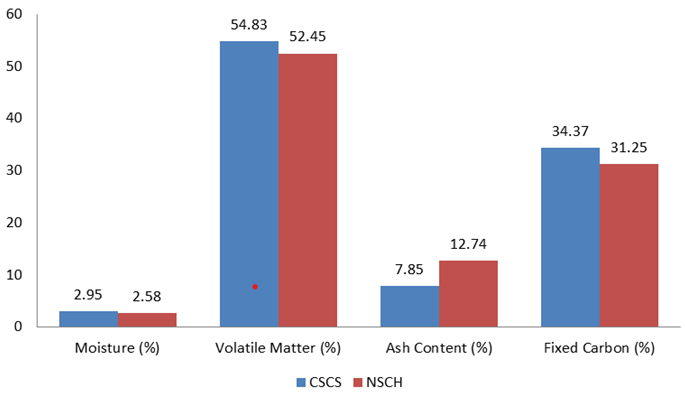
In Table 1 the results for proximate analysis of Castor and Neem Seed Cakes mixed with seed shells are given. The table indicated that the moisture contents of the two seed-cake/shell mixtures or composite biomasses are low which can enhance easy carbonization of the biomass samples. The volatile matter contents of castor and neem seed cakes/shells of 54.83% and 52.45% respectively show that about half of the composite biomasses contained volatile compounds which were released or given off during carbonization process as seen by the fumes released during the process. The ash contents of the composite biomasses are low with 7.85% for castor seed cakes/shells and 12.74% for neem seed cakes/shells higher than that of castor. There are significant fixed carbon contents of 34.37 % for the castor seed cake/shell composite and 31.25 % for the neem seed cake/shell composite. The chart in Figure 3.1 shows the percentage amount of these proximate parameters in the two composite biomass samples for castor and neem seeds. The order of these parameters in percentage for both castor and neem seed cake/shell composite biomasses is: Volatile Matter > Fixed Carbon > Ash Content > Moisture. The significant amount of carbon contents in the two composite biomasses indicates that activated or carbonized carbon can be prepared using these composite biomass samples. Hence, this shows the importance of proximate analysis especially where activated or carbonized carbon is to be produced from a raw biomass sample.
| CSCS | NSCH | |
|---|---|---|
| Moisture (%) | 2.95 ±0.71 | 2.58 ±0.18 |
| Volatile Matter (%) | 54.83 ±0.11 | 52.45 ±0.28 |
| Ash Content (%) | 7.85 ±0.07 | 12.74 ±0.36 |
| Fixed Carbon (%) | 34.37 ±0.00 | 31.25 ±0.00 |
Table 1: Results for proximate analysis of Castor and Neem Seed Cakes mixed with seed shells CSCS: Castor seed cake with shells,
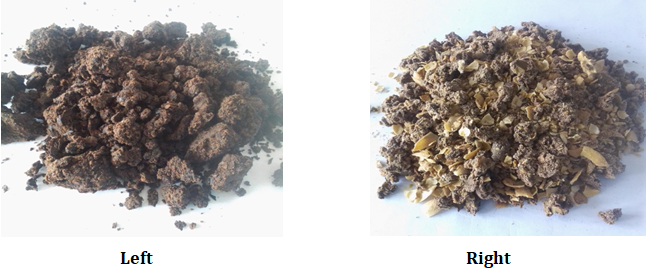
The images in Figure 3 are the two biomass mixtures used in this study. They were obtained after soxhlet extraction of oil samples from the seeds. The waste seed cake biomass of each castor and neem seed was then mixed in approximately equal amount or 50:50 ratio with the shells or hulls covering the seed kernels. The mixture was then boiled for some time with water to remove any remnants of oil in the seed cake. The biomass mixture was then wrapped in a cellulose cloth material and squeezed to remove oil/water from the mixture. It was then dried under sunlight for about 5 days. Each biomass mixture was separately stored in a container and labeled.
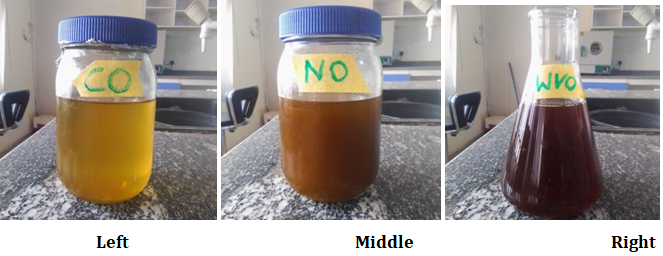
The images in Figures 4 & 5 show the two extracted oil samples (castor seed and neem seed oils) using soxhlet extraction technique with n-hexane as the solvent. The WVO in the image on the right part stands for waste vegetable oil representing the waste cooking oil (WCO) obtained from a fish frying restaurant. All the three oil samples were filtered to remove colloidal particles and other suspended materials as in the WVO, and then finally heated to remove water as explained in the materials and methods section.
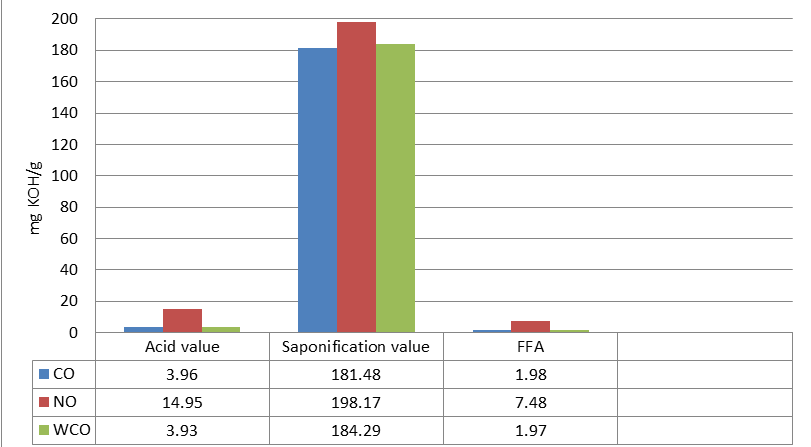
In Table 2, the results for the physicochemical analysis of the oil samples are shown. Acid value is highest in the neem oil sample than in the other two samples (castor oil and waste cooking oil). The order of acid value for the oil samples is: NO > CO > WCO with values of 14.95 > 3.96 > 3.93 mg KOH/g for neem oil, castor oil, and waste cooking oil respectively. The acid value of the oil is defined as the number of mg of potassium hydroxide required to completely neutralize 1g of the oil. It can also be defined as the number mg of potassium hydroxide neutralized by the free acid present in the 1g of an oil or fat. The value is informative on the amount of free acid present in oil under sturdy [9]. The saponification value for the oil samples is in the order of NO > WCO > CO with values 198.17 > 184.29 > 181.48 respectively. The saponification value is expressed as the number of milligram of KOH required to completely saponify 1g of fat or oil. It is also defined as the measure of the mean molecular weight of the fatty acid present in the fat or oil. According to Hassan, et al. [9] oil with low density is an indication that it contains low molecular weight fatty acid; likewise it will have high saponification value which makes it suitable for soap production. The low density of the NO in the table with its high saponification value of 198.17 mg KOH/g is in agreement with this statement from the literature. Hence, in addition to many biodiesel production applications using neem seed oil, soap can also be produced due to high saponification value. This relationship between density and saponification values is seen in both castor seed oil and the waste cooking oil. The iodine values of the oil samples are in the order of: WCO > NO > CO with values 122.14 > 82.49 > 80.39 gI2/100g of sample. The iodine value of a fat or oil is the measure of the degree of unsaturation of the fatty acid present in the oil or fat. Hence, the WCO sample has higher amount of unsaturated compounds, followed by NO sample, and finally, the CO sample. The free fatty acid values or FFA are obtained by dividing the acid value by 2 or by multiplying the acid value by 0.5. All the pH values of the three oil samples are in the acidic ranges which are in the order of: 5.89 > 5.67 > 5.62 for NO > CO > WCO respectively. Ebenaza and Vinoth, 2015 reported a saponification value of waste cooking oil (WCO) was reported as 186.3 (mg KOH/g) and an acid value of 17.41 mg KOH/ g. Sherif and Uthman, 2019 reported saponification values of 178.00 mg KOH/g and 182.96 mg KOH/g from oil extracted from two different varieties of castor seeds.
The percentage oil extraction or yield of the seeds is 41.10% for neem seeds slightly higher than 40.43% for castor seeds. Both seeds have substantial amounts of oil content and hence can be used for biodiesel production.
| Property | CO | NO | WCO |
|---|---|---|---|
| Acid value (mg ) KOH/g | 3.96 ± 0.01 | 14.95 ± 0.25 | 3.93 ± 0.10 |
| Saponification value ( mg /) KOH g | 181.48 ± 0.12 | 198.17 ± 0.16 | 184.29 ± 0.12 |
| Iodine value ( gI /100g) 2 | 80.39 ± 0.10 | 82.49 ± 0.14 | 122.14 ± 0.21 |
| Free fatty acid ( mg /) KOH g | 1.98 ± 0.01 | 7.48 ± 0.25 | 1.97 ± 0.10 |
| Ph | 5.67 ± 0.006 | 5.89 ± 0.01 | 5.62 ± 0.006 |
| Density (g/cm3) | 0.984 ± 0.001 | 0.938 ± 0.00 | 0.961 ± 0.001 |
Table 2: Results for the physicochemical analysis of the oil samples.
The chart in Figure 6 shows the diagramatic representation of the three physicochemical parameters; acid, saponification, and free fatty acid values in mg KOH/g for the oil samples. The highest value for acid value is 14.95 for NO, that of saponification value is highest with 198.17 for NO, and for FFA too with 7.48 all in mg KOH/g. Hence, NO has the highest values for acid, saponification and FFA.
Conclusion
The outcome of this study revealed that: The low moisture contents of the two seed-cake/shell mixtures or composite biomasses can enhance easy carbonization of the biomass samples. About half of the castor and neem seed cake/shell composite biomasses contained volatile compounds. There is a low ash content of 7.85% for castor seed biomass and a significant 12.74% for neem seed biomass. There are significant fixed carbon contents of 34.37 % for the castor seed cake/shell composite biomass and 31.25 % for the neem seed cake/shell composite biomass. The order of these proximate parameters in percentage for both castor and neem seed cake/shell composite biomasses is: Volatile Matter > Fixed Carbon > Ash Content > Moisture. The significant amount of carbon contents in the two composite biomasses indicates that activated or carbonized carbon can be prepared using these composite biomass samples. Hence, this shows the importance of proximate analysis especially where activated or carbonized carbon is to be produced from a raw biomass sample. Acid value is highest in the NO sample than in the other two samples (CO and WCO), hence; the neem oil has more amount of free acid present. The NO sample had highest saponification value and a low density than the CO and WCO samples which indicates low molecular weight fatty acid in the neem oil sample. The WCO sample had higher amount of unsaturated fatty acid compounds than NO and CO samples based on the iodine values obtained for the three oil samples.
Conflict of Interest
The authors declare no conflict of interest.
Acknowledgment
The authors are very grateful to the staff in the Department of Pure and Applied Chemistry, Kebbi State University of Science and Technology, Aliero, Biochemistry Laboratory KSUSTA, as well as those from Advanced Science Laboratory Usmanu Danfodiyo University Sokoto for providing all the chemicals, glass ware apparatus and other facilities used in this work. Special thanks go to Prof. Aminu Muhammad Bayawa, for his supervision as the major supervisor in this work and my co-supervisors Prof. Chika Muhammad and Dr. Ibrahim Mohammed Danmallam.
References
-
Kelle HI, Udeozo IP (2015) Characterization of the Chemical Properties of Some Selected Refined Vegetable Oils Commonly Sold in Nigeria. Journal of Applied Science & Technology 5(6): 538-546.
-
Ebenaza GT, Vinoth E (2015) Biodiesel Production from Waste Cooking Oil. International Journal of Students’ Research In Technology & Management 3(8): 448-450.
-
Chika M, Asiya B, Francis A, Muhammad SJ, Yahaya A (2018) Biodiesel Production from Terminalia catappa (Tropical Almond) Seed Oil using CaO Derived from Snail Shell as Catalyst. Journal of Energy and Environmental Sustainability 6: 10-17.
-
Swaroopa RD, Vaibhav VG (2014) Effect of pre-treatment on solvents extraction and physico-chemical properties of castor seed oil. J Renewable Sustainable Energy 6(6): 063108.
-
Sherif SZH, Uthman MD (2019) Characterization of Hot Pressed-Fixed Oil Extracted from Ricinus communis L. Seeds. International Journal of Innovative Research in Science, Engineering and Technology 8(10): 1-20.
-
Ketema BH, Desalegn AA, Abreham BB (2022) Extraction, Optimization, and Characterization of Neem Seed Oil via Box-Behnken Design Approach. JOTCSA 9(2): 513-526.
-
Abdallah SE, Wagih AS, Olfat MS, Wagih AS, Olfat MS, et al. (2021) Glycerolysis treatment to enhance biodiesel production from low-quality feedstocks. Fuel 284: 118970.
-
AOAC (2000) Official Methods of Analysis, Association of Official Analytical Chemists. Washington DC, USA.
-
Hassan KJ, Zubairu MS, Oyewole RO (2015) Production of Soap from Neem Seed Oil and Acacia 5]nilotica Seed Oil. Int jonl Modern Org Chem 4(1): 70-84.
-
Makavana JM, Agravat VV, Balas PR, Makwana PJ, Vyas VG (2018) Engineering Properties of Various Agricultural Residue. Int J Curr Microbiol App Sci 7(6): 2362-2367.
- Plant Diversity, Regeneration Dynamics, and Socio-Ecological Impacts at the Forest-Savanna Transition Zone, Cameroon
- Bird Community, Feeding Guilds and Habitat Associations Along the Proposed River Dibombe Hydropower and Transmission Line Project in Nkam and Moungo Divisions, Cameroon
- Plant Diversity and Carbon Storage Potential Across Different Land Use Types in Infrastructure Development Landscapes in Cameroon: Implications for no Net Loss of Biodiversity
- Optimization and Modelling for the Remediation of Brilliant Green Dye and Ni2+ ions from Water Using Advanced gC3N4/PVA@ Alginate Bio-Polymeric Hydrogel Beads
- The Negative Implications of Using Cell Phones on Human Health and Environment
- A Comprehensive Survey of Population Ecology in Insects