
The Association of Asthma with Onset of Dementia-An Initial Exploration by Meta-Analysis
Objective: A meta-analysis was performed to assess the association between asthma and dementia, aimed to provide initial exploration for further etiolotical/preventive/clinical discussion. Methods: A systematic search of Pubmed, Embase, Web of Science and Cochrane library databases was conducted to screening evidence. Cohort/case control studies that are focused on the association between asthma and the onset of dementia were identified in the current meta-analysis. The search time frame was from database establishment to August, 1st, 2023, with independent reviewers screening the literature. The quality of the literature was evaluated by Newcastle-Ottawa Quality Assessment Scale (NOS). R 4.3.2 was used in data analysis. Results: 9 studies including 234248 participants were included. The overall quality of the included studies was high, with an average NOS score of over 8. The results of the meta-analysis in the current study confirmed that there is an association between asthma and cognitive dysfunction. It is noteworthy that the significant association was found between all-severity levels-of-asthma and the risk of onset of all-types-of-dementia when we define it as dichotomous variable. Moreover, subgroup analysis revealed a high risk of dementia in specific asthma patients. Conclusion: Our findings showed a significant increase in the risk of dementia among patients with asthma, and this risk is not affected by the types of dementia, however it seems especially obviously among specific asthma patients.
Introduction
Epidemic of dementia is becoming a global challenge, US researchers indicated that dementia currently affects more than 5 million patients and will rise to 16 million by 2050 in U.S., and will reach 65.7 and 115.4 million globally in 2030 and 2050, respectively [1]. At the same time, chronic disorders such as heart failure, metabolic diseases, together with pulmonary disorders such as bronchial asthma, could even worsen cognitive function and dementia status, especially among elderly [2, 3]. The phenomenon of increasing allergy in elderly patients is still a not-fully-known perspective today; however there are more and more studies especially regarding bronchial asthma [4]. A similar problem was observed in patients with dementia, especially the patients with AD [5]. Moreover, few systematic evidence are available regarding the association of the onset of dementia with asthma, thus in this manuscript the meta-analysis was conducted to summarize the current evidence towards it.
Previous literature of epidemiology, neuroimaging and animal models all indicated that asthma adversely affects the brain function, although the accurate mechanism and extent of neuropathological and physiological impact remain unclear [6, 7]. Studies also indicated that cognitive impairment was largely observed in adults with asthma and was more prevalent in older adults, also, longer asthma duration and lower lung function were more associated with cognitive dysfunction [8, 9]. A closely association must be exist between them which was also be indicated by some therapy evaluation, such as appropriate treatment of asthma leads to a cognitive improvement in patients with mild and moderate AD [10]. The current meta- analysis could be as an initial exploration which would benefit further etiological, preventive and clinical research.
Methods
Data Source and Searches
We systematically searched the PubMed, EMBASE, Cochrane Library, and Web of Science databases from their inception to August, 1st, 2023. The Medical Subject Heading (MeSH) terms and keywords used in the search were: (“asthma” or “bronchitis asthma”) and (“dementia” or “Alzheimer’s disease”).
Eligibility Criteria
The included studies were required to meet the following criteria: Cohort study design; case control study design; the risk of dementia or Alzheimer’s disease as the outcome (expressed as relative risk/odds ratio/hazard ratio).
Exclusion Criteria
Exclusion criteria were: conference abstracts, study protocols, duplicate publications, studies with no relevant outcomes.
Research Selection
Three reviewers (Ziyu Zhang, Yi Ren and Xinyue Zhi) screen the literature independently. Duplicated publications were excluded based on titles/abstracts. Irrelevant publications were excluded also. Potential eligible publications were downloaded (full-text) and read for further identification afterwards. In case of disagreement, discussions were conducted with an adjudicator for final justification (Xinyue Zhi).
Data Extraction and Assessment
In the current study, reviewers (Ziyu Zhang and Yi Ren) extracted the data independently using a data-extraction- form according to the data extraction guideline. (including: name of the first author, year of publication, country, study type, follow up years for cohort study, sample size, age of participants, diagnosis of asthma and dementia, adjusted confounder, et al.). The Newcastle-Ottawa Quality Assessment Scale (NOS) was used to evaluate the quality of the included studies. (The scores of cohort studies/case control studies ranged from 0 to 9 and higher scores indicated higher quality. NOS scores≥7 indicated high quality, 4~6 indicated moderate quality, and 0~3 indicated low quality).
Statistical Analysis
The OR/RR/HR and adjusted OR/RR/HR from the included studies were used to assess the pooled risk of dementia/cognitive impairment. The heterogeneity was assessed by I2 and chi-square test, P<0.1 or I2>50% was considered to indicate heterogeneity. Further random-effects model/fixed-effects model were employed accordingly. Sensitivity analyses were conducted to verify the robustness of the pooled results and detect the source of heterogeneity. Subgroup analysis in the current study was only performed on study design, asthma severity and dementia type. R 4.3.2 software was used for statistical analyses.
Results
Literature Search and Characteristics of Included Studies
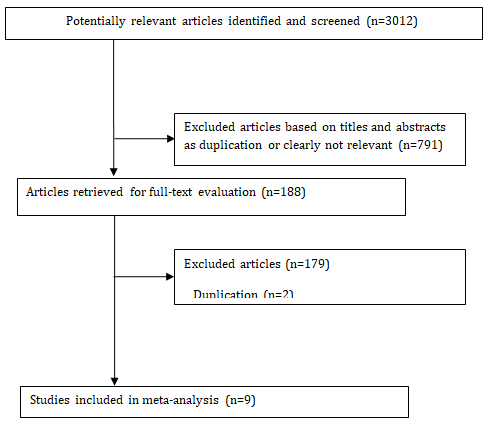
A total of 202176 articles were screened out from the initial literature search, of which 3012 articles were potentially relevant after the first-round screening and were identified. Furthermore, 2824 studies were excluded according to the title and abstract, including the study focused on the outcomes was inconsistent with the current target (HR/RR/OR) and those that did not match the research topic/study design. 9 articles [11, 12, 13, 14, 15, 16, 17, 18, 19] were included finally, out of the 188 that retrieved for full-text evaluation. As shown in Figure 1.
| Age(yrs) | Country | Sample size | Follow up year | Diagnosis of asthma | Diagnosis of dementia | NOS | |
|---|---|---|---|---|---|---|---|
| Age(yrs) | Country | Sample size | (cohort study) | Diagnosis of asthma | Diagnosis of dementia | NOS | |
| Nair AK, 2022 | 43-93 | USA | 375 | - | Mild/severe asthma | Dementia/AD | 10 |
| Peng YH, 2015 | - | China | 63855 | 2 | Newly diagnosed | All-types-of-dementia | 9 |
| Chen MH, 2014 | >45 | China | 55150 | 13 | All-types-of-asthma | All-types-of-dementia | 10 |
| Eriksson UK, 2008 | - | Sweden | 29988 | 38 | All-types-of-asthma(self-report) | All-types-of-dementia | 8 |
| Carlson SM, 2017 | - | USA | 1287 | - | All-types-of-asthma(self-report) | All-types-of-dementia | 8 |
| Pan TL, 2021 | >45 | China | 11649 | - | All-types-of-asthma | Dementia/AD | 9 |
| Yeh JJ, 2017 | ≥40 | China | 30773 | 10 | All-types-of-asthma | All-types-of-dementia | 9 |
| Chen TB, 2017 | - | China | 8456 | - | All-types-of-asthma | Dementia/MCI | 11 |
| Koyanagi A, 2017 | >50 | China, Ghana, India, Mexico, Russia, and South Africa | 32715 | 3 | All-types-of-asthma | Dementia/MCI | 8 |
Table 1: Characteristics of the Included Studies.
The 9 studies included covering 234248 individuals. Among them, 5 of the studies were cohort studies, 4 were case control studies. The sample size ranged from 375 to 63855. The main characteristics of the studies are shown in Table 1.
Methodology Quality Assessment
The NOS scale was used to assess the quality of the included studies, three of them had a score of 8, another three of them had a score of 9, two of them had a score of 10 and one of them had a score of 11, as shown in table 1. The general quality of the studies was good.
Association Between Asthma and Dementia
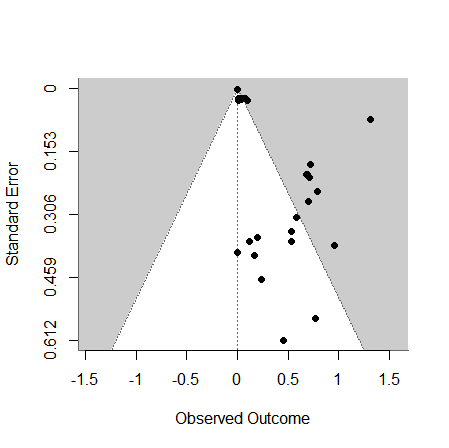
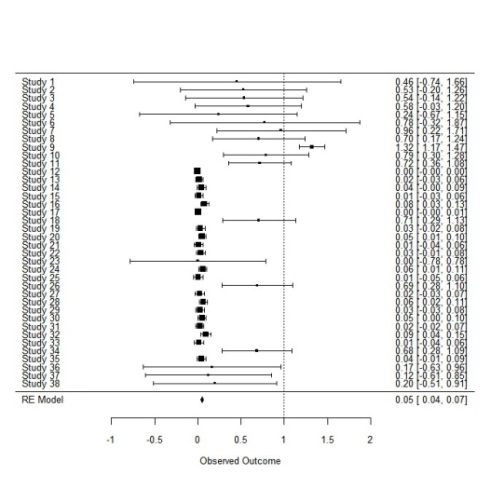
General Association of all-Severity Levels-of-Asthma with all-Types-of-Dementia by Pooling all the Included Studies: Owning to the significant heterogeneity (I2=90.45%, P<0.0001), the random-effects model was conducted for the analysis when we summarize all the results initially, subgroup analysis was also conducted in order to discuss the source of heterogeneity afterwards. The overall pooling logOR was 0.05 (95%CI: 0.04~0.07) which suggested all asthma (any severity levels) is associated with the higher risk of all dementia (any types). Potential higher publication bias was detected in the current analysis. The Kendall’s tau was -0.0139 (P= 0.8952) from rank correlation test for funnel plot asymmetry and z was 9.8343(P<0.0001), b was-0.0023 (CI: -0.0198, 0.0152) from the regression test.
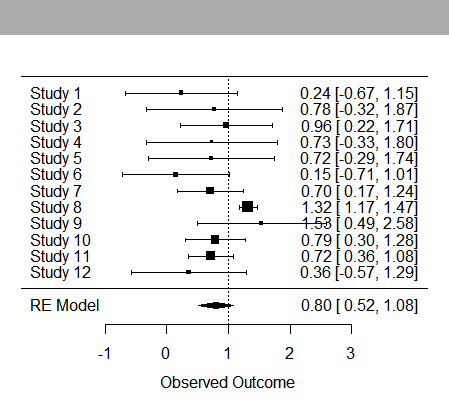
Subgroup Analysis by Different Study Design • Association of all-Severity Levels-of-Asthma with all-Types-of-Dementia by Pooling the Included Cohort Studies: The significant heterogeneity (I2=61.88%,P=0.0024) was found when we summarized only the cohort study results, the random-effects model was conducted for the analysis accordingly. The pooling logOR was 0.80(95%CI: 0.52~1.08) with P<0.0001, which suggested all asthma (any severity levels) was associated with the higher risk of all types of dementia. As shown in Figure 2. The funnel plots indicated no potential publication bias was detected for pooling results of cohort studies. The Kendall’s tau was 0.2121 (P= 0.3807) from rank correlation test for funnel plot asymmetry and z was -2.2831(P=0.0224), b was 1.2476 (CI: 0.8944, 1.6009) from the regression test.
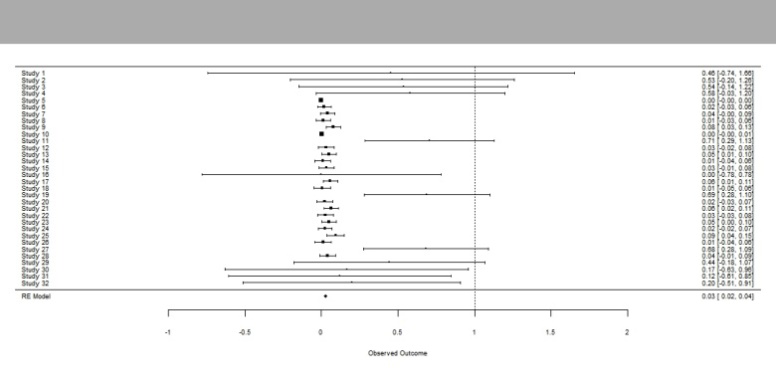
• Association of all-Severity Levels-of-Asthma with all-Types-of-Dementia by Pooling the Included Case Control Studies: The significant heterogeneity (I2=68.19%, P<0.0001) was detected when we summarized all the case control study results, then the random-effects model was conducted and the pooling logOR was 0.30 (95%CI: 0.20~0.40) with P<0.0001, which indicated all-severity levels-of-asthma was also associated with the higher risk of all-types-of-dementia. As shown in Figure 3. The funnel plots indicated potential higher evaluation of the result for the sake of the publication bias. The Kendall’s tau was -0.0227 (P=0.8578) and z was 7.7972(P<0.0001), b was -0.0002 (CI:-0.0040, 0.0035).
Subgroup Analysis by Different Outcome Representation • Association of all-Severity Levels-of-Asthma with Dementia (Dementia as Dichotomous Variable) by Pooling all the Included Studies: Subgroup analysis for the association between all-severity levels-of-asthma and dementia (dementia as dichotomous variable) suggested the pooling results were with a very low heterogeneity (I2=0.00%,P=0.7997), thus fixed-effects model was conducted and the pooling logOR was 0.66
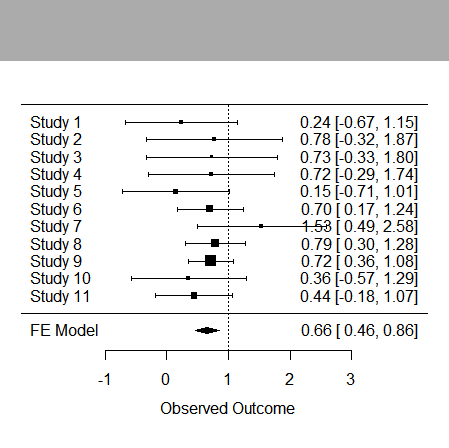
(95%CI: 0.46~0.86) with P<0.0001, which indicated all- severity levels-of-asthma was associated with the higher risk of dementia (dementia as dichotomous variable). As shown in Figure 4. The funnel plots indicated very low level of publication bias. The Kendall’s tau was 0.0545(P=0.8793) from rank correlation test for funnel plot asymmetry and z was -0.2811(P<0.0001), b was 0.7323 (CI: 0.2034, 1.2611) from the regression test.
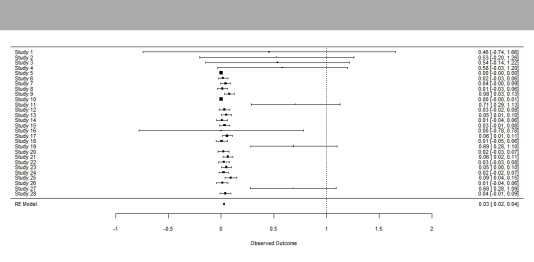
• Association of all-Severity Levels-of-Asthma with Dementia (Dementia-Related Index) by Pooling all the Included Studies: The significant heterogeneity (I2=71.57%,P<0.0001) was found when we summarized the studies with dementia-related indexes as outcomes, then the random-effects model was conducted and the pooling logOR was 0.30 (95%CI: 0.20~0.40) with P<0.0001, which indicated all-severity levels-of- asthma was associated with the higher risk of abnormal dementia-related index status. As shown in Figure 5. Moreover, the funnel plots indicated potential higher evaluation of the result for the sake of the publication bias. The Kendall’s tau was 0.1010 (P= 0.4617) from rank correlation test for funnel plot asymmetry and z was 7.9171(P<0.0001), b was -0.0007(CI:-0.0045, 0.0030) from the regression test.
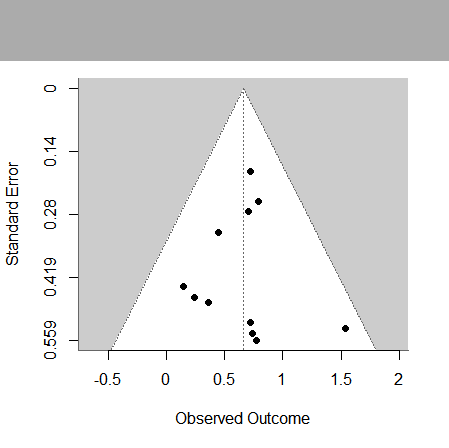
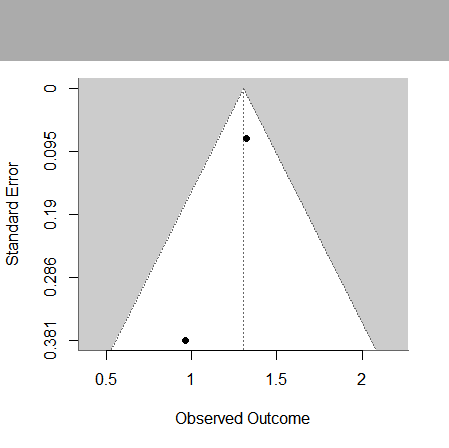
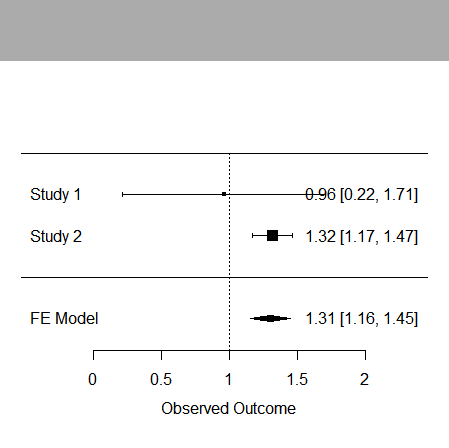
• Association of all-Severity Levels-of-Asthma with Dementia (Only AD) by Pooling all the Included Studies: This subgroup analysis for the association between all-severity levels-of-asthma and AD suggested the pooling results were with a very low heterogeneity (I2=0.00%,P=0.2595), then fixed-effects model was used and the pooling logOR was 1.31 (95%CI: 1.16~1.49) with P<0.0001, which showed us all-severity levels-of-asthma was associated with the higher risk of AD. As shown in Figure 6. The funnel plots indicated very low level of publication bias. The Kendall’s tau was -1.000(P=1.000) and z was -0.9163(P-0.3595), b was 1.4077 (CI: 1.1446, 1.6709).
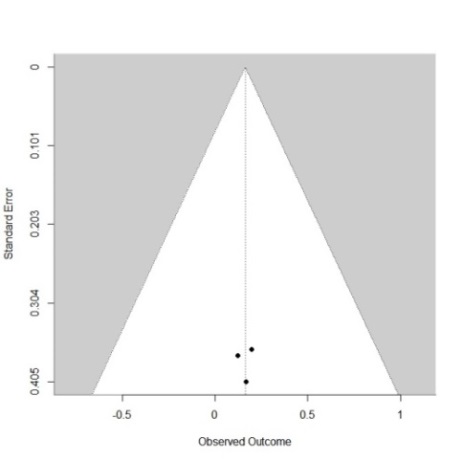
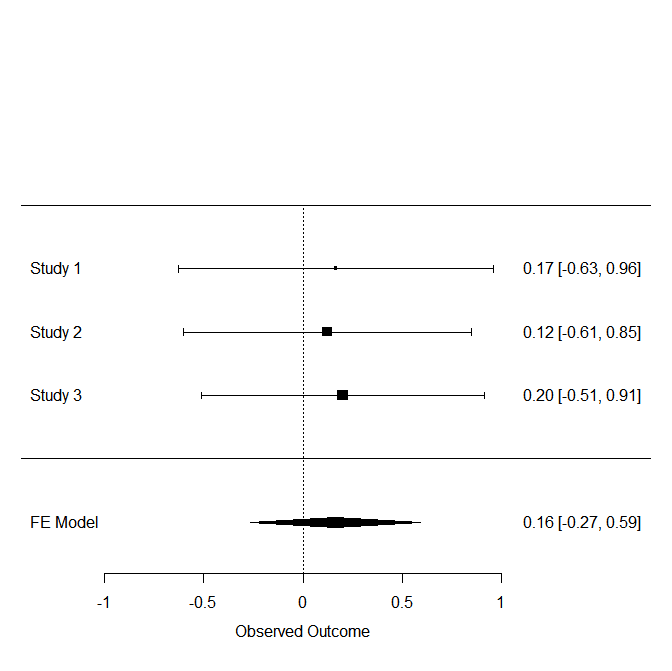
• Association of all-Severity Levels-of-Asthma with Dementia (Only MCI) by Pooling all the Included Studies: The subgroup analysis for the association between all-severity levels-of-asthma and MCI suggested the pooling results were with a very low heterogeneity (I2=0.00%,P=0.9890), so fixed-effects model was conducted and the pooling logOR was 0.16 (95%CI: -0.27~0.59) with P<0.0001, which suggested all-severity levels-of-asthma was associated with the higher risk of MCI. As shown in Figure 7. The funnel plots indicated very low level of publication bias. The Kendall’s tau was -0.3333 (P=1.000) and z was -0.0188(P=0.9850), b was 0.2509 (CI:-8.9426, 9.4445).
Subgroup Analysis by Different Independent Variable Representation • Association of Non-Specified-Asthma with all- Severity Levels-of-Dementia by Pooling all the Included Studies: The significant heterogeneity (I2=91.50%, P<0.0001) was found when we made the subgroup analysis in summaring the studies with non- specified-asthma as independent variable, then the random-effects model was conducted and the pooling
logOR was 0.30 (95%CI: 0.20~0.40) with P<0.0001, which indicated non-specified-asthma was associated with the higher risk of all-types-of-dementia. As shown in Figure 8. Moreover, the funnel plots indicated potential higher evaluation of the result for the sake of the publication bias. The Kendall’s tau was 0.1010 (P= 0.4617) from rank correlation test for funnel plot asymmetry and z was 7.9171(P<0.0001), b was -0.0007(CI:-0.0045, 0.0030) from the regression test.
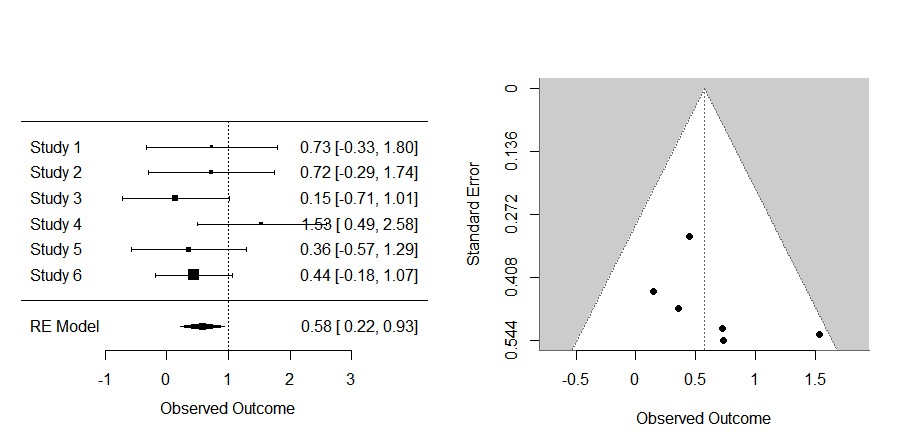
• Association of Asthma (Specified-Asthma) with all-Types-of-Dementia by Pooling all the Included Studies: This subgroup analysis for the association between specified-asthma and dementia (all-types- of-dementia) suggested the pooling results were with a very low heterogeneity (I2=0.00%,P=0.4500), then fixed-effects model was conducted and the pooling logOR was 0.58 (95%CI: 0.22~0.93) with P=0.0016, which suggested specified-asthma was associated with the higher risk of all-types-of-dementia. As shown in Figure
9. The funnel plots showed very low level of publication bias. The Kendall’s tau was 0.7333 (P=0.0556) and z was 1.0908(P=0.2753), b was -0.4002 (CI:-2.1902, 1.3898).
Discussion
Dementia and asthma are common diseases among elderly [20, 21, 22]. Interactions of asthma and brain have initially centered on anxiety and depression, and the studies indicated a bidirectional effect between them and lead the study direction to neurodegeneration and dementia [23, 24]. Although the exact etiological link between asthma and dementia remains unknown, previous literature indicated that there were several potential mechanisms support the association of asthma and dementia/cognitive impairment, including oxidative stress related mechanism, tissue hypoxemia related mechanism, together with the influence from inactive state and systemic inflammatory state. It is also known that untreated chronic diseases including asthma can be associated with declining cognitive function [25].
Consistent with many previous findings, in the current meta-analysis, we found an overall association between asthma and cognitive dysfunction. It suggested a significant association between all-severity levels-of-asthma and the risk of onset of all-types-of-dementia when we define the later as a dichotomous variable. The problem of allergic diseases has been increasing in many countries recently, and many studies have reported a positive association between allergic diseases, such as asthma, and dementia [26]. A systemic inflammatory response is usually present with allergies. Considerable data suggesting that inflammation plays a principle role in age-associated disorders, both for body and brain, currently. However, the effects of systemic inflammation on the pathogenesis of dementia and AD are not completely clarified [26, 27, 28]. Positive evidence such as recent animal experiment induced chronic airway allergy in triple transgenic AD (3xTgAD) and wild type (WT) mice by repeated exposure to ovalbumin (OVA) as an allergen [24]. Moreover, Imaging studies suggested that dementia and frailty often linked to chronic inflammation, changes to the white matter of the brain in asthma patients that resemble neuroinflammation changes in most of the neurodegenerative diseases [29]. Moreover, the use of montelukast, an asthma drug, has been shown to rejuvenate the brain of middle- aged animals in intervention studies, which also supports the connection between asthma and dementia [30]. Nevertheless, further Identifying the related pathways that contribute to chronic inflammation in this asthma-dementia association will contribute to the new therapeutic targets developing. On the other hand, hypoxemia might be another important media among the association of asthma and dementia, Patients may show cerebral perfusion alterations as a consequence of hypoxemia, and according cognitive impairment could be led by those changes [31].
It is also noteworthy that In this manuscript, we complied the evidence of totally 5 cohort studies (included 12 independent results) on the association between asthma and dementia, subgroup evaluation further suggested a significant association between all-types-of-asthma and AD, however only 2 results involved in supporting. Moreover, subgroup analysis in terms of different severity levels of asthma indicated a high risk of dementia in specific asthma patients, which help to identify the high-risk patients in preventive and clinical works [32, 33].
There were some limitations in this study. It is worth considering the heterogeneity of the included studies existed in this meta-analysis especially when the analysis focused on the general pooled effect which based on all of the studies included, which may be attributable to differences in sample size, different study design and diagnosis procedures among included studies. However the subgroup analysis was conducted, heterogeneity still could be found in some of the subgroup discussion. Thus it is need to be treated with caution when interpreting our results [34, 35].
Conclusion
Our findings showed a significant increase in the risk of dementia among patients with asthma, and this risk is not affected by the difference types of dementia, however it seems especially obviously among specific asthma patients.
References
-
Bodtger U, Poulsen LK, Linneberg A (2006) Rhinitis symptoms and IgE sensitization as risk factors for development of later allergic rhinitis in adults. Allergy 61(6): 712-716.
-
Busse PJ (2007) Allergic respiratory disease in the elderly. AJ Med 120(6): 498-502.
-
Takahashi K, Uchida C, Shin RW, Shimazaki K, Uchida T (2008) Prolyl isomerase, Pin1: new findings of post- translational modifications and physiological substrates in cancer, asthma and Alzheimer’s disease. Cell Mol Life Sci 65(3): 359-375.
-
Sund R, Lahtinen H, Wass H, Mattila M, Martikainen P (2017) How voter turnout varies between different chronic conditions? A population-based register study. J Epidemiol Community Health 71(5): 475-479.
-
Bozek A, Jarzab J (2013) Epidemiology of IgE dependent allergic diseases in elderly patients with Poland. AMJ Rhinol Allergy 27(5): e140-145.
-
Epstein TG, Ryan PH, LeMasters GK, Bernstein CK, Levin LS, et al. (2012) Poor asthma control and exposure to traffic pollutans and obesity in older adults. Ann Allergy Asthma Immunol 108(6): 423-428.
-
Huss K, Naumann PL, Mason PJ, Nanda JP, Huss RW, et al. (2001) Asthma severity, atopic status, allergen exposure and quality of life in elderly persons. Ann Allergy Asthma Immunol 86(5): 524-530.
-
Begum A, Morgan C, Chiu CC, Tylee A, Stewart R (2012) Subjective memory impairment in older adults: aetiology, salience and help seeking. Int J Geriatr Psychiatry 27(6): 612-620.
-
Busse W, Bartels C, Rosenkranz M (2023) Brain-Airway Interactions in Asthma. Adv Exp Med Biol 1426: 185- 214.
-
Wu Y, Zhao Y, Xu T, You L, Zhang H, et al. (2019) Alzheimer’s Disease Affects Severity of Asthma Through Methylation Control of Foxp3 Promoter. J Alzheimers Dis 70(1): 121-129.
-
Antimisiaris DE, Folz RJ, Cavallazzi RS, Polivka BJ (2023) Polypharmacy Interactions Impacting Methacholine Challenge Testing for Asthma Assessment in Older People. Sr Care Pharm 38(1): 29-40.
-
Son SH, Ahn JH, Shin KC, Kim HW, Kong E (2023) Brain FDG PET for visualizing the relation between impaired lung function and cognitive decline in lung cancer: a preliminary study. Nucl Med Commun 44(6): 488-494.
-
Selvanathan J, Aaron SD, Sykes JR, Vandemheen KL, FitzGerald JM, et al. (2020) Performance Characteristics of Spirometry With Negative Bronchodilator Response and Methacholine Challenge Testing and Implications for Asthma Diagnosis. Chest 158(2): 479-490.
-
Nair AK, Van Hulle CA, Bendlin BB, Zetterberg H, Blennow K, et al. (2022) Asthma amplifies dementia risk: Evidence from CSF biomarkers and cognitive decline. Alzheimers Dement (N Y) 8(1): e12315.
-
Peng YH, Wu BR, Su CH, Liao WC, Muo CH, et al. (2015) Adult asthma increases dementia risk: a nationwide cohort study. J Epidemiol Community Health 69(2): 123- 128.
-
Chen MH, Li CT, Tsai CF, Lin WC, Chang WH, et al. (2014) Risk of dementia among patients with asthma: a nationwide longitudinal study. J Am Med Dir Assoc 15(10): 763-767.
-
Eriksson UK, Gatz M, Dickman PW, Fratiglioni L, Pedersen NL (2008) Asthma, eczema, rhinitis and the risk for dementia. Dement Geriatr Cogn Disord 25(2): 148-156.
-
Pan TL, Bai YM, Cheng CM, Tsai SJ, Tsai CF, et al. (2021) Atopic dermatitis and dementia risk: A nationwide longitudinal study. Ann Allergy Asthma Immunol 127(2): 200-205.
-
Carlson SM, Kim J, Khan DA, King K, Lucarelli RT, et al. (2017) Hippocampal volume in patients with asthma: Results from the Dallas Heart Study. J Asthma 54(1): 9-16.
-
Yeh JJ, Wei YF, Lin CL, Hsu WH (2017) Effect of the asthma- chronic obstructive pulmonary disease syndrome on the stroke, Parkinson’s disease, and dementia: a national cohort study. Oncotarget 9(15): 12418-12431.
-
Chen TB, Yiao SY, Sun Y, Lee HJ, Yang SC, et al. (2017) Comorbidity and dementia: A nationwide survey in Taiwan. PLoS One 12(4): e0175475.
-
Koyanagi A, Lara E, Stubbs B, Carvalho AF, Oh H, et al. (2018) Chronic Physical Conditions, Multimorbidity, and Mild Cognitive Impairment in Low- and Middle-Income Countries. J Am Geriatr Soc 66(4): 721-727.
-
Ng TP, Chiam PC, Kua EH (2007) Mental disorders and asthma in the elderly: a population-based study. Int J Geriatr Psychiatry 22(7): 668-674.
-
Lipska KJ, Altaf FK, Barthel AGB, Spatz ES, Lin Z, et al. (2023) Adjustment for Social Risk Factors in a Measure of Clinician Quality Assessing Acute Admissions for Patients with Multiple Chronic Conditions. JAMA Health Forum 4(3): e230081.
-
Tan MMC, Prina AM, Terrera MG, Mohan D, Ismail R, et al. (2022) Prevalence of and factors associated with multimorbidity among 18 101 adults in the South East Asia Community Observatory Health and Demographic Surveillance System in Malaysia: a population-based, cross-sectional study of the MUTUAL consortium. BMJ Open 12(12): e068172.
-
Dehdar K, Raoufy MR (2023) Effects of inhaled corticosteroids on brain volumetry, depression and anxiety-like behaviors in a rat model of asthma. Respir Physiol Neurobiol 315: 104121.
-
Bozek A, Jarzab J (2011) Improved activity and mental function related to proper antiasthmatic treatment in elderly patients with Alzheimer’s disease. Allergy Asthma Proc 32(5): 341-345.
-
Yohannes AM, Eakin MN, Holbrook JT, Sugar EA, Henderson R, et al. (2021) Association of mild cognitive impairment and characteristic of COPD and overall health status in a cohort study. Expert Rev Respir Med 15(1): 153-159.
-
Wu CH, Huang YS, Lin YJ, Liaw YP (2022) Could randomization be to blame for the apparent association between atopic dermatitis and dementia risk? Ann Allergy Asthma Immunol 128(4): 476.
-
Nidadavolu LS, Feger D, Chen D, Wu Y, Grodstein F, et al. (2023) Associations between circulating cell- free mitochondrial DNA, inflammatory markers, and cognitive and physical outcomes in community dwelling older adults. Immun Ageing 20(1): 24.
-
Fang Y, Doyle MF, Chen J, Alosco ML, Mez J, et al. (2022) Association between inflammatory biomarkers and cognitive aging. PLoS One 17(9): e0274350.
-
Brummel NE, Hughes CG, Thompson JL, Jackson JC, Pandharipande P, et al. (2021) Inflammation and Coagulation during Critical Illness and Long-Term Cognitive Impairment and Disability. Am J Respir Crit Care Med 203(6): 699-706.
-
Marschallinger J, Iris S, Klein B, Gelfert R, Rivera JF, et al. (2015) Structural and functional rejuvenation of the aged brain by an approved anti-asthmatic drug. Nat Commun 27(6): 8466.
-
Reuben DB, Lubow GE, Evertson LC, Jennings LA (2022) Chronic disease management: why dementia care is different. Am J Manag Care 28(12): e452-e454.
- Capacity Constraints in Pediatric Inpatient Psychiatric Care: A Cross-Sectional Analysis of Bed Availability and Geographic Access in North Carolina
- Why Healthcare Analytics Still Optimizes the Wrong Things
- Coding, Coverage, and Care: The Infrastructure of Transgender Health Inequities
- The Effect of Classroom Attendance on Academic Achievement of Management and Leadership Discipline of Nursing Students at Instituto Superior Cristal and Universidade de Dili, Timor-Leste, 2024: A Case Study
- The Role of Social Bonds in Facilitating Shared Investments and Resource Allocation: Addressing the “Wrong Pocket Problem” in Public Health and Healthcare
- Social-Cultural Factors Contributing to Antimicrobial Resistance in Livestock Farmers and Community Households in Kayonza District, Rwanda