
Square Wave Voltammetric Determination of Piperazine Using Gold Electrode in Human Biological Samples
From voltammetric experiments, the electrochemical behavior of piperazine (PPZ) was determined at gold electrode (GE) in pH 7, 0.2 M phosphate buffer solution. It is shown that in the presence of PPZ the electrochemical oxidation at a GE was irreversible process. Based on the experimental results suitable mechanism was proposed. The electrooxidation of PPZ showed diffusion controlled. Under optimized conditions, linearity between the peak current and PPZ concentration was observed in the range of 1.0x10⁻⁶–1.7x10⁻⁵ M and LOD was found to be 4.49 x 10⁻⁸ M. Further, the sensor was used for the assay of PPZ in biological samples.
Introduction
Electrochemical techniques have proved to be excellent alternatives to determine pharmaceutical compounds, since they are simple, low cost and require relatively short analysis times, without the need for derivatizations or time- consuming extraction steps [1]. Moreover, these techniques are less sensitive than other analytical techniques to the effects of excipient substances in commercial formulations. The advantages of square wave voltammetry (SWV) over other electroanalytical techniques are greater speed of analysis, fewer problems with blocking of the electrode surface and lower consumption of electroactive species. In particular, complexity of real biological systems may result in overlapping voltammetric signals. Moreover, the limited number of electrode materials makes only a restricted number of analytes suitable for electrochemical detection with high sensitivity and selectivity.
Piperazine (Scheme 1) (PPZ) is the finest and classical representation of six membered saturated nitrogen heterocycles. The name PPZ comes from the genus name Piper, which is the Latin word for pepper. PPZ is having two nitrogen atoms on the opposing side of the six membered ring. The variation of substituents on nitrogen atoms plays an important role in selectivity and potency against biological targets. PPZ derivatives are the most privileged structural motifs in the field of nitrogen heterocyclic chemistry. They occur in several natural and synthetic bioactive compounds. Rather they are widely used in medicine. Tens of thousands of compounds of this series have been synthesized and studied by now; more than 300 of them are used in medical practice as drugs. They include drugs with central and peripheral neurotropic effects (local anaesthetics, M-cholinoblockers, agonists and antagonists of other pharmacological receptors, analgesics etc.,) on the cardiovascular system (coronary dilative, antiarrhythmic, antihypertensive), spasmolytics, diuretics, broncholytics, antiemetics, antinuclear drugs and many others.
H
N
N
H
Scheme 1: Chemical structure of PPZ.
The PPZ motif appears in many drugs encompassing a broad range of activities (e.g. Oxatomide, Almitrine, Hydroxyzine, Buclizine, Lomerizine [2]). This motif (monoary and diaryl PPZ) also found in drug candidates displaying anti-allergenic, antibacterial, anti-anxiety, antiemetic, antimigraine and platelet anti-aggregatory activities [3, 4, 5]. In addition, PPZ motif is present in many cardiovascular drugs [6] (e.g., Manidipine, Doxazosin, Trimetazidine, Flunarizine, Prazosin) and drug candidates [7, 8]. PPZ and their derivatives also possess antimalarial activity [9], antioxidative activity [10] and antifungal activity [11]. PPZ is a cyclic diamine, which has fast rate of reaction with CO2, higher CO2 capture capacity, and resistance to degradation [12, 13, 14].
The gold electrode has been widely used in electrochemical studies and electro analysis for various substrates for wide potential window and fast electron transfer rate [15, 16]. To the best of our knowledge, to date there are no studies in the literature on the voltammetric method for the determination of PPZ by gold electrode. Here, we report an electrochemical oxidation process of PPZ on gold electrode by cyclic voltammetry and a square wave voltammetric analytical method for the direct determination of PPZ in real samples like urine.
Experimental
Instrumentation
All voltammetric measurements were recorded using a CHI630D Electrochemical Analyser (CH Instruments Inc., USA) in a 10 ml single compartment of three electrode cell with Ag/AgCl (3 M KCl) as a reference electrode, a platinum wire as an auxiliary electrode and the Gold electrode as a working electrode. The pH values of solutions were measured using an Elico LI120 pH meter (Elico Ltd, India).
Chemicals
PPZ was purchased from Sigma Aldrich India. The phosphate buffers from pH 3.00 to 10.40 were made using double distilled deionized water [17]. All solutions used were all of analytical grade. The stock solution of PPZ was prepared by dissolving an appropriate amount in water.
Pretreatment of Working Electrode
To provide a reproducible active surface and to improve the sensitivity and resolution of the voltammetric peaks, the gold electrode was polished to a mirror finish with 0.3 micron alumina on a smooth polishing cloth and then rinsed with Millipore water prior to each electrochemical measurement. All the measurements were carried out at room temperature (298 ± 0.2K).
Area of Working Electrode
At different scan rates, the area of the electrode was calculated using 1.0 mM K3Fe(CN)6 as a probe. For a reversible process, the Randles-Sevcik formula has been used [18], as given in eqn (1).
Ipa = (2.69x10⁵)n3/2ADo 1/2Co υ 1/2 (1)
where, Ipa refers to the anodic peak current, n is the number of electrons transferred, A is the surface area of the electrode, D0 is diffusion coefficient, υ is the scan rate and C0 is the concentration of K3Fe(CN)6. For 1.0 mM K3Fe(CN)6 in 0.1 M KCl electrolyte, n = 1, D0 = 7.6 × 10⁻⁶ cm2s−1 [18], then from the slope of the plot of Ipa versus υ1/2 relation, the surface area of electrode was calculated. In our experiment, the surface area of gold electrode was calculated to be 0.086 cm2.
Results and Discussion
Cyclic Voltammetry Behavior of PPZ
In order to understand the electrochemical behavior of PPZ at gold electrode cyclic voltammetry experiment was carried out between pH 3.0 and 10.0 of phosphate buffer. The cyclic voltammogram obtained for 1.0 mM PPZ solution at a scan rate of 50 mVs−1 exhibits a well-defined irreversible anodic peak at about 1.182 V at gold electrode. The cathodic peak that appeared corresponds to the reduction of gold oxides [19]. The results are shown in Figure. 1. The blank solution without PPZ was shown by curve (b). Here in curve ‘b’ no peak was observed and at curve ‘a’ intensity of the peak increased due to electro catalytic behavior of the gold. Gold electrodes are very weak chemisorbers due to filled d-orbitals, yet display a higher electroactivity towards the oxidation of drugs. The electrocatalytic behavior of gold is highly complex. The catalytic component of gold electrode is believed to be hydrous gold oxide, AuOH, which is formed by the chemisorption of hydroxide anions to the gold surface.
This process occurs at potentials of 0 to 1.6 V vs. Ag/AgCl (3 M KCl) depending on the surface structure of the gold electrode. Therefore, the gold oxide formation and its reduction is pH dependent [20].
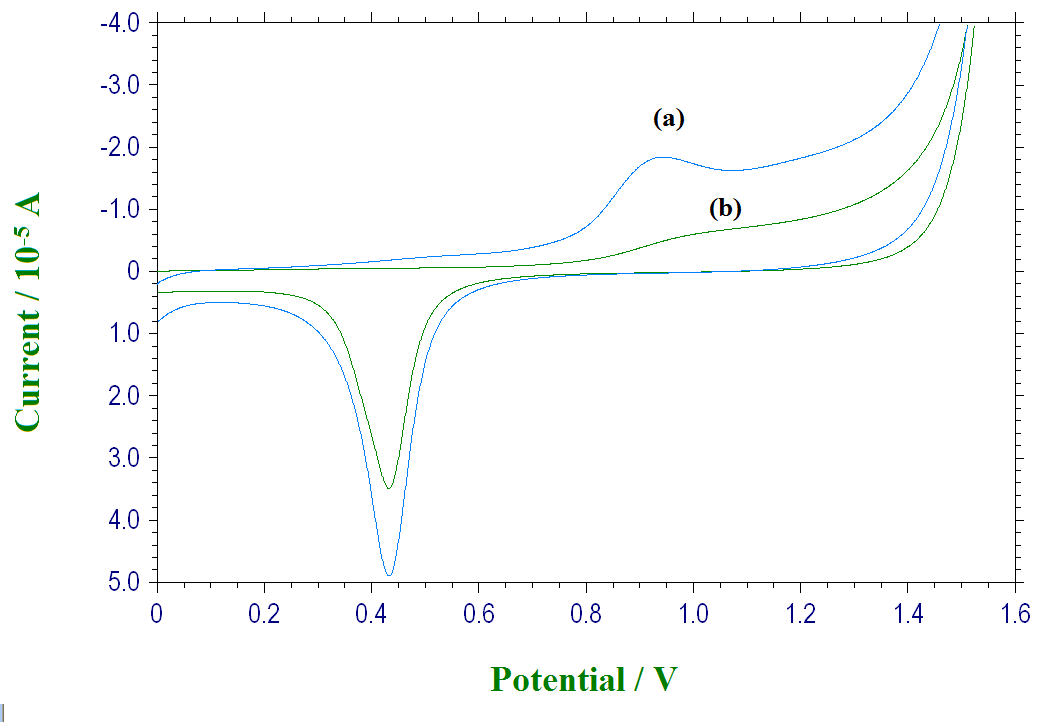
The voltammograms corresponding to the first cycle were generally recorded because of decrease in the oxidation peak current occurs with the number of successive sweeps. This phenomenon may be attributed to the adsorption of the oxidation product on the electrode surface [21].
Influence of PH of the Supporting Electrolyte
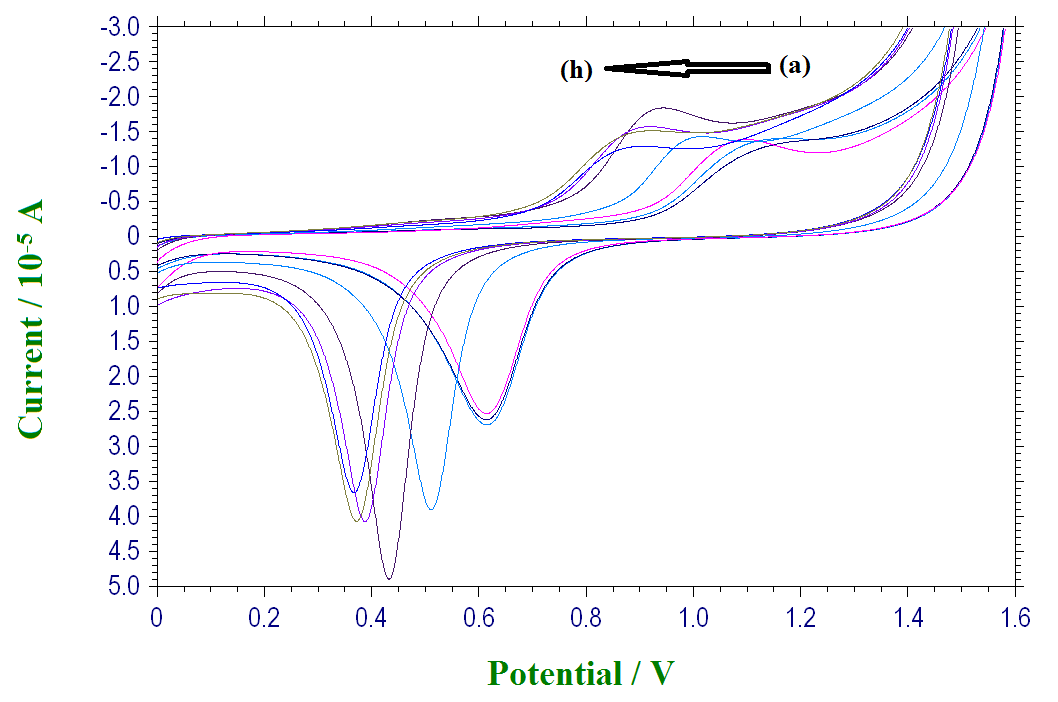
The electrolytic oxidation of PPZ at the Gold electrode is dependent on the pH of the buffer. Therefore, it is necessary to optimize the pH value and to evaluate the ratio of the number of protons and electrons involved in the electrocatalytic voltammetric detection of PPZ. Figure.2A shows the cyclic voltammograms of 1.0 mM PPZ in 0.2 M phosphate buffer recorded at different pH values from 3.0 to 10.0 at the surface of the gold electrode. All the three peaks were shifted to less positive potentials with the increase in the pH of the solution.
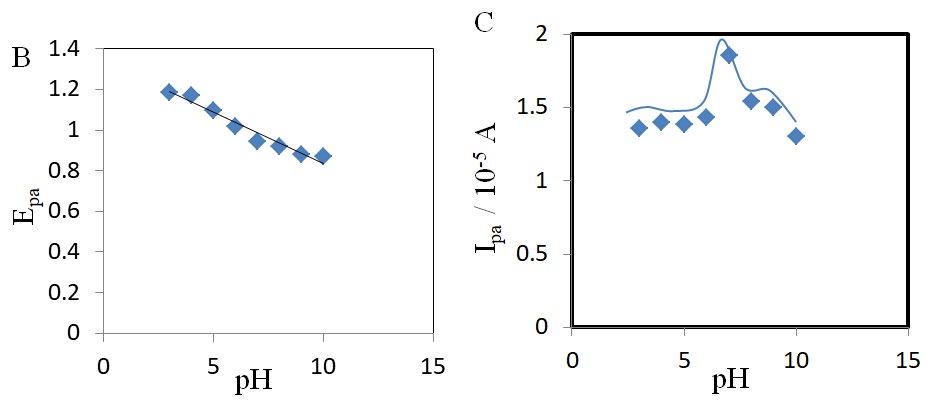
The potential diagram was constructed by plotting the graph of peak ‘b’ potentials, Epa vs. pH of the buffer with good linearity (Figure 2B). The slope obtained was 50mV/ pH, which indicates with the theoretical value of 59mV/pH; it reveals that the number of electrons and protons involved in the reaction is equal [22, 23].
From Figure 2C, it was clear that the peak current was high for the 1.0 mM PPZ in the supporting medium at physiological pH value 7. Therefore, for further experiments, pH 7 was selected as the optimum pH value.
Influence of the Scan Rate
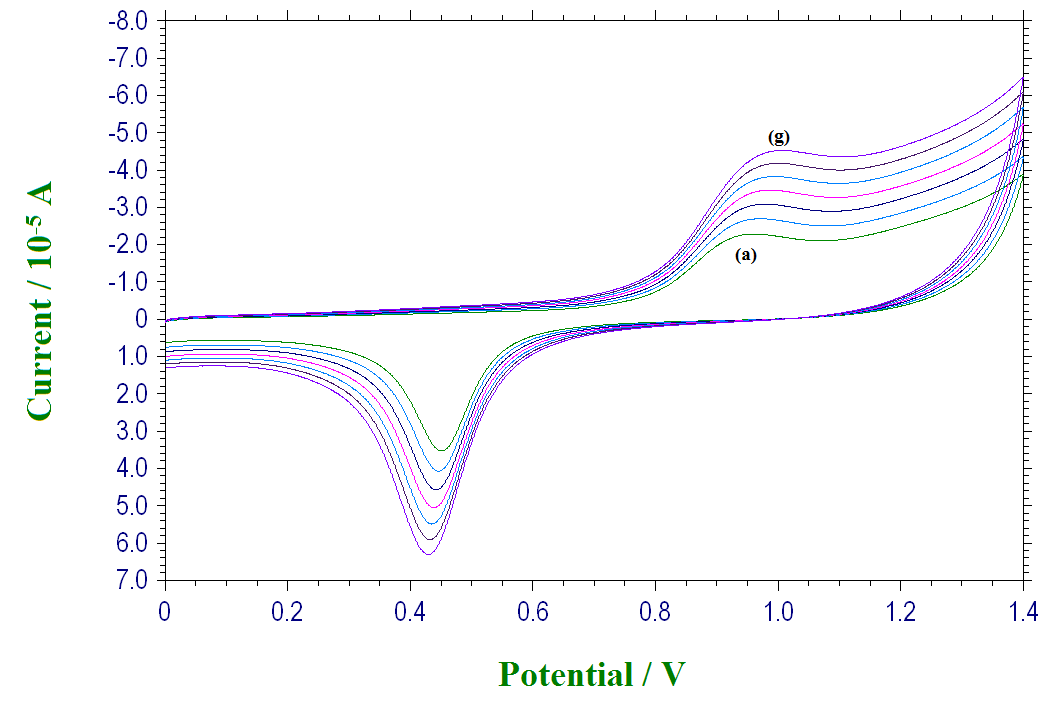
The influence of the scan rate plays an important role in voltammetric oxidation reaction. So, it is important to evaluate the dependence of peak current and peak potential on the scan rate and to know whether the electrode reaction is the adsorption or diffusion controlled process. The Gold electrode showed an increase in redox peak currents with an increase in the scan rate from 50 to 350 mV s-1 (Figure 3A) in 0.2 M phosphate buffer solution.
A good linearity was observed between the logarithm of peak current and the logarithm of the scan rate as shown in Figure 3B, with a slope value of 0.435 indicating that the electrode reaction was purely diffusion controlled [24] and the linear equation is as follows. log Ipa (A) = 0.422 log v (V s-1) + 0.7959; (r = 0.9861) (2) The Laviron equation [25] (eqn (3)) has been employed to find out the number of electrons transferred (n) and the heterogeneous rate constant (k0) for an irreversible electrode reaction. Epa =E0 + (2.303RT/nF) log (RTk0/nF) + (2.303RT/αnF) log v (3) where ‘α’ is the transfer coefficient, v the scan rate and E0 is the formal standard redox potential. Other symbols have their usual meaning. The ‘αn’ was calculated by using the slope of the plot of Epa vs. log v (eqn (4), Figure 3C, Epa(V) = 0.073 log v (V s-1) + 1.041; (r = 0.997) (4) Figure 3: (B) Dependence of the logarithm of peak current on logarithm of scan rate. (C) Dependence of the oxidation peak potential on the logarithem of scan rate.
The Bard and Faulkner formula [26] (eqn (5)) was used to evaluate the value of α. α = 47.7/(Ep –Ep/2)mV (5) The values of αn and α were found to be 0.36 and 0.78. So, the number of electrons (n) transferred in electro-oxidation of PPZ was calculated to be 2.2≈2. Mechanism
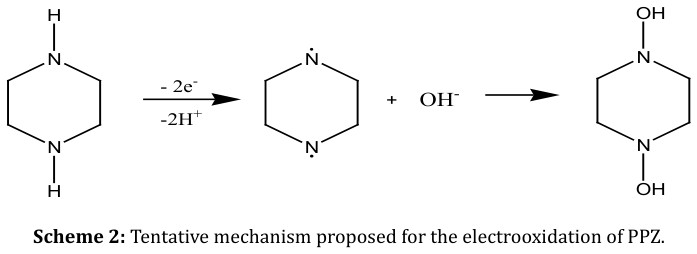
Scheme 2: Tentative mechanism proposed for the electrooxidation of PPZ.
As evidenced from the above studies, it is inferred that electrochemical oxidation of PPZ occurs in a single well-defined oxidation peak current (Ipa). One molecule of PPZ on electrooxidation gives free radicals containing PPZ with removal of two electrons and two protons. Again this free radical containing PPZ hydrolysis gives final product piperazine-1,4-diol.
Calibration Curve
To develop a voltammetric method for determining the drug, we selected the square wave voltammetric (SWV) mode, because the peaks are sharper and better defined at lower concentrations of PPZ than those obtained by cyclic voltammetry. According to the obtained results, it was possible to apply this technique to the quantitative analysis of PPZ. A phosphate buffer solution of pH 7.0 was selected as the supporting electrolyte for the quantification of PPZ because it gave the maximum peak current at pH 7.0. SWV obtained with increasing amounts of PPZ showed that the peak current increased linearly with increasing concentration, as shown in Figure 4A. Using the optimum conditions described a linear calibration curve was obtained for PPZ in the range from 1.0 x 10⁻⁶ to 1.7 x 10⁻⁵ M for SWV (Figure 4B). The linear equation was Ipa (µA) = 0.066C (µM) + 4.311 (r2 = 0.993)
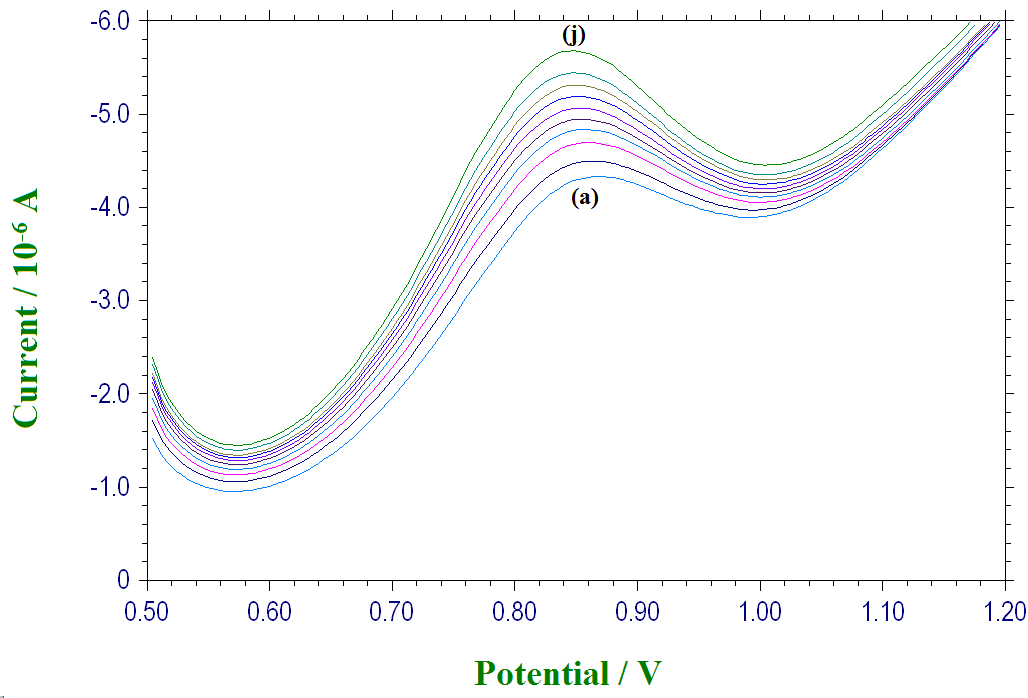
Deviation from linearity was observed for more concentrated solutions, as a result of the adsorption of PPZ or its oxidation products on the electrode surface. Related statistical data for the calibration curves were obtained from five different determinations. The limit of detection (LOD) and quantification (LOQ) were 4.49 x 10⁻⁸ M and 1.49 x 10⁻⁷ M, respectively. The LOD and LOQ were calculated using the equations.
LOD = 3s/m LOQ = 10s/m (8)
where s is the standard deviation of the peak currents of the blank (five runs) and m is the slope of the calibration curve. Sample solutions recorded after 48 h did not show any appreciable change in the assay values.
To ascertain the repeatability of the analysis, five measurements on 1.0 μM PPZ solution were carried out using a gold electrode at an interval of 20 min. The RSD value of the peak current was found to be 0.25%, which indicates that the gold electrode has good repeatability. The reproducibility between days was similar to that within one day, when the temperature was kept constant.
Effect of Interferents
The selectivity of gold electrode was evaluated in the presence of different interfering molecules. The voltammetric response of gold electrode was examined. In the presence of some interfering substances like glucose, starch, sucrose, dextrose, gum acacia, citric acid, and oxalic acid (thousand fold excess). The square wave voltammograms were taken for the oxidation of PPZ (1.0 µM) after addition of varying concentration of each interferent. The obtained potential in the absence of any interferent was 0.8958 V for the gold electrode. The results are given in Table 1. As it is shown in Table 1, there is no serious interfering in the presence of foreign compounds on the electrooxidation of PPZ.
| Potential (V) | Signal Change (%) | |
|---|---|---|
| Citric acid | 0.8607 | 3.51 |
| D-Glucose | 0.9089 | -1.31 |
| Gum acecia | 0.904 | -0.82 |
| Oxalic acid | 0.8836 | 1.22 |
| Starch | 0.935 | -3.92 |
| Sucrose | 0.9113 | -1.55 |
Table 1: Influence of potential excipients on the voltammetric response of 1.0 µM PPZ.
Detection of PPZ in Urine Samples
The applicability of the SWV to the determination of PPZ in spiked urine was investigated. The recoveries from urine were measured by spiking drug-free urine with known amounts of PPZ. The urine samples were diluted 100 times with the phosphate buffer solution before analysis without further pretreatment. A quantitative determination can be carried out by adding the standard solution of PPZ into the detection system of urine sample. The calibration graph was used for the determination of spiked PPZ in urine samples. The detection results of three urine samples obtained are listed in Table 2. The recovery determined was in the range from 99.09% to 100.25% and the R.S.D. was 0.27%. Thus, satisfactory recoveries of the analyte from the real samples and a good agreement between the concentration ranges studied and the real ranges encountered in the urine samples when treated with the drug make the developed method applicable in clinical analysis.
| Added (µM) | found(a) (µM) | Recovery (%) | SD± RSD (%) | Bias (%) |
|---|---|---|---|---|
| 3.5 | 3.468 | 99.09 | 0.0301±0.22 | 0.914 |
| 4 | 4.01 | 100.25 | 0.0252 ± 0.26 | -0.25 |
| 6.5 | 6.488 | 99.82 | 0.0198±0.32 | 0.184 |
Table 2: Determination of PPZ in urine samples. (a)Mean average of five determinations.
Conclusion
In this study, the development of a simple, cheap, less time-consuming, sensitive and selective electrochemical method for determination of PPZ using GE with cyclic and square wave voltammetric techniques were described. GE exhibits a good electrocatalytic response for the measurement of PPZ due to its conductive properties and a good linear response observed in the range between 1.0x10⁻⁶ and 1.7x10⁻⁵ M with a detection limit of 4.49x10⁻⁸ М· When we take into consideration the properties of GE, it allows for electrode manufacture at low cost and can be very useful in the construction of simple and cheap electrochemical sensors for determination of pharmaceutical compounds such as PPZ in clinical and pharmaceutical formulations.
References
-
Ganjali MR, Veismohammadi B, Riahi S, Norouzi P (2009) Promethazine Potentiometric Membrane Sensor for Promethazine Hydrochloride Pharmaceutical Analysis; Computational Study. Int J Electrochem Sci 4: 740-754.
-
Már Másson, Jukka Holappa, Martha Hjálmarsdóttir, Ögmundur Vidar Rúnarsson, Tapio Nevalainen, et al. (2008) Antimicrobial activity of piperazine derivatives of chitosan. Carbohydr Polym 74(3): 566-571.
-
Antoine Michel (1991) Benzo[1,8]naphthyridine derivatives, their preparation and compositions containing them. Laboratorie Roger Bellon, US-5053509.
-
Nakazato A (2002) Remedial agent for anxiety neurosis or depression and piperazine derivative. Taisho Pharmaceutical Co, WO-0200259.
-
Shue HJ (1998) Piperazino derivatives as neurokinin antagonists. Schering Corp, WO-9808826.
-
Chambers MS, Sharp M, Dohme (1998) Piperazine, piperidine and Tetrahydropyridine dervative of Indol-3- alkyl as 5-HT1D-α agonists. Pub Chem, US-5807857.
-
Carceller E, Almansa C, Merlos M, Giral M (1992) (Pyridylcyanomethyl) piperazines as orally active PAF antagonists, J Med Chem 35(22): 4118-4134.
-
Carceller E, Almansa C, Merlos M, Giral M (1993) Synthesis and structure-activity relationships of 1-acyl- 4-((2-methyl-3-pyridyl)cyanomethyl)piperazines as PAF antagonists. J Med Chem 36(20): 2984-2997.
-
Herrin TR, Pauvlik JM, Schuber EV, Geiszler AO (1975) Antimalarials. Synthesis and antimalarial activity of 1-(4-methoxycinnamoyl)-4-(5-phenyl-4-oxo-2- oxazolin-2-yl)piperazine and derivatives. J Med Chem 18(12): 1216-1222.
-
Kimura M, Masuda T, Yamada K, Kubota N (2002) Novel diphenylalkyl piperazine derivatives with dual calcium antagonistic and antioxidative activities. Bioorg Med Chem Lett 12(15): 1947-1950.
-
Upadhayaya RS, Sinha N, Jain S, Kishore N, Chandra R, et al. (2004) Optically active antifungal azoles: synthesis and antifungal activity of (2R,3S)-2-(2,4-difluorophenyl)- 3-(5-{2-[4-aryl-piperazin-1-yl]-ethyl}-tetrazol-2-yl/1- yl)-1-[1,2,4]-triazol-1-yl-butan-2-ol. Bioorg Med Chem 12(9): 2225-2238.
-
Tan CS, Chen JE (2006) Absorption of carbon dioxide with piperazine and its mixtures in a rotating packed bed. Sep Purif Technol 49(2): 174-180.
-
Sun WC, Yong CB, Li MH (2005) Kinetics of the absorption of carbon dioxide into mixed aqueous solutions of 2-amino-2-methyl-l-propanol and piperazine. Chem Eng Sci 60(2): 503-516.
-
Lin SH, Chiang PC, Hsieh CF, Li MH, Tung KL (2008) Absorption of carbon dioxide by the absorbent composed of piperazine and 2-amino-2-methyl-1-propanol in PVDF membrane contactor. J Chin Inst Chem Eng 39(1): 13-21.
-
Li YG, Mather AE (1996) Correlation and Prediction of the Solubility of Carbon Dioxide in a Mixed Alkanolamine Solution. Ind Eng Chem Res 35(12): 4804-4809.
-
Jou FY, Otto F, Mather A (1985) Equilibria of H2S and CO2 in triethanolamine solutions. Can J Chem Eng 63(1): 122-125.
-
Ferapontova EE (2004) Electrochemistry of guanine and 8-oxoguanine at gold electrodes. Electrochim Acta 49(11): 1751-1759.
-
Rezaei B, Damiri S (2008) Voltammetric behavior of multi-walled carbon nanotubes modified electrode- hexacyanoferrate(II) electrocatalyst system as a sensor for determination of captopril. Sens Actuators B: Chem 134(1): 324-331.
-
Barus C, Gros P, Comtat M, Daunes Marion S, Tarroux R (2007) Electrochemical behaviour of N-acetyl-l-cysteine on gold electrode-A tentative reaction mechanism. Electrochim Acta 52(28): 7978-7985.
-
Toghill KE, Compton RG (2010) Electrochemical Non- enzymatic Glucose Sensors: A Perspective and an Evaluation. Int J Electrochem Sci 5: 1246-1301.
-
Kalanur SS, Seetharamappa J, Mamatha GP, Hadagali MD, Kandagal PB (2008) Electrochemical Behavior of an Anti-Cancer Drug at Glassy Carbon Electrode and its Determination in Pharmaceutical Formulations. Int J Electrochem Sci 3: 756-767.
-
Shah A, Victor CD, Rumana Q, Brett AMO (2010) Electrochemical behaviour of dimethyl-2-oxoglutarate on glassy carbon electrode. Bioelectrochemistry 77(2): 145-150.
-
Pattar VP, Nandibewoor ST (2015) Electroanalytical method for the determination of 5-fluorouracil using a reduced graphene oxide/chitosan modified sensor. RSC Adv 5(43): 34292-34301.
-
Gosser DK (1993) Cyclic Voltammetry: Simulation and Analysis of Reaction Mechanisms. VCH, New York. 7(3): 298-298.
-
Laviron E (1979) General expression of the linear potential sweep voltammogram in the case of diffusionless electrochemical systems. J Electroanal Chem 101(1): 19–28.
-
Bard AJ, Faulkner LR (2004) Elecrochemical Methods Fundamentals and Applications, 2nd (Edn.), Wiley, pp: 236.
- Solution-Processed Chiral Perovskites for Biomedical Applications
- Nanotechnology in Health Chemistry and Medicine: Current Challenges and Future Directions
- Human Exposure to Micro- and Nanoplastics: Pathways, Toxicity, and Intervention Strategies
- Exosome Nanomedicine for Cancer Therapy
- Micro and Nanoplastics–Plastisphere, Biotoxicity, Impact on Human Health, and Mitigation Strategies
- Process Validation of Cefixime Powder for Suspension Dosage Form, 50 mL