
Metal Phosphates: Emerging Materials for Energy Storage
In recent years metal phosphates have gained the limelight due to their unique properties and versatile electrochemical behaviour. These materials offer a wide range of compositions, crystal structures, and redox properties, enabling their application in various energy storage systems. This review provides an overview of the recent advancements in metal phosphates for energy storage, focusing on their synthesis, electrochemical performance, and potential applications. Metal phosphates hold great promise as emerging materials for energy storage applications. Their tunable properties, versatile electrochemical behaviour, and potential for multiple energy storage systems make them potential candidates for nextgeneration energy storage technologies. Ongoing research and development efforts are crucial to revealing the full potential of metal phosphates and accelerating their integration into practical energy storage devices.
Introduction
The need to meet society’s growing energy demands has placed energy at the forefront of international debates [1, 2, 3]. The over usage of conventional energy sources like coal and petrol caused the issue of global warming [4]. As a result, the use of renewable energy sources like geothermal, solar, and wind power has expanded over the years [5]. To avoid changes in the amount of power delivered or energy used, the energy generated from these sources must be efficiently stored and transmitted to the consumers. Lithium-ion batteries, sodium- ion batteries, fuel cells, and supercapacitors are just a few of the energy storage technologies that are available and are widely studied. Among these, batteries and supercapacitors have long provided a secure and dependable means of energy storage and transportation. In contrast, a rise in energy and power density is required to meet the rising energy storage demands associated with the development of renewable energy production for wearable portable devices, hybrid electric vehicles, or other electric machinery or instruments. This concern led to the development of technology for storage devices with a major focus on supercapacitors (SC). SC is one of the efficient and desirable candidates for hybrid energy storage devices due to its rapid charge- discharge rates and long-term cycling stability as compared to the batteries [6]. In order to function as a vital link between batteries/fuel cells and conventional capacitors, SCs either store charge by surface adsorption or reversible redox processes at an electrode/electrolyte interface that precedes any phase transformation. The Ragone plot is shown in Figure 1 to provide a brief comparative overview of popular electrochemical energy storage systems concerning performance features [7, 8].
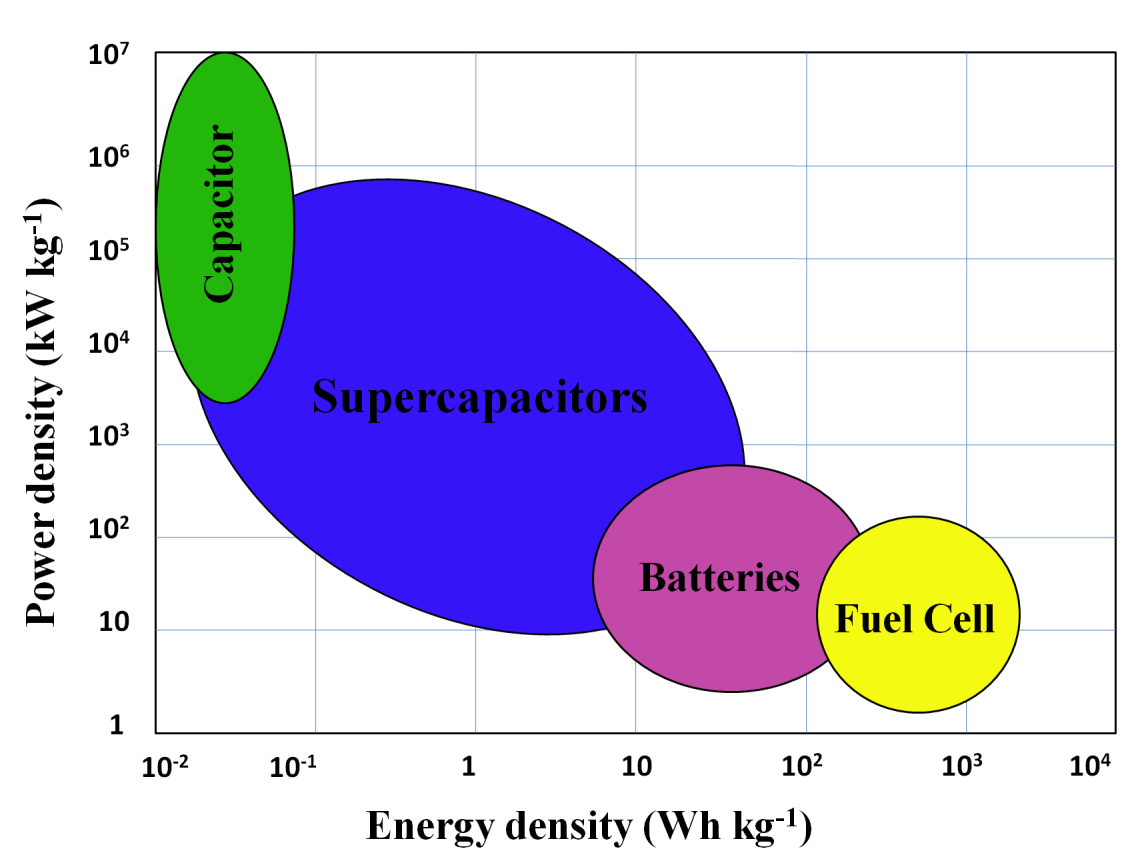
Any supercapacitor system’s performance efficiency is often evaluated in terms of its specific capacitance, energy density, and power density, as well as its cycle life, and retention capacity.
The specific capacitance is calculated from the GCD curves according to the following equation (1) reported in the literature [9].
$$ C s p = \frac {I \times t}{m \times \Delta v} $$
(1) Where Csp is the specific capacitance (F g-1), I is the response current (mA cm−2), Δt is the discharge time (s), m is the mass (g) of the electrode recorded using the weight difference method, and ΔV is the potential range (V). The power density (P, kW kg-1) and energy density (E, Wh kg-1) of the three-electrode are calculated from the GCD curves by using equations (2) and (3) reported in the literature [10, 11].
( ) $$ E = \frac {0 . 5 C s p \times \left(\Delta v\right) ^ {2}}{3 . 6} (2) $$
$$ P = \frac {E}{t} (3) $$
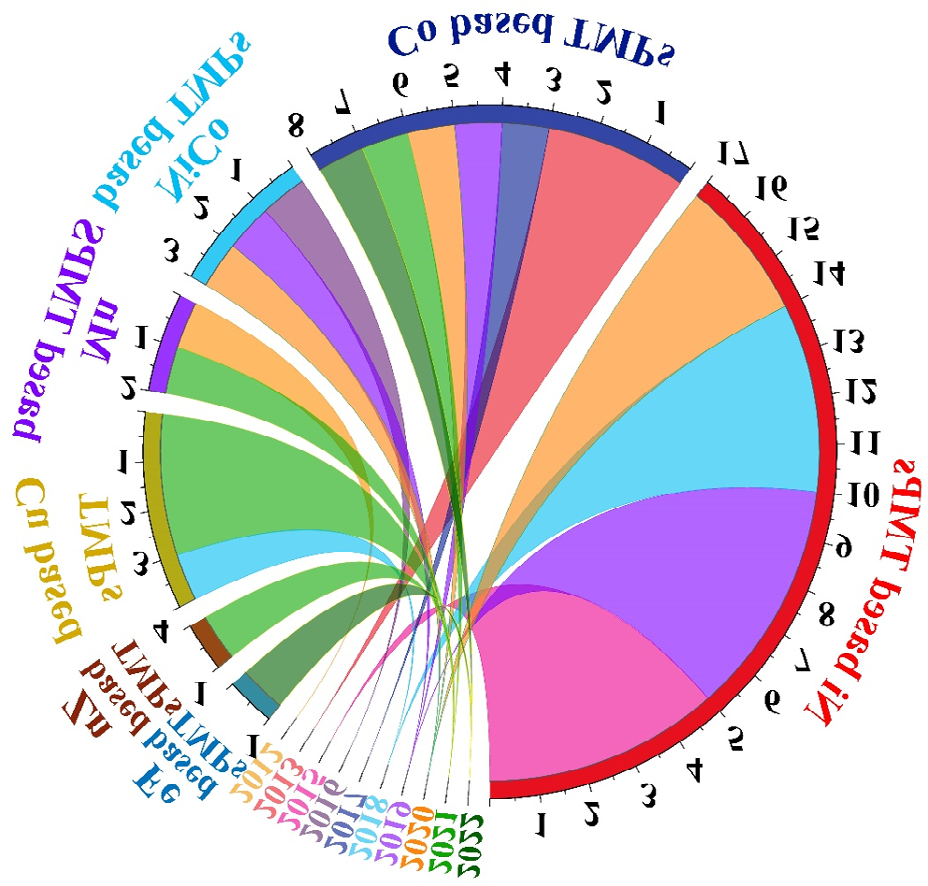
Where ΔV (V) is the applied potential window, t (s) is the discharge time. As a result, high-performance supercapacitors can be primarily ascribed to their lower equivalent series resistance (ESR), wider operating voltage, and high capacitance value, which are governed by the properties of the electrode material used and the interaction of electrolyte ions. Additionally, the parameters of the electrode (morphology, size, porosity, homogeneity, etc.) and electrolyte (conductivity, viscosity, density, volatility, etc.) affect the overall performances of SCs. As a result, choosing the right material for an electrode is crucial for high-performance supercapacitors. There have been significant efforts to use environmentally friendly electrode materials and boost the power and energy density of electrodes while also lowering the cost of manufacture. The most common electrode materials for supercapacitors are typically carbon materials, metal-organic frameworks (MOFs), metal oxides (hydroxides), conductive polymers, and transition metal phosphates (TMPs). In comparison, TMPs generally outperform carbon-based materials in terms of specific capacitance and cycling efficiency as TMPs contain phosphorus, a chemical element that has the ability to store and release electrons which is essential for energy storage. Along with this, the TMP-based compounds have exceptional morphology which enhances the electrochemical performance [12]. The elemental phosphorus is also known for its lower electronegativity and lower bond ionicity, the interaction of metals and phosphorus results in a sequence of TMPs that display greater metalloid characteristics [13]. Additionally, the coexisting P-P and direct metal-metal bonding networks in TMPs exhibit great flexibility in the cation/anion ratio (variable valence states and coordination numbers), providing an open framework with substantial channels and cavities for effective electron/ion transport [14]. Furthermore, Ni, Co and Mn are among the transition metal phosphates that produce more redox oxidation states, which is advantageous for supercapacitors [15]. As a result, active TMPs such as Ni2P2O7, Co3(PO4)2, and Mn3(PO4)2 are widely explored for supercapacitor application as shown in Figure 2. Due to their high redox behaviour, low cost, higher energy density, superior cycle stability, and high oxidation potential they demonstrate interesting results as promising electrode materials for SCs application which are particularly covered in this review. The main takeaway from this review for larger research communities is to provide guidelines for future research directions in the energy storage applications of TMPs as well as a summarised comparative accounting of the performance parameters associated with various TMPs.
Transition Metal Phosphates
Levi and Peyronel first developed crystal formations of TMPs in 1935 using the generic formula XY2O7, where X denotes a four-valency element and Y denotes a pentavalent element, such as phosphorous [16]. These compounds often exist in a cubic phase with a lattice constant of 8. In the polyanionic structure, TMPs are one of the essential groups of transition metal ions. Furthermore, TMPs electrodes offer several advantages, including excellent thermal stability, high safety, and long cycle life. These properties make them attractive for various energy storage applications.
Nickel Phosphosphates: The term “nickel phosphate” refers to a material composed of the ions of nickel (Ni) and phosphate (PO4). Nickel phosphates have a wide variety of structures that can boost their ion exchange rate and ionic conductivity. It is frequently utilized as an active material in the electrode of supercapacitors in order to efficiently utilize nickel phosphate. Nickel phosphate-based electrodes are synthesized using several techniques, including hydrothermal [17], sol-gel [18] and electrodeposition [19] etc. The overall efficiency of nickel phosphate-based supercapacitors is significantly influenced by the choice of electrode architecture, electrolyte, and device design. The overall energy storage mechanism in supercapacitors is facilitated by the high specific capacitance, long cycle life, favourable redox behaviour, and conductivity of nickel phosphate. Literature shows S. Ramesh et al. synthesized Ni3(PO4)2 via a sonochemical method which exhibited the maximum specific capacity of 620 C g-1 at 0.4 A g-1. Additionally, the fabricated Ni3(PO4)2 //activated carbon-based asymmetric supercapacitor with a potential voltage range of 1.45 V. The device exhibited an energy density of 76 W h kg-1 and a power density of 599 W kg-1 with life cycles of 88.5% capacitance retention after 3000 cycles [20]. Yusuke Yamauchi, et al. reported amorphous nickel phosphate-based nanotubes via the solvothermal method for asymmetric supercapacitors (ASC). The device was fabricated using nickel phosphate as the positive electrode and activated carbon (AC) as the negative electrode which exhibits high energy densities of 50 W h kg-1, at power densities of 362 W kg-1 with 100 % retention over 5000 cycles [21].
Despite being an insulating substance, nickel phosphate can be made more electrically conductive by embedding it into conductive frameworks or combining it with other conductive materials like carbon-based substances or conducting polymers. This facilitates efficient charge transport and enhances the overall performance of the supercapacitor electrode N. Manyala et al. [22]. synthesized pristine Ni3(PO4)2 nano-rods and Ni3(PO4)2/GF composites via a hydrothermal method. The electrochemical behaviour of Ni3(PO4)2/GF composites was studied in a three-electrode cell configuration using 6 M KOH electrolyte which exhibited the highest specific capacity of 48 mA h g-1 at a current density of 0.5 A g-1. A hybrid asymmetric device was also fabricated with Ni3(PO4)2/ GF as the cathode and carbonized iron cations (Fe3+) adsorbed onto polyaniline (PANI) (C-FP) as the anode material and tested in with the potential range of 0.0– 1.6 V using 6 M KOH. This hybrid device achieved maximum energy and power densities of 49 W h kg-1 and 499 W kg-1, respectively, at 0.5 A g-1 and had long-term cycling stability. As shown in Figure 3 CV curve of Ni-Co Phosphate is a reflection of both faradic Ni Phosphate and Pseudocapacitive Co Phosphate [23].
![Figure 3: The CV curve of Ni-Co phosphate as a reflection of both faradic Ni phosphate and pseudocapacitive Co phosphate materials. Reproduced and reprinted with permission from ref [23] Elsevier.](/fulltextimages/10758/fig_3.png)
For practical applications, efforts tend to focus on enhancing energy density, cycling stability, and scalability. In order to improve overall performance and broaden the range of possible uses for nickel phosphate-based supercapacitors, researchers also continue to investigate hybrid systems and composite materials that combine nickel phosphate with other active materials.
Cobalt Phosphosphates: Cobalt phosphate (Co3(PO4)2) is an inorganic compound composed of cobalt (Co) and phosphate (PO4) ions which demonstrates excellent electrochemical properties making it suitable for supercapacitor applications. Cobalt ions undergo multiple oxidation and reduction reactions leading to high capacitance and rapid charge/discharge capabilities. Cobalt phosphate can be synthesized using various methods, like co-precipitation [24], hydrothermal synthesis [25], sol-gel techniques [26] and electrodeposition [27] etc. The synthesized cobalt phosphate is typically integrated into the supercapacitor electrode using techniques like slurry casting, screen printing, or electrodeposition onto the conductive substrates. A literature survey reveals that Hui Mao et al. synthesized Co3(PO4)2 nanoflakes by hydrothermal method and obtained a specific capacitance of 410 F g-1 at the current density of 1.0 A g-1. (1 M KOH electrolyte flexible symmetric supercapacitor was fabricated with PVA-KOH gel electrolyte, exhibiting the specific capacitance of 165 F g-1 at a current density of 0.5 A g-1 with a high energy density of 52.8Wh kg-1 at a power density of 756 W kg-1 and the capacity retention was still 96.1% after 2000 cycles [28]. Figure 4 shows various morphology obtained for Co3(PO4)2.
![Figure 4: (a-d) SEM images of Co3(PO4)2 nanoflakes [28] (a’-d’) SEM images of Co3(PO4)2 samples with different solvents: (a’) sample 3 (50 ml H2O), (b’) sample 2 (45 ml H2O, 5 ml ethanol), (c’) sample 4 (30 ml H2O, 20 ml ethanol), and (d’) sample 5 (10 ml H2O, 40 ml ethanol). Reproduced and reprinted with permission from ref [28,29] Springer and Royal Society of Chemistry.](/fulltextimages/10758/fig_4.png)
Figure 4: (a-d) SEM images of Co3(PO4)2 nanoflakes [28] (a’-d’) SEM images of Co3(PO4)2 samples with different solvents: (a’) sample 3 (50 ml H2O), (b’) sample 2 (45 ml H2O, 5 ml ethanol), (c’) sample 4 (30 ml H2O, 20 ml ethanol), and (d’) sample 5 (10 ml H2O, 40 ml ethanol). Reproduced and reprinted with permission from ref [28, 29] Springer and Royal Society of Chemistry.
Furthermore, S. K. Shinde et al. synthesized highly porous 1D nanobelt-like cobalt phosphate (Co2P2O7) materials using a hydrothermal method and obtained a specific capacitance of 1766 F g−1 at a lower scan rate of 5 mVs-1 in a 1 M KOH electrolyte. An asymmetric hybrid Co2P2O7//AC supercapacitor device exhibited the highest capacitance of 266 F g-1, with an excellent energy density of 83.16Wh kg-1, and a power density of 9.35 kW kg-1, while retention capacity of the electrodes up to 4000 cycles was achieved [30]. Vinod Patil et al. synthesized amorphous cobalt phosphate thin film by successive ionic layer adsorption and reaction (SILAR) method and obtained a specific capacitance of 1147 F g-1 at a 1 mA cm-2 current density. Additionally, hybrid supercapacitor devices were assembled with cobalt phosphate and rGO (reduced graphene oxide) as cathode and anode electrodes, respectively. The assembled hybrid aqueous supercapacitor device (S-CP4//KOH//rGO) delivered 44.8Wh kg-1 specific energy (SE) at a specific power (SP) of 4.8 kW kg-1 with 126 F g-1 specific capacitance and an outstanding 94% capacitive retention over 5000 cycles [31]. Yufeng Zhao, et al. synthesized a (Ni, Co)3(PO4)2·8H2O nano slices by a mild hydrothermal method and obtained a specific capacitance of 1128 F g-1 at a current density of 0.5 A g-1. The ASC based on the hybrid exhibited a high energy density of 35.3Wh kg-1 at a low power density and still holds 30.9Wh kg-1 at 4400 W kg-1. Significantly, the ASC manifests very high cycling stability with 95.6% capacitance retention after 5000 cycles [32]. Supriya Marje, et al. synthesized nickel cobalt phosphate thin film electrode by chemical bath deposition method and obtained a specific capacitance of 1116 F g-1 at 0.5 A g-1 in 1 M KOH electrolyte. A fabricated ASC device consists of nickel cobalt phosphate thin film as a cathode and reduced graphene oxide as an anode delivered a higher specific capacitance of 120 F g-1 with a high energy density of 42.3Wh kg-1 at a power density of 1 kW kg-1 and 83.7 % initial capacitance retention after 4000 GCD cycles [33].
The specific capacitance of cobalt phosphate electrodes can range from a few tens to hundreds of Farads per gram (F g-1). However, cobalt phosphate often displays lower specific capacitance when compared to alternative electrode materials like activated carbon. In addition, the use of cobalt in cobalt phosphate electrodes may provide a solution with cycling stability and high cost. Researchers have investigated doping cobalt with other elements or hybridizing it with carbon-based materials, to improve the electrochemical performance of cobalt phosphate. These methods seek to increase the electrical conductivity, stability, and specific capacitance of cobalt phosphate electrodes. Thus, Shaoqun Ma and Dong Xianget al. synthesized nickel cobalt ammonium phosphate electrode material by a hydrothermal method and obtained a specific capacitance of 811.1 Fg-1 at the current density of 1.25 A g-1. The electrochemical performance, good reversibility and better stability with 89.1% capacitance retention over 2000 cycles have been achieved [34]. The another report reveals hierarchical structured cobalt phosphate (Co3(PO4)2) nanoflakes were synthesized by simple co- precipitation method and employed as electrodes for supercapacitor. The electrochemical behaviour of as prepared and calcined (Co3(PO4)2) samples was studied and compared to investigate the effect of crystalline nature. The specific capacitance for the as-synthesized and calcined (Co3(PO4)2) nanoflakes electrodes was 132 and 210 Fg-1 at a scan rate of 10 mV s-1. The schematic, XRD characterization, electrochemical performance and stability with columbidc effinciency is shown in Figure 5.
Furthermore, Pranav Katkar et al. synthesized a binder- free, amorphous iron-doped nickel-cobalt phosphate by successive ionic layer adsorption and reaction method and obtained a specific capacitance of 987 C g-1 at a current density of 2.1 A g-1. The designed F-NCP-3//rGO ACS device shows a wide potential window of 1.6 V and a maximum specific capacitance of 116 F g-1 at 1.5 A g-1. In addition, the ASC device gives a higher energy density of 41.26 Wh kg-1 at 1.22 kW kg-1 power density and exhibits superior cyclic stability of 93% after 5000 cycles [36]. Abdulmajid Mirghni et al. synthesized nickel-cobalt phosphate/graphene foam (NiCo(PO4)3/GF) as an electrode for a supercapacitor by hydrothermal process and obtained a specific capacitance of 86.4 mAh g−1 at 1 A g-1. The hybrid supercapacitor device (NiCo(PO4)3//AC) has also been fabricated and achieved the highest energy density of 34.8Wh kg−1 and a power density of 377 W kg-1 at a specific current of 0.5 A g-1. The hybrid device also showed 95% of capacity retention after 10000 charge-discharge cycles at a specific current of 8 A g-1 and 90% efficiency at a floating time over 110 h at 5 A g-1 [37]. The purpose of ongoing research is to improve the synthesis processes, investigate novel cobalt phosphate structures and morphologies, and develop hybrid electrode structures to improve the overall performance of cobalt phosphate- based supercapacitors. In conclusion, cobalt phosphate is promising electrode material for supercapacitors, offering good specific capacitance, rate capability, and stability. To enhance its overall performance and address issues like its lower specific capacitance when compared to other materials, more study and development are required.
![Figure 5: Furthermore, Pranav Katkar et al. synthesized a binder- free, amorphous iron-doped nickel-cobalt phosphate by successive ionic layer adsorption and reaction method and obtained a specific capacitance of 987 C g-1 at a current density of 2.1 A g-1. The designed F-NCP-3//rGO ACS device shows a wide potential window of 1.6 V and a maximum specific capacitance of 116 F g-1 at 1.5 A g-1. In addition, the ASC device gives a higher energy density of 41.26 Wh kg-1 at 1.22 kW kg-1 power density and exhibits superior cyclic stability of 93% after 5000 cycles [36]. Abdulmajid Mirghni et al. synthesized nickel-cobalt phosphate/graphene foam (NiCo(PO4)3/GF) as an electrode for a supercapacitor by hydrothermal process and obtained a specific capacitance of 86.4 mAh g−1 at 1 A g-1. The hybrid supercapacitor device (NiCo(PO4)3//AC) has also been fabricated and achieved the highest energy density of 34.8Wh kg−1 and a power density of 377 W kg-1 at a specific current of 0.5 A g-1. The hybrid device also showed 95% of capacity retention after 10000 charge-discharge cycles at a specific current of 8 A g-1 and 90% efficiency at a floating time over 110 h at 5 A g-1 [37]. The purpose of ongoing research is to improve the synthesis processes, investigate novel cobalt phosphate structures and morphologies, and develop hybrid electrode structures to improve the overall performance of cobalt phosphate- based supercapacitors. In conclusion, cobalt phosphate is promising electrode material for supercapacitors, offering good specific capacitance, rate capability, and stability. To enhance its overall performance and address issues like its lower specific capacitance when compared to other materials, more study and development are required.](/fulltextimages/10758/fig_5.png)
Figure 5: (a) The schematic representation of Co3(PO4)2 nanoflakes by simple coprecipitation method. (b) XRD patterns of the (a) Hexagonal phase Co3(PO4)2 -JCPDS No. 701795, (b) as-synthesized, and (c) calcined Co3(PO4)2 sample. (c) (a) Comparison of Charge-Discharge (CD) curves of as-synthesized and calcined Co3(PO4)2 electrode materials at a current density of 3 A g-1, (b and c) CD curves of calcined and as-synthesized materials at various current densities, and (d) the variation of SC with related to current density. (d)Specific capacitance and coulombic efficiency vs. cycle number of the calcined Co3(PO4)2 electrode. Reproduced and reprinted with permission from ref [35] Wiley.
Manganese Phosphate: Manganese phosphate is an inorganic compound with the chemical formula Mn3(PO4)2 with favourable properties, like high theoretical specific capacitance abundance, low cost, and environmental friendliness, and hence, can be counted for supercapacitor application. Manganese phosphate can be synthesized by using various methods, like hydrothermal synthesis [38], sol-gel techniques [39] and co-precipitation [40] and Self- template [41] (Figure 6) etc. A literature survey reveals that Pranav Katkar et al. synthesized binder-free micro rods-like manganese phosphate thin film by single-pot hydrothermal method and obtained a specific capacitance of 145 F g−1 at 0.2 mA cm-2 current density in 1.0 M Na2SO4 electrolyte. The symmetric energy storage device was assembled with PVA- Na2SO4 solid gel-electrolyte. The corresponding symmetric supercapacitor achieves a high energy density of 11.7Wh kg−1 at a high-power density of 1.41 kW kg−1 with an excellent specific capacitance of 37 F g−1 at 0.1 mA cm-2 current density. Manganese phosphate shows long-term electrochemical cyclic stability at a current density of 0.8 mA cm-2 for 9000 galvanostatic charge-discharge cycles with excellent capacitance retention (99 %) [42].
![Figure 6: Self-templating synthesis of manganese phosphate hollow nanospheres. Reproduced and reprinted with permission from ref [42] Copyright 2018 American Chemical Society.](/fulltextimages/10758/fig_6.png)
Moshawe Madito et al. synthesized graphene-manganese phosphate (graphene-Mn3P2O8) composite by hydrothermal method and obtained a specific capacitance of 7.2 mAh g−1. The electrochemical analysis confirmed that the n-type- doped composite graphene has enhanced the electrical conductivity of the Mn3P2O8 electrode and decreased the potential barriers by enhancing the interfacial charge transfer between the electrode surface and the electrolyte.
Hence, the graphene-Mn3P2O8 composite electrode exhibited a high specific capacity of 38.4 mA h g−1 with excellent cycling stability (∼100% capacity retention over 5000 charge- discharge cycles at 5 A g−1 [43]. Kumar Raju synthesized ammonium manganese phosphate hydrate, (NH4MnPO4·H2O) by hydrothermal method and obtained a specific capacitance of 48.4F g-1. The devices showed excellent energy and power densities i.e. 29.4Wh kg-1 and 133 kW kg-1 for asymmetric cells with extraordinary capacitance retention of 93% over 100000 cycles at 5 A g-1 for asymmetric supercapacitor [44]. Chee Lee et al. synthesized manganese phosphate particles decorated polyaniline electrode material by sonochemical method followed by calcinations and obtained a specific capacitance of 347 C g-1 in 1 M KOH electrolyte. The hybrid supercapacitor (activated carbon//PANI-M90) achieved a maximum energy density of 14.7Wh kg-1 and a power density of 378 W kg-1 with 80% of capacity retention after 3000 charge-discharge cycles [45]. N. Priyadharsini et al. synthesized potassium manganese phosphate (a mixture of KMnPO4⋅H2O and KMnPO4 phases) by sol-gel thermolysis method and the obtained specific capacitance was 516 F g−1 at 2 mV s−1 in 1 M KOH aqueous electrolyte. The electrode shows a better specific capacity of 329 F g−1 at a current density of 0.6 mA cm-2 in galvanostatic charge-discharge measurements. The electrode displayed 82% capacitance retention at 1 mA cm-2 for consecutive 1000 cycles in a three-electrode system [46]. Yan-Hua Dai, et al. synthesized manganese phosphate nanosheets by chemical precipitation method and obtained a specific capacitance of 302 F g−1 at 1 mV s−1 in 2 M KOH alkaline electrolyte. The aqueous asymmetric supercapacitor device delivers a high energy density of 32.32 Wh kg−1 at a power density of 4250 W kg−1 with 65.22 % retention over 2000 cycles of charge-discharge [47]. Xiao Liu, et al. synthesized a manganese phosphate cathode by electrochemical method and obtained exhibited a high specific capacity of 912.4 F g−1 at current density 1 A g-1 in 1 M Na2SO4 electrolyte. A device demonstrates a specific capacitance of 205.5 Fg-1, energy density of 126 Wh kg-1 and power density of 161 W kg-1 with 95.37% stability of capacity over 5000 cycles [48]. Furthermore, Hongbin Lu et al. synthesized high-performance all-solid-state supercapacitors based on the assembly of graphene and manganese phosphate nanosheet which delivered electrode- specific capacitance of 2086 F g−1 at 1 mV s−1. While the device demonstrated a specific capacitance of 152 F g-1 with an energy density of 0.17 Wh cm-2 at 0.5 Ag-1 with 100% capacitance retention over after 2000 GCD cycles at 2 A g−1 [49]. Furthermore, to enhance the specific capacitance of the active metal phosphates electrode, researchers moved the attention to the synthesis of the composite of the manganese phosphate. Muhammad Iqbal et al. synthesized a composite of cobalt manganese phosphate by a sonochemical method and obtained a specific capacitance of 1704.21 F g−1 at 1.2 A g−1. The supercapacitor device was found to have an impressive specific energy of 45.45 Wh kg−1 at 0.5 A g−1 and provided a remarkable specific power of 4250 W kg−1 at 5 A g−1 current density. The device exhibits 93% capacity retention after 1500 charge-discharge cycles [50]. Another article by his group reports the synthesis of copper-doped cobalt manganese phosphate by a sonochemical method and obtained a specific capacitance of 483 C g-1 at 0.5 A g-1. The fabricated device delivered specific energy of 56Wh kg-1 with a specific power of 800 W kg-1 and holds an outstanding specific power of 6420 W kg-1 while still retaining specific energy of 16.88Wh kg-1. Moreover, the device delivered excellent capacity retention of 97.2% over 2000 GCD cycles [51].
![Figure 7: (a) Schematic diagram of the hydrothermal method for cobalt manganese phosphate thin film deposition (b) Schematic representation of crystal growth with morphological evolution of the cobalt manganese phosphate nano/microstructure. Reproduced and reprinted with permission from ref [53] American Chemical Society.](/fulltextimages/10758/fig_7.png)
Futhermore, cobalt manganese phosphate (H-CMP-series) thin films with different compositions of Co/Mn are prepared on stainless steel (SS) substrate via a facile hydrothermal method (Figure 7) [52] and employed as binder-free cathode electrodes in a hybrid supercapacitor. The cobalt manganese phosphate thin film electrode demonstrates a maximum specific capacitance of 571 F g-1 at a 2.2 A g-1 current density in 1 M KOH with capacitance retention of 88% over 8000 charge-discharge cycles. More importantly, the aqueous/all-solid-state asymmetric supercapacitor manufactured with the cobalt manganese phosphate thin film as the cathode and reduced graphene oxide (rGO) as the anode displays a high operating potential window of 1.6 V. The aqueous asymmetric device exhibited specific capacitance of 128 F g-1 at a of 1 A g-1 current density with an energy density of 45.7 Wh kg-1 and a power density of 1.65 kW kg-1. As a result, current research aims to enhance the synthesis procedures, look into innovative manganese phosphate structures and morphologies, and create hybrid electrode structures to enhance the overall performance of manganese phosphate- based supercapacitors.
Summary and Outlook
Phosphate-based materials have drawn considerable amounts of interest for energy storage applications because of their unique properties and potential for high-performance energy storage systems. Phosphate materials, such as nickel phosphate, cobalt phosphate, and manganese phosphate provide benefits including superior electrochemical performance, stability, and scalability. They have a higher capability for storing energy since they can show both double-layer capacitance and pseudocapacitance. By combining phosphate materials with conductive additives or incorporating them into nanocomposites, their conductivity can be enhanced, leading to improved charge transfer kinetics. Thus, phosphate nanocomposites demonstrate potential electrodes for supercapacitor applications by offering improved capacitance, cycle stability, and enhanced electrochemical performance. The outlook for phosphate materials in energy storage applications is promising, but further research and development are needed to optimize their performance and investigate their commercial viability.
Key Areas of Focus Include
Nano-engineering: Continued research into synthesis methods, nanostructuring, and composite engineering approaches will lead to the development of highly efficient and tailored phosphate-based materials for energy storage. The performance of the electrochemical system can be greatly influenced by controlling the shape, size, and crystal structure of the phosphates. Stability: Enhancing the stability and cycling life of phosphate materials is crucial for their practical application. To extend the lifespan of phosphate-based energy storage devices, efforts should be focused on comprehending and minimizing degradation mechanisms, enhancing structural stability, and investigating protective coatings. Scalability: Developing scalable and cost-effective manufacturing processes for phosphate materials is essential for their widespread adoption. This includes exploring large- scale synthesis methods, optimizing electrode fabrication techniques, and utilizing abundant and affordable raw materials. Integration with other energy storage systems: Phosphate materials can complement other energy storage systems, such as lithium-ion batteries or fuel cells, to create hybrid energy storage solutions. Investigating the synergistic effects and compatibility between phosphate materials and other technologies will lead to innovative and high-performance energy storage systems. Impact on Environmental: Environmental effects of phosphate-based energy storage devices are supposed to be taken into account as sustainability becomes more crucial. Utilising eco-friendly materials, reducing the usage of harmful or rare elements, and investigating the disposal or recycling options for phosphate-based devices should all be the focus of future research.
In conclusion, phosphate materials hold great potential for energy storage applications, including supercapacitors. Continued research and development efforts will further unlock their capabilities, leading to the realization of these being used as efficient, stable, and scalable energy storage devices for a wide range of applications.
Acknowledgement
The author RAC gratefully appreciates Chhatrapati Shahu Maharaj Research Training and Human Development Institute (SARTHI), Pune Government of Maharashtra for the financial support under the Chhatrapati Shahu Maharaj National Research Fellowship-2019 (CSMNRF-2019). We are thankful to the Department of Chemistry, Shivaji University, Kolhapur for providing the research facilities. We are thankful to Shivaji University Group for Advanced Research “SUGAR” for the helpful discussion.
References
-
Heubner C, Nikolowski K, Reuber S, Schneider M, Wolter M, et al. (2021) Recent Insights into Rate Performance Limitations of Li-ion Batteries. Batteries & Supercaps 4(2): 268-285.
-
Kraytsberg A, Ein Eli Y (2011) Review on Li–air batteries—Opportunities, limitations and perspective. J Power Sources 196(3): 886-893.
-
Liang Y, Zhao CZ, Yuan H, Chen Y, Zhang W, et al. (2019) A review of rechargeable batteries for portable electronic devices. InfoMat 1(1): 6-32.
-
Arif M, Sanger A, Singh A (2018) Sputter deposited chromium nitride thin electrodes for supercapacitor applications. Mater Lett 220: 213-217.
-
Chavan RA, Ulissoa DM, Rasal A, Chang JY, Ghule AV (2023) Facile Synthesis of Ternary MXene Nanocomposites as an Electrode for Supercapacitive Applications. Mater Adv 4(12): 2659-2666.
-
Kamble G, Kashale A, Kolekar S, Chen IW, Sathe B, et al. (2021) Reflux temperature-dependent zinc cobaltite nanostructures for asymmetric supercapacitors. J Mater Sci Mater Electronics 32: 5859-5869.
-
Chavan RA, Kamble GP, Dhavale SB, Rasal AS, Kolekar SS, et al. (2023) NiO@MXene Nanocomposite as an Anode with Enhanced Energy Density for Asymmetric Supercapacitors. Energy & Fuels 37(6): 4658-4670.
-
Vadiyar MM, Bhise SC, Kolekar S, Chang JY, Ghule KS, et al. (2016) Low-cost flexible 3-D aligned and cross-linked efficient ZnFe2O4 nano-flakes electrode on stainless steel mesh for asymmetric supercapacitors. J Mater Chem A 4(9): 3504-3512.
-
Kamble GP, Rasal AS, Gaikwad SB, Gurav VS, Chang JY, et al. (2021) CuCo2O4 nanorods coated with CuO nanoneedles for supercapacitor applications. ACS Appl Nano Mater 4(11): 12702-12711.
-
Dhavale SB, Patil VL, Beknalkar SA, Teli AM, Patil AH, et al. (2021) Study of solvent variation on controlled synthesis of different nanostructured NiCo2O4 thin films for supercapacitive application. J Colloid Interface Science 588: 589-601.
-
Bandgar SB, Vadiyar MM, Ling YC, Chang JY, Han SH, et al. (2018) Metal Precursor Dependent Synthesis of NiFe2O4 Thin Films for High-Performance Flexible Symmetric Supercapacitor ACS Appl Energy Mater 1(2): 638-648.
-
Pujari SS, Kadam SA, Ma YR, Jadhav SB, Kumbhar SS, et al. (2022) Hydrothermally synthesized nickel copper phosphate thin film cathodes for high-performance hybrid supercapacitor devices. Journal of Energy Storage 52: 105037.
-
Li X, Elshahawy AM, Guan C, Wang J (2017) Metal Phosphides and Phosphates-based Electrodes for Electrochemical Supercapacitors. Small 13(39): 1701530.
-
Zhao Y, Zhao M, Ding X, Liu Z, Tian H, et al. (2019) One- step colloid fabrication of nickel phosphides nanoplate/ nickel foam hybrid electrode for high-performance asymmetric supercapacitors. Chem Eng J 373: 1132- 1143.
-
Yang L, Zhu Q, Yang K, Xu X, Huang J, et al. (2022) A Review on the Application of Cobalt-Based Nanomaterials in Supercapacitors. J Nanometer 12(22): 4065.
-
Norberg ST, Svensson G, Albertsson J (2001) A TiP2O7 superstructure. Acta Crystallogr 57(3): 225-227.
-
Fa D, Yu B, Miao Y (2019) Synthesis of ultra-long nanowires of nickel phosphate by a template-free hydrothermal method for electrocatalytic oxidation of glucose. Colloids and Surf 564: 31-38.
-
Thong YJ, Beh JH, Lai JC, Lim TH (2019) Synthesis and Characterization of Alginate-BasedSol–Gel Synthesis of Lithium Nickel Phosphate with Surface Area Control. Ind Eng Chem Res 58(2): 625-631.
-
Han R, Pan W, Shi S, Wu H, Liu S (2007) Electrodeposition of macroporous magnetic metal films using colloidal nickel phosphate templates. Mater Lett 61(28): 5014- 5017.
-
Omar FS, Numan A, Duraisamy N, Bashir S, Ramesh K, et al. (2016) Ultrahigh capacitance of amorphous nickel phosphate for asymmetric supercapacitor applications. RSC Adv 6(80): 76298-76306.
-
Wulan Septiani NL, Kaneti YV, Fathoni KB, Wang J, Ide Y, et al. (2020) Self-assembly of nickel phosphate-based nanotubes into two-dimensional crumpled sheet- like architectures for high-performance asymmetric supercapacitors. Nano Ener 67: 104270.
-
Wang T, Hao Q, Liu J, Zhao J, Bell J, et al. (2016) High capacitive amorphous barium nickel phosphate nanofibers for electrochemical energy storage. RSC Adv 6(51): 45986-45992.
-
Mirghni AA, Oyedotun KO, Mahmoud BA, Bello A, Ray SC, et al. (2019) Nickel-Cobalt Phosphate/Graphene foam as Enhanced Electrode for Hybrid Supercapacitor. Compos Part B: Eng 174: 106953.
-
Mahmoud BA, Mirghni AA, Oyedotun KO, Momodu D, Fasakin O, et al. (2020) Synthesis of Cobalt Phosphate- Graphene Foam Material Via Co-Precipitation Approach for a Positive Electrode of an Asymmetric Supercapacitors Device. J Alloys Compd 818: 153332.
-
Katkar PK, Marje SJ, Kale SB, Lokhande AC, Lokhande CD, et al. (2019) Synthesis of Hydrous Cobalt Phosphate Electro-Catalysts by a Facile Hydrothermal Method for Enhanced Oxygen Evolution Reaction: Effect of Urea Variation. CrystEngComm 21: 884-893.
-
Mugundan S, Rajamannan B, Viruthagiri G, Shanmugam N, Gobi R, et al. (2015) Synthesis and Characterization of Undoped and Cobalt-Doped Tio2 Nanoparticles Via Sol- Gel Technique. Appl Nanosci 5: 449-456.
-
Zhong DK, Cornuz M, Sivula K, Gratzel M, Gamelin DR (2011) Photo-Assisted Electrodeposition of Cobalt– Phosphate (Co–Pi) Catalyst on Hematite Photoanodes for Solar Water Oxidation. Energy Environ Sci 4(5): 1759-1764.
-
Mao H, Zhang F, Liu X, Qiu J, Li B, et al. (2018) Synthesis of Cobalt Phosphate Nanoflakes for High-Performance Flexible Symmetric Supercapacitors. J Mater Sci Mater Electronics 29: 16721-16729.
-
Li J, Zhang L, Yang P, Cheng X (2018) Morphological Evolution of Co Phosphate and its Electrochemical and Photocatalytic Performance CrystEngComm 20(43): 6982-6988.
-
Ajay D, Shinde Sk, Sutripto M, Yadav HM, Young Kim D, et al. (2022) A Novel Synthesized 1D Nanobelt-like Cobalt Phosphate Electrode Material for Excellent Supercapacitor Applications. Journal Materials 15(22).
-
Patil VV, Pujari SS, Bhosale SB, Kumbhar SS, Parale VG, et al. (2022) Hydrous and Amorphous Cobalt Phosphate Thin-Film Electrodes Synthesized by the SILAR Method for High-Performing Flexible Hybrid Energy Storage Devices. Energy & Fuels 36(20): 12791-12806.
-
Yufeng Z, Zhaoyang C, Ding Bang X, Yuqing Q, Yongfu T, et al. (2016) Hybridized Phosphate with Ultrathin Nanoslices and Single Crystal Microplatelets for High Performance Supercapacitors. Scientific Reports 6: 17613.
-
Marje S, Patil V, Parale V, Park HH, Shinde P, et al. (2021) Microsheets Like Nickel Cobalt Phosphate thin Films as Cathode for Hybrid Asymmetric Solid-State Supercapacitor: Influence of Nickel and Cobalt Ratio Variation. Chem Eng J 429 132184.
-
Ma S, Xiang D, Wang Y, Hao X, Li H, et al. (2022) Ammonium Nickel-Cobalt Phosphate Nanoflowers on Highly Conductive Carbon Fibers as an Electrode Material for Enhanced Electrochemical Performance Supercapacitors. Asia Pac Chem Eng 17: E2749.
-
Theerthagiri J, Thiagarajan K, Senthilkumar B, Khan Z, Senthil RA, et al. (2017) Synthesis of Hierarchical Cobalt Phosphate Nanoflakes and Their Enhanced Electrochemical Performances for Supercapacitor Applications. Chem Select 2: 201-210.
-
Katkar PK, Padalkar NS, Patil AM, Jeon JH, Sheikh ZA, et al. (2022) Development of Amorphous Fe-Doped Nickel- Cobalt Phosphate (Fexnico(PO4)2) Nanostructure for Enhanced Performance of Solid-State Asymmetric Supercapacitors. Int J Energy Res 46: 12039-12056.
-
Mirghani A, Oyedotun K, Mahmoud B, Bello A, Ray S, et al. (2019) Nickel-Cobalt Phosphate/Graphene Foam as Enhanced Electrode for Hybrid Supercapacitor Compos. B Eng. 174: 106953.
-
Mirghni AA, Madito MJ, Masikhwa TM, Oyedotun KO, Bello A, et al. (2017) Hydrothermal Synthesis of Manganese Phosphate/Graphene Foam Composite for Electrochemical Supercapacitor Applications. J Colloid Interface Science 494: 325-337.
-
Priyadharsini N, Shanmugavani A, Vasylechko L, Kalai Selvan R (2018) Sol-Gel Synthesis, Structural Refinement, and Electrochemical Properties of Potassium Manganese Phosphate for Supercapacitors. Ionics 24: 2073-2082.
-
Bouddouch A, Amaterz E, Haounati R, Naciri Y, Taoufyq A, et al. (2020) Synthesis, Characterization and Luminescence Properties of Manganese Phosphate Mn3(PO4)2 Mater. Today Proc 22: 16-21.
-
Zhang T, Zhang S, Cao S, Yao Q, Lee JY (2018) A Self- Templating Redox-Mediated Synthesis of Hollow Phosphated Manganese Oxide Nanospheres as Noble- Metal-like Oxygen Electrocatalysts. Chem Mater 30: 8270-8279.
-
Katkar PK, Marje SJ, Pujari SS, Khalate SA, Deshmukh PR, et al. (2020) Single-Pot Hydrothermal Synthesis of Manganese Phosphate Microrods as a Cathode Material for Highly Stable Flexible Solid-State Symmetric Supercapacitors. Synth Met 267: 116446.
-
Madito MJ (2021) Correlation of the Graphene Fermi-Level Shift and the Enhanced Electrochemical Performance of Graphene-Manganese Phosphate for Hybrid Supercapacitors: Raman Spectroscopy Analysis. ACS Appl Mater Interfaces 13(31): 37014-37026.
-
Raju K, Han H, Velusamy DB, Jiang Q, Yang H, et al. (2020) Rational Design of 2D Manganese Phosphate Hydrate Nanosheets as Pseudocapacitive Electrodes. ACS Energy Lett 5: 23-30.
-
Lee CC, Omar FS, Numan A, Duraisamy N, Kasi R, et al. (2017) An Enhanced Performance of Hybrid Supercapacitor Based on Polyaniline-Manganese Phosphate Binary Composite. Journal of Solid State Electrochemistry 21: 3205-3213.
-
Natarajan P, Shanmugavani A, Vasylechko L, Kalai Selvan R (2018) Sol-gel Synthesis, Structural Refinement and Electrochemical Properties of Potassium Manganese Phosphate for Supercapacitors Ionics 24(21).
-
Dai YH, Kong LB, Yan K, Shi M, Luo YC, et al. (2016) Facile Fabrication of Manganese Phosphate Nanosheets for Supercapacitor Applications. Ionics 22: 1461-1469.
-
Yang D, Song Y, Zhang MY, Qin Z, Dong R, et al. (2021) A Manganese Phosphate Cathode for Long-Life Aqueous Energy Storage Adv Funct Mater 31: 2100477.
-
Yang C, Dong L, Chen Z, Lu H (2014) High-Performance All-Solid-State Supercapacitor Based on the Assembly of Graphene and Manganese(II) Phosphate Nanosheets. J Phys Chem C 118(33): 18884-18891.
-
Iqbal MZ, Abbasi U, Alzaid M (2022) Cobalt Manganese Phosphate and Sulfide Electrode Materials for Potential Applications of Battery-Supercapacitor Hybrid Devices. Journal of Energy Storage 50: 104632.
-
Iqbal MZ, Khan J, Gul A, Siddique S, Alzaid M, et al. (2021) Copper Doped Cobalt-Manganese Phosphate Ternary Composites for High-Performance Supercapattery Devices. Journal of Energy Storage 35: 102307.
-
Katkar PK, Marje SJ, Parale VG, Lokhande CD, Gunjakar JL, et al. (2021) Fabrication of a High-Performance Hybrid Supercapacitor Based on Hydrothermally Synthesized Highly Stable Cobalt Manganese Phosphate Thin Films. Langmuir 37(17): 5260-5274.
- Solution-Processed Chiral Perovskites for Biomedical Applications
- Nanotechnology in Health Chemistry and Medicine: Current Challenges and Future Directions
- Human Exposure to Micro- and Nanoplastics: Pathways, Toxicity, and Intervention Strategies
- Exosome Nanomedicine for Cancer Therapy
- Micro and Nanoplastics–Plastisphere, Biotoxicity, Impact on Human Health, and Mitigation Strategies
- Process Validation of Cefixime Powder for Suspension Dosage Form, 50 mL