
Paclobutrazol (PBZ) and its Metabolic Function in Agriculture: A Review
The plant growth retardant paclobutrazol, (PP333) (2RS, 3RS)-1-(4-chlorophenyl)-4,4-dimethyl-2-(1,2,4-triazol-1-yl)pentan-3-ol, inhibits specifically the three steps in the oxidation of the gibberellin precursorent kaurene toent-kaurenoic acid in a cell-free system from Cucurbita maxima endosperm. Paclobutrazol (PBZ) is a plant growth retardant and triazole fungicide. It is a known antagonist of the plant hormone gibberellin. It acts by inhibiting gibberellin biosynthesis, reducing internodial growth to give stouter stems, increasing root growth, causing early fruit set and increasing seedset in plants. ). It is a synthetic compound [(2 RS, 3 RS) -1- (4-chlorophenyl) 4, 4-dimethyl-2- (1 H-1, 2, 4-triazol-1-yl) -pentan-3 ol] that inhibits vegetative growth [6,8], belonging to the triazole group. Chemical properties of PBZ include: molecular weight 293.8, molecular formula C15H20ClN3O, melting point 165°C–166°C, density 1.22 g ml–1 and water solubility 35 mg L–1. PBZ is a hydrophobic and slightly polar molecule, with hydrophilic parts. Paclobutrazol is an inhibitor of enzymes which use cytochrome P450 as a cofactor.
Introduction
The triazole family includes paclobutrazol (PBZ) [(2RS, 3RS)-1-(4-chlorophenyl)-4, 4-dimethyl-2-(1H-1, 2, 4-trizol- 1-yl)-pentan-3-ol]. The triazole family includes paclobutrazol (PBZ) [(2RS, 3RS)-1-(4-chlorophenyl)-4, 4-dimethyl- 2-(1H-1, 2, 4-trizol-1-yl)-pentan-3-ol]. By altering the isoprenoid pathway, blocking GA synthesis, lowering ethylene production, and raising the concentration of CKs and ABA, this substance controls plant growth. According to research by Coolbaugh, et al. ancymidol highly selectively inhibits the oxidative stages in the GA biosynthesis pathway that go from ent-kaurene to ent-kaurenoic acid. It is believed that the active triazol derivatives inhibit the same oxidative processes. According to reports, paclobutrazol prevents the oxidation of kaurene to kaurenoic acid by inhibiting kaurene oxidase, a Cyt P-450 oxidase. This prevents the manufacture of GA in plants. The aims of this investigation were to ascertain the translocation and distribution pattern of paclobutrazol from the root system of apple seedlings at different time intervals by GC, verify the presence of paclobutrazol in apple seedling tissues by GC-MS, and identify the acronyms GA, gibberellin; El, electron impact; TMSi, trimethylsilyl ether; and amu, atomic mass unit. Compounds known as “plant growth retardants” are those that slow down a plant’s growth without altering its developmental trajectory or becoming phytotoxic. A common ingredient in agriculture is PBZ, a member of the triazole plant growth regulator group [1, 2]. It is an inhibitor of cell elongation and internode extension that slows down plant growth by blocking the synthesis of gibberellins. Gibberellins promote the lengthening of cells. In addition, PBZ may cause changes in the morphology of leaves, including bigger leaves, fewer stomatal pores, more surface appendages overall, and a greater density of roots, all of which may enhance the plant’s ability to withstand environmental stressors and resist disease [3]. Because it can impede sterol production as a triazole, PBZ also possesses modest fungicidal activity [3].
Chemistry of Paclobutrazol
Plant growth regulator PBZ ([(2R, 3R + 2S, 3S)-1-(4- chloro-phenyl) 4,4-dimethyl-2-(1,2,4-triazol-1-yl)-pentan- 3-ol]) is a registered brand name that includes Bonzi, Clipper, Cultar, and Parsley. It is categorized as a triazole compound by Fletcher RA, et al. [4]. Triazole compounds have a ring structure with three nitrogen atoms, chlorophenyl, and carbon side chains. According to Hedden P, et al. [5], PBZ is a structurally modified triazole with two asymmetric carbon atoms that is synthesized as a combination of 2R, 3R, and 2R, 3R and 2S, 3S enantiomers. Paclobutrazol (PBZ) is a triazole fungicide and plant growth retardant. It is well recognized to be an antagonist of gibberellin, a plant hormone it works by preventing the synthesis of gibberellin, inducing early fruitset in plants like pepper and tomato, increasing root growth, decreasing internodial growth to produce stouter stems, and increasing seedset. PBZ has also been demonstrated to lessen plants’ sensitivity to frost.
| Common Name | Paclobutrazol | Paclobutrazol Structure | |
|---|---|---|---|
| CAS Number | 76738-62-0 | Molecular Weight | 293.792 |
| Density | 1.2±0.1 g/cm3 | Boiling Point | 460.9±55.0 °C at 760 mmHg |
| Molecular Formula | C H ClN O 15 20 3 | Melting Point | 165-166°C |
Table 1: Nomenclature of the Paclobutrazol.
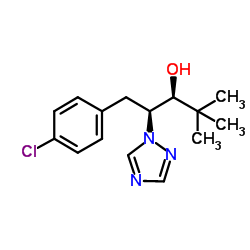
Chemistry of Paclobutrazol (PBZ)
A new bioregulator called PBZ was initially unveiled in 1986 and brought to the market by ICI Agrochemicals, which is now a part of Syngenta. This artificial substance, which is a member of the triazole group, is [(2 RS, 3 RS) -1- (4-chlorophenyl) - 4,4-dimethyl-2- (1 H-1,2,4-triazol- 1-yl) -pentan-3 ol] and it suppresses vegetative growth [6, 8]. The molecular weight of PBZ is 293.8, its chemical formula is C15H20ClN3O, its melting point ranges from 165 to 166 degrees Celsius, its density is 1.22 g ml–1, and its water solubility is 35 mg L–1. PBZ is a somewhat polar, hydrophobic compound with hydrophilic regions. There are two pairings of enantiomers [(2R, 3R)- and (2S, 3S)-] and [(2S, 3R)- and (2R, 3S)-] because it has two chiral centers, or two asymmetric carbons.
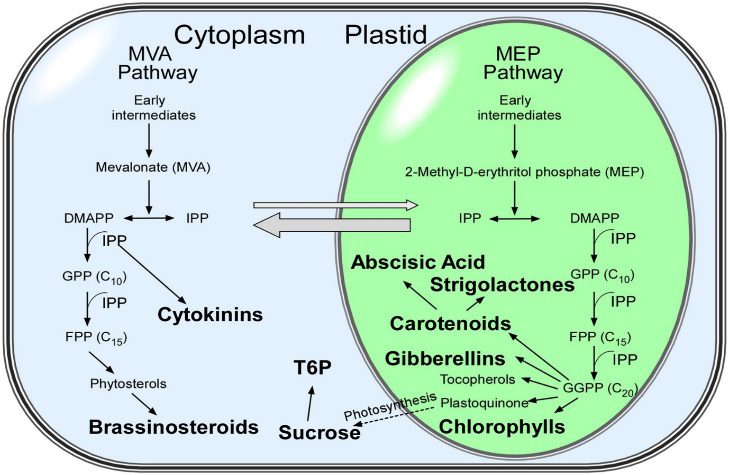
Figure 2: Isoprenoid biosynthetic pathways in plants. Metabolites discussed in this review are shown in bold. The mevalonate (MVA) and methylerythritol phosphate (MEP) pathways both generate isopentenyl diphosphate (IPP) in parallel and contribute to particular isoprenoids (Swiezewska and Danikiewicz, 2005). Thick grey arrows show the exchange of intermediates between the MVA and MEP pathways.
Paclobutrazol (PBZ): PBZ is the ISO common name for an organic compound that is used as a plant growth retardant and triazole fungicide (2), (3) While 2R and 3R are more readily broken down, 2S and 3S exhibit a greater inhibitory efficiency in the production of gibberellin among the stereoisomers.It is a well-known antagonist of the plant hormone gibberellin, which it inhibits. In plants like tomato and pepper, it causes early fruitset, increases seedset, reduces internodal development to produce stouter stems, and increases root growth. PBZ has also been demonstrated to lessen plants’ sensitivity to frost. Moreover, a chemical method for lowering the danger of lodging in cereal crops is the application of paclobutrazol. Arborists have demonstrated that PBZ has other beneficial impacts on trees and shrubs in addition to reducing shoot growth. Enhanced root development, darker green leaves, increased resilience to fungus and bacteria, and improved resistance to drought stress is a few of these. It has been demonstrated that certain tree species have decreased cambial and shoot growth.
Structure and Synthesis: A team at Jealott’s Hill, ICI, filed patents revealing the first synthesis of paclobutrazol.
4-Pinacolone and chlorobenzaldehyde are mixed in an aldol condensation to create a chalcone, which is then hydrogenated with the help of Raney nickel as a catalyst to produce a substituted ketone.
In a study conducted in 1984, ICI researchers used chiral resolution to separate the various enantiomers and were able to show that only the (2R,3R) isomer exhibited significant fungicidal activity, while the growth-regulating features were attributed to the (2S,3S) isomer. However, since both components were useful in agriculture, separation of the isomers was not necessary, and the racemic material-developed under the code number PP333—was the commercial output.”Compendium of Pesticide Common Names: paclobutrazol”: The BCPC [6].
Mechanism of Action: An inhibitor of enzymes that require cytochrome P450 as a co-factor is paclobutrazol. The ent- kaurene oxidase enzyme is inhibited by the (2S,3S) isomer [7, 8]. As a result, geranylgeranyl pyrophosphate builds up in the plant, some of which is used to produce more phytol group and the hormone abscisic. The fungus cytochrome P450 14α-demethylase’s active site is more compatible with the (2R,3R) isomer [9]. This prevents lanosterol from being converted to ergosterol, which is a deadly substance found in the fungal cell membrane and is found in many species. This kind of behavior is seen in numerous other azole derivatives, such as propiconazole and tebuconazole [7]. PBZ is an active ingredient in a number of commercial products, including “AuStar®,” “Regalis® Plus” (BASF, USA), “Cultar® 25 SC,” and “Bonzi®”. It is a broad-spectrum, non-polar chemical that is mostly transported through xylem. It can also be carried by phloem, therefore it will rely on the application route. The terpene pathway is used to frame PBZ’s method of action.
The mode of activity of PBZ is surrounded as portion of the terpene pathway. This can, be it restrains the biosynthesis of gibberellins by inactivating the protein ent-kaurene oxidase, which catalyses their oxidation to ent-kaurenoic corrosive. This favors the actuation of the proteins geranylgeranyl reductase and phytoene synthase for chlorophyll and abscisic corrosive biosynthesis, as a result, it diminishes energy and advances flower acceptance and advancement.
Plant development and advancement is related with cell division and extension initiated by gibberellin action. PBZ applications restrain its synthesis; consequently, cell elongation does not happen. Within the tree you’ll see a more prominent number of takes off, shoots and shorter internodes. Moreover, it increments the thickness of the clears out and decreases the measure of stomatal pores through transpiration.
Mode of Action: In spite of the fact that the exact highlights of the atomic structure which bestow plant development administrative exercises are not well caught on, it shows up to be related to the stereochemical course of action of the substituents on the carbon chain [10]. There are signs that enantiomers having S arrangement at the chiral carbon bearing the hydroxyl gather are inhibitors of GA biosynthesis. One of the inhibitor of GA biosynthesis, paclobutrazol, is basically utilized as development retardant and stretch protectant [11]. This hindrance of development is due to the obstructions of PBZ with gibberellin biosynthesis by restraining the oxidation of ent-kaurene to ent-kauronoic corrosive through inactivating cytochrome P450-dependent oxygenase [12, 13]. PBZ is additionally known to influence the blend of the hormone abscisic corrosive and phytol. Abscisic corrosive is additionally synthesized through the terpenoid pathway. When gibberellins blend is blocked, more antecedents within the terpenoid pathway are amassed and shunted to advance the beginning of abscisic corrosive [14]. It has moreover been detailed to hinder ordinary catabolism of ABA [15]. The impact of PBZ on both the blend and catabolism forms leads to improved concentrations of ABA in takes off. One of the major parts of ABA is to cause closing of stomatal opening and diminishing misfortune of water from takes off through transpiration.
Terpenoid pathway for biosynthesis of gibberellins, abscisic corrosive, phytol, and steroids, and way for corruption of abscisic corrosive. Steps blocked by paclobutrazol shown with Geranyl diphosphate synthase (GPS), Farnesyl diphosphate synthase (FPS), Geranyl geranyl diphosphate synthase (GGPS), ent-copalyl-diphosphate synthase (CPS), ent-kaurene synthase (KS), ent-kaurene oxidase (KO), ent- kaurenoic acid oxidase (KAO), Geranyl geranyl reductase (GGRS), Chlorophyll synthase (CHL) and Phytoene synthase (PSY) are the proteins included within the terpenoid pathway. ABA 8’-hydroxylase (ABA 8′OH) included within the enzymatic debasement of ABA into Phaseic corrosive. KO, KAO and ABA 8′OH are the chemicals restrained upon PBZ application.
Plant development controllers are broadly utilized in modern horticulture to advance plant development, yield and grain quality. Both advantageous and antagonistic impacts of plant growth controllers on growth and advancement as well as plant digestion system have been archived [16]. The term development retardants is utilized for all chemicals that hinder cell division and cell stretching in shoot tissues and control plant height physiologically without developmental impacts [17]. Paclobutrazol could be a part of the triazole family of plant development controllers and has been found to ensure a few crops from different natural stresses, including drought, chilling, warm and UV radiation [18].
Paclobutrazol (PBZ) could be a triazole subordinate that represses sterol and gibberellin biosynthesis [19]. This compound can particularly influence plant development and advancement by changing the photosynthetic rate and altering the phytohormone levels [20]. Paclobutrazol represses the action of ent-kaurene oxidase, which is an chemical within the GA biosynthetic pathway that catalyzes the oxidation of ent-kaurene to ent-kaurenoic corrosive [21]. PBZ application has diminished plant stature, moved forward stem distance across and leaf number, changed root engineering specifically contributed to surrender increment, and by implication diminished the occasion of lodging [22]. It was moreover detailed that application of paclobutrazol effectively diminished vegetative development of rice plants and expanded chlorophyll substance. Rice seedlings treated with paclobutrazol distributed less photosynthates for vegetative development; designated more photosynthates for seed advancement compared to control plants or those plants treated with gibberellin [23].
Paclobutrazol Induced Responses in Plants
Morphological Response: Paclobutrazol is utilized in tall input crop administration to abbreviate the stem, in this manner diminishing the hazard of lodging. There are a few reports portraying the different impacts of paclobutrazol on plant morphology of crops. For illustration, [24] detailed PBZ application altogether diminished plant stature of Camelina sativa when compared to control and actuated overshadowing impact and with most noteworthy concentration of PBZ in which greatest diminishment (47.5crease) in plant tallness with regard to control was obtained. Similarly, paclobutrazol concentrations of 200 mg/L to 600 mg/L diminished gibberellin substance in the clears out compared to that of control when connected to rice plant during preanthesis [25]. Paclobutrazol application diminished plant height and the more prominent concentration of paclobutrazol caused serious dwarfism as demonstrated in Figure 2. Concurring to Tesfahun and Menzir 2018, plant tallness diminishment emphatically related with diminished prolongation of the internodes, instead of bringing down the number of internodes and they found highest internodes to be abbreviated beneath paclobutrazol application. Yield Response: The positive impacts of paclobutrazol on surrender components such as more noteworthy prolific tillers, spike, ripe panicle or spikelet and in a few cases cruel grain weight has been shown in studies assessing the generation potential of cereals; in any case, various ponders have uncovered that the expanded prolific tiller, modified phenology and better canopy have been the most vital components that essentially related with upgraded grain yield in reaction to paclobutrazol application [26]. One of the conceivable increases in grain abdicate is (i) the alter in canopy scope, in which the plant created broader canopy this in turn encouraged progressed light capture attempts for superior photosynthesis in leaves and stems of PBZ treated plants.
Advance, (ii) the clears out in PBZ treated plants were closely packed, dark green and remained on plants for a larger period than controls. This may clarify expanded dry matter aggregation in stem and root and synchronous surrender increases in spite of diminished plant tallness due to PBZ medications. Dish, et al. connected the grain abdicate increase (iii) with moderate senescence in takes off which prolong the phase of seed improvement and development and as a consequence, the yield can be expanded, but the collect time deferred. Physiological Response: Chlorophyllis a basic component of the essential photosynthetic response contains a double work in photosynthesis. The biosynthesis of chloroplast colors was altogether influenced by paclobutrazol. A few considers on Tsegaw, et al. [27] and camilena Sumit, et al. [24] appeared that chlorophyll was higher on plants treated with paclobutrazol compared to control. The expanded chlorophyll substance treated with paclobutrazol can be from minimized harm caused by responsive oxygen and changes in the levels of carotenoids, ascorbate and the ascorbate peroxidase. The report of Nivedithadevi, et al. [28] moreover appeared that plants treated with paclobutrazol synthesized more cytokinin, which in turn improved chloroplast separation and chlorophyll biosynthesis, and avoided chlorophyll debasement. Stress response: Since early relocation from oceanic to terrestrial environments, plants have had to adapt with intermittent and eccentric natural stresses, such as dry season and saltiness. Crop generation in bone-dry or semi- arid locales is usually restricted by soil dampness shortage as well as soil saltiness. Water shortfall coupled with saltiness in irrigation water is the major restricting calculate in most locales where cereals are subjected to extreme water shortage amid dry seasons. Upgraded push tolerance in cereals can be accomplished by exogenous application of a few plant development controllers, counting paclobutrazol. Exogenous application of paclobutrazol can reduce some of the destructive impacts of dry season and salt stretch and in a few cases, compensate misfortunes or harms caused by these stresses [16]. Paclobutrazol expanded push resilience of plants through the taking after strategies. Increasing Root Activity: Paclobutrazol are regularly alluded as multi-stress protectants due to their natural potential of relieving the negative impacts of abiotic stresses had on plant development and development, by directing hormones level, enzymatic and non-enzymatic cancer prevention agents and osmolytes [29, 30]. The 2-year comes about of Kamran, et al. [29] appeared that root movement and root-bleeding sap flow were significantly higher in paclobutrazol medicines than compared to control. As root- bleeding sap is the marker of root pressure, in this manner, the made strides root-bleeding sap is credited to higher root development and root vigor in reaction to the paclobutrazol application. Also the ponder of Morita, et al. [31] appeared the nearness of a near relationship between the dying rate and the root characteristics in maize. Submergence Tolerance: Also paclobutrazol encompasses a role on submergence stretch. The long-time submergence is too inconvenient to rice edit, and where this cannot be avoided a few remedial measures are to be taken to abuse surrender potential of rice crop. Beneath submerged conditions, 200 ppm paclobutrazol splash to rice seedlings come about in 50% increment in percent survival over control. The expanded seedling survival is probably due to moo vitality use in elongation [32]. Increasing Antioxidant Enzyme: Expanded the levels of antioxidant protein exercises in plants under stretch conditions are normal reactions, which can offer assistance plants way better endure the push. Exogenous application of paclobutrazol extended these characteristics and upgraded push resilience in plants. Furthermore, the improved antioxidant chemical exercises in reaction to paclobutrazol application may too ensure their photosynthetic machineries against harms caused by Responsive oxygen species amid water-deficit conditions.
Among these SOD and CAT are well-known antioxidative proteins in cells, which can catalyze the ineffectively responsive oxygen species changing over them to non-toxic substances. SOD constitutes the primary line of guard against dynamic oxygen species (AOS). This protein expels O2− by catalyzing its dismutation, wherein one O2_Mis decreased to hydrogenperoxide (H2O2) and another is oxidized to oxygen [33]. CAT is an enzyme that can change over H2O2 straightforwardly into water and oxygen. This chemical is show in each cell and in particular on peroxisome. Grass and CAT plays a noteworthy part in guarding against oxidative stretch initiated by abiotic stretch in plant tissues [34]. This compound diminished harm in plants developed beneath water stress conditions by upgrading the movement of these antioxidative proteins. A number of thinks about appeared that paclobutrazol minimizes the unfavorable impacts of water-deficit stretch by expanding the levels of the exercises of antioxidative chemicals in numerous plants such as groundnuts, sesame seeds, mangos and tomatoes [35, 36, 37, 38, 39, 40]. Proline Content: Proline is well-known as an osmotic regulator that can diminish osmotic harm [41]. It was detailed that under non-water-stressed condition paclobutrazol does not have any noteworthy impact; in any case, beneath water stress conditions, paclobutrazol (40 mg l−1) treatment come about in a significant increase in proline content of grain plant as demonstrated. Later considers appeared that paclobutrazol has effect in expanding free proline substance of crops to ensure from dry spell push. Be that as it may, the impact of paclobutrazol on proline substance is still unclear.
Supporting this thought Mohamed, et al. detailed that free proline substance in 50 mg L−1 paclobutrazol-treated tomato plants developed under 60% field capacity topped at 54.56 mg g−1, which is 1.52-fold compared to control. In differentiate, free proline content in 10 mgL−1paclobutrazol pretreated shelled nut beneath water shortfall conditions (1.04-folds over control) was lower than non-treated plants (1.49-folds over control) [42]. The amassing of proline in clears out could possibly play a security part separated from osmoregulation amid dry season push. In locate of this sense we get it that paclobutrazol might act as a stretch enhancing operator crops, as this plant does not got to collect the proline substance within the takes off. Past considers have demonstrated that proline aggregation was lower in tolerant plants when compared to delicate plants amid periods of dry season stretch [43]. In any case, assist consider is required in arrange to reach conclusive assention on the impact of paclobutrazol on free proline substance of crop leaves.
Translocation and Chemical Stability
It was already accepted that triazoles were fundamentally transported acropetally within the xylem [44]. In any case, PBZ has been identified in xylem and phloem sap of castor bean and pear demonstrating that triazoles can be transported acropetally and basipetally [45, 46]. In spite of the fact that the metabolic destiny of connected has not been explored in detail most of them have a tall chemical steadiness and depending on the location of application tend to be metabolized gradually [2, 47]. Early, et al. [48] watched more quick PBZ digestion system in apple takes off than other plant parts, whereas Sterrett found small prove for PBZ digestion system in apple seedlings. PBZ is comparatively more safe to debasement than BAS 111 [49].
Methods of Application
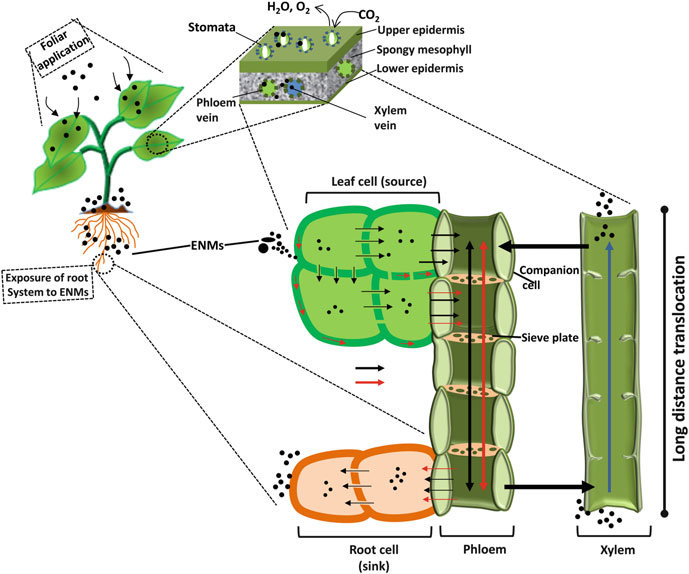
The foremost common application strategies of PBZ are foliar splashes and media soak. PBZ appears great comes about for both strategies; in any case, soaks act longer and give uniform control of plant stature with lower dosages [50, 51]. When PBZ is connected by foliar spray, the compound is ineffectively dissolvable in water and consequently small translocated within the phloem. In this way, when connected by shower to the plant canopy, its activity is confined to the damp contact zone [52]. On the other hand, the application of PBZ by soak is uniform and increments the item proficiency in lower concentrations compared to foliar shower. In addition, splash application of PBZ may straightforwardly hinder GA blend as roots synthesize huge amounts of GA [53]. So also, Banon, et al. [54] and AlKhassawneh NM, et al. [55] illustrated that splash applications were more viable, permitting to utilize lower amount of PBZ, which is alluring for both ecological and financial reasons. This effectiveness may be straightforwardly related to its tall perseverance within the soil soak [56] and in plant organs [57, 58]. Gent MPN, et al. [59] moreover shown that PBZ continues in annuals, herbaceous perennials and, particularly, woody ornamentals. PBZ is considered a phloem stationary chemical [60] in spite of the fact that a few coordinate [45] and backhanded [61] prove exists that it is somewhat portable in phloem. Considers demonstrate that PBZ and uniconazole-P move in plants acropetally by means of the xylem, collect in takes off, and have exceptionally moo versatility in phloem [1]. This comes about in a moo level of PBZ buildups in seeds and natural products as they are provided with supplements through the phloem [2]. Be that as it may, moo phloem versatility of PBZ advance diminishes the adequacy of foliar splashing, since PBZ activity on plant development would be confined to the location of application. A parcel has been done to recognize the leading application rate of PBZ in several places. Components like age of the trees, extent of vegetative development and strategy of application ought to be considered when deciding the rate of PBZ to be connected. The rates moreover influence the distinctive tree parameters differently. In common, the sum of PBZ required to advance blossoming and fruiting in natural product crops is very low [46].
The rate of soil application may be a work of tree measure and cultivar. The rate is decided by increasing the distance across of tree canopy in meters by 1–1.5 g of dynamic fixings of PBZ. Tongumpai P, et al. [62] they shown that other variables counting soil sort, water system framework, etc. may influence PBZ action and, hence, may be essential to move forward the adequacy of the chemical. As to them, overdose may cause undesirable impacts such as limited development, panicle malformation (too compact), and shoot distortion. They too declared that to guaranteed uniform blooming and decrease the negative side impacts, the rummage around for superior application strategies were explored and one approach is to apply tall volume of moo PBZ concentration to move forward superior scope. Optimizing PBZ measurements could be a prerequisite for any yield advancement programs. Extreme and undesirable loss in seed and oil yield of Camelina was watched when the plants were treated with higher PBZ concentration (125 mg L−1), whereas PBZ measurements between 75 mg L−1 and 100 mg L−1 can successfully progress the financial characteristics, counting higher seed and oil yields in Camelina.
Extreme hindrance of Camelina development was too reflected in plant tallness, branch and canopy measure when the plants were showered with higher PBZ concentration (125 mg L−1) [63]. He too detailed that Camelina seed abdicate expanded by 74.23% when compared to the control with the applications of 100g L−1. Additionally, decreased yields were recorded in shelled nut and Jatropha related with higher PBZ concentrations. Kamran M, et al. [64, 65, 66] described that dousing of seeds beneath 300 mg L−1 PBZ expanded the normal maize grain surrender by 61.3% as compared to the control. Patil, et al. [67] moreover reported that application of 5 g of PBZ through soil enabled to induce early and standard fruiting with 2.8 times increment in abdicate in mango var. Alphonso. In expansion, PBZ at a rate of 150 mg L−1 in bottle gourd, 100 mg L−1 in severe gourd, 150 mg L−1 in French bean, 125 mg L−1 in cucumber and 40 mg L−1 in tomato expanded the surrender and quality of natural products [68].
Morphological and Physio-Biochemical Responses of Plants to PBZ
Effect of PBZ on Relative Water Content: Relative water substance (RWC), directly related to the substance of soil water could be a critical pointer of water stretch in takes off. Plant introduction to water stretch comes about in an quick lessening of RWC [63]. PBZ quickened the stomatal closure, made strides water maintenance, and expanded dry season resilience in jack pine and oak [15, 37]. PBZ-treated plants kept up higher RWC than the non-treated ones’ [43, 69].
Dwivedi et al. expressed that the application of PBZ (30 mg/l) in wheat beneath control and water-stressed plants brought about in an increment of 5% and 11% respectively in the mean RWC. The decreased rate of evapotranspiration helps plants maintain the next RWC, and overcome stress, and created resilience to different natural stresses. RWC expanded in PBZ-treated triticale (Triticale hexaploide) plants amid water push [70]. Beneath water stretch, PBZ treatment helps plants in holding water for 30-40 days [69]. Garg, et al. watched that application of PBZ (90 mg/l) under dry season in rice genotypes was capable for around a 15% increment in RWC as compared to drought without PBZ treatment. Jungklang, et al. found that in Curcuma alismatifolia clears out, PBZ (1500 mg/l) expanded RWC by 5% beneath dry spell. Iqbal et al. detailed that in okra (Abelmoschus esculentu) cultivar Nutec, application of PBZ (80 mg/l) in conjunction with dry spell expanded RWC (60.1%) compared to dry season without PBZ treatment (57.2%) in spite of the fact that the result was not factually noteworthy. Essentially, in Safflower (Carthamus tinctorius L.) application of PBZ under drought improves the RWC. Generally PBZ upgrades the RWC of plants beneath dry spell conditions by a diminishment in evapotranspiration. Effect of PBZ on Membrane Stability Index: Film soundness could be a common model for deciding dry season resilience since water shortage actuates water loss from plant tissues, which severely disables film structure and function. The stability of the cell layer was used as a dry spell resilience indicator and spillage of electrolytes appeared an increment in water deficit, detailed that PBZ (90 mg/l) in rice genotypes driven to an 11% increment in cruel MSI as compared to drought-stressed plants without PBZ treatment. PBZ (20 mg/l) minimized the spillage of electrolytes in carrots [71]. Dwivedi, et al. detailed that the application of PBZ (30 mg/l) in wheat beneath control and water-stressed plants brought about in an increment of 1-2% and 4-5% individually within the cruel MSI. So also, Jungklang, et al. detailed that PBZ (1500 mg/l) diminished electrolyte spillage by 60% under water deficit push in Curcuma alismatifolia. Babarashi, et al. watched that the application of PBZ (150 mg/l) in mungbean beneath dry season diminished electrolyte spillage from 52.6% (dry season without PBZ) to 47.1%. Additionally, in Safflower (Carthamus tinctorius L.) application of PBZ beneath dry spell enhances the cell layer solidness. Collectively, these discoveries recommend that PBZ improves MSI by minimizing electrolyte and particle spillage beneath stretch conditions Effect of PBZ on Plant Growth: The most striking growth reaction observed in PBZ-treated plants may be a reduction in shoot development. This reaction is basically ascribed to internode length reduction. Hua, et al. [72], detailed that canola plant tallness was decreased by 27% when PBZ was connected at 10 cm stalk stature as compared to without PBZ. Rezazadeh, et al. [73], detailed that ruddy firespike plants treated with PBZ (.24 mg/pot) beneath drought were 11 cm taller than untreated plants. Beneath water shortage stretch, found that applying PBZ (1500 mg/l) diminished the plant stature of Curcuma alismatifolia by 50% relative to non-treated plants [69]. In Amorpha fruticosa, Fan, et al. found that PBZ treatment (150 mg/l) beneath extraordinary dry season (RWC 35-40%) come about in a 61% increment in stature relative development rate compared to dry spell without PBZ. Jungklang, et al. [69], watched that in Patumma after 40 days of withholding water, the plant tallness was 1.2 times lower in PBZ (1500 mg/l) treated plants compared to water-stressed without PBZ. When PBZ (3750 mg/L) was connected to Patumma, shoot tallness was reduced by 48.93% relative to untreated plants. In comparison to non- treated plants, soil splashing with PBZ (1500 mg/l) beneath water stress for 20 and 30-days periods-maintained shoot length. However, in sunflower and zinnia shoot height was decreased by 26.3 and 42.1%, separately, after soil soaking with PBZ (2.0 mg/pot) (Ahmad et al., 2014). Agreeing to Roseli et al. (2012), Syzygium myrtifolium (Roxb.) Walp. plant stature was diminished by 19.93% when treated with PBZ (3750 mg/L). Agreeing to Azarcon et al. (2022), PBZ (500ppm) expanded panicle number, coming about in higher grain surrender whereas reducing water demand, subsequently expanding rice water utilize effectiveness beneath dry spell conditions.
Berova, et al. [70] detailed that PBZ (50 mg/l) expanded wheat seedling length, new and dry weight of shoots, under low-temperature push as compared to control (low- temperature push without PBZ). PBZ has been appeared to extend both the fresh and dry weight of shoots and roots in cucumber seedlings that have been uncovered to tall temperatures. Kamran, et al. [65], detailed that seed dousing of maize with PBZ (300 mg/l) beneath a semi-arid locale expanded root dry weight by 102.1% at the seventh leaf arrange, 65.1% at the ninth leaf organize, 47.9% at the twelfth leaf arrange, compared to dry spell without PBZ treatment. Sankar et al. (2014), detailed that in shelled nut plants at 80 days after sowing (DAS) application of PBZ (10 mg/l) beneath dry spell expanded root length from 18.17 to 28.15 cm/plant, add up to leaf zone from 96.38 to 117.31 cm2/plant, entirety plant new weight from 33.72 to 39.16 g/plant, entire plant dry weight from 3.49 to 4.12 g/ plant as compared to drought-stressed plants without PBZ treatment. A comparative design of comes about was too gotten by Abraham, et al. (2008) in Sesamum indicum by application of PBZ (5 mg/l) amid dry spell. Yooyongwech, et al. watched that in sweet potatoes, PBZ (34 µM) beneath dry season expanded vine new weight, root new weight, vine dry weight, and root dry weight by 40.10, 65.47, 66.91, and 67.86% individually, compared to water-stressed plants.
After PBZ (500 mg/l) application, the root dry weight of Aesculus hippocastanum was made strides (18.4% decrease) after water shortage push [74]. Beneath dry spell conditions, the dry weight of PBZ (60 mg/l) treated tomato shoots (37.17% lessening) and root dry weight (13.04% decrease) were higher as compared to the control. Additionally, the dry weight of PBZ (50 mg/l) treated plants diminished by 20.45%, compared to 36.77% for non-treated plants [75]. In turf grass, shoot dry weight was amazingly responsive to water shortage conditions (25), coming about in 95 to 97% lessening, separately, whereas treatment with PBZ (30 mg/l) diminished the shoot dry weight by 3.14% as it were. The leaf region of P. angustifolia plants treated with PBZ (30 mg/l) and developed beneath well-watered conditions was diminished by 83.25%. In any case, when uncovered to gentle water shortfall conditions, the development of PBZ- treated plants progressed but declined when uncovered to serious water shortfall stretch [76]. When uncovered to dry season, shoot stature, leaf range, and root length of PBZ (10 mg/l) pre-treated shelled nut plants progressed compared to the control [42]. Farooqi, et al. detailed that the breadth of Vetiveria Zizanioides expanded in focused plants due to 12% PBZ application. Agreeing to Buddy, et al. PBZ (1.6 mg/l) decreased leaf region (LA) in tomato plants by 24% beneath water shortfall conditions. Generally, PBZ improved plant advancement beneath unpleasant circumstances by expanding shoot and root biomass. In spite of the fact that a few investigate infers that PBZ diminishes plant tallness, others report that PBZ increments plant tallness, subsequently a more noteworthy information of the impact of PBZ application on plant improvement is required some time recently future application.
Effect of PBZ on Photosynthetic Pigments: Water stretch changes the overall chlorophyll substance and soundness within thylakoid layer protein-pigment complexes which are the primary structures to be debilitated beneath push conditions. Chlorophyll diminishment beneath water shortfall stretch is primarily due to chloroplast harm caused by ROS. PBZ (3 g a.i./tree) expanded Chlorophyll a (27.35%), Chlorophyll b (54.54%), add up to chlorophyll (30.98%) and carotenoids (13.55%) compared to control without PBZ in cashew.
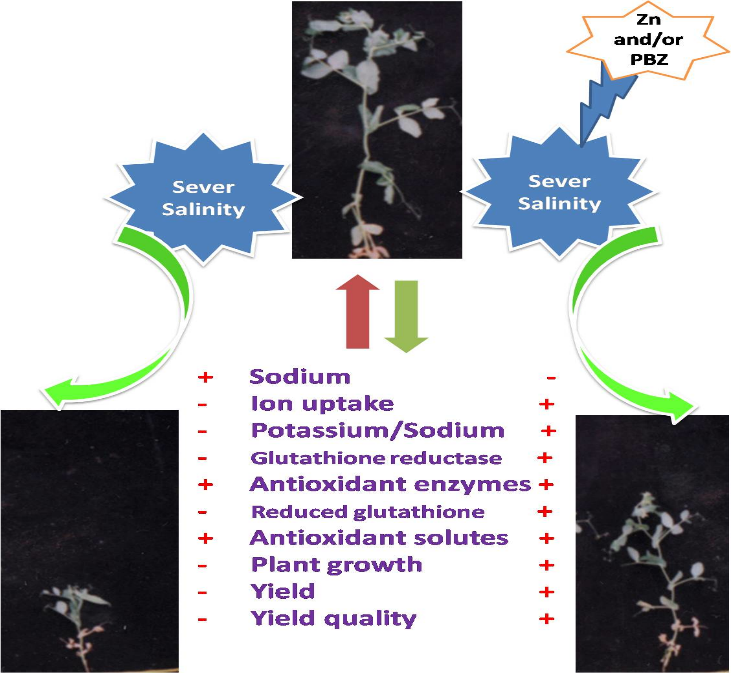
According to Dwivedi, et al. applying PBZ (30 mg/l) to wheat plants beneath water shortage push brought about in a 25.7% increment in chlorophyll substance as compared to pushed plants without PBZ. Kamran, et al. [65], detailed that in maize PBZ (300 mg/l) expanded the chlorophyll substance by 48.2%, 54.3%, 51.2%, and 79.0%, at 0, 15, 30, and 45 DAS separately Additionally carotenoid substance expanded by 15.7%, 17.3%, 27.9% and 36.7% at 0, 15, 30 and 45 DAS in water shortfall stretch as compared to control (dry spell without PBZ application). Berova, et al. [70], watched that PBZ treatment was 15–18% more successful than the control at anticipating chlorophyll misfortune in wheat amid low-temperature stretch. PBZ (10 mg/l) expanded add up to chlorophyll, carotenoid, xanthophyll, and anthocyanin substance in 80 days ancient Arachis hypogaea by 120.22%, 112.66%, 116.48%, 111.26%, 114.44%, and 112.24% individually over control under drought [42] detailed that PBZ (2 mg/l) expanded chlorophyll substance by 62% as compared to control in maize. Dewi, et al. [23], watched that treatment with 25 or 50 mg/l PBZ in dark rice plants had greener clears out and experienced late senescence than control plants. Essentially, in Safflower (Carthamus tinctorius L.) application of PBZ beneath dry season upgrades the photosynthetic shades. Rezazadeh, et al. [73], detailed that net photosynthesis was 51% higher in ruddy firespike plants treated with PBZ (0.24 mg/pot) beneath dry season than in those without PBZ. In Zoysia japonica, PBZ (50 mg/l) amid water shortage stretch expanded leaf chlorophyll substance by 0.6 mg/g FW compared to water-stressed without PBZ. So also, Buddy, et al., recorded that PBZ in both flooded and deficit-irrigated plants expanded Chlorophyll substance as compared to control plants (without PBZ). PBZ expanded the photosynthetic color substance in Festuca arundinacea and Lolium perenne beneath water stretch. Beneath water shortfall stretch, PBZ essentially expanded chlorophyll a, chlorophyll b, and carotenoids in wheat cultivars [77]. Babarashi, et al. [78], detailed that PBZ (150 mg/l) treatment in mungbean beneath dry spell expanded SPAD value from 34 (dry season without PBZ) to 37.7. All earlier examinations have concluded that PBZ makes strides photosynthesis by expanding chlorophyll and other photosynthetic colors beneath unpleasant circumstances.
Effect of PBZ on Grain Yield and Dry Matter Partitioning: Dry spell fundamentally influences generation by lessening the number of seeds by either impacting the amount of dry matter delivered at the time of blossoming or by specifically influencing dust or ovules, driving to a diminish in seed collection. PBZ has been appeared to adjust sink proficiency, inciting absorbs to be redistributed to meristematic locales other than shoot apices and progressing acclimatize stream to regenerative structures in plants [78]. Beneath dry spell, the utilize of PBZ (50 mg/l) expanded the normal weight of 1,000 seeds and surrender in maize (Zea mays L.) [75]. Concurring to Kamran M, et al. [65], normal maize grain yields expanded by 61.3ter seed drenching with 300 mg/l PBZ, whereas seed dressing with PBZ at 2.5 g/kg expanded surrender by 33.3% compared to control without PBZ in semi-arid districts.
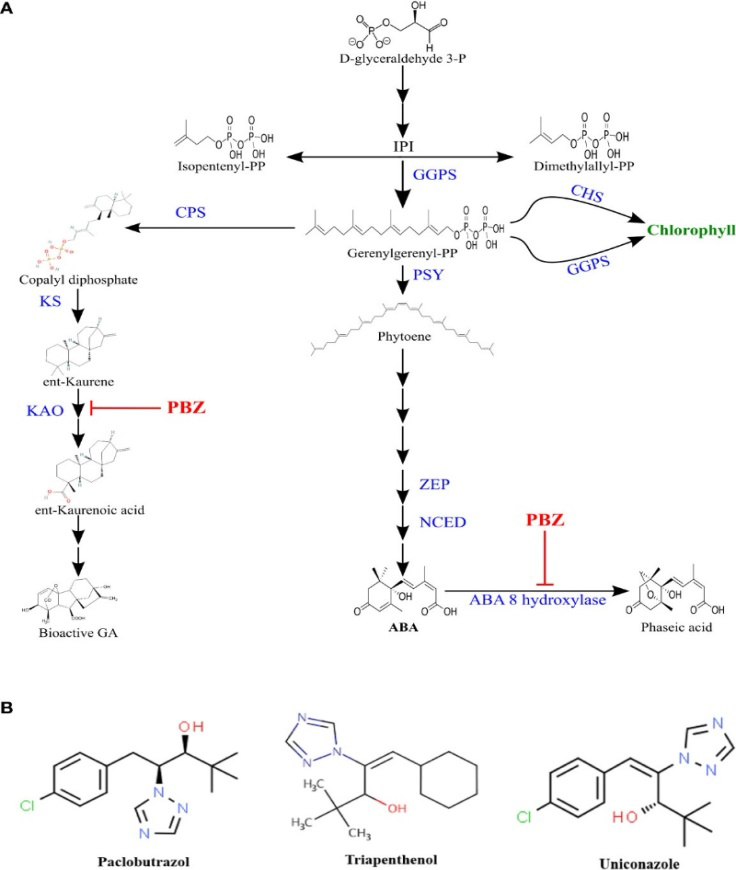
Figure 5: (A) Terpenoid pathway. Paclobutrazol inhibition is indicated by (CPS), Copalyl diphosphate synthase; (KAO), ent- kaurenoic acid oxidase; (KS), ent-kaurene synthase; (GGPPS), geranylgeranyl pyrophosphate synthase; (PSY), phytoene synthase; (ZEP), zeaxanthin epoxidase; (NCED), 9-cisepoxycarotenoid dioxygenase; (CHS), chlorophyll Synthase; (GGRS), geranylgeranyl reductase. (B) Chemical structure of some triazoles.
Beneath water stretch, wheat genotypes treated with PBZ expanded grain abdicate per plant by 6-7%, grain numbers per panicle by 24-33%, 1,000-grain mass by 3-6%, and gather file by 2-4%. According to Iqbal, et al. beneath water push, abdicate per plant was decreased. Stretch impacts, on the other hand, were found to be diminished when PBZ was connected (40 mg/l). Babarashi, et al. detailed that the application of PBZ (150 mg/l) in mungbean beneath dry spell expanded seed surrender from 622 (dry spell without PBZ) to 1921 kg/ha. Dry spell impeded blooming in ruddy firespike plants, but PBZ treatment (0.24 mg/plant) advanced blooming and kept up the same number of blooms (6 flowers/plant) as the control [73]. Tomato plants treated with PBZ (50 mg/l) delivered 1.37 times more natural product than non-treated plants. The abdicate of pre-treated plants was decreased by 4.79% when they were subjected to dry season at 60% field capacity [36]. Latimer JG, et al. [57] watched that PBZ (30 mg/l) pre-treated tomato plants held their natural product surrender (3.89 kg/plant) and natural products per plant (31 fruits/plant) when uncovered to water shortfall push. Generally, past investigate shows that the utilize of PBZ boosted grain yield/fruit set beneath dry spell by making strides sink proficiency. PBZ hampered the gibberellin biosynthesis. GAs are development controllers which drop beneath a expansive family of tetracyclic diterpenoids. GAs are plant hormones that are required for a variety of formative exercises in plants such as dust development, stem stretching, leaf extension, trichome creation, seed germination, and blossoming acceptance [79]. Besides, the exogenous application of gibberellins can turn around PBZ-induced development hindrance [80]. These discoveries bolster the hypothesis that PBZ-induced development restraint is due to a lessening in gibberellin biosynthesis. Wu et al. considered the impact of PBZ (200 mg/l) in rice assortments beneath submergence push and found that gibberellic corrosive substance was diminished by the application of PBZ compared to submergence stretch without PBZ. Fan, et al. found that PBZ (150 mg/l) beneath serious dry season (RWC 35-40%) diminished GA substance more than dry season without PBZ in Amorpha fruticosa. PBZ-induced abscisic corrosive biosynthesis Abscisic corrosive (ABA) is classified as a push phytohormone since it collects rapidly in reaction to push and intervenes numerous stretch reactions that offer assistance plants survive [81]. The impact of PBZ on ABA is of critical significance since ABA is synthesized through the isoprenoid pathway. Fan, et al. detailed that PBZ (150 mg/l) beneath extreme dry spell (RWC 35-40%) expanded ABA (27.1%) than without PBZ in Amorpha fruticosa. Additionally, Dwivedi, et al. recorded that treatment with PBZ in wheat cultivars did not altogether influence ABA substance, in any case, cruel ABA substance was altogether improved by 25% beneath water shortfall push. Buddy, et al. appeared that DI (Shortage watered) + PBZ treated plants altogether expanded ABA amassing compared to DI control plants. PBZ application expanded ABA and diminished gibberellins amid the regenerative organize within the shoot of mango plants [82]. Compared to untreated seedlings, PBZ treatment has been appeared to play down endogenous ABA by approximately one-third caused by water stretch in apples and wheat [83]. Mackay C, et al. [84] found that PBZ-induced push resilience in snap beans was due to expanded endogenous ABA substance. PBZ considerably improved endogenous ABA levels in hydroponically developed seedlings and withdrawn clears out of oilseed assault, agreeing to Häuser C, et al. [85]. Concurring to Aly A, et al. [77], PBZ upgraded the endogenous level of ABA in wheat beneath water shortfall push. Wu, et al. watched that PBZ (200 mg/l) expanded ABA substance in rice assortments beneath submergence stretch compared to submergence stretch without PBZ application. The impact of PBZ on ABA may be the source of push defense [10].
PBZ Elevated Antioxidant Enzymes Activity: PBZ improves the detoxification of ROS, antioxidant, and chlorophyll (Chl) substance. As photosystem II (PSII) operation is diminished, an awkwardness between electron era and utilization happens, causing quantum abdicate shifts. These changes in chloroplastic photochemistry cause overabundance light vitality to be disseminated within the PSII center and antenna beneath dry spell, coming about in the advancement of possibly destructive dynamic oxygen species (O2-1, 1O2, H2O2, Goodness). ROS detoxification pathways can be found in all plant species and are classified as enzymatic which incorporate ascorbate peroxidase (APX), superoxide dismutase (Turf), catalase (CAT), peroxidase (POX), and non- enzymatic which incorporate diminished glutathione (GSH), ascorbic corrosive and tocopherol.
Somasundaram, et al. [39] appeared that PBZ (5 mg/l) application to Sesamum indicum come about in 464.74%, 267.49%, and 359.08% increment in Turf, APX, and POX action individually in leaf tissue beneath dry spell conditions as compared to without PBZ. Diverse PBZ medications expanded Grass activity in maize developed within the semi-arid environment to shifting degrees. From to 15 days after silking (DAS), Turf movement expanded, at that point diminished until it comes to 45 DAS [65]. The APX movement of PBZ-treated ryegrasses was found to be 25% higher than that of untreated beneath dry spell. No impressive contrast in CAT action was watched in PBZ-treated plants beneath dry spell. PBZ expanded POX movement impressively beneath dry spell.
PBZ Enhanced Proline Content: Proline could be a key amino corrosive in protein and membrane structures, as well as a ROS forager beneath dry spell [16]. PBZ treatment upgraded proline substance and improved drought resilience. In any case, advance inquire about is required to decide the genuine atomic component basic the impact of PBZ on versatile proline concentration in plants. PBZ treatment (75 mg/L) altogether diminished proline substance (0.030 μmol/g FW) in pomegranate takes off by 59.22% to control (0.067 μmol/g FW). Mohamed, et al. [36] found that free proline concentration expanded by 54.56 mg g-1 in PBZ (50 mg/l) treated tomato plants developed at 60% field capacity, which was 1.52-fold more noteworthy than the control. In any case, in water-stressed conditions, the free proline level in PBZ (10 mg/l) in pre-treated peanuts was lower (1.04- fold over control) than in untreated plants (1.49-fold over control) [42]. Dwivedi, et al. appeared that the wheat plants treated with PBZ beneath water stretch had a 40crease in proline substance as compared to the pushed plants without PBZ. These discoveries proposed that the wheat genotypes experienced less push (as demonstrated by the proline substance) and moved forward dry season resistance as a result of PBZ application. Another think about appeared a significant increment in free proline substance after Mannitol+PBZ treatment in wheat cultivar Sakha 8 (3.342 mg g-1 f.w) as compared to control (without PBZ+Mannitol) and the same design was watched in all the wheat cultivars [77]. Endogenous proline level expanded by 17% in mango takes off treated with PBZ (1500 mg/L) beneath salt stretch when compared to salinized plants without PBZ treatment. Samota, et al. appeared a critical increment in proline substance in drought-sensitive and dry spell tolerant rice genotypes after preparing with PBZ beneath dry spell as compared to their unprimed tests. Babarashi, et al. detailed that the application of PBZ (150 mg/l) in mungbean beneath dry season expanded proline substance from 7.28 (dry season without PBZ) to 7.87 μmol/g f.wt. Additionally, in Safflower (Carthamus tinctorius L.) application of PBZ beneath dry season upgrades the proline substance.
PBZ Reduced Malondialdehyde Content: Ordinarily, film lipid peroxidation in plants is identified by measuring malondialdehyde (MDA). MDA may be a broadly utilized marker of oxidative lipid harm caused by natural stretch. Kamran, et al. appeared that the MDA substance was altogether lower within the PBZ-treated maize plants over the control beneath dry season. PBZ treatment beneath dry season significantly decreased the MDA substance in maize leaf by 31.5% at DAS, 31.4% at 15 DAS, 32.2% at 30 DAS, and 20.2% at 45 DAS compared with dry spell without PBZ. Other ponders carried out on PBZ-primed rice samples demonstrated that PBZ appeared inconsequential alter in MDA substance within the touchy genotype beneath dry season whereas a 55crease in MDA substance was found within the tolerant genotype as compared to PBZ treated beneath control conditions. Comparable discoveries were recorded by Samota, et al. who watched that plants raised from PBZ-primed seeds had lower MDA levels beneath control and dry spell conditions than plants raised from unprimed seeds. The sum of MDA diminished as the sum of PBZ expanded. PBZ (80 mg/l) diminished MDA substance (51.15 mol/g f.wt.) beneath water shortfall stretch relative to dry season alone (61.92 mol/g f.wt.). Kamran, et al. detailed that PBZ (300 mg/l) within the semi-arid region reduced MDA substance by 44.1%, 50.4%, 66.3%, 40.5%, at 0, 15, 30, and 45 DAS individually compared with the water-stressed plants without PBZ treatment.
PBZ Influence on Protein Content: The protein substance in plants diminishes with the onset of water insufficiency. PBZ treatment expanded the protein substance of the takes off and tubers in carrots [71]. From to 15 DAS, the dissolvable protein substance of maize expanded somewhat, at that point consistently diminished from 15 to 45 DAS. Plants treated with a tall concentration of PBZ beneath dry season held higher protein content from to 15 DAS, but protein substance was essentially hindered from 30 to 45 DAS [65]. Wheat seeds prepared with PBZ had expanded protein substance. Moreover, there are other comparable reports which appeared that PBZ preparing expanded the protein substance beneath abiotic push and non-stress conditions. Agreeing to Iqbal, et al. when PBZ was connected beneath dry season to the okra cultivar Nutec, add up to dissolvable proteins expanded as the sum of PBZ was expanded. Add up to solvent proteins were 11.04, 11.29, 10.75, and 11.76 mg/g f.wt. at four diverse PBZ medications of 0, 20, 40, and 80 mg/l, separately beneath water stretch conditions.
PBZ Influence on Sugar Content: During drought, the accumulation of congruous solutes such as carbohydrates is claimed to be an compelling stretch resistance component. Sugar coming about from passing starch degradation was taken note in PBZ-pretreated plants, which holds the leaf water potential beneath water shortfall push conditions [86]. PBZ treatment in mango expanded add up to sugar, sugar: corrosive proportion, decreasing sugar, and titratable causticity lessening [87, 88]. In drought-stressed ryegrass, PBZ application altogether expanded dissolvable sugar substance compared to untreated plants. The affect of PBZ was primarily articulated on 30 and 45 days of dry spell treatment in Iranian lasting ryegrass. Agreeing to Fan, et al., PBZ (150 mg/l) beneath extraordinary dry spell (RWC 35- 40%) had 119% higher dissolvable sugar substance than dry season without PBZ in Amorpha fruticosa. In untreated and PBZ-treated (50 mg/l) tomato plants add up to dissolvable sugars expanded by 1.16 and 1.52 times beneath water shortfall (60), individually. Sugar substance expanded by 2 mg/l after foliar application of PBZ beneath 6% PEG-induced water shortage stretch in S. rebaudiana Bertoni as compared to stressed plants. Add up to soluble sugar enrichment in PBZ- treated sweet potatoes may be required for cellular osmotic alteration beneath water shortage stretch circumstances.
Molecular Responses of Plants to PBZ: PBZ hinders GA biosynthesis by inactivating cytochrome P 450-dependent oxygenase, which represses the oxidation of ent-kaurene to ent-kauronoic corrosive [86, 89]. PBZ hinders ABA debasement into phaseic corrosive, coming about in ABA aggregation. In drought-stressed tomato plants, PBZ expanded the expression of ABA biosynthesis qualities (SlZEP, SlNCED, and SlAAO1). To pick up distant better;a much better;a higher;a stronger;an improved”>a higher understanding of the dwarfism instrument, Zhu, et al. analyzed quality transcripts of Lily clears out after PBZ treatment. 2704 qualities were found to be differentially communicated by comparing PBZ-treated tests to untreated tests. PBZ expanded the expression of nine qualities encoding GA biosynthesis chemicals (one KAO and eight GA20ox qualities) whereas diminishing the expression of a quality included in GA deactivation (GA2ox quality). Tune, et al. [90] detailed that the expression of ent-kaurene oxidase (ZmKO1-2), ent-kaurene synthase (ZmKS1,2,4), and ent-copalyl diphosphate synthase (ZmCPS) diminished, though the expression of GA 3-oxidase (ZmGA3ox1), GA20- oxidase (ZmGA20ox1,5) and ent-kaurenoic corrosive oxidase (ZmKAO) expanded in maize seedlings treated with PBZ. PBZ has been appeared to increase SLGA20ox-3 and SLGA3ox2 expression in tomato plants through criticism direction. Upregulation of SLGA20ox-3 and SLGA3ox2 transcript amassing was watched in reaction to PBZ-induced ent-kaurene oxidase restraint, which was thought to be a feedback upregulation of GA biosynthesis in reaction to lower GA substance [73].
Another study examined the expression profiles of GA biosynthesis genes (ent-kaurene oxidase; KO, gibberellin 20-oxidase1; GA20ox1 and gibberellin 3-oxidase; GA3ox) and floral transcription factor genes (UFO, WUSCHEL; WUS, and LFY) in response to 1,250 mg/l of PBZ treatment of Jatropha floral buds. Then, samples were selected at the different time points of 14 days (no sex organs observed), and 20 days after treatment (blooming and sex organs observed). The results showed that PBZ significantly reduced the expression level of GA20ox1, GA3ox, and LFY as compared to the control (P<0.05) at 14 days. On the other hand, the expression level of UFO and WUS1 were significantly higher than the control. At 20 days, there was no difference in the expression level of GA biosynthesis genes between the control and treatment. At the same time blooming time of PBZ-treated flowers was delayed which might be due to low expression levels of GA20ox1, GA3ox, and LFY in treated floral buds. PBZ application increased ABA content regardless of rice genotypes due to the upregulation of 9-cis-epoxycarotenoid dioxygenase (NCED), the main enzyme in ABA biosynthesis, encoded by OsNCED3. At various growth stages after the formation of the basal second internode of wheat, the complex changes in the activities of enzymes involved in lignin biosynthesis, such as phenylalanine ammonia-lyase (PAL) and 4-coumarate: CoA ligase (4CL), were assessed in response to PBZ (200 mg/l) application. The activity of PAL and 4CL were higher by 42% and 35.6% respectively as compared to the control [65].
PBZ (PBZ) at 0.8 and 1.6 mg/l significantly increased aquaporin (gene and protein) expression in tomato plants compared to controls, implying a coordinated increase in ABA and aquaporin levels in response to water stress. Treatment with PBZ during deficit irrigation increased SlTIP2 expression by 5.3-fold above the control and resulted in greater PIP2- 7 protein levels (compared to PBZ-irrigated). Application of PBZ under irrigated conditions and PBZ-treated deficit irrigated plants increased Sl Succinyl-CoA ligase, SlSCoAL1, and SCoAL2 expression by 1.66 and 2.01-fold, 1.21, and 3.66-fold, respectively, resulting in substantially increased succinate abundance (1.63-fold). PBZ-treated irrigated and deficit irrigated plants produced more GABA than control plants. When PBZ-treated irrigated and deficit irrigated plants were compared to their respective control plants, increased expression of glutamate decarboxylase, SlGAD, was connected to better GABA buildup. GABA production was boosted by increasing the expression of SlGAD, an enzyme necessary for glutamate to GABA conversion. DNA methylation plays an important role in plant growth and development. Recent research findings have shown that the imposition of various biotic and abiotic stresses on the plant contributes to increased methylation of the genome and thus leads to genome activity degeneration. Garg, et al. found that the application of PBZ under water deficit stress leads to hypermethylation which was predominant in the drought susceptible genotype as compared to drought tolerant genotypes
Response of Plants to PBZ
Plant Hormone Biosynthesis: Gibberellin: Gibberellins (GAs) are a large family of tetracyclic diterpenoid plant growth regulators. Since its original discovery, > 130 GAs have organic movement [91]; numerous non-bioactive GAs exist in plants, and these act as forerunners for the bioactive shapes or are de-activated metabolites. Gibberellins (GAs) are plant hormones that are fundamental for numerous formative forms in plants, counting seed germination, stem stretching, leaf extension, trichome advancement, dust development and the acceptance of blossoming. The major bioactive GAs, which incorporates GA1, GA3, GA4 and GA7, are inferred from a basic diterpenoid carboxylic corrosive skeleton, and commonly includes a C3 hydroxyl gather [91]. Abscisic Acid: The impact of PBZ on ABA is of intrigued since ABA, just like the gibberellins, is synthesized through the isoprenoid pathway, and the two compounds regularly show contradicting physiological exercises. The action of PBZ on ABA may well be the source of stretch protection that has been watched with PBZ [10]. ABA could be a common plant development controller that has been involved in plant acclimation and security against natural stretch. Be that as it may, both tests appeared that increments in ABA were brief lived and inevitably diminished to normal or below control levels. Hauser C, et al. [85] hypothesized that this may be due to invigorated ABA catabolism and/or by a hindrance of its biosynthesis. Hence, giving a persistent supply, over the developing season, of the PBZ may offer assistance to preserve higher levels of endogenous ABA and in this manner drag out its stress-protecting impacts. In expansion, Aly A, et al. [77] moreover detailed that PBZ increased the endogenous level of ABA in wheat. Cytokinin: Cytokinins are synthesized within the roots and translocated acropetally to the shoots where they regulate both plant improvement and senescence [92]. They are included within the control of various plant formative forms such as cell division, apical dominance, stomatal behavior, root arrangement, leaf senescence, and chloroplast advancement [93]. Zhu L, et al. [86] watched an increment in the endogenous cytokinin (Zeatin) level in xylem sap of young apple trees in reaction to PBZ treatment. PBZ treatment delayed the onset of senescence in grapevine and blueberry [94]. It has been detailed that cytokinin or chemicals like thidiazuron with cytokinin-like movement invigorate chlorophyll amalgamation and impede senescence and hence, PBZ-induced physiological reactions may be related with expanded cytokinin blend or avoidance of its corruption [95].
Fletcher R, et al. [60] too proposed that triazoles invigorate cytokinin amalgamation which improve chloroplast separation, chlorophyll biosynthesis and anticipate chlorophyll debasement. An expanded level of cytokinins and polyamines over the senescence-promoting hormones ABA and ethylene was detailed in plants treated with PBZ. PBZ deferred senescence and expanded period of ‘stay-green’ in Camelina sativa [63] by improving endogenous levels of cytokinins which advanced chlorophyll arrangement and expanded action of certain antioxidant chemicals. A longer ‘staygreen’ character at the same time expanded the period of leaf photosynthesis in PBZ-applied plants by keeping the takes off photosynthetically effective for a longer time which in turn improved the plant efficiency of Camelina [63].
Stress Protection: Dynamic oxygen species, expanded substance of cancer prevention agents and chlorophyll (Chl) [89]. More as of late, it was found that triazole compounds have been detailed to secure plants from different natural stresses, counting chilling, dry season, warm, waterlogging, discuss toxins, and overwhelming metals [60, 81]. The triazole-mediated push security is regularly clarified in terms of hormonal changes such as an increase in cytokinins, a transitory rise in ABA and a diminish in ethylene [77]. Improved chilling resistance in triazole-treated tomato [96] was related with expanded antioxidant chemical concentrations. In treated tomatoes, separated from the increment within the cancer prevention agents a-tocopherol and ascorbate, free greasy acids were higher and there was a diminishment in the misfortune of layer phospholipids, as compared to the untreated controls. PBZ avoids the decay in add up to chlorophyll substance in corn plants after introduction to chilling temperatures [96]. PBZ-induced resilience to moo temperature push has been related with expanded levels of endogenous ABA [60], which has been detailed to trigger the hereditary forms for solidifying. PBZ moreover ensures plants from high-temperature-induced wounds [96]. Assurance against tall temperature stretch is went with by the generation of moo atomic mass stretch proteins [97] and the increase within the movement of antioxidant proteins [96]. Berova M, et al. [70] proposed that the security caused by PBZ was due to a similar mechanism of upgraded free-radical rummaging frameworks. Assimilate Partitioning: Absorb dividing to the diverse sinks may be controlled by ecologically controlled, hormonal equalizations [98]. PBZ treatment expanded the root-to-shoot proportion [96] expanded apportioning of acclimatizes to financially critical plant parts such as bulbs, potato tubers, carrot root and rice grain surrender [71, 99, 100, 101, 102]. The instrument of tubers to act as a overwhelming sink amid acclimatize apportioning may be associated with PBZ invigorated moo GA level within the tuber tissue that increments tuber sink movement [101]. Setia RC, et al. [78] moreover detailed that the application of PBZ resulted in an in general increment in dry weight per plant and superior apportioning of absorbs (percent proportion of siliqua dry weight to plant dry matter) in Brassica juncea and Brassica carinata. Essentially, Kumar, et al. [63], Senoo S, et al. [66] reported that PBZ treatment upgraded seed surrender in Camelina sativa and this improvement of surrender was connected with advancement in CO2 absorption physiology, sink action dividing of absorbs and rooting. Mineral Uptake: By affecting shoot and root morphology, PBZ changes mineral take-up. Rieger M, et al. [103] working in hydroponics on ‘Nemaguard’ peach rootstocks, found that PBZ treatment actuated diminishes in N, P, K, Fe and Moment, though levels of Ca, Mg, B and Mn were expanded by PBZ. This creator expressed that the size of changes in foliar nourishment was relative to the degree of growth suppression. Within the case of Fuji apple trees, Huang WD, et al. [104] found that the contrasts within the add up to dry matter gathered per kg of leaves were unimportant. On the other hand, Wang SY, et al. [83] watched that the PBZ medications increment the substance of N, P, K, Ca, Mg, B, and Zn in clears out of pear tree [103]. Illustrated in peach tree that the foliar concentrations of N, P, K, and Fe diminish marginally, whereas increment those of Ca, Mg, B and Mn. As of late, Yeshitela T, et al. [88] moreover detailed that PBZ expanded mango leaf Mg, Cu, Zn, and Fe substance without influencing the concentration of N, P, K, and Ca. In expansion, this creator shown that the higher concentration of PBZ (8.25 g a.i./tree) come about in a decreased Cu concentration, whereas the increment in PBZ concentration (2.75-8.25 g a.i./tree) did not appear an increase of the concentration of Zn.
Plant Growth, Yield And Quality
Germination and Seedling Development: Common issues found when treating seeds with development controllers are lessening or nonattendance of germination and delay in seedling rise. Apple seeds (Pyrus malus Process.) guzzled in 7 mg L−1 PBZ arrangement had 35% hindrance of germination and a germination delay by 2 days [105]. So also, Almond (Prunus dulcis L.) seeds splashed in 4000 or 8000 mg L−1 PBZ arrangements amid 15 min failed to grow [106].
Germination rate of tomato seeds that were doused in 500 or 1000 mg L−1 PBZ for 6, 16, or 24 h was lower than that of water-soaked seeds [107]. They further found that seedling tallness concealment at 36 days after sowing was > 30% for seeds that had been drenched for 16 h in 500 or 1000 mg L−1 PBZ compared to those splashed in water. Pill WG, et al. [108] moreover found that uncovering Universe bipinnatus seeds to 1000 mg L−1 PBZ amid dousing or preparing decreased seedling stature conjointly diminished seedling development with the reactions being greater with longer introduction amid preparing than amid dousing. So also, Pasian CC, et al. [107] noted that 500 or 1000 mg L−1 PBZ decreased and deferred germination of tomato, geranium, and marigold seeds. These might be due to PBZ that adheres to the seed coat of treated seeds and after that diffuses into the development medium where it can be taken up by the seedling roots [109]. Be that as it may, PBZ may penetrate the seed coat and apply a coordinate poisonous impact on the fetus. In expansion, Kar C, et al. [110] portrayed that treating sunflower (Helianthus annus L.) and safflower (Carthamus tinctorius L.) seeds with PBZ decreased the rate of germination and diminished seedling development. Essentially, treating seeds with PBZ (at 250 mg per 1 kg seeds) hindered prolongation of essential takes off in wheat (Triticum durum L.), grain (Hordeum vulgare L.), oat (Avena sativa L.), and rye (Secale cereale L.) [111]. The primary genuine clears out of seedlings from triazole- treated seeds had a exasperates morphology. In these seedlings, root prolongation was less seriously hindered than shoot development; roots were thicker and had higher water substance [110]. Other information too proposed that germination of PBZ-treated seeds is subordinate on seed GA levels influenced by light escalated [112].
Triazole medications ordinarily diminished the shoot length and expanded thickness of the youthful plant stem, as well as the accelerated root formation is a noteworthy advantage of the paclobutrazol treatment in Lycopersicon esculentum [113]. Shoot growth: Triazole medications regularly diminished the shoot length and expanded thickness of the youthful plant stem, as well as the quickened root arrangement could be a noteworthy advantage of the paclobutrazol treatment in Lycopersicon esculentum [113]. Triazole medicines have more articulated impact of decreasing stature in wheat plants and showed up greener [114, 115]. The foremost striking development reaction watched totally different species treated with PBZ is shoot development diminishment [72]. PBZ was too found to viably hinder plant stature, leaf extension and modify the stem in Syzygium campanulatum [115]. So also, plant tallness was altogether diminished by PBZ application in canola [72], Vigna radiata [116], Epidendrum radicans [58], mango [117], wheat [70], Dianthus caryophyllus [54].
The PBZ successfully stifles development in a wide run of plant species, where treated plants tend to be littler and more compact in appearance and have darker green takes off [118, 119, 120, 121, 122].
Leaf Growth: Leaf Area: Triazole medicines significantly reduced the leaf range and the diminishment can be due to the diminishment in leaf measure [123, 124]. Moreover detailed that triazole medications diminished the leaf range in Manihot esculenta. PBZ actuates different morphological alterations depending on plant species, development organize, rate and strategy of application [88, 122]. Vijayalakshim D, et al. [87] found that application of PBZ in mango found to be altogether prevalent in expanding the leaf range compared to other medications like potassium nitrate, urea and ethrel recording an normal region of 94.89 cm2, while the control was as it were 63.65 cm2. Agreeing to these creators, the increment in leaf region has overcome the impediment of consumption for save nourishment materials. As the save nourishment materials were at that point bounty, the breaking up of alternate bearing cycle within the cultivars chosen has been accomplished. Be that as it may, this was found to be conflicting to the finding of Fernandez JA, et al. [76]. Who detailed a diminish in leaf region with PBZ in Phillyrea angustifolia. Essentially, Paclobutrazol treatment too decreased the leaf area in Solanum tuberosum, Ocimum sanctum, Hordeum vulgare, Catharanthus roseus and zinnia plants [101, 125, 126, 127, 128]. In spite of the fact that PBZ diminished the surface range of the plants, it progressed the toughness of leaves; therefore, the diminish within the surface region of clears out was compensated by the need of leaf falling and by the leaf strength [101]. Chlorophyll Synthesis: A few thinks about illustrated increment in chlorophyll substance in triazole-treated plants [60, 113]. The greening impact caused by plant medications with development controllers can be clarified by an increment in chlorophyll substance and/or more thickly stuffed chloroplasts per unit leaf area due to a reduction in leaf range [129]. A comparable clarification is recommended for the expanded chlorophyll a and b substance in potato clears out [101]. Dewi K, et al. [23] detailed that black rice plants treated with either 25 or 50 ppm PBZ have greener takes off compared to control and the takes off too experienced late senescence. This may well be due to an increment within the action of oxidative proteins that avoided cell development. So also, ponders on Jatropha Ghosh A, et al. [64], tef Tekalign T, et al. [130] and Camelina Sumit K, et al. [24] appeared that chlorophyll was higher on plants treated with PBZ compared to control. The expanded chlorophyll substance treated with PBZ may be from minimized harm caused by responsive oxygen and changes within the levels of carotenoids, ascorbate and the ascorbate peroxidase. The report of Nivedithadevi D, et al. [28] appeared that plants treated with PBZ synthesized more cytokinin, which in turn upgraded chloroplast separation and chlorophyll biosynthesis, and anticipated chlorophyll corruption. Berova M, et al. [113] also detailed that the increment in chlorophyll substance may be credited to higher cytokinin substance that’s known to invigorate chlorophyll biosynthesis and/or decreased chlorophyll catabolism. Stem Growth: Concealment of plant tallness by PBZ happens since the compound pieces three partitioned steps within the terpenoid pathway for the generation of gibberellins (GAs). GA improves internode prolongation of intaglio stems [131]. Liu, et al. [132] appeared that GA advances cell division by fortifying cells within the G1 stage to enter the S stage and by shortening the term of S stage. They concluded that expanded cell numbers lead to quicker stem development. But treating plants with PBZ come about in stems with the same numbers of takes off and internodes compressed into a shorter length [133]. Additionally, diminishment in internode length was shown in tomato in reaction to PBZ treatment [134]. He advance taken note that the application of PBZ at a rate of 400 ppm come about in a diminished internode length as compared to 200 ppm PBZ application. PBZ can be compelling for getting strong plant and diminishing plant tallness in a few species without diminishing blooming quality [135, 136]. Root Growth: Triazole medications actuated the root development in cucumber, which was related with expanded the endogenous cytokinin levels [137]. PBZ treatment increased the root length and upgraded the sidelong roots in tomato plants, Vigna unguiculata and Festuca plant [35, 138]. PBZ initiated the root development in both maize and wheat, mango, avocado [139, 140, 141]. Swietlik D, et al. [142] detailed that root length was fortified by PBZ applications at moo to direct concentrations. Higher concentrations, in any case, may decrease root development.
Flower Enhancing: PBZ is viable not as it were in bloom acceptance but moreover in early and off season blossom acceptance in mango [82, 143, 144, 145, 146]. PBZ, a gibberellin inhibitor, diminishes vegetative promoter level and in this manner increments florigenic promoter/vegetative promoter proportion which fortifies blooming shoots in pitifully inductive shoots of fruit crops [88, 147, 148, 149]. Fruit Yield: Foliar application of PBZ (200 ppm) was compelling in expanding surrender and minimizing natural product drop and natural product breaking in ber [150]. The viability of PBZ was subordinate on arrange of improvement as the application of PBZ at bud bursting and 2 weeks some time recently anthesis of grape expanded the abdicate altogether [143]. Soil application around the tree trunk (collar soak) was more solid than foliar application because it guarantees legitimate take-up in actuating fruiting [151]. On the other hand, Yeshitela T, et al. [88] detailed that application of PBZ both as a soil splash and foliar application was viable in smothering vegetative development and improving abdicate in mango.
Response of Paclobutrazol
Morphological Response: The stem, subsequently diminishing the chance of lodging. There are a few reports depicting the different impacts of paclobutrazol on plant morphology of crops. For case, Sumit, et al. [24] detailed PBZ application essentially diminished plant tallness of Camelina sativa when compared to control and initiated overshadowing impact and with most elevated concentration of PBZ in which greatest decrease (47.5crease) in plant tallness with regard to control was gotten. Essentially, paclobutrazol concentrations of 200 mg/L to 600 mg/L diminished gibberellin substance within the takes off compared to that of control when connected to rice plant amid preanthesis [25]. Paclobutrazol application diminished plant tallness and the more noteworthy concentration of paclobutrazol caused extreme dwarfism as shown in Figure 2. Decrease in plant height is considered as the foremost basic morphological result of paclobutrazol application. Agreeing to Tesfahun, et al. [152], plant tallness lessening strongly associated with diminished prolongation of the internodes, instead of bringing down the number of internodes and they found highest internodes to be abbreviated beneath paclobutrazol application. Correspondingly, Koutroubas SD, et al. [153] detailed that foliar application of paclobutrazol at 12.5 g a.i ha−1, beneath a single-application conspire diminished plant tallness of sunflowers without unfavorable impacts on achene and oil yields, in this way giving a premise for lessening the chance of plant lodging. On Yield Response: The positive impacts of paclobutrazol on abdicate components such as more prominent rich tillers, spike, rich panicle or spikelet and in a few cases cruel grain weight has been appeared in thinks about assessing the generation potential of cereals; be that as it may, various ponders have uncovered that the expanded ripe tiller, modified phenology and way better canopy have been the most vital components that significantly associated with improved grain surrender in reaction to paclobutrazol application [152]. One of the conceivable increases in grain abdicate is (i) the alter in canopy scope, in which the plant created broader canopy this in turn encouraged progressed light capture attempts for way better photosynthesis in leaves and stems of PBZ treated plants. Assist, (ii) the clears out in PBZ treated plants were closely pressed, dull green and remained on plants for a larger period than controls. This may clarify expanded dry matter amassing in stem and root and concurrent surrender increases in spite of decreased plant tallness due to PBZ medications. (iii) with moderate senescence in takes off which drag out the stage of seed improvement and development and as a result, the abdicate can be expanded, but the gather time postponed. The other conceivable grain yield increment is closely related to (iv) the spread of roots, which decides the take-up and utilization of water and supplements [154]. In comparable way, Zhang X, et al. [155] detailed that more prominent root biomass is altogether and emphatically connected with ear characteristics and upgraded biomass and grain yields. The expanded within the grain surrender is ascribed incompletely to (v) diminished speculation in over ground parts, due to a moderately stouter canopy of paclobutrazol treated plants, (vi) as well as enhanced grain filling within the treated plants due to the progressed establishing framework, which possibly increased the supplements and water take-up. On the Physiological Response: Chlorophyllis a critical component of the essential photosynthetic response includes a double work in photosynthesis. It captures light, and too serves as a medium for the light-driven charge division and transport of electrons [156]. The biosynthesis of chloroplast colors was essentially influenced by paclobutrazol. A few considers on tef Tsegaw, et al. [27] and camilena Sumit, et al. [24] appeared that chlorophyll was higher on plants treated with paclobutrazol compared to control. The expanded chlorophyll substance treated with paclobutrazol may be from minimized damage caused by receptive oxygen and changes within the levels of carotenoids, ascorbate and the ascorbate peroxidase. The report of Nivedithadevi, et al. [28] moreover appeared that plants treated with paclobutrazol synthesized more cytokinin, which in turn improved chloroplast differentiation and chlorophyll biosynthesis, and prevented chlorophyll corruption. On the Stress Response: Since early relocation from sea- going to earthly situations, plants have had to manage with occasional and eccentric natural stresses, such as dry spell and salinity. Edit generation in dry or semi-arid districts is as a rule confined by soil dampness shortage as well as soil salinity. Water shortage coupled with saltiness in water system water is the major limiting factor in most districts where cereals are subjected to extraordinary water deficit during dry seasons. Improved stretch resistance in cereals can be accomplished by exogenous application of a few plant development controllers, counting paclobutrazol. Exogenous application of paclobutrazol can diminish a few of the destructive impacts of dry season and salt stretch and in a few cases, compensate misfortunes or harms caused by these stresses. Paclobutrazol expanded stretch resilience of plants through the taking after strategies.
Uses for Gibberellins and Inhibitors of Gibberellin Biosynthesis in Crop Production
Space impediment does not allow scope of all viable employments that have been established for the diverse GAs and inhibitors of GA arrangement. Therefore, only the major employments and a few later augmentations are alluded to. Nitty gritty data on how to utilize a given PGR in a particular crop can be found within the particular names, which are given by the conveying companies by means of the internet.
Wheat, Barley, Rye, Oats and Other Small-Grain Cereals
The generation of wheat and other small grains has undergone exceptional changes since the presentation of science-based agrarian strategies. This improvement is especially self-evident in West Europe with its oceanic climate, long days at the time of grain filling and other developing conditions ideal for winter wheat. Efficiency information are nearly persistently accessible for Germany since 1878. In any case, gigantic increases in yield levels may well be accomplished since the starting of the 1950s: inside six decades, efficiency was nearly quadrupled from around 2.0 to 7.5 t/ha. Comparable degrees of heightened were come to in nations with comparable generation conditions such as France and the Joined together Kingdom (UK). It is assessed by a few creators that the increments in efficiency have primarily come about from expanded and better-targeted treatment (40–45%), taken after by breeding (25–30%) and edit assurance also soil administration (25–30%). These variables for success are closely interconnected: dispensing, for occasion, with fungicides treatments could certainly lead to abdicate diminishments of much more than 30% beneath unfavorable generation conditions. Lodging happens primarily amid the two months going before gather and may definitely reduce profitability through decreased yield and quality and expanded costs for gathering and grain drying. Assuming an normal surrender of 7.5 t/ha and a producer price of 180.00 €/t for wheat, a diminishment in surrender of 20% due to lodging is identical to 270.00 €/ha. Extra monetary misfortunes are likely to result from inferior grain quality and expanded costs for gathering and grain drying. Not slightest due to this, a decrease of wheat productivity by roughly 25% has resulted in comparison to nations with comparable production conditions such as Denmark, Germany or the UK. A few a long time back, the boycott on PGR utilize in Swedish wheat generation was lifted.
Two Forms of Lodging can be differentiated: Stem lodging happens when overwhelming wind and precipitation apply a constrain that breaks the stem base. Regularly, stem lodging is found after a serious electrical storm. Eyespot, caused by Pseudocercosporella herpotrichoides, and other foot decay maladies may intensify the hazard of stem lodging. • Root lodging is typically observed when, after a few days of precipitation, the plant’s root framework is incapable to keep the stem, with its overwhelming, water-soaked ear, upright. Breeding for short-strawed assortments has only mostly contributed to stem adjustment beneath generation conditions focused on for tall surrender and quality. Shorter stems would have a negative impact on light interception, encourage leaf diseases and make collecting more troublesome. Thus, breeders are depending to a significant degree on stem shortening ‘when needed’ by implies of PGRs.
Rice: In direct-seeded rice, application of GA3 as a seed dressing is relatively common. This treatment significantly improves germination percentage, seedling emergence and seedling height and is especially important at sub-optimal temperatures. However, modern semi-dwarf cultivars produce relatively high yields, while being largely lodging- resistant. In spite of this option, many farmers still prefer to grow tall but lodging-susceptible varieties, which are tastier and achieve a higher price. For instance, Japanese consumers prefer rice from the traditional long-strawed cultivar ‘Koshihikari’, which is grown on approximately 35% of the Japanese rice-producing area. Whereas stem stabilisers are applied to cereal plants by spraying the leaves, granules for throwing into the paddy field are preferred in rice production, particularly in Japan and South Korea. In order to be absorbed via the roots, such stem stabilisers have to be relatively persistent. Accordingly, preparations based on long-lived uniconazole-P and paclobutrazol are the main active ingredients used as anti-lodging agents in this crop. Prohexadione-calcium, which has to be spray-applied, is only of minor importance. Sugarcane: Ethephon, glyphosate or other herbicides are frequently utilized as chemical ripeners in sugarcane generation. They ought to be connected through flying machine or ground-operated booms. By quickly lessening the sink request of youthful and developing plant parts, sucrose capacity inside the stalk is quickened driving to tall gather yields. Indeed way better impacts can be accomplished with trinexapac-ethyl. In the interim, trinexapac-ethyl is enlisted in Brazil, Australia, the USA and other nations for use in this crop.
Pasture and Turf Grasses: GA3 has found some use in the USA and other countries to GA3 has found a few utilize within the USA and other nations to invigorate shoot development in field grasses. In any case, much more intrigued is coordinated towards lessening shoot prolongation.
Here, inhibitors of GA biosynthesis are imperative in high-intensity fine turf, especially on golf courses. A primary reason is to diminish vertical leaf development, which leads to smoother and more uniform playing surfaces. Darker leaf colour, heightens root development, diminished water utilization, seed head concealment of undesirable yearly bluegrass (Poa annua), and, not slightest, less require for mowing are extra benefits. Trinexapac-ethyl, paclobutrazol, flurprimidol and different combinations of these retardants are the most PGRs utilized for this reason within the USA. Comparative items for development direction in fine turf grasses are accessible in a few other nations. Prohexadione- calcium is accessible as a PGR for use on turf grasses in Germany. A later overview of development controllers in turfgrasses is accessible. Oilseed Rape: Winter oilseed assault (Brassica napus, ssp. napus) has ended up an imperative oilseed edit in numerous European nations and somewhere else. It can be kept from as well seriously development in late harvest time, in this manner making it less helpless to solidifying and drying up in winter. Afterward in its advancement, surrender misfortunes due to lodging may happen, which can too be diminished by stem-shortening specialists (Kightley, 2001; Berry and Spink, 2009; Pastry specialist et al., 2014). The driving compounds utilized are the triazoles tebuconazole and metconazole, which are showcased for this reason in France, the UK, Germany and a few other European nations. Later presentations are the combination of metconazole with mepiquat chloride and paclobutrazol with the fungicide difenoconazole. Tebuconazole and metconazole are essentially utilized as fungicides in a number of edit plants counting oilseed assault. Their shoot growth-reducing movement is limited to oilseed assault and many other species. Peanuts: The foliage of shelled nut plants is still green at gathering such that over the top vine development may decrease burrowing effectiveness. Prohexadione-calcium, which is enlisted for this utilize within the USA, impedes vegetative development and makes strides the perceivability of lines, coming about in moved forward gathering productivity. Case surrender and part quality may moreover be progressed.
Gibberellins: In pears, parthenocarpic natural product arrangement can be accomplished with GA3. This may lead to an expanded natural product set and is especially imperative when the generative portion of the bloom has been harmed by ice or when there has been poor fertilization.
A few assortments, e.g. ‘Williams’ and ‘Abate Fetel’, are more responsive than others. GA3 may too be utilized in sweet cherries to create brighter-coloured, firmer natural products with expanded measure. The blend of GA4 and GA7 is regularly utilized by apple cultivators to decrease natural product russetting, a shallow clutter in which the natural product surface is hindered by raised corky outgrowths, though GA7 or maybe restrains blooming and diminishes return sprout. Subsequently, arrangements moo in GA7 may have an advantage for this utilize. Combined with the cytokinin benzyladenine, GA4/7 is additionally used to progress estimate and shape of apples fruits.
Summary
GAs and inhibitors of GA biosynthesis are well set up in farming, cultivation and viticulture. For the time being, the existing items are reasonable for the applications for which they were created. Hence as a result of the colossal costs included, it’ll be troublesome to present modern dynamic fixings. Be that as it may, it is likely that extra markets or extra employments for the known PGRs will be found. For occasion, climate changes in a few European nations have altogether raised the chance of over-growth in winter cereals in late harvest time. Hence, it shows up late that harvest time applications of anti-lodging products are registered in arrange to dodge winter harm. Prohexadione-calcium is well suited to help within the generation of high-quality strawberry transplants. Within the same crop, it may too be utilized to diminish runner arrangement beneath long-day conditions, subsequently improving blossom acceptance and berry abdicate within the taking after year. Presenting unused combinations of registered PGRs may too offer new and made strides arrangements. For instance, prohexadione- calcium additionally trinexapac-ethyl combine prompt and longer-lasting activities, separately, in graminaceous species.
Moreover, dynamic fixings may lose enlistment due to toxicological concerns, in which case it is likely that substitutes will be required. Moreover, it is conceivable that a competitive amalgamation can be found for exo-16,17- dihydro-GA5-13-acetate. Since of its tall specificity, this compound might represent a compound with ‘ultra-safe’ toxicological features.
Future Perspectives
Paclobutrazol is a growth inhibitor and also belongs to the triazol group. The utilize of this product on natural product trees (mango, lime, apple and guava) hinders the biosynthesis of gibberellins; cell division happens, cell prolongation and development don’t happen. This permits a more noteworthy generation of shoots, number of clears out and internodes, but they will be shorter. PBZ actuates blooming with a ensuing increment in natural product surrender, weight, estimate, and it improves the organoleptic properties of natural product. On the other hand, in some countries it is disallowed and/or confined by the narrative prove of its residual and hurtful impacts on the environment (soil and groundwater) and human wellbeing (LMR in natural products). Be that as it may, natural product generation is related with an extensive use of PBZ in Latin America. There’s small prove of a lawful system that permits clients to actualize the ideal utilize of this item, to moderate conceivable impacts on the environment and human wellbeing. For this reason, the agronomic administration of PBZ must have conventions that seek its control with a sound and sustainable approach.
Future Line of Work
PBZ, a triazole, is an greatly dynamic chemical and influences nearly all plant species, whether connected as a shower or a soil drench. It is more effective when connected to the growing media and application on the developing medium would grant longer assimilation time and more assimilation of dynamic fixing than foliar shower. It restrains GA biosynthesis by blocking the oxidation of ent-kaurene. PBZ has been utilized to supply plant security against various abiotic stresses such as chilling, water shortfall stretch, flooding and saltiness. PBZ discouraged the vegetative development components, but GA induced vegetative development components through add up to shoot length and add up to bud number increases.
PBZ induced the increment in tuber surrender, particular gravity and dry matter yield, natural product number and abdicate, TSS, TSS/TA, decreasing sugar and add up to sugar, and a diminish in TA. In this way, zone needs encourage examination because paclobutrazol is moderately immobile in soil and bound primarily by natural matter. The impacts of paclobutrazol in free proline substance beneath water push condition is still vague, few consider appeared the proline substance is raised whereas other writing appeared the level of proline is diminished due to the part of paclobutrazol acting as a stress-ameliorating specialist in plant, as the plant does not ought to collect the proline substance in the leaves.
Conclusion
PBZ, a triazole, is an greatly active chemical and influences almost all plant species, whether applied as a shower or a soil splash. It is more compelling when connected to the developing media and application on the developing medium would provide longer assimilation time and more retention of dynamic fixing than foliar spray. It hinders GA biosynthesis by blocking the oxidation of ent-kaurene. PBZ has been utilized to supply plant assurance against various abiotic stresses such as chilling, water shortage push, flooding and saltiness.
PBZ discouraged the vegetative growth components, but GA actuated vegetative development components through add up to shoot length and total bud number increments. PBZ actuated the increment in tuber surrender, particular gravity and dry matter surrender, natural product number and surrender, TSS, TSS/TA, reducing sugar and add up to sugar, and a diminish in TA. This audit has compiled and examined the nature of PBZ, the part of PBZ as a security against various abiotic stresses such as chilling, water shortfall push and warm stretch, the effects of PBZ on the vegetative growth, abdicate and quality of crops. This audit will be useful for the professionals and analysts working on plant development controllers to move forward edit generation through the utilize of PBZ..
Reprints and Permissions
Paclobutrazol (PBZ) is a fungicide that can direct hindrance of plant growth. PBZ has been basically utilized in agriculture and cultivation to make strides plant development within the open field and in greenhouse soils. PBZ could be a synthetic compound with two chiral centers; i.e., it bears two topsy-turvy carbons. Hence, two pairs of enantiomers may exist, (2R, 3R)- and (2S, 3S)- PC, and (2S, 3R)- and (2R, 3S)-PC. Be that as it may, steric obstacle permits the production of as it were the first pair of enantiomers. (2S, 3S)-PC may be a more grounded controller of plant development hindrance than (2R, 3R)-PC within the case of apple seedlings. In contrast, (2R, 3R)-PC hinders cell growth more powerfully and accounts for the composition of sterols in suspension culture of celery. Wu et al. (2015) carried out the in vitro enantioselective digestion system of PC by utilizing rodent liver microsomes. The comes about suggested that the debasement of both enantiomers followed first-order energy, which (2S, 3S)-PC degraded faster than (2R, 3R)-PC (t1/2 values of 10.93 and 18.60, individually), evidencing the critical enantioselectivity of the corruption handle. Besides, the comes about appeared noteworthy contrasts in the dynamic parameters of (2R,3R)- PC and (2S,3S)-PC: KM values of 2.96 and 7.33 μmol L−1 and VMAX values of 150.22 and 397.95 nmol min−1 mg−1 of protein, respectively. However, the CLint values of (2R, 3R)- PC and (2S, 3S)-PC were nearly the same, 50.79 and 54.31 mL min−1 mg−1, separately. The clearance results obtained as the proportion between the clearances of (2R, 3R)-PC and (2S, 3S)-PC provided a esteem of 0.94, which recommended that the hepatic clearance of this pesticide had a little degree of stereo selectivity.
Conflicts of Interest
The authors declare that they have no conflict of interest to report in this paper.
Acknowledgements
We acknowledge horticulture department of Shool of Agricultural sciences, IIMT University, Meerut-250001, UP, India.
Contributions
Ashok kumar is the first author of the review article, whereas the co-author has contributed equally for the literature collection, manuscript documentation and its revision. All authors read and approved the final manuscript.
Consent for Publication
The authors confirm that the content of the manuscript has not been published, or submitted for publication elsewhere.
Refrences
1. Rademacher W (2000) Growth Retardants: Effects on Gibberellin Biosynthesis and Other Metabolic Pathways. Annual Review of Plant Physiology and Plant Molecular Biology 51(1): 501-531.
2. Davis TD, Curry EA, Steffens GL (1991) Chemical regulation of vegetative growth. Crit Rev Pl Sci 10(2): 151-188.
3. Chaney WR (2005) Growth retardants: A promising tool for managing urban trees. Purdue Extension pp: 1-6.
4. Fletcher RA, Hofstra G, Jianguo G (1986) Comparative fungi toxic and plant growth regulating properties of triazole derivatives. Plant Cell Physiol 27(2): 367-371.
5. Hedden P, Graebe JE (1985) Inhibition of gibberellins biosynthesis by paclobutrazol in cell-free homogenates of Cucurbita maxima endosperm and Malus pumila embryos. J Plant Growth Regul 4: 111-122.
6. Harrison SK (1987) The Pesticide Manual - A World Compendium 8th (Edn.). Journal of Environmental Quality 17(2): 345-346.
7. Sugavanam B (1984) Diastereoisomers and enantiomers of paclobutrazol: Their preparation and biological activity. Pesticide Science 15(3): 296-302.
8. Davidson SE, Smith JJ, Helliwell CA, Poole AT, Reid JB (2004) The Pea Gene LH Encodes ent-Kaurene Oxidase. Plant Physiology 134(3): 1123-1134.
9. Hedden P (2020) The Current Status of Research on Gibberellin Biosynthesis. Plant and Cell Physiology.
61(11): 1832-1849.
10. Fletcher RA, Hofstra G (1988) Triazoles as potential plant protectant. In: Berg D, Plempel M (Eds.), Sterol synthesis inhibitors in plant protection (Edn.), Ellis Horwood Ltd: Cambridge, UK, pp: 321-331.
11. Gopi R, Jaleel CA, Azooz MM, Panneerselvam R (2009) Photosynthetic alterations in Amorphophallus campanulatus with triazoles drenching. Glob J Mol Sci 4(1): 15-18.
12. Li-Hua Z, Peppel AV , Xue-Yuan L, Welander M (2004) Changes of leaf water potential and endogenous cytokinins in young apple trees treated with or without paclobutrazol under drought conditions. Sci Hort. 99(2): 133-141.
13. Mostafa MR, MaybelleS G (2012) Improving barley yield grown under water stress conditions. Research Journal of Recent Sciences 1(6): 1-6.
14. Rademacher W (1997) Bioregulation of crop plants with inhibitors of gibberellins biosynthesis. Proc Plant Growth Regul Soc Am 24: 27-31.
15. Marshall JG, Rutledge RG, Blumwald E, Dumbroff EB (2000) Reduction in turgid water volume in Jack pine, white spruce and black spruce in response to drought and paclobutrazol. Tree Physiol 20(10): 701-707.
16. Ashraf M, Akram NA, Al Qurainy F, Foolad MR (2011) Drought tolerance: Roles of organic osmolytes, growth regulators, and mineral nutrients. Advances in Agronomy 111: 249-296.
17. PGRSA (2007) Plant Growth Regulation Society of America. ASHS Journals 4.
18. Orabi SA, Salman SR, Shalaby MAF (2010) Increasing Resistance to Oxidative Damage in Cucumber (Cucumis sativus L.) Plants by Exogenous Application of Salicylic Acid and Paclobutrazol. World Journal Agricultural Sciences 6(3): 252-259.
19. Khan MSH, Wagatsuma T, Akhter A, Tawaraya K (2009) Sterol biosynthesis inhibition by paclobutrazol induces greater aluminum (Al) sensitivity in Al-tolerant rice. Amer Journal Plant Physiological 4(3): 89-99.
20. Kim J, Wilson RL, Case JB, Binder BM (2012) A comparative study of ethylene growth response kinetics in eudicots and monocots reveals a role for gibberellin in growth inhibition and recovery. Plant Physiology 160(3): 1567-1580.
21. Kondhare KR, Hedden P, Kettlewell PS, Farrell
AD, Monaghan JM (2014) Use of the hormone- biosynthesisinhibitors fluridone and paclobutrazol to determine the effects of altered abscisic acid and gibberellin levelson pre-maturity amylase formation in wheat grains. Journal of Cereal Science 60(1): 210-216.
22. Syahputra BSA, Sinniah UR, Ismail MR, Swamy MK (2016) Optimization of paclobutrazol concentration and application time for increased lodging resistance and yield in field-grown rice. Philippine Agricultural Sciences 99(3): 221-228.
23. Dewi K, Agustina RZ, Nurmalika F (2016) Effects of blue light and paclobutrazol on seed germination, vegetative growth and yield of black rice (Oryza Sativa L. ‘CempoIreng’). Biotropia 23(2): 85-96.
24. Sumit K, Ghatty S, Satyanarayana J, Guha A, Chaitanya BSK, et al. (2012) Paclobutrazol treatment as a potential strategy for higher seed and oil yield in field-grown camelina sativa L. Crantz. BMC Research Notes 5(137).
25. Syahputra BAS, Sinniah UR, Syed Rastan SO, Ismail MR (2013) Changes in gibberellic acid (GA) content in 3 Oryza sativa due to paclobutrazol treatment. Journal Food Pharmaceutical Sciences 1(1): 14-17.
26. Tesfahun W, Menzir A (2018) Effect of rates and time of paclobutrazol application on growth, lodging, yield and yield components of Tef [Eragrostis Tef (Zucc.)Trotter] in Ada district, East Shewa, Ethiopia. Journal of Biology, Agriculture and Healthcare 7(13): 104-117.
27. Tsegaw T (2007) Growth, photosynthetic efficiency, rate of transpiration, lodging, and grain yield of Tef (Eragrostis Tef (Zucc.)Trotter) as influenced by stage and rate of paclobutrazol application. East African Journal of Sciences 1(1): 35-44.
28. Nivedithadevi D, Somasundaram R, Pannerselvam R (2015) Effect of abscisic acid, paclobutrazol and salicylic acid on the growth and pigment variation in Solanum trilobatum (l). Int J Drug Dev Res 204: 236-246.
29. Kamran M, Cui W, Ahmad I, Meng X, Zhang X, et al. (2018) Effect of paclobutrazol, a potential growth regulator on stalk mechanical strength, lignin accumulation and its relation with lodging resistance of maize. Plant Growth Regulation 84: 317-332.
30. Kuai J, Yingying S, Min Z, Peipei Z, Qingsong Z, et al. (2016) The effect of nitrogen application and planting density on the radiation use efficiency and the stem lignin metabolism in rapeseed (Brassica napusL.). F Crop Researcher 199: 89-98.
31. Morita S, Okamoto M, Abe J, Yamagishi J (2008) Bleeding rate of field-grown maize with reference to root system development. Japanese Journal Crop Sciences 69(1): 80- 85.
32. Chon NM, Koseki NN, Hirata Y, Saka H, Abe H (2000) Effects of brassinolide on coleoptile and leaf growth in rice seedlings. Plant Production Science 3(4): 360-365.
33. Halliwell B (2006) Reactive species and antioxidants. Redox biology is a fundamental theme of aerobic life. Plant Physiology 141(2): 312-322.
34. Finaud J, Lac G, Filaire E (2006) Oxidative stress: Relationship with exercise training. Sports Med 36(4): 327-359.
35. Manivannan P, AbdulJaleel C, Kishorekumar A, Sankar B, Somasundaram R, et al. (2008) Protection of Vigna unguiculata (L.)Walp. Plants form salt stress by paclobutrazol. Colloid Surf 61(2): 315-318.
36. Mohamed GF, Agamy RA, Rady MM (2011) Ameliorative effects of some antioxidants on water-stressed tomato (Lycopersicon esculentum Mill.) plants. Journal Applications Sciences Researcher 7(12): 2470-2478.
37. Percival GC, Salim AlBalushi AM (2007) Paclobutrazol- induced drought tolerance in containerized English and evergreen oak. Arboriculture Urban Forest 33(6): 397- 409.
38. Sankar B, Abdul Jaleel C, Manivannan P, Kishorekumar A, Somasundaram R, et al. (2007) Effect of paclobutrazol on water stress amelioration through antioxidants and free radical scavenging enzymes in Arachis hypogaea L. Colloid Surf B 60(2): 229-235.
39. Somasundaram R, Abdul Jaleel C, Abraham SS, Azooz MM, Panneerselvam R (2009) Role of paclobutrazol and ABA in drought stress amelioration in Sesamumindicum L. Global Journal MolSci 4(2): 56-62.
40. Srivastav M, Kishor A, Dahuja A, Sharma RR (2010) Effect of paclobutrazol and salinity on leakage, proline content and activities of antioxidant enzyme in mango (Mangifera indica L.). Sciences Horticultural 125(4): 785-788.
41. Reddy SP, Jogeswar G, Rasineni GK, Maheswari M, Reddy AR, et al. (2015) Prolineover-accumulation alleviates salt stress and protects photosyntheticand antioxidant enzyme activities in transgenic sorghum (Sorghum bicolor (l.). Moench. Plant Physiol Biochem 94: 104-113.
42. Sankar B, Gopinathan P, Karthishwaran K, Somasundaram R (2014) Biochemical content variation in Arachishypogaea under drought stress withor without paclobutrazol and abscisic acid. Journal Ecobiotechnol 6: 9-14.
43. Jungklang J, Usui K, Matsumoto H (2003) Differences inphysiological responses to NaCl between salt-tolerant Sesbania rostrata Brem and Oberm and non-tolerant Phaseolus vulgaris L. Weed Biologic Management 3(1): 21-27.
44. Davis TD, Steffens GL, Sankhla N (1988) Triazole plant growth regulators. In: Janick J (Ed.), Hort Rev 10: 63-105.
45. Witchard M (1997) Paclobutrazol is phloem mobile in castor oil plants (Ricinus communis L.). J Plant Growth Regul 16: 215-217.
46. Browning G, Kuden A, Blake P (1992) Paclobutrazol promotion of axillary flower initiation in pear cv. Doyenne du Comice. J Hort Sci 67(1): 121-128.
47. Jung J, Rentzea C, Rademacher W (1986) Plant growth regulation with triazoles of the dioxanyl type. J Plant Growth Regul 4: 181-188.
48. Early JD, Martin GC (1988) Translocation and breakdown of 14C-labeled paclobutrazol in ‘Nemaguard’ peach seedling. HortSci 23(1): 196-200.
49. Reed AN, Curry EA, Williams MW (1989) Translocation of triazole growth retardants in plant tissue. J Am Soc Hort Sci 114(6): 893-898.
50. Rademacher W (2015) Plant growth regulators: backgrounds and uses in plant production. J Plant Growth Regul 34(4): 845-872.
51. Franca CFM, Costa LC, Ribeiro WS, Mendes TDC, Santos MNS, et al. (2017) Evaluation of paclobutrazol application method on quality characteristics of ornamental pepper. Ornam Hort 23(3): 821-829.
52. Ribeiro DM, Muller C, Bedin J, Rocha GB, Barros RS (2011) Effects of autoclaving on the physiological action of paclobutrazol. Agric Sci 2: 191-197.
53. Sopher CR, Krol M, Huner NPA, Moore AE, Fletcher RS (1999) Chloroplastic changes associated with paclobutrazol-induced stress protection in maize seedling. Can J Bot 77(2): 279-290.
54. Banon S, Gonzalez A, Cano EA, Franco JA, Fernandez JA (2002) Growth, development and colour response of potted Dianthus caryophyllus cv. Mondrian to paclobutrazol treatment. Sci Hort 94: 371-377.
55. Alkhassawneh NM, Karam NS, Shibli RA (2006) Growth
and flowering of black iris (Iris nigricans Dinsm.) following treatment with plant growth regulators. Sci Hort 107: 187-193.
56. Sharma D, Awasthi MD (2005) Uptake of soil paclobutrazol in mango (Mangifera indica L.) and its persistence in fruit and soil. Chemosphere 60: 164-169.
57. Latimer JG, Scoggins HL, Banko TJ (2003) Persistence of plant growth regulator effects on perennial plants in the nursery. Acta Hort 624: 229-322.
58. Pateli P, Papafotiou M, Chronopoulos J (2004) Comparative effects of four plant growth retardants on growth of Epidendrum radicans. J Hortic Sci Biotechnol 79: 303-307.
59. Gent MPN, McAvoy RJ (2000) Plant growth retardants in agriculture and horticulture. In: Their role and commercial uses. Binghamton 1st (Edn.). Food Prod Press, pp: 89-146.
60. Fletcher FA, Gilley A, Sankhla N (2000) Triazoles as plant growth regulator and stress protectants. Horticultural Reviews 24: 55-138.
61. Singh DK, Ram S (2000) Level of paclobutrazol residues in shoot and fruit of mango. Indian J Plant Physiol 5: 186- 188.
62. Tongumpai P, Jutamanee K, Subhadrabandhu S (1991) Effect of paclobutrazol on flowering of mango cv. ‘Khiew Sawoey’. Acta Hort. 291: 67-79.
63. Kumar S, Ghatty S, Satyanarayana J, Guha A, Chaitanya BSK, et al. (2012) Paclobutrazol treatment as a potential strategy for higher seed and oil yield in field-grown Camelina sativa L. Crantz. BMC Res Notes 5: 1-13.
64. Ghosh A, Chikara J, Chaudhary DR, Prakash AR, Boricha G, et al. (2010) Paclobutrazol arrests vegetative growth and unveils unexpressed yield potential of Jatropha curca. J Plant Growth Regul 29: 307-135.
65. Kamran M, Wennan S, Ahmad I, Xiangping M, Wenwen C, et al. (2018) Application of paclobutrazol affect maize grain yield by regulating root morphological and physiological characteristics under a semi-arid region. Scientific Reports. 8(1): 4818.
66. Senoo S, Isoda A (2003) Effects of paclobutrazol on dry matter distribution and yield in peanut. Plant Prod Sci 6: 90-94.
67. Patil HK, Talathi JM (1994) Economic viability of paclobutrazol application in mango cv. Alponso. South Indian Horticulturae 47(1-6): 145-146.
68. Rai N, Yadav DS, Yadav RK (2002) Standardization of Paclobutrazol concentrations in vegetable crops. Veg Sci 29: 149-153.
69. Jungklang J, Saengnil K, Uthaibutra J (2017) Effects of water-deficit stress and paclobutrazol on growth, relative water content, electrolyte leakage, proline content and some antioxidant changes in Curcuma alismatifolia gagnep. Cv. chiang mai pink. Saudi Journal of Biological Sciences 24(7): 1505-1512.
70. Berova M, Zlatev Z, Stoeva N (2002) Effect of paclobutrazol on wheat seedlings under low temperature stress. Bulg J Plant Physiol 28(1-2): 75-84.
71. Gopi R, Jaleel C, Sairam R, Lakshmanan GMA, Gomathinayagam M, et al. (2007) Differential effects of hexaconazole and paclobutrazol on biomass, electrolyte leakage, lipid peroxidation and antioxidant potential of Daucus carota L. Colloids Surf B 60: 180-186.
72. Hua S, Zhang Y, Yu H, Lin B, Ding H, et al. (2014) Paclobutrazol application effects on plant height, seed yield and carbohydrate metabolism in canola. Int J Agric Biol 16: 471-479.
73. Rezazadeh A, Harkess RL, Guihong B (2016) Effects of paclobutrazol and flurprimidol on water stress amelioration in potted red fire spike. Hort Technol 26: 26-29.
74. Percival C, Noviss K (2008) Triazole induced drought tolerance in horse chestnut (Aesculus hippocastanum). Tree Physiol 28(11): 1685-1692.
75. Bayat S, Sepehri A (2012) Paclobutrazol and salicylic acid application ameliorates the negative effect of water stress on growth and yield of maize plants. Journal Researcher Agricultural Sciences 8(2): 127-139.
76. Fernandez JA, Balenzategui L, Banon S, Franco JA (2006) Induction of drought tolerance by paclobutrazol and irrigation deficit in Phillyrea angustifolia during the nursery period. Sci Hort 107: 277-283.
77. Aly A, Latif H (2011) Differential effects of paclobutrazol on water stress alleviation through electrolyte leakage, phytohormones, reduced glutathione and lipid peroxidation in some wheat genotypes. Romanian Biotechnological Letters 16: 6710-6721.
78. Setia RC, Kaur P, Setia N (1996) Influence of paclobutrazol on growth and development of fruit in Brassica juncea (L.) Czern and Coss. J Plant Growth Regul 20: 307-316.
79. Achard P, Genschik P (2009) Releasing the brakes of plant growth: how GAs shutdown DELLA proteins. J Exp
Bot 60: 1085-1092.
80. Lever BG (1986) Cultar-A technical overview. Acta Hort 179: 459-466.
81. Zhang M, Duan L, Tian X, He Z, Li J, et al. (2007) Uniconazole-induced tolerance of soybean to water deficit stress in relation to changes in photosynthesis, hormones and antioxidant system. J Plant Physiol 164(6): 709-717.
82. Burondkar MM, Rajan S, Upreti KK, Reddy YTN, Singh VK, et al. (2013) Advancing Alphonso mango harvest season in lateritic rockysoils of Konkan region through manipulation in time of paclobutrazol application. Journal of Applied Horticulture15(3): 178-82.
83. Wang SY, Byun JK, Steffens GL (1985) Controlling plant growth via the gibberelllin biosynthesis system- II. Biochemical and physiological alterations in apple seedlings. Physiologia Plantarum 63(2): 169-175.
84. Mackay CE, Hall JC, Hofstra G, Fletcher RA (1990) Uniconazole-induced changes in abscisic acid, total amino acids and proline in Phaseolus vulgaris. Pesticide Biochemistry and Physiology 37(1): 74-82.
85. Hauser C, Kwiatkowski J, Rademacher W, Grossmann K (1990) Regulation of endogenous abscisic acid levels and transpiration in oilseed rape by plant growth retardants. Journal of Plant Physiology 137(2): 201-217.
86. Zhu L, Van De Peppel A, Li X, Welander M (2004) Changes of leaf water potential and endogenous cytokinins in young apple trees treated with or without paclobutrazol under drought conditions. Scientia Horticulturae 99(2): 133-141.
87. Vijayalakshmi D, Srinivasan PS (1999) Morpho- physiological changes as influenced by chemicals and growth regulators in alternate bearing mango cv. Alphonso. Madaras Agr J 86: 485-487.
88. Yeshitela T, Robbertse PJ, Stassen PJC (1995) Effects of various inductive periods and chemicals on flowering and vegetative growth of ‘Tommy Atkins’ and ‘Keitt’ mango (Mangifera indica) cultivars. New Zealand Journal of Crop and Horticultural Science 32(2): 209-215.
89. Rady M, Gaballah S (2012) Improving barley yield grown under water stress conditions. Research Journal of Recent Sciences 1(6): 1-6.
90. Tuna AL (2014) Influence of foliarly applied different triazole compounds on growth, nutrition, and antioxidant enzyme activities in tomato (Solanum lycopersicum L.) under salt stress. Australian Journal of Crop Science
8(1): 71-79.
91. Yamaguchi S (2008) Gibberellin metabolism and its regulation. Annu Rev Plant Biol 59: 225-251.
92. Binns AN (1994) Cytokinin accumulation and action: biochemical, genetic, and molecular approaches. Annu Rev Plant Physiol 45: 173-196.
93. Mok MC (1994) Cytokinins and plant development-an overview. In: Mok DWS & Mok MC, (Eds.), Cytokinins: chemistry and function. CRC Press, Boca Raton, pp: 155- 166.
94. Basiouny FM (1994) Shelf life and quality of rabbiteye blueberry fruit in response to pre-harvest application of CaEDTA, nutrical and paclobutrazol. Acta Hort 368: 893- 900.
95. Visser C, Fletcher RA, Saxena PK (1992) Thidaizuron stimulates expansion and greening in cucumber cotyledons. Physiol Mol Biol Plants 1: 21-26.
96. Pinhero RG, Fletcher RA (1994) Paclobutrazol and ancymidol protects corn seedlings from high and low temperatures stresses. Plant Growth Regu 15: 47-53.
97. Larsen MH, Davis TD, Evans RP (1988) Modulation of protein expression in uniconazole treated soybeans in relation to heat stress. Proc Plant Growth Regul Soc Am 15: 177-182.
98. Almekinders CJM, Struik PC (1996) Shoot development and flowering in potato (Solanum tuberosum L.). Potato Research 39: 581-607.
99. Le Guen-Le Saos F, Hourmant A, Esnault F, Chauvin JE (2002) In vitro bulb development in shallot (Allium cepa L. Aggregatum Group): effects of anti-gibberellins, sucrose and light. Ann Bot 89(4): 419-425.
100. De Resende GM, De Souza RJ (2002) Effects of paclobutrazol doses on garlic crop. Pesquisa Agropecuaria Brasileira 37(5): 637-641.
101. Tekalign T, Hammes PS (2005) Growth and biomass production in potato grown in the hot tropics as influenced by paclobutrazol. Plant Growth Regul 45: 37- 46.
102. Mabvongwe O, Manenji BT, Gwazane M, Chandiposha M (2016) The effect of paclobutrazol application time and variety on growth, yield, and quality of potato (Solanum tuberosum L.). Advances in Agriculture 2016: 1-5.
103. Rieger M, Scalabrelli G (1990) Paclobutrazol, root
growth, hydraulic conductivity, and nutrient uptake of ‘Nemaguard’ peach. HortScience 25(1): 95-98.
104. Huang WD, Shen T, Han ZH, Liu S (1995) Influence of paclobutrazol on photosynthesis rate and dry matter partitioning in the apple tree. Journal of Plant Nutrition 18(5): 901-910.
105. Mage F, Powell L (1990) Inhibition of stratification and germination of apple seeds by paclobutrazol. HortScience 25(5): 577.
106. Koukourikou-Petridou MA (1996) Paclobutrazol affects growth of almond fruits and germination of almond seeds. Plant Growth Regulation 20: 267-269.
107. Pasian CC, Bennett MA (2001) Paclobutrazol soaked marigold, geranium, and tomato seeds produce short seedlings. HortScience 36: 721-723.
108. Pill WG, Gunter JA (2001) Emergence and shoot growth of cosmos and marigold from paclobutrazol- treated seed. Journal of Environmental Horticulture 19(1): 11-14.
109. Pasian CC, Bennett MA (1999) Seed coats as plant growth regulator carriers in bedding plant production. Acta Hort 504: 93-98.
110. Kar C, Gupta K (1991) Effect of triazole-type plant growth regulators on sunflower and safflower seed viability. Canadian Journal of Botany 69(6): 1344-1348.
111. Buchenauer H, Kutzner B, Koths T (1988) Effect of various triazole fungicides on the growth of cereal seedlings and tomato plants as well as on gibberellin contents and lipid metabolism in barley seedlings.
112. Li FL, Chen JC, Zhao YJ (2000) Effects of gibberellin and light on seed germination and seedling growth of Arabidopsis. Acta Phytophysiol 26: 101-104.
113. Berova M, Zlatev Z (2000) Physiological response and yield of paclobutrazol treated tomato plants (Lycopersicon esculentum Mill.). Plant Growth Regul 30: 117-123.
114. Hajihashemi S, Kiarostami K, Saboora A, Enteshari S (2007) Exogenously applied paclobutrazol modulates growth in salt-stressed wheat plants. Plant Growth Regul 53: 117-128.
115. Ahmad Nazarudin MR, Mohd Fauzi R, Tsan FY (2007) Effects of paclobutrazol on the growth and anatomy of stems and leaves of Syzygium campanulatum. J Trop Forest Sci 19(2): 86-91.
116. Bekheta MA, Talaal IM (2009) Physiological response of mung bean Vigna radiata plants to some bioregulators. J Appl Bot Food Qual. 83: 76-84.
117. Murti GSR, Upreti KK (2005) Effect of paclobutrazol on leaf water potential, Ethylene production, ACC, ACC- oxidase and polyamines in mango seedlings. J Plant Biol 32: 183-188.
118. Esmaielpour B, Hokmalipour S, Jalilvand P, Salimi G (2011) The investigation of paclobutrazol effects on growth and yield of two potato (Solanum tuberosum) cultivars under different plant density. J Food Agric Environ 9(3&4): 289-294.
119. Brito CLL, Matsumoto SN, Santos JL, Goncalves DN, Ribeiro AF (2016) Effect of paclobutrazol in the development of ornamental sunflower. Revista de Ciencias Agrarias 39(1): 153-160.
120. Rahman MN, Shaharuddin HA, Wahab NA, Wahab PEM, Abdullah MO, et al. (2016) Impact of paclobutrazol on the growth and development of nursery grown clonal oil palm (Elaeis guineensis Jacq.). J Oil Palm Res 28(4): 404-414.
121. Terri WS, Millie SW (2000) Growth retardants affect growth and flowering of Scaevola. HortSci 35(1): 36-38.
122. Sebastian B, Alberto G, Emilio AC, Jose AF, Juan AF (2002) Growth, development and color response of potted Dianthus carophyllus cv. Mondriaan to paclobutrazol treatment. Sci Hort 94(3-4): 371-377.
123. Sheena A, Sheela VL (2010) Effects of the growth retardant triadimefon on the Ex vitro establishment of Gladiolus (Gladiolus grandiflorus L.) cv. Vinks Glory. Plant Tissue Cult Biotech 20(2): 171-178.
124. Gomathinayagam M, Jaleel CA, Alagu Lakshmanan GM, Panneerselvam R (2007) Changes in carbohydrate metabolism by triazole growth regulators in Cassava Manihot esculenta Crantz; effects on tuber production and quality. Comples Rendus Biologies 330(9): 644-655.
125. Divya Nair V, Jaleel CA, Gopi R, Panneerselvam R (2009) Changes in growth and photosynthetic characteristics of Ocimum sanctum under growth regulator treatments. Front Biol China 4(2): 192-199.
126. Sunitha S, Perras MR, Falk DE, Zhang R, Pharis RP, et al. (2004) Relationship between gibberellins, height and stress tolerance on barley seedlings. Plant Growth Regul 42: 125-135.
127. Jaleel CA, Gopi R, Chang-xing Z, Azooz MM, Panneerselvam R (2008) Plant growth regulators and fungicides alters growth characteristics in Catharanthus roseus; comparative study. Glob J Mol Sci 3: 93-99.
128. Asgarian H, Nabigol A, Taheri M (2013) Effects of paclobutrazol and cycocel for height control of Zinnia. Int J Agron Plant Prod 4: 3824-3827.
129. Khalil IA, Rahman H (1995) Effect of paclobutrazol on growth, chloroplast pigments and sterol biosynthesis of maize (Zea mays L.). Plant Sci 105(1): 15-21.
130. Tekalign T (2007) Photosynthetic efficiency, rate of transpiration, lodging, and grain yield of Tef (Eragrostis tef (Zucc.)Trotter) as influenced by stage and rate of paclobutrazol application. East Afr J Sci 1(1): 35-44.
131. Salisbury FB, Ross CW (1992) Plant physiology, Hormones and Plant Regulators. In: Auxins and Gibberellins, 4th (Edn.). Wadsworth Publishing pp: 357- 381.
132. Liu PBW, Loy JB (1967) Action of gibberellic acid on cell proliferation in the sub apical shoot meristem of watermelon seedlings. Am J Bot 63(5): 700-704.
133. Taiz L, Zeiger E (2006) Plant Physiology. Sinauer Associates Inc Publishers 4.
134. Rahman H, Khan M, Khokhar M (1989) Effect of paclobutrazol on growth and yield of tomato. Pak J Agric Res 10(1): 49-51.
135. Mansuroglu S, Karaguzel O, Ortacesme V, Sayan MS (2009) Effect of paclobutrazol on flowering, leaf and flower colour of Consolida orientalis. Pak J Bot 41(5): 2323-2332.
136. Currey CJ, Lopez RG (2010) Paclobutrazol pre-plant bulb dips effectively control height of ‘Nellie White’ easter lily. HortTechnology 20(2): 357-360.
137. Feng Z, Guo A, Feng Z (2003) Amelioration of chilling stress by triadimefon in cucumber seedling. Plant Growth Regul 39: 277-283.
138. Mahsa S, Ali T, Haniye H, Yahya S (2011) Effect of drought stress and paclobutrazol- treated seeds on physiological response of Festuca arundinacea L. Master and Lolium perenne L. Barrage. J Biol Environ Sci 5(14): 77-85.
139. Nayyar H, Gupta D (2006) Differential sensitivity of C3 and C4 plants to water deficit stress: association with oxidative stress and antioxidants. Environ and Exp Bot 58(1-3): 106-113.
140. Tahir FM, Ibrahim M, Hamid K (2003) Seasonal
variation in nutrient concentration of bearing and non- bearing terminals in mango. Asian J Plant Sci 2(1): 113- 115.
141. Chartzoulakis K, Patakas A, Kofidis G, Bosabalidis A, Nastou A (2002) Water stress affects leaf anatomy, gas exchange, water relations and growth of two avocado cultivars. Scientia Horticult 95(1): 39-50.
142. Swietlik D, Miller SS (1983) The effects of paclobutrazol on growth and response to water stress of apple seedlings. J Amer Soc for Hort Sc 108(6): 1076- 1080.
143. Christov C, Tsvetkov I, Kovachev V (1995) Use of paclobutrazol to control vegetative growth and improve fruiting efficiency of grapevines (Vitis vinifera L.). Bulg J Plant Pysiol 21: 64-71.
144. Protacio CM, Bugante RD, Quinto J, Molinyawe G, Paelmo G (2000) Regulation of flowering in Carabao mango tree by paclobutrazol. Philipp J Crop Sci 25(1): 27-33.
145. Blaikie SJ, Kulkarni VJ, Muller WJ (2004) Effects of morphactin and paclobutrazol flowering treatments on shoot and root phenology in mango cv. Kensington Pride. Sci Hortic 101(1-2): 51-68.
146. Nafees M, Faqeer M, Ahmad S, Alam KM, Jamil M, et al. (2010) Paclobutrazol soil drenching suppresses vegetative growth, reduces malformation, and increases production in mango. Int J Fruit Sci 10(4): 431-440.
147. Voon CH, Pitakpaivan C, Tan SJ (1991) Mango cropping manipulation with cultar. Acta Hort 291: 219- 228.
148. Iglesias DJ, Cercos M, Olmenero-Flores JM, Naranjo MA, Rios G, et al. (2007) Physiology of citrus fruiting. Braz J Plant Physiol 19(4): 333-362.
149. Adil OS, Rahim A, Elamin OM, Bangerth FK (2011) Effects of paclobutrazol (PBZ) on floral induction and associated hormonal and metabolic changes of beinnially bearing mango (Mangifera indica L.) cultivars during off year. ARPN J Agric Biol Sci 6: 18-26.
150. Singh Z (2000) Effect of (2RS, 3RS) paclobutrazol on tree vigour, flowering, fruit set and yield in mango. Acta Hort 525: 459-462.
151. Kulkarni VJ, Hamilthon D, Mc Mahon G (2006) Flowering and fruiting in mangoes in top end with paclobutrazol. Crops Forestry and Horticulture Darwin, Northern Territory Govt, pp 1-3.
152. Tesfahun W (2018) In: Fatih Y (Ed.), A review on: Response of crops to paclobutrazol application. Cogent Food & Agriculture 4(1): 1-9.
153. Koutroubas SD, Damlas CA (2015) Sunflower response to repeated foliar applications of paclobutrazol. Planta Daninha 33(1): 129-135.
154. Qi WZ, Hui HL, Peng L, Shu TD, Bing QZ, et al. (2012) Morphological and physiological characteristics of corn (Zea mays L.) roots from cultivars with different yield potentials. European Journal Agronomic 38: 54-63.
155. Zhang X, Chen S, Sun H, Wang Y, Shao L (2009) Root size, distribution and soil water depletion as affected by cultivars and environmental factors. F Crop Researcher 114(1): 75-83.
156. Zhao J, Zhang W, Qiu Q, Li ZP, Zhang MH, et al. (2011) Effects of PP333 spraying at different stages on soybean agronomic and physiological characters. Soybean Sciences 30: 211-214.
157. Abod SA, Jeng LT (1993) Effects of Paclobutrazol and its method of application on the growth and transpiration of Acacia mangium Seedlings. Pertanika J Trop Agric Sci 16(2): 143-150.
158. Giovinazzo R, Souza-Machado V, Hartz TK (2001) Paclobutrazol responses with processing tomato in France. Acta Hort 542: 355-358.
159. Gopi R, Sridharan R, Somasundaram R, Lakshmanan GMA, Panneerselvam R (2005) Growth and photosynthetic characteristics as affected by triazoles in Amorphophallus campanulatus Blume. Gen Appl Plant Physiol 31(3-4): 171-180.
160. Hollenbach B, Schreiber L, Hartungs W, Dietz KJ (1997) Cadmium leads to stimulated expression of lipid transfer protein (ltp) in barley: Implications for the involvement of LTP in wax assembly. Planta 203(1): 9-19.
161. Izhaki A, Swain SM, Tseng TS, Borochov A, Olszewski NE, et al. (2001) The role of SPY and its TRP domain in the regulation of gibberellin action throughout the life cycle of Petunia hybrida plants. Plant J 28(2): 181-190.
162. Lolaei A, Kaviani B, Raad KM, Rezaei MA, Maghsoudi M (2012) Effect of Paclobutrazol and salinity on vegetative and sexual growth and fruit quality of strawberry (Fragaria × Ananassa Duch. cv. Selva). Ann Biol Res 3(10): 4663-4667.
- Evaluation of Comparative Morphological and Phytochemical Studies on the Seeds Extracts of Cocos nucifera (L.) and Elaeis guineensis Jacq. (Arecaceae)
- Aborted Spores in Argentine Ferns
- Ficus middletonii Chantaras. – A New Distributional Record For Central India
- A Study on the Phytochemical, Antioxidant and Antimicrobial Activities of Ficus glumosa Delile (Moraceae)
- Decalepis arayalpathra: Ethnobotany, Scientific Interventions and Prospects
- Effect of Different Cultural Treatments on Branching and Yield of Groundnut (Arachis hypogea L.)