
Evaluation of Comparative Morphological and Phytochemical Studies on the Seeds Extracts of Cocos nucifera (L.) and Elaeis guineensis Jacq. (Arecaceae)
The family Arecaceae is a great source of food. Many species of this family provide valuable timber and also fiber used in rope, paper and textile industries. Comparative morphological and phytochemical studies on the seeds extracts of Cocos nucifera and Elaeis guineensis were evaluated to identify their physical characteristics and secondary metabolites using standard methods. Morphological study was carried out by visual observation and standard techniques were used for phytochemical study. The data was analyzed using ANOVA and Duncan’s Multiple Range Test was used to separate the means. Data was presented in mean ± standard deviation. Results showed some resemblances and differences between the two species. Morphological result indicated that both had the same habit, leaf arrangement and leaf venation. Both also had the investigated phytochemical except tannins and alkaloids that were absent in E. guineensis. Higher phenolic content (41.72 ± 1.03 mg GAE/100g) and flavonoids (142.88 ± 4.14 mg CE/100g), were observed in E. guineensis while C. nucifera demonstrated a higher tannins level (35.82 ± 1.00 mg TAE/100g). In conclusion, slight similarities justified their placement in the same family Arecaceae, while the differences explained their placement in different genus and species. Higher phenolic and flavonoids contents indicated that E. guineensis is more suitable for antioxidant applications, while presence of tannins and alkaloids in C. nucifera suggested its applications in antimicrobial purposes.
Abbreviations
GAE: Gallic acid equivalent; CE: Catechin equivalent; TAE: Tannic acid equivalent; DMRT: Duncan’s Multiple Range Test.
Introduction
The family Arecaceae is a perenial flowering plant in the monocot order Arecales. They are mainly referred to as palms; they can grow as climbers, shrubs, tree-like plants, or stemless plants. The family has significant economic importance globally. Members of this family are involved in several industries and are the main suppliers of food, materials, and economic products in both tropical and subtropical areas. Among the species in this great family are Cocos nucifera and Elaeis guineensis which are of largest importance in world commerce worldwide.
Cocos nucifera, usually referred to as the coconut palm, is an equatorial tree indigenous to the Indo-Pacific coast. It is common throughout tropical nations because it grows well on sandy soils and warm, humid temperatures. The coconut palm is valued for its adaptability, since every component of the plant, from the leaves to the fruit, has economic worth. The fruit, sometimes known as a coconut, yields flesh, milk, oil, and water that are all used in cosmetic, culinary, and therapeutic applications. Coconut oil is highly prized and frequently used in cooking and cosmetic products, Because of its antibacterial and anti-inflammatory qualities. Coconut products are becoming more and more important in sustainable agriculture and the worldwide market due to its inherent health benefits [1].
Elaeis guineensis (African oil palm), is a subtropical tree indigenous to West and Central Africa. This species is the principal derivation of palm oil, Among the most widely used vegetable oils in the world.
Palm oil, derived from the fruit, is utilized in the manufacture of soaps, cosmetics, candles, biofuels, and lubricating greases, as well as in the processing of tinplate and the coating of iron plates. Palm kernel oil, derived from the seeds, is utilized in the production of various edible items, including margarine, ice cream, chocolate confections, cookies, and bread, in addition to numerous pharmaceuticals. The residual cake left after the extraction of kernel oil serves as feed for cattle. Furthermore, the plant is cultivated as an ornamental species in several subtropical regions. E. guineensis is commercially important because of its high yield per hectare, particularly in nations like Malaysia and Indonesia that produce the majority of the world’s supply. Nevertheless growing it has sparked concerns about climate change, biodiversity loss, and deforestation. In an effort to lessen palm oil’s negative environmental effects, efforts to produce it sustainably have accelerated recently [2].
Morphology is a branch of biology that studies the shape and composition of living things [3]. Plant morphology centers on the external characteristics of plants, particularly their vegetative and reproductive parts [4].
Morphological characteristics that are essential to taxonomic classification include among others leaf shape, stem structure, and flower arrangement. These characteristics also reveal information about a plant’s evolutionary history [5]. These traits, both above and below ground, show form-function relationships that help plants to grow in various environments [6]. Plant morphology plays a vital role in crop improvement, where understanding traits informs breeding and genetic manipulation [7]. Additionally, morphological information is essential for identification manuals, field guides, and taxonomy [8].
Phytochemistry is the study of chemical molecules produced by plants, known as phytochemicals. This discipline investigates the compounds that plants synthesize for growth, defense, and reproduction by combining botany, chemistry, and biochemistry [9]. Phytochemicals, despite not being necessary for human diet, have anti-inflammatory and protective qualities [10]. They fall into groups like glycosides, phenolic chemicals, alkaloids, terpenoids, and saponins.
They are incorporated into supplements in nutraceuticals for possible health advantages [11], and plant-derived substances are used in the cosmetics industry because of their anti-aging and antioxidant qualities [12]. Phytochemicals are used in agriculture as growth regulators or natural insecticides [13].
Phytochemicals have demonstrated promise in the treatment of cancer [14], cardiovascular health, anti- inflammatory treatment [15], and neuroprotection [16].
Phytochemical profiles are also crucial for taxonomy and preservation of therapeutic plants [17]. These species Cocos nucifera (L.) and Elaeis guineensis Jacq., have potential health benefits, economic and industrial applications. Evaluation of the differences and similarities with regards to morphology and phytochemistry of the two species was the aim of the study. Materials and Methods
Area of the Study
The research was conducted in the Botany Laboratory of Nnamdi Azikiwe University, located in Awka. Collection and Identification of Plant Specimens .
The seeds of Cocos nucifera and Elaeis guineensis were sourced from the Eke-Awka market located in Awka South Local Government Area of Anambra State, Nigeria. A plant taxonomist from the Department of Botany at Nnamdi Azikiwe University, Awka, verified the authenticity of the seeds.
Morphological Studies
The plants were primarily examined in their natural habitat. A random selection of four samples from each species was made for observation. The total heights of these plants were measured from the ground level to the apex of the crown, and the diameter at breast height was also determined. The overall form and visual characteristics of the crown were observed. Additionally, the quantity of fronds per plant was documented, and the length of a fully developed frond was assessed from its base to its tip. The count of leaflets on one side of the frond was also conducted, along with the measurement of the length and width of various leaflets taken from different sections of the frond. The
color and texture of the leaflets were recorded, along with the texture of the trunk and the spacing between leaf scars (internodes). An evaluation of the fruits was conducted, and a thorough examination of the root systems was performed. Additionally, key components of the plants were captured using a digital camera.
Phytochemical Studies
Sample Preparation: Dried nuts were rinsed and processed using an electric blender. Each of the ground samples, weighing 100 g, was immersed in 500 ml of water for duration of 24 hours. The extracts were subsequently filtered using cheesecloth. The resulting solutions, yielding 50%, were concentrated utilizing a rotary evaporator before undergoing testing.
A qualitative phytochemical analysis of the extracts was performed to determine the presence of various phytochemicals, including flavonoids, alkaloids, phenols, tannins, saponins, and oxalate and beta carotene.
The analysis was carried out in accordance with the standard methodology outlined by Harborne, and modified by Ilodibia, et al. [18]. A quantitative phytochemical analysis of the extracts was performed to ascertain the percentage contents of the aforementioned phytochemicals, using standard techniques. The flavonoids, phenols, oxalate and beta carotene contents were determined following the standard method described by Barros, et al. [19]. saponins content was determined using the standard procedure as outlined by Obadoni, et al. [20] while tannins and alkaloids contents were determined following the standard method described by AOAC [21]. Data Analysis The statistical method used for data analysis was One- Way-Anova (F-Test) to analyze the data at p < 0.05. Duncan’s Multiple Range Test (DMRT) was then used to separate the means and data were expressed as mean ± standard deviation of triplicate.
Results
Results were presented in Tables 1- 3 and Figures 1 & 2.
Morphological Results
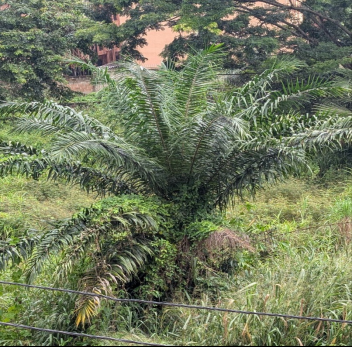
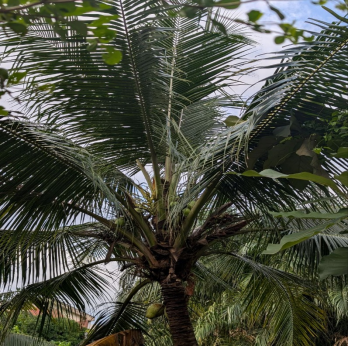
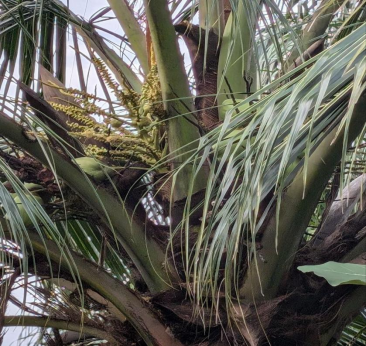
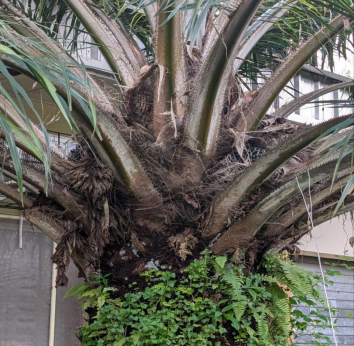
Observations regarding the morphology of C. nucifera and E. guineensis indicate that both species are characterized as single-stemmed palm trees (Figures 1 & 2). C. nucifera can attain heights of up to 30 meters, while E. guineensis reaches a maximum height of 20 meters. The leaves of these species are arranged alternately and exhibit a pinnate, feather-like structure, featuring a central midrib and numerous leaflets that are spirally arranged, with a parallel venation pattern. Each crown comprises 30 to 40 leaves, with C. nucifera reaching lengths of up to 6 meters and E. guineensis extending to 5 meters. The leaf surface of C. nucifera is characterized by its smooth texture, in contrast to the textured, rugose surface of E. guineensis, which features small, stiff hairs. The petiole of C. nucifera measures 2.11 meters in length and is thick, fibrous, and woody, while E. guineensis has a shorter petiole at 1.53 meters, which is also thick and fibrous but exhibits a slightly woody quality. Both species generate small yellowish flowers that cluster at the base of their leaves, subsequently maturing into fruit. Their stems are robust, fibrous, and woody, exhibiting a columnar, straight, and unbranched structure, characterized by enduring leaf bases and a slight bulge at the base. Recorded measurements are as follows: stem height—30 m (C. nucifera) and 20 m (E. guineensis); stem diameter—45 cm and 14 cm; internode length—27 cm and 17 cm; node diameter—10 cm and 6 cm. The bark is thick, hard, and rough, varying in color from grayish- brown to brown (Table 1). Both species possess a fibrous root system, with a deep taproot and numerous adventitious roots spreading outward.
| Cocos nucifera | Elaeis guineensis | |
|---|---|---|
| Habit | Tree | Tree |
| Leaf arrangement | Spiral pattern | Spiral pattern |
| Leaf apex | Terminal | Pointed |
| Leaf base | Narrow | Sheathing |
| Leaf length | 6.0 m | 5.0 m |
| Leaf width | 2.11m | 1.74m |
| Leaf color | Green | Dark green |
| Leaf surface | Smooth and glabrous | Rugose with small stiff hairs |
| Leaf venation | Parallel | Parallel |
| Stem girth | 49.44 cm | 61.21cm |
| Stem shape | Cylindrical and slightly tapering towards the top | Cylindrical and slightly swollen at the base |
| Stem color | Grayish or light brown | Dark brown or blackish |
| Stem texture | Smooth with shiny surface | Rough and scaly |
| Petiole color | Light green | Dark green |
| Petiole length | 2.11 m | 1.53 m |
| Petiole girth | 3.79 cm | 5.54 cm |
| Petiole texture | Smooth and glabrous | Rough and fibrous |
| Leaf margin | Smooth and entire | Finely serrated or toothed |
Table 1: Morphological Characteristics of Cocos nucifera and Elaeis guineensis.
Phytochemical Results
Qualitative Phytochemical Compositions of the seeds of Cocos nucifera and Elaeis guineensis: The qualitative phytochemical results of the seeds of C. nucifera showed the presence of phenol, flavonoid, tannin, carotenoid, alkaloids, saponins and oxalate (Table 2). The seeds of E. guineensis also showed the presence of the phytochemical as that of C. nucifera except tannins and alkaloids which was absent in it. The table below shows phytochemicals present in both species of C. nucifera and E. guineensis.
| Phytochemicals | Cocos nucifera | Elaeis guineensis |
|---|---|---|
| Phenol | + | + |
| Flavonoid | + | + |
| Tanin | + | - |
| Carotenoid | + | + |
| Alkaloid | + | - |
| Saponin | + | + |
| Oxalate | + | + |
Table 2: Qualitative Phytochemical Analysis of the seeds of _Cocos nucifera_ and _Elaeis guineensis._
| Phytochemical Compositions | ||
|---|---|---|
| Phytochemicals | Cocos nucifera | Elaeis guineensis |
| Total Phenol (mgGAE/100g) | 1.31 ± 0.21a | 41.72 ± 1.03b |
| Flavonoid (mgCE/100g) | 38.29 ± 0.89a | 142.88 ± 4.69b |
| Tanin (mgTAE/100g) | 35.82 ± 2.08 | 0 |
| Carotenoid (mg/100g) | 0.19 ± 0.07a | 0.19 ± 0.07a |
| Alkaloid (%) | 0.32 ± 0.03 | 0 |
| Saponin (%) | 0.76 ± 0.03a | 0.92 ± 0.06b |
| Oxalate (mg/g) | 0.50 ± 0.01a | 1.05 ± 0.11b |
Table 3: ** Quantitative Phytochemical Composition of The Seeds of _Cocos nucifera_ and _Elaeis guineensis_ Phytochemical Composi
GAE: Gallic acid equivalent CE: Catechin equivalent TAE: Tannic acid equivalent Values are in mean ± standard deviation of triplicate determination. Means on the same row but with different superscript are significantly different at (p<0.05). Table 3: Quantitative Phytochemical Composition of The Seeds of Cocos nucifera and Elaeis guineensis Phytochemical Compositions.
Quantitative Phytochemical Composition of the Seeds of Cocos nucifera and Elaeis guineensis: The Table 3 presents the quantitative analysis of phytochemical compositions between Palm Kernel and Coconut. The results indicate significant differences in the concentrations of various compounds. For Palm Kernel, the phenolic content was found to be 41.72 ± 1.03 mgGAE/100g, while Coconut had a lower phenolic concentration of 1.31 ± 0.15 mgGAE/100g. Flavonoids were also markedly higher in Palm Kernel at 142.88 ± 4.14 mgCE/100g compared to 38.79 ± 0.60 mgCE/100g in Coconut. Other compounds such as tannins (Palm Kernel: 0.00; Coconut: 35.82 ± 1.00 mgTAE/100g), carotenoids (Palm Kernel: 0.19 ± 0.01 mg/100g; Coconut: 0.19 ± 0.01 mg/100g), alkaloids (Palm Kernel: N/A; Coconut: 0.32 ± 0.02%), saponins (Palm Kernel: 0.92 ± 0.06%; Coconut: 0.76 ± 0.01%), and oxalates (Palm Kernel: 1.05 ± 0.08 mg/g; Coconut: 0.50 ± 0.02 mg/g) further illustrate these differences. The means are expressed as mean ± standard deviation, and the differences are statistically significant at p < 0.05, as indicated by different superscripts.
Values are in mean ± standard deviation of triplicate determination. Means on the same row but with different superscript are significantly different at (p<0.05). Discussion The morphological characteristics of C. nucifera and E. guineensis showed significant similarities, such as their habit as single-stemmed palm trees, which grow up to 30m and 20m, respectively. Both species have a spiral leaf arrangement with pinnate, feather-like leaves. However, differences were observed in their leaf and stem morphology. C. nucifera exhibits smooth and glabrous leaves, while E. guineensis has rugose leaves with small stiff hairs, which provide a more textured surface. The petiole of C. nucifera is longer (2.11m) compared to E. guineensis (1.53m), and this difference in petiole length also reflects in their leaf and stem dimensions, with C. nucifera generally having larger leaf and stem measurements.
These observations aligned with previous studies by Tomlinson [22] who described the general morphological characteristics of palm species, noting that leaf texture and petiole length can vary significantly between species within the same family, depending on their environmental adaptations. The distinct characteristics such as the rough, scaly stem of E. guineensis compared to the smoother stem of C. nucifera also tallied with the findings by Dransfield, et al. [23] who reported similar morphological distinctions among palm species.
The phytochemical analysis of Cocos nucifera and Elaeis guineensis revealed significant differences in their bioactive compound, each contributing uniquely to potential health- related applications.
The phytochemical analysis revealed notable differences between the two species. E. guineensis exhibited significantly higher levels of phenols, flavonoids, saponins, and oxalates compared to C. nucifera, which was richer in tannins and alkaloids. The higher phenol content in E. guineensis (41.72 mgGAE/100g) compared to C. nucifera (1.31 mgGAE/100g) suggests that E. guineensis may possess stronger antioxidant properties, as phenolic compounds are known for their antioxidant activity [24].
The phenolic content in E. guineensis (41.72 mgGAE/100g) is substantially higher than in C. nucifera (1.31 mgGAE/100g). Phenolic compounds are integral to plant defense mechanisms and have been associated with various health benefits, including antioxidant, anti-inflammatory, and anticancer activities. The high phenolic content in E. guineensis suggests a strong potential for antioxidant activity, which is crucial for combating oxidative stress—a factor in chronic diseases like cancer and cardiovascular disorders [25].
This observation is consistent with the findings of Vuong, et al. [26], who noted that plants exposed to more challenging environmental conditions often accumulate higher levels of phenolics. This adaptive trait enhances their survival while also increasing their value as sources of natural antioxidants. Given the rising demand for natural antioxidants in the food and cosmetic industries, E. guineensis could serve as a viable alternative to synthetic antioxidants like BHT and BHA.
Flavonoids are crucial phytochemicals known for their role in plant pigmentation, UV protection, and defense against pathogens. The study showed that E. guineensis has a significantly higher flavonoid content (142.88 mgCE/100g) compared to C. nucifera (38.29 mgCE/100g). Flavonoids are linked to a multitude of health benefits, including protection against heart disease, cancer, and neurodegenerative conditions [27].
The high flavonoid concentration in E. guineensis aligned with research by Yao, et al. [28], which highlights the potential of flavonoids to reduce oxidative stress and inflammation— key contributors to cardiovascular diseases. This suggests that E. guineensis could be particularly valuable in developing functional foods or nutraceuticals aimed at cardiovascular health, offering a natural source of these beneficial compounds.
Saponins, found in both species but slightly higher in E. guineensis (0.92%) than in C. nucifera (0.76%), are known for their cholesterol-lowering, immune-boosting, and anticancer properties [29]. The slightly elevated saponin levels in E. guineensis indicated its potential for more effective applications in health products targeting cholesterol management and cancer prevention.
Oxalates, which are more prevalent in Elaeis guineensis (1.05 mg/g) compared to Cocos nucifera (0.50 mg/g), have both beneficial and adverse effects. While high oxalate levels can reduce mineral bioavailability and contribute to kidney stone formation, in moderate amounts, oxalates may play a role in plant defense. The higher oxalate content in E. guineensis suggested the need for caution in dietary applications, particularly for individuals prone to kidney stones.
The absence of tannins and alkaloids in E. guineensis is noteworthy, especially when compared to C. nucifera, which contains these compounds. Tannins are polyphenolic compounds with antioxidant and antimicrobial properties, often contributing to the astringency and bitterness of plant- based foods [30].
The lack of tannins in E. guineensis may make its extracts more palatable for certain applications, especially where bitterness is undesirable.
Similarly, the absence of alkaloids in E. guineensis is significant. Alkaloids, present in C. nucifera, are known for their pharmacological activities, including analgesic, anti- inflammatory, and anticancer effects.
This difference suggested that C. nucifera may have a broader range of medicinal applications, particularly in pain management and anti-inflammatory treatments, where alkaloid activity is advantageous.
The significantly higher flavonoid content in Elaeis guineensis (142.88 mgCE/100g) compared to Cocos nucifera (38.29 mgCE/100g) suggested that E. guineensis may have more potent anti-inflammatory and cardioprotective effects, as flavonoids are important bioactive compounds with various health benefits [31]. The absence of tannins and alkaloids in E. guineensis, contrasted with their presence in C. nucifera, indicated potential differences in medicinal applications, with C. nucifera possibly being more suited for antimicrobial treatments where tannins and alkaloids are beneficial. These findings are consistent with those of Adewusi, et al. [32] who also reported higher phenolic and flavonoid content in E. guineensis compared to other palm species, further validating the results of this study [33, 34].
The distinct phytochemical profiles of Cocos nucifera and Elaeis guineensis underscore their varied potential applications in health, nutrition, and industry. The high phenolic and flavonoid content in E. guineensis suggested it may be particularly effective as a natural antioxidant and anti-inflammatory agent, while the presence of tannins and alkaloids in C. nucifera indicated its potential for use in antimicrobial and medicinal applications. These findings provide a foundation for further exploration into the specific uses of these species based on their unique phytochemical compositions.
Conclusion
In conclusion, slight similarities justified their placement in the same family Arecaceae, while the differences explained their placement in different genus and species. Higher phenolic and flavonoids contents indicated that E. guineensis is more suitable for antioxidant applications, while presence of tannins and alkaloids in C. nucifera suggested its applications in antimicrobial purposes.
References
-
Balasundram N, Sundram K, Samman S (2021) Phenolic compounds in plants and agri-industrial by-products: Antioxidant activity, occurrence, and potential uses. Journal of Agricultural and Food Chemistry 32(12): 34- 43.
-
Cazzolla Gatti R, Liang J, Velichevskaya A, Zhou M (2022) Sustainable palm oil may not be so sustainable. Nature Food 3(2): 82-89.
-
Hickey M, King C (2016) 100 Families of Flowering Plants. In: 3rd (Edn.), Cambridge University Press pp: 123.
-
Raven PH, Evert RF, Eichhorn SE (2013) Biology of Plants. In: 8th (Edn.), WH Freeman and Company pp: 900.
-
Evert RF, Eichhorn SE (2013) Raven Biology of Plants. In: 8th (Edn.), WH Freeman and Company pp: 190.
-
Judd WS, Campbell CS, Kellogg EA, Stevens PF, Donoghue MJ (2016) Plant Systematics: A Phylogenetic Approach. In: 4th (Edn.), Sinauer Associates pp: 219.
-
Glover BJ (2014) Understanding Flowers and Flowering: An Integrated Approach. Oxford University Press pp: 215.
-
Stace CA (2010) New Flora of the British Isles. In: 3rd (Edn.), Cambridge University Press pp: 153.
-
Kabera JN, Semana E, Mussa AR, He X (2020) Plant secondary metabolites: Biosynthesis, classification, function and pharmacological properties. Journal of Pharmacy and Pharmacology 72(9): 1167-1179.
-
Altemimi A, Lakhssassi N, Baharlouei A, Watson DG, Lightfoot DA (2017) Phytochemicals: Extraction, isolation, and identification of bioactive compounds from plant extracts. Plants 6(4): 39-42.
-
Shahidi F, Yeo J (2018) Bioactivities of phenolics by focusing on suppression of chronic diseases: A review. International Journal of Molecular Sciences 19(6): 15- 73.
-
Działo M, Mierziak J, Korzun U, Preisner M, Szopa J, et al. (2016) The potential of plant phenolics in prevention and therapy of skin disorders. International Journal of Molecular Sciences 17(2): 139-160.
-
Campos EV, Proença PL, Oliveira JL, Bakshi M, Abhilash PC, et al. (2019) Use of botanical insecticides for sustainable agriculture: Future perspectives. Ecological Indicators 105(21): 483-495.
-
Soundararajan P, Kim JS (2018) Anti-carcinogenic glucosinolates in cruciferous vegetables and their antagonistic effects on prevention of cancers. Molecules 23(11): 29-83.
-
Hewlings SJ, Kalman DS (2017) Curcumin: A review of its effects on human health. Foods 6(10): 92-102.
-
Sawda C, Moussa C, Turner RS (2017) Resveratrol for Alzheimer’s disease. Annals of the New York Academy of Sciences 1403(1): 142-149.
-
Wink M (2020) Evolution of the angiosperms and co-evolution of secondary metabolites, especially of alkaloids. Progress in Botany 81(3): 427-454.
-
Ilodibia CV, Okoli BE (2016) Anatomical and Phytochemical Studies on Various Parts of Morinda lucida Benth. (Rubiaceae). An International Journal of Life Science 5(2): 100-106.
-
Barros L, Soraia F, Baptista P, Cristina F, Miguel VB, et al. (2007) Antioxidant activity of Agaricus sp. mushrooms by chemical, biochemical and electrochemical assays. Food Chemistry 32(11): 61-66.
-
Obadoni BO, Ochuko PO (2002) Phytochemical Studies and Comparative Efficacy of the crude Extracts of some Hemostatic Plants in Edo and Delta States of Nigeria. Global Journal of Pure and Applied Sciences 8(2): 203- 208.
-
AOAC (2005) Association of Analytical Chemistry. Methods for Phytochemical Analyses pp: 2318-2391.
-
Tomlinson PB (2006) The Anatomy of Palms. Oxford University Press, USA, pp: 463.
-
Dransfield J, Uhl NW, Asmussen CB, Baker WJ, Harley MM, et al. (2008) Genera Palmarum: the evolution and classification of palms. Kew Publishing, Royal Botanic Gardens Kew pp: 205.
-
Harborne JB (1998) Phytochemical Methods: A Guide to Modern Techniques of Plant Analysis. Springer Science and Business Media pp: 264.
-
Shahidi F, Ambigaipalan P (2015) Phenolics and polyphenolics in foods, beverages, and spices: Antioxidant activity and health effects–A review. Journal of Functional Foods 18(32): 820-897.
-
Vuong QV, Hirun S, Roach PD, Bowyer MC, Phillips PA, et al. (2014) Effect of extraction conditions on total phenolic compounds and antioxidant activities of Carica papaya leaf aqueous extracts. Journal of Herbal Medicine 4(3): 69-76.
-
Middleton E, Kandaswami C, Theoharides TC (2000) The effects of plant flavonoids on mammalian cells: implications for inflammation, heart disease, and cancer. Pharmacological Reviews 52(4): 673-751.
-
Yao LH, Jiang YM, Shi J, Tomás-Barberán FA, Datta N, et al. (2004) Flavonoids in food and their health benefits. Plant Foods for Human Nutrition 59(3): 113-122.
-
Madrigal-Santillán E, Madrigal-Bujaidar E, Alvarez- González I, Sumaya-Martínez MT, Gutiérrez-Salinas J, et al. (2014) Review of natural products with hepatoprotective effects. World Journal of Gastroenterology: WJG 20(40): 147-187.
-
Shahidi F, Zhong Y (2010) Novel antioxidants in food quality preservation and health promotion. European Journal of Lipid Science and Technology 112(9): 930- 940.
-
Panche AN, Diwan AD, Chandra SR (2016) Flavonoids: An Overview. Journal of Nutritional Science 5(4): 7-13.
-
Adewusi HA, Akindahunsi AA (2008) Antioxidant and phenolic content of Elaeis guineensis. African Journal of Food Science and Technology 2(1): 22-27.
-
Ludovici V, Barthelmes J, Nägele MP, Enseleit F, Ferri C, et al. (2018) Cocoa, blood pressure, and vascular function. Frontiers in Nutrition 4(3): 21-36.
-
Osagie AU (1998) Antinutritional Factors. In: Nutritional Quality of Plant Foods. Ambik Press Ltd, Benin City, Nigeria 40: 221-244.
- Aborted Spores in Argentine Ferns
- Ficus middletonii Chantaras. – A New Distributional Record For Central India
- A Study on the Phytochemical, Antioxidant and Antimicrobial Activities of Ficus glumosa Delile (Moraceae)
- Paclobutrazol (PBZ) and its Metabolic Function in Agriculture: A Review
- Decalepis arayalpathra: Ethnobotany, Scientific Interventions and Prospects
- Effect of Different Cultural Treatments on Branching and Yield of Groundnut (Arachis hypogea L.)