
Advances in Probiotics use with the Utilization of Engineering Technology for Diseases beyond Obesity, Non Alcoholic Fatty Liver Disease, to Treat Neurodegenerative Diseases, Metabolic Diseases like Type1 Diabetes, Infectious Diseases and Infections-A Systematic Review
Earlier we have emphasized the role of gut microbiota in human health and role of dysbiosis in obesity, metabolic syndrome as well as non-alcoholic fatty acid liver disease (NAFLD). Further how they are involved in inflammatory signaling in the gut is already under publication, regarding how at various levels of intestines these bacilli might be influencing the development of systemic inflammation in obesity along with enterohepatic circulation with roles of bacteria associated with diets like high protein diet. It is realized that gut dysbiosis might correlate with umpteen diseases like as inflammatory bowel disease (IBD), Ulcerative colitis, Crohns disease, cardiovascular disease (CVD) as well as neurodegenerative diseases as well as cancers. Greater insight into gut microbiome, use of probiotic bacteria for the manipulation of gut microbiota for avoidance as well as treating a lot of diseases has gained a lot of attention. With the continuous formation of tools as well as technology, engineering probiotic microbes having wanted properties as well as functions for the benefit of human health has made considerable advances. Here we have tried to conduct a systematic review of utilizing them for diagnosing as well as treating various bacterial infections, role in certain metabolic disorders like type 1 diabetes mellitus (T1DM), Phenylketonuria (PKU), Hyperammonemia, neurodegenerative disease s like Parkinson’s disease, alzheimers disease along with specific severe infectious diseases like cholera, etc. associated with considerable mortality with probiotics having live bacteria for those specific purposes specifically engineered.
Introduction
The human gastrointestinal tracts (GIT) harbours complicated as well as various different kinds of microbes which work as a critical factor in sustaining the homeostasis of the intestinal microenvironment [1]. It is evaluated that about 1013-1014 bacterial cells from >1000 various species are located in the gut, that develop a natural ecosystem within the human body [2]. These commensal bacteria can utilize the nutrients in the gut to synthesize metabolites and develop a host-microbe metabolic axis [3]. Within that metabolic axis, it controls nutrient absorption, energy metabolism as well as several physiological processes in host [4]. The study of interaction among gut flora as well as human host has developed a lot of attraction. Greater proof is there that gut microbiota have a significant part within human health as well as diseases [5]. Human gut microbiota aids in providing essential healthy nutrients, food digestion, decreasing inflammation as well as breakdown of toxins, facilitate haematopoietic as well as enteric nerve function along with control the host’s immune system [6]. Reversely the aberrant alterations in the gut ecosystem correlate with pathological problems like atherosclerosis, hypertension, cardiac failure, chronic renal disease, obesity, diabetes mellitus (DM), as well as cancer [7, 8, 9, 10, 11]. Additionally the gut microbiota composition in humans can point the disease, risk or formation [12]. It has been documented, that diet can have a considerable influence on gut microbiota composition, with other factors being host genetics, infections, utilization of antibiotics, immunosuppressive therapy as well as other ways of therapy also adds to the composition as well as action of gut flora [13]. Earlier we have reviewed the role of probiotics in obesity as well as non-alcoholic fatty acid liver disease (NAFLD) [14, 15, 16]. Here we further review the extensive role of engineering probiotics for various indications.
Methods
We did a systematic review regarding engineering probiotics for different diseases with the MeSH terms like; inflammatory bowel disease; DM; bacteria l infections; diagnosis and detecting diseases from 1970’s till date.
Results
We found a total of 360 articles out of which we selected 96 articles for this review.
Probiotics
The word probiotic comes from the Greek word, which means ‘’for life”. Despite lot of change in definitions, currently the definition recognized by Food and Agricultural Organization of the United Nations (FAO) and world health organization (WHO) working group experts is that probiotics are live strains of strictly selected microorganisms, which once administered in adequate amounts, give a health benefit to the host [17]. Probiotics represent live bacterial species which can survive as well as thrive in the acidic environment of the stomach as well as give advantageous action on health of the host by re-establishing the gut microbiota [18]. Probiotics administration into the GIT might act as a luring method for restoration of the balance of the gut ecosystem as well as avoid or treat illnesses a lot of progress has been made in utilization of a living product instead of a chemical for therapy of disease, that are DM, phenylketonurea, human immunodeficiency virus (HIV) as well as inflammatory bowel disease (IBD) [19, 20, 21, 22]. Nevertheless, there is no one- size fits all. Probiotics that acts well for every one since gut microbiome is separate in persons. With the formation of metabolic engineering as well as synthetic biology, engineering of Probiotics has raised probabilities of designing microbes for targeting particular tissues as well as cells instead of the total body as well as formation of innovative Probiotics with required properties as well as functionalities. Here the recent advances in engineering Probiotic bacteria as living diagnostics as well as therapeutics for investigation as well as therapy of metabolic abnormalities, infections, inflammation as well as pathogenic bacterial infection.
Probiotics Engineering to Abrogate Metabolic Abnormalities
Enzymes have a main part in cellular metabolism as well as catalyze complex biological processes for life maintenance. The steady state of metabolism is based on lot of enzymatic reactions that might get interrupted via enzyme deficiency [23]. This absent or enzyme that is defective causes metabolic problems where toxic metabolites might collect or essential products might not get synthesized [24, 25]. Utilizing enzymatic replacements for restoration of metabolism as well as removal of toxic products or inhibiting their formation are promising therapies for metabolic problems (Figure 1) [26]. Lot of researches have pointed that engineering probiotics that harbour particular enzymes or pathways can relieve metabolic abnormalities in organisms [27, 28].
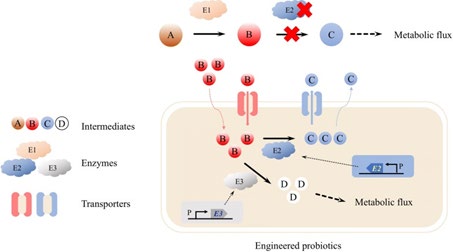
Figure 1: Courtesy ref no-26 -Engineering probiotics for the treatment of metabolic disorders caused by enzyme deficiency. The lack of E2 results in the accumulation of intermediate B and the insufficient supply of intermediate C. The engineered probiotics harboring E2 and/or E3 can be used to restore metabolism and eliminate the accumulation of the intermediate B.
DM represents a disease where blood glucose amounts in the blood escalate > than normal in view of pancreatic inability to synthesize enough amounts of the hormone insulin. This can cause a lot of complications like cardiovascular disease (CVD), Alzheimers disease, and stroke as well as nerve damage [29]. Type 1 diabetes (T1D) is an autoimmune disease where the immune system attacks as well as impairs cells within the pancreas .Whereas T2D is usually a result of insulin resistance (IR) [30]. Presently insulin as well as hypoglycaemic drugs along with cytokine based treatments are being utilized for DM therapy [31, 32]. As compared to these traditional therapies use of probiotics for therapy of DM has <side effects as well as can prevent the pain caused via injections. Presently investigators engineered a human gut strain Lactobacillus lactis for the therapy of T1D. This modified strain Lactobacillus lactis had the ability of liberating whole proinsulin auto antigen as well as biologically active immunoregulatory cytokine interleukin-10 (IL-10). The combination treatment with recombinant L. Lactis as well as low dose of nonspecific modulator anti-CD3 was utilized to evaluate if the NOD mouse could get normoglycemia following DM onset. The outcome demonstrated that 59% of animal models (36/61 mice) had a stable recovery of autoimmune DM as compared to control group [33]. Robert, et al. [34] engineered L. Lactis in another study for liberating the T1D auto antigen GAD 65370-575 as well as the cytokine IL-10. In combination with short –course low dose anti-CD3, this therapy could stabilize the pancreatic islet inflammation in non-obese diabetic (NOD) mice even in the case of severe hyperglycemia. Glucagon like peptide (GLP1) represents a controller for different homeostatic events. It gets synthesized by post translational processing of proglucagon [35]. It has been documented that GLP1-(1-37) can control insulin synthesis both in vivo as well as in vitro by converting adult intestinal epithelial cells into functional insulin synthesizing cells [36]. On this ground Dual, et al. fashioned a recombinant strain L.gasseri for liberation of GLP1-(1-37) to decrease blood glucose amounts. The gene that encoded GLP1-(1-37) was fused with a USP 45-LEISS liberation marker (SEC) as well as polyhistidine (HIS) tag that was separated via an enterokinase site. This expression cassette that is under regulation of the promoter PsipA was inserted into chromosome of L.gasseri. The in vitro outcomes pointed that GLP1-(1-37) could convert rat cells into insulin liberating cells. On feeding recombinant L.gasseri into diabetic rats, lots of insulin liberating cells were formed in the upper intestine, the numbers was enough to replace 25-33% of the insulin ability of non- diabetic healthy rats [20]. Additionally L. Lactis that harboured GLP1 was delivered orally in zucker diabetic fatty (ZDF) rats; liberation of insulin was markedly stimulated from a pancreatic β cell line HIT-T15, as well as the blood glucose amounts were decreased by 10-20% during 2-11 h post dosing [37]. Though engineering of bacteria for the therapy of DM, have made a lot of advances in animal models, very little clinical trials have been conducted.
Phenylketonuria (PKU) constitutes a genetic metabolic disorder which doesn’t allow patients to break down the amino acid phenyl alanine [24]. It results via deficiency of phenyl alanine hydroxylase (PAH) that is an enzyme which converts phenyl alanine into rest of metabolites. Collection of phenyl alanine at abnormally large amounts in the blood might cause serious health problems that are emotional as well as behavioral difficulties, convulsions, tremors as well as marked intellectual disability [38]. Phenyl alanine ammonia lyase (PAL) can convert phenyl alanine into ammonia as well as transcinnamic acid, that acts as a potential enzyme for PKU treatment [39]. A huge amount of PAL protein was got by overexpression of PAL gene from Rhono sporidum toruloides in Escherrichia coli. Delivery of PAL from Anabaena variabilis could markedly decrease blood phenyl alanine in the mice model of human PKU & was successful in decreasing the plasma phenyl alanine amounts [40]. The metabolically engineered Lactobacillus reuteri that was carrying PAL from Anabaena variabilis could greatly decrease blood phenyl alanine in the mice model of PKU within 4-5 days of therapy in another study. It was also seen that the Probiotic microbes was lost from the intestines at 8mths post therapy [41]. An engineered Probiotic SYNB1618 was constructed for breakdown of phenyl alanine. Here, PAL as well as L-amino acid deaminase (LAAD), an enzyme that converts phenyl alanine into phenyl pyruvate, was introduced into E.coli Nissle 1017. This programmed Probiotic strain can liberate those 2 Enzymes which get activated in the gut under hypoxic circumstances. Oral therapy of the PAHenu2/enu2mouse model of PKU with SYNB1618 significantly decreased the blood phenyl alanine amounts by 38% compared to controls. Further delivery of SYNB1618 to cytomegalovirus monkey also inhibited the typical escalation of plasma phenyl alanine following a diet challenge test [27]. This therapy in now under clinical trials (NCT 035516487) to find the efficacious dose in the human body.
Hyperammonemia refers to a metabolic disorder having the properties of escalated amount of ammonia in blood [42]. Cause of this is loss of the capacity of metabolism of free ammonia to urea in view of the defect in enzymes as well as transporters that take a part in urea cycle [43]. It has been pointed that delivery of antibiotics or lactulose can treat this by preventing the development of ammonia within intestine or inhibition of its absorption into the body, that are not efficacious and related to many side effects [44]. Oral delivering of the Probiotic L.helveticus strain N58 can liberate the cognitive decrease as well as anxiety like behaviors observed in hyperammonemia rats, point that utilization of the gut flora to delete ammonia via the gut can act as a luring therapy for hyperammonemia [45]. Utilization of the changed Schedler flora (ASF), a defined consortium of 8 gut commensal organisms having urease action for therapy of hyperammonemia that induced encephalopathy as well as neurotoxicity was demonstrated by Shen, et al. [46]. Colonization of these ASF aided in new gut microbiome getting established which caused a reduction of urease action as well as ammonia generation. Transplanting ASF to thioacetamide treated acute as well as chronic hepatic damaged mice was successful in decreasing the ammonia in blood as well as enhanced the survival rate as well as behavioral actions [46]. Engineered E.coli Nissle 1917 for developing the Probiotic strain SYNB 1020 was carried out by Kurtz, et al. This can convert ammonia into L-arginine dramatically. The genes thyA as well as argR in this strain that encode the negative controllers got removed to activate the transcription of various genes that participate in biosynthesis as well as transportation of arginine. Other than the gene argA 215 that encodes a feedback resistant N-acetyl glutamate synthase (argAfbr) was integrated into the genome for escalation of biosynthesis of arginine. Delivery of SYNB 1020 decreased blood ammonia amounts as well as enhanced survival rate to 50% in the spfash mouse model of hyperammonemia. Further enhancement of this strain towards a clinical phase 1 study was done and it was shown that it has dose dependent effect in hyperammonemia disorders [28]. Currently SYNB 1020 has been shifted to a phase 1b/2a clinical trials for checking its safety, pharmacodynamics as well as tolerability (NCT 03447730).
For the therapy of Parkinson‘s Disease Levodopa represents the primary therapy [47]. Once it crosses the blood brain barrier (BBB), it can get decarboxylated into dopamine catalyzed by the aromatic acid decarboxylase (AADC) to active therapeutic actions [48]. Nevertheless it can get decarboxylated within the GIT as well for the synthesis of dopamine in the periphery that results in unaccepted intestinal side effects as well as decrease in bioavailability [49]. Though co-administering Levodopa with carbidopa, that is an inhibitor of AADC, would let Levodopa to enter the brain by preventing the peripheral catabolism of Levodopa, the bioavailability is not greater than 50% [50]. An interspecies pathway for Levodopa metabolism in the human gut flora was recently documented. The pyridoxal phosphate based tyrosine decarboxylate (Tyr DC) from Enterococcus faecalis as well as the molybdenum co-factor dependent dehydroxylase (Dadh) from Eggerthela lenta were isolated as 2 enzymes that convert Levodopa into m-tyramine in the gut. The investigators also showed a compound S-α fluoro methyl tyrosine (AFMT) which had the ability to inhibit the decarboxylation of Levodopa in the gut microbes. It has been seen that co-administering AFMT with Levodopa with carbidopa escalated the bioavailability of Levodopa in mice [50]. A chronic neurodegenerative disease Alzheimers disease represents propagation of loss of brain cells that results in memory loss as well as the cognitive decrease [51]. At present, practically all β-amyloid as well as tau centric treatment approaches that were checked for Alzheimers disease have failed in clinical trials that suggests the larger requirement for innovative treatment approaches for treating this complex disease. The propagation of Alzheimers disease gets correlated with the changes in gut flora composition. This gut dysbiosis leads to peripheral collection of phenyl alanine as well as isoleucine that facilitates the activation of M1 microglia, aiding in cognitive imbalance. On the basis of this mode, a sodium oligosaccharide drug called GV
971 was utilized to reduce neuro inflammation as well as cognitive imbalance in Alzheimers disease propagation by re-establishing the gut microbiota [52]. This drug has now moved to phase 3 clinical study and the results have depicted that it is efficacious for therapy of Alzheimers disease (NCT02293915).
Probiotics Engineering to Treat Bacterial Infections
Globally morbidity as well as mortality is caused via Bacterial Infections [53]. Utilization of antibiotics is the major method of avoidance as well as treating Bacterial Infections. Nevertheless exaggerated utilization of antibiotics has resulted in formation of antibiotics resistance that constitutes one of the biggest public health challenges [54]. An engineered Probiotics for inhibition of pathogenic Bacteria to sustain GIT health as well as therapy of Bacterial Infections has geared a lot of interest recently [55, 56]. In the form of a novel as well as other method for treatment of Infectious diseases, Probiotic therapy aids in decreasing the formation of multi resistant bacteria. It has been posited that Probiotics can inhibit pathogens by a variety of modes that are liberation of anti-Bacterial chemicals, stimulation as well as manipulation of immune responses, competition of nutrition as well as particular adhesion sites as well as inhibition of toxic proteins expression in GIT pathogens [57, 58, 59, 60]. As per the modes, different Probiotics have been manufactured, with most of them showing lot of specificity as well as effectiveness for inhibiting pathogens.
A lot of chronic Infections are caused by the Bacterial biofilm development that causes resistance against antibiotics as well as human immune system. Engineered Probiotics for inhibition of biofilm development works as a mode to suppress pathogens [61]. In an earlier study, an Engineered E.coli strain was manufactured for finding as well as killing Pseudomonas aeruginosa through a quorum- sensing signazling system. In this particular system the promoter PLasl induced by P. aeruginosa quorum-sensing signalling molecule N-acyl-homoserine-lactone (AHL) got introduced for driving the expression of a genetic circuit is comprised of the genes that encode E7 lysin protein as well as pyocin S5, a narrow spectrum bacteriocin that target P. aeruginosa infection. The E7 lysin protein synthesized causes lyses of the E. coli cells so that the produced pyocin S5 can be liberated into the extracellular medium for killing P. aeruginosa particularly. These results showed that the Engineered E. coli could inhibit the biofilm development by 90% as well as decrease the growth of planktonic P. aeruginosa by 99% [61]. Further manipulation of this system for avoiding P. aeruginosa gut infection in animal models was tried by utilizing E. coli Nissle 1917 as the host. In contrast to the earlier system, an additional anti- biofilm protein dispersin B was introduced for destabilization of mature biofilms for getting a >physiologically relevant therapy. The in vivo efficiency of this system was examined in both Caenorhabditis elegans as well as mouse infection models. The survival time of the therapy group escalated >2 times in P. aeruginosa infected mouse models, the P. aeruginosa levels got decreased by 77% in the therapy group as compared to control group, as well as the probiotic could colonize in the mouse gut for up to 3wks [55]. Further Probiotics can get engineered to get an inhibitory action on enterohaemorrhagic E.coli strain (EHEC), Staphylococcus aureus as well as S.epidermidis infections. Fang, et al. [60] found a protease DegP within the periplasm of E.coli Nissle 1917, it could inhibit the biofilm development of EHEC strain. Further it also showed marked suppressive action on the growth rates of gram positive pathogens Staphylococcus aureus as well as S.epidermidis.
Salmonella infections result in several different symptoms like diarrhea, nausea, abdominal cramping as well as fever [62]. Salmonella bacteria are usually seen in animals like livestock, rodents as well as poultry, but at certain times it might spread to humans in food that gets contaminated by infected animal faeces [62]. Earlier, a chromosome-encoded antibiotic Microcin H47 was found in E.coli that showed the inhibitory action on the growth of Salmonella [63]. Hence, Sassone Corsi, et al. [64] showed that Engineering of E.coli Nissle 1917 for manufacturing Microcin H47 can help removing the pathogen S.enterica from the inflamed gut under particular environmental circumstances like limiting iron. Reactive oxygen species (ROS) synthesized during gut inflammation interacted with luminal thiosulfate, causing production of tetrathionate [65]. The ttr operon (ttrRSBCA) in Salmonella species is a locus that encodes tetrathionate reductase for anaerobic respiration that aids this pathogen with the capacity to use the synthesized tetrathionate as a respiratory electron acceptor. In view of this the growth of Salmonella species outcompetes with the intestinal microbiota at the time of inflammatory situations [65]. On this mode basis Palmer, et al. [59] formed an E.coli Nissle 1917 strain that possessed both Microcin H47 generating system as well as tetrathionate sensing system for inhibition of Salmonella infections (Figure 2). In this particular strain the synthesis of the Probiotic strain for the inhibition of overgrowth of the infectious Salmonella spp under inflammatory situations. E.coli AY25 liberates an antibacterial peptide microcin MccJ25. Mature MccJ25 can develop an exceptional as well as stable lasso structure for inhibition of transcription by the bacteria RNA polymerase [66]. The Probiotic E.coli Nissle 1917 was manipulated to express as well as liberate MccJ25 for the reduction of S.enterica in turkey gastrointestinal tract. The outcome displayed that the delivery of the Probiotic reduced the Salmonella that was carried by the treated group by 97% and had no significant influence on the native microbiome in turkey ceca. It was also seen that the modulated Probiotic showed >effectiveness as compared to therapy with the traditionally used antibiotic enrofloxacin [67].
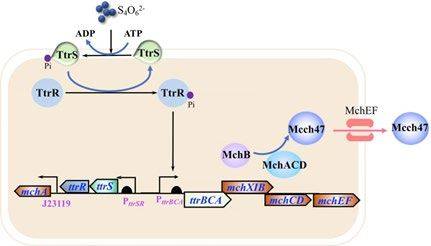
Figure 2: Courtesy ref no-26-Engineering probiotic strain for the inhibition of Salmonella infection. The tetrathionate sensing system and Microcin H47 (Mcch47) production system was introduced into E. coli Nissle 1917. The ttr operon (ttrRSBCA) encodes tetrathionate reductase and the mch operon (mchAXIBCDEF) encodes Mcch47. During the course of Salmonella infection, tetrathionate was generated in the inflamed gut. In the presence of tetrathionate, the promoter PttrBCA was activated by the tetrathionate sensor histidine kinase TtrS and the response regulator TtrR. The transcription of the mch operon was initiated to produce Microcin H47 for the inhibition of Salmonella.
Cholera is an acute diarrheal disease involving escalated secretion on infection of the intestine by Vibrio Cholerae [68, 69]. The causative organism Vibrio Cholerae is able to colonize within the small intestine and generates severe watery stools. Left untreated, severe dehydration can cause shock at a fast pace causing shock as well as death in a small time. Vibrio Cholerae uses a quorum sensing system that is markedly sophisticated for regulating its infections behaviour in a density-based manner. At low cell density, the expression of virulence factors gets initiated for infection to get developed. Once the bacterial numbers are large, the expression of virulence factors gets suppressed by the high amount collection of auto inducer [70]. On this mode Duan, et al. [71] engineered a Probiotic E.coli strain for interaction with interference of quorum sensing and thus avoids Vibrio Cholerae from synthesizing toxin. Delivering therapeutic Probiotic E.coli strains caused an escalated survival rate as well as reduced toxin generation in infant mouse models [71, 72]. Oral delivery of L. Lactis could kill Vibrio Cholerae by generating lactic acid in infant mouse Cholera challenge models [73]. A live Cholera vaccine candidate was developed in another e.g. by genetic Engineering a variant Cholerae El-Tor strain, the modification is removal of the essential virulence factors, decreased potential side effects as well as avoidance of the organism becoming toxic repeatedly. It was shown that this vaccine can efficaciously give Probiotic like cholera protection in the short time in an infant rabbit model of cholera [74].
Probiotics Engineering to Diagnose and Find Out Diseases Presence
This involves engineering bacteria for sensing a significant molecule within the body and subsequently developing a particular signal that allows probiotics to develop into a diagnostic device. Once the quorum sensing system was introduced into the probiotics is a usually used approach for sensing infected pathogens [73]. Like, a diagnostic circuit within L. Lactis was formed for in situ finding a molecule developed by Vibrio Cholerae, and hence for obtaining an early alarm regarding Cholera infection by the colour alteration of the host faecal samples. Here, an innovative signal molecule- sensing device was manufactured by fusion of transmembrane ligand binding domain, of CqS from Vibrio Cholerae, as well as signal transduction domain of NisK from L. Lactis. On finding the signaling molecule developed by V. Cholerae via the engineered L. Lactis, it would liberate the β-lactamase to show the colorimetric switch once nitrocefin was there. Oral delivery of the engineered L. Lactis to cholera infected mice resulted in positive signal within their faeces samples [73]. Formylated peptides constitute a ubiquitous signal peptide synthesized by a wide range of bacterial species [75]. The human formyl peptide receptor FPR 1 has the capacity of monitoring the presence of formyl peptides at nanomolar scales [76]. Sedlmayer, et al. [77] manufactured an artificial microbial control circuit via coupling of formyl peptide sensor with the quorum sensing system to find as well as delete pathogens infection. Cells possessing this system can find formyl peptides synthesized via pathogens having great sensitivity as well as activate quorum sensing signalling molecule autoinducer 2 (AI-2) for effectively decrease the biofilm generation.
Other than recognizing pathogen infections, the sensor possessing probiotics could further be utilized for making signals that could be picked up regarding cancer diagnosis. The oxygen-limited as well as necrotic areas of tumors are luring environments for certain anaerobic bacteria like E.coli, Clostridium as well as Salmonella [78, 79]. The natural ability for colonizing tumor environments makes these bacteria to target these tumors as well as metastasis selectively [79, 80, 81]. Danino, et al. [82] engineered a Probiotic E.coli Nissle 1917 in the form of a diagnostic method for picking up hepatic metastasis in mice by particularly colonizing liver tumor as well as forming a detectable signal in the urine. In this particular design, the expression cassettes luxCDABE (that encodes uciferase) as well as lacZ (that encodes- galactosidase) were co-expressed in E.coli, that allowed the manufactured probiotic strain PROP-Z for producing luminescent signal as well as colorimetric readout [80, 81]. Treating the liver metastasis in the murine model as well as intraperitoneal injection of D-luciferin, it was seen that there was a good specifity as well as an association among tumor diameters as well as signal radiances. For escalating the stability as well as efficiency of this system further, a toxin-anti toxin as well as the gene dlp7 from Bacillus subtilis was introduced into PROP-Z for forcing the cell to sustain the plasmid and equally segregate it on cell division. Oral administration in combination with the delivery of luciferin/galactose conjugate caused liberation of luciferin into the circulation, that could be cleared by the kidney that enables for detecting it in murine urine samples. Kotula, et al. [83] manufactured a toggle switch in a separate study in E.coli, which allowed detection, memory as well as recording of exposure to antibiotics within the gut environment. Particularly, this system has a stable memory element, dependent on the phage lamba cI/cro genetic switch as well as a trigger device, where the expression of the gene cro is regulated by a tetracycline-inducible promoter. In the presence of tetracycline switches the memory element from the cI/ state into the cro state as well as triggers the expression of β galactosidase) reporter gene (encoded lacZ ) within the memory element. Oral delivery of the by Engineered E.coli strain to tetracycline-exposed mice allows recording of the process in the mouse gut via analysis of the faecal samples [83].
Further probiotics could be engineered for picking up inflammation through small sensing molecule. Nitric oxide (NO) is a signaling molecule which can be produced by many cell kinds [84]. It is known to be an anti-inflammatory compound under normal physiological situations [85]. Whereas over synthesis of NO under aberrant conditions results in tissue injury, inflammation as well as even cancer [86]. Hence a high amount of NO acts as a pro inflammatory indicator in inflammatory bowel diseases. A living bacterial sensing device was manufactured by Archer, et al. [87] for finding NO as a marker for gut inflammation. The Engineered E.coli strain which possessed a synthetic device picked up NO generation in the gut. The presence of NO activated the expression of a DNA recombinase, resulting in permanent activation of a switch which gets inherited by progeny following cell division [87]. Tetrathionate is one other small molecule that holds interest. Sulfate reducing bacteria (SRB) in the colon can generate hydrogen sulphide that is markedly cytotoxic for the host cells [88]. Great amounts of hydrogen sulphide inactivate cytochrome c oxidase as well as inhibit the oxidation of butyrate in colon epithelial cells [89]. In the host, hydrogen sulphide can get detoxicated to thiosulfate, that gets further oxidized to tetrathionate by reactive oxygen species (ROS) during gut inflammation [65, 90]. Thus tetrathionate can be utilized as a biomarker for finding out GIT disease if this molecule can be sensed by the host properly. Certain pathogenic bacteria have the capacity of utilizing tetrathionate as a terminal electron acceptor & have been documented to gain growth benefit. Those bacteria have a 20 component controlling system (TCRS), That has the capacity to particularly sense the presence of tetrathionate as well as sequentially reduce its collection by activation of the expression amount of tetrathionate consumption pathways [65, 90]. On the basis of this mode Riglar, et al. [91] formed a probiotic E.coli strain which can sense as well as recall tetrathionate exposure in the gut by utilizing the TCRS from Salmonella as well as engineered this system for activation of a phage lamba cI/cro genetic element. Daeffler, et al. [92] in a separate study found an innovative TCRS homolog from marine Shewanella species that had a thiosulphate sensor and regulator ThsSR as well as a tetra thionate sensor regulator TtrSR. It was observed that both sensors worked well in the complicated colonic environment. Utilizing a fluorescent reporter gene inserted the Probiotic E.coli strain possessing thiosulphate sensors showed particular response as well as fluorescence in colon Inflammation in mouse model [92].
Conclusion
The studies cited above demonstrate an escalating proof the good healthy actions probiotics have on a person [93]. Use of probiotics for dietary therapy of diseases has received a lot of focus in food as well as medicine industries [94].
Formation of metabolic engineering as well as synthetic biology allows us in telling the mode of action as well as developing new probiotic strains having the functions wanted. Engineering of probiotic strains for finding as well as therapy of metabolic diseases, Inflammation as well as pathogenic infections has done lot of advances in these years [27, 52]. These advancements allow us to give understanding of the principles as well as limitations for forming perfect probiotics for human health.
Metabolic disorders that are hyperammonemia as well as phenylketonuria are commonly the result of escalated collection of toxic products or insufficient availability of essential metabolic intermediates [24, 42]. Engineering probiotics that have supplemental enzymes or pathways for supplying essential intermediates or delete toxic products acts as an advantageous method for treating metabolic disorders as a result of enzyme deficiency [95]. Nevertheless, the specificity as well as activity of the introduced enzymes needs to be carefully examined to prevent in other causation of other unnecessary metabolic conditions. At present a lot of strains are utilized as probiotic host that are L. Lactis, E.coli Nissle 1917, B.subtilis, Saccharomyces cerevisiae, Enterococcus, as well as Streptococcus species [73, 87, 96]. In certain cases those microbes are genetically modulated for a particular action, that present a biggest limiting factor for utilizing them on large scale. Certain people think that these genetically modulated microorganisms are dangerous for their health. Further it is essential to carry out safety evaluations on those probiotic strains that are for human utilization, that are short term, long term side effects as well as potential vulnerability or pathogenicity to the consumer or the patient. Engineering probiotics can also be utilized for inhibition of pathogenic infections by liberation of antimicrobials peptides or bacteriocins which allow probiotic strains to get growth benefit [62, 69]. Nevertheless like antibiotics most of the antimicrobials peptides or bacteriocins are not specific. Utilization of those chemicals might cause intestinal dysbiosis, metabolic disorders as well as other side effects. Additionally these antimicrobials peptides or bacteriocins are mostly toxic to the probiotic strains along with even killing the manufacturing cells. In certain cases those that get orally delivered antimicrobials peptides or bacteriocins get rapidly recognized via the immune system as well as degraded prior to their reaching the target area of infection. Engineering probiotics for detecting as well as diagnosing diseases like IBD as well as presymptomatic abnormal alterations are involved for sensing a significant molecule that can be quorum sensing signaling molecules or inflammation environmental situations, and the generating certain signals that can be found in the urine or faeces [77, 87]. Such in vivo monitoring ways can track the gut health status in patients without more invasive investigations, like endoscopy. Nevertheless various issues still requires addressing for broader utilization of these diagnostic devices. The interface among the probiotic strains as well as host cells is difficult to fathom. Other than the sensitivity as well as specificity of the engineered sensors is hard to control. Hence most of the present studies have not yet advanced into clinical trials. Inspite of those limitations, still attention needs to be given on engineering probiotic strains for improvement of human health. It is thought that the >knowledge of the human microbiome as well as mode of disease, the rapid formation of metabolic engineering, synthetic biology as well as other disciplines will promote optimization of methods to design as well as construct robust as well as efficacious probiotics for prevention of diseases as well as improve human health.
References
-
Baumier A, Sperandio V (2016) Interactions between the microbiota and pathogenic bacteria in the gut. Nature 535(7610): 85-93.
-
Rupa P, Mine Y (2012) Recent advances in the role of Probiotics in human inflammation and gut health. J Agric Food Chem 60(34): 8249-8256.
-
Nicholson JK, Elaine H, James K, Remy B, Glenn G, et al. (2012) Host-gut microbiota metabolic interactions. Science 336(6086): 1262-1267.
-
Fischbach Michael A, Segra Julia A (2016) Signaling in host-associated microbial communities. Cell 164(6): 1288-1300.
-
Clements JC, Ursell LK, Parfrey LW, Knight R (2012) The impact of the gut microbiota on human health: an integrative view. Cell 148(6): 1258-1270.
-
Nicholson JK, Wilson ID (2003) Understanding global system biology: metabolomics and the contribution of metabolism. Nat Rev Drug Discov 2: 668-676.
-
Jonsson AL, Backhead F (2017) Role of gut microbiota in atherosclerosis. Nat Rev Cardiol 14(2): 79-87.
-
Li J, Zhao F, Wang Y, Chen J, Tao J, et al. (2017) Gut microbiota dysbiosis contribute to the development of hypertension. Microbiome 5: 14.
-
Tang WW, Wang Z, Kennedy DJ, Wu Y, Buffa JA, et al. (2015) Gut microbiota dependent trimethylamine N-oxide(TMAO) pathway contributes to both development of renal insufficiency and mortality in chronic renal disease. Circ Res 116(3): 448-455.
-
Mafra D, Fouque D (2015) Gut microbiota and inflammation in chronic kidney disease partners. Clin kidney J 8(3): 332-334.
-
Baothman OA, Zamzami MA, Taher I, Abu Baker J, Abu Farha M (2016) The role of gut microbiota in the development of obesity, and diabetes. Lipids Health Dis 15: 108.
-
Murphy EA, Velazquez KT, Herbert KM (2015) Influence of high fat diet on gut microbiota: a driving force for chronic disease risk. Curr Opin Clin NutrMetab Care 18(5): 515-520.
-
Wu GD, Compher C, Chen EZ, Smith SA, Shah RD, et al. (2016) Comparative metabolomics in vegans and omnivores reveals constraints on diet dependent gut microbiota metabolite production. Gut 65(1): 63-72.
-
Kulvinder Kochar Kaur, Allahbadia GN, Singh M (2018) Weight loss Associated with high protein Intake in Obesity: Interactions of Gut Microbiota in Protein Sources influencing this positive effect. Acta Scientific Nutritional Health 2(7): 80-89.
-
Kaur KK, Allahbadia GN, Singh M (2019) Have Probiotics and Synbiotics passed the test of time to be implemented in management of obesity and related metabolic disorders-a comprehensive review. Advances in Obesity, Weight Management & Control 9(1): 21-28.
-
Kaur KK, Allahbadia GN, Singh M (2020) Will Probiotics Provide the Answer for Therapy of Non-alcoholic Fatty Liver Disease (NAFLD)?-A Systematic Review. Biochem Physiol 9(1): 257.
-
Guidelines for the evaluation of Probiotics in Food: Report of a Joint FAO/WHO Working Group on Drafting Guidelines for the evaluation of Probiotics in Food (2002). Food and Agricultural Organization (FAO).
-
Gareau MG, Sherman PM, Walker WA (2010) Probiotics and the gut microbiota in intestinal health and disease. Nat Rev Gastroenterol Hepatol 7(9): 503-514.
-
Chua KJ, Kwok WC, Agarwal N, Sun T, Chang MW (2017) Designer Probiotics for the prevention and treatment of human disease. Curr Opin Chem Biol 40: 8-16.
-
Duan FF, Liu JH, March JC (2015) Engineered commensal bacteria reprogram intestinal cells into glucose responsive insulin-secreting cells for the treatment of diabetes. Diabetes 64(5): 1794-1803.
-
Lagenaur LA, Sanders Beer BE, Birchacek B, Pal R, Liu X, et al. (2011) Prevention of vaginal SHIV transmission in macaques by a live recombinant Lactobacillus. Mucosal Immunology 4: 648-657.
-
Ramirez AM, Rodriquez Lopez A, Ardila A, Beltran L, Patarroyo CA, et al. (2017) Production of human recombinant phenyl alanine hydroxylase in Lactobacillus plantarum for gastrointestinal delivery. Eur J Pharm Sci 109: 48-55.
-
Yen CLE, Cheong ML, Greuter C, Zhou P, Moriwaki J, et al. (2009) Deficiency of the intestinal enzyme acyl CoA: monoacylglycerol acyl transferase-2 protects mice from metabolic disorders induced by high-fat feeding. Nat Med 15: 442-446.
-
Blau N, Van Spronsen FJ, Levy HL (2010) Phenylketonuria. The Lancet 376(9750): 1417-1427.
-
Sethi SK, Raina R, McCulloch M, Bunchman TE (2019) Critical care pediatric nephrology and dialysis: A practical handbook, Hyperammonemia and metabolic diseases. Singapore pp: 311-323.
-
Zhou Z, Chen X, Sheng H, Shen X, Sun X, et al. (2020) Engineering probiotics as living diagnostics and therapeutics for improving human health. Microb Cell Fact 19(1): 56.
-
Isabella VM, Ha BN, Castillo MJ, Lubkowicz DJ, Rowe SM, et al. (2018) Development of a synthetic live bacterial therapeutic for the human metabolic disease Phenylketonuria. Nat Biotechnol 36: 857-864.
-
Kutz CB, Millet YA, Puurunen MK, Perreault M, Charbonneau MR, et al. (2019) An engineered E. coli Nissle improves Hyperammonemia and survival in mice and shows dose dependent exposure in healthy humans. Sci Translational Med 11(475): 7975.
-
Li X, Song D, Leng SX (2015) Link between type 2diabetes and Alzheimer disease: From epidemiology to mechanism and treatment. Clin Interv Aging 10: 549- 560.
-
Kloppel G, Lohr M, Hablich K, Oberholzer M, Heitz PU (1985) Islet pathology and the pathogenesis of Type 1 and Type 2 diabetes mellitus revisited. Surv Synth Pathol Res 4(2): 110-125.
-
Vinay K, Abbas AK, Fauston N (2005) Robbins and Cotran pathologic basis of disease. 9th (Edn.), Elsevier, China 8: 208-221.
-
Bluestone JA, Herold K, Eisenbarth G (2010) Genetics, pathogenesis and clinical interventions in Type 1 diabetes. Nature 464(7293): 1293-1300.
-
Takishi T, Korf H, Van Belle TL, Robert S, Grieco FA, et al. (2012) Reversal of autoimmune diabetes by restoration of antigen specific tolerance using genetically modified Lactococcus lactis in mice. J Clin Invest 122(5): 1717- 1725.
-
Robert S, Gysemans C, Takishi T, Korf H, Spagnuolo I, et al. (2014) Oral delivery of glutamic acid decarboxylase (GAD)-65 and IL-10 by Lactococcus lactis Reverses diabetes in recent onset NOD mice. Diabetes 63(8): 2876-2887.
-
Hvidberg A, Nielsen MT, Hilsted J, Orskov C, Holst JJ (1994) Effect of Glucagon like peptide-1(pro Glucagon 78-107 amide) on hepatic glucose production in healthy man. Metabolism 43(1): 104-108.
-
Suzuki A, Nakauchi A, Taniguchi H (2003) Glucagon like peptide-1(1-37) converts intestinal epithelial cells into insulin producing cells. Proc Natl Acad Sci USA 100(9): 5034-5039.
-
Agarwal P, Khatri P, Billack B, Low WK, Shao J (2014) Oral delivery of Glucagon like peptide-1 by a recombinant Lactococcus lactis. Pharm Res 31: 3404-3414.
-
Mitchell JJ, Trakadis YJ, Scriver CR (2011) Phenyl alanine hydroxylase Deficiency. Genetics Med 13(8): 697-707.
-
Wang L, Gamez A, Sarkissian CN, Straub M, Patch MG, et al. (2005) Structure based chemical modification strategy for enzyme replacement treatment of Phenylketonuria. Mol Genet Metab 86(12): 134-140.
-
Sarkissian CN, Shao Z, Blain F, Peevers R, Su H, et al. (1999) A different approach to treatment of Phenylketonuria: phenyl alanine degradation with recombinant phenyl alanine ammonia lyase. Proc Natl Acad Sci USA 96(5): 2339-2344.
-
Durrer KE, Allen MS, Von Herbing IH (2017) Genetically engineered Probiotics for the treatment of Phenylketonuria (PKU): assessment of a novel treatment and in vitro and in the PAHneu2 mouse model of PKU. PLoS ONE 12(5): e0176286.
-
Bachmann C (2002) Mechanisms of Hyper ammonemia. Clin Chem Lab Med 40(7): 653-662.
-
Leonard JV, Morris AAM (2002) Urea cycle disorders. Semin Neonatal Sn 7(1): 27-35.
-
Auron A, Brophy PD (2012) Hyper ammonemia in review: pathophysiology, diagnosis, and treatment. Pediatr Nephrol 27(2): 207-222.
-
Luo J, Wang T, Liang S, Hu X, Li W, et al. (2014) Ingestion of Lactobacillus strain reduces anxiety and improves cognitive function in the Hyperammonemia rat. Sci China Life Sci 57(3): 327-335.
-
Shen TCD, Albenberg L, Bittinger K, Chehoud C, Chen YY, et al. (2015) Engineering the gut microbiota to treat Hyperammonemia. J Clin Invest 125(7): 2841-2850.
-
Hornykiewicz O (2017) L-DOPA. J Parkinsons Dis 7(S1): 3-10.
-
Bergmann S, Curzon G, Friedel J, Marsden CD, Parkes JD, et al. (1974) The absorption and metabolism of a standard oral dose of L-dopa in patients with Parkinsonism. Br J Clin Pharmacol 1(5): 1417-1424.
-
Whitfield AS, Moore BT, Daniels RN (2014) Classics in Chemical Neuroscience: Levodopa. ACS Chem Neurosci 5(12): 1192-1197.
-
Rekdal VM, Bess EN, Bisanz JE, Turnbaugh PJ, Balskus EP (2019) Discovery and inhibition of an interspecies gut bacterial pathway for Levodopa metabolism. Science 364(6445): 6323.
-
Selkoe DJ, Hardy J (2016) The amyloid hypothesis of Alzheimer’s disease at 25 years. EMBO Mol Med 8(6): 595-608.
-
Wang X, Sun G, Feng T, Zhang J, Huang X, et al. (2019) Sodium oligomannate therapeutically remodels gut microbiota and suppresses gut bacterial amino acids- shaped neuroinflammation to inhibit Alzheimer’s disease progression. Cell Res 29: 787-803.
-
Mulholland EK, Adegbola RA (2005) Bacterial infections-a major cause of death among children in Africa. N Engl J Med 352(1): 75-77.
-
Renwick MJ, Brogan DM, Mossialos E (2016) A systematic review and critical assessment of incentive strategies for Discovery and development of novel antibiotics. J Antibiot 69(2): 73-88.
-
Hwang IY, Koh E, Wong A, March JC, Bentley WE, et al. (2017) Engineered probiotic Escherrichia coli can eliminate and prevent Psedomonas Aeruginosa gut infection in animal models. Nat Commun 8: 15028.
-
Certain LK, Way JC, Pezone MJ, Collins JJ (2017) Using Engineered Bacteria to characterize infection dynamics and antibiotic effects in vivo. Cell Host Microbe 22(3): 263-268.
-
Martinsen TC, Bergh K, Waldum HL (2005) Gastric Juice: A barrier against infectious diseases. Basic Clin Pharmacol & Toxicol 96: 94-102.
-
Simoc S, Berlec A, Stopinsek S, Strukelj B, Orel R (2019) Engineered and wild type L. Lactis promotes anti- inflammatory cytokine signalling in inflammatory bowel disease patient’s mucosa. World J Microbiol Biotechnol 35(3): 45.
-
Palmer JD, Piatelli E, McCormick BA, Silby MW, Brigham CJ, et al. (2017) Engineered probiotic for the initiation of Salmonella via tetrathionate induced production of microcin H47. ACS Infectious Dis 4(1): 39-45.
-
Fang K, Jin X, Hong SH (2018) Probiotic Escherrichia coli inhibits biofilm formation of pathogenic E.coli via extracellular activity of DegP. Sci Rep 8: 4939.
-
Gupta S, Bram EE, Weiss R (2013) Genetically programmable pathogen sense and destroy. ACS Synth Biol 2(12): 715-723.
-
Tsolis RM, Kingsley RA, Townsend SM, Ficht TA, Adams LG, et al. (1999) Of mice, calves and men. Mechanisms in the pathogenesis of enteric diseases 2: 261-274.
-
Lavina M, Gaggero C, Moreno F (1990) Microcin H47, a chromosome-encoded microcin antibiotic of Escherrichia coli. J Bacteriol 172(11): 6585-6588.
-
Sassone Corsi M, Nuccio SP, Liu H, Hernandez D, Vu CT, et al. ( 2016) Enterobactericiacea in the inflamed gut. Nature 540: 280.
-
Winter SE, Thiennimitr P, Winter MG, Butler BP, Huseby DL, et al. (2010) Gut inflammation provides a respiratory electron acceptor for Salmonella. Nature 467: 426-429.
-
Adelman K, Yuzenkova J, La Porta A, Zenkin N, Lee J, et al. (2004) Molecular mechanism of transcription inhibition by peptide antibiotic microcin J25. Mol Cell 14(6): 753- 762.
-
Forkus B, Ritter S, Vlysidis M, Geldart K, Kaznessis YN (2017) Antimicrobial Probiotic s reduce Salmonella enteric in Turkey gastrointestinal tracts. Sci Rep 7: 40695.
-
Bennish ML (1994) Cholera: Pathophysiology, Clinical features and Treatment. Vibrio Cholerae and Cholera, pp: 229-255.
-
Ali M, Nelson AR, Lopez AL, Sack DA (2015) Updated global burden of Cholera in endemic countries. PLoS Negl Trop Dis 9(6): 0003832.
-
Higgins DA, Pomianek ME, Kraml CM, Taylor RK, Semmelhack MF, et al. (2007) The major Vibrio Cholerae autoinducer and its role in virulence factors production. Nature 450(7171): 883-886.
-
Duan F, March JC (2010) Engineered Bacterial communication prevents Vibrio Cholerae virulence in an infant mouse models. Proc Natl Acad Sci USA 107(25): 11260-11264.
-
Holowko MB, Wang H, Jayaraman P, Poh CL (2016) Biosensing Vibrio Cholerae with genetically Engineered Escherrichia coli. ACS Synthetic Biol 5(11): 1275-1283.
-
Mao N, Ruiz CN, Cameron DE, Collins JJ (2018) Probiotic strains detect and suppress cholera in mice. Sci Transl Med 10(445): 02586.
-
Hubbard TP, Billings G, Dorr T, Sit B, Warr AR, et al. (2018) A live vaccine rapidly protects against Cholera an infant rabbit model. Sci Transl Med 10(445): 8423.
-
Dorward DA, Lucas CD, Chapman GB, Haslett C, Dhaliwal K, et al. (2015) The role of formylated peptides and formyl peptide receptor 1 in governing neutrophil function during acute inflammation. Am J Pathol 185(5): 1172-1184.
-
He HQ, Troksa EL, Caltabiano G, Pardo L, Richard DY (2014) Structural determinants for the interaction of formyl peptide receptor 2 with peptide ligands. J Biol Chem 289(4): 2295-2306.
-
Sedlmayer F, Hell D, Muller M, Auslander D, Fussenegger M (2018) Designer cells programming quorum sensing interference with microbes. Nat Communi 9: 1822.
-
Helmann DM, Rosenberg SA (2003) Continuous intravenous administration of live genetically modified Salmonella typhimurium in patients with metastatic melanoma. J Immunother 26(2): 179-180.
-
Nermunaitis J, Cunningham C, Senzer N, Kuhn J, Cramm J, et al. (2003) Pilot trial of live Genetically modified Salmonella expressing the E. coli cytosine deaminizes gene in refractory cancer patients. Cancer Gene Ther 10(10): 737-744.
-
Riedel CU, Casey PG, Mulcahy H, O’Gara F, Gahan CG, et al. (2007) Construction of p16Slux, a novel vector for improved bioluminescent labeling of gram-negative bacteria. Appl Environ Microbiol 73(21): 7092-7095.
-
Meighen EA (1991) Molecular biology of bacterial bioluminescence. Microbiol Rev 55(1): 123-142.
-
Danino T, Prindle A, Kwong GA, Skalak M, Li H, et al. (2015) Programmable Probiotics for detection of cancer in urine. Sci Translational Med 7(289): 289.
-
Kotula JW, Kerns SJ, Shaket LA, Siraj L, Collins JJ, et al. (2014) Programmable bacteria detect and record an environmental signal in the mammalian gut. Proc Natl Acad Sci USA 111(13): 4838-4843.
-
Leonard N, Bishop A, Polak J, Talbot I (1998) Expression of nitric oxide synthase in inflammatory bowel disease is not affected by corticosteroid treatment. J Clin Pathol 51(10): 750-753.
-
Kimura H, Miura S, Shigematsu T, Ohkubo N, Tsuzuki Y, et al. (1997) Increased nitric oxide production and inducible nitric oxide synthase activity in colonic mucosa of patients with active ulcerative colitis and Crohns disease. Dig Dis Sci 42(5): 1047-1054.
-
Maeda H, Akaike T (1998) Nitric oxide and oxygen radicals in infection, inflammation and cancer. Biochem. Blokhimiia 63(7): 854-865.
-
Archer EJ, Robinson AB, Soel GM (2012) Engineered E.coli that detect and respond to gut Inflammation through nitric oxide sensing. ACS Synth Biol 1(10): 451- 457.
-
Khan A, Schuler M, Prior M, Yong S, Coppock R, et al. (1990) Effects of hydrogen sulfide exposure on lung mitochondrial respiratory chain enzymes in rats. Toxicol Appl Pharmacol 103(3): 482-490.
-
Petersen LC (1977) The effect of inhibitors on the oxygen kinetics of cytochrome oxidase. Biochemica Biophysica Acta 460(2): 299-307.
-
Simmond NJ, Rampton DS (1993) Inflammatory bowel disease-a radical view. Gut 34(7): 865-868.
-
Riglar DT, Baym M, Kerns SJ, Niederhuber MJ, Bronson RT, et al. (2016) Long term monitoring of inflammation in the mammal gut using Programmable commensal bacteria. BioRxiv.
-
Daeffler KNM, Galley JD, Sheth RU, Ortiz Velez LC, Bibb CO, et al. (2017) Engineering bacterial Thiosulphate and tetrathionate sensors for detecting gut Inflammation. Mol Syst Biol 13(4): 923.
-
Lee ES, Song EJ, Nam YD, Lee SY (2018) Probiotics in human health and disease from nutribiotics to pharmabiotics. J Microbiol 56: 773-782.
-
Sanders M, Merenstein D, Merrifield C, Hutkins R (2018) Probiotics for human use. Nutr Bull 43(3): 212-225.
-
Huang S, Vignolles ML, Chen XD, Le Loir Y, Jan G, et al. (2017) Spray drying of Probiotics and other food-grade bacteria: A review. Trends Food Sci Technol 63: 1-17.
-
Garcia Kroll L, Longo M, Novaes V, Assem N, Ervolino E, et al. (2016) Effect of the Probiotic Saccharomyces cerevisiae on the ligature-induced periodontitis in rats. J Periodontal Res 51(1): 26-37.
- Shaping Healthy Futures: Pediatric Endocrine Breakthroughs of 2025
- Precision Medicine in Obesity: Customizing Treatment for 2025
- The Thyroid Revolution: How 2025 is Redefining Hormone Health
- Editorial- Targeting Immunometabolism for Generating Innovative Therapies for Cancer
- Current Knowledge of Chickenpox
- Correlation of Preinjection Values of Gonadotropins and Estradiol Level with Clinical and Radiologic Evidence of Sufficient Pubertal Suppression in Girls with Central Precocious Puberty