
Heavy Metal Concentrations in Commonly Sold Onions (Allium Cepa) and Probable Health Risk Assessment
In this current research, samples of domestic and imported onions were collected from wholesale markets in Dhaka, Bangladesh, and their heavy metal concentrations were measured. Several health issues could arise from eating onions, according to estimations. After being randomly selected, prepared, and analyzed, samples from onions were used to assess whether contaminants such as heavy metals were present using atomic absorption spectroscopy. The mean readings for chromium, copper, lead, and zinc in the native and imported onion samples ranged from 0.00 to 6.24., 4.78 to 21.61, 0.00 to 37.00, 31.75 to 70.16 mg kg-1, and from 0.00 to 17.93, 3.64 to 17.04, 0.00 to 26.00, 10.97 to 42.72 mg kg-1, respectively. For the majority of the samples of foreign onions, the ADI values of Pb were higher than the PMTDI. Most onion samples had Hazard Index values higher than 1, indicating a risk in the future to human health (carcinogenic) from these onions intake.
Introduction
Trace metals are among the primary sources of food contamination and may be the most significant environmental issue, claim Zaidi, et al. [1]. They may diminish plant productivity and jeopardize the safety of meals and feeds made from plants [2]. Globally, this problem is getting a little bit out of control, especially in developing countries. Due to their reputation as excellent soil metal chelators, vegetables are thought to contain both necessary and dangerous chemicals in various concentrations. Metals contaminate the soil, mix with the soil’s liquid portion, and invade living tissues. Because of this, even trace concentrations of metals in the soil can build up to dangerous levels in vegetable vegetables [3]. If heavy metals enter and deposit in the body’s tissues more quickly than the detoxification processes can remove them, they steadily build up there. The compounds that humans must consume to sustain regular physiological functions are referred to as necessary trace elements. Risk assessments show two levels of trace element toxicity: those connected to high intakes that result in toxicity [4]; and those linked to low inputs that result in nutritional problems [5]. Heavy metals can have adverse side effects since they are typically not biodegradable, have long biological half- lives, and can accumulate in various human organs [6]. Heavy metal contamination can come from several sources, including irrigation with contaminated water, fertilizer and metal-based pesticide additives, industrial emissions, transportation, harvesting, storage, and sale, according to Tuzen and Soylak [7] and Duran, et al. [8]. Heavy metals can harm the human body even at low doses because they lack a robust removal system [9]. These metals can cause various human problems, including cancer, liver, heart, etc. Some of the general harmful effects of excessive metal exposure include liver damage, renal system damage, mental retardation, CNS breakdown, loose stools, hookworm disease, and degeneration of the brain and liver basal ganglia [10]. Lead and cadmium are two of the most ubiquitous and harmful heavy metals. Excessive levels of heavy metals in diet are connected to the onset of a range of illnesses, including those that affect the heart, kidneys, neurological system, and bones, according to Sanchez- Castillo, et al. [11] and Steenland and Boffetta [12]. Lead toxicity and detrimental effects on human health are well known. The health of the general people may be seriously endangered by lead ingestion. Among the chronic effects of lead poisoning includes colic, constipation, and anemia. Species have changed how people eat and treat illnesses for thousands of years. Different bioactive compounds found in spices can change how food is digested and metabolized and improve flavor. They might also contain undesirable, harmful compounds, like mycotoxins, pesticides, heavy metals, and leftover polycyclic carbohydrate material.
We could hardly imagine what we eat without onions. In our daily lives, they are most frequently used as spices. Spice can also be consumed as a vegetable, utilized medicinally, ceremonially, for fragrance production, or in religious or ritualistic contexts. For instance, onions can treat hair problems and offer therapeutic advantages. Throughout a person’s lifetime, even a minimal amount of heavy metal in this often-consumed meal would be quite worrying. Because onions can cause cancer, we need to determine the quantity of heavy metals in them.
In Bangladesh, there are many industries with ineffective environmental management. Sewage and industrial wastewater are frequently used as water systems to grow crops and create other products, especially in rural regions. Throughout the dry season, the criterion for irrigation water quality deteriorates since there are so few natural water sources. Chemical irrigation water, herbicides, and fertilizers add heavy metals to the field’s planted crops. We eat to obtain the nutrients we require for survival, not to accumulate pollutants for our health. Therefore, insulating the heavy metal concentration of spices we regularly consume is critical. The main objectives of the study were:
- To evaluate heavy metal concentrations (Cr, Pb, Cu, and Zn) in onion samples collected from Dhaka’s Shyambazar and Karwanbazar wholesale markets.
- To investigate and compare the concentration of heavy metals in native and foreign onion samples collected from the Shyambazar and Karwanbazar market.
- To calculate the Average Daily Intake (ADI), Hazard Quotient (HQ), and Hazard Index (HI) values in order to determine the health risk associated with the ingestion of certain heavy metals.
Materials and Methods
Study Area and Sample Collection
The current study’s objective was to evaluate the amounts of heavy metals in common stem vegetables in Bangladesh. Samples of onions (Allium cepa) were obtained from the vegetable markets in Karwan Bazar and Shyam Bazar in Dhaka. They are Dhaka’s largest and most well- known wholesale markets and contain numerous smaller roadside markets. Additionally, there are countless mobile vegetable and fish hawkers in the region. The majority of the fruits and vegetables in this market are imported from places like Savar, Munshiganj, Narsingdi, Mymensingh, Kishoregonj, Rajshahi, Jessore, Kushtia, Bogra, and Chittagong. Karwan Bazar and Shyam Bazar supply all varieties of vegetables, fish, grains, and other goods to the other fresh marketplaces in Dhaka city. As a result, the results of this study will be typical of the heavy metals discovered in stem vegetables in other vegetable markets in Dhaka. Laboratory evaluations were completed in the University of Dhaka’s Advanced Research Laboratory, which is part of the Department of Soil, Water, and Environment. Three replications of various onion sample types were obtained from multiple stores. The domestic and foreign varieties were bought randomly and brought to the lab for additional examination.
Sample Preparation and Preservation
The collected samples were divided into little pieces and air-dried on paper for roughly two hours to remove any excess moisture. Depending on the sample size, the fresh weight of each sample was first measured, followed by drying at 60–70° C for 72–96 hours before being reweighed to obtain the dry weight. The dried vegetable samples were mashed in a clean mortar and pestle and then passed via a 0.2 mm sieve to obtain a homogenized sample. The powdered samples were labeled, clean, dry polythene bags that were kept at room temperature until examination.
Digestion of Samples
The plant sample was digested using a common acid- based digestion [13, 14]. A 100 mL beaker was filled with one gram of the oven-dried sample, 10 mL of concentrated HNO3 (analysis grade, Merck-Germany), and 2 mL of concentrated HClO4 (Merck-Germany). On a hot plate heated to between 150 and 200 degrees, the digestion was performed. The samples that had been digested were then removed and brought to room temperature. The samples were filtered and then put into a volumetric flask that had been 100 mL filled with DI water once they had cooled. For later examination, the 100 mL sample stock solution was then placed in a bottle made of plastic.
Analysis of the Samples
Using an Atomic Absorption Spectrophotometer (Varian AA 240), the concentration of heavy metals such as Cr, Cu, Pb, and Zn in the extracts was assessed.
Average Daily Intake (ADI)
The following equation shows how to determine the ADI % heavy metals as a function of average vegetable daily consumption per person, percentage of vegetable dry weight, and average heavy metal concentration per dry- weight vegetable [15]:
ADI = Avconsumption × % DWvegetable × Cheavy metals Where ADI is the average daily intake of heavy metals per person per day (mg person-1 day-1), Avconsumption is the average daily consumption of vegetables per person per day (g day-1), % DWvegetable is the percentage of the dry weight of vegetables (%DW = [(100− % moisture)/100]) and Cheavymetal is the average heavy metal concentration of dry weight vegetable (mg g-1). The average daily consumption of vegetables reported by the Household Income and Expenditure Survey of Bangladesh [16] is 166.1 g per person. The value 166.1 g/person/day is used in calculating the ADI values, and the average weight of a person is considered to be 60 kg [17]. If the ADI exceeds the maximum permissible daily intake (MTDI) value, it may cause various health hazards.
Hazard Quotient (HQ)
The hazard quotient means the ratio between the amount at which no adverse effects are anticipated and the likely exposure to an element or chemical. The quotient denotes potential health hazards from exposure when it is >1 and indicates no potential health impacts when it is 1 [18]. The calculation of the HQ as a proportion of the determined dosage to the reference dose is demonstrated by the following equation:
HQ RfD ADI =
RfD is a rough estimate of the amount of daily exposure a person can have without running a significant risk of adverse health effects throughout their lifetime. According to WHO/ FAO [19], the RfD for Pb, Zn, Cu, and Cr are 0.004, 0.3, 0.04, 0.003 mg kg-1 day-1.
Hazard Index (HI)
1 HI n i HQ = =∑
Effects are additive when more than one pollutant is exposed. As a result, the hazard index (HI) is a crucial statistic that evaluates the overall risks posed by exposure to many contaminants. If the HI is greater than 1, this may indicate that eating contaminated food negatively impacts health. According to the following equation [15], the hazard quotients for each pollutant are summed together to get the hazard index.
Statistical Analysis
According to Gomez and Gomez [20], the experiment findings were statistically analyzed using ANOVA (Analysis of Variance) and Duncan’s Multiple Range Test in IBM SPSS statistics version 20. The latter was employed to determine whether variations in mean values were statistically significant. For the statistical analysis, a 0.05 level of probability was chosen.
Results and Discussion
Heavy Metal Concentrations in Onion Samples
The human diet must include vegetables because they are essential sources of recognized nutrients that support healthy physiological processes. However, due to its potential to pose health risks, heavy metals poisoning of vegetables by anthropogenic and natural processes is becoming a growing concern in Bangladesh. Heavy metal contamination of vegetables in Bangladesh is primarily caused by the continuous use of several fertilizers, contaminated irrigation water, preservatives and pesticides, and industrialization. The toxicity of heavy metals and the risk of exposure from eating contaminated plants are significant issues. The metal concentrations in all domestic and imported onion samples are listed in Tables 1 and 2.
| Types of Onion | Metal Concentrations (mg kg-1 dw) | |||
|---|---|---|---|---|
| Cr | Cu | Pb | Zn | |
| Shyambazar Native Onion 1 | 6.24 c | 10.34 e | 23.00 c | 49.39 e |
| Shyambazar Native Onion 2 | 0.00 a | 7.71 c | 19.00 b | 38.08 b |
| Shyambazar Native Onion 3 | 5.70 b | 21.61 f | 0.00 a | 41.87 d |
| Karwanbazar Native Onion 1 | 0.00 a | 4.78 a | 0.00 a | 31.75 a |
| Karwanbazar Native Onion 2 | 0.00 a | 7.91 d | 37.00 d | 70.16 f |
| Karwanbazar Native Onion 3 | 0.00 a | 7.41 b | 0.00 a | 41.16 c |
| MPL ( mg kg-1 ) | 2.30 [21] | 10.00 [22] | 0.30 [22] | 50.00 [22] |
Table 1: Heavy Metal Concentrations in Native Onion Samples.
Six native onion samples were obtained from the Shyambazar and Karwanbazar wholesale marketplaces in Dhaka, Bangladesh, and tested for chromium levels (mg kg-1). Between 0.00 and 6.24 mg kg-1, Cr was present in onions on average. The research found that the Maximum Permissible Limit (MPL) of 2.30 mg kg-1 [21] was exceeded by the onion collected from Shyambazar (Native 1 and Native 3). They did not differ statistically from one another but did differ from other species. Shyambazar Native Onion 2 and Karwanbazar Native Onions 1, 2, and 3 contained no chromium. The analysis revealed that the mean Cr contents in the native onion samples declined from Shyambazar Native Onion 1 to Shyambazar Native Onion 3 to Shyambazar Native Onion 2 to Karwanbazar Native Onion 1 and 3, respectively. All other onions tested were within the safe level except for the Shyambazar Chinese Onion 1, Shyambazar Turkish Onion 3, and Karwanbazar Egyptian Onion 2. The outcome revealed that Karwanbazar Egyptian Onion 2 has a maximum Cr concentration of 17.93 mg kg-1. The Shyambazar Burmese Onion 2, Karwanbazar Egyptian Onion 1, Karwanbazar Egyptian Onion 2, and Karwanbazar Pakistani Onion 3 samples had the lowest mean concentration, which was reported at 0.00 mg kg-1. Comparing the samples of foreign onions showed that the average Cr concentrations declined in the following order: Karwanbazar Egyptian Onion 2, Shyambazar Chinese Onion 1, Shyambazar Turkish Onion 3, and Shyambazar Burmese Onion 2. Ullah [23] and Nuruzzaman, et al. [24] speculate that the elevated Cr concentration in vegetables may be due to irrigating agricultural fields around Dhaka with water contaminated with tannery waste. According to Niagu and Nieboer, the primary source of chromium discharged into soil globally may be the disposal of commercial products containing the metal, contributing 51% of the total amount. According to Niagu and Nieboer [25], the release of chromium into the soil can also be caused by the disposal of coal fly ash and bottom fly ash from electric utilities and other businesses (33.1%), food and agricultural waste (5.3%), animal waste (3.9%), and air fallout (2.4%). Numerous authors Ullah SM and Mondol MN, et al. [23, 26] reported higher concentrations of Cr in the Dhaka area’s environments. The tannery industries, according to Ullah [23], are one of the primary causes of the greater concentration of chromium in the regions surrounding Dhaka. The most likely explanation for the greater Cr concentration in veggies is that they were produced in soils with high Cr content.
According to the study, there were noticeable fluctuations in the mean Cu concentrations. In Shyambazar Native Onion 1 and Shyambazar Native Onion 3, copper (Cu) concentrations were discovered to be higher than the MPL. The mean Cu concentrations in Shyambazar Native Onion 3 (21.61 mg kg-
1) and Karwanbazar Native Onion 1 (4.78 mg kg-1) were found to be the highest and lowest, respectively. The comparison revealed that the mean Cu concentrations in the samples of native onions decreased in the following order: Karwanbazar Native Onion 2 > Karwanbazar Native Onion 3 > Shyambazar Native Onion 3. Mean Cu content in Shyambazar Native Onion 1 and Shyambazar Native Onion 3 were 3.29 and 53.73% higher than the MPL. Significant differences were seen in the Cu concentration of nine samples of foreign onions. Higher values than the Maximum Permissible Limit were found for the Cu concentration in Karwanbazar Egyptian Onion 1 and Karwanbazar Egyptian Onion 3. Others had Cu concentrations within the safe limit; however, Karwanbazar Egyptian Onion 1 and Karwanbazar Egyptian Onion 3 were higher than the MPL by 41.31 and 27.17%, respectively. The mean Cu contents ranged from 3.64 mg kg-1 in the Pakistani onion at Karwanbazar to 17.04 mg kg-1 in the Egyptian onion at Karwanbazar. The comparison revealed that the mean Cu concentrations in the foreign onion samples decreased in the following order: Karwanbazar Egyptian Onion 1, Karwanbazar Egyptian Onion 3, Karwanbazar Egyptian Onion 2, Shyambazar Burmese Onion 2, Karwanbazar Pakistani Onion 1, Shyambazar Turkish Onion 3, Shyambazar Chinese Onion 1, Karwanbazar Pakistani Onion 1, and Karwanbazar Pakistani Onion 2.
| Types of Onion | Metal Concentrations (mg kg-1 dw) | |||
|---|---|---|---|---|
| Cr | Cu | Pb | Zn | |
| Shyambazar Chinese Onion 1 | 10.42 c | 5.89 c | 26.00 f | 19.16 c |
| Shyambazar Burmese Onion 2 | 0.00 a | 6.89 f | 25.00 f | 26.85 g |
| Shyambazar Turkish Onion 3 | 4.98 b | 5.96 d | 20.00 c | 42.72 i |
| Karwanbazar Egyptian Onion 1 | 0.00 a | 17.04 i | 20.00 c | 21.27 d |
| Karwanbazar Egyptian Onion 2 | 17.93 d | 9.60 g | 23.00 e | 24.74 f |
| Karwanbazar Egyptian Onion 3 | 0.00 a | 13.73 h | 21.00 cd | 10.97 a |
| Karwanbazar Pakistani Onion 1 | 0.00 a | 6.54 e | 3.00 b | 34.89 h |
| Karwanbazar Pakistani Onion 2 | 0.00 a | 3.64 a | 22.00 de | 21.99 e |
| Karwanbazar Pakistani Onion 3 | 0.00 a | 4.69 b | 0.00 a | 14.21 b |
| MPL ( mg kg-1 ) | 2.30 [21] | 10.00 [22] | 0.30 [22] | 50.00 [22] |
Table 2: Heavy Metal Concentrations in Foreign Onion Samples.
The six native onion samples’ mean lead (Pb) concentrations showed significant variations. In Shyambazar Native Onion 1, Shyambazar Native Onion 2, and Karwanbazar Native Onion 2, the lead concentration exceeded the Maximum Permissible Limit. The analyses’ findings revealed that the native onion samples’ mean Pb concentrations ranged from 0.00 to 37.00 mg kg-1 of DW. Lead levels were below the detection limit.in Shyambazar Native Onion 3, Karwanbazar Native Onion 1, and Karwanbazar Native Onion 3. The MPL of 0.30 mg kg-1 recommended by FAO/WHO [22] exceeded the mean concentration of Pb in Shyambazar Native Onion 1, Shyambazar Native Onion 2, and Karwanbazar Native Onion 2. Shyambazar Native Onion 1, Shyambazar Native Onion 2, and Karwanbazar Native Onion 2 had lead contents that were, respectively, 98.70%, 98.42%, and 99.19% higher than the MPL. The comparison showed that the mean Pb concentrations in native Onion samples decreased in the order of Karwanbazar Native Onion 2 > Shyambazar Native Onion 1 > Shyambazar Native Onion 2 > Shyambazar Native Onion 3, Karwanbazar Native Onion 1, and Karwanbazar Native Onion 3. The study’s findings revealed a significant difference in the mean Pb concentration for nine foreign onion samples, and when the mean Pb concentration was compared to the Maximum Permissible Limit, lead concentrations in every foreign onion sample except for Karwanbazar Pakistani Onion 3 were higher than the MPL. The range of the mean Pb content in various foreign samples was 0.00 to 26.00 mg kg-1. Shyambazar Chinese Onion 1 had the highest mean Pb concentration (26.00 mg kg-1). The comparison revealed that the mean Pb concentrations in samples of foreign onions decreased in the following order: Shyambazar Turkish Onion 3> Karwanbazar Pakistani Onion 1> Karwanbazar Pakistani Onion 2 and Shyambazar Chinese Onion 3> Karwanbazar Egyptian Onion 2> Karwanbazar Egyptian Onion 3> Karwanbazar Egyptian Onion 1.
The investigation demonstrated considerable variability in the mean Zn contents of the native onion samples. Only Karwanbazar Native Onion 2’s Maximum Permissible Limit for zinc concentration was determined to be exceeded; all others fell below it. Karwanbazar Native Onion 2 had a mean Zn concentration of 70.16 mg kg-1, while Karwanbazar Native Onion 1 had a mean Zn concentration of 31.75 mg kg-1. Comparing the two revealed that the native onion samples’ mean Zn concentrations declined in the range of Karwanbazar Native Onion 2 > Shyambazar Native Onion 1 > Shyambazar Native Onion 3 > Karwanbazar Native Onion 3 > Shyambazar Native Onion 2 > Karwanbazar Native Onion 1. The levels of zinc in the samples of native onions were compared to the standards established by FAO/WHO [22]. Except for Karwanbazar Native Onion 2, the study revealed that all concentrations were below the MPL. Significant differences were found in the Zn concentrations in nine samples of foreign onions. The concentration of Zn in all the imported onions was below the MPL, and all were within the safe level, ranging from 10.97 to 42.72 mg kg-1. The comparison revealed that the mean Zn concentration in the samples of foreign onions decreased in the following order: Shyambazar Turkish Onion 3 > Karwanbazar Pakistani Onion 1 > Shyambazar Burmese Onion 2 > Karwanbazar Egyptian Onion 2 > Shyambazar Chinese Onion 1 > Karwanbazar Karwanbazar > Pakistani Onion 3 Arabic Onion 3. Zinc is a naturally occurring element in soil, but anthropogenic inputs have caused Zn concentrations to rise abnormally. The majority of Zn is added during industrial processes like steel processing, coal and waste combustion, and mining. High Zn concentrations in soils can also result from a variety of pollution sources, such as atmospheric deposition from a nearby industrial source, excessive application of zinc-rich materials, and high Zn concentrations in sewage sludges or industrial wastewater. Because of the buildup of Zn in soils, plants frequently take in more Zn than their system can handle [27]. Numerous publications [23, 24, 26] have previously documented higher Zn concentrations in Dhaka’s contaminated soils. As a result, one of the causes of the high Zn concentration in the onions harvested in Karwanbazar, Dhaka, may be the high Zn concentration in the soil.
Soil contamination may be the leading cause of the heavy metals in the analyzed onion samples. Agrochemicals, sludge applications, vehicle exhaust, and solid waste disposal are the other leading causes of soil pollution. Therefore, contamination of agricultural soils through these anthropogenic activities leads to excessive heavy metal uptake by the onions, which in turn impairs food quality and safety [23, 26]. Furthermore, the difference in heavy metals among different phases of sampling can be attributed to the land in which the particular onion sample had grown, probably having an extra level of contamination, or at the end of the season when there is scarcity for a specific vegetable, the tendency to use preservative increases.
The field’s proximity to a busy road, its use of contaminated water for irrigation, the use of agrochemicals, and the disposal of industrial waste and effluents into agricultural fields, among other factors, may be to blame for the higher metal contents in onion samples [15]. Heavy metals like Cu and Zn in the field could be ascribed to agricultural products added to the soil as fertilizer. Pb is a pollutant that is known to come from traffic-related activities like fuel combustion, lubricating oil, tire and brake wear, road abrasion, and road runoff, all of which can adversely affect vegetables cultivated by the side of the road [15].
Assessment of Public Health Risks
Average Daily Intake (ADI) of Heavy Metals
Estimating heavy metal exposure levels is indispensable in assessing organism health hazards [25]. The degree of toxicity of heavy metals to human beings varies on their daily intake [28]. In the present study, the average daily intake of eight metals was calculated based on 166.1g of edible vegetable part in a person’s daily diet according to Household Income and Expenditure Survey in Bangladesh [16] by considering the mean concentration of each metal in edible vegetable parts, corresponding dry weight of vegetables and average body weight of 60 kg of a person (Table 3).
| Types of Onion | Average Daily Intake (mg person-1 day-1) | |||
|---|---|---|---|---|
| Cr | Cu | Pb | Zn | |
| Shyambazar Native Onion 1 | 0.13 c | 0.21 c | 0.47 c | 1.02 a |
| Shyambazar Native Onion 2 | 0.00 a | 0.18 b | 0.44 b | 0.89 a |
| Shyambazar Native Onion 3 | 0.10 b | 0.38 d | 0.00 a | 0.74 a |
| Karwanbazar Native Onion 1 | 0.00 a | 0.18 b | 0.00 a | 1.19 a |
| Karwanbazar Native Onion 2 | 0.00 a | 0.16 a | 0.76 d | 1.43 a |
| Karwanbazar Native Onion 3 | 0.00 a | 0.19 b | 0.00 a | 1.06 a |
| PMTDI (mg person-1 day-1) | 0.20 [28] | 2.00 [21] | 0.21 [29] | 20.00 [21] |
Table 3: Average Daily Intake of Native Onion Samples.
The average daily intake with the Permitted Maximum Tolerable Daily Intake (PMTDI) for Cr by ingestion of six native onion samples is shown in Table 3. Significant variability was detected in the chromium (Cr) average daily intake (ADI). The ADI of Cr in native onion samples ranged from 0.00 to 0.13 mg person-1 day-1, which demonstrated that Cr was ingested below the PMTDI approved by Recommended Dietary Allowances [28] of 0.20 mg person-1 day-1. In every sample of native onion obtained, the daily intake of Cr was less than the PMTDI. The following is the order of contribution for Cr intake: Karwanbazar Native Onion 1, Karwanbazar Native Onion 2, and Karwanbazar Native Onion 3 are listed in the following order: Shyambazar Native Onion 1, Shyambazar Native Onion 3, and Shyambazar Native Onion 2. Table 4 displays the average daily intake and the maximum daily intake of Cr from eating nine samples of foreign onions. It exhibited large fluctuations in the ADI values. The PMTDI of 0.20 mg person-1 day-1 recommended by RDA [28] for consuming foreign onion samples was lower than the average daily intake of Cr, which was quieter. The range of the Cr ADI was shown to be between 0.00 to 0.19 mg person-1 day-1. The following is the order of contribution for Cr intake: Order is Shyambazar Burmese Onion 2, Shyambazar Chinese Onion 1, Shyambazar Turkish Onion 3, Karwanbazar Egyptian Onion 2, Karwanbazar Pakistani Onion 1, and Karwanbazar Pakistani Onion 3. Due to its active participation in lipid metabolism and insulin function, chromium is an essential diet component [30]. On the other hand, long-term exposure to Cr can harm the liver, kidneys, and lungs [31].
| Types of Onion | Average Daily Intake (mg person-1 day-1) | |||
|---|---|---|---|---|
| Cr | Cu | Pb | Zn | |
| Shyambazar Chinese Onion 1 | 0.12 c | 0.07 a | 0.31 de | 0.23 b |
| Shyambazar Burmese Onion 2 | 0.00 a | 0.17 d | 0.60 g | 0.65 g |
| Shyambazar Turkish Onion 3 | 0.07 b | 0.09 b | 0.29 d | 0.63 g |
| Karwanbazar Egyptian Onion 1 | 0.00 a | 0.24 e | 0.29 d | 0.30 d |
| Karwanbazar Egyptian Onion 2 | 0.19 d | 0.10 bc | 0.25 c | 0.27 c |
| Karwanbazar Egyptian Onion 3 | 0.00 a | 0.23 e | 0.35 f | 0.18 a |
| Karwanbazar Pakistani Onion 1 | 0.00 a | 0.10 bc | 0.05 b | 0.55 f |
| Karwanbazar Pakistani Onion 2 | 0.00 a | 0.11 bc | 0.64 h | 0.64 g |
| Karwanbazar Pakistani Onion 3 | 0.00 a | 0.12 c | 0.00 a | 0.36 e |
| PMTDI (mg person-1 day-1) | 0.20 [28] | 2.00 [21] | 0.21 [30] | 20.00 [21] |
Table 4: Average Daily Intake of Foreign Onion Samples.
Table 3 displays the average daily intake and the PMTDI of Cu from consuming six native onion samples. The average daily intake of copper (ADI) varied from 0.16 to 0.38 mg per individual per day. Due to the consumption of Shyambazar Native Onion 3 and Karwanbazar Native Onion 2, respectively, the maximum and lowest values were estimated. The order of the examined native onion samples’ average daily intake of copper was Shyambazar Native Onion 3 followed by Shyambazar Native Onion 1, Shyambazar Native Onion 3, Karwanbazar Native Onion 1, and Shyambazar Native Onion 2. The average daily intake values for the native onion samples were below the PMTDI (2.00 mg person-1 day-1) established by FAO/WHO [21]. Table 4 displays the average daily consumption and the PMTDI of Cu from eating nine foreign onion samples. Significant discrepancies were seen in the levels of ADI of Cu in the examined samples of foreign onions. The range of the mean ADI values was 0.07 to 0.24 mg person-1 day-1. They decreased in the following order: Karwanbazar Pakistani Onion 1 > Karwanbazar Pakistani Onion 3 > Karwanbazar Pakistani Onion 2 & Karwanbazar Egyptian Onion 2 > Shyambazar Turkish Onion 3 > Karwanbazar Chinese Onion 1. The average daily intake of copper from eating the examined samples of foreign onions was less than the permissible maximum daily intake of 2 mg per day per person, as recommended by FAO/WHO [21]. According to many investigators [30, 31], copper is a vital micronutrient that acts as a bio-catalyst, is necessary for body pigmentation in addition to iron, supports a healthy nervous system, avoids anemia, and is linked to Zn and Fe metabolism in the body. Although copper is necessary, excessive amounts of metal can harm the liver, kidneys, and digestive tract.
Table 3 displays the average daily intake of lead and the tolerable maximum daily intake based on the consumption of six native onion samples. It represented substantial deviations from the ADI mean values. The ADI of Pb was discovered in the native onion samples and ranged from 0.00 to 0.76 mg person-1 day-1. The following was the order of contributions for the Pb intake: Karwanbazar Native Onion 2 precedes Shyambazar Native Onion 1 and is followed by Shyambazar Native Onion 2 and then Shyambazar Native Onion 3. The study found that Pb consumption in Shyambazar Native Onion 1, Shyambazar Native Onion 2, and Karwanbazar Native Onion 2 exceeded the PMTDI recommended by JECFA [30] of 0.21 mg person-1 day-1. Table 4 displays the average daily Pb intake values resulting from the consumption of foreign onion samples. The outcome revealed sizable variances in the mean ADI values. The ADI’s mean values ranged from 0.00 to 0.64 mg per person daily. The following is the order of contribution for Pb intake: Karwanbazar Pakistani Onion 2 is followed by Shyambazar Burmese Onion 2 and then Karwanbazar Egyptian Onion 3, followed by Shyambazar Chinese Onion 1 and then Shyambazar Turkish Onion 3, and Karwanbazar Egyptian Onion 1. The study also showed that, for nine samples of foreign onions, the ADI values of Pb were higher than the PMTDI (0.21 mg person-1 day-1) recommended by JECFA [30]. In samples taken from the Dhaka city market, Sultana [32, 33] found that the ADI of Pb in stem vegetables ranged from 0 to 0.052 mg person-1 day-1. Lead poisoning (plumbism) or even death may result from dietary intake of lead above the PMTDI, which can accumulate in the body’s organs (such as the brain). Lead also impacts the kidneys, gastrointestinal tract, and central nervous system. Children exposed to lead run the risk of slower growth, a lower IQ, a shorter attention span, hyperactivity, and mental degeneration, with children under six running a significantly higher risk. When exposed to lead, adults typically exhibit slowed reaction times, memory loss, nausea, sleeplessness, anorexia, and joint weakness [34].
In Table 3, the average daily intake of zinc (Zn) for six samples of native onions did not differ significantly. In native onion samples, the ADI for Zn ranged from 0.74 to 1.43 mg person-1 day-1. The dietary intake of Karwanbazar Native Onion 2 had the highest mean ADI value, and the dietary intake of Shyambazar Native Onion 3 had the lowest mean ADI value. Karwanbazar Native Onion 2 was the lowest in terms of mean ADI values, followed by Karwanbazar Native Onion 1 and Karwanbazar Native Onion 3, and then Shyambazar Native Onion 1 and Shyambazar Native Onion 2. Zn consumption was lower than the FAO/WHO [21] recommended PMTDI of 20 mg per day-1, according to the mean values of ADI. Table IV displays the average daily intake and the PMTDI of zinc from consuming nine foreign onions. The consumption of foreign onion samples produced means Zn ADI values that ranged from 0.18 to 0.65 mg person-1 day-1. Shyambazar Burmese Onion 2, Karwanbazar Pakistani Onion 2, Shyambazar Turkish Onion 3, Karwanbazar Pakistani Onion 1, Karwanbazar Pakistani 2, Karwanbazar Egyptian Onion 1, Karwanbazar Egyptian 2, Shyambazar Chinese Onion 1, and Karwanbazar Egyptian Onion 3 had the lowest mean values of ADI for Zn. The study found that the ADI of Zn from eating foreign onion samples fell below the FAO/WHO [21] recommended PMTDI of 20 mg per day per person. Zinc is among the most crucial metals for a human’s healthy growth and development. Lethargy, dizziness, anxiety, sadness, corrosive effects on the gastrointestinal tract, and other symptoms can be brought on by high Zn intake through diet. However, Zn has not been proven to be mutagenic or carcinogenic to humans; instead, zinc deficiency is thought to be a possible risk factor for cancer [35].
The concentration of each metal in samples of domestic and imported onions was used to calculate the ADI of heavy metals. Tables 3 and 4, respectively, provide the average ADI values and the PMTDI of the examined metals via dietary intake of the native and foreign onions. Except for Zn, the ADI values for the heavy metals from eating the investigated native onion samples differed significantly. On the other hand, when consumed, all of the investigated foreign onion samples had quite different ADI values for the heavy metals. By consuming native onions (0.47 mg per day-1, 0.44 mg per day-1, and 0.76 mg per day-1), as well as foreign onions (0.31 mg per day-1, 0.60 mg per day-1, 0.29 mg per day-1, 0.25 mg per day-1, 0.35 mg per day-1, and 0.64 mg per day-1, all of the heavy metals’ ADI values fell below the PMTDI except Pb. The consumption of Karwanbazar Egyptian Onion 2 (Cr), Shyambazar Native Onion 3 (Cu), and Karwanbazar Native Onion 2 (Pb and Zn) were found to contribute the most heavyS metal to the ADI. It demonstrates that native onion samples were more likely to transfer heavy metals than foreign ones. Additionally, compared to other onion samples, Karwanbazar Native Onion 2 was primarily contaminated by heavy metals.
Hazard Quotient (HQ) and Hazard Index (HI)
The HQ and HI were developed to assess the health risk from heavy metal contamination of several onion samples obtained from Shyambazar and Karwanbazar in Dhaka city. Oral reference doses (RfD) generated Hazard Quotient (HQ) values. The risk of swallowing these metals by eating this stem vegetable was determined using the Hazard Index (HI), calculated by adding the HQ of all heavy metals for domestic and imported onions.
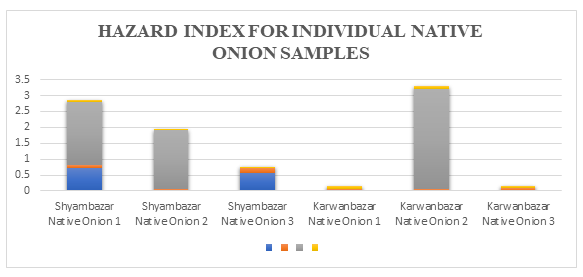
Figure 1 shows HQ values of heavy metals from the consumption of native onion samples. The results showed that, except Pb in Shyambazar Native Onion 1, Shyambazar Native Onion 2, and Karwanbazar Native Onion 2, all heavy metal HQ values were less than 1 in all native onion samples. When HQ is greater than 1, this indicates that exposure may harm health [18]. Therefore, it cannot be argued that people are risk-free when consuming the native onions under study. Cr, Cu, Pb, and Zn each had HQ values that ranged from 0.00 to 0.72, 0.07 to 0.16, 0.00 to 3.15, and 0.04 to 0.08, respectively. According to the comparison of native onion samples, the metals’ HQ values declined in the following order: For Cr, the following charge applies: Shyambazar Native Onion 1 > Shyambazar Native Onion 3 > Shyambazar Native Onion 2, Karwanbazar Native Onion 1, and Karwanbazar Native Onion
3; for Cu, the following order applies Shyambazar Native Onion 3 > Shyambazar Native Onion 1 > Karwanbazar Native Onion 3 > Karwanbazar Native Onion 1, and Shyambazar.
For ingestion of Karwanbazar Native Onion 2, Karwanbazar Native Onion 1, and Karwanbazar Native Onion 3, the Hazard Index (HI) values were 3.29 and 0.14, respectively. HI, values were found in the following order: Karwanbazar Native Onion 2 followed by Shyambazar Native Onion 1 and 2, then Shyambazar Native Onion 2, then Shyambazar Native Onion 3, and then Karwanbazar Native Onion 1 and 3. When the HI is greater than 1, it is implied that eating veggies may harm health. Because the HI values for three of the native onion samples in this investigation were above 1 (Figure 2), eating the samples poses health hazards.
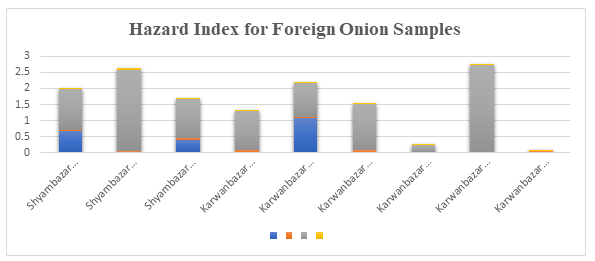
Pb levels in foreign onion samples exceeded 1, and this high level of Pb suggests possible health hazards for consumers. Consumers are, therefore, not said to be risk- free when consuming the examined foreign onion samples. The respective HQ ranges for Cr, Cu, Pb, and Zn were 0.00 - 1.08, 0.03 - 0.10, 0.00 - 2.68, and 0.01 - 0.04. HQ values for the metals declined in the following sequence, according to a comparison of samples of foreign onions: for Cr, Chinese Onion 1 > Turkish Onion 2 > Burmese Onion 2 > Karwanbazar Egyptian Onion 2 > Shyambazar Chinese Onion 1 > Turkish Onion 3 > Karwanbazar Burmese Onion 2, Karwanbazar Egyptian Onion 1, and Pakistani Onion 1, 2, and 3; for Cu, For Pb, the following order is used: Karwanbazar Egyptian Onion 1 > Karwanbazar Egyptian Onion 3 > Shyambazar Burmese Onion 2 > Karwanbazar Pakistani Onion 3 > Shyambazar Turkish Onion 3 > Karwanbazar Egyptian Onion 1 > Except for Karwanbazar Pakistani Onion 1 and Karwanbazar Pakistani Onion 3, all foreign onion samples showed Hazard Index values that indicated potential health concerns from consumption. These values were more significant than unity. The highest HI value was 2.76 when Karwanbazar Pakistani Onion 2 was consumed, and the lowest value was 0.07 when Karwanbazar Pakistani Onion 3 was consumed. The order of the HI values was Karwanbazar Pakistani Onion 2 followed by Shyambazar Burmese Onion 2, Karwanbazar Egyptian Onion 2, Shyambazar Chinese Onion 1, Shyambazar Turkish Onion 3, Karwanbazar Egyptian Onion 1, Karwanbazar Pakistani Onion 2, and Karwanbazar Pakistani Onion 3 (Figure 2).
Conclusion
Data on carcinogenic metal concentration in stem vegetables were gathered based on the samples of Karwanbazar and Shyambazar markets in Dhaka, Bangladesh, and a hazard valuation for heavy metal exposure in consumers was performed. This study found that most onion samples had a mean Cr, Pb, Zn, and Cu concentration above the Maximum Permissible Limit. The mean daily intakes of Pb were consistently higher than the EPA’s safe upper limit. Except for lead, all metals had hazard quotient (HQ) values below 1, and most were well below 0. However, almost all the onion samples had a hazard index (HI) of more than one. Therefore, the outcomes of the current study suggest that onions may pose a health risk (cancer). The poisoning of heavy metals in the environment (soil, plants, water, and air) is very worrying because of the damage it could do to people and other living things. Most heavy metals mentioned here are potentially harmful, although their adverse effects do not show up for decades after exposure has begun. Further research is needed to assess the hazard to human health. Moreover, to prevent the unnecessary buildup of these heavy metals in the human food chain, it is recommended that monitoring and assessment of heavy metal concentrations in onions from the market and production sites be strengthened. There is scant information in the literature about the levels of heavy metals in the onions sold at Bangladeshi markets.
Acknowledgment
I would like to thank the Department of Soil, Water and Environment, University of Dhaka, Bangladesh for providing facilities to conduct the research.
References
-
Zaidi MI, Asrar A, Mansoor A, Farooqui MA (2005) The heavy metal concentrations along roadside trees of Quetta and its effects on public health, J Appl Sci 5: 708- 711.
-
Zheljazkov VD, Craker LE, Xing B (2006) Effects of Cd, Pb, and Cu on growth and essential oil contents in dill, peppermint, and basil, Environ Exp Bot 58(1-3): 9-16.
-
Zhou H, Yang WT, Zhou X, Liu L, Gu JF, et al. (2016) Accumulation of Heavy Metals in Vegetable Species Planted in Contaminated Soils and Health Risk Assessment. Int J Environ Res Public Health 13(3): 289.
-
Tuzen M (2003) Determination of heavy metals in soil, mushrooms and plant samples by AAS, Microchem J 74(3): 289-297.
-
Goldhaber SB (2003) Trace element risk assessment: essentially vs. toxicity. Regul Toxicol Pharmacol 38(2): 232-242.
-
Radwan MA, Salama AK (2006) Market basket survey for some heavy metals in Egyptian fruits and vegetables. Food Chem Toxicol 44(8): 1273-1278.
-
Tuzen M, Soylak M (2007) Evaluation of trace element contents in canned foods marketed from Turkey. Food Chem 102(4): 1089-1095.
-
Duran A, Tuzen M, Soylak M (2008) Trace element levels in some dried fruit samples from Turkey. Int J Food Sci Nutr 59(7-8): 581-589.
-
Ghosh AK, Bhatt MA, Agrawal HP (2012) Effect of long- term application of treated sewage water on heavy metal accumulation in vegetables grown in Northern India. Environ Monit Assess 184(2): 1025-1036.
-
Misra SG, Dinesh D (1991) Soil Pollution. Ashing Publishing House, New Delhi, India 8: 247-252.
-
Sanchez-Castillo CP, Dewey PJS, Aguirre A, Lara JJ, Vaca R, et al. (1998) The mineral content of Mexican fruits and vegetables. J Food Compos Anal 11(4): 340-356.
-
Steenland K, Boffetta P (2000) Lead and cancer in humans: Where are we now? Am J Ind Med 38(3): 295- 299.
-
Alain TK, Luc BT, Ali D (2021) Assessment of heavy metal concentration and evaluation of health risk of some vegetables cultivated in Loumbila Farmland, Burkina Faso, J Environ Prot 12: 1019-1032.
-
Kacholi DS, Sahu M (2018) Levels and Health Risk Assessment of Heavy Metals in Soil, Water, and Vegetables of Dar es Salaam, Tanzania. J Chem 10: 1-9.
-
Report of the Household Income & Expenditure Survey (2010) Bangladesh Bureau of Statistics, Statistics Division, Ministry of Planning. Dhaka, Bangladesh.
-
JECFA (Joint FAO/WHO expert Committee on Food Additives) (1993) Evaluation of certain food additives and contaminants: forty-first report of the Joint FAO/ WHO Expert Committee on Food Additives, World Health Organization, Geneva.
-
Bermudez GMA, Jasan R, Pl´a R, Pignata ML (2011) Heavy metal and trace element concentrations in wheat grains: Assessment of potential non-carcinogenic health hazard through their consumption. J Hazard Mater 193: 264-271.
-
Blum WEH, Spiegel H and Wenzel WW (1996) Soil condition inventory. Concept, implementation and evaluation, recommendations for standardizing the procedure in Austria. Federal Ministry of Land and Forestry, Vienna. 1-19.
-
WHO/FAO (2013) Guidelines for the safe use of wastewater and foodstuff, Wastewater uses in agriculture, World Health Organization and Food and Agriculture Organization (FAO), Geneva, Switzerland 2(1): 988.
-
Gomez KA, Gomez AA (1984) Statistical procedures for agricultural research. 2nd(Edn.), John Wiley and Sons, New York, pp: 1-690.
-
FAO/WHO (2011) Codex Alimentarius Commission. Joint FAO/WHO food standards program codex committee on contaminants in foods, Food CF/5 INF/1, Fifth Session, The Hague, The Netherlands, pp: 3-38.
-
FAO/WHO (2001), Food additives and contaminants. Joint Codex Alimentarius Commission, FAO/WHO Food Standards Programme, ALINORM 01/12A: 1-289.
-
Ullah SM (1999) International conference on arsenic pollution of groundwater in Bangladesh: causes effects and remedies, Dhaka Community Hospital, Dhaka, Bangladesh, pp: 133.
-
Nuruzzaman M, Gerzabek MH, Ullah SM (1995) Studies on Heavy Metal and Microbiological Pollution of Soils, Sediments and Water Systems in and Around Dhaka City; Report to the Austrian Academy of Sciences, Austrian Research Centers Seibersdorf (O¨ FZS): Vienna, Austria, pp: 5-20.
-
Nriagu JO and Nieboer E (1988) Chromium in the Natural and Human Environments. John Wiley & Sons, New York, 20: 571.
-
Mondol MN, Chamon AS, Faiz B, Elahi SF (2011) Seasonal variation of heavy metal concentrations in water and plant samples around Tejgaon industrial area of Bangladesh. J Bangladesh Acad Sci 35(1): 19-41.
-
Greany KM (2005) An assessment of heavy metal contamination in the marine sediments of Las Perlas Archipelago. Gulf of Panama, M.S. thesis, School of Life Sciences Heriot-Watt University, Edinburgh, Scotland 5(1): 10-26.
-
Singh A, Sharma RK, Agrawal M, Marshall FM (2010) Risk assessment of heavy metal toxicity through contaminated vegetables from wastewater irrigated Varanasi, India. Trop Ecol 51(28): 375-387.
-
RDA (1989) Recommended Dietary Allowances: 10th(Edn.), Washington (DC), National Academies Press, US, pp: 1-190.
-
JECFA (2003) Food additives and food contaminants. FAO procedural guidelines for the Joint FAO/WHO Expert Committee on Food Additives.
-
Ahmed MK, Shaheen N, Islam MS, Mamun MHA, Islam S, et al. (2015) Dietary intake of trace elements from highly consumed cultured fish (Labeo rohita, Pangasius pangasius and Oreochromis mossambicus) and human health risk implications in Bangladesh, Chemosphere 128: 284-292.
-
Zayed AM, Terry N (2003) Chromium in the Environment: Factors Affecting Biological Remediation. Plant Soil 249(1): 139-156.
-
Sultana R (2019) Metal Concentration in Commonly Sold Vegetables in Dhaka City Market (Kawranbazar) and Probable Health Risk, MS Thesis, Department of Soil, Water and Environment, University of Dhaka, Bangladesh.
-
NSC (2009), Lead Poisoning, Available at http://www. nsc.org/newsresources/Resources/Documents/Lead Poisoning.pdf
-
Nriagu J (2007) Zinc Toxicity in Humans. Elsevier Publication, Michigan, pp: 71-87.
- Antifungal Activity of New Acetophenone Derivatives
- Interconnected Microbiomes Human Health Within an Environmental Framework
- Silkworm-Based Vaccine Production for H5N1: A One Health Approach to Pandemic Preparedness
- Microbial Diversity and Lipolytic Activity of Bacteria and Fungi from Oil-Contaminated Sites in Makurdi Metroplois
- Antibiotic Resistance Profile of Bacteria Isolated at the Central Laboratory of the National Hospital Center of Nouakchott
- Epidemiology and Sensitivity to Antibiotics of Germs Isolated from Blood Cultures in the Laboratory of the National Hospital Center of Nouakchott-Mauritania