
Health Benefits and Antibacterial Properties of Probiotics Isolated From Fermented Food Products
As a result of the continuously expanding scientific evidence probiotic bacteria have become increasingly popular due to their beneficial effects on human health. The main objective of this study was to isolate, identify, and characterize some lactic acid bacterial strains from fermented food products as potential probiotics with antimicrobial activity against some test strains. Total four samples of fermented food products were taken (Sauerkraut, Fermented Cucumber, Idli batter and Dosa batter). The Lactic acid bacteria were isolated from these samples and the probiotics were further tested for their ability to tolerate pH, bile salt at different concentrations. The probiotic strains were found to grow at different pH and also at different conc. of bile and NaCl. These isolates exhibited high antibacterial activity when tested against the test organism (Pseudomonas, Streptococcus, Escherichia coli and Klebsiella) in well diffusion method. The present study concludes that the isolated probiotic strain from the fermented food qualifies pH, bile and NaCl tolerance tests that make an isolate to be an ideal probiotic. Probiotic strains were found to carry antimicrobial property and can be used to control gut microbiota. The result of the present study showed that the fermented food products can be used as a good source of probiotic culture.
Introduction
Probiotics are live microorganisms provide health benefits when consumed, generally by improving or restoring the gut flora. Probiotics are safe to consume but may cause bacteria host interactions and unwanted side effects in rare cases. On October 2001 report by World Health Organization (WHO) defines probiotics as living microorganisms that, “when administered in adequate amounts, confer a health benefit on the host.” India is traditionally rich in microbial diversity since ancient times. As the production and consumption of traditional fermented food has become increasingly relevant in the face of rapidly increasing population and food insecurity, more research and development to ensure the safety and nutritional quality of these fermented food products is warranted. In addition to preservation, fermented foods can also have the added benefits of enhancing flavor, increased digestibility, improving nutritional and pharmacological values [1]. Lactic acid bacteria have contributed increased volume of fermented foods worldwide especially in foods containing probiotics or health promoting bacteria.
The lactic acid bacteria (LAB), generally considered as “food grade” organisms, show special promise for selection and implementation as protective cultures. There are many potential applications of protective cultures in various food systems [2]. These organisms have been isolates from fermented vegetables and traditional fermented food products. In the present investigation, we have isolated LAB from vegetables (Sauerkraut and fermented cucumber) and traditional fermented food products (including dosa batter and idli batter). In a similar study, LAB were isolated from vegetables and traditional fermented food including dhokla batter, idli batter, dahi, jalebi batter, lassi, yogurt and cabbage [3, 4]. In another similar study, LAB was isolated from Appam (dosa) batter and vegetable pickle. Lactic acid bacteria convert milk sugar lactose into lactic acid and also produce antimicrobial substances that suppress spoilage bacteria. Dahi or curd is the most popular traditional Indian fermented products prepared by fermentation of milk by lactic acid bacteria. Intake of dahi has been found to cure diarrhea [5]; and reported to have anticholesterolemic, anticarcinogenic [6] and anti-diabetic effects [7] and few other benefits [8]. The lactic acid fermentation of vegetables, applied as a biopreservation method to enhance their storage life [9]. Considering the rich microbial diversity in fermented food, the health benefits and antimicrobial properties of the associated microflora, an attempt is made to isolate the novel strains, characterize them and to check their antimicrobial properties.
Materials and Methods
Sampling
Rice and pulse based batter of fermented foods like dosa and idli and fermented vegetables like sauerkraut and cucumber were collected from households into sterile glass bottles. For antimicrobial analysis four strains Escherichia coli, Klebsiella species, Streptococcus species, and Pseudomonas species were isolated from water, spoiled meat and soil respectively. All the samples were stored at lower temperature in refrigerator to protect them from being contaminated.
Isolation of LAB
The LAB was isolated from fermented food products by using MRS medium. The sample was serially diluted and poured on the MRS agar plates and were incubated at 37°C for 24 to 48 hrs anaerobically. Selected colonies with different morphological characteristics were purified by streak plate method and then preserved at -20°C on MRS agar slants, in MRS broth containing 10% glycerol (v/v) and are freeze dried form. All the cultures were routinely sub-cultured at regular intervals and were activated in MRS broth before being used in the experiment.
Physiological Characterization
Gram Staining: Isolates were identified as Gram positive, rod/cocci shaped bacteria by Gram’s staining method under microscope.
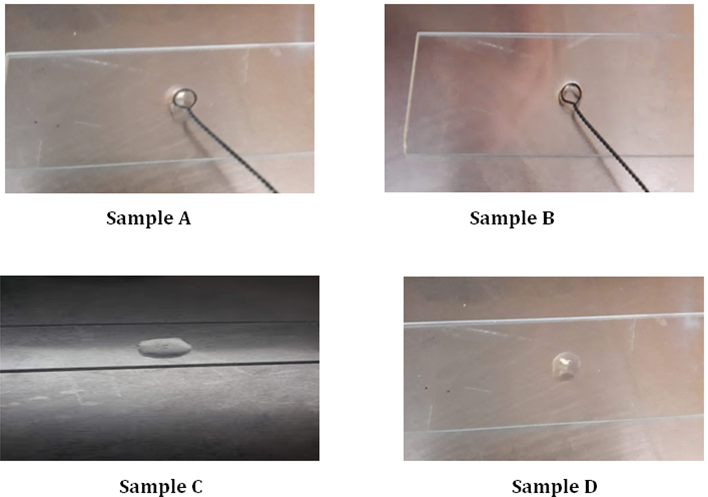
Catalase Test: Slide (Drop) method: One or two drops of H2O2 (Hydrogen Peroxide) were put on the glass slide. The isolates were taken and were kept on the drop of Hydrogen peroxide. Immediate effervescence shows positive test and no effervescence or bubble formation gives negative test.
Growth at Different pH
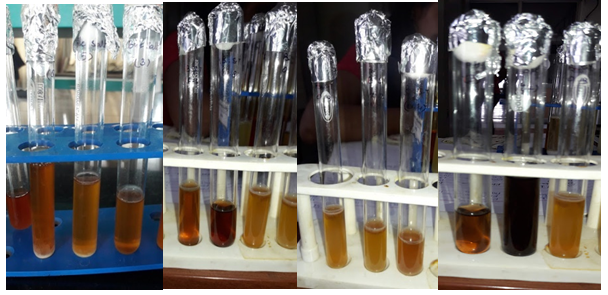
To check the growth of isolates at various acidic pH. MRS broth with different pH 2.0, 4.0 and 6.0 were prepared, inoculated with 1% of active culture and then incubated at 37°C for 48 hrs. During incubation, extent of growth was recorded based on visible turbidity marked as double positive sign (++) for maximum turbidity, single positive sign (+) for normal growth and negative sign (–) for no growth.
Growth at Different Bile Concentrations
To check the growth of isolates at various bile concentrations. MRS broth with different bile concentrations 0.3, 0.5 and 0.8% were prepared, inoculated with 1% active cultures and then incubated at 37°C for 48hr. During incubation, extent of growth was recorded based on visible turbidity marked as double positive sign (++) for maximum turbidity, single positive sign (+) for normal growth and negative sign (–) for no growth.
Growth at Different Salt Concentrations
Overnight grown active cultures were inoculated at 1% in MRS broth tubes with various concentrations of NaCl 4, 6 and 8% with their respective controls. The cultures were incubated at 37°C. After 48 hrs of incubation, extent of growth was recorded based on visible turbidity marked as double positive sign (++) for maximum turbidity, single positive sign (+) for normal growth and negative sign (–) for no growth.
Biochemical Characterization
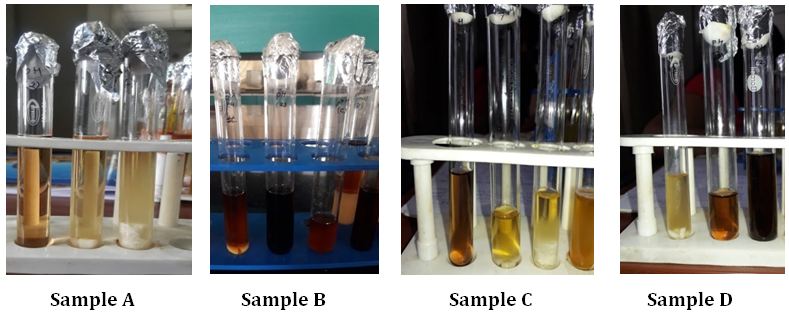
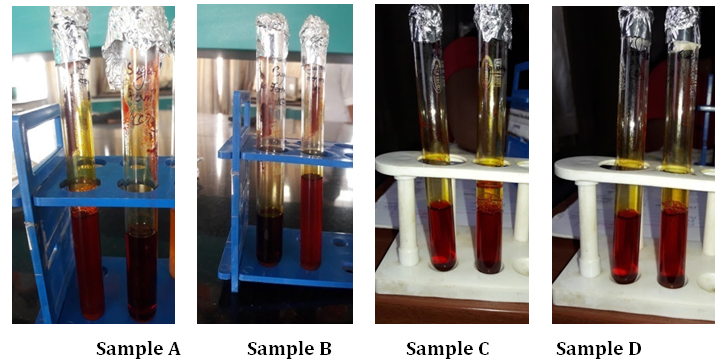
Sugar Fermentation: MRS broth containing different sugars and phenol red as pH indicator was inoculated at 37°C for 24 hrs.
EPS production: The isolates were taken and streaked on the MRS agar plates supplemented with 5% sucrose and incubated at 30°C for 48hrs. Productions of mucoid colonies were considered as the potential for EPS production ability of the culture.
Arginine Hydrolysis
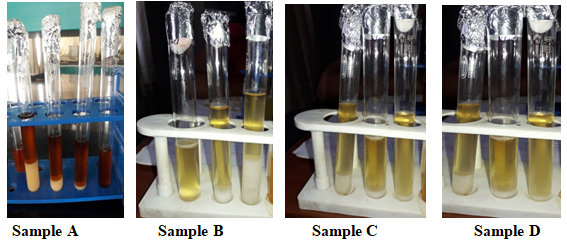
Test for the production of ammonia from arginine was done by the inoculation of the 1% active cultures in the arginine broth and kept for 24 hrs in incubator. After 24hrs, the sample was taken and kept on the slide and Nessler’s reagent was added. Immediate appearance of dark orange colour indicates ammonia due to hydrolysis of arginine.
Tolerance Test
Acid Tolerance: Overnight grown cultures were prepared by inoculation into MRS broth and incubated at 37°C for 16hrs. Isolates were inoculated into MRS broth with different pH 2, 4 and 6 adjusted with HCl and buffer tablets respectively. Then they were incubated for 37°C. Growth study was done on the basis of comparison of isolates with the control.
Bile Salt Tolerance: All isolated strains were tested for growth in MRS broth with and without bile at 37°C. Overnight cultures were inoculated into MRS broth which contain 0.3, 0.5 and 0.8% of bile salts and then incubated at 37°C for 48hrs. The bacterial growth was reported and comparison of isolates was done on the basis of growth in each broth.
Salt Tolerance: The cultures were grown in MRS broth at 37°C for 24hrs. In 9 ml of MRS broth 1ml of active culture was added in the presence of Sodium Chloride Supplementation at different concentrations 4, 6 and 8%. All tubes were inoculated at 37°C for 48hrs. Growth of bacterial Culture in tubes indicates NaCl tolerance [10].
Results and Discussion
A total of 4 samples of fermented vegetables and traditional fermented food products from various sources were plated on MRS agar and after 48hrs of incubation, typical colonies showing different morphological characteristics were picked up.
The cell morphology of the isolated colonies was studied by Gram’s Staining .The isolates were also tested for Catalase reaction. From among 10 isolates, only 4 were found to be Gram positive rods or cocci and Catalase negative (Table 1). These isolates were also found to be nonmotile and non- spore formers. Hence, these 4 isolates were further evaluated for different physiological and biochemical characterization.
| Samples | Gram’s Staining | Catalase Test | Growth at Different pH | Growth at Different Bile Con. | Grow that Different NaCl Con. | ||||||
|---|---|---|---|---|---|---|---|---|---|---|---|
| 2 | 4 | 6 | 0.3 | 0.5 | 0.8 | 2 | 4 | 8 | |||
| A | + | - | - | + | ++ | + | ++ | ++ | + | ++ | ++ |
| B | + | - | - | + | ++ | + | ++ | +++ | + | ++ | + |
| C | + | - | - | + | + | ++ | ++ | + | + | ++ | + |
| D | + | - | - | + | ++ | + | ++ | ++ | + | ++ | + |
Table 1: Physiological Test Results and Growth at different pH, Bile and Salt Concentrations.
Physiological Characterization
All strains grew well at 30 °C, 37 °C and 45 °C and their growth was comparable. Probiotic bacteria mostly derived in food system must be acid and bile tolerant to survive in the human gastrointestinal tract. The time from entrance to release from the stomach has been estimated to release from the stomach has been estimated to be approximately 90 min with further digestive process requiring longer residence time [11]. Before reaching the intestinal tract, probiotic bacteria must first survive the transit passage through the stomach where the pH can be as low as 1.5 to 2 [12].
Acid Tolerance
Before reaching the intestinal tract, probiotic bacteria must first survive the harsh acidic condition of the stomach. Three pH levels of the growth medium were used where previously adjusted with HCL ranging from 2.0, 4.0 and 5.0 considering the stomach acidity varies from individual to individual [12].
All the isolates showed different performance at varying pH. The threshold point to state avid resistance in this research was set at pH 2, pH 3 for 4 hr incubation, as it stimulates bacterial residency in the stomach. In the present study, 4 isolates from the 4 samples were taken and tolerance was examined on the pH 2, pH 4 and pH 6. All the 4 isolates at pH 4 were able to survive an incubation period of 4 hr. The isolates were able to resist an incubation period of 4 hr at pH 6. At pH 2 all the four isolates were not able to grow (Table 2). Similar results were reported by Dunne, et al. [12] and EI-Naggar [13]. This study confirms that the resistance to the low pH is strain dependent. These results are in confirmation with Mishera, et al. three of their seven isolates Lactobacillus sp. Tolerated pH 3.0. Although the acid tolerance in lactobacilli is highly strain specific, members of the genus Lactobacillus are acidophilic in nature and are able to grow at pH 4.0 in foods containing a fermentable carbohydrate [14]. Chan, et al. [15] reported that acids such as the hydrochloric acid (HCl) found also in human stomach, disrupt the biomolecules of cells, such as fatty acids , proteins and DNA. Low pH environments can inhibit the metabolism and reduce the growth and viability of Lactobacilli. Other studies also confirmed that exposing to gastric acid with pH ≤ 2 after 3 hours incubation caused a reduction in the viability count of the bacteria intensively [16, 17]. According to Prasad, et al. [18] and Chan, et al. [15] the threshold point to state acid resistance in this research was set at pH = 2 and pH = 3 for 3 hours incubation, as it simulates bacterial residency in the stomach. This is in accordance with findings from Liong and Shah which stated that resistance at pH = 3 were set as standards for acid tolerance of probiotic culture.
| Samples | Sugar Fermentation | EPS Production | Arginine Hydrolysis | Acid Tolerance | Bile Tolerance | Salt Tolerance | ||||||
|---|---|---|---|---|---|---|---|---|---|---|---|---|
| 2 | 4 | 6 | 0.3 | 0.5 | 0.8 | 2 | 4 | 8 | ||||
| A | + | - | - | - | + | ++ | + | ++ | ++ | + | ++ | ++ |
| B | + | - | + | - | + | ++ | + | ++ | +++ | + | ++ | + |
| C | + | - | - | - | + | + | ++ | ++ | + | + | ++ | + |
| D | + | - | + | - | + | ++ | + | ++ | ++ | + | ++ | + |
Table 2: Biological Test and Tolerance Test Results.
Bile Tolerance
Tolerance to bile salt is a precondition for colonization and metabolic activity of bacteria in the small intestine of the host [19]. This will help Lactobacilli to arrive at the small intestine and colon and contribute in balancing the intestinal microflora [20]. Bile salts are synthesized in the liver from cholesterol and are secreted from the gallbladder into the duodenum in the conjugated form in volumes ranging from 500 to 700 ml per day. The relevant physiological concentrations of human bile range from 0.1 to 0.3% and 0.5% and staying time is proposed to be 4 hrs [12, 21].
Thus, in the present study the growth of lactic acid bacterial strains were checked to various concentrations of bile salts ranging from 0.3, 0.5 and 0.8% (w/v) for at least 4 hr. All the 4 isolates were able to tolerate 0.3% sodium taurocholate. All the 4 isolates were able to tolerate 0.5% sodium taurocholate. Out of four isolates 3 isolates were able to tolerate 0.8% sodium taurocholate as compared to control (Table 2). Similar observation by Abriouel, et al. [22] showed all lactic acid bacteria isolated from fermented olive were able to grow and survive at 0.3% w/v bile salt.
Lactic acid bacteria tolerate high salt concentrations as it allows the bacteria to begin metabolism, which produces acid that further inhibits the growth of undesirable microorganisms. In the present study, all the lactic acid bacteria were weakly tolerable to 2% NaCl concentrations. All the isolates were able to tolerate 4% NaCl concentrations. Among all, 1 isolate was able to grow at 8% NaCl concentration and other 3 isolates were weakly tolerable to 8% NaCl concentration (Table 2). In a similar finding, were able to grow lactobacilli isolated from meat and meat products in the presence of 7.5% NaCl.
Biochemical Characterizations of Isolates
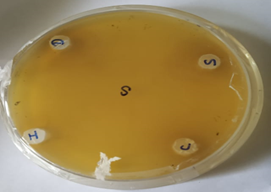
Lactic acid is a major metabolic end product of carbohydrate fermentation by lactic acid bacteria, responsible for the sour taste and improved microbiological stability and safety of food. Almost all the selected isolates were able to utilize hexose sugars like Glucose (G), Lactose (L), Maltose (M), Sucrose(S) and Fructose (F) at different rates. Among 4 isolates, 2 isolates produced gas indicating that they were heterofermentative (Table 2). None of the isolates could be able to produce EPS when streaked on plates containing 5% Sucrose (Table 2). Among the 4 isolates from all the 4 samples, only 2 isolates (1 from dosa batter and 1 from idli batter) showed ammonia production from arginine (Table 3) (Figures 1-6).
| Sample | Pseudomonas sp. | Streptococcus sp. | E.coli | Klebsiella sp. |
|---|---|---|---|---|
| A | + | + | + | + |
| B | - | + | - | + |
| C | + | + | + | + |
| D | - | - | - | + |
Table 3: Antibacterial Activity Test.
Conclusion
Fermented vegetables have common characteristics of high acidity and low pH that makes them safe and microbiologically stable all along their shelf life. Fermented foods are one of the richest sources for the isolation of lactic acid bacteria. Lactic acid bacteria are typically involved in a large number of food fermentations but they are also associated with human environment. The intake of probiotic bacteria shows various health benefits. Probiotics are active bacteria or yeast that is good for human health, especially the digestive system. Mostly probiotics are from genus Lactobacillus and Bifidobacterium, these are 2 probiotics present mostly in fermented foods. The aim of the study was the determination of probiotic properties of Lactic acid bacteria isolated from fermented vegetables and traditional fermented food (Sauerkraut, Cucumber, Dosa batter and Idli batter). 10 isolates were obtained on MRS agar plate from which only 4 isolates were found to be Gram positive and Catalase negative(Table1). To determine the probiotic properties of these isolates different test were employed namely Acid tolerance, Bile salt tolerance, NaCl tolerance, Sugar fermentation and Antibiotic sensitivity test. The isolates showed growth at minimum pH as well as they showed their growth at 0.3% bile concentration and 8% of NaCl concentration; showing that they can resist the internal environment of the intestinal tract (Table 2). The isolates gave the positive result for the sugar fermentation test and even 2 isolates gave the production of gas which shows that they are heterofermentative in nature. Not all fermented food is probiotics only those strains are regarded as probiotics which can resist the survival in the digestive system. The experimental results indicated that isolates can be further used to check their probiotic potential in detail as they were resistance to gastrointestinal passage and may work effectively in human gut by modulating residing microflora.
References
-
Jeyaram K, Singh ThA, Romi W, Devi AR, Singh WM, et al. (2009) Traditional fermented foods of Manipur. Indian Journal of Traditional Knowledge 8(1): 115-121.
-
Holzapfel WH, Geisen R, Schillinger U (1995) Biological preservation of foods with reference to protective cultures, bacteriocin and food grade enzymes. Int J Food Microbiol 24(3): 343-362.
-
Patel MR, Myers LS, Kurundkar RA, Maheshwari A, Nurat A, et al. (2012) Probiotic bacteria induce maturation of intestinal claudin 3 expression and barrier function. Am J Pathol 180(2): 626-635.
-
Neha A, Kamaljit S, Bilandi A, Tarun G (2012) Probiotic: As effective treatment of diseases. International Research Journal of Pharmacy 3(1): 96-101.
-
Agarwal KN, Bhasin SK (2002) Feasibility studies to control acute diarrhoea in children by feeding fermented milk preparation Actimal and Indian Dahi. Eur J Clin Nutr 4: S56-S59.
-
Arvind, Sinha PR, Singh NK, Kumar R (2009) Effect of acidophillus-casei dahi (probiotic curd) on lipids in 1,2-dimethylhydrazine induced intestinal cancer in rats. Int J Probiot Prebiot 4: 195-200.
-
Yadav H, Jain S, Sinha PR (2007) Antidiabetic effect of probiotic dahi containing Lactobacillus acidophilus and Lactobacillus casei in high fructose fed rats. Nutrition 23(1): 62-68.
-
Patel A, Prajapati JB, Holst O, Ljungh A (2014) Determining probiotic potential of exopolysaccharide producing lactic acid bacteria isolated from vegetables and traditional Indian fermented food products. Food Bioscience 5: 27-33.
-
Kingston JJ, Radhika M, Roshini PT, Raksha MA, Murali HS, et al. (2010) Molecular characterization of lactic acid bacteria recovered from natural fermentation of beet root and carrot kanji. Indian J Microbiol 50(3): 292-298.
-
Mandal H, Jariwala R, Bagchi T (2016) Isolation and characterization of lactobacilli from human faeces and indigenous fermented foods for their potential application as probiotics. Can J Microbiol 62(4): 349- 359.
-
Berrada N, Lemeland JF, Laroche G, Thouvenot P, Piaia M (1991) Bifidobacterium from fermented milks: survival during gastric transit. J Dairy Sci 74(2): 409-413.
-
Dunne C, Mahony LO, Murphy, Thronton G, Morrissey D, et al. (2001) In vitro selection criteria for probiotic bacteria of human origin: correlation with invivo findings. Am J Clin Nutr 73(2 Suppl): 386S-392S.
-
Naggar EI, Moustafa YM (2004) Comparative study of probiotic cultures to control the growth of Escherichia coli O157: H7 and Salmonella typhimurium. Biotechnology 3(2): 173-180.
-
Alakomi HL, Skytta E, Saarela M, Mattila-Sandlolm T, Latva-Kala K, et al. (2000) Lactic acid permeable Gram- negative bacteria by disturbing the outer membrane. Applied and Environmental Microbiology 66(5): 2001- 2005.
-
Chan HK, Sahadeva RPK, Leong SF (2011) Survival of commercial probiotic strains to pH and bile. Int Food Res 18(4): 1515-1522.
-
Mandal S, Puniya Ak, Singh K (2006) Effect of aliginate concentrations on survival of microencapsulated Lactobacillus casei NCDC-298. International Dairy Journal 16(10): 1190-1195.
-
Mishra V, Prasad DN (2005) Application of in vitro methods for selection of Lactobacillus casei strains as potential probiotics. Int J Food Microbiol 103(1): 109- 115.
-
Prasad RJ, Gill H, Smart J, Gopal PK (1998) Selection and characterization of Lactobacillus and Bifidobacterium strains for use as probiotic. International Dairy Journal 8(12): 993-1002.
-
Havenaar R, Huisint’Veld JHJ (1992) Probiotics: a general view. In: Wood BJB (Ed.), The Lactic Acid Bacteria in Health and Disease, Chapman and Hall, New York, USA, pp: 151-170.
-
Tambekar DH, Bhatuda SA (2010) An evaluation of probiotic potential of Lactobacillus sp. From milk of domestic animals and commercial available probiotic preparations in prevention of enteric bacterial infections. Recent Research in Science and Technology 2(10): 82- 88.
-
Mathara JM, Ulrich S, Kutima PM, Samuel KM, Guigas C, et al. (2008) Functional properties of Lactobacillus plantarum strains isolated from Maasai traditional fermented milk products in Kenya. Curr Microbiol 56(4): 315-321.
-
Abriouel H, Benomar N, Cobo A, Caballero N, Fuentes MAF, et al. (2012) Characterization of lactic acid bacteria from naturally-fermented Alorena green table olives. Food Microbiology 32(2): 308-316.
- Antifungal Activity of New Acetophenone Derivatives
- Interconnected Microbiomes Human Health Within an Environmental Framework
- Silkworm-Based Vaccine Production for H5N1: A One Health Approach to Pandemic Preparedness
- Microbial Diversity and Lipolytic Activity of Bacteria and Fungi from Oil-Contaminated Sites in Makurdi Metroplois
- Antibiotic Resistance Profile of Bacteria Isolated at the Central Laboratory of the National Hospital Center of Nouakchott
- Epidemiology and Sensitivity to Antibiotics of Germs Isolated from Blood Cultures in the Laboratory of the National Hospital Center of Nouakchott-Mauritania