
Researches Regarding the Implementation of an Integrated Waste Management System in Cluj County, Romania
Waste management represents the most important component of sanitation services and refers to activities of collection, transport, treatment, recovery and their disposal. Waste recycling and the circular economy are among the most important issues in the European Union strategies. Because Romania has yet to meet many requirements of the European Commission’s policies, there have been opened several infringement proceedings against our country for pollution, wood management, and waste management. This paper presents our researches regarding the implementation of an integrated waste management system in one of the most important sites of Romania-Cluj County. The aim of this system is to create the necessary infrastructure so waste management takes place perform in accordance with the legal norms, in conditions of protection for environmental and population health. Due to the current waste management system, these are deteriorated in a constant way. The main objectives of this research concern the household collecting way, the recovery of municipal waste, reducing the amount of biodegradable waste for storage by composting and other treatment methods, closure and greening of storage spaces, construction of a landfill for non-hazardous waste.
Introduction
Waste recycling and the circular economy are among the most important issues in the European Union strategies. Waste represents a continually growing problem at global and regional, as well as at local level. As a result of rapid increase in production and consumption, urban society generates solid material, which regularly leads to considerable increase in the volume of waste generated from several sources. A proper management system of solid waste is a central pillar of the policies for a sustainable environment. An inadequate management system of municipal waste results in considerable public health hazards and additional costs. First regulations regarding proper waste collection in Europe date back to the 18th century, and technical standards became implemented in all major cities during the industrial revolution. Recovery - at a significant scale and in an organized way-of waste components suitable for animal feed and further industrial processing (glass, metals, paper, textiles, etc.) also dates back to the 18th century and can be found today throughout Europe at all levels [1, 2]. Starting from the principle of reduce, reuse, and recycle, these policies are more relevant through the accelerated increase of waste quantities due to the significant economic growth. Communities developed a growing awareness that significant environmental improvements could be achieved by reducing landfill disposal and recovering resources [3].
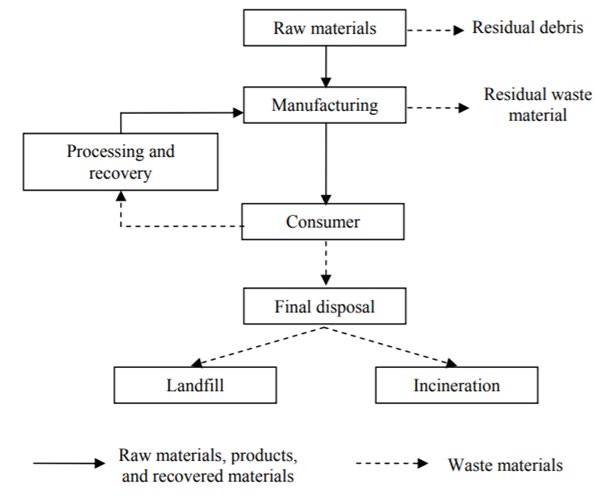
The management system of the solid waste is associated with the control of the processes regarding generation, storage, collection, transfer and transport, processing and disposal of solid wastes in a manner in accord with known principles of public health, economics, conservation, environmental engineering, and other considerations (Figure 1).
Material and Methods
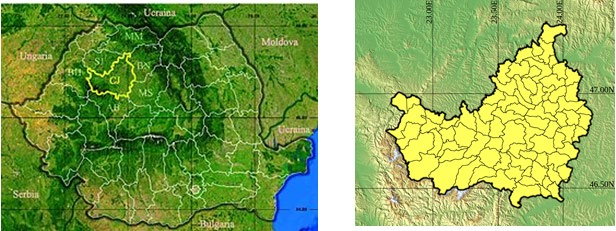
On the world map, the Cluj County is located in a central- European position, in the North-Western part of Romania, in the central of the historical province of Transylvania, at 330-340 m altitude. Three distinct physical-geographical units have a contact area here: the Apuseni Mountains, the Someșan Plateau and the Transylvanian Plain (Figure 2).
The integrated solid waste management centre in Cluj County is located on a plot with a total area of 30 ha, at a distance of about 1.8 km from the Feleacu locality and 3.5 km from the Cluj Napoca City. Separately collected recyclable and biodegradable waste will be transported to the transfer stations from Huedin, Gherla and Mihai Viteazu, and then transferred to the integrated management centre of the solid waste, respectively at the sorting station or at the mechanical- biological treatment station afferent to the technical area. Street waste and waste collected in the mixture will be transported to the warehouse directly or through transfer stations. The access to the location is made from the County Road DJ 105 S through a newly designed road with a length of 2.10 km.
We have identified the following potential sources of groundwater and surface water pollution: leach-ate collected by the drainage system fixed on the bottom of the storage space (consists in waste water and rain water infiltrated in waste); technological waste water or from washing platforms, floors and spaces closed inside the sorting station; technological waste water and from washing the platforms of the mechanical-biological treatment area (industrial waste water with a high content of inorganic and organic suspensions, as well as organic substances dissolved, also contaminated with petroleum products); sewage from building’s toilets of the administrative department; rainwater collected from the inside surfaces, captured through the sewerage system for rainwater, with drains and gutters [4, 5].
Regarding the air pollution, the main pollution sources identified are: industry, construction activities, traffic, etc. The main greenhouses gases are: CO2, N2O, and CH4. The global potential greenhouse effect (PGE) is expressed in equivalent CO2, CO2 having, by definition, PGE = 1, N2O multiplying by 310, and CH4 by 21. Air quality can be influenced by the functioning of the waste management centre by: the mechanical-biological treatment plant (at this level, from the process of compost generating, is released fermentation / emission gases, which have in composition mainly CO2, nitrogen, sulphur, and alcohol compounds), and landfill (pollutants dispersion in the atmosphere being done through collection and dispersion installations). Emissions from flue gas combustion are eliminated through the tower burner with a height of 15 m.
Waste water from temporary storage inside the three transfer stations (Mihai Viteazu, Huedin, and Gherla) are collected through the own network. The current use of the land in the studied area is agricultural, in recent years being used for crops specific to the plain area, so it is not identifiable significant soil or subsoil pollution. Potential identified sources of soil pollution in the construction period are: storage on the ground of materials, waste, packaging that could affect its quality; the deposition on the ground of the pollutants initially emitted in the air by the equipment and means of transport used in the warehouse construction; malfunctions of equipment or vehicles, leading to losses of petroleum products (fuels or lubricants); deficiencies in the system of collection and storage for waste water resulting on site, which can lead to leaks with negative effects on soil quality; and torrential rains during soil stripping in the area intended for construction storage cells, and before waterproofing of the deposit base. Temporary storage of the construction materials on the ground, as well as the accidental deposits of fuel / lubricants due to defects of the transport equipment or vehicles will have to be followed by a proper sanitation of the polluted perimeters. In conclusion, the necessary landscaping activities does not raise special issues in terms of the environmental factor protection (soil / subsoil), because the level of quantifiable pollution is insignificant.
Potential sources of pollution generated by the functioning of technical installations, sewerage related to the centre, the treatment plants and the transfer stations are designed so that the possibility of soil or subsoil pollution through technological activities carried out on location is minimized [1, 5, 6]. Storage cells can also be sources of soil and subsoil pollution, in case of occurrence cracks in the waterproofing layers, by leach-ate infiltrations, so measures are required to fully ensure the prevention of soil and subsoil pollution. From a landscape perspective, the area of the current landfills is unpleasant and strongly dissonant to any aesthetic values. The implementation of the designed constructions will have a positive impact on the landscaping of the areas, and it will increase their aesthetic value. This appreciation takes into account the high level of anthropization for the studied locations. Planting some fast- growing trees in the perimeters of built sites will give the landscape a natural, personalized and agreeable local status.
Technical Operating Data
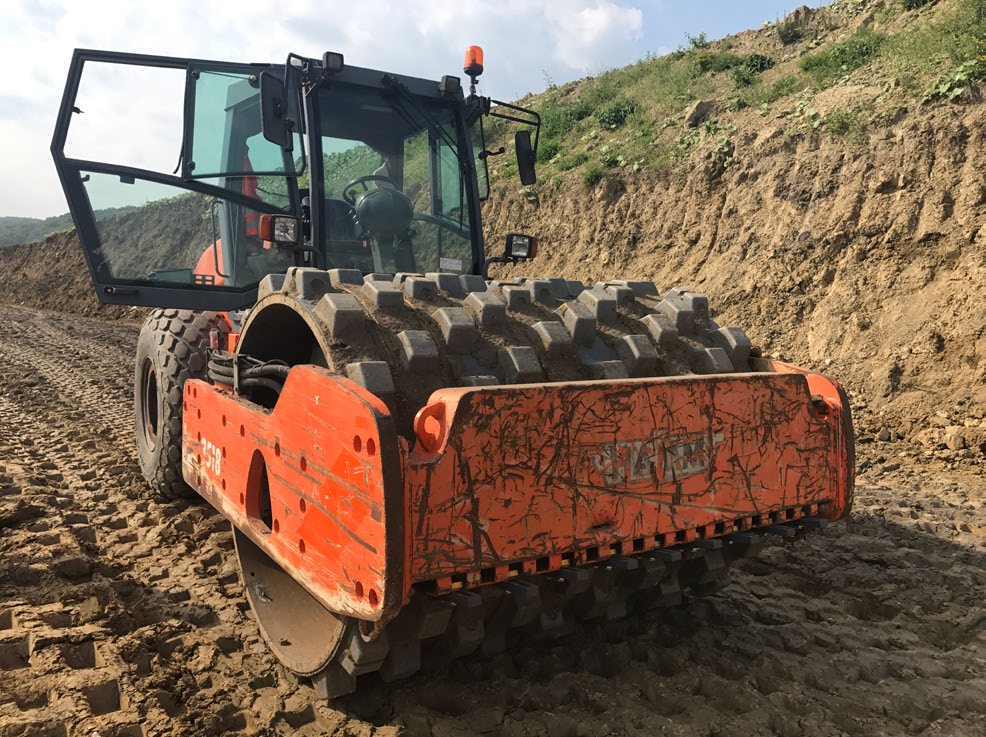
The centre of integrated management system of solid waste includes the storage area, and the technical area, composing of a sorting station and a mechanical-biological treatment station. The storage area within the integrated waste management centre will be used for the storage of household waste from the entire territory of Cluj County, in compliance with the existing European and Romanian norms. It will serve approx. 687,000 inhabitants of Cluj Napoca, Gherla, Câmpia Turzii, Turda, and Huedin cities, also 75 communes with 420 villages. All waste will be brought to the central landfill. The capacity of the warehouse will be in around of 256,900 tons /year or 185,000 m3 /year. The annual amount of waste generated by population is 343,314 tons /year. Related to the storage area, a mechanical workshop is necessary to be built for the equipment which serve the technical and storage area. The storage of non- hazardous waste will be done by making some cells daily, which will be compacted using “sheep’s foot” compactors, being later covered with soil or compost (Figure 3).
The waste storage activity is carried out in the following stages: weighing, unloading, visual inspection of waste composition, spreading and compaction, laying on layers periodically, weighing at the exit of the garbage truck without load. The general warehouse monitoring system covers the following elements: leach-ate, groundwater, surface water, biogas and settlements. The monitored parameters were: meteorological data, the volume and composition of waste at entrance and at exit, auxiliary works, etc [2, 4]. The sorting station will be built in the central waste management unit of Cluj Napoca, together with the landfill and simple mechanical–biological wet waste treatment station. Solid waste will be separated into twelve fractions: three for paper, five for plastic, two for glass, and two for ferrous and non- ferrous metals. The composting process will be an aerobic one, organized in covered modular piles. This solution also allows the production of a good quality compost if it is used the collection method of two bins - a blue bin for waste from dry packaging (all types of paper, ferrous and non-ferrous metals, plastic and glass), and a brown one for wet organic matter, collected separately. The mechanical-biological treatment plant capacity will be around 213,000 tons /year, dimensioned to cover all areas.
Effects on the Environment
Regarding the implementation of measures necessary to mitigate the effects on the environment, the air emission control system will include: a polluted air collection system, and a treatment unit for cleaning the polluted air. From all points with dust and odour emissions, the polluted air will be extracted by a ventilator and will be discharged through a bag filter where all dust will be collected. The air will then pass through a bio-filter for deodorization and will be released into the atmosphere. The air processed after biological treatment, which passed through the organic material to provide the oxygen needed for oxidation, must be deodorized and purified before release in atmosphere. This is achieved by covering piles of material with a membrane special made of two material types: a central part-breathable membrane, and a marginal part – reinforced polyethylene membrane.
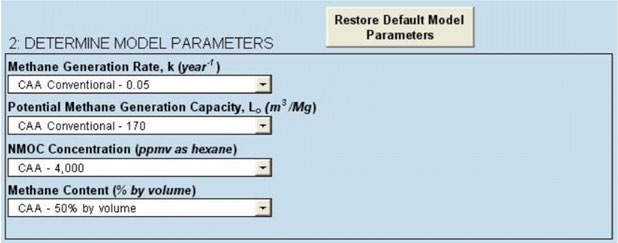
The leach-ate produced in the compost piles is collected in a special tank and re-circulated in these piles to maintain the necessary humidity for the waste biological treatment. The leach-ate and residual water excess are carried by an appropriate network pipes to the leach-ate treatment plant. This station serves the warehouse and the sorting station. Landfill Gas Emissions Model (LandGEM), Version 3.02, was used to calculate the biogas generation. The maximum amount of gas (cell 1 and 2) is estimated to be in 2038 (at the end of the 2037 year, the last one in which the landfill will accept waste) [7]. The maximum value of the emitted gas is about 23 000 000 m3 /year (Figure 4).
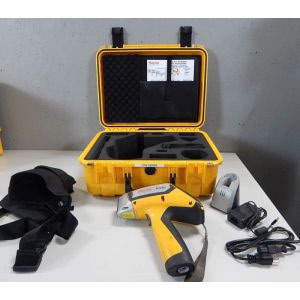
It will be avoid depositing certain quantities of significant solvents that are not bio-convertible. Similarly, we’ll avoid the storage of complex agents (chelating agents) that can solubilize heavy metals. It is also important to minimize the amount of organic chemical waste entering the landfill. Regarding the soil samples, working methodology included several determinations, made by performant methods: determination of heavy metals concentration in the soil by Spectrometry of X-ray Fluorescence using a NITON XL700, W 3362 spectral analyzer type (Figure 5), determination of total nitrogen and total phosphorus [8, 9].
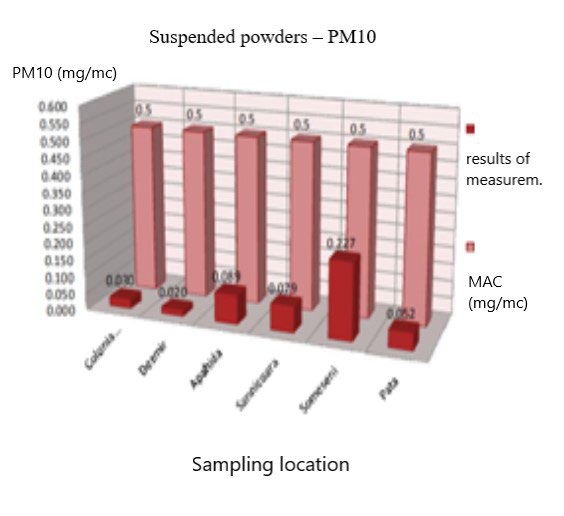
Regarding the air environmental factor, we made the determination of sulphur dioxide content by spectrophotometer, also of NO2 and of breathable dust PM10 and PM2,5 (mg /m3). We measured the concentration of total organic carbon and formaldehyde using a portable apparatus for measuring gas by photo-acoustic spectroscopy in IR (Figure 6).
Conclusion
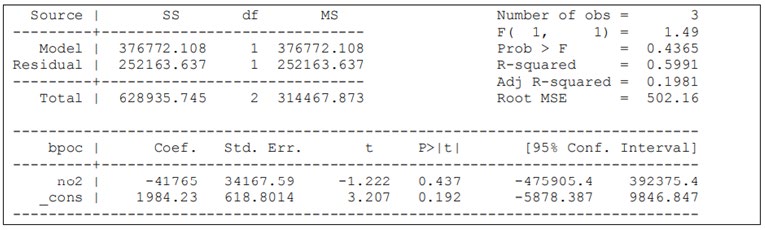
Linear regression models did not show any statistically significant correlation between the values determined in air of analyzed dangerous substances (NO2, SO2, PM10, PM2,5, volatile organic compounds, formaldehyde), and the frequency of chronic diseases investigated in the studied area (for example: chronic obstructive pulmonary disease, ischemic heart disease, malignancies, etc) (Figure 7).
Due to the lack of facilities and deficient exploitation, waste deposits are among the objectives recognized as impact and risk generators for environment and public health. Air pollution with unpleasant odours and wind-induced suspensions is special evidenced in the area of current urban warehouses, where cell exploitation is not practiced and coating with inert materials. Leaks on the slopes or landfills near surface waters contribute to their pollution with organic substances and suspensions. Unsealed urban landfills are often the source of groundwater infestation with nitrates and nitrites, but also with other pollutants. Removing land for landfills from the natural or economical circuit is a process that can be considered temporary, but which, in terms of the “sustainable development” concept, extends over at least two generations if the summed up periods of arrangement (1-3 years), operation (15-30 years), ecological restoration and post-monitoring (15-20 years). All these considerations lead to the conclusion that waste management requires the adoption of some specific measures, appropriate to each phase of waste disposal in the environment. Compliance of these measures must be the subject for monitoring of the affected environmental factors by the presence of wastes.
References
-
EPA (1998) Compilation of Air Pollutant Emission Factors, AP-42, Volume 1: Stationary Point and Area Sources, 5th (Edn.), Supplement E, Chapter 2.4: Municipal Solid Waste Landfills. U.S. Environmental Protection Agency, Office of Air Quality Planning and Standards, Research Triangle Park, NC, November.
-
Alina A, Gabor V (2018) Environmental Engineering- Course. Ed. PIM Yassy, Romania, pp: 312.
-
Gabor V, Cismaru C (2004) Solid waste management, Ed. Performantica, Yassy, Romania, pp: 216.
-
Hester RE, Harrison RM (2002) Environmental and Health impact of solid waste management activities, Royal Society of Chemistry, UK.
-
Plesea D, Smaranda V (2010) Good practices regarding solid waste management recycling, Economical Amphitheatre, Volume XII, No 27, February, pp: 228-241.
-
Pelt WR (1993) Memorandum. Radian Corporation to Municipal Solid Waste Landfills Docket A-88-09, Methodology Used to Revise the Model Inputs in the Municipal Solid Waste Landfills Input Database (Revised), Public Docket No. A-88-09.
-
Thorneloe SA, Reisdorph A, Laur M, Pelt R, Bass RL, et al. (1999) The U.S. Environmental Protection Agency’s Landfill Gas Emissions Model (LandGEM), Sardinia 99, Seventh International Waste Management and Landfill Symposium, Published in Proceedings 4(11S18): 4S8.
-
Brindusa R, Macoveanu M (2010) Environmental evaluation for sustainability, Ed. Ecozone, Yassy, Romania, pp: 240.
-
Joanna B (2018) Municipal waste management in rural areas in Poland, Proceedings of the 2018 International Conference “Economic Science for Rural Development” No 49, Jelgava, LLU ESAF, pp: 17-24.
- Electronic Waste Management in the Top Ten Economies in the World: A Critical Review on Waste Generation, Regulations, Collection, Recycling and Environmental Challenges
- Some Challenging Transdisciplinary Aspects of the Sustainable Waste Management in the Permacrisis Context
- Use of Mobile Autonomous Systems for Pollution Control of Inland Water Bodies
- Environmental Impact Perspective Sustainable Online Textile Retailing: Harnessing Augmented Reality-Based Digital Twins in Bangladesh
- Composite Treatment Module for Removing Acidity and Metal (Loid)S from Acid Rock Drainage
- Household E-Waste Management Systems [E-Wms] in Malaysia