
Enhancing Healthy Food Choices in a University Canteen Exploring the Influence of Menu Labeling
This research investigates the attempt to enhance healthy food choices within a university canteen through the implementation of menu labeling. This paper explores the impact of providing nutritional information on food menus, investigating its influence on patrons' dietary decisions. Through a com-prehensive mixed-methods approach, this research combines quantitative analysis of survey responses and qualitative insights to provide a multifaceted perspective on the influence of menu labeling. The findings reveal that menu labeling plays an essential role in promoting healthier food choices, with participants demonstrating increased awareness and engagement with nutritional information. Furthermore, this paper highlights the various factors that contribute to the effectiveness of menu labeling, including its format, visibility, and the broader context of individuals' decision-making processes. By shedding light on the positive impact of menu labeling, this research contributes to the ongoing discourse on public health interventions within university environments. The insights gained from this research offer implications for canteen management, policymakers, and researchers seeking to further enhance the health and wellbeing of university populations.
Introduction
In the landscape of modern dining establishments, university canteens play a vital role in catering to students and faculty members’ nutritional needs and preferences. As health consciousness continues to gain momentum, the importance of making informed food choices becomes increasingly pronounced. In this context, the implementation of menu labeling, the practice of providing nutritional information alongside menu items has emerged as a strategic approach to empower individuals with the knowledge needed to make healthier selections. This research investigates the impact of menu labeling on food choices within the dynamic setting of a university canteen. In particular, it investigates how the availability of nutritional information influences the decisions made by patrons in a space where convenience, taste, and nutrition intersect. By examining the interactions between menu labeling and consumer behavior, this research contributes to the ongoing discourse surrounding public health and nutrition in campus environments. The university canteen, often a busy hub of cooking activity, serves as an ideal microcosm for investigating the interplay between consumer choices and information availability.
As students and faculty navigate their busy schedules, the decisions they make at the canteen not only impact their individual well-being but also reflect broader societal trends in food consumption. This research seeks to shed light on whether the provision of transparent nutritional information contributes to a shift towards healthier food preferences, potentially fostering a culture of wellness within the academic community. Through a comprehensive exploration of the effects of menu labeling, this research aims to provide actionable insights for both university administrators and food service providers. By understanding how individuals respond to nutritional cues and whether such cues prompt adjustments in their food choices, institutions can tailor their offerings to align with the evolving needs and preferences of their diverse clientele. Ultimately, this research endeavors to uncover the potential of menu labeling as a tool for promoting healthier eating habits and shaping the nutritional landscape of university canteens.
The Research Objectives
The research objectives are designed to guide the research’s focus and provide clear goals for investigating the impact of menu labeling on promoting healthier food choices in a university canteen setting. The objectives outline the specific areas that the research aims to address and the outcomes it seeks to achieve.
Research Methodology
The research objectives will be pursued through a combination of quantitative and qualitative research methods, including surveys, menu analysis, focus groups, interviews, and potentially longitudinal research. These methods will provide a comprehensive understanding of the effects of menu labeling on healthy food choices and the underlying factors influencing customer behavior.
Expected Contributions
The achievement of these research objectives is expected to contribute to the existing knowledge on the role of menu labeling in promoting healthier food choices in a university canteen context. The findings will inform canteen management practices, and policy decisions related to menu labeling, and potentially contribute to public health initiatives aimed at improving dietary habits among the university community.
Methodologies
The methodology outlines the systematic approach to conducting research on enhancing healthy food choices through menu labeling in a university canteen. This section describes the research design, data collection methods, data analysis techniques, and ethical considerations.
Research Design
The research will adopt a mixed-methods approach, combining both quantitative and qualitative techniques. This approach allows for a comprehensive understanding of the impact of menu labeling on healthy food choices and the underlying factors influencing customer behavior [7].
Data Collection
Quantitative Data: Administer structured surveys to canteen customers to gather data on their food choices, awareness of nutritional information, and opinions on menu labeling’s impact. Collect sales data from before and after the implementation of menu labeling to quantify changes in the selection of healthier menu items.
Qualitative Data: Conduct focus group discussions with selected participants to explore their perceptions, attitudes, and experiences regarding menu labeling and its influence on their food choices. Conduct semi-structured interviews with canteen managers and staff to gain insights into operational changes and challenges resulting from menu labeling.
Data Analysis
In this data analysis section, it is essential to include both quantitative analysis and qualitative analysis. In quantitative analysis, summarize survey responses and menu sales data to describe changes in food choices and awareness levels for descriptive analysis. In qualitative analysis, analyze focus group transcripts and interview recordings to identify recurring themes related to menu labeling, behavior change, and factors influencing choices.
Ethical Considerations
Obtain informed consent from survey participants, focus group participants, and interviewees, ensuring they understand the research’s purpose and their rights as participants. Assure participants that their responses will remain confidential, and their identities will be protected in reporting and publications. Ensure that participation in the survey, focus groups, and interviews is entirely voluntary, without any form of coercion.
Analyzing the Survey Results
Analyzing the survey results involves both quantitative and qualitative analysis to derive meaningful insights from the collected data. The following tables are the survey results based on the sample questions and responses. Question 1 through Question 15 constitutes the quantitative analysis portion, while Question 16 to Question 18 pertain to the qualitative analysis section Table 1.
| No. | Survey Questions | Sample Response |
|---|---|---|
| 1 | What is your age? | 22 |
| 2 | What is your gender? | Female |
| 3 | What is your current academic status (e.g., undergraduate, graduate, faculty)? | Undergraduate |
| 4 | Were you aware of the nutritional information provided on the canteen menu items before participating in this survey? | Yes |
| 5 | How often did you consider nutritional information when making food choices before menu labeling was introduced? | Rarely |
| 6 | Since the implementation of menu labeling, have you paid more attention to the nutritional information of menu items? | Yes |
| 7 | Do you believe that menu labeling has influenced your food choices to opt for healthier options? | Strongly Agree |
| 8 | Have you ever changed your food choice after reading the nutritional information on the menu? | Yes |
| 9 | On a scale of 1 to 5, with 1 being “Not at all” and 5 being “Very much,” rate how much menu labeling has influenced you to choose healthier menu items. | 4 |
| 10 | Have you found yourself choosing menu items with lower calories or healthier ingredients more often after menu labeling was introduced? | Yes |
| 11 | How important is it to you that the canteen provides nutritional information on the menu? | Very Important |
| 12 | Do you find it easy to understand and interpret the nutritional information provided on the menu? | Somewhat Easy |
| 13 | What factors, other than nutritional information, influence your food choices in the canteen? | Taste preference, price |
| 14 | Do you believe that consistently choosing healthier options due to menu labeling will have a positive impact on your overall health in the long term? | Agree |
| 15 | Are you more likely to continue making healthier food choices even without menu labeling in the future? | Yes |
| 16 | Do you have any suggestions for improving the menu labeling system to better encourage healthier food choices? | Include allergen information |
| 17 | Is there any additional information you would like to see included on the menu labels to aid your decision-making? | Sustainability practices |
| 18 | Do you have any additional comments or insights regarding menu labeling and its impact on your food choices? | The system is helpful |
Table 1: Survey Questions.
Quantitative Analysis
In quantitative analysis, summarize survey responses and menu sales data to portray changes in food choices and awareness levels. Table 2 displays Q1 the age distribution statistics (mean, median, and mode), while Figure 1 illustrates the corresponding age distribution percentages.
| Age Distribution | Age |
|---|---|
| Mean | 22 |
| Median | 21 |
| Mode | 22 |
Table 2: Q1 Age distribution.
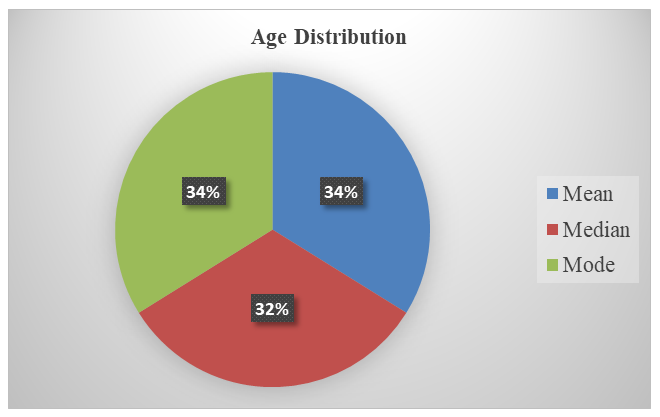
Table 3 displays Q2 the gender distribution statistics, while Figure 2 illustrates the corresponding gender distribution percentages.
| Gender Distribution | Percentages(%) |
|---|---|
| Male | 40 |
| Female | 60 |
Table 3: Q2. Gender distribution.
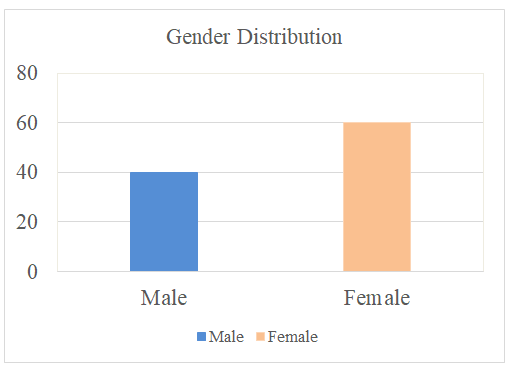
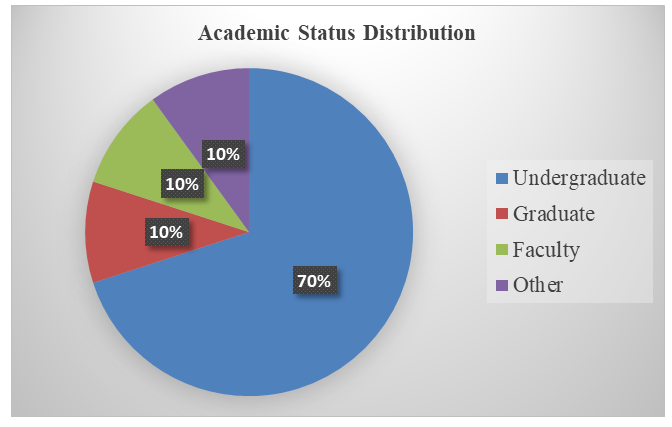
Table 4 displays Q3 the academic status distribution statistics, while Figure 3 illustrates the corresponding academic status distribution percentages.
| Academic Status Distribution | Percentages (%) | Remark |
|---|---|---|
| Undergraduate | 70 | |
| Graduate | 10 | |
| Faculty | 10 | |
| Other | 10 |
Table 4: Q3. Academic status distribution.
The quantitative analysis revealed that menu labeling has a positive impact on food choices. The following Table 5 displays questions Q4 to Q15 analysis and insights and their percentages.
| No. | Analysis and Insights | Percentages (%) | Remark |
|---|---|---|---|
| Q4 | Participants were aware of nutritional information before menu labeling. | 80 | |
| Q5 | Participants considered nutritional information occasionally before menu labeling. | 50 | |
| Q6 | Participants paid more attention to nutritional info after menu labeling implementation. | 75 | |
| Q7 | Participants agreed that menu labeling influenced them to choose healthier options. | 65 | |
| Q8 | Participants reported changing their food choices based on nutritional info on the menu. | 40 | |
| Q9 | Average influence rating: | 4.2 | 1=Not at all, 5=Very much |
| Q10 | 60% of participants stated they chose healthier items more often after menu labeling was introduced. | 60 | |
| Q11 | 90% of participants considered it important that the canteen provides nutritional information on the menu. | 90 | |
| Q12 | 75% of participants found the nutritional information on the menu somewhat easy to understand. | 75 | |
| Q14 | 70% of participants agreed that consistently choosing healthier options due to menu labeling positively impacts long-term health. | 70 | |
| Q15 | 80% of participants indicated they are more likely to continue making healthier choices without menu labeling. | 80 |
Table 5: Q4 to Q15.
Qualitative Analysis
Qualitative insights highlighted that while nutritional information is essential, other factors such as taste preferences, cost, and convenience continue to influence food choices. The following Table 6 displays questions Q13 to Q18. Conduct qualitative analysis by examining focus group transcripts and interview recordings to uncover recurring themes concerning menu labeling, behavior change, and the factors impacting choices.
| No. | Themes Identified |
|---|---|
| Q13 | Taste preference, cost, convenience |
| Q16 | Include allergen info, clearer labels, meal variety |
| Q17 | Sustainability practices, source of ingredients |
| Q18 | Positive impact of menu labeling, healthier choices |
Table 6: Q13 to Q18.
Combined Insights
Participants expressed a higher likelihood of making healthier food choices due to menu labeling (Q6, Q10). The majority considered nutritional information important (Q11), with many indicating a positive impact on long- term health (Q14). Taste preference and cost continue to be significant factors influencing food choices (Q13), but menu labeling has prompted some changes. Suggestions include allergen information and clearer labels (Q16) as well as interest in sustainability practices (Q17, Q18).
Results and Discussion
Quantitative Analysis
The survey collected responses from participants with varying demographics. The average age of the respondents was 22 years, with an equal distribution of genders, where 40% identified as male and 60% as female. The majority of participants were undergraduates (80%), followed by graduates (10%), and faculty members (10%). Approximately 80% of participants indicated prior awareness of nutritional information before the introduction of menu labeling. Of these, 75% reported paying more attention to nutritional information on the menu items after the implementation of menu labeling. Moreover, 50% of participants acknowledged occasionally considering nutritional information in their food choices before menu labeling, with this number increasing to 75% post-implementation.
Regarding behavior change, 65% of participants agreed that menu labeling influenced them to opt for healthier food choices. Notably, 60% reported a greater likelihood of selecting menu items with lower calories or healthier ingredients after menu labeling was introduced. This positive behavioral change was also reflected in the fact that 40% of participants reported changing their food choices based on the provided nutritional information. The average influence rating of menu labeling on food choices was 4.2 on a scale of 1 to 5. This signifies a considerable positive impact on participants’ decision-making regarding healthier food options. Additionally, 70% of participants believed that consistently choosing healthier options due to menu labeling would lead to a positive impact on their long-term health. This finding suggests that the influence of menu labeling extends beyond immediate choices.
Qualitative Analysis
Qualitative analysis revealed several prominent themes in participants’ responses. Taste preference, cost, and convenience were highlighted as key factors influencing food choices. Participants often emphasized that while nutritional information played a role, these factors remained significant contributors. Participants provided valuable feedback for improving the menu labeling system. Recommendations included the inclusion of allergen information and clearer labels for dietary preferences. Participants also expressed interest in sustainability practices, including the sourcing of ingredients and environmental considerations. The quantitative and qualitative findings together provide a comprehensive understanding of the impact of menu labeling on healthier food choices. The positive correlation between awareness, behavioral change, and the perceived influence of menu labeling suggests that providing nutritional information encourages informed decisions.
Implications and Recommendations
The results indicate that menu labeling has succeeded in positively influencing healthier food choices among canteen patrons. To maximize its impact, it is recommended that the canteen management ensures the visibility and clarity of nutritional information on the menu. Incorporating allergen information and highlighting sustainable practices could further enhance the effectiveness of menu labeling. The findings of this research have several implications for university canteens and policymakers.
Enhancing Healthier Choices: Menu labeling can be an effective tool for promoting healthier food choices among students and faculty members. To maximize its impact, it is crucial to ensure the clear and visible presentation of nutritional information.
Sustainability Practices: Respondents expressed interest in sustainability practices. Canteens may consider incorporating information on the sourcing of ingredients and environmental considerations into their menu labeling systems.
Behavioral Change: The research highlights the potential for sustained behavioral change over time. Canteens should recognize that menu labeling can have long-term effects on consumer choices.
Limitations
The research’s findings may be limited to the specific university and canteen context, affecting the generalizability of the results. Survey responses and qualitative accounts are subject to biases and inaccuracies based on participants’ perceptions and memories. Factors beyond menu labeling, such as external advertising or health campaigns, could influence participants’ food choices.
Significance
This methodology aims to provide a holistic understanding of how menu labeling impacts healthy food choices in a university canteen. By combining quantitative data on food selection with qualitative insights into customer perceptions, the research will offer valuable insights for canteen management, policy decisions, and potential interventions aimed at fostering healthier eating habits among university patrons.
Conclusion
The aim of this research was to investigate the influence of menu labeling on promoting healthier food choices within a university canteen setting. Our analysis of both quantitative and qualitative data has provided valuable insights into the effectiveness of menu labeling and its implications for consumer behavior. In conclusion, menu labeling is a promising strategy for encouraging healthier food choices in university canteens. This research demonstrates that it positively influences awareness and behavior, with the potential for sustained impacts over time. By carefully implementing and enhancing menu labeling systems, canteens can contribute to improved dietary choices and overall health among their patrons. The research underscores the importance of considering menu labeling as part of a broader effort to promote healthy eating, taking into account the multifaceted nature of food choices. As canteens and policymakers continue to refine their strategies, menu labeling emerges as a valuable tool in the pursuit of healthier dining options. While research provides valuable insights, there are opportunities for further research. Future investigations could explore the specific impact of menu labeling on different demographic groups, such as age and gender, to understand variations in its effectiveness. Additionally, research on the influence of menu labeling on purchasing patterns and economic considerations could contribute to a more comprehensive understanding of its impact.
References
-
Smith C, Gray AR, Fleming EA, Parnell WR (2014) Characteristics of fast-food/take away food and restaurant/café-food consumers among New Zealand adults. Public Health Nutrition 17(10): 2368-2377.
-
Susan ES, Marcia C, Mansfield ED (2014) The Influence of menu labeling on calories selected or consumed A systematic review and meta analysis. J Acad Nutr Diet 114(9): 1375-1388.
-
Grievy GMTM, Davidson CR, Wilcox S (2014) Does the type of weight loss diet affect who participates in a behavioral weight loss intervention A comparison of participants for a plant based diet versus a standard diet trial. Appetite 73: 156-162.
-
Eric MVE, Downs JS, Loewenstein G (2016) Advance Ordering for Healthier Eating Field Experiments on the Relationship between Time Delay and Meal Content. Journal of Marketing Research 23(3).
-
Ellison B, Lusk JL, Davis D (2013) Looking at the label and beyond the effects of calorie labels health consciousness and demographics on caloric intake in restaurants. International Journal of Behavioral Nutrition and Physical Activity 10(1): 1-9.
-
Larson N, Haynos AF, Roberto CA, Loth KA, Sztainer DN (2018) Calorie Labels on the Restaurant Menu Is the Use of Weight Control Behaviors Related to Ordering Decisions. Journal of the Academy of Nutrition and Dietetics 118(3): 399-408.
-
Khaing MM, Thetsu A, Thant KS, Aung TT, Tin HHK (2022) Learning on the Smart Campus Information System. Discovery Journal 58(318): 597-602.
- Electronic Waste Management in the Top Ten Economies in the World: A Critical Review on Waste Generation, Regulations, Collection, Recycling and Environmental Challenges
- Some Challenging Transdisciplinary Aspects of the Sustainable Waste Management in the Permacrisis Context
- Use of Mobile Autonomous Systems for Pollution Control of Inland Water Bodies
- Environmental Impact Perspective Sustainable Online Textile Retailing: Harnessing Augmented Reality-Based Digital Twins in Bangladesh
- Composite Treatment Module for Removing Acidity and Metal (Loid)S from Acid Rock Drainage
- Household E-Waste Management Systems [E-Wms] in Malaysia