
Knowledge and Perception Assessment of Pharmacy Technicians on Biosimilars at the University Hospital Center -Tlemcen
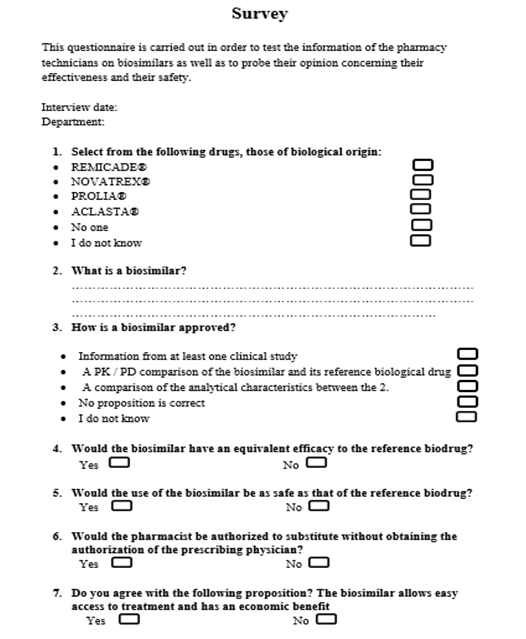
Biosimilars are similar products, but not identical, to a reference biological drug already approved by the authorities, whose protection certificate has expired. Biosimilars have recently been introduced at Tlemcen University Hospital Center (TUHC). Pharmacy technicians are essential health actors for good distribution and use of biodrugs in particular biosimilars within the TUHC. For this, we have done a study to assess the knowledge of pharmacy technicians on biosimilars as well as their opinion on their efficacy-safety profiles. The data collection was carried out by the distribution of a questionnaire with 12 questions (Figure 1). We have analyzed the questionnaires of the 10 pharmacy technicians who agreed to join our study. More than half of pharmacy technicians could not correctly define a biosimilar. In addition, according to the answers provided, the stages of development and approval of biosimilars are not well known. Continuous training on the topic of biosimilars is necessary in order to raise awareness in this category of the importance of rigorous monitoring of these treatments within the TUHC. Regarding the accessory goal of the questionnaire attributed to pharmacy technicians, to provide their opinions on the efficacy and safety of biosimilars according to their daily professional experience, a large part of pharmacy technicians has expressed a satisfaction with the efficiency and safety of these drugs. However, since a certain category of pharmacy technicians affirms to witness suspicion of side effects of biosimilar treatment without informing the Central Pharmacy, it is imperative to raise awareness of the need to declare them to regional and national pharmacovigilance centers.
Introduction
Biological medicinal products have revolutionized the management and fate of many diseases in terms of morbidity / mortality and quality of life [1, 2, 3]. Biosimilars are similar products, but not identical, to a reference biological drug already approved by the authorities, whose protection certificate has expired. Biosimilars, by their intrinsic nature, the complexity of their production, their quality controls and their regulatory assessment, cannot be considered as generics of biological drugs [4]. During this last decade, several biosimilar molecules have had access to the Algerian market and are used in different health structures. Their commercialization requires rigorous monitoring of their effectiveness and side effects. Biosimilars have recently been introduced at Tlemcen University Hospital Center (TUHC). Their use has become preponderant within this establishment. Pharmacy technicians are essential health actors for good distribution and use of biodrugs in particular biosimilars within the TUHC. For this, we have done a study to assess the knowledge of this category on biosimilars as well as their opinion on their efficacy-safety profiles.
Materials and Methods
This is a descriptive observational study; it has been provided with a questionnaire for the pharmacy technicians of TUHC. The choice of the TUHC as a study environment was motivated by the high workforce of pharmacy technicians compared to other health structures.
The consent of pharmacy technicians was implied by filling or not questionnaires. The data collection was carried out by the distribution of a questionnaire with 12 questions, aiming to assess the state of knowledge of pharmacy technicians on biosimilars, as well as their opinion on their efficacy-safety profiles. The data were collected from December 20, 2019 to January 20, 2020. Data entry was performed by the SPSS Statistics 25 software (Figure 1). The results analysis was performed with the same software. The results are expressed as a percentage for qualitative variables.
Results
During the period from December 20, 2019 to January 20, 2020, we interviewed 10 pharmacy technicians. Figure 2 shows their distribution according to their belonging service. 20% of pharmacy technicians asked belong to the medico- surgical emergencies department of the (TUHC).
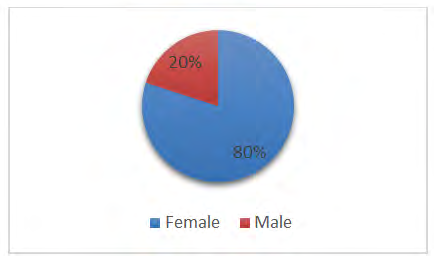
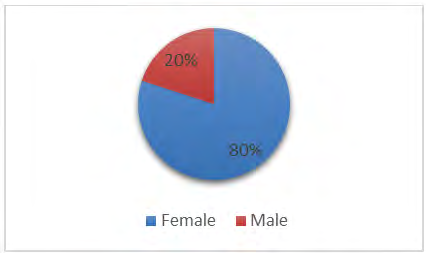
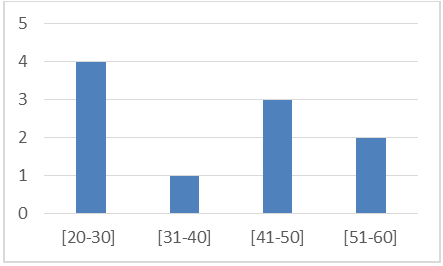
Most of the pharmacy technicians interviewed were female and over 30 years old (Figures 3 & 4).
Presentation of Questionnaire-Results
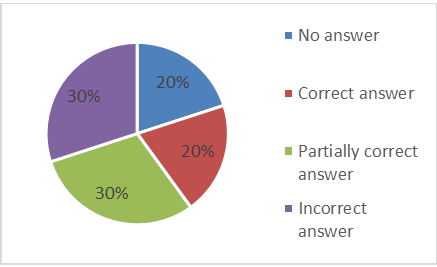
General information on biological drugs: Unfortunately, only 20% of the questioned pharmacy technicians provided a correct answer to this question. 30% of them provided only a partial response, in other words, they checked partially the correct question-proposals. Almost one-third of them gave a false response and 20% of them did not provide an answer (Figure 5).
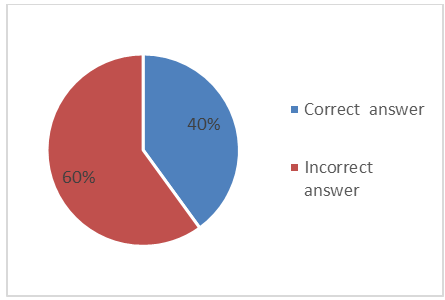
As for defining a biosimilar, the percentage of pharmacy technicians that have provided a correct response was below average (40%) (Figure 6).
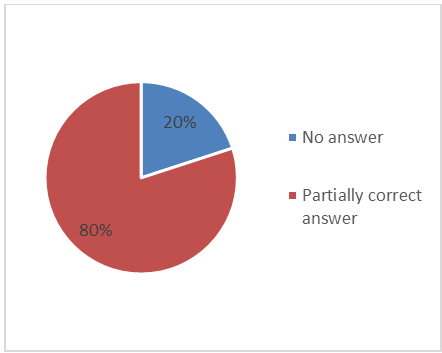
Information on the approval process for a biosimilar: The majority of pharmacy technicians (80%) provided only partially correct answers. 20% of them did not provide a response (Figure 7).
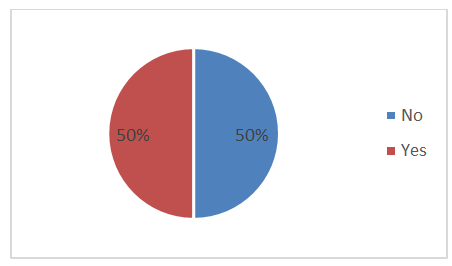
Perception of the efficacy of biosimilars: Half of the questioned pharmacy technicians (50%) gave a negative response and therefore think that biosimilar would not have an effectiveness equivalent to its reference product (Figure 8).
Perception of the safety of biosimilars: Half of the questioned pharmacy technicians (50%) think that the use of biosimilar would not be as safe as that of the reference drug (Figure 9).
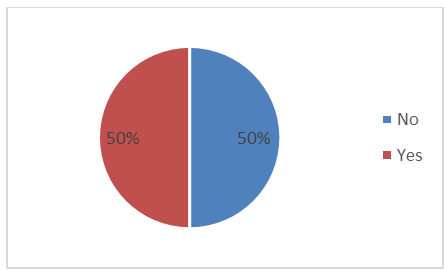
Information on the substitution of biosimilar by pharmacists: 50% of pharmacy technicians interviewed believe that the pharmacist is not allowed to substitute between the biosimilar and its reference product (Figure 10)
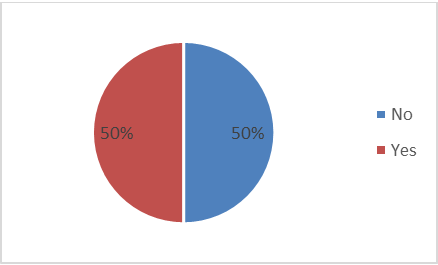
Information on the economic advantage of biosimilars: Most pharmacy technicians (70%) provided an approved response and think, thus, that biosimilars have an economic advantage and allows easy access to treatment (Figure 11).
Survey of Their Experience with Biosimilars at TUHC
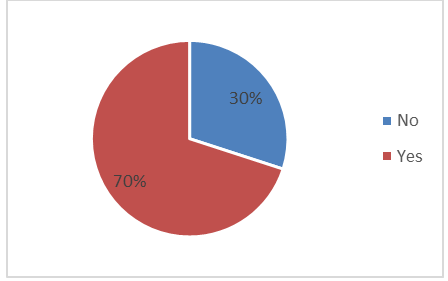
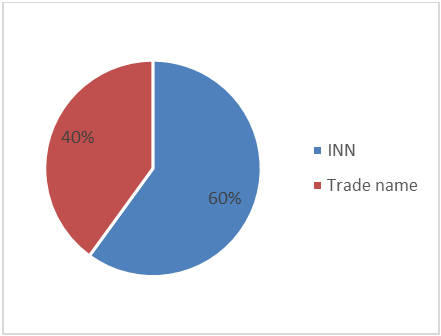
When pharmacy technicians were interviewed on how biological drugs are prescribed within the TUHC, The proposal “INN: International Non-proprietary Name” was the most checked (60%) (Figure 12).
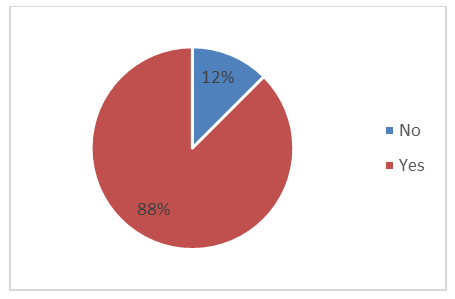
In addition, the vast majority of pharmacy technicians (88%) report that biosimilar are the same efficacy as the reference products. According to them, it has not been reported differences in efficacy between the 2 bio-drugs (Figure 13.)
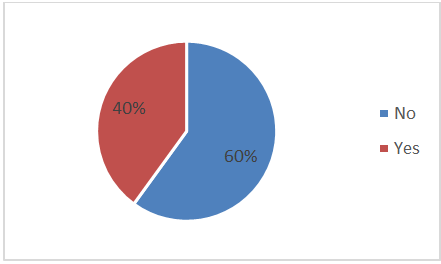
Nevertheless, almost half of the pharmacy technicians interviewed (40%) report that patients under biosimilar complain more often from side effects than those treated with reference biodrugs (Figure 14).
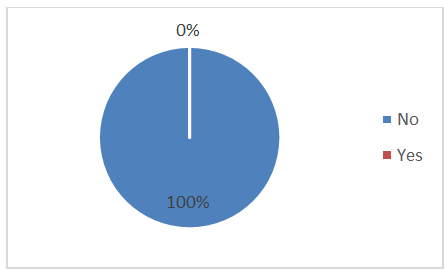
All pharmacy technicians have affirmed that they do not report side effects to central hospital pharmacy or to pharmacovigilance centers (Figure 15).
Discussion
During this last decade, several biosimilar molecules have had access to the Algerian market and are used in different health structures. For this, we decided to study them at the level of the TUHC given their recent and preponderant introduction within this establishment. 06 biosimilars were used at the TUHC during the period of our study: EPOTIN®, AVONEX®, JUSLINE N®, INSUDAL BASAL®, CANMAB®, REMSIMA®, The REMSIMA® is the biosimilar that has been most recently introduced to the TUHC. All these biosimilars are imported.
After distribution of the questionnaire among pharmacy technicians, we have collected 10 questionnaires. In other words, we analyzed the questionnaires of the 10 pharmacy technicians who agreed to join our study.
Several Press articles [5, 6, 7] report that some pharmaceutical firms on the Algerian territory consider the beginning of biosimilar development in Algeria, to limit the import cost and to meet the needs of the market.
The questionnaire attributed to pharmacy technicians was intended to assess their state of knowledge on biosimilars, as well as their opinion on their efficacy-safety profiles.
According to the responses of pharmacy preparators on the questionnaire that most pharmacy technicians have insufficient information on bio-drugs and biosimilars. In the first question, only 20% of pharmacy technicians could identify the drugs that are: Remicade® and Prolia®, also more than half of them could not correctly define a biosimilar, the word “generic” was cited in several responses. A biosimilar is always mistaken for a generic.
No significant difference was noted between the group of women and men according to their answers to the question of definition of the biosimilar (P =0.747). Likewise, there was any significant difference between the different age categories according to their answer to this same question (P=0.808).
In addition, according to the answers provided, the stages of development and approval of biosimilars are not well known. Continuous training on the topic of biosimilars is necessary in order to raise awareness in this category of the importance of rigorous monitoring of these treatments within the TUHC.
Also, 50% of the pharmacy technicians interviewed believe that the pharmacist has the authorization to substitute a reference biodrug by its biosimilar, but the Algerian regulation, as we have already specified, is not clear in this regard. It is also found that the majority of pharmacy technicians know that biosimilar is easy to access and has an economic advantage.
Regarding the accessory goal of the questionnaire attributed to pharmacy technicians, to provide their opinions on the efficacy and safety of biosimilars according to their daily professional experience, a large part of pharmacy technicians has expressed a satisfaction with the efficiency and safety of these drugs. However, since a certain category of pharmacy technicians affirms to witness suspicion of side effects of biosimilar treatment without informing the Central Pharmacy, it is imperative to raise awareness of the need to declare them to regional and national pharmacovigilance centers.
Faced with insufficient information from pharmacy technicians, important health players within the TUHC, we designed a leaflet summarizing the main characteristics of biosimilars and we distributed it to all the pharmacy technicians who participated in the study.
Conclusion
In recent years, many patents of biological drugs have expired, which has led to the emergence of biosimilars. Some of these drugs are used at the TUHC. These medications reduction in the period of drug stock-outs and have an economic advantage, but many health professionals at the TUHC have insufficient knowledge of these drugs, their differences with generic drugs and how to monitor them. In the end, we strongly hope that our study has helped to better identify the situation of the biosimilar, meet certain limits in their way of being used and especially to test and enrich the knowledge of a very large category of health actors who are pharmacy technicians. This will undoubtedly have a favorable impact on the management of patients under biological drugs at the level of TUHC.
References
-
Déborah Pinheiro (2018) Bilan en 2012 sur l’utilisation des biosimilaires : un équivalent du biomédicament de référence ou un générique biologique ? Thèse pour obtenir le Diplôme d’Etat de Docteur en Pharmacie. Université de Lorraine, pp : 2-143.
-
Gregory Fleury A Et Pr Cem Gabay A (2017) Effets Secondaires Des Traitements Biologiques. Revue Médicale Suisse 13: 542-548.
-
ANSM : Les médicaments biosimilaires - ANSM : Agence nationale de sécurité du médicament et des produits de santé.
-
Aurélie Laura Argentin : Production, contrôle de la qualité et règlementation des médicaments biosimilaires : Un challenge pour l’industrie pharmaceutique. Thèse pour l’obtention du diplôme d’état de docteur en pharmacie. Université Toulouse iii, Paul Sabatier.
-
Hamid Bellagha (2019) Santé/Médecine : Le biosimilaire, un médicament (presque) naturel, reporters, le 26 janvier.
-
Bouali Benhalima (2019) Directives Et Reglementation S’imposent, Elwatan.
-
Santénews (2019) Les biosimilaires permettront à l’Algérie de réduire sa facture d’importation d’au moins 350 millions $ .Santenews 16.
- Hydrogen Peroxide Scavenging by Methanolic Extracts of Coriander: An In Vitro Antioxidant Study
- Aromatherapy in Palliative Care: A Fragrant Quest for Relief
- Empowering Women, Securing Futures: Contraception’s Role in Socioeconomic Progress in India
- Effect of Crospovidone, Croscaramellose Sodium in Combination on the Drug Release of Anti diabetic Medication in Tablet Form
- Knowledge, Attitudes, Anxiety, and Preventive Behaviors Regarding Covid-19 Affliction among Healthcare Workers in Pakistan
- “Competitive Landscape and Brand Equivalents: Implications for ANDA (Abbreviated New Drug Application) Approval”