
Effect of Two Teaching Methods on Learning Outcomes Regarding Prevention of Cervical Cancer among Married Women in Rural Areas of Kannur District, Kerala-A Pilot Study
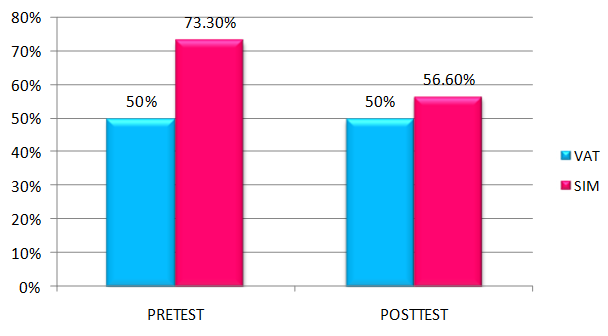
Cervical cancer is the second most prevalent cancer among women worldwide and the fifth leading cause of cancer deaths. The study was conducted among married women who met the inclusion criteria in a selected rural areas at Kannur district to assess the effect of two teaching methods on learning outcomes regarding prevention of cervical cancer. Study adopted an experimental two group pre test post test design with a Quantitative research approach. Study was conducted in selected rural areas of Kannur district among married women in the age group 18- 60 years. Sampling technique adopted for the study was simple random sampling with the sample size of 60. The study revealed that there is a marked improvement in the knowledge, attitude, practice and perceived barriers among the married women regarding prevention of cervical cancer after video assisted teaching rather than the self instructional module. Major findings of the study were; majority of the women belongs to the age group of 18- 30years (50%) and most of their age at marriage was 18- 30 years (93.3%), 56.7% of women had college education and, 50% of women were housewives .In pre-test out of 30 samples 26 (86.6%) samples had inadequate knowledge before video assisted teaching were as in post test 19 (63.3%) samples had adequate knowledge after VAT. In pretest out of 30 samples 25 (83.3%) samples had inadequate knowledge before self instructional module were as in post test 3 (10%) samples had adequate knowledge after SIM. In pretest out of 30 samples 25 (83.3%) samples had positive attitude before video assisted teaching and in post test 30(100%) had positive attitude after VAT. In pretest out of 30 samples 22 (73.3%) samples had positive attitude before self instructional module and in post test 29 (96.6%) had positive attitude after SIM. In pretest out of 30 samples 15 (50%) had good practice before video assisted teaching and in post test 22 (73.3%) had good practice after VAT. In pre-test out of 30 samples 15(50%) samples had good practice before self instructional module and in post test 17(56.6%) had good practice after SIM . Hence it can be inferred that video assisted teaching is more effective than self instructional module in increasing knowledge score among married women in rural area regarding prevention of cervical cancer.
Introduction
Cancer refers to a class of disease to which a cell or group of cells divide and replicate uncontrollably, intrude into adjacent cells and tissues and ultimately spread to other parts of the body than the location at which they arouse [2009]. Cervical cancer mostly affects women age between 18 to 45, is linked to human papilloma virus, a sexually transmitted virus that can also cause genital warts. A pap smear or colposcopy can spot cervical cancer at an early stage and HPV [Human Papiloma Virus] vaccines have been developed.
Background of the Study
Cervical cancer is the second most prevalent cancer among women worldwide and the fifth leading cause of cancer deaths. A cross sectional study was conducted by Suryapriya Balan, to assess the Knowledge of cervical cancer screening among rural Indian women, 407 women aged 21-65 years in a selected village of Karnataka [1]. Majority of the study population (98.5%, 401) had poor knowledge regarding cervical cancer screening. There was no apparent difference in the mean and standard deviation of knowledge scores in the different categories of cervical cancer (2.49±1.665), symptoms (0.43±0.496), Pap smear test (0.33±0.807) and screening guidelines (0.51±0.742) (2013). A cross-sectional study was conducted by Geeta V [2], to assess the awareness of cervical cancer among women of reproductive age group in urban slums of Karnataka. Total sample size was 200. Result shows that about 7.5% of the respondents had heard about cervical cancer (2014). A cross sectional study conducted by Jansirani Siddharthar, to assess the knowledge, awareness and prevention of cervical cancer among women in tertiary care hospital in Puducherry [3]. 400 women were recruited over three months for the study. The research findings showed that less than half of the study population (178, 44.5%) knew about cervical cancer. Less than one-fourth of the population knew about screening services for prevention of cervical cancer (2013).
Need for the Study
Cervical cancer is a sexually transmitted disease. It has been found that in many developed countries the annual incidence and prevalence of cervical cancer has decreased by 50% to 70% after introduction of population based screening. So if women in India undergo screening for cervical cancer, it is possible to detect cancer in early stages and thereby reducing mortality and morbidity. Improvement in living standard of women has resulted in a reduction in the incidence of cervical cancer. Regular cervical cytology examination by all women who have initiated sexual activity can prevent the occurrence of cervical cancer. Hence the researcher has decided to conduct a study on prevention of cervical cancer among married women.
Objectives
- Compare the test scores on knowledge, attitude, practice and perceived barriers of women regarding cervical cancer before and after video assisted teaching.
- Compare the test scores on knowledge, attitude, practice and perceived barriers of women regarding cervical cancer before and after the self-instructional module.
- Determine the correlation between knowledge and attitude with the practice of women regarding cervical cancer.
- Find out the association between knowledge, attitude, practice and perceived barriers with selected socio- demographic variables.
- Identify the effect of pre and post test score on willingness of subjects to undergo Pap smear.
Review of Literature
A Large Prospective Cohort Study was conducted by Jissa V Thulaseedharan [2], to assess the Socio Demographic and Reproductive Risk Factors for Cervical Cancer in 113 local Panchayats from Rural India. 30,958 women were randomly selected for the study. The result shows that women of increasing age 95%, having many pregnancies and no education were found to be at significantly increased risk of cervical cancer. These findings further stress the importance of formulating public health policies aimed at increasing awareness and implementation of cervical cancer screening programmes (2007). A descriptive study was conducted by Balaiah Donta [4], to assess the Awareness of Cervical Cancer among Couples in a Slum Area of Mumbai. A total of 1958 married women aged from 18 to 49 and their husbands were selected using simple random sampling. Among those couples3.6% husbands and 9.7% wives had heard of Pap smear test. The difference in awareness between husband and wife was found to be significant. It was also found that only 4 couples were aware of Pap smear test and 96 couples were not aware of pap smear test (2011). An experimental study conducted by S Bharatha Sorubarani [22], to assess the effectiveness of video assisted teaching on prevention of cervical cancer among women in Milaganoor, Sivaganga district, Tamilnadu. Sample size of the study was 60.Result shows that pre- test value is 31.076% and post-test value is 40.22%. From the study findings, it was clear that rural women lack in knowledge regarding cervical cancer and its prevention. Video assisted teaching is the best method of intervention to create awareness among women in rural community (2013). A cross sectional study was conducted by SuryapriyaBalan Thovarayi [11], to assess the Knowledge of cervical cancer screening among rural Indian women. 407 women aged 21-65 years in a randomly selected village of udupitaluk in Karnataka. Majority of the study population (98.5%, 401) had poor knowledge regarding cervical cancer screening. There was no apparent difference in the mean and standard deviation of knowledge scores in the different categories of cervical cancer (2.49±1.665), symptoms (0.43±0.496), Pap smear test (0.33±0.807) and screening guidelines (0.51±0.742). There is very poor knowledge of cervical cancer screening among women (2013).Another same study was conducted by Harsha Kumar HN [7], to assess the knowledge and Screening for Cervical Cancer among Women attending the outpatient departments of teaching hospitals attached to Kasturba Medical College. A sample size of 83 was selected. Majority of the women have poor knowledge about cervical cancer (81.9% [68/83]) and it's screening (85.5% [71/83]). Only 6 out of 83 women had undergone screening (2012).Hence the researcher decided to all the studies made the researcher to conduct the study on preventive aspect of cervical cancer.
Research Methodology
Research Approach
Quantitative research.
Research Design
Experimental two group pre-test – post test design.
Setting of the Study
The study was conducted in a selected rural area of Kannur district.
Population
Population for the present study was the married women who fall in the age group of 18- 60yrs living in rural areas belongs to PHC and CHC.
Samples
60 married women in selected areas of Kannur district who met the inclusion criteria and exclusion criteria of the study.
Sampling Technique
Simple random sampling.
Data Collection Process
A prior formal permission obtained from the concerned authority. The purpose of the study was explained and consent obtained from the subjects. The investigators selected 60 samples as per the inclusion criteria and divided into two groups for VAT and the SIM. Each group served as control to other group. Structured questionnaire is used to assess the knowledge, attitude, practices and perceived barriers in married women regarding prevention of cervical cancer. After the administration of self instructional module and video assisted teaching the post test was conducted after 7 days of educational interventions.
of cervical cancer. Keeping in view the objectives of the study, mean, standard deviation, bivariate analysis, and frequency percentage were adopted to evaluate the relationship between knowledge, attitude and practice of pre-test score and post test score. The gathered data then organized, tabulated, analysed and interpreted. Part I: Description of the Demographic Variables of the Respondents.
Major Findings
The study deals with analysis and interpretation of pre test and post test data about knowledge, attitude, practice and perceived barriers collected from 60 married women using structured questionnaire regarding the prevention
| No. Of Subjects | |||||||||||||||
|---|---|---|---|---|---|---|---|---|---|---|---|---|---|---|---|
| VDO | SIM | ||||||||||||||
| Demographic variable | |||||||||||||||
| Column | Column | ||||||||||||||
| Count | Count | ||||||||||||||
| N % | N % | ||||||||||||||
| Age in year | 18-30 | 15 | 50.00% | 6 | 20.00% | ||||||||||
| 31-40 | 9 | 30.00% | 12 | 40.00% | |||||||||||
| 41-50 | 2 | 6.70% | 8 | 26.70% | |||||||||||
| 51-60 | 4 | 13.30% | 4 | 13.30% | |||||||||||
| Age at marriage | 18-30 | 28 | 93.30% | 29 | 96.70% | ||||||||||
| 31-40 | 2 | 6.70% | 1 | 3.30% | |||||||||||
| 41-50 | 0 | 0.00% | 0 | 0.00% | |||||||||||
| 51-60 | 0 | 0.00% | 0 | 0.00% | |||||||||||
| Educational status | Primary | 2 | 6.70% | 1 | 3.30% | ||||||||||
| Normal | 3 | 10.00% | 8 | 26.70% | |||||||||||
| Secondary | 8 | 26.70% | 7 | 23.30% | |||||||||||
| College | 17 | 56.70% | 14 | 46.70% |
Table 1: Frequency and percentage distribution of respondents according to their demographic variable The percentage distribution
Table 1: Frequency and percentage distribution of respondents according to their demographic variable The percentage distribution of respondents participated in the video assisted teaching according to their age shows that majority of the respondents 15 (50%) were in the age group of 18 – 30 years, 9 (30%) in the age group of 31-40 years, 4 (13.3%) in the age group of 51- 60 years and only 2 (6.7%) were in the age group of 42-50 years. The percentage distribution of respondents participated in the self instructional module according to their age shows that majority of the respondents 12 (40%) were in the age group of 18- 30 years, 8 (26.7%) in the age group of 31-40 years, 6 (20%) in the age group of 51- 60 years and only 4 (13.3%) were in the age group of 42-50 years. The result indicates that majority of the respondents participated in the study were in the age group of 18- 30 year of age. The percentage distribution of respondents participated in the video assisted teaching according to their age at marriage shows that majority of the respondents 28 (93.3%) were in the age group of 18- 30 years, and no respondents were participated in the study of age at marriage within 41- 60 years. The percentage distribution of respondents participated in the self instructional module according to their age at marriage shows that majority of the respondents 29 (96.7%) were in the age group of 18- 30 years, and no respondents were participated in the study of age at marriage within 41- 60 years. The percentage distribution of respondents participated in the video assisted teaching according to their educational status shows that majority of the respondents 17 (56.7%) had college education, and 2 (6.7%) had primary education. The percentage distribution of respondents participated in the self instructional module according to their educational status shows that majority of the respondents 14 (46.7%) had college education, and 1 (3.3%) had primary education. The result indicates that majority of the respondents participated in the study had college education.
PART II: Analysis of Pre Test and Post Test Score on Knowledge, Attitude, Practice and Perceived Barriers of Women Regarding Prevention of Cervical Cancer.
| Paired Samples Statistics | ||||||
|---|---|---|---|---|---|---|
| Std | Std. Error | |||||
| Tests | Mean | t | Sig.(2tailed) | |||
| Deviation | Mean | |||||
| Knowledge on cervical cancer | Pre | 3.0667 | 1.10433 | 0.20162 | -13.3092 | 0 |
| Post | 6.1667 | 1.18419 | 0.2162 | |||
| Attitude towards cervical cancer | Pre | 3.6792 | 0.51974 | 0.09489 | -2.56343 | 0.016 |
| Post | 3.9542 | 0.37064 | 0.06767 | |||
| Practice | Pre | 1.4714 | 0.3604 | 0.02484 | 3.117451 | 0.004 |
| Post | 1.9524 | 0.21134 | 0.03858 | |||
| Perceived barriers | Pre | 0.0194 | 0.05217 | 0.00953 | 0.626013 | 0.536 |
| Post | 0.0139 | 0.03159 | 0.00577 |
Table 2: Mean, standard deviation, standard error of pre test and post test score on knowledge, attitude, practice and perceived
Table 2: Mean, standard deviation, standard error of pre test and post test score on knowledge, attitude, practice and perceived barriers of respondents before and after video assisted teaching. The data presented in the table 2 shows that there is no effectiveness on perceived barriers of women regarding prevention of cervical cancer before and after video assisted teaching. And there is effectiveness on knowledge, attitude and practice of women regarding cervical cancer before and after video assisted teaching.
| Paired Samples Statistics | |||||||||||||||||||
| Sig. | |||||||||||||||||||
| Tests | Mean | Std. Deviation | S | td. Error Mea | n | T | |||||||||||||
| (2 tailed) | |||||||||||||||||||
| Knowledgeoncervicalcancer | Pre | 2.2 | 1.87819 | 0.34291 | -6.45934 | 0 | |||||||||||||
| Post | 4.7667 | 0.98902 | 0.18057 | ||||||||||||||||
| Attitude towards cervical cancercervical cancer | Pre | 3.5333 | 0.88445 | 0.16148 | -2.52688 | 0.017219 | |||||||||||||
| Post | 3.9667 | 0.40462 | 0.07387 | ||||||||||||||||
| Practice | Pre | 1.4905 | 0.10399 | 0.01899 | -0.39881 | 0.692955 | |||||||||||||
| Post | 1.5048 | 0.16665 | 0.03043 | ||||||||||||||||
| perceived barriers | Pre | 0.0167 | 0.04035 | 0.00737 | 0 | 1 | |||||||||||||
| Post | 0.0167 | 0.05085 | 0.00928 |
Table 3: Mean, standard deviation, standard error of pre test and post test score on knowledge, attitude, practice and perceived
Table 3: Mean, standard deviation, standard error of pre test and post test score on knowledge, attitude, practice and perceived barriers of respondents before and after self instructional module. The data presented in the table 3 shows that there is no effectiveness on practice and perceived barriers of women regarding prevention of cervical cancer in before and after self instructional module. And there is effectiveness on knowledge and attitude of women regarding cervical cancer in before and after self instructional module.
- Part III: Correlation between Knowledge and Attitude with the Practice of Women Regarding Prevention of Cervical
- Cancer.
- Correlation of Pre test score on knowledge, attitude with practice
- Groupsz
- Knowledge
- Attitude
- Practice
- Pearson Correlation
- 1
- 0.241
- -0.069
- Knowledge
- Sig.(2-tailed)
- -
- 0.199
- 0.718
- VDO
- Attitude
- Pearson Correlation
- 0.241
- 1
- -0.33
- Sig.(2-tailed)
- 0.199
- -
- 0.075
- Practice
- Pearson Correlation
- -0.069
- -0.33
- 1
- Sig.(2-tailed)
- 0.718
- 0.075
- -
- Knowledge
- Pearson Correlation
- 1
- .586**
- -.393*
- Sig.(2-tailed)
- -
- 0.001
- 0.031
- Attitude
- Pearson Correlation
- .586**
- 1
- -0.117
- Sig.(2-tailed)
- 0.001
- -
- 0.538
- SIM
- Practice
- Pearson Correlation
- *
- -0.393
- -0.117
- 1
- Sig.(2-tailed)
- 0.031
- 0.538
- -
Table 4: Bivariate analysis of correlation of pre test between knowledge and attitude with the practice of respondents.
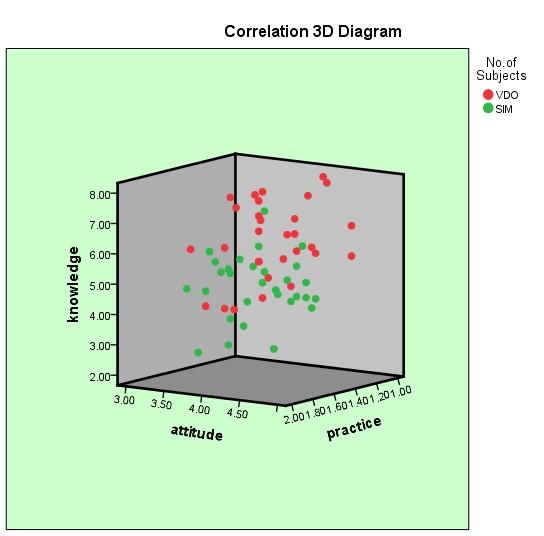
Figure 1 shows that there is correlation between knowledge and attitude with practice regarding prevention of cervical cancer.
PART IV: Effect of Pre and Post Test Scores on Willingness of Subjects to Undergo Pap Smear.
| Groups | ||||||||||||
|---|---|---|---|---|---|---|---|---|---|---|---|---|
| VDO | SIM | |||||||||||
| NO | P | ERCENTAG | E | NO | P | ERCENTAGE | ||||||
| Count | Column N % | Count | Column N % | |||||||||
| WILLING TO UNDERGO PAPSMEAR TESTIN FUTURE | Yes | 17 | 56.7 | 19 | 63.3 | |||||||
| No | 13 | 43.3 | 11 | 36.7 |
Table 5: Pre test frequency and percentage distribution of respondents according to their willingness to undergo Pap smear. The d
Table 5: Pre test frequency and percentage distribution of respondents according to their willingness to undergo Pap smear. The data presented in the figure 8 shows that 17 (56.4%) of respondents are willing to undergo pap smear test and 13(43.3%) of respondents are not willing to undergo pap smear test. in video assisted teaching. In self instructional module 19 (63.3%) of respondents are willing to undergo pap smear test and 11(36.7%) of respondents are not willing to undergo pap smear test.
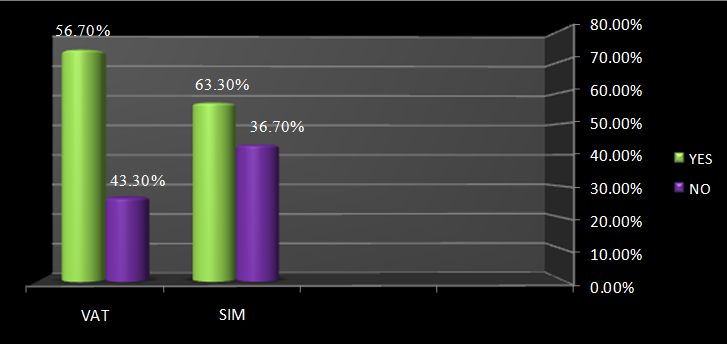
instructional module 17 (56.6%) of respondents are willing to undergo pap smear test and 13(43.3%) of respondents are not willing to undergo pap smear test.
| Good >70% | |||||||||||||||||
|---|---|---|---|---|---|---|---|---|---|---|---|---|---|---|---|---|---|
| Moderate | Low | ||||||||||||||||
| Area | Percentage | Percentage | Percentage | ||||||||||||||
| 50-70% | <50% | ||||||||||||||||
| Pre-test | 0 | 0 | 4 | 13.30% | 26 | 86.60% | |||||||||||
| Post-test | 19 | 63.30% | 7 | 23.30% | 4 | 13.30% |
Table 6: Grading of pre-test and post-test attitude score of video assisted teaching and self instructional module. In pretest ou
were as in post test 19 (63.3%) samples had adequate knowledge after VAT.
| Area | Good | Moderate | Low | ||||||||||||||
|---|---|---|---|---|---|---|---|---|---|---|---|---|---|---|---|---|---|
| Percentage | Percentage | Percentage | |||||||||||||||
| >70% | 50-70% | <50% | |||||||||||||||
| Pre-test | 0 | 0 | 5 | 16.60% | 25 | 83.30% | |||||||||||
| Post-test | 3 | 10% | 19 | 63.30% | 8 | 26.60% |
Table 8: Grading of pre-test and post-test attitude score of video assisted teaching and self instructional module. In pretest ou
were as in post test 3 (10%) samples had adequate knowledge after SIM.
| Area | Good >70% | Percentage | Moderate 50-70% | Percentage | Low <50% | Percentage |
| Pretest | 0 | 0 | 4 | 10.00% | 26 | 26.60% |
Table 7: Grading of pre-test and post-test attitude score of video assisted teaching and self instructional module. In pretest ou
| Area | Good >70% | Percentage | Moderate 50-70% | Percentage | Low <50% | Percentage |
Table 9: Grading of pre-test and post-test attitude score of video assisted teaching and self instructional module. In pretest ou
samples 15(50%) samples had good practice before self instructional module and in post test 17(56.6%) had good practice after SIM.
| ATTITUDE SCORE | ||||||||||||
|---|---|---|---|---|---|---|---|---|---|---|---|---|
| PRETEST | POSTTEST | |||||||||||
| FREQUENCY | PERCENTAGE | FREQUENCY | PERCENTAGE | |||||||||
| Count | ||||||||||||
| VDO | 25 | 83.30% | 30 | 100% | ||||||||
| SIM | 22 | 73.30% | 29 | 96.60% |
Table 10: Grading of pre-test and post-test attitude score of video assisted teaching and self instructional module. In pretest ou
Table 8: Grading of pre-test and post-test attitude score of video assisted teaching and self instructional module. In pretest out of 30 samples 25 (83.3%) samples had positive attitude before video assisted teaching and in post test 30(100%) had positive attitude after VAT. In pretest out of 30 samples 22 (73.3%) samples had positive attitude before self instructional module and in post test 29 (96.6%) had positive attitude after SIM [5, 6, 7, 8, 9, 10].
Nursing Implications
Nurses must incorporate scientific knowledge and technical advances into their practice to assist the patients in remaining well and functioning at the maximum level. The nursing implications of the study could be discussed under nursing practice, nursing education, nursing administration and nursing research. Nursing Practice The nursing personnel need to prepare instructional materials which should be simple, clear and understandable that can be studied at their own with other family members. Nursing personnel working in various units of hospitals will be able to find opportunities to teach and improve the knowledge regarding cervical cancer and its prevention. Nursing Education The study has proved that improving the knowledge of married women brings about better awareness regarding prevention of cervical cancer. Nurses must be abreacting with new technologies, new approaches and techniques. Findings should be included in the nursing curriculum. Nursing Administration Nursing administrators should take interest in motivating the nursing personals to improve their professional knowledge and skill by attending the health conferences, workshops, seminars and training programmes. Nursing Research This study yield fruitful outcomes that are of great help in addressing arising problems. The nurse researcher may effectively use the result of these studies and develop clear knowledge on prevention of cervical cancer in promoting health of married women and a way of preventing cervical cancer and promoting health.
Conclusion
The focus of this study was to compare the effect of Video assisted teaching and self instructional module on learning outcomes regarding prevention of cervical cancer among married women in rural areas of Kannur district.
References
-
Thovarayi SB, Noronha JA, Nayak S (2014) Knowledge of cervical cancer screening among rural Indian women: a cross sectional study. IOSR-JNHS 3(1): 51-55.
-
Aswathy S, Quereshi MA, Kurian B, Leelamoni K (2012) Cervical cancer screening: Current knowledge & practice among women in a rural population of Kerala. IJMR 136(2): 205-210.
-
Siddharthar J, Rajkumar B, Deivasigamani K (2014) Knowledge, Awareness and Prevention of Cervical Cancer among Women Attending a Tertiary Care Hospital in Puducherry, India. Journal of clinic and diagnostic research 8(6): OC01-OC03.
-
Dutta DC (2008) Textbook of Gynaecology. 5th edition. New Delhi, new central book agency.
-
Kumar HNH, Tanya S (2014) A Study on Knowledge and Screening for Cervical Cancer among Women in Mangalore City. Ann Med Health Sci Res 4(5): 751- 756.
-
Donta B, Begum S, Nair S, Naik DD, Mali BN, et al. (2012) Awareness of Cervical Cancer among Couples in a Slum Area of Mumbai. Asian Pacific journal of cancer prevention 13(10):4901-4903.
-
World health organization (1992) Cervical cancer screening programme: managerial guidelines / A. B. Miller.
-
Chintamani Lewis. Medical surgical nursing. Reed Elsevier India private limited 2011.
-
Anantharaman VV, Sudharshini S, Chitra A (2012) A cross-sectional study on knowledge, attitude, and practice on cervical cancer and screening among female health care providers of Chennai Corporation. JAMS 2(3): 124-128.
-
Mehta S, Rajaram S, Goel G, Goel N (2013) Awareness about Human Papilloma Virus and its vaccine among medical students. Indian journal of community medicine 38(2): 92-94.
- hMPV: Is It Another Covid-19 Like Situation?
- Streptomyces: Sources of Novel Discoveries in Antibiotic Research to Combat Antimicrobial Resistance
- A Review of Mosquitoes (Diptera: Culicidae) and Their Biodiversity, Medical and Veterinary Importance
- Past and Current Immunotherapy in Cancer
- Hematological Cancer and Viral Infection
- The Growing Threat of Antimicrobial Resistance in India: Challenges and Solutions