
Recombinant Peptide Subunit Vaccine (Covid-19)
Coronaviruses cause respiratory and intestinal infections in humans and animals; being that most coronavirus infections in humans are caused by species of low pathogenicity, leading to the development of symptoms of the common cold, however, can eventually lead to serious infections in at-risk groups, the elderly and children. Prior to 2019, two highly pathogenic and animal-derived coronavirus species (SARS and MERS) were responsible for outbreaks of severe acute respiratory syndromes. These viruses received this name due to the spikes on its surface, which resemble a crown. SARS-COV-2 is a new strain of coronavirus that has not been previously identified in humans. Outbreaks or epidemics of new viruses among humans are challenging, especially when little is known about the cha
Introduction
Immunization, for example through vaccination, consists of inoculating, usually through injection, a harmless (non-pathogenic) antigen that contains epitopes similar to those presented by a pathogen - which can be, for example, a virus or bacteria. Thus, a reaction is induced in the system directed against those epitopes, with the production of specific antibodies or immunoglobulins. The next time that same antigen presents itself (for example, during an infection with the same virus or bacteria that is the target of the immunization), the antibodies will be ready to act. In addition, there will have been the formation of an immune memory, that is, an ability of the immune system to react more readily against these “known” epitopes. Thus, the infection will be more quickly eliminated, and the disease will be milder, subclinical or non-existent [1, 2, 3, 4, 5].
The immune system is responsible for the defense of the organism against invading microorganisms.IT is composed of several complex mechanisms, and can basically be divided Perspective into two main defense fronts, the innate immune system and the adaptive immune system Tizard, 2014. The immune system innate is the first to be used to fight pathogens and manages to eliminate the vast majority of them Zinkernagel, 2003. In the event that the microorganisms manage to overcome it, the immune system adaptive comes into action. This system features a highly specific response to invaders and their memory capacity.
Memory, the ability to learn from the process and act more quickly and effectively in subsequent infections are the key points on which vaccine functioning is based and why which they are considered successful tools in human and animal health Zinkernagel, 2003. The purpose of vaccines is to protect the individual from illness or to make clinical signs milder.
Vaccine antigens mimic a natural infection, activating T and / or B lymphocytes, which are the main actors involved in cellular and humoral response, respectively. In a second contact with the antigen, be it vaccine or natural, memory cells can quickly identify it and act with great efficiency, preventing exacerbated multiplication of the pathogen and, consequently, that it causes clinical signs Mesquita Júnior, et al. 2010.
There are basically two types of vaccines, vivid- attenuated and inactivated ones. The first is composed of live microorganisms; while the second by whole dead pathogens or by them. The type of vaccine directly influences the effectiveness vaccination. Inactivated vaccines stimulate the immune system with less intensity when compared to live- attenuated vaccines (CDC, 2016). For this reason, in the case of inactivated vaccines, adjuvants may necessary to increase the vaccine response Christensen, 2016. On the other hand, the more stimulate the immune system, more adverse reactions to vaccines can cause. This is a big challenge that vaccine development faces: stimulating an adaptive response, with production of memory, without stimulating the innate immune system, linked to most adverse reactions Tizard, 2014. Adverse reactions may be linked to normal vaccine toxicity, occurring as part of the immune response. However, even considered normal, there is a low acceptance of the population in face of these Side effects. Reactions can also be inadequate responses to vaccines, ranging from mild to serious and may lead the individual to death Tizard, 2014. These are rare, but due to the disorders and injuries caused, are highly unwanted WHO, 2013.
In view of this, the objective is to better understand the functioning of vaccines, understanding why adverse vaccine reactions and what types of side effects they can cause.
Peptide Vaccines
Peptide vaccines are based on the use of the mRNA sequence of the infectious agent to be fought. Vaccines are substances made from bacteria or viruses that cause disease, and their main function is to stimulate our immune system to produce antibodies to fight a certain antigen and, thus, keep our body free from infectious diseases. We say that vaccines are a form of active immunization, since it is our own body that produces antibodies for its defense.
Unlike traditional vaccines, peptide vaccines have the ability to generate cellular and humoral immune responses, and it is based on the use of sequences of genetic material from the agent to be fought. When this vaccine is administered to a person, the sequence of amino acids that make up the peptide is recognized by its cells, which begin to produce substances that would normally be produced by bacteria, viruses, or any other agent, causing the host organism to recognize and produce immunity against these substances, thus creating an immune memory.
When compared to traditional vaccines, peptide vaccines have more economic, technical and logistical advantages, as they have a simpler quality control, do not need refrigeration for their transport, since they are stable at room temperature; have low production and maintenance costs, among others. Another advantage of these vaccines is that they stimulate the production of T lymphocytes, responsible for identifying and killing infected cells.
Theoretically, the main disadvantages of peptide vaccines, when poorly prepared, are: difficulty in recognizing, selecting and correlating all the genomic parts of the agent to be fought; possibility of inducing an autoimmune disease; integration of DNA into the host’s chromosome, causing mutations that could lead to cancer; and inducing host tolerance to substances stimulated by the peptide.
However, the engineering of the development of the peptide sequence is a determining factor for the success of the immunogen. In addition, as with other vaccines, there is a need for it to be integrated by an effective and safe adjuvant, and this also depends on the knowledge and competence of those who are developing it. Peptide vaccines can be administered by different routes, but intramuscular injection is the most used form.
In this way, COVID-19-IMUNOGEN BIOGENETZ follows all the characteristics described above, using a highly competent and accurate process [6, 7, 8].
(COVID-19-IMUNOGEN) is a vaccine strategy that does not require the whole organism, dead or attenuated, to identify peptide epitopes that stimulate protective immunity. This subunit vaccine uses only the antigenic fragments of the microorganism, in this case, coronavirus that best stimulate an immune response, that is, there is an identification of the immunodominant gene. From there, it is possible to deduce the protein sequences of these virus antigens to prepare large amounts of proteins by recombinant DNA technology. Advantages: known composition; it can be produced on a large scale; and has no risk of pathogenicity.
Action Engineering
The sequence of amino acids that form the protein that makes up the vaccine is based exactly on the Spike of the coronavirus (covid-19), where the microorganism has an affinity for “linking” in the cytoplasmic membrane of the Target cell. The organism, in this case the human, when receiving the vaccine with the definition of immunogen activates factors of the immune system using the MHC -HLA complex where it bases a whole defense preparation when the virus really comes into contact with the organism.
COVID-19
Coronaviruses (CoV) are a large family of viruses that cause diseases ranging from the common cold to more serious diseases, such as the Middle East Respiratory Syndrome (MERS-CoV) and the Severe Acute Respiratory Syndrome (SARS-CoV) (WHO). On December 31, 2019, an epidemic of lower respiratory tract infections of unknown etiology was reported to the World Health Organization (WHO) in the city of Wuhan, Hubei province, China. After intensive investigations, on January 7, 2020, Chinese scientists were
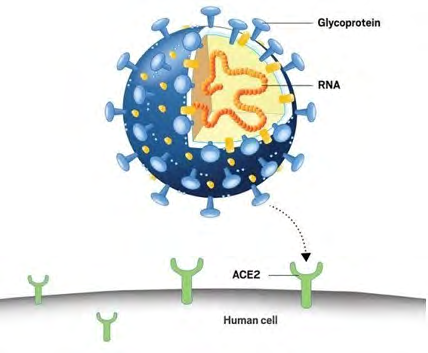
The Histocompatibility is the compatibility or equivalence between cells, tissues and organs. To know a little better about histocompatibility, it is necessary to understand why there are these differences in genes between human beings. This group of genes is called the Major Histocompatibility Complex (MHC). This group of genes is common to all vertebrates and has an important role in the immune system and in determining the biological identity of able to isolate a new coronavirus (CoV) in Wuhan patients, never before reported in humans. WHO Coronavirus disease (COVID-2019) R&D, 2020 Chan, Kok, Zhu, Chu, et al. Thus, on February 11, 2020, the Director General of the World Health Organization (WHO), named the disease caused by the new COVID-19 coronavirus, an acronym for “Coronavirus disease 2019” (Cascella; Rajnik; Cuomo; Dulebohn, et al. 2020) Elshabrawy, 2020; Guo; Cao; Hong; Tan, et al. 2020). Α and β-CoV are capable of infecting mammals, including humans, while γ and δ-CoV, tend to infect birds Figure 1.
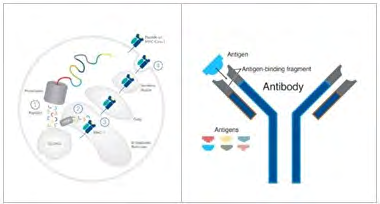
each one. MHC encodes a group of antigens or proteins found on the surface of cells. This complex identifies and prevents a foreign body from entering or spreading into the body. This usually happens in coordination with the immune system that triggers an immediate response against these foreign bodies. In humans, this complex is called Human Leukocyte Antigen (HLA - Human Lukocyte Antigen) Figure 2.
Understanding HLA
The immune system has the function of identifying and reacting to foreign organisms. This process is based on the identification of antigens, the “biological mark” of each cell. When the organism recognizes a foreign antigen, it triggers a response with the aim of destroying it. This detected foreign body can be either a bacterium or virus, or a transplanted tissue, organ or marrow. Thus, HLA is responsible for histocompatibility [6, 7, 8, 9, 10].
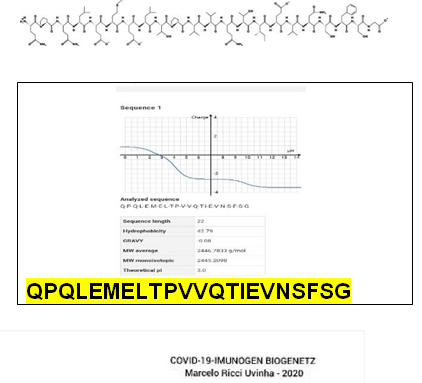
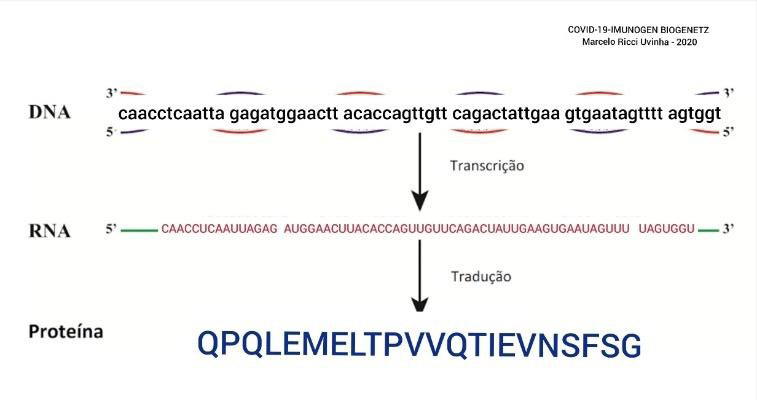
It is important to know that HLA is inherited, part of the mother and part of the father. The HLA identity is composed of several genes grouped in the same region on chromosome 6. Each gene has a very large diversity of alleles. It is known that more than 11 thousand alleles have already been identified worldwide. Therefore, it is very rare that two individuals have the same group of genes. The great complexity of transplants is to find this compatibility between donor and recipient. And yet, even with the use of immunosuppressive drugs, which help to adapt the immune system against the attack on this foreign body, organ rejection can happen Figures 3-5 & Table 1.
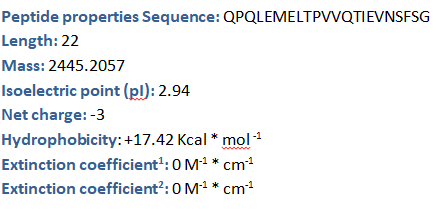
| Job Title |
|---|
| COVID-19-IMUNOGEN Sars-coV-2 Vacina 2020 Marcelo Ricci Uvinha – Brasil |
| RID |
| WWNGG4CJ01R |
| Program |
| BLASTP |
| Database |
| nr |
| Query ID |
| lcl|Query_68966 |
| Molecule type |
| amino acid |
| Query Length |
| 22 |
Table 1: ORF1ab polyprotein [Severe acute respiratory
Plotting Geolocations
Only about 100 of the large number of genomes analyzed were wildtype, mostly of Chinese origin. Still, the mutant virus genomes came from all over, being considered in almost In addition, common mutations were observed in Algerian and European stresses, as in European and Dutch genomes, which showed ten periodic mutations. African and Australian genomes shared mutations in four positions, and two positions by Asian genomes.
The most significant variability was seen in Australia, New Zealand, and the U.S. Important characteristics for the effectiveness of the immunogen, without causing damage to the organism: When a molecule is designated as foreign, it contains epitopes that are not found in the antigens themselves. In the case of an autoimmune disorder, reactions initiated against an antigen may injure tissues, resulting in tissue release and changes. Autoimmune disease is characterized by an attack on the immune system, it loses the ability to recognize what is original and what is not, leading to the production of antibodies against healthy cells, organs and tissues, attacking and destroying them, when your role should be protection.
Conclusion
(COVID-19-IMUNOGEN) After a thorough analysis of the peptide sequence, using Bioinformatics tools and methodology prepared within the viral protein structure, it was possible to determine an affinity of the peptide to generate a rapid and adequate immune response for the production of a vaccine with great specificity to Covid-19.
The characteristic of this work is to offer an immunogen with a short sequential structure, but with excellent antigenic affinity to create an adequate immune response and where the virus does not allow genomic change. In this way, the concept of causing an unsatisfactory immune response or with a result for triggering autoimmunity, is diminished and presents more security for a mass immunization program. Thus, the next step in this work is to continue the protocol, customizing the peptide synthesis and starting the assay and tests, “in vitro” and “in vivo”.
References
-
China CDC Primers and probes for detection 2019-nCoV (24 January 2020)
-
Corman V, Landt O, Koopmans M, Zambon M (2020) Diagnostic detection of Wuhan coronavirus 2019 by real-time RT-PCR - Charité, Berlin Germany.
-
(2020) Detection of 2019 novel coronavirus (2019- nCoV) in suspected human cases by RT-PCR - Hong Kong University.
-
(2020) PCR and sequencing protocol for 2019- nCoV - Department of Medical Sciences, Ministry of Public Health, Thailand.
-
PCR and sequencing protocols for 2019- nCoV- National Institute of Infectious Diseases Japan.
-
National Center for Biotechnology Information - U.S. National Library of Medicine.
-
Liji Thomas is an OB-GYN, from the Government Medical College, University of Calicut, Kerala
-
Infectious diseases, Chan Zuckerberg Biohub, 499 Illinois st., San Francisco, CA 94158, USA 19-NOV-2020
-
NCBI - National Center for Biotechnology
-
SARS-CoV-2/human/USA/CA-CZB- 5670/2020 isolate RR089i_00212collected by UCSF Clinical Microbiology Laboratory collection date2020-07-28geographic locationUSA: CA, Marin County hostHomo sapienshost disease COVID- 19 isolation sourceNasopharyngeal/ oropharyngeal swablatitude and longitude38.0234 N 122.6544252 W.
- Origin, Evolution, and Functional Impact of Short Insertion- Deletion Variants in Human Genomes: A Review
- Harnessing Molecular Glues for Next-Generation Vaccine, Cancer and Cardiovascular Disease Drug Development: A Comprehensive Review
- Lateral Cervical Epidermal Inclusion Cyst in a Paediatric Patient: A Rare Case Report
- Malarial Plasmodium Falciparum with Hepatitis B and C Virus Infections among Blood Donors in Ife Central Local Government Area, Ile Ife, Osun State, Nigeria
- Withanolides and Withaferin A- What’s next in Ashwagandha Research
- Designing of Dual Pulse Photoacoustic Tomography for Imaging of Drug-Response and Tumor Growth