
Environmentally Friendly Approaches for Extraction from Plant Material through the View of the Ultrasound-Assisted Enzymatic Extraction Operating Conditions
Increasing the shelf life of foods is one of the most important trends in food biotechnology. Extracts of aromatic plants have natural antioxidants and antimicrobial properties that can extend the shelf life of food. This study aims to improve the extraction efficiency of extracts from rosemary and a mixture of black cumin and oregano. It was found that the highest value of antioxidant activity (96.78%) was when extracts were obtained from rosemary using ultrasound-assisted enzymatic extraction according to the following parameters: (45℃-30min the dose of the mixture of enzymes cellulase + pectinase: 0.5 g in the ratio 1:1, processing mode 22.5kHz, power 400watts), also it was observed that the highest content of total phenols (148.56mg GAE/gram) and flavonoids (37.45mg QE/gram), was when extracts were obtained from rosemary, a mixture of herbs (black cumin and oregano), respectively according to the following parameters: (55℃-30min – the dose of the mixture of enzymes cellulase + pectinase: 0.5 g in the ratio 1:1, processing mode 22.5kHz, power 400watts). The results obtained confirm the high potential of using this technology in the food industry.
Introduction
Consumer demand for low-processed and healthier food products has led to the search for an alternative to replace or reduce synthetic food additives with natural ones. Aromatic plants have been researched for being natural food preservatives and antioxidants to extend the shelf life of foods [1]. They contribute to food safety due to their antioxidant and anti-biofilm properties [2]. These potential food safety features and the growing demand for natural food additives have generated interest in their use, especially in traditional meat, dairy and bakery products, which will provide them with added value and increase competitiveness in the market [3].
Aromatic plants are well known for their antioxidant and antimicrobial properties preventing food degradation and alteration as they are rich in phenolic commonly referred to as polyphenols, and flavonoid substances, which are natural components of plants and herbs [4, 5, 6, 7].
Antioxidants were originally defined as “substrates, in small amounts, capable of preventing or significantly slowing down the oxidation of easily oxidisable nutrients such as fats” [8]. Consequently, there is growing interest in expanding the range of plant antioxidants that can be used as food ingredients to prevent food oxidation [9].
Polyphenols are an extensive class of chemical compounds containing several phenolic groups in their molecules. These are secondary metabolites of plants or organic compounds synthesized by them. They are called secondary because they do not participate in the growth, development or reproduction of a plant. Their role is to protect against ultraviolet radiation and the influence of pathogens [10].
The biological role of polyphenols is related to their ability interact with activated oxygen metabolites, converting them into inactive forms. Thus, polyphenols have antioxidant properties and are considered as promising non - toxic drugs [11].
Flavonoids have pronounced anti–allergic, anti– carcinogenic, anti–inflammatory and antiviral properties. Flavonoids, unlike phenolic antioxidants (tocopherols), in addition to direct anti-radical action, are able to bind metal ions with variable valence (transition metals), forming stable chelate complexes. It is known that the formation of such complexes of flavonoids with transition metal ions leads to the inhibition of free radical processes. Due to their chelating properties, flavonoids entering the body with food are able to influence the ionic (metal) balance and oxidative status of cells and tissues [12].
Many studies have focused on optimizing extraction parameters such as solvent type, solvent-to-solid ratio, particle size, extraction temperature, and extraction time in order to increase the extraction yield [13]. However, the main disadvantages of these methods are: high consumption of organic solvents or water, the cost of energy required separating the solute; extraction of unwanted components, possible degradation of thermo sensitive compounds such as carotenoids.
New efficient extraction processes need to be identified and developed to extract the natural substances present in plants. Recently, ultrasonic extraction [14] microwave extraction [15], supercritical fluid extraction [16], enzyme assisted extraction, and high pressure extraction have been successfully used in many studies to extract natural products.
Enzyme assisted extraction is considered a promising, greener alternative to traditional extraction methods. Therefore, extraction with enzymes allows the release of phenolic compounds, making them more easily extractable, increasing their extraction rate, selectivity, and yield.
Today, to improve the yield of extracts, the combined use of enzymes with ultrasonic treatment, microwave extraction and supercritical fluid is used. The ultrasonic wave can improve the ability of the enzyme, at the same time, it promotes uniform distribution of the enzyme [17].
The aromatic plants that have been used in this study are rosemary, black cumin, and oregano. They are widely used as a condiment, and their taste and smell are highly valued throughout the world in cooking. In addition, these plant have antimicrobial and antioxidant properties. The antimicrobial properties of these aromatic plants can be successfully used to prevent spoilage processes and the growth of pathogenic bacteria in dairy products, including cheeses [18].
Rosemary is in high demand in the food industry due to its excellent sensory properties [19]. It is a widely used flavoring food ingredient and is known as a traditional medicinal plant for its beneficial properties such as antibacterial, anti-alcohol and anti-rheumatic. It also contains the highest concentration of phenolic compounds therefore it is considered a natural source of phenolic compounds [20].
Black cumin seeds contain non-volatile essential oils, alkaloids, proteins and saponins. The highest biological activity was attributed to the main component of the essential oil - thymoquinone (24.5–57%), as well as p-cymene (10.7-40.3%), α-thuene (1.9-8.2%), carvacrol (2.2-4.5%),
4-terpineol (1.9-4.5%).
Some studies have shown that oregano has the highest total antioxidant capacity and has the highest phenol content compared to some other herbs such as thyme, sage, rosemary, mint, and sweet basil [21]. Table 1 shows the content of antioxidant activity, total phenolic, and flavonoid content in rosemary, cumin, and oregano extracts depending on different references.
| Antioxidant Activity (%) | Total Phenolic Content (mg GAE/g) | Total Flavonoid Content (mg QE/g) | |
|---|---|---|---|
| Rosemary | 81.29 | 137.3 | 11.89 |
| Cumin | 52.47 | 27.11 | 2.82 |
| Oregano | 85 | 67.8 | 31.6 |
Table 1: The content of antioxidant activity, total phenolic, and flavonoid content in rosemary, cumin, and oregano extracts depe
Thus, the main objective of this research is to study the content of antioxidants, polyphenols, and flavonoids in various aromatic plants and to determine the optimal extraction conditions for obtaining and further using the extract in the food industry.
Materials and Methods
Materials
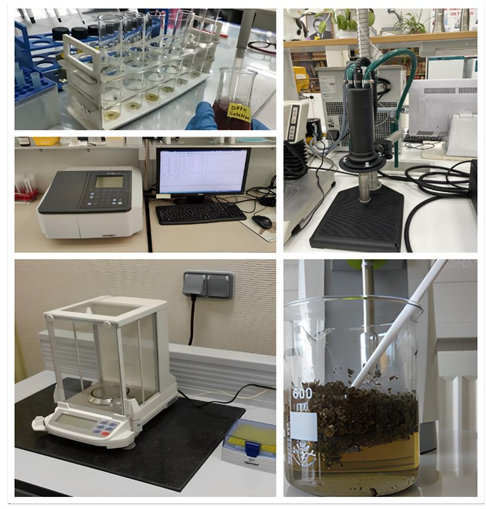
Dried grinded leaves (rosemary–oregano), dried black cumin seeds were obtained from a local market in Russia. The total phenolic content and the radical scavenging activity of the plant extracts were determined by Folin-Ciocalteu (2N) reagent (Sigma-Aldrich, China), and scavenging of DPPH (2,2-diphenyl-1- picrylhydrazyl) (Sigma-Aldrich, China) , respectively. To determine the total flavonoid content was used quercetin (Sigma-Aldrich, China), other chemicals that have been used for experiments: Gallic acid (Sigma- Aldrich, China), Na2CO3 solution (20%), AlCL3 solution (10%), NaOH (1N), all these chemicals were purchased from (Microbiobrom, Russia). Enzymes that have been used: cellulase (5000 U g-1), pectinase (1000 U g-1) were purchased from (Sigma-Aldrich, China). The equipment that was used in this work is shown in (Figure 1).
Extraction Procedures
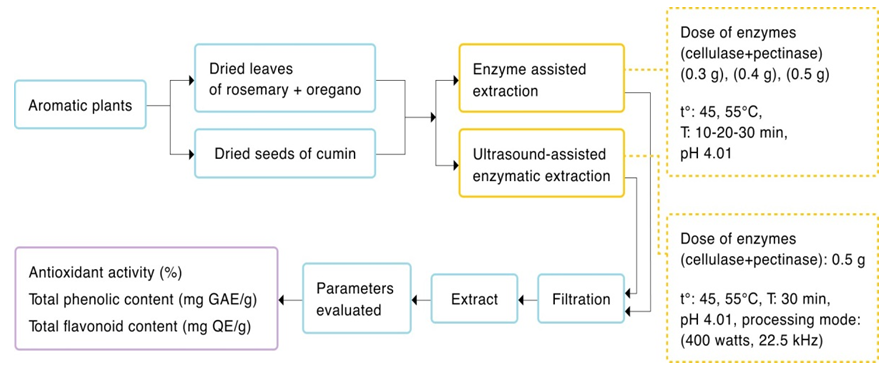
Enzyme-assisted extraction: Aqueous samples of plant extracts were prepared from rosemary, as well as from a composition of herbs (cumin + oregano) in a ratio (1:1) in a dry form, where 10 g of these herbs were placed in an Erlenmeyer flask with a stopper, then 100 cm3 of a buffer solution (pH 4.01) was added to adjust the pH, and a given amount from a mixture of enzymes (cellulase and pectinase) in different doses (0.3-0.4-0.5g) for 10g of extracts ) in a ratio (1:1), enzymatic hydrolysis was carried out at a constant temperature (50℃) for an hour.
After enzymatic hydrolysis, the samples were filtered. After filtration through gauze, the filtrate (buffer solution) was removed, and the filter residue was collected for the next experiment. Distilled water (200cm3) was added to the fermented plant mass, then the samples were placed in a water bath (at 45–55℃) and kept for 10 to 30minutes. Samples were filtered and cooled to (20°C), antioxidant activity, total phenolic content, and total flavonoid content were determined. After determining the optimal extraction conditions (temperature, extraction time, enzyme dose), these parameters were used for enzymatic ultrasonic extraction. Ultrasound-assisted enzymatic extraction: Obtaining extracts using this method consists of 2 main steps: enzymatic hydrolysis and sonication. First, enzymatic hydrolysis was carried out, where 10 g of plant herbs were placed in an Erlenmeyer flask with a stopper, then 100 ml of a buffer solution (pH 4.01) were successively added to adjust the pH, and a given amount from a mixture of enzymes (cellulase and pectinase: 0.5g) in the ratio (1:1), enzymatic hydrolysis was carried out at a constant temperature (50℃) for an hour. The samples were then filtered, the filtrate (buffer solution) was removed, and the filter residue was collected for the next experiment. Then the fermented plant mass was placed in a glass container and poured with distilled water (500 cm3, water temperature 45–55℃), extraction was carried out using an ultrasonic generator (И-10). Processing parameters: 22.5 kHz, with a power of 400 watts, sonication time (30 min), the amount of enzymes (0.5 g for 10 g of extracts), antioxidant activity, total phenolic content, and total flavonoid content were determined in the prepared samples.
Determination of Antioxidant Activity (The DPPH radical scavenging activity)
The DPPH radical scavenging activity was evaluated according to the slightly modified procedure described by [25] 1ml of diluted extract (1ml of leaf extract was taken, and diluted to 10 ml with distilled water) was added to 4 ml of a DPPH solution (0,1mM in ethanol).
The reaction mixture was then shaken vigorously and left to stand in the dark at room temperature for 30 min. The absorbance was measured at 517nm. The ability to scavenge DPPH radicals was calculated by the following equation:
DPPH radical scavenging activity (%) = [(Abs control-Abs sample)] / (Abs control)] x 100 Where, Abs control is the absorbance of DPPH radical+ solvent; Abs sample is the absorbance of DPPH radical + sample extract.
Determination of Total Phenolic Content (Folin- Ciocalteu Assay)
The total phenolic content was determined using the Folin-Ciocalteu reagent [26]. To 100µl of the diluted extract was added 1.58cm3 of distilled water and 100µl of the Folin- Ciocalteu reagent, left for 8 min at room temperature. Then 300µl Na2CO3 (20%) was added. Samples were incubated in a water bath for 40min at 40°C. Absorbance was measured at (765nm), Gallic acid dilutions (0-450mg/L) were used as standards for calibration, and the results were expressed as mg of Gallic acid equivalents per g of plant extract. The principle of Folin–Ciocalteu method is shown in (Figure 2).
![Figure 2: Principle of Folin–Ciocalteu method [40].](/fulltextimages/12091/fig_2.png)
Determination of Total Flavonoid Content
The total flavonoid content was determined by aluminium chloride colorimetric assay adapted from Zhishen with some modification [27]. 1ml of each diluted sample or quercetin is mixed with 3ml of distilled water. After stirring,
0.3ml sodium nitrite solution (5%) is added and the mixture is stirred well. After 5minutes, 0.2ml of aluminum chloride solution (10%) is added, and then after 5minutes, 0.5ml of sodium hydroxide (1N) is added to the mixture. The samples were mixed and incubated for 40min at room temperature in a dark place. The method is based on the color change of aromatic ring bearing a catechol group with Al (III) which is an orange complex and will turn pink-red when NaOH added. Then the absorbance was measured at 415nm, quercetin dilutions (0-6µg/mL) were used as standards for calibration. The total flavonoid content was expressed as mg quercetin equivalents (QE) per g of plant extract (Figure 3).
![Figure 3: Formation of flavonoid complex with AlCl3 [40].](/fulltextimages/12091/fig_3.png)
In this study, all experiments were performed in triplicate for each sample, and all the results were expressed as mean ± SD. The results were statistically evaluated using ANOVA, at the level of significance (P < 0.05) and the Least Squared Difference (LSD) was calculated.
The Effect of The Dose of Enzymes on The Properties of The Extract
After preparing aqueous plant extracts of rosemary at (45℃, 10min) with different doses of enzymes, the antioxidant activity, total phenolic, and flavonoid content were determined for these samples. Experimental results are shown in (Table 2).
| Sample | Enzyme dose (g) | Antioxidant activity (%) | Total phenolic content (mg GAE/g) | Total flavonoid content (mg QE/g) | |
|---|---|---|---|---|---|
| 1 (rosemary) | 0.3 | 79.79 ± 0.12c | 59.42 ± 0.23c | 6.43 ± 0.1c | |
| 2 (rosemary) | 0.4 | 85.75 ± 0.22b | 79.22 ± 0.33b | 11.56 ± 0.14b | |
| 3 (rosemay) | 0.5 | 89.63 ± 0.15a | 82.35 ± 0.4a | 14.68± 0.2a |
Table 2: Effect of the dose of enzymes on antioxidant activity, total phenolic, and flavonoid content for rosemary extracts (45℃,
All values are mean ± standard deviation of three replicates. a-c Means within a column with different letters are significantly different.
The results show that with an increase in the dose of the enzyme from 0.3g to 0.5g per 10g of extract, the antioxidant activity, total content of phenols, and flavonoids of the extracts increase by 9.84%, 22.93mg GAE/g, and 8.25mg QE/g, respectively. The values of these indicators when extracts are obtained by adding 0.3g of enzymes are significantly lower than the values, when extracts are obtained by adding 0.5 g of enzymes (p < 0.05). With an increase in the dose of the enzyme, the reaction rate will also increase since a larger number of enzyme molecules will collide with the substrate molecule [29].
The best values of antioxidant activity, total content of phenols, and flavonoids were obtained by adding a combination of cellulase and pectinase enzymes at a dosage of 0.5g. This is consistent with what [30] observed when studying the effect of enzymatic ultrasonic extraction on the extract yield from Keji Beling leaves (Strobilanthes crispus). In this study, an increase in enzyme concentration up to 50mg/g, led to an increase in the extract yield and antioxidant activity. It was also found that an increase in enzyme concentration led to an increase in the total content of polyphenols, reaching 74.45mg GAE/g at an enzyme concentration of 2%v/w in the experiment on black tea leaf extraction conducted by [31]. Thus, based on the literature and research, an enzyme dose of 0.5g was chosen for obtaining extracts using enzymes, as using too much enzyme will become ineffective for conducting the enzymatic reaction since, at a certain concentration, the enzyme becomes saturated, and increasing the concentration will have no effect on the rate of product formation, as the substrate is not a limiting factor [30].
The Effect of Extraction Conditions Using Enzymes on The Antioxidant Activity of Extracts
After determining the optimal dose of the enzyme, rosemary extracts were prepared, where 0.5g of enzymes (cellulase + pectinase) were added to 10g of rosemary in a ratio (1:1) and studied at (45–55 ℃), extraction time (10–30minutes). The results of measuring the antioxidant activity of these extracts are shown in (Figure 5).
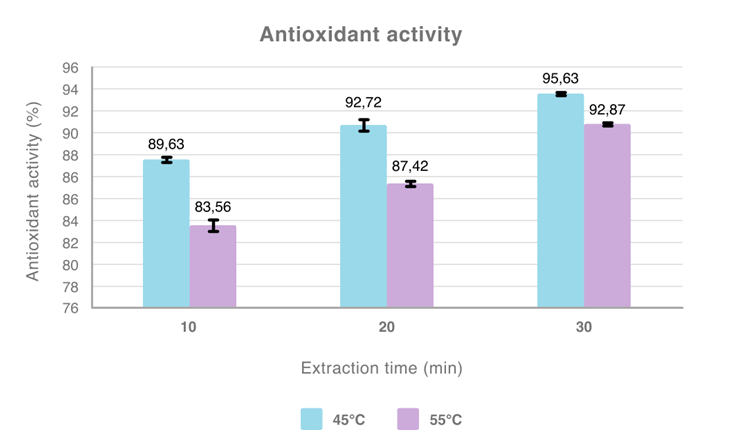
The results shown in Figure 5 demonstrate that the antioxidant activity of the extracts increases with the increase in extraction time, as the values of antioxidant activity are significantly different when the extraction time is increased from 10 to 30 minutes (p < 0.05). Hence, a prolonged exposure of the sample in the solvent allowed sufficient time for the desired compounds to migrate into the solvent.
This result is in agreement with the work of who observed the same trend when studying the effect of extraction time on the antioxidant activity of fresh Bulgarian Melissa officinalis L, where the best value of antioxidant activity was achieved at 30min [32], moreover, it was found that the antioxidant activity increases at a temperature of 45℃ compared to 55 ℃ when extracts with the addition of enzymes are obtained; this could be due to the decomposition of the antioxidant compounds associated with the phenolic compounds. Therefore, this temperature (45℃) was chosen for obtaining extracts using enzymatic ultrasonic extraction to determine their antioxidant activity.
Total Phenolic Content in Extracts, Obtained Using Enzyme-Assisted Extraction
After determining the optimal dose of the enzyme, rosemary extracts were prepared, where 0.5 g of enzymes (cellulase + pectinase) were added to 10g of rosemary in a ratio (1:1) and studied at (45–55 ℃), extraction time (10–30 minutes). The results of measuring the total phenolic content of these extracts are shown in (Figure 6).
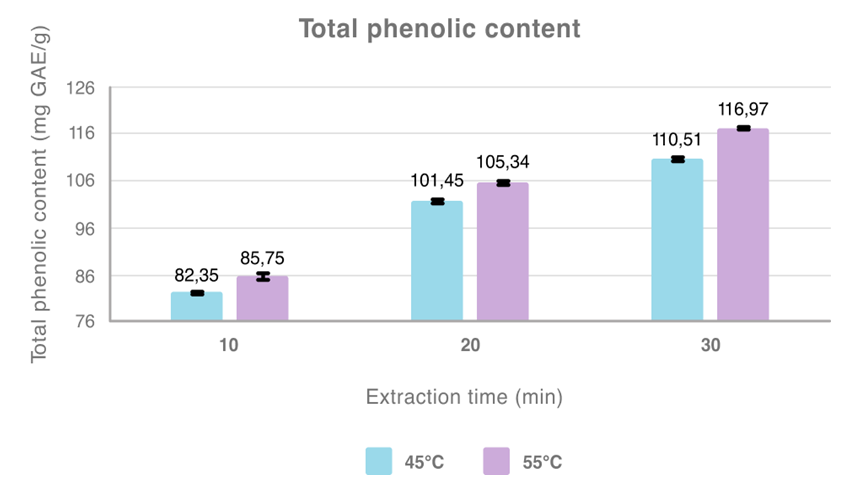
The results presented in Figure 6 show that the total phenolic content of the extracts increases with increasing extraction time from 10 to 30 minutes. This is consistent with what was previously obtained, moreover, it was found that the total phenolic content increases at a temperature of 55℃ compared to a temperature of 45℃ when obtaining extracts using enzymes, where the values of the total phenolic content ranged from 85,75 to 116,97 (mg GAE/g) at a temperature of 55℃ , which is higher than the values obtained at a temperature of 45℃. The total phenolic content increases with an increase in the extraction temperature due to a decrease in the viscosity of the solvent; as well as enhancement of mass transfer and solvent penetration into the plant matrix [33].
Compared to previous studies on the influence of temperature on polyphenolic compounds from different plants during extraction, it was observed that an increase in temperature leads to a decrease in the value of antioxidant activity, and this explains that the highest value of antioxidant activity was at 45℃, in contrast to the total phenolic content, whose value increased at 55℃ compared to 45℃ [34]. This result is in agreement with the recent work by [35] who observed the same effect when extracting phenolic compounds from banana peel extracts using enzyme-assisted extraction, where it was observed that the suitable temperature obtained for maximum extractability of phenolic compounds was 55°C. Therefore, this temperature (55°C) was chosen for obtaining extracts using enzymatic ultrasonic extraction to determine the total phenolic content of the other extracts.
Total Flavonoid Content in Extracts, Obtained Using Enzyme-Assisted Extraction
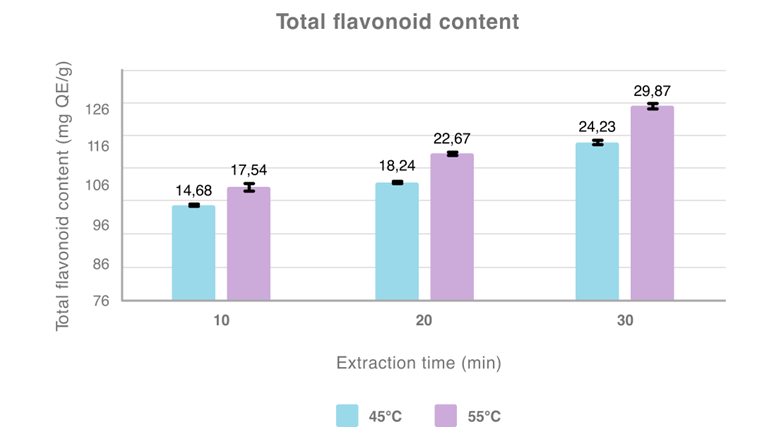
After determining the antioxidant activity, and the total phenolic content of rosemary extracts prepared by adding the optimal enzyme dose (0.5g) (cellulase + pectinase in ratio (1:1)) at 45-55℃, extraction time (10-30 minutes) The total flavonoid content was also determined for these samples. The results of measuring the total flavonoid content of these extracts are shown in (Figure 7).
The results in Figure 7 show that the total flavonoid content of the extracts increases with increasing extraction time. This is consistent with what has been achieved previously; moreover, it has been found that the total flavonoid content is increased at a temperature of 55℃ compared to 45℃ when extracts are obtained using enzymes. The values of total flavonoid content when extracts are obtained at a temperature of 55 ℃ are significantly higher than the values when extracts are obtained at a temperature of 45℃ (p < 0.05).
According to previous studies, the total content of flavonoids increases with increasing temperature because high temperatures cause a decrease in viscosity and surface tension, which ensures better penetration of the solvent into the sample matrix. In addition, it increases molecular motion by accelerating the mass transfer of intracellular bioactive compounds from the plant matrix [36] This is consistent with what was obtained by who found that the optimal temperature for enzyme-assisted extraction and purification of flavonoids from Pinus koraiensis is 55℃ [37]. Therefore, this temperature of 55°C was chosen for obtaining extracts using enzymatic ultrasonic extraction to determine the total flavonoid content in the extracts.
Antioxidant Activity, Total Phenolic, and Flavonoid Content in Extracts, Obtained Using Enzymes, Enzymatic Ultrasonic Extraction
The optimal extraction conditions (temperature, extraction time, and enzyme dosage) were determined for obtaining extracts using enzymes. Subsequently, further research was focused on obtaining extracts from rosemary and a mixture of herbs (cumin and oregano) using enzymatic ultrasonic extraction with a processing mode of 22.5 kHz and a power of 400watts. The antioxidant activity, total phenolic, and flavonoid content of these extracts are presented in Table 3. Extracts from the mixture of herbs (cumin and oregano) were prepared under the optimal extraction conditions determined earlier: extraction time 30minutes, extraction temperature 45°C (for determining the antioxidant activity), 55°C (for determining total phenolic, and flavonoid content), enzyme dosage 0.5 g (cellulase + pectinase). The antioxidant activity, total phenolic and flavonoid content of these extracts obtained using enzymes and enzymatic ultrasonic extraction are shown in (Table 3).
| Type of herbal extract | Extract properties | Extraction method | |
|---|---|---|---|
| Enzyme- assisted extraction | Enzymatic ultrasonic extraction | ||
| Rosemary | Antioxidant activity (%) | 95.63 ± 0.35b | 96.78 ± 0.18a |
| Total phenolic content | 116.97 ± 0.19b | 148.56 ± 0.23a | |
| (mg GAE/g) | |||
| Cumin + Oregano | Antioxidant activity | 89.21 ± 0.29b | 94.25 ± 0.30a |
| (%) | |||
| Total phenolic content | 91.31 ± 0.37b | 134.34 ± 0.44a | |
| (mg GAE/g) | |||
| Total flavonoid content | 31.68 ± 0.25b | 37.45 ± 0.20a | |
| (mg QE/g) |
Table 3: Antioxidant activity, total phenolic, and flavonoid content of extracts (rosemary, cumin + oregano using enzymes, and en
The results presented in Table 3 show that antioxidant activity increases when extracts are obtained using enzymatic ultrasonic extraction compared to when these extracts are obtained using only enzymes. According to research, ultrasound treatment gives the highest yield of certain polyphenols that act as antioxidants [38]. The best antioxidant activity value (96.78%) was observed when extracts from rosemary were obtained using ultrasonic enzymatic extraction under the following conditions: 45°C for 30 min); processing mode: 22.5 kHz; power: 400watts.
This corresponds to the results obtained by who studied the enzymatic ultrasonic extraction method and its effect on the extract yield from Keji Beling leaves (Strobilanthes crispus), where it was found that the introduction of the UAE and EAE methods is best suited for the degradation of the plant cell wall, which also increases the extract yield and antioxidant activity of the extracts [39]. Compared to other studies, when optimizing the ultrasonic extraction of phenolic compounds, antioxidants, and rosmarinic acid from perilla leaves, it was established that the optimal conditions for ultrasonic extraction are: temperature (54°C), time (55min), processing mode: (400watts, 50kHz). At these conditions, the maximum values of antioxidant activity were 73.35% [40]. In another study, when investigating the effect of ultrasound power and time on the efficiency of extraction and the content of carnosic and rosmarinic acids (polyphenolic compounds) in extracts from rosemary, it was found that increasing the ultrasound power from 150 to 250watts and the extraction time from 10 to 30 minutes can increase the yield of compounds (carnosic and rosmarinic acids) [41].
Also, from (Table 3), it can be seen that the total content of phenols in the extracts increases when these extracts are obtained using enzymes such as cellulase, pectinase, as these enzymes are proteins that participate in the breakdown of compounds and can improve the extraction of polyphenols from plant materials [42]. The highest value of the total phenolic content was observed when extracts were obtained using enzymatic ultrasonic extraction, where there is a significant difference between the values of the total phenolic content when obtaining extracts using enzymatic ultrasonic extraction compared to obtaining these extracts using only enzymes, where these values increased by (31.59mg GAE/g), (43.03mg GAE/g) when obtaining extracts from rosemary, a mixture of herbs (cumin and oregano) using enzymatic ultrasonic extraction, respectively. Compared to some studies, it was noted that the optimal conditions for ultrasonic extraction were found at a frequency of 40 kHz, a temperature of 40.8°C, and a time of 21.6minutes, which allowed for the highest content of total phenolic compounds (130.2mg GAE) to be extracted from date palm [43]. Thus, the following extraction conditions were chosen for further determination of the total content of flavonoids in extracts obtained using enzymatic ultrasonic extraction: processing mode (400watts, 22.5kHz), time (30min), temperature (55℃), enzyme dose (0.5g).
Regarding the total flavonoid content, it can be seen that the total content of flavonoids in extracts increases when these extracts are obtained using enzymes. Since the extraction processes using enzymes are based on the ability of enzymes to break down the cell wall and hydrolyze the structural components of plant tissues, thereby promoting the release of bioactive compounds [44, 45] since cellulose is a key structural component of the cell wall, it can be expected that enzymatic pretreatment with cellulases will have a favorable effect on the extraction of flavonoids from plant material [46]. This has indeed been observed in several studies on various materials, such as grape seeds [47], plant leaves [48], sawdust [49] and fruit residues [50].
The best value of the total flavonoid content was observed when extracts were obtained using enzymatic ultrasonic extraction. This is consistent with previous studies where ultrasound treatment gave the highest yield of some polyphenols and flavonoids, which act as antioxidants [51]. In recent studies, it has been found that the optimal temperature for enzymatic ultrasonic extraction of the total flavonoid content from Acanthopanax senticosus is (53.70℃), which is in line with the temperature used in this study (55℃) [52]. Additionally, compared to some studies, it was found that the maximum flavonoid content was observed when extracts were obtained from Syzygium cumini (cumin) seeds using ultrasound extraction according to the following parameters: time (12min), ultrasound power (125 watts), temperature (35°C) [53]. In another study, it was found that the optimal conditions for ultrasound-assisted extraction of total flavonoids from Jujube (Caenorhabditis elegans) sour fruit seeds were achieved at a power of 404 watts and a temperature of 60°C for 60.03minutes [54, 55]. Thus, based on the previous results, the following extraction conditions were chosen for further experiments when obtaining extracts using enzymatic ultrasonic extraction: processing mode (400watts, 22.5kHz), time (30 min), temperature (55℃), enzyme dose (0.5g).
Conclusions
Based on the results of the study, it can be concluded that the addition of enzymes in the preparation of extracts had a positive effect on antioxidant activity, the total phenolic, and flavonoid content, since the highest values of these indicators were observed when extracts were obtained using ultrasound-assisted enzymatic extraction.
It was found that the highest value of antioxidant activity (96.78%) was when extracts were obtained from rosemary using ultrasound-assisted enzymatic extraction according to the following parameters: (45℃-30min - the dose of the mixture of enzymes (cellulase + pectinase: 0.5g for 10g of extracts in the ratio 1:1, processing mode 22.5kHz, power 400watts), also it was observed that the highest content of total phenols (148.56mg GAE/g) and flavonoids ( 37.45mg QE /g), was when extracts were obtained from rosemary, a mixture of herbs (black cumin and oregano), respectively according to the following parameters: (55℃ - 30min - the dose of the mixture of enzymes cellulase + pectinase: 0.5g in the ratio 1:1, processing mode 22.5 kHz, power 400watts).
In the case of plant leaves, enzymatic extraction combined with ultrasonic extraction resulted in better quality extracts compared to extracts obtained with enzymes alone. This advantage can offset the cost to some extent when scaling up is the goal, and this greener approach can be seen as a useful addition to traditional extraction for high value-added extracts.
The obtained extracts of rosemary, a mixture of herbs, black cumin, and oregano are an antioxidant-rich material that can be useful as a natural alternative to synthetic antioxidants in food and health food products and can be used in the production of a variety of functional products.
Further studies are ongoing and will be aimed at studying the formation of the sensory characteristics of the cheese mass, and determining its storage capacity after adding these extracts.
Declarations of Competing Interest
The authors declare that they have no known competing financial interests or personal relationships that could have appeared to influence the work reported in this paper.
Data availability
No data was used for the research described in the article.
References
-
Birce MT, Elisaveth S, Lizziane KW, Eugenia B (2022) Value-added effects of using aromatic plants in foods and human therapy. Food Sci Technol 42: 1-20.
-
Filipcev B (2020) The Effects of Aromatic Plants and their Extracts in Food Products. Feed additives London 45: 279-294.
-
Laranjo M, Fernandez A, Potes M, Agulheiro S, Elias M (2017) Use of Essential Oils in Food Reservation 10: 177-188.
-
Baño MJ, Lorente J, Castillo J, Benavente G, Marin MP, et al. (2006) Flavoid Distribution during the Development of Leaves Flowers, Stems and Roots of _Rosmarinus_ _Officinalis_. Postulation of the Biosynthetic Pathway. J Agric Food Chem 52(16): 4987-4992.
-
Ribeiro SR, Andrade M, Melo N, Sanches SA (2017) Use of essential oils in active food packaging: recent advances and future trends. Trends in Food Science & Technology 61: 132-140.
-
Jamshidi KF, Lorigooini Z, Amini KH (2018) Medicinal Plants: Past History and Future Perspective. Journal of Herbmed Pharmacology 7(1): 1-7.
-
Tariq S, Wani S, Rasool W, Shafi K, Bhat MA, et al. (2019) A comprehensive review of the antibacterial antifungal and antiviral potential of essential oils and their chemical constituents against drug- resistant microbialpathogens. Microb Pathog 134: 68-74.
-
Charalampos P, Konstantina L, Olga KM, Panagiotis Z, Vassileia J (2013) Antioxidant Capacity of Selected Plant Extracts and Their Essential Oils. Antioxidants (Basel) 2(1): 11-22.
-
Skowyra M, María PA (2019) Antioxidant properties of extracts from selected plant materials (CaesalpiniaSpinosa, Perillafrutescens, Artemisia annua, and Viola wittrockiana) in vitro and in model food systems. 65: 40-48.
-
Musarra PM, Ginestra G, Smeriglio A, Pennisi R, Sciortino M, et al. (2019) The Antimicrobial and Antiviral Activity of Polyphenols from Almond (_Prunus Dulcis_ L.) Skin. Nutrients 11(10): 2355.
-
Mutha RE, Tatiya AU, Surana SJ (2021) Flavonoids as natural phenolic compounds and their role in therapeutics an overview. utur J Pharm Sci 7(1): 25-38.
-
Wei F, Zhiyou H (2018) Isolation and Structure Identification of Flavonoids. Biosynthesis to Human Health 19-42.
-
Cheng X, Liangwu B, Zhendong Z, Yuxiang C (2015) Advances in Enzyme Assisted Extraction of Natural products. Chinese chemical letters 28: 45-50.
-
Albu S, Joyce E, Paniwnyk L, Lorimer J, Mason T (2004) Potential for the use of ultrasound in the extraction of antioxidants from _Rosmarinus officinalis_ for the food and pharmaceutical industry. Ultrason Sonochem 11(3-4): 261-265.
-
Yuan Y, Macquarrie D (2017) Micro wave assisted extraction of sulfated polysaccharides (fucoidan) from Ascophyllum nodosum and its antioxidant activity. Carbohydr Polym 129: 101-107.
-
Patrícia F, Mara E, Daisy N, João E, Marcia O (2003) Functional Properties of Spice Extracts Obtained via Supercritical Fluid Extraction. J Agric Food Chem 51(9): 2520-2525.
-
Rozaria N, Lydia PT, Theopisti L, Diomi M, Dimitris K, et al. (2022) Conventional and Enzyme Assisted Extraction of Rosemary Leaves (_Rosmarinus officinalis_L.) Toward a Greener Approach to High Added-Value Extracts 11(8): 65-79.
-
Bhattacharyya S, Chakraborty C, Moitra S, Bandyopadhyay K (2018) Potential application of milk and milk products as carrier for herbs and spices: A Review. Int J Eng Res Sci Technol 6: 113-124.
-
Christopoulou SD, Androutsopoulou C, Hahalis P, Kotsalou C, Vantarakis A, et al. (2021) Rosemary Extract and Essential Oil as Drink Ingredients An Evaluation of Their Chemical Composition, Genotoxicity, Antimicrobial, Antiviral, and Antioxidant Properties. Foods 10(12): 3143.
-
Cedeno P, Magdalena MT, Maria AM, Maria JJ, Sancho B (2020) Assessment of Rosemary (_Rosmarinus officinalis_ L.) Extract as Antioxidant in Jelly Candies Made with Fructan Fibres and Stevia. Antioxidants 9(12): 1289.
-
Singletary K (2010) Oregano: Overview of the Literature on Health Benefits. Nutrition Today 45: 129-138.
-
Bianchin M, Daiane P, Jacqueline FA, Cristiane M, Rafaelly SP, et al. (2020) Antioxidant Properties of Lyophilized Rosemary and Sage Extracts and its Effect to Prevent Lipid Oxidation in Poultry Pátê. Molecules 25(21): 5160.
-
Shamsiev A, Jongjin P, Ibukunoluwa F, Golden O, Wonyoung L (2021) Optimization of ultrasonic-assisted extraction of polyphenols and antioxidants from cumin (_Cuminum cyminum_ L.). Korean J. Food Preserv 28(4): 510-521.
-
Spiridon I, Colceru S, Anghel N, Teaca C, Bodirlau R, et al. (2011) Antioxidant capacity and total phenolic contents of oregano (_Origanum vulgare_) lavender (_Lavandula angustifolia_) and lemon balm (Melissa officinalis) from Romania. Nat Prod Res 25(17): 1657-1661.
-
Brand WW, Cuvelier ME, Berset C (1995) Use of free radical method to evaluate antioxidant activity. LWT - Food Science and Technology 28(1): 25-30.
-
Pereira VP, Knor FJ, Vellosa JC, Beltrame FL (2017) Determination of phenolic compounds and antioxidant activity of green black and white teas of _Camellia sinensis_ (L.) Kuntze Theaceae Revista Brasileira de Plantas Medicines 16 (3).
-
Zhen L, Zhi J, Jiao X, Li X, Tian y, et al. (2016) Optimization of ultrasound assisted extraction of phenolic compounds antioxidants and rosmarinic acid from perilla leaves using response surface methodology. Food Science and Technology 36(4): 686-693.
-
Shi L, Zhao W, Yang Z, Subbiah V, Suleria HA (2022) Extraction and characterization of phenolic compounds and their potential antioxidant activities. Environ Sci Pollut Res Int 29(54): 81112-81129.
-
Angelina, Mauhibah Y, Abdullah, Rita A, Tania S, et al. (2018) The usage of enzyme in ultrasound-assisted enzymatic extraction method and its effect on yield extract from Keji Beling (_Strobilanthes crispus_.) leaves. E3S Web of Conferences Indonesia.
-
Angelina, Mauhibah Y, Abdullah, Rita A, Tania S, et al. (2018) Flavonoid isolation and identification of mother- in-law’s tongue leaves (_sansevieria trifasciata_) and the inhibitory activities to xanthine oxidase enzyme. E3S Web of Conferences Indonesia.
-
Hai T, Nam N, Anh LT, Vu T, Man P (2016) Enzyme Assisted Extraction of Polyphenols from the Old Tea Leaves. Journal of Nutrition and Health Sciences 3 (4): 404-410.
-
Mihaylova D, Aneta P, Iordanka A (2017) The effect of extraction time on the antioxidant activity of fresh Bulgarian _Melissa officinalis_ L. Journal of Bio Science and Biotechnology 5: 115-118.
-
Wang J, Sun BG, Cao Y, Tian Y, Li XH (2008) Optimization of ultrasound-assisted extraction of phenolic compounds from wheat bran. Food Chemistry 2: 804-810.
-
Antony A, Farid M (2022) Effect of Temperatures on Polyphenols during Extraction. Appl Sci 12(4): 2107.
-
Islam R, Kamal M, Kabir R, Hasan M, Haque AR, et al. (2023) Phenolic Compounds and Antioxidants Activity of Banana Peel Extracts: Testing and Optimization of Enzyme-Assisted Conditions. Measurement: Food 10: 100085.
-
Chaves JO, Mariana C, Laise C, Daniel L, Paulo C, et al. (2020) Extraction of Flavonoids From Natural Sources Using Modern Techniques. Frontiers in chemistry 8: 11- 25.
-
Zhang M, Ma W, Wang C, Yang X, Lou Y, et al. (2021) Optimization of Enzyme- Assisted Extraction and Purification of Flavonoids from _Pinus koraiensis_ Nut Coated Film and Antioxidant Activity Evaluation. Molecules 26(7): 1950.
-
Rassem HH, Nour AH, Yunus RM (2016) Techniques for Extraction of Essential Oils from Plants: A Review. Australian Journal of Basic and Applied Sciences 10(16): 117-127.
-
Zhen L, Zhi J, Jiao X, Li X, Tian y, et al. (2016) Optimization of ultrasound assisted extraction of phenolic compounds antioxidants and rosmarinic acid from perilla leaves using response surface methodology. Food Science and Technology 36(4): 686-693.
-
Zu G, Rongrui Z, Lei Y, Chunhui M, Yuangang Z, et al. (2012). Ultrasound Assisted Extraction of Carnosic Acid and Rosmarinic Acid Using Ionic Liquid Solution from _Rosmarinus officinalis_. Int J Mol Sci 13(9): 11027-11043.
-
Winkler HA, Rodrigo H, Paloma K, Michele R, Elizabeth S (2019) Enzyme assisted extraction of polyphenols from green yerba mate 22: e2017222.
-
Baiano A (2014) Recovery of biomolecules from food wastes-A Review. Molecules 19(9): 14821-14842.
-
Gligor O, Mocan A, Moldovan C, Locatelli M, Crisan G, et al. (2019) Enzyme-Assisted Extractions of Polyphenols-A Comprehensive Review. Trends in Food Science Technology 88: 302-315.
-
Lavecchia R, Zuorro A (2016) Cellulase Applications in Pigment and Bioactive Compound Extraction. In New and Future Developments in Microbial Biotechnology and Bio-Engineering. Elsevier: Amsterdam, The Netherlands 209-222.
-
Chen S, Xing XH, Huang JJ, Xu MS (2011) Enzyme-assisted extraction of flavonoids from Ginkgo biloba leaves: Improvement effect of flavonol transglycosylation catalyzed by _Penicillium decumbens_ cellulase. Enzyme Microb Technol 48(1): 100-105.
-
Wang Y, Zu Y, Long J, Fu Y, Li S, et al. (2012) Enzymatic water extraction of taxifolin from wood sawdust of _Larix_ _gmelini_ (Rupr.) Rupr and evaluation of its antioxidant activity. Food chem 126:1178-1185.
-
Meini MR, Cabezudo I, Boschetti CE, Romanini D (2019) Recovery of Phenolic Antioxidants from Syrah Grape Pomace through the Optimization of an Enzymatic Extraction Process. Food Chemistry 283: 257-264.
-
Huang D, Zhou X, Si J, Gong X, Wang S (2017) Studies on Cellulase-Ultrasonic Assisted Extraction Technology for Flavonoids from _Illicium Verum_ Residues. Chem Cent J 10(1): 56.
-
Mahindrakar KV, Rathod VK (2022) Ultrasonic Assisted Aqueous Extraction of Catechin and Gallic Acid from Syzygium Cumini seed Kernel and Evaluation of total Phenolic, Favonoid Contents and Antioxidant activity. Chemical Engineering and Processing-Process Intensification 149: 107841.
-
Gouda M, Bekhit AE, Tang Y, Huang Y, Huang L, et al. (2021) Recent Innovations of Ultrasound Green Technology in Herbal Phytochemistry: A Review. Ultrasonics Sonochemistry 73: 105538.
-
Che SS, Mahiran B, Hamid RF, Wei JC, Siti E, et al. (2017) Effects of temperature, time, and solvent ratio on the extraction of phenolic compounds and the anti-radical activity of _Clinacanthus nutans_ Lindau leaves by response surface methodology. Chem Cent J 11(1): 54.
-
Hassanien FM, Mahgoub SA, Zahar KM (2014) Soft Cheese Supplemented with Black Cumin Oil: Impact on Foodborne Pathogens and Quality during Storage. Saudi J Biol Sci 21(3): 280-288.
-
Meini MR, Cabezudo I, Boschetti CE, Romanini D (2019) Recovery of Phenolic Antioxidants from Syrah Grape Pomace through the Optimization of an Enzymatic Extraction Process. Food Chemistry 283: 257-264.
-
Ruixue L, Xiuling C, Jianqing S , Xiang F, Qibin K, et al. (2021) Enzyme Assisted Ultrasonic Extraction of Total Flavonoids from _Acanthopanax senticosus_ and Their Enrichment and Antioxidant Properties. Processes 9(10): 1708.
-
Antonio Z, Roberto L, Ángel D, Janet B, Pasqua L (2019) Optimization of Enzyme-Assisted Extraction of Flavonoids from Corn Husks. Processes 7(11): 804.
- Origin, Evolution, and Functional Impact of Short Insertion- Deletion Variants in Human Genomes: A Review
- Harnessing Molecular Glues for Next-Generation Vaccine, Cancer and Cardiovascular Disease Drug Development: A Comprehensive Review
- Lateral Cervical Epidermal Inclusion Cyst in a Paediatric Patient: A Rare Case Report
- Malarial Plasmodium Falciparum with Hepatitis B and C Virus Infections among Blood Donors in Ife Central Local Government Area, Ile Ife, Osun State, Nigeria
- Withanolides and Withaferin A- What’s next in Ashwagandha Research
- Designing of Dual Pulse Photoacoustic Tomography for Imaging of Drug-Response and Tumor Growth