
Survey on Virtualization Technique and Its Role in Cloud Computing Environment
Nowadays, cloud computing and virtualization are two major study areas. Unlike in the past, virtualization is being used by a growing variety of organizations for power reduction, testing and development, disaster recovery, server consolidation, dynamic load balancing, improved system reliability, and security. It also offers high availability for critical applications and expedites their deployment and migration. Through cloud computing, information technology resources can be provided to end users as services via the Internet. Virtualization is one of these crucial cloud computing core technologies. We provide a thorough overview of virtualization in this paper.
Introduction to Cloud Computing
To put it simply, cloud computing is the practice of accessing and storing data and applications via the Internet rather than the hard disk of our computer. The Internet can be compared to a cloud [1]. Due to its on-demand, pay-as-you- use model [2]. Which bases payment on client usage, cloud computing has cheap operating and capital costs. Through internet-connected devices, users can use applications that are available remotely and are not located on the work site. By doing this, computer resources can be used effectively and efficiently, possibly consuming less processing power, allowing for cooperative resource sharing [3].
The Internet has made it possible to access data and applications from anywhere at any time. Juniper research [4] predicts that the value of mobile users and enterprise cloud- based applications will rise greatly. Aepona [5] determines MCC (Mobile Cloud Computing) as a new paradigm for mobile applications, where data processing and storage are moved from mobile devices to powerful and centralized computing platforms located in clouds. These centralized applications are then accessed over wireless connections based on a thin local client or web browser on the mobile devices [6].
Virtualization
When anything is constructed virtually instead of physically, it is referred to as virtualization. The integration of software and hardware engineering that yields Virtual Machines (VMs) and permits the operation of several operating systems on a single platform. The most significant development in the field of information technology at the moment is undoubtedly cloud computing [7]. In computing, virtualization refers to the production of virtual-rather than actual-hardware, software, platforms, operating systems, storage, and network devices [6]. IT enterprises that operate in virtualized settings must adapt to and handle numerous changes, as the virtual environment is subject to more rapid changes than the real environment. Cloud computing is scalable and adaptable due to virtualization [8].
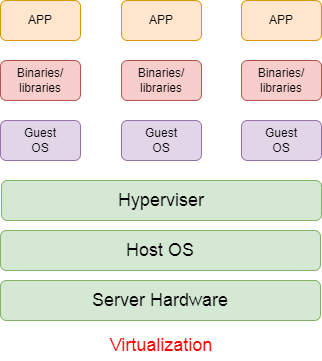
Another way to think of virtualization is as a technique that allows the physical resources of a server to be logically divided and used as separate, isolated machines known as virtual machines. The single CPU multiplies into numerous virtual CPUs, RAM multiplies into numerous virtual RAMs, and hard disks undergo the same transformation. A technology that makes it possible to build an abstract layer of system resources and conceal the complexity of the hardware and software working environment is virtualization [9, 10]. The advantages of virtualization include enhanced hardware independence, guest operating system separation, and virtual machine encapsulation in a single file. Hypervisor [11] technology, which is a software or firmware component that may virtualize system resources, is frequently employed to implement virtualization (Figure 1).
Literature Survey
Numerous research papers, articles, and books covering different facets of virtualization and its integration with cloud computing can be found by conducting a literature review on virtualization techniques and their function in the cloud computing environment. An outline of some important topics and sources in this field is provided below [12].
Technologies for Virtualization
Various virtualization methods, including hardware- assisted virtualization, para-virtualization, and complete virtualization, are frequently the subject of research.
- The architecture, design, and use of hypervisors-which are essential to virtualization-are examined in papers.
- Xen, KVM, VMware ESXi, Microsoft Hyper-V, and Virtual Box are notable technologies [13]. Performance of Virtualization
- Research looks into the CPU, memory, storage, and networking overheads related to virtualization performance.
- We investigate methods for enhancing virtualization performance, including hardware acceleration, lightweight hypervisors, and para virtualization [14].
Management of Virtual Machines
- Numerous facets of virtual machine (VM) management, including as resource allocation, migration, provisioning, and monitoring, are covered by research.
- The topic of virtual machine administration is frequently brought up when talking about automation and orchestration platforms like Kubernetes, Open Stack, and VMware vCenter.
Safety and Seclusion
- The literature examines side-channel attacks, hypervisor vulnerabilities, and VM escape assaults as examples of security issues in virtualized environments.
- Methods like memory encryption, secure boot, and sandboxing that improve security and isolation are examined [15].
Virtualization and Cloud Computing
- The integration of virtualization with cloud computing platforms and services is covered in papers [16].
- The models of Software as a Service (SaaS), Platform as a Service (PaaS), and Infrastructure as a Service (IaaS) are covered, along with how virtualization makes these services possible.
Resource Allocation and Efficiency
- The goal of research is to optimize resource consumption in virtualized systems by using methods such as load balancing, dynamic resource allocation, and workload consolidation [17].
- Resource management in cloud systems is becoming more and more optimized through the use of machine learning and AI-based techniques.
Energy Effectiveness
• Research looks at how much energy virtualized data centers use and suggests ways to manage virtual machines (VMs) and server consolidation more efficiently.
- •
- Initiatives for green computing and methods for cutting carbon emissions in virtualized systems are also covered
- [17].
- Best Practices and Case Studies
- •
- Case studies and actual virtualization implementations
- Title
- Description
- Virtualization Techniques: Enabling Cloud Computing
- Infrastructure
- A Comprehensive Survey of Virtualization Technologies for Cloud Computing
- Virtualization in Cloud Computing: Techniques,
- Challenges, and Opportunities
- Exploring Virtualization Techniques and their Impact on Cloud Computing
- Virtualization Paradigms: Bridging the Gap in Cloud
- Computing Environments
Table 1: Survey Paper Comparison.
Emphasizes the enabling role of virtualization in cloud computing infrastructure.
Indicates a thorough examination of various virtualization technologies in the context of cloud computing.
Highlights virtualization techniques along with associated challenges and opportunities in cloud computing.
Suggests an exploration of different virtualization techniques and
- •
- Initiatives for green computing and methods for cutting carbon emissions in virtualized systems are also covered
- [17].
- Best Practices and Case Studies
- •
- Case studies and actual virtualization implementations
- Title
- Description
- Virtualization Techniques: Enabling Cloud Computing
- Infrastructure
- A Comprehensive Survey of Virtualization Technologies for Cloud Computing
- Virtualization in Cloud Computing: Techniques,
- Challenges, and Opportunities
- Exploring Virtualization Techniques and their Impact on Cloud Computing
- Virtualization Paradigms: Bridging the Gap in Cloud
- Computing Environments
Table 1: Survey Paper Comparison.
Advantages and Disadvantages of Virtualization
Here is a quick rundown of virtualization’s benefits and drawbacks [14].
Benefits
- Financial savings via consolidated hardware.
- Better scalability and resource utilization.
- Improved backup and disaster recovery capacities.
- Security and isolation advantages.
- Testing and development effectiveness.
- Legacy application support.
Drawbacks
- Overhead in performance.
- The complexity of management.
- Conflict over resources.
- Risk of a single point of failure.
- The price of licensing.
- Security concerns.
- Hardware dependency.
In short, virtualization presents a number of advantages, including flexibility and cost savings, but it also presents issues that businesses have to cope with, including performance overhead and dangers to security [18].
their specific impact on cloud computing.
Emphasizes how virtualization paradigms bridge the gap within cloud computing environments.
Role of Virtualization in Cloud Computing
Virtualization plays a vital role in cloud computing for small firms, but they must take certain unique concerns into account based on their needs for and scaling [16].
Cost-effectiveness
Budgets for IT infrastructure tend to be limited in small enterprises. Through the use of virtualization, they can take use of cloud services, which usually have a pay-as-you-go pricing structure, eliminating upfront hardware purchases and saving money on recurring maintenance [19, 20].
Scalability
Without requiring an important upfront investment, virtualization in the cloud allows small enterprises to adjust their computing capacity in response to demand. This scalability is necessary for helping business expansion and adjusts to shifting workloads.
Flexibility
Small businesses may access and control their IT resources from any location with an internet connection thanks to cloud-based virtualization. This flexibility makes resource access and collaboration easy, and is especially useful for companies with dispersed or remote personnel [21].
Resource Optimization
Small businesses can maximize resource use and attain greater efficiency by utilizing cloud virtualization. They can minimize waste and cut costs by accurately configuring virtual machines with the CPU, memory, and storage capabilities needed by their applications.
Disaster Recovery and Business Continuity
Robust disaster recovery and business continuity solutions are accessible to small businesses through cloud- based virtualization. In the event of hardware malfunctions, natural disasters, or other occurrences, virtual machines are quickly backed up, copied, and recovered, ensuring little downtime and data loss [22].
Security and Compliance
Cloud service providers usually provide strong security protocols and compliance certifications. This is especially beneficial for small firms that have little resources and experience in IT security [23]. Small organizations may effectively safeguard their data and apps through using these security features through cloud virtualization.
Application Development and Testing
Cloud-based virtualization environments are useful for application development and testing in small businesses. They can test apps independently without harming live systems, easily provision virtual machines with varied configurations, and experiment with different software environments.
Access to Advanced Technologies
Advanced virtualization technologies, such as server less computing and containers, are often made available by cloud providers [23, 24]. These technologies can assist small enterprises in modernizing their infrastructure and applications without having to make an important upfront investment.
Virtualization Techniques
Here’s a quick rundown of virtualization methods [18].
Complete Virtualization
Constructs fully functional virtual machines (VMs) that replicate real hardware. Every virtual machine (VM) has its own separate operating system.
Para-virtualization
To improve performance and resource usage, the guest OS must be modified.
Hardware-assisted Virtualization
Makes use of CPU capabilities to improve the effectiveness and performance of virtualization. Apps and their dependencies are packaged into lightweight containers that share the host operating system kernel through a process called containerization.
Operating System-level Virtualization
Permits the sharing of the host OS kernel among several separate user-space instances, or containers.
Storage Virtualization
This technique abstracts physical storage resources to facilitate effective storage allocation and management [18].
Network virtualization
Is a method of separating network resources-firewalls, switches, and routers, for example-into a software-based model. It makes it possible to build virtual networks that function apart from the real network infrastructure. Network virtualization is made feasible by technologies that include Software-Defined Networking (SDN), Virtual LANs (VLANs), and Virtual Extensible LANs (VXLANs) [19].
Characteristics of Virtualization
Improved Security
Fresh possibilities for providing a safe, controlled execution environment arise from the capacity to openly manage a guest program’s execution. Usually, the virtual machine is the target of all guest program actions, which are then converted and applied to the host applications [25].
Managed Execution
The most important features are sharing, aggregation, emulation, and isolation.
Sharing
A separate computing environment can be created on the same host thanks to virtualization.
Aggregation
Though sharing physical resources throughout multiple guests is possible, virtualization also makes the opposite process possible.
The Use of Virtualization
The Following Hardware and Software are needed for Virtualization
Software Prerequisites
- Software for hypervisors (such as VMware, Hyper-V, KVM, and Virtual Box).
- Operating systems that work with both host and guest computers.
- Software for resource provisioning, monitoring, and allocation.
- Software for networking to control network traffic.
- Software for managing storage.
- Software for disaster recovery and backup.
Hardware Prerequisites
- CPU with several cores and hardware extensions for virtualization (such as AMD-V and Intel VT-x).
- Enough RAM to support operating several virtual computers at once.
- Storage to hold data and virtual machine images Gigabit Ethernet or more rapid networking gear.
- Motherboard that allows expansion slots and hardware virtualization extensions.
- Sufficient cooling and power supply to enable higher hardware use.
- Depending on the particular virtualization technology and deployment environment, these specifications could change [27, 28, 29, 30].
Virtualization Types
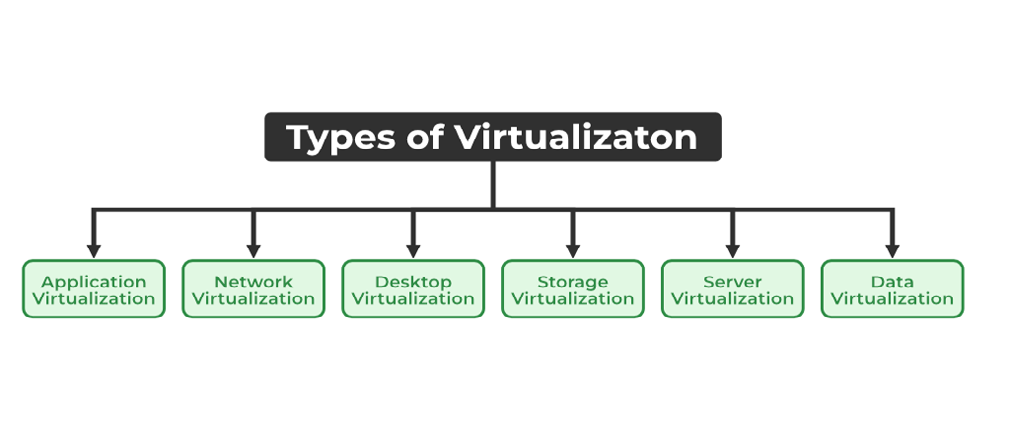
An operating system (OS) or application can run in numerous virtual instances on a single physical machine thanks to a technology called virtualization. Virtualization comes in a variety of forms, each with specific applications and characteristics (Figure 2) [31]
Server Virtualization
The method of splitting real servers into several virtual servers, each running its own operating system and set of applications, is referred to as server virtualization. Virtual machine monitor (VMM) software, which separates the physical hardware resources and controls the virtualized settings, makes this process simpler (Figure 3).
![Figure 3: Server Virtualization [13].](/fulltextimages/12460/fig_3.png)
Client Virtualization
In cloud computing client virtualization is the process of virtualizing desktops and programs and delivering them to end users via the internet from servers housed in the cloud. Many benefits come with this strategy, such as cost savings, increased flexibility, better security, and central management. A virtual machine (VM) environment on the machine used by the user is known as client virtualization. Frequently referred to as “endpoint virtualization,” the user’s PC operates several virtual machines (VMs), each of which comes with an operating system and a collection of apps.
Storage Virtualization
In cloud computing, storage virtualization is the abstraction of physical storage resources and the development of a virtualized storage layer that is distributed over several storage systems or devices. In cloud systems, this virtualization layer enables flexible allocation of resources and management, improved efficiency, scalability, and centralized management. Functional RAID levels and controllers are an essential part of storage virtualization for storage servers. Device-connected operating systems and applications can directly access the drives for writing [32].
Memory Virtualization
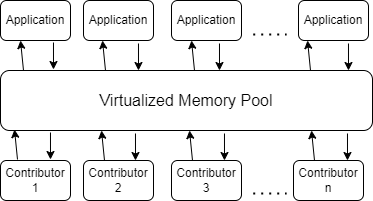
Application-Level Integration
In cloud computing, the process of easily integrating and working together various cloud-based services, applications, and platforms is known as application-level integration. Collaboration across several cloud environments, workflow automation, and data exchange are made feasible by this integration. By easily integrating and managing interactions between various cloud-based services, apps, and data sources, application-level integration in cloud computing is essential to enabling enterprises realize the full potential of technology that is cloud-based (Figure 4) [33].
Operating System Level Integration
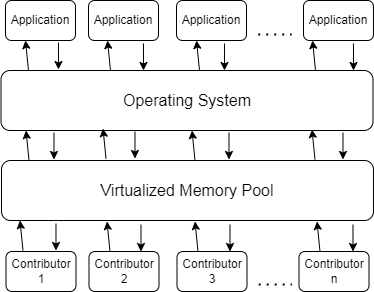
In cloud computing, operating system-level integration refers to the direct integration of cloud resources, services, and management tools into the operating system (OS) environment. The objectives of this integration are to optimize cloud utilization, boost productivity, and improve user experience. By enabling smooth access to cloud resources, management tools, and security features straight from the OS environment, operating system-level integration in cloud computing improves the interoperability, manageability, and security of cloud environments. Administrators and end users alike will benefit from this integration’s streamlining of cloud usage and enhanced user experience (Figure 5) [34].
Software Virtualization
It gives the primary computer the capacity to run and build one or more virtual environments. It is used to turn on a whole computer system so that a guest operating system can function. For example, allows a Microsoft Windows operating system to run native on Linux as a guest (or vice versa, running Windows as a guest on Linux).
Software Virtualization Types Are
- Operating systems
- Virtualization for applications
- Virtualization for services [32].
Advantages of Software Virtualization
Below is a list of cloud computing software virtualization advantages?
Testing
Because testing can be done within the same program and no additional hardware is needed, testing the new operating system and software on virtual machines, or VMs, is simpler. The virtual machine may be moved or deleted for additional testing after the test.
Utilization
If software virtualization is tuned correctly, resource utilization efficiency is increased. The user can adjust the virtual machine (VM) to suit their needs by changing its RAM, storage space, etc. When considering the number of physical machines required achieving the same result, a lot less hardware is required [35].
Effective
It is effective in that it does not require the utilization of 12 physical boxes since it can run twelve virtual computers. This includes both the cost of power and server maintenance.
Reduced Downtime
As the virtual machines (VMs) are operating, the software is being updated. Virtual Machines can be configured to switch between operating and non-operating states, leading to extremely little downtime
Flexible
It offers the user versatility so they can change the software to suit their needs. The change can be completed in a matter of minutes, and it can be readily adjusted when the workload changes (Figure 6) [34].
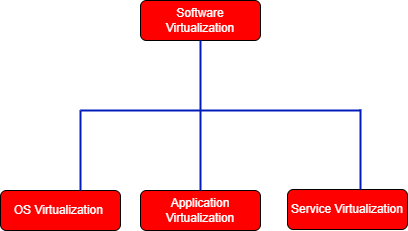
Desktop Virtualization
It offers security and convenience for work. Due to the potential of remote access, you can operate on any PC and from any location. Employees have a great deal of flexibility to work from home or on the go. By keeping sensitive data on a central machine, it also guards against data loss or theft. Cloud virtualization makes it simple to create new virtual servers, saving you the trouble of keeping track of numerous ones. It’s important to keep track of everything, including how your physical resources are used for virtual resources. Look for solutions with user-friendly tools that make it easy to measure and track use. Not every scenario may be solved by virtualization (Figure 7) [33].
![Figure 7: virtualization of desktops [36].](/fulltextimages/12460/fig_7.png)
Conclusion
Network virtualization is the method of removing networking resources from the physical network infrastructure that underpins them. It makes it possible to build virtual networks that function in addition to the actual network design. More automation, scalability, and flexibility in networking are made feasible by this. Cisco ACI and VMware NSX are two examples. One of the most current advances on the Internet is cloud computing. Virtualization is the process of using computer resources to mimic other computer resources or entire systems in the context of cloud computing [27].
AI (Artificial Intelligence) and cloud computing are two powerful technological forces that are reshaping the business landscape [37]. Let’s explore their symbiotic relationship and how they drive innovation, efficiency, and strategy:
Cloud Computing
- The cloud computing market is projected to double from its current size to an impressive $947 billion by 2026.
- Cloud services provide the essential computing resources and infrastructure needed for various applications.
- Cloud adoption enables faster scalability, cost savings, and flexibility for businesses [33].
Artificial Intelligence (AI)
- The AI market is slated to grow more than 5 times, reaching $309 billion.
- AI encompasses technologies that enable computers to perform advanced functions, such as understanding natural language, recognizing patterns, and making decisions.
• Machine learning (ML) algorithms are a key component of AI, and they require substantial computational power for training [38].
The Symbiotic Relationship
- Automation: AI and cloud computing converge in automating processes such as data analysis, security, and decision-making.
- Efficiency: AI streamlines simple tasks, allowing IT professionals to focus on more innovative development.
- Cost Savings: AI-driven insights can lead to significant cost savings within enterprises.
- Connected Experiences: AI-powered services like virtual assistants (e.g., Alexa, Siri) seamlessly combine cloud resources and ML models to enhance user experiences [39, 40, 41, 42].
Applications of AI in Cloud Computing
- Data Analysis: AI algorithms analyze large datasets efficiently, providing valuable insights.
- Machine Learning: Cloud systems offer the necessary compute power for training ML models.
- Server less Computing: AI cloud services enable server less architectures.
- Container Orchestration: AI enhances container management and deployment [43].
AI and cloud computing work together to enhance each other’s capabilities. AI automates complex tasks [44], optimizes system performance and improves user experiences, while cloud computing provides the infrastructure needed to train and deploy AI models at scale. In terms of virtualization methods, this survey study has provided an in-depth review of the research being done in the field of cloud computing. We’ve covered a lot of procedures, plans, and their subtle elements. Through the Internet, cloud computing offers customers a variety of services, including data storage computation, and application [31]. Infrastructure costs have decreased as a result of the resources that CSPs have made available to users. Although the cloud is utilized for many different things, compute and storage are two of the most common uses. This essay focused on cloud storage. The design, models, and challenges associated with cloud storage systems were reviewed [44]. It was also done to compare a few of the storage features offered by IBM and Amazon, two renowned cloud storage service providers.
References
-
Rashid A, Kumar A (2019) Cloud Computing Characteristics and Services: A Brief Review. International Journal of Computer Sciences and Engineering 7(2): 2347-2693.
-
Jain R (2023) Unleashing the Power of AI. Computer Science and Engineering 1.
-
Masdari M, Nabavi SS, Ahmadi V (2016) An overview of virtual machine placement schemes in cloud computing. Journal of Network and Computer Applications 66: 106- 127.
-
Ali M, Khan SU, Vasilakos AV (2015) Security in Cloud Computing: Opportunities and Challenges. Information Sciences 305: 357-383.
-
Khan N, Al-Yasiri A (2016) Identifying Cloud Security Threats to Strengthen Cloud Computing Adoption Framework. The 2nd International Workshop on Internet of Thing: Networking Applications and Technologies IoTNAT 94: 485-490.
-
Kovari A, Dukan P (2017) KVM & OpenVZ virtualization based IaaS Open Source Cloud Virtualization Platforms: OpenNode, Proxmox VE, pp: 540.
-
Mell E (2016) Words to Go: Virtual container standards. Tech Target Publication.
-
Mehta DK, Patel MB, Dangi A, Patwa N, Patel Z, et al. (2024) Exploring the Efficacy of Natural Language Processing and Supervised Learning in the Classification of Fake News Articles. Advances in Robotic Technology (ART) 2(1): 7-12.
-
McDermott J, Montrose B, Li M, Kirby J, Kang M, et al. (2012) The Xenon Separation VMM: Secure Virtualization Infrastructure for Military Clouds, USA.
-
Usmani Z, Singh S (2016) A Survey of Virtual Machine Placement Techniques in a Cloud Data Center. Procedia Computer Science 78: 491-498.
-
Mell E (2016) Cloud containers-what they are and how they work. Tech Target Publication.
-
Mishra M, Sudevalayam S Introduction to Cloud Computing and Virtualization CSE, IIT Bombay.
-
Sarvakar K, Jani KA, Yagnik SB, Panchal EP, Jain R, et al. (2023) AI and Fuzzy Logic Based Image Processing Camera Mounted Drone for Disease Diagnosis in Rural Areas. Patent Application Publication 91600 pp: 31677.
-
Megouache L, Zitouni A, Djoudi M (2020) Ensuring user authentication and data integrity in multi- cloud environment. Human-centric Computing and Information Sciences.
-
Mishra S, Patel HB, Shukla A, Prajapati D, Mevada J, et al. (2023) Call Data Record Analysis using Apriori Algorithm. Indian Journal of Natural Sciences 14(80): 62954-62960.
-
Krishnamoorthy S, Dua A, Gupta S (2021) Role of emerging technologies in future iot-driven healthcare 4.0 technologies: a survey, current challenges and future directions. Journal of Ambient Intelligence and Humanized Computing 14: 361-407.
-
Patel HB, Mishra S, Jain R, Kansara N (2023) The Future Of Quantum Computing And Its Potential Applications. Journal For Basic Sciences 23(11): 513-519.
-
Theimer MM, Lantz KA, Cheriton DR (1985) Preemptable remote execution facilities for the V-system. In the Proceedings of the tenth ACM Symposium on Operating System Principles, pp: 2-12.
-
Book WJ (2021) Modelling design and control of flexible manipulator arms: A tutorial review. USA, pp: 500-506.
-
Jain R, Thakur A (2019) Comparative Study of Machine Learning Algorithms for Document Classification. International Journal of Computer Sciences and Engineering 7(6): 1189-1191.
-
Chaturvedi ARA (2019) Virtualization and its Role in Cloud Computing Environment. International Journal of Computer Sciences and Engineering 7(4).
-
Bera S, Misra S, Saha N (2020) Traffic-aware Dynamic Controller Assignment in SDN. IEEE 68(7): 4375-4382.
-
Mizusawa N, Seki Y, Tao J, Yamaguchi S (2020) A Study on I/O Performance in Highly Consolidated Container-Based Virtualized Environment on Overlay FS with Optimized Synchronization. International Conference on Ubiquitous Information Management and Communication (IMCOM).
-
Michail A, Euripidis P (220) Elixir: An Agent for Supporting Elasticity in Docker Swarm. Institutional Repository Technical University of Crete.
-
Yang S, Wang X, Wang X, An L, Zhang G (2020) High- performance docker integration scheme based on OpenStack 4.
-
Zeng D, Gu L, Pan S, GuoS (2020) Sensing, Communication and Computation. Software Defined Systems, pp: 17-35.
-
Antichi G, Rétvári G, (2020) Full-stack SDN: The Next Big Challenge? Proceedings of the Symposium on SDN, pp: 48-54.
-
Jain R (2024) Demystifying AI and ML from Algorithms to Intelligence. Eliva Press, Europe.
-
Jain R, Mishra S, Prajapati D, Patel C (2023) The Intersection of Artificial Intelligence and Business: A Study of Impact and Implications. Journal of Advances in Artificial Intelligence 1(1): 45-48.
-
Jain R, Patel M (2023) Investigating the Impact of Different Search Strategies (Breadth First, Depth First, A*, Best First, Iterative Deepening, Hill Climbing) on 8-Puzzle Problem Solving - A Case Study. International Journal of Science & Engineering Development Research 8(2): 633-641.
-
Ahuja SP (2023) Full and Para Virtualization. Fidelity National Financial Distinguished Professor of CIS School of Computing, UNF.
-
Jain R, Dixit S (2023) Revolutionizing the Future: Exploring the Multifaceted Advances of Robotic Technologies. Advances of Robotic Technology 1(1): 1-7.
-
(2024) Virtualization cloud computing types.
-
Server Virtualization in Cloud Computing.
-
Asutton K (2022) Desktop Virtualization and Its Benefits.
-
Dixit S, Jain R, Patel HB (2024) Impact of 5G Wireless Technologies on Cloud Computing and Internet of Things (IOT). Advances in Robotic Technology 2(1): 1-7.
-
Jain R, Vanzara R, Sarvakar K (2024) The Rise of AI and ML in Financial Technology: An In-depth Study of Trends and Challenges. In: Kumar A, et al. (Eds.), Proceedings of the 6th International Conference on Communications and Cyber Physical Engineering, pp: 329-341.
-
Jain R, Vanzara R (2023) Emerging Trends in AI- Based Stock Market Prediction: A Comprehensive and Systematic Review. Engineering Proceedings 56(1): 254.
-
Jain R, Sarvakar K, Patel C, Mishra S (2024) An Exhaustive Examination of Deep Learning Algorithms: Present Patterns and Prospects for the Future. International Journal of Engineering and Technology 10(1): 105-111.
-
Jain R, Dhiren P (2023) Climate Change and Animal Health: Impacts, Challenges, and Mitigation Strategies, Open Access Journal of Veterinary Science & Research 8(2): 1-6.
-
Bhatla AB, Kikani YB, Joshi DG, Jain R, Patel K (2023) Real Time Cattle Health Monitoring Using IoT, Thing Speak, and a Mobile Application. Journal of Ethology & Animal Science 5(1): 1-7.
-
Jain R, Prajapati D, Dangi A (2023) Transforming the Financial Sector: A Review of Recent Advancements in FinTech. International Journal for Research Trends and Innovation 8(2): 250-267.
-
Patidar N, Mishra S, Jain R, Prajapati D, Solanki A, et al. (2024) Transparency in AI Decision Making: A Survey of Explainable AI Methods and Applications. Advances of Robotic Technology 2(1): 1-10.
-
Jain Y (2017) Virtualization Concepts and Applications. DA-IICT (DCOM Research Group), pp: 10-55.
- Group Consensus of Nonlinear Hybrid Multi-Agent Systems with Self-Triggering Event Mechanism
- Optimum Vector Combinatorial Theory and Its Applications
- Manifold Systems Applied Theory for Innovative Robotic Technology
- Collaborative Robots: Human-Robots Coexistence in Industrial Environments
- Utilizing Idle Time for Job Clusters Reduces Inventory and Total Job Completion Time for Single Machine Scheduling
- Embracing the Future of Robotics with ART