
Regorafenib Induced Toxic Erythema of Chemotherapy Presenting as Malignant Intertigo with Hand Foot Skin Reaction
<p>Newer chemotherapeutic drugs often present with adverse reactions involving the skin. These reactions may be mistaken for infections, drug allergies or GVHD. Regorafenib is a multikinase inhibitor with a characteristic adverse event profile affecting the hands and feet as well as flexures. Because of a very high incidence of these reactions, adequate precautions to prevent, as well as early diagnosis and management, improve quality of life as well as outcomes of treatment.</p>
Case Report
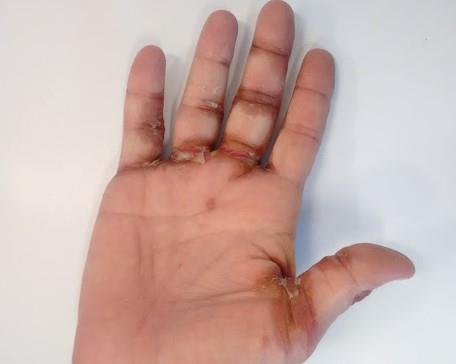
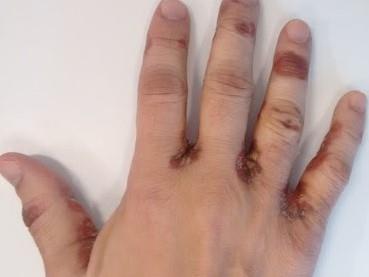
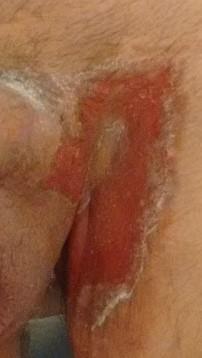
A 52-year-old non-diabetic, non-obese male patient with unresectable Gastro Intestinal Stromal Tumour (GIST) presented with erythematous, confluent erosions with surrounding scales in the groin and perianal region 10 days after starting chemotherapy with the multikinase inhibitor, regorafenib at the dose of 160 mg per day. The patient did not have a history of hyperhidrosis. Suspecting candidal intertrigo, he was prescribed topical antifungal but showed no improvement. Within two to three days, similar lesions appeared on the flexural areas of the hand. The patient complained of mild discomfort and difficulty in doing day to day activities. The lesions healed completely during the ‘off phase’ of the dosing cycle. Lesions recurred on restarting the medicine, this time interfering considerably with activities of daily life. Hence regorafenib was with held till complete healing. After that, it was started at a lower dose of 120 mg per day which was well tolerated. He developed callous like foot lesions on the reduced dose, but they did not require further dose reduction. Most case reports till date have hand and feet lesions as the primary presentation of HFSR. Flexures and pressure points are also known to be affected. However, in our patient, the intertriginous area was the first to be involved. This led to an initial suspicion of candidial intertrigo. The foot was involved later, after dose reduction, when the groin and hand lesions had healed completely (Figure 1-4).

Discussion
Palmoplantar and intertriginous involvement of the skin is a dose limiting cutaneous toxicity of many chemotherapeutic agents. After alopecia and mucositis, it is the most common adverse reaction to chemotherapy [1]. The term Toxic Erythema of Chemotherapy (TEC) was introduced to include multiple anatomically limited names (eg. hand foot syndrome (HFS) for chemotherapy agents and hand foot skin reaction (HFSR) for multikinase inhibitors) or histologically obscure terms (eccrine squamous syringometaplasia). Clinical findings of Toxic Erythema of Chemotherapy are erythematous to violaceous patches or edematous plaques involving primarily the hands and feet, intertriginous zones (for example, axillae, groin, submammary or pannus folds), scrotum, neck, elbows and knees. Occasionally, when severe, it can involve much of the body surface area. It is associated with pain and burning more often than pruritus. Lesions can develop a dusky hue, petechiae and/or sterile bullae (followed by erosions). Desquamation is dry on the palms and soles and moist in the intertriginous zones [2]. The term ‘malignant intertrigo’ has been proposed to describe TEC affecting the intertriginous areas [3]. Spontaneous resolution occurs without specific therapy. It can recur if same or higher dose of chemotherapy administered.
These eruptions are self-limited and often resolve with desquamation and post inflammatory hyperpigmentation. The clinical recognition of this entity, is important because it often first presents in the complex 2–4-week period after high-dose therapy at a time when several other processes must be considered including drug allergy, infection and GVHD [2].
References
-
Sanches Junior JA, Brandt HR, Moure ER, Pereira GL, Criado PR (2010) Adverse mucocutaneous reactions to chemotherapeutic agents: part I. An Bras Dermatol 85(4): 425-437.
-
Bolognia JL, Cooper DL, Glusac EJ (2008) Toxic erythema of chemotherapy: a useful clinical term. J Am Acad Dermatol 59(3): 594-599.
-
Smith SM, Milam PB, Fabbro SK, Gru AA, Kaffenberger BH (2016) Malignant intertrigo: A subset of toxic erythema of chemotherapy requiring recognition. JAAD Case Reports 2(6): 476-481.
- Epithelioid Granuloma; 3cases with Different Clinical Features
- Advancing Representation in Dermatology Clinical Trials: Ethical, Scientific, and Regulatory Imperatives for Inclusion Across all Fitzpatrick Skin Types
- A Case of Atopic Dermatitis with Concurrent Psoriasis Vulgaris: Successful Treatment with Upadacitinib
- Innovation Lifting Eyeshadow: A Synthesis of Makeup and Optical Illusion
- Distinguishing Superficial Actinic Porokeratosis from Actinic Keratosis with UVF Dermoscopy: A Case Report
- High Mobility Group Box 1 (HMGB1) in Cutaneous Inflammation: An Immune Modulator Bridging Cellular Stress, Ferroptosis and Danger Signaling