
Generalized Eczematous Eruption after Secukinumab Treatment Successfully Treated with Dupilumab and Guselkumab
A 68-year-old woman with chronic plaque psoriasis for 37 years was seen in June 2021. The patient was under secukinumab treatment and showed generalized exfoliative dermatitis with severe itch. Many authors reports that some biological drugs can induce chronic inflammatory diseases such as psoriasis and atopic dermatitis, especially anti-IL17 drugs. Consequently, we decided to stop secukinumab treatment and to start dupilumab. After six weeks of dupilumab treatment, guselkumab was added to manage the psoriatic disease. At one month of combinate therapy, the patient reported significant improvement of various parameters such as PASI, EASI, NRS itch, NRS sleep, and DLQI. Currently, the patient is receiving only treated with guselkumab 100 mg every 8 weeks, maintaining complete recovery from the disease
Consent Statement
Consent for the publication of all patient photographs and medical information was provided by the authors at the time of article submission to the journal stating that all patients gave consent for their photographs and medical information to be published in print and online and with the understanding that this information may be publicly available.
Introduction
Biological drugs have brought a profound transformation in the management of chronic inflammatory skin diseases, such as psoriasis. Since biological agents are used to block specific targets in the immune system, it can sometimes lead to the development of unexpected inflammatory conditions. This occurs due to an imbalance in cytokines. More specifically, this imbalance leads to the so-called paradoxical reactions [1]. Several times has been reported in literature, that the biological drugs inhibiting interleukin-17 used in the treatment of psoriasis can give paradoxical generalized eczematous eruption (EE) [2, 3]. We report the case of a paradoxical EE after secukinumab, successfully treated with dupilumab and guselkumab.
We report the case of a 68-year-old woman affected by severe chronic plaque psoriasis since 2001. The patient had previously been treated for psoriasis, in another specialist center, with traditional systemic therapies such as methotrexate, cyclosporine and acitretin with partial benefit. In 2014, due to the onset of joint pathology, she underwent biological therapy, first with adalimumab, interrupted due to little benefit; then with originator etanercept and subsequently with biosimilar etanercept, the latter also discontinued due to disease recurrence. In 2020, the patient started therapy with biosimilar adalimumab.
In January 2021, the patient presented a progressive worsening of joint symptoms and skin conditions with severe reactivation of the disease that involved all the body, except face, palm and soles. As a result, she was hospitalized in January 2021 for erythroderma, which was initially treated with a high dose of intravenous corticosteroids, followed by a tapering off corticosteroid therapy over 3 months.
In April 2021, after discontinuing corticosteroid therapy and achieving almost complete disease clearance, secukinumab therapy was initiated. There was no initial response to loading dose of secukinumab. The anti-IL17A drug secukinumab, far-off controlling the disease, led to a significant worsening of the skin condition within two months, triggering erythroderma with associated intense itching for which the patient came to our Dermatological Clinic in June 2021 (Figure 1). Anamnesis was negative for atopic dermatitis and allergic comorbidities. The diagnostic hypothesis is that the condition of erythroderma was determined both by the psoriatic disease and by an overlapped generalized EE, caused by secukinumab. A skin biopsy was performed, which confirmed the presence of spongiosis, indicative of an EE.
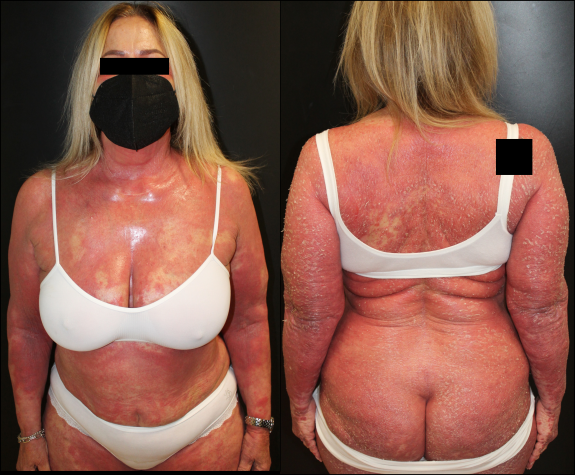
We decided to suspend secukinumab, and to treat the patient with dupilumab, a humanized IgG4 monoclonal antibody that targets the IL-4 receptor alpha chain (IL- 4Rα), common to both IL-4R complexes: type 1 (IL-4Rα/ γc; IL-4 specific) and type 2 (IL-4Rα/IL-13Rα1; IL-4 and IL-13 specific) approved for the treatment of moderate to severe atopic dermatitis. In this sense, dupilumab could have resolved the EE and reduced the itching symptoms which had significantly compromised the patient’s quality of life.
At her 4-week follow-up, the patient already showed the first signs of improvement with a marked decrease in erythema and itching. However, psoriasis persisted. For this reason, dupilumab was combined with guselkumab, an anti-IL23p19 biological drug. After 4 weeks of association, the patient reported a clear improvement compared to the previous examination, as evidenced by the decrease of all the parameters such as PASI, NRS pruritus, NRS sleep and DLQI (Figure 2).
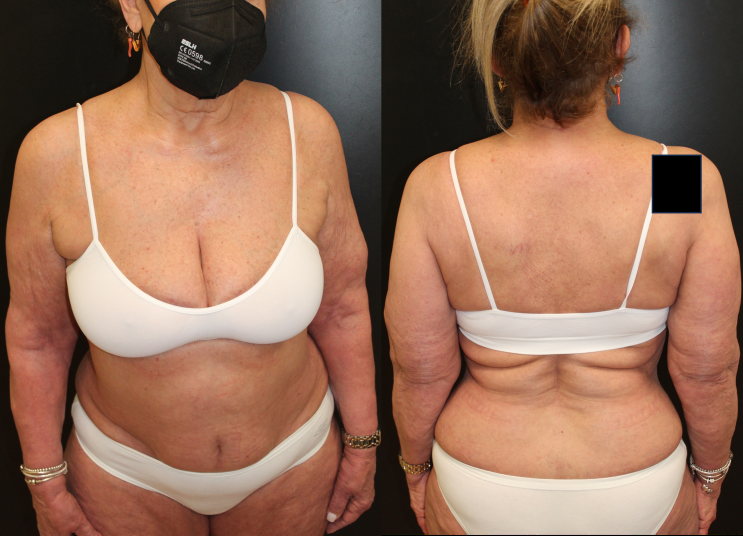
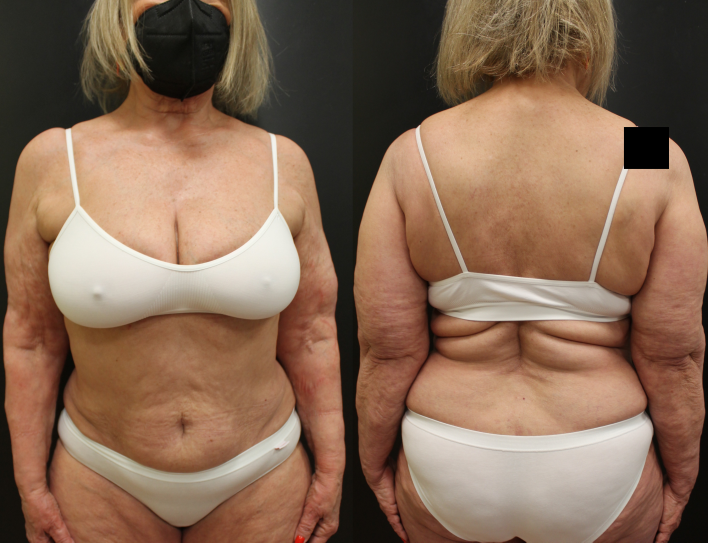
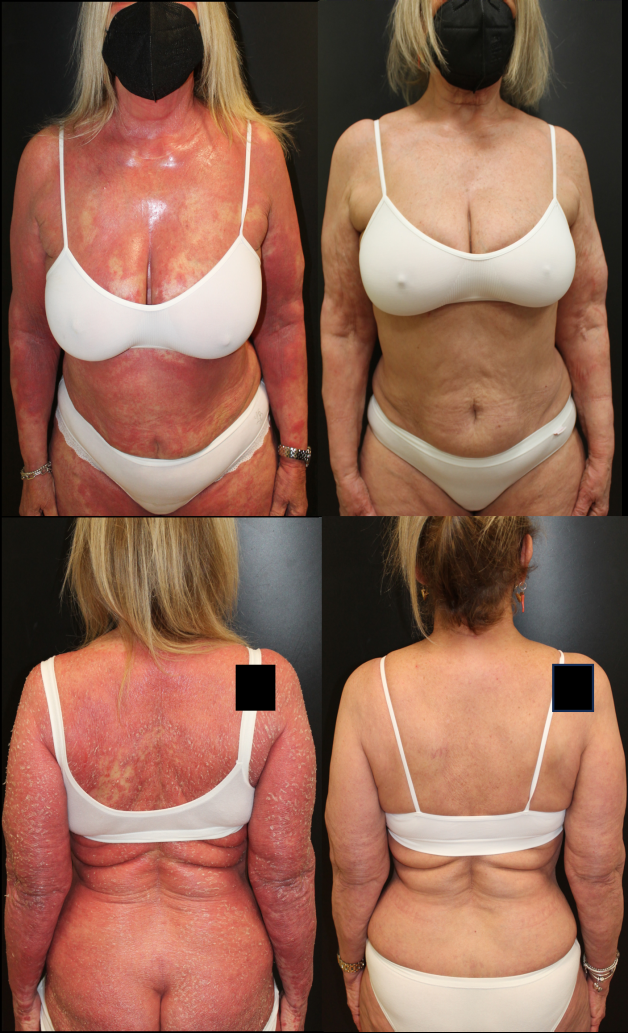
After 4 months of combined therapy, the patient showed an almost complete clearance of the psoriatic lesions evidenced by a PASI score of 1 and the total absence of pruritus and erythema. Thus, it was decided to suspend therapy with dupilumab and continue therapy with guselkumab, administered every 8 weeks, for the control of psoriasis (Figures 3 & 4).
Discussion
In conclusion, also from our clinical experience it emerged that the association of guselkumab and dupilumab can be useful in counteracting paradoxical EE due to anti- IL17 drugs. The pathogenesis of the latter has yet to be clarified. Psoriasis is characterized by an overactive Th1 response, while eczema is associated with an exaggerated Th2 response. When patients are treated with anti-IL- 17A drugs, the suppression of the Th1 pathway, leads to increased activity in the Th2 arm. Recent research indicates that approximately 2.2% of patients treated with anti- IL-17A medications develop EE, often necessitating the discontinuation of the treatment in 75% of these cases [4].
However, the biological drug dupilumab approved for the treatment of moderate-severe atopic dermatitis was able to control EE effectively and safely, by counteracting the amount of inflammation deriving from the overlapped dermatitis. Scientific literature shows that biological drugs are frequently used in combination to control different pathologies or the same pathology on several fronts and this case is a concrete example; however further studies will be needed to establish the efficacy of the combination.
References
-
Megna M, Caiazzo G, Parisi M, Ruggiero A, Capasso G, et al. (2022) Eczematous drug eruption in patients with psoriasis under anti-interleukin-17A: does interleukin-22 play a key role? Clin Exp Dermatol 47(5): 918-925.
-
Megna M, Genco L, Noto M, Patruno C, Fabbrocini G, et al. (2022) Eczematous eruption after brodalumab successfully treated with guselkumab and dupilumab. Dermatol Ther 35(11): e15839.
-
Napolitano M, Megna M, Fabbrocini G, Nistico SP, Balato N, et al. (2019) Eczematous eruption during anti- interleukin 17 treatment of psoriasis: an emerging condition. Br J Dermatol 181(3): 604-606.
-
Caldarola G, Pirro F, Stefani AD, Talamonti M, Galluzzo M, et al. (2020) Clinical and histopathological characterization of eczematous eruptions occurring in course of anti IL-17 treatment: a case series and review of the literature. Expert Opin Biol Ther 20(6): 665-672.
- Epithelioid Granuloma; 3cases with Different Clinical Features
- Advancing Representation in Dermatology Clinical Trials: Ethical, Scientific, and Regulatory Imperatives for Inclusion Across all Fitzpatrick Skin Types
- A Case of Atopic Dermatitis with Concurrent Psoriasis Vulgaris: Successful Treatment with Upadacitinib
- Innovation Lifting Eyeshadow: A Synthesis of Makeup and Optical Illusion
- Distinguishing Superficial Actinic Porokeratosis from Actinic Keratosis with UVF Dermoscopy: A Case Report
- High Mobility Group Box 1 (HMGB1) in Cutaneous Inflammation: An Immune Modulator Bridging Cellular Stress, Ferroptosis and Danger Signaling