
Ethnobotanical Studies on Traditional Medicinal Plants Used in the Treatment of Humans’ Skin Diseases in Ethiopia: A Review
The ethnobotanical literature review explores the use of medicinal plants in treating skin diseases in Ethiopia, assessing gaps in accessible research papers. 18 scientific papers, including M.Sc. theses, journals, electrons, and proceeding, highlight the safety and cost-effectiveness of these plants. In this ethnomedicinal literature review, a total of “233” species belonging to 71 families under 170 genera were selected from different regions of the country. Taxa commonly used for the treatment of skin disease belong to six families such as Asteraceae (19), Fabaceae (17), Solanaceae (15), Euphorbiaceae (14), Lamiaceae (11) and Malvaceae (10, each) in number of species. Herbs formed a major component (43%), while shrubs, trees, and climbers constitute 32%, 16%, and 9%, respectively. Plant species cure various skin diseases such as dandruff, eczema, skin rash, scabies, inflammation, cuts, wounds, boils, itching, sores, and swellings. The most frequently used plant parts for the preparation of remedies were leaves, followed by roots and/or leaves. Traditional folk medicines hold the heritage of community acceptance because they are derived from indigenous knowledge and skills that also involve theories, beliefs, and experiences. In this review, the current literature on ethnomedicinal plants is summarized, along with a listing of the medicinal plants used for common skin ailments. Based on the reviewed papers, the main threats to medicinal plants in the country were overgrazing, agricultural expansion, firewood, drought, and construction. Thus, the review paper concludes by providing recommendations regarding the scenarios of research in the country.
Introduction
Ethiopia’s topographical diversity, including high mountains, plateaus, gorges, river valleys, and plains, contributes to tropical, subtropical, and temperate climates.
The country’s diverse environment highlights plant and animal life, and it is home to numerous ethnic groups and cultural diversity [1].
It is important to note that out of the total 422,000 flowering plants reported from around the world [2], more than 50,000 are used for medicinal purposes [3]. Ethiopia has diverse medicinal flora that is distributed in different vegetation types. The current literature shows that about 1,000 medicinal plants have been identified and documented in the country [4]. However, investigations have indicated the presence of erosion of genetic and indigenous knowledge, which in turn calls for the collection, investigation, and conservation of these resources [5].
Physical inspection of the skin and the mucous membranes forms the foundation for an exact analysis of skin membrane conditions [6]. These conditions mostly present with skin exterior changes (wounds), which have additional or fewer discrete features [7]. Skin conditions are among the commonest causes of morbidity in rural and urban areas of developing countries, accounting for a high proportion of visits to primary healthcare centers, which are often undeserved and underfunded [8]. Although a well- designed epidemiological survey has never been conducted in Ethiopia, available information, though scanty, indicates that dermatological diseases rank fifth among the top twelve morbidity causes that were recorded between 1981 and 1991 [9].
Dermatological disorders were reported as the second and fourth most frequent complaints at Shebe and Agaro health centers in the tropical foothill region of Illbabor province, southern Ethiopia. Among children, skin disease is usually the second most common reason for consultation in rural clinics [10]. Another study carried out in 1996 to determine the prevalence of skin diseases among schoolchildren in rural Ethiopia showed that 80.4% of schoolchildren assessed were found to have one or more skin diseases [11].
The objective of the present work is to review the accessible literature on ethno-botanical knowledge for the treatment of skin diseases as well as assess the literature’s content and indicate its gaps for future studies that will be undertaken elsewhere in Ethiopia. This review was conducted using secondary information found in published, open-access journals, proceeding papers, and unpublished thesis documents. The data were compiled and analyzed using descriptive statistics (graphs, tables, percentages, and charts).
Ethnomedicinal and Skin Diseases Review
Ethnomedicinal Research in Ethiopia
Before three and a half decades in Ethiopia, it was stated that detailed descriptions of plants used medicinally were scanty (FAO, 1986); however, few ethnobotanical investigations were conducted in the recent past in different parts of the country [4, 12, 13, 14, 15, 16]. These researchers have clearly indicated the presence of a wealth of indigenous knowledge of the use and management of plant resources among the local people of various parts of the country and ethnic groups. Nevertheless, considering the country’s varied flora and socio-cultural diversity, these studies are few as ethno-medical healing systems vary across cultures. In addition, researchers have also indicated the reliance of nearly 80% of the population in the country on utilizing plant-based traditional medicines as a major health-care system [17].
Common Dermatological Disorders
It was reported that skin is primarily an organ of protection. As the body’s first line of defense, the skin is continuously subjected to potentially harmful environmental agents, including solid matter, liquids, gases, sunlight, and microorganisms [18]. Although it has remarkable properties that allow for a continuous cycle of healing, shedding, and cell regeneration, the skin is subjected to a very wide range of disorders [19].
Infectious Skin Disorders
Mitscher LA, et al. [18] indicated that the skin is subjected to attack by a number of microorganisms. Normally, the skin flora, sebum, immune responses and other protective mechanisms guard the skin against infection. Depending on the virulence of the infecting agent and the competence of the host’s resistance, infections may result [18]. Bacterial Infections Bacteria are considered normal flora of the skin. Most bacteria are not pathogenic; however, when pathogenic bacteria invade the skin, superficial or systematic infections may develop. Bacterial infections are classified as primary, or superficial (e.g., impetigo), and secondary, or deep (e.g., infected ulcers) [18]. The most common bacterial infections include impetigo, folliculitis, furuncles, and carbuncles [18, 20].
Fungal Infections
Microbial information revealed that fungal infections of the skin can be superficial, intermediate, or deep. Some are opportunistic and affect a susceptible host, while others are truly pathogenic and can infect a healthy person [18, 20]. The superficial infections are called dermatophytosis, and they are commonly known as tinea or ringworm. Different forms of tinea affect different body areas. Tinea can affect the body (Tinea corporis), scalp (Tinea capitis), beard (Tinea barbae), hands (Tinea manus), feet (Tinea pedis), nail (Tinea unguium), or groyne and upper parts of the thigh (Tinea cruris). Individual species of three genera have been identified as the invading fungi in most forms of tinea: Microsporum, Epidermophyton, and Trychophyton. Intermediate fungal diseases invade both the superficial and deeper tissues; moniliasis caused by Candida albicans is an example. Deep fungal infections involve the epidermis, dermis, and subcutis. Infections that are typically superficial may exhibit deep involvement in immunosuppressed individuals [18, 20].
Viral Infections
It is reported that viruses invade the keratinocyte, begin to reproduce, and cause cellular proliferation or cellular death. The use of corticosteroid medications, which have immunosuppressive qualities, and birth control pills, which change the bacterial flora of the skin, has been linked to the sharp rise in viral skin illnesses [18]. Herpes simplex, Varicella (also known as chickenpox), Herpes zoster, Warts (Verrucae), Rubeola (Measles), and Rubella (also known as German measles) are some of the most common infectious skin disorders of viral origin [20].
Inflammatory and Allergic Skin Disorders
Inflammatory skin diseases are usually localized to the skin and are rarely associated with a specific internal disease. They produce marked variations in normal skin, usually papulosquamous in nature. Inflammation and erythema are common. Acne, lichen planus, psoriasis, and pityriasis resea are among the most common skin disorders of this type. Allergic skin responses involve the body’s immune system and are caused by hypersensitivity reactions. They include contact dermatitis, atopic and cummular eczema, and drug reactions [18, 20].
Use of Medicinal Plants on the Skin
Plants have been used for skin treatment since prehistoric times, with Egyptians recording skin care on temple wall paintings Grierson, et al. [21, 22]. About 33% of phototherapy in non-Western communities is used for skin disorders, wounds, and infections [23]. Topical application of medicinal plants has proven effective due to their biological activities, such as anti-microbial, anti-inflammatory, and anti-erythema properties [24].
It was confirmed that ethnobotanical surveys have been found to be one of the most reliable approaches to the bio- prospecting of medicinal plants and their uses. Many plant medicines have been incorporated into the mainstream of the healthcare system. The pharmaceutical industry has considered plant medicine as a source of bioactive agents that can be used in the preparation of medicine [25]. Effective and inexpensive botanical remedies are gaining popularity equally among both rural and urban areas [26].
Skin Diseases in Ethiopia
Although limited studies have been made on the prevalence of skin diseases in Ethiopia, the available records are indicative of the high prevalence of this problem in the country. A study made at Black Lion Hospital indicated that skin diseases are among the leading causes of hospital visits. The most common skin diseases were allergic skin diseases (25.5%), infections (25.4%), and photodermatoses (22.9%), followed by papulosquamous diseases (11.4%) and pruritus of unknown origin (3.3%). The pattern of skin diseases observed in this analysis shows that allergic and infectious causes account for three-quarters of skin problems [27]. It was also reported that of all the skin diseases that were diagnosed in 4,700 patients in one of the dermatological hospitals in the capital, dermatomycosis, vitiligo (including a group of genetically determined disorders characterised by an inability to produce melanin in the skin, hair, and eyes), and psoriasis accounted for 7.8%, 4.6%, and about 2%, respectively (Schaller, 1963, cited in Dawit, et al.). Another study conducted in 1980 involving 1, 000 patients showed skin disorders due to bacteria and fungi to be 12.7% and 9.7%, respectively, while psoriasis and vitiligo were 2.6% each [1].
A study made in northwest Ethiopia showed a prevalence rate of 49.2%. Tinea capitis, impetigo, infected wounds, and verrucae were the most common skin infections [28]. A related study made at Kazanchis Health Centre in Addis Ababa also reported that 15 bacterial, fungal, and viral infections were dominating, comprising 19.4%, 18.5%, and 6.5% of the Ncases [28].
In this review, a total of 233 plant species belonging to 170 genera and 71 families were found to be useful in the treatment of more than 24 different skin diseases like wounds, hemorrhoids, body swelling, ringworm, skin rush, itching, burns, aches, eczema, dandruff, boils, scabies, rashes, tinea versicularis, tinea nigri, and the like. Out of 233 plant species, 95 were invariably used for the treatment of wound diseases. Swelling, hemorrhoids, general skin diseases, skin rush, and dandruffs were treated consistently by 45, 35, 25, 24, and 22 species, respectively. The fewest (one or two) plant species treat diseases like leprosy, colic, mumps, meningitis, and so on. The review revealed that skin diseases, wounds, scabies, eczema, itching, ringworm, skin cancer (tumor), sores, skin eruptions, and swellings are very common among the different tribal communities of Ethiopia. The infection of the skin could be superficial, intermediate, or deep (Table 1; S1)
| Skin Diseases/Disorders | No. of MPs | Percentage (%) | |
|---|---|---|---|
| Superficial/deep | Wounds | 95 | 20.26 |
| Superficial/deep | Swelling | 45 | 9.59 |
| Deep/superficial | Hemorrhoids | 35 | 7.46 |
| Superficial/deep | General skin diseases | 24 | 5.12 |
| Deep/superficial | Skin rash, herpes | 25 | 5.33 |
| Superficial | Scabies | 21 | 4.48 |
| Superficial | Dandruff | 22 | 4.69 |
| Superficial/intermediate | Other fungi (tinea nigri, athlete’s foot etc.) | 21 | 4.48 |
| Superficial | Ringworm | 20 | 4.26 |
| Superficial | Itching | 19 | 4.05 |
| Deep | Eczema | 16 | 3.41 |
| Deep | Warts | 16 | 3.41 |
| Deep | Rheumatism | 15 | 3.19 |
| Deep | Skin cancer/tumor | 13 | 2.77 |
| Intermediate/deep | Sores | 9 | 1.92 |
| Deep | Tetanus | 8 | 1.71 |
| Superficial | Blood clot | 8 | 1.71 |
| Superficial | Skin poison | 8 | 1.71 |
| Deep | Leschimaniasis | 7 | 1.49 |
| Superficial/intermediate | Allergy | 6 | 1.28 |
| Deep/superficial | Burns | 6 | 1.28 |
| Deep/superficial | Boils | 6 | 1.28 |
| Superficial | Aches | 5 | 1.07 |
| Deep | Ulcer | 5 | 1.07 |
| Superficial/deep | Skin infection | 4 | 0.85 |
| Could be superficial, intermediate or deep | Others (mumps, colic, bite, sun strike, menjites, goiter, leprosy) | 10 | 2.13 |
| Total | 469 | 100 |
Table 1: Skin diseases caused by microorganisms.
| S/N | Scientific name | Families | Common name | Pp | Ethnobotanical uses | References | |
|---|---|---|---|---|---|---|---|
| 1 | Acacia abyssinica Hochst. ex Benth | Fabaceae | Lafto | T | L | Skin rash, goiter, wound | 1, 2, 3, 7 |
| 2 | Acalypha volkensii Pax | Euphorbiaceae | Kirija | Cl | L | Wound | 14 |
| 3 | Acanthus eminens C.B. Clarke, | Acanthaceae | ‘Phecho’, | S | St | Wound | 18 |
| 4 | Acanthus polystachius Delile | Acanthaceae | Kosorruu | S | L | Wound | 15, 6 |
| 5 | Acanthus pubescens (Oliv.) Engl. | Acanthaceae | Kosorru | S | Sap | Tinea corporis | 4 |
| 6 | Achyranthes aspera Lam. | Amaranthaceae | Telenj | H | L, R | Wound, hemorrhage, swell, cut | 3, 6,7,8,16 |
| 7 | Aeollanthus densiflorus Ryding, | Lamiaceae | ‘Dicho’ | H | L | Skin disease | 18 |
| 8 | Acmella caulirhiza Del. | Asteraceae | Kutcha-melk | H | L | Swelling | 7 |
| 9 | Acokanthera schimperi (A.DC.) Schweinf. | Apocynaceae | Qaraaru | S | L | Leprosy, itching | 5, 12 |
| 10 | Ageratum conyzoides L. | Asteraceae | Tuffoo (Or.) | H | L | Blood clot, wound | 1, 18 |
| 11 | Albizia sp. | Fabaceae | Ambaltaa | T | Bar | Wound | 15 |
| 12 | Allium sativum L. | Alliaceae | Shinkurt | H | Bar, sap | Tinea nigra; itching, wound, skin disease, rheumatic | 4, 9, 11, 16 |
| 13 | Aloe debrana | Aloaceae | Eret | H | Sap | Hemorrhoids, ringworm | 8 |
| 14 | Aloe macrocarpa Tod. | Aloaceae | Ret/erete | H | Lat | Fire burn, wound | 4, 7 |
| 15 | Aloe kefaensis Gilbert & Sebsebe | Aloaceae | ‘Ginwaro | H | Sap | Wound | 18 |
| 16 | Aloe otallensis Baker | Aloaceae | Godare utsa | H | L, sap | Wound | 11 |
| 17 | Aloe pirottae A. Berger | Aloaceae | S | L | Hemorrhoid | 5 | |
| 18 | Arundinaria alpine K. Schum. | Poaceae | Kerkeha | H | R | Eczema | 5 |
| 19 | Arundo donax L. | Poaceae | Lemicho (Wol) | S | L | Wound | 17 |
| 20 | Artemisi annua L. | Asteraceae | Faranjiya agupiya | H | L | Ringworm; skin disease | 11 |
| 21 | Asparagus africanus Lam. | Asparagaceae | Yeset-qest | H | Wp | Tetanus, bone fracture, wound, itching | 7,8 ,12, 15,16 |
| 22 | Astragalus atropilosus (Hochst.) Bunge | Asparagaceae | H | Wp | Itching | 7 | |
| 23 | Asparagus racemosus Willd | Asparagaceae | ‘Ufikaro’ | H | R & St | Wound | 18 |
| 24 | Bersama abyssinica Fresen. | Melianthaceae | Azamir | S | L, St | Skin infection, rheumatic | 4,17, 18 |
| 25 | Brachiaria brizantha (Hochst. ex A. Rich.) Stapf) | Poaceae | Shalishshattuwa | H | R | Scabies | 11 |
| 26 | Brassica carinata A. Br. | Brassicaceae | Gomen | H | Se | Skin rush | 8 |
| 27 | Brucea antidysenterica Swiss Chard. | Simarobaceae | Waginos/Avalo | S | Fl | Eczema, Rheumatic, Tinea nigri, snake bite, ulcer, wound, itching | 3,4,6, 7, 9, 11 ,12,16 |
| 28 | Buddleja polystachya Fresen. | Loganiaceae | Anfar | S | L | Scabies, itching, wound | 3, 7,8 |
| 29 | Cadaba farinosa Forssk | Capparidaceaee | Qalqalch | S | L | Ringworm, wound, eczema | 12 |
| 30 | Calotropis procera (Ait.) Ait.f. | Asclepiadaceae | Qimbo (Am) | S | Lat | Hemorrhoids, swell, wound | 3,7,8, 15 |
| 31 | Calpurnia aurea (Ait.) Benth. | Fabaceae | Digita | S | Fl, L | Eczema, scabies, wound | 6, 16, 17 |
| 32 | Canarina eminii Aschers ex Schweinf. | Campanulaceae | Maaracaa | Cl | Wp | Scabies | 15 |
| 33 | Capparis tomentosa Lame. | Capparidaceae | Gumeero | S | R | Skin rush | 8 |
| 34 | Capsicum annuum L. | Solanaceae | Qaria | H | Se | Skin rush | 3 |
| 35 | Capsicum frutescens L. | Solanaceae | Mis’imis’uwa | H | Fr, Fl | Swelling, fungal, rheumatism | 11 |
| 36 | Carduus leptacanthus Fresen | Asteracea | ‘Guchino’ | H | R | Skin disease | 18 |
| 37 | Carduus shimperi Sch. Hip. | Asteraceae | Qoriiharree | H | R/ Bar | Hemorrhages | 12 |
| 38 | Carica papaya L. | Caricaceae | Paappaayyaa | T | Se | Wound | 15 |
| 39 | Catha edulis (Vahl) Forssk. ex Endl. | Celasteraceae | Chat | S | Se | Skin disease | 6 |
| 40 | Centella asiatica (L.) Urban | Apiaceae | Baala buqqee | H | L | Tinea corporis | 15 |
| 41 | Caylusea abyssinica (Fresen.) Fisch. & Mey. | Resedaceae | ‘Yamo’ | H | L | Skin disease, scabies | 4, 18 |
| 42 | Chenopodium ambrosioides L. | Chenopodiaceae | ------ | H | L | Wound | 12 |
| 43 | Chenopodium murale L. | Chenopodiaceae | Amedmado | H | L | Wound, dandruff, swellings | 3,7,8 |
| 44 | Cissus quadrangularis L. | Vitaceae | Yezehon anjet | Cl | Wp | Hemorrhage | 8 |
| 45 | Citrus aurantifolia Burn. f. | Rutaceae | Loomiya | S | L, Fr | Germ killing, wound (qunchir) | 7, 11 |
| 46 | Citrus limon (L.) Burm.f. | Rutaceae | Lomi | S | Fr | Athletes foot, skin rush, scabies | 3, 8,12 |
| 47 | Clausena anisata Willd. Hook.f. ex Benth. | Rutaceae | Limich | S | R, L | Skin rash (shiffe), skin disease | 2,18 |
| 48 | Clematis hirsuta Guill. & Perr. | Ranunculaceae | Azo-hareg | Cl | Fr | Hemorrhoids, skin wound, swell | 8,11 |
| 49 | Clematis simensis Fresen. | Ranunculaceae | Azo-areg | Cl | L, R | Sore, leishmaniasis, Tinea nigri, sore, cancer | 2, 3,7, 6, 12,16 |
| 50 | Clerodendrum cephalanthum Oliv. | Lamiaceae | Boye maataa | Cl | Wp | Swelling, wound | 11 |
| 51 | Clerodendrum myricoides (Hochst.) Vatke | Lamiaceae | Misirch | S | R, lat, L & sap | skin disease, wound, eczema, burn mumps, swell, tetanus | 2, 8,11,18 |
| 52 | Clutia lanceolata Jaub. & Spach. var. abyssinica | Euphorbiaceae | Feyele-fej | S | L, Fr | Itching, hemorrhages | 6 |
| 53 | Clutia abyssinica subsp. lanceolata Forssk. | Euphorbiaceae | Feyel fej | H | L | Dandruff | 3 |
| 54 | Coffea arabica L. | Rubiaceae | Bunna | S | Se | Sore, cuts, wound | 8,12,16 |
| 55 | Combretum molle R. Br. ex G. Don. | Combretaceae | Avalo | T | Se | Skin rush, tumors | 3 |
| 56 | Combretum paniculatum Vent. | Combretaceae | Baggi | S | Lat | Ring worm | 2 |
| 57 | Commelina benghalensis L. | Commelinaceae | Lalunxe (Wol) | H | Lat | Skin infection | 17 |
| 58 | Commelina diffusa Burm.f. | Commelinaceae | ‘Naletto’ | H | Sap | Skin disease | 18 |
| 59 | Commelina sp. | Commelinaceae | Wuha-anqur | H | R, L | Athlete foot, wound Skin, wound | 13 |
| 60 | Commelinia latifolia Hochst. ex A Rich. | Commelinacea | Dali’sha (Gassa) | H | Sap | Wound (gormit) | 7,11 |
| 61 | Commiphora africana (A. Rich.) Endl. | Burseraceae | ---------- | S | L | Eczema, scabies | 5 |
| 62 | Convolvulus steudneri Engl. | Convolvulaceae | Flasot | H | L | Swelling | 6 |
| 63 | Cordia africana Lam. | Boraginaceae | Warka | T | L, bar, L | Poison, wound, dandruff | 2, 3, 11,12, 14 15,18 |
| 64 | Crotalaria karagulensis Taub. | Fabaceae | Yeahiya ater | H | L | Itching (likft) | 7 |
| 65 | Crotalaria incana L. | Fabaceae | Atarii kuruphee | H | L | Swelling, wound | 2,18 |
| 66 | Croton macrostachyus Del. | Euphorbiaceae | Bisana | T | L, lat | Ringworm, boil, wound, cut, eczema, skin disease | 2, 3, 4, 5, 6, 7, 8, 9, 12, 13, 15, 16 |
| 67 | Cucumis ficifolius A. Rich. | Cucurbitaceae | Hiddi hoolo (Or) | Cl | R, L | Tetanus, swelling, wound | 2, 7, 8 |
| 68 | Cynoglossum coeruleum (Hochst. A. Rich.) DC. | Boraginaceae | Chegogit | H | L | Itching, sun strike, swelling, skin, wound, poison | 13, 7,16, 17 |
| 69 | Cynoglossum amplifolium Hochst. ex A.DC. | Boraginaceae | Girshu | H | L | Wound | 14 |
| 70 | Cynoglossum densdoliatum Chiov. | Boraginaceae | Chigogote | H | L | Skin infection | 8 |
| 71 | Cyphostema adenanthum (Fresen.) Desce. | Vitaceae | Aserkuch-tebeteb | Cl | L, R | skin wound | 13 |
| 72 | Cyphostemma spp. | Vitaceae | Gaalee | Cl | Fl | Hemorrhages | 12 |
| 73 | Datura metel L. | Solanaceae | Qoricha bofaa (Or.) | H | L | Snake bite | 1 |
Table 2: Skin diseases caused by microorganisms.
74 Datura stramonium L. Solanaceae Astenagir H L, Fr
75 Dichrostachys cinerea (L.) Wight & Arn. Fabaceae Gariggaruwa T L Wound 11
76 Delonix regia (Boj.ex Hook.) Raf. Fabaceae Mimi (Wol) T L Wound 17
77 Drymaria cordata (L.) Schultes Caryophyllaceae Sayidasajal H L Swelling, allergy, wound 1, 18
78 Discopodium penninervum Hochst. Solanaceae Almit S L Wound, dandruff 16
79 Dissotis senegambiensis (Guill. & Perr.) Triana Melastomataceae Kossosiya H R, L Fungal infection 11
80 Dodonaea angustifolia L.f. Sapindaceae Kitkita S L
81 Ehretia cymosa Thonn. Boraginaceae Ulaagaa T L Rheumatism 1
82 Embelia schimperi Vatke Myrsinaceae Enqoqo S Fl, L, sap Hemorrhoids, wound, itching, snake bite, 16,14
83 Erica arborea L. Ericaceae Asta S L Wound, 16
84 Eucalyptus globules Labill. Myrtaceae Bahir zaf T L Foot smell, skin diseases 1,3,9
85 Euphorbia abyssinica Gmel Euphorbiaceae Qulquql S St, lat Itching/scabies, wound, hemorrhoids 5, 7,16
86 Euphorbia ampliphylla Pax Euphorbiacea ‘Gineato’ S Sap Wound, hemorrhage, cancer 3, 18
87 Euphorbia colubrina Bally & Carter Euphorbiaceae Anterfa S Sap Ringworm 8
88 Euphoriba depauperata A. Rich. Euphorbiaceae Anxarfaa H Lat Eczema 12
89 Euphorbia lathryis L. Euphorbiaceae Hadaamii T St Hemorrhoids 2
90 Euphorbia platyphylos L. Euphorbiaceae Antir (Am) H Lat Tumor, wound, dandruff 3,6
91 Euphorbia schimperiana Scheele Euphorbiaceae Antirfa H Wp, sap Wound, skin disease 16,18
92 Euphorbia tirucalli L. Euphorbiaceae Shuramo (Wol) S Lat Skin cancer, hemorrhage, ringworm, wart
93 Falkia canescens C.H. Wright Convolvulaceae Gura hantutaa H L Spider poison, allergy 1
94 Ficus carica L. Moraceae Beles S Lat Wound 6,7
95 Ficus exasperata Vahl Moraceae Balansofi (Or) T Sap Warts, Eczema 4
Ring worm, dandruff, scabies head infection, hemorrhoids, head, wound
2, 3,4, 5, 6, 8,10,11, 16,17,13, 18,
Wounds, skin rush, eczema, Tinea versicolor, bone fracture, burn, skin rush
3, 5, 6, 8, 12, 16
4 ,8, 10, 15, 17,18
| 96 | Ficus palmata Forssk. | Moraceae | Beles | T | R/L | Cancer | 8 |
|---|---|---|---|---|---|---|---|
| 97 | Ficus sur Forssk. | Moraceae | Shola | T | Fl, Fr, sap, L | Itching, wound, acute bleeding, ring worm, wart (cancer) | 2, 6,12, 16, 17 |
| 98 | Ficus sycomorus L. | Moraceae | Odaa (Or) | T | Sap | Hemorrhoid | 2 |
| 99 | Ficus vasta Forssk. | Moraceae | Warka | T | St | Eczema, wound | 7,16 |
| 100 | Galium aparinoides Forssk. | Rubiaceae | Kanggad’a | H | L | Fungal infection, ulcer | 11 |
| 101 | Gnidia glauca Fersen | Thymelaeaceae | Matta | H | R | Burns | 16 |
| 102 | Gnidia involucrata Steud ex A. Rich. | Thymelaeaceae | Geni’e- | S | R, St | Glandular swelling | 11 |
| 103 | Grewia ferruginea Hochst. ex A. Rich. | Tiliaceae | Dhoqonuu | T | L, bar | Dandruff, red hair | 4,7,15 |
| 104 | Guizotia abyssinica (L.f.) Cass. | Asteraceae | Nug | H | Se | Sore, swelling | 15,16 |
| 105 | Guizotia scabra (Vis.) Chiov | Asteraceae | Tuffoo (Or) | H | L, Wp | Wound | 1,12, 18 |
| 106 | Hibiscus micranthus L.f. | Malvaceae | Yebeklo | H | L | Wound | 3,7 |
| 107 | Hordeum vulgare L. | Poaceae | Gebis | H | Se | Dandruff | 3 |
| 108 | Impatiens hochstetteri Warb | Balsaminaceae | Ensosila | H | R | Scabies | 16 |
| 109 | Impatiens tinctoria A. Rich. | Balsaminaceae | Gurshet | H | Rhizome | Rheumatism | 3 |
| 110 | Indigofera spicata; Forrsk. | Fabaceae | Qoricha hadha | Cl | L | Allergy, scabies, eczema | 1, 5 |
| 111 | Indigofera hochstetteri Bak. | Fabaceae | Qoricha | H | R | Tetanus | 2 |
| 112 | Ipomoea cairica (L.) | Convolvulaceae | Kalaalaa (Or.) | Cl | L | Wart | 1 |
| 113 | Ipomoea tenuirostris Choisy | Convolvulaceae | Nisbaa | Cl | L | Allergy | 1 |
| 114 | Jasminum grandiflorum L. | Oleaceae | Tenbelel | Cl | R | Boils | 6 |
| 115 | Juniperus procera Hochst ex. Engl. | Cupressaceae | Tid | T | Resin | Ringworm, swelling, wound (gormit) | 7, 16 |
| 116 | Justicia schimperiana (Hochst. ex Nees) T. Anders | Acanthaceae | Sensel, Smiza, | S | L | Hemorrhoids, open sore, Rheumatism, swelling, skin lesion, dandruff | 1,3, 13, 16, 17 |
| 117 | Kalanchoe densiflora Rolfe | Crassulaceae | ‘Kachamiitobo’ | H | L | Wound, swelling | 3, 18 |
| 118 | Kalanchoe petitiana A. Rich. | Crassulaceae | Endahula | H | R/L | boil, sore, colic, wound, allergy, swelling | 1,6,8 ,16, 17 |
| 119 | Kanahia laniflora (Frossk.) R. Br. | Asclepiadaceae | Arust (Am) | H | L, Wp, lat | Tumor, wart | 6,8 |
| 120 | Lagenaria siceraria (Mollina) Standl. | Cucurbitaceae | Qil | Cl | R | Wound, scabies, Tinea versicolor, swell, dandruff | 2, 3, 15,16 |
| 121 | Laggera tomentosa (Sch. Bip. ex A. Rich.) Oliv. & Hiern | Asteraceae | Keskeso | H | L | Swelling | 8 |
| 122 | Lannea fruticosa (A. Rich.) Engl. | Anacardiaceae | Dechimarac’c’iya | T | R | Swelling, meningitis | 11 |
| 123 | Lepidium sativum L. | Brassicaceae | Feto | H | Se | Wound, hemorrhage, ringworm, swelling | 3, 8, 11, 13 |
| 124 | Leuca martinicensis (Jacq.) R.Br. | Lamiaceae | Bokkoluu | H | L | Ringworm | 12 |
| 125 | Linum usitatissimum L | Lineaceae | Talbaa | H | Se | Dandruff, breast ulcer, wound | 7, 9, 15 |
| 126 | Lippia adoensis Hochst ex. Walp. | Lamiaceae | Kessie | H | L | Ring Worm | 2 |
| 127 | Lobelia rhynchopetalum (Hochst) Hemsl. | Campanulaceae | Jibra | H | R | Scabies/itching | 16 |
| 128 | Maesa lanceolata Forssk. | Myrsinaceae | ‘Chego’ | S | L, sap | Skin disease, swelling, hemorrhoids | 11,12,18 |
| 129 | Maerua oblongifolia (Forsslc.) A. Rich. | Capparidaceae | Sanggaana | S | Bar R, L, Wp | Swelling, tetanus | 11 |
| 130 | Malva verticillata L. | Malvaceae | Lut | H | R | Wound, dandruff, poison, scabies | 3, 7,8 |
| 131 | Maytenus senegalensis (Lam.) Exell | Celasteraceae | Kombolcha | S | L | Hemorrhoids | 12 |
| 132 | Melia azedarach Forssk. | Meliaceae | Nim | S | L | Wound, acute blooding tetanus, dandruff, lashing (fungus), | 3, 8, 16, 17 |
| 133 | Microglossa pyrifolia (Lam.) O. Kuntze | Asteraceae | Orgulach | S | L | Swell | 14 |
| 134 | Mirabilis jalapa L. | Nyctagnaceae | Ababa diimaa | S | Fr | Hemorrhoids | 15 |
| 135 | Millettia ferruginea (Hochst.) Bak. | Fabaceae | Sotallo | T | L | Tetanus, skin disease, wound, ringworm | 3,8,11,12,18 |
| 136 | Momordica foetida Schumach & Thonn. | Cucurbitaceae | Qura-hreg | Cl | L | Swelling, wound, swelling, scabies | 1,6,11,16,17 |
| 137 | Myrtus communis L. | Myrtaceae | A des | S | L | Scabies, leishmaniasis, dandruff | 3, 6,16 |
| 138 | Nephrolepis undulata (Aftel. exSw.) J.Sm. | Oleandraceae | Bisaa | H | L | Swelling of gland | 11 |
| 139 | Nicandria physaloides (L.) Gaertn. | Solanaceae | Yewushe Ageda | H | Se | Wound | 3 |
| 140 | Nicotiana tabacum L. | Solanaceae | Timbaho | H | L | ‘Neqersa’ (cancer) wound | 1,7 |
| 141 | Nigella sativa L. | Ranunculaceae | Tiqur-azm | H | Se | Skin fungus | 13 |
| 142 | Ocimum gratissimum L | Lamiaceae | Dama kessie | H | L | Wart, febrile-illness, Rheumatism. | 1,4,11 |
| 143 | Olea europaea L. subsp. cuspidata (Wall. ex G. Don) Cif. | Oleaceae | Woira | T | St | Sore, ‘Naqersa’ (cancer), wound, itching, hemorrhoids, scabies | 1,5, 12, 16 |
| 144 | Oliverella hildebrandtii (Engl.) Tieghem | Loranthaceae | Dheertuu Dhumugaa | H | L | Dandruff | 15 |
| 145 | Osyris quadripartite Decn. | Santalaceae | Qerets | S | L | Leishmaniasis, skin, wound | 3, 13 |
| 146 | Otostegia tomentosa A. Rich. | Lamiaceae | Tunjuti (or) | S | L/R | Febrile illness | 4 |
| 147 | Pavonia sp. | Malvaceae | ‘Sheto’ | H | L | Wound | 18 |
| 148 | Periploca linearifolia Quant. Dill. & Rich. | Asclepiadaceae | Moider hareg | Cl | L/R | Wound, hemorrhage | 7,16 |
| 149 | Pavonia urens Cav. | Malvaceae | Hincinnii | H | L | Wound | 15 |
| 150 | Phytolacca dodecandra L’Herit. | Phytolacaceae | Andode (Or.) | Cl | L, R | Scabies, herpes, zoster, itching, skin, swelling, rheumatism | 1,3,9, 11 |
| 151 | Piper nigrum L. | Piperaceae | K’unddobam bbariyaa | T | Se, L | Rheumatism, swelling | 11 |
| 152 | Plantago lanceolata L. | Plantaginaceae | Wonberet/Esat adrik | H | L | Ulcer, burn, wound, hemorrhoid, skin cut, open wound, wart | 1,2,3, 6, 7,9,15, 16 |
| 153 | Plectocephalus variance (A. Rich) C. Jeffrey. ex Cufod. | Asteraceae | Ets-yohannes | H | Wp | Tumor | 6 |
| 154 | Protea gaguedi J. F. Gmel. | Proteaceae | Laaluwa | T | L, R | Body swell | 11 |
| 155 | Premna schimperi Engl. | Lamiaceae | Urgessa | S | L | Eczema | 12 |
| 156 | Plumbago zeylanica L. | Plumbaceae | Ameeraa; | H | R | Hemorrhoids, wound | 1,7 |
| 157 | Podocarpus falcatus (Thunb.) Mirb. T | Podocarpaceae | Dagucho | T | St, Bar | Wound | 17 |
| 158 | Premna schimperi Engl. | Lamiaceae | Chocho | S | Bark | Hemorrhoids, wound, skin, inflammation Eczema | 7, 13 |
| 159 | Prunus africanus (Hook. f.) Kalkam | Rosaceae | Hoomii (Or) | T | L, bar | Wound | 15,18 |
| 160 | Prunus persica (L. Batsch) | Rosaceae | Kookii | T | L | Hemorrhages | 15 |
| 161 | Psidium guajava L | Myrtaceae | Zeytun | T | L | Skin rush, wound | 8,12 |
| 162 | Pycnostachys abyssinica Fresen. | Lamiaceae | Olomuwa | S | L | Swell | 11 |
| 163 | Ranunculus multifidus Forssk. | Ranunculaceae | ‘Hogiyo’ | H | Fr, R, L, sap | Skin disease | 18 |
| 164 | Ranunculus oligocarpus Hochst. ex A. Rich. | Ranunculaceae | Tinkushi | H | L | Sore, eczema, leishmaniasis | 16 |
| 165 | Ranunculus sinesiss Frescene | Ranunculaceae | ----- | H | R, L | Sore of scrofula, boil swelling, leishmaniasis | |
| 166 | Rhamnus prinordes L’Herit | Rhamnaceae | Xaddo (Wol) | S | L, Se | Skin infection, Tinea versicolor, scabies, dandruff, herpes, eczema | 4, 5, 6, 7,8,10,17, 18 |
| 167 | Rhus glutinosa A. Rich. subsp. glutinosa | Anacardiaceae | Embes | T | Bar | Wound | 3 |
| 168 | Rubia cordifolia L. | Rubiaceae | Dumo | Cl | R | Swelling | 17 |
| 169 | Rhus ruspolii Engl. | Anacardiaceae | ------ | S | L | Wound | 14 |
| 170 | Rhus vulgaris Meikle | Anacardiaceae | Kammo (Am) | S | L | Wound | 6 |
| 171 | Rhus natalesis Meikle | Anacardiaceae | ------- | H | R | Wound | 8 |
| 172 | Ricinus communis L. | Euphorbiaceae | Qobo (Or.) | S | Se | Wound, ulcer, skin disease | 1,18 |
| 173 | Ritchiea albersii Gilg | Capparidaceae | Dalsach | T | L | Wound | 14 |
| 174 | Rubus apetalus Poir. | Rosaceae | Gora (Wol) | S | L | Swelling | 17 |
| 175 | Rumex abyssinicus Jacq. | Polygonaceae | Meqmeqo | H | L, R | Scabies, Tinea vesicular, ringworm, wound | 3,6,12,15 |
| 176 | Rumex nepalensis Spreng. | Polygonaceae | Baaruda (Or.) | H | L | Blood clot, body swelling, poison, wart, wound, hemorrhoid | 1,2,5, 6,8,12,15 |
| 177 | Rumex nervosus Vahl | Polygonaceae | Enbuacho | S | R | Itching, skin rash, wart | 7,16 |
| 178 | Salvia nilotica Juss. ex. Jacq | Lamiaceae | Shokoksa (O) | H | R | Herpes, hemorrhoid | 5,11 |
| 179 | Salix subserrata Willd. | Salicaceae | Haya | T | L | Boil | 3 |
| 180 | Schefflera abyssinica (Hochst. ex A. Rich.) Harms | Araliaceae | Getem | T | R | Swelling, wart, itching | 9,16 |
| 181 | Senna occidentalis (L.) Link | Fabaceae | Hamash (Wol) | S | L | Poisoning | 17 |
| 182 | Sesbania sesban (L.) Merr. | Fabaceae | Arbeti (Wol) | S | L | Swelling, wound | 1, 17 |
| 183 | Sida ovata Forssk. | Malvaceae | Chifrig | S | R/L | Foot wound, skin, skin infection, burn | 7, 13, 17 |
| 184 | Sida collina Schlechtend. | Malvaceae | Sese | H | L | Wound | 14 |
| 185 | Sida schimperiana Hochst.ex A. Rich. | Malvaceae | Chifrig | S | Wp /Fl, St, L,R | Leishmaniasis, sore, tumor, wound, skin rush | 3,8,16 |
| 186 | Sida rhombifolia L. | Malvaceae | Gorgegit | S | L | Wound | 7 |
| 187 | Sida tenuicarpa Vollesen | Malvaceae | S | L | Wound | 7 | |
| 188 | Sida urens L. | Malvaceae | Sese | H | L | Wound | 14 |
| 189 | Solanecio gigas Vatke. | Asteraceae | Leaf | S | L | Skin rush | 2 |
| 190 | Solanum adoense (Hochst) ex A. Rich. | Solanaceae | Zerchi ebuay | S | Fr | Itching | 7,16 |
| 191 | Solanum dasyphyllum Schumach. | Solanaceae | Embay | S | R | Skin cancer, wound (lifie) | 3 |
| 192 | Solanum capsicoides Allioni | Solanaceae | Buluwa | H | L, Se | Rheumatism | 11 |
| 193 | Solanum esculentum L. | Solanaceae | Timatim | H | L | Poison | 1 |
| 194 | Solanum incanum L. | Solanaceae | Buluwa | H | L, R, Fr | Mump, tetanus, hemorrhoid | 5,11 |
| 195 | Solanum marginatum L.f. | Solanaceae | Hiddii | S | St | Wound | 12 |
| 196 | Solanum nigrum L. | Solanaceae | H | Wp, L | Wound, Hemorrhoid, poison | 7 | |
| 197 | Sonchus asper (L.) Hill | Asteraceae | Attuchi (Or) | H | L | Tinea versicolor | 1 |
| 198 | Sauromatum venosum (Ait.) Kunth. | Araceae | Mun | H | Tuber | Hemorrhoids | 13 |
| 199 | Snowdenia polystachya (Fresen.) Pilg. | Poaceae | Muujja | H | Wp, L. | Tenia pedis or Tiinea nigri | 2 |
| 200 | Trigonella foenum-grae- cum L. | Fabaceae | --- | H | Fr | Skin disease | 9 |
| 201 | Stephania abyssinica (Dill and Rich). Walp. | Menispermaceae | Yeayit hareg | Cl | R, L | Wart, skin cancer, wound skin, herpes, swelling | 2, 3,13, 16,17 |
| 202 | Steganotaenia araliaceae Hochst. ex A. Rich. | Apiaceae | Yefiyel chew | T | St | Hemorrhoids | 7 |
| 203 | Stereospermum kunthianum Cham. | Bignoniaceae | Zana | H | R/bar | Wound, skin rash | 13 |
| 204 | Tapinanthus globiferus (A. Rich.) Tiegh. | Loranthaceae | Hafa- teketsila | H | Wp | Skin rash | 13 |
| 205 | Terminalia brownie Fresen. | Combretaceae | Olpata | T | L | Skin wound | 5 |
| 206 | Tamarindu indica L. | Fabaceae | Mserech | T | L | Wound | 3 |
| 207 | Thalictrum rhynchocarpum Dill. & A. Rich. | Ranunculaceae | Inchiilaa | H | L | Swelling | 1,7 |
| 208 | Toddolia asiatica (L.) Lam. | Rutaceae | Harangam a | S | L | Glandular swelling | 15 |
| 209 | Tragia brevipes Pax. | Euphorbiaceae | Abelbelit | H | R | Swelling | 7 |
| 210 | Tragia mixata M. Gilbert | Euphorbiaceae | Gugubdu | Cl | L | Poison | 1 |
| 211 | Trichilia dregeana Sond. | Meliaceae | Anunu | T | St | Wart | 1 |
| 212 | Urtica simensis Steudel | Urticaceae | Sama | H | L | Burns, hemorrhage, fibril illness | 3,7,16 |
| 213 | Vebascum sinaiticum Benth. | Scrophulariacaee | Kutina | H | R | Wound | 3 |
| 214 | Vepris glomerata Engl. | Rutaceae | ---- | S | L & R | Skin wound | 5 |
| 215 | Verbena officinalis L. | Scrophularaceae | Ketentina | H | R | Sore | 16 |
| 216 | Vernonia adoensis Sch. Bip ex Walp. | Asteraceae | Etse-musay | S | R | Itching | 7 |
| 217 | Vernonia amygdalina Del. | Asteraceae | Ebicha | S | Lat, L | Dandruff, wound, scabies, athlete foot, herpes, skin infection, Rheumatism | 1,3,6,7,8,11, 14 |
| 218 | Vernonia auriculifera Hiern | Asteraceae | Reejje (wol) | S | R | Wound | 17 |
| 219 | Vernonia ituriensis Musch. | Asteraceae | Giginaa | T | L | Rheumatism | 11 |
| 220 | Vernonia myriantha Hook.f. | Asteraceae | ----- | S | L | Ulcer, sore | 16 |
| 221 | Vicia fava L. | Fabaceae | Baqiela | H | Se | Boil, leishmaniasis, skin disease, swell | 3, 8, 9, 16 |
| 223 | Vinca major L. | Apocynaceae | Wuluwusha | H | Wp | Wound | 11 |
| 224 | Vernonia theophrastifolia Schweinf ex. Oliv. & Hiern. | Asteraceae | Buuzuwa | S | L | Wound healing | 11 |
| 225 | Vigna unguiculata (L.) Walp. | Fabaceae | Hiphoo | Cl | L, St, Se | Tinea corporis, head fungus, rheumatism, | 4,15 |
| 226 | Zanthium spinosum L. | Asteraceae | Dehanekay | S | Wp | Swell | 8 |
| 227 | Zehneria scabra (Linn. f.) Sondll. | Cucurbitaceae | Haregresa | Cl | St, L | Hemorrhage, fibril illness, swelling | 3,7 |
| 228 | Zizlphus spinachristi (L.) Desf. | Rhamnaceae | Gaba | S | L | Dandruff | 3,7 |
| 229 | Zornia pratensis Milne- Redh. | Fabaceae | ------- | H | L, R | Rheumatism | 11 |
| 230 | Withania somnifera (L.) Dunal in DC. | Solanaceae | Gizaawaa | S | L | Allergy, swelling | 1,11 |
| 231 | Xamimenia caffra Sond. | Olacaceae | Enqoy | S | Bar | Herpes zoster | 6 |
| 232 | Ximenia americana L. | Olacaeae | Enqoy | H | Bar | Wound | 7 |
| 233 | Xanthium strumarium L. | Asteraceae | Gid-zemede | S | L | Tinea vesicular, dandruff | 6,7 |
Table S1: List of Reviewed Medicinal Plants for Treating Skin Diseases.
Reviewed traditional medicinal plants in Ethiopia for the treatment of various skin diseases: Etana, 2010=1; Amenu, 2007=2 Abebe, 2011=3; Tolasa, 2007=4; Mesfin et al., 2014=5; Gebeyehu et al., 2014=6; Chekole, 2011= 7; Alemayehu, 2010=8; Yirga and Zeraburk, 2011=9 ; Mesfin et al., 2013=10; Agize, et al.,2013=11; Gebrehiwot, 2010= 12; Giday et al., 2007=13; Gidey et al., 2009=14; Megersa et al., 2013=15; Amsalu, 2010=16; Tamene, 2011)=17; Awas and Demissew, 2009=18. Key to Abbreviations: T-tree, S-shrub, H-herb, Cl-climber, L-leaf, R-root, Fl-flower, Wp-whole plant, Plant parts used- Pp, St-stem, Fr-fruit, Bar-bark, Lat-latex, Se-seed, R-root, Habit-Hb
Number of Reviewed Studies in Terms of Regions
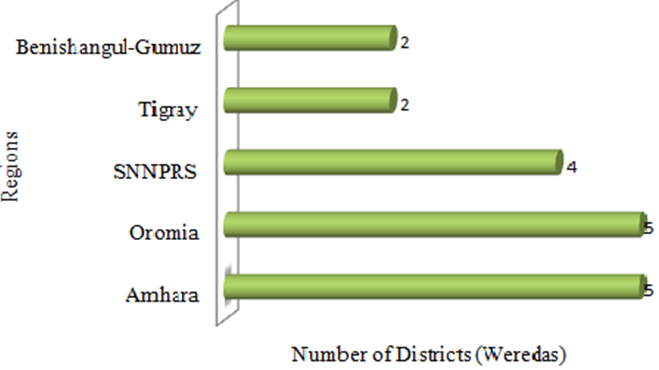
In this review, a total of 18 districts (weredas) were taken from five regions (Amhara, Oromia, Benishangul-Gumuz, SNNPR, and Tigray). Amhara and Oromia account for five districts each, whereas SNNPRS, Tigray, and Benishangul- Gumuz, 4, 2, and 2 districts were selected, respectively (Figure 1; S2). However, the papers were taken randomly, and therefore the review does not indicate whether the given regions were extensively studied or not. In any case, the different research papers revealed that, compared to the huge number of districts in the country, the ethnomedicinal studies that have been undertaken are almost scanty. On the other hand, of the eighteen scientific papers taken into account from the five regions, nine of them are M.Sc. theses.
| Research Title | Author and Year | Study Region | Type of paper |
|---|---|---|---|
| Ethnobotanical study of traditional medicinal plants of Goma Wereda, Jima Zone | Etana, 2010 | Oromia | M.Sc. Thesis |
| Use and Management of Medicinal Plants by Indigenous People of Ejaji Area (Chelya Wereda) West Shewa, | Amenu, 2007 | Oromia | M.Sc. Thesis |
| Ehnobotanical study of medicinal plants used by local communities in Debark Wereda, North Gondar | Abebe, 2011 | Amhara | M.Sc. Thesis |
| Use and Conservation of Traditional Medicinal Plants by Indigenous People in Gimbi Wereda, Western Wellega | Tolosa, 2007 | Oromia | M.Sc. Thesis |
| An Ethnobotanical Study of Medicinal Plants in Amaro Woreda, Ethiopia. | Mesfin et al., 2014 | SNNPRS | Journal |
| An Ethnobotanical Study of Traditional use of medicinal plants and their conservation status in Mecha Wereda, West Gojjam zone | Gebeyehu et al., 2014 | Amhara | Journal |
| An Ethnobotanical Study of Plants Used in Traditional Medicine and as Wild Foods in and around Tara Gedam and Amba Remnant Forests in Libo Kemkem Wereda, South Gondar Zone | Chekole, 2011 | Amhara | M.Sc. Thesis |
| Ethnobotanical study on medicinal plants used by indigenous local communities in Minjar-Shenkora Wereda, north Shewa zone | Alemayehu, 2010 | Amhara | M.Sc. Thesis |
| Ethnobotanical study of traditional medicinal plants in Gindeberet District | Yirga and Zeraburk, 2011 | Tigray | Journal |
| Ethnobotanical study of traditional medicinal plants used by indigenous people of Gemad District | Mesfin et al., 2013 | Tigray | Journal |
| Ethnobotany of Medicinal Plants in Loma and Gena Bosa Districts (Woredas) of Dawro Zone | Agize et al., 2013 | SNNPRS | Journal |
| An Ethnobotanical Study of Medicinal Plants in Seru Wereda, Arsi Zone | Gebrehiwot, 2010 | Oromia | M. Sc. Thesis |
| Medicinal plants of the Shinasha, Agew-awi and Amhara peoples in northwest | Giday et al.,2007 | Benishangul- Gumuz | Journal |
| Medicinal plants of the Meinit ethnic group of Ethiopia: An ethnobotany study. | Giday et al.,2009 | Benishangul- Gumuz | Journal |
| An ethnobotanical study of medicinal plants in Wayu Tuka District, East Welega Zone | Megersa et al., 2013 | Oromia | Journal |
| An Ethnobotanical Study of Medicinal Plants in Farta Wereda, South Gondar Zone | Amsalu, 2010 | Amhara | M. Sc. Thesis |
| An Ethnobotanical Study of Medicinal Plants in Wondo Genet Natural Forest and Adjacent Kebeles, Sidama Zone | Tamene, 2011 | SNNPRS | M. Sc. Thesis |
| Ethnobotanical study of medicinal plants in Kafficho people, southwestern Ethiopia | Awas and Sebsebe, 2009 | SNNPRS | Proceeding |
Table S2: List of reviewed papers on ethnobotany.
Diversity of Medicinal Plants in Terms of Families
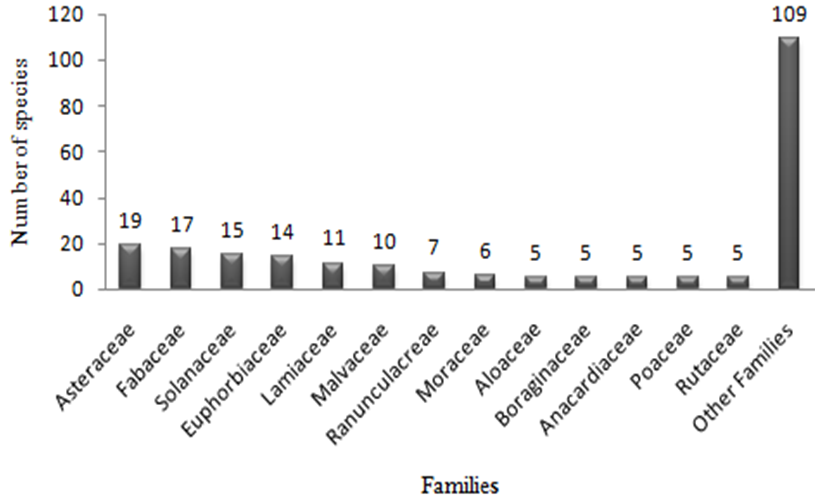
Asteraceae is the most dominant family, holding 19 plant species, followed by Fabaceae, which has 17 species. Other taxa commonly used are Solanaceae (15 spp.), Euphorbiaceae (14 spp.), Lamiaceae (11 spp.), Malvaceae (10 spp.), Ranunculaceae (7 spp.), Moraceae (6 spp.), Aloaceae, Anacardiaceae, Boraginaceae, Poaceae, and Rutaceae (5 each). The other fifty-eight families hold 109 species. Of which Acanthaceae, Capardiaceae, Commelinaceae, Convolvolaceae, and Cucurbitaceae each account for 4 species. The rest of the families signify one, two, or three species (Figure 2; S1).
Different Parts of Plants Used to Cure Skin Diseases
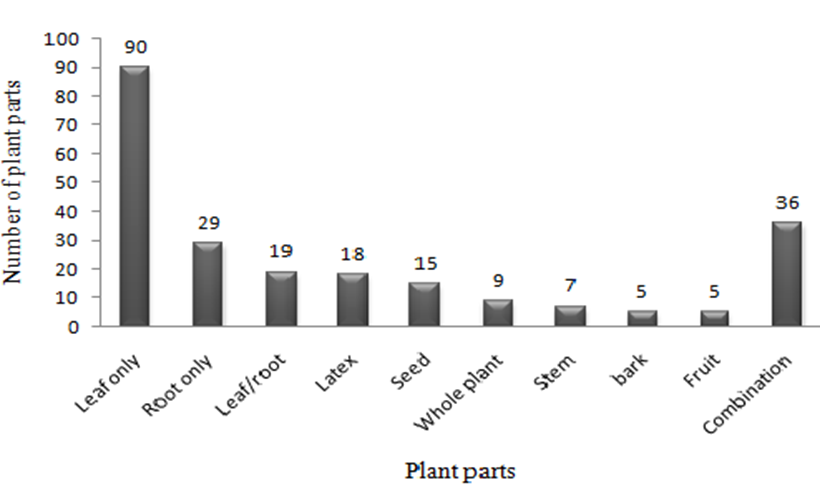
The plant parts used ranged from leaves (90), root (29), root and leaf (19), latex/sap (18), seed (15), whole plant (9), stem (7), to barks and fruits (5 each). In addition, two or more combinations of parts (which account for 36), such as flowers, seeds, leaves, bark, latex, fruit, resin, rhizomes, and the like, were used. The survey data revealed that leaves were by far the most widely used plant parts, followed by roots, leaves, or roots in the preparation of remedies (see Fig. 3 and S1). The different reports in Ethiopia have also shown that leaves were the most commonly used, followed by roots, to treat various health problems [29, 30, 31].
Habits of Medicinal Plants that Treat Skin Diseases
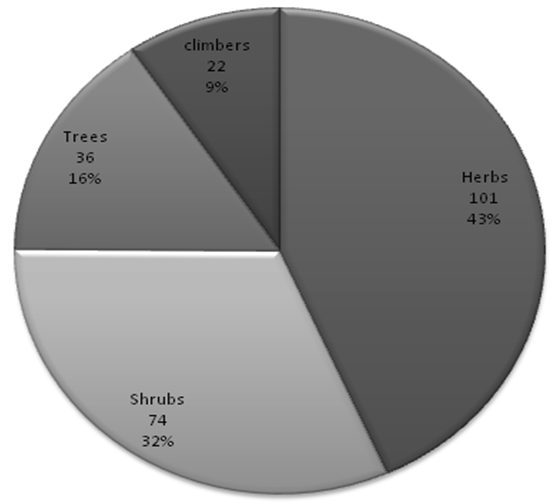
The review shows that the most widely used medicinal plants habit in the different study areas were herbs 101 (43%) followed by shrubs 74 (32%). Trees and climbers account 36 (16%) and 22 (9%) respectively (Figure 4; S1). Herbs are largest in number this may be due to the plant species exhibit high level of abundance and easy to access them. The results of this reviews agreed with the findings of other indigenous researchers including Berhanu, et al. [29, 32, 33, 34, 35, 36, 37]. On the contrary, the findings of Tamene B, et al. [13, 15, 30, 32, 36, 37] revealed that shrubs are the most commonly used habits in their respective different study sites of Ethiopia.
Ten top Medicinal Plants used in the Prevention and Treatment of Skin Diseases
Based on the reviewed data from various sources, Croton macrostachyus and Dataura stramonium were cited by 12 authors as treating 6 and 7 skin diseases, respectively. Brucea antidysenterica, Plantago lanceolata, and Rhamnus prinoide were cited by 24 (each 8) authors and each of them treats 7, 7, and 6 dermatological diseases, respectively. Justicia schimperiana and Euphorbia tirucalli were the least both in terms of the number of diseases treated and the number of authors cited (Table 2). The diseases treated by the ten top medicinal plants were: skin lesion, dandruff, burn, open wound, skin infection boil, Tinea nigri, snake bite, ulcer, wound, itching, cut, eczema, skin disease, skin cancer, haemorrhage, ringworm, wart, open sore, rheumatism, scabies, herpes, blood clot, body swelling, poison, scabies, and athlete’s foot (Table 2; S1).
| Botanical Names | No. of Diseases Treated | No. of Authors Cited |
|---|---|---|
| Brucea antidysenterica | 7 | 8 |
| Croton macrostachyus | 6 | 12 |
| Dataura stramonium | 7 | 12 |
| Dodonaea angustifolia | 7 | 6 |
| Euphorbia tirucalli | 5 | 6 |
| Justicia schimperiana | 6 | 5 |
| Plantago lanceolata | 7 | 8 |
| Rhamnus prinoides | 6 | 8 |
| Rumex nepalensis | 6 | 7 |
| Vernonia amygdalina | 7 | 7 |
Table 5: Top ten Plant species cited by many authors which treat many skins diseases.
Preparations and Mode of Applications of Herbal Medicines
The majority of traditional medicinal plants were prepared using water as a medium. The mode of application was topical, confined to the affected portion of the skin [37, 38, 39, 40, 41, 42, 43, 44, 45, 46, 47, 48, 49, 50, 51, 52, 53, 54, 55]. In some cases, additives were added during applications. The above authors reported that the methods of preparation used by traditional healers were crushing, squeezing, and powdering. Most of the medicinal plants encountered in the study areas were prepared from a single plant or plant part. The use of multiple plants or plant parts for a single skin disease problem was rare. It was also reported that the condition of the plant materials used was fresh, dry, or fresh or dry.
Plants used to Treat Skin Diseases
The paired comparison of five selected medicinal plants out of 15 species used to treat a disease called wound based on informant consensus showed that Euphorbia abyssinica, Ranunculus oligocarpus, Clematis simensis, Justicia schimperiana, and Dodonaea angustifolia stood 1st, 2nd, 3rd, 4th, and 5th, respectively [53]. For a similar disease, the same number of medicinal plants were identified and compared using ten informants to know their rank; thus, Plantago lanceolata stood first, followed by Rumex nepalensis Tolasa E, [41]. On the other hand, using seven informants Etana T, [57] found that Indigofera spicata species stood first for the treatment of skin allergies, and Drymaria cordata, Ipomoea tenuirostris, and Withania somnifera were ranked 2nd, 3rd, and 4th, respectively. Kalanchoe petitiana was the least preferred species to treat the disease in the area. He indicated that rank is because of the efficacy of the plant, at least in the context of local people.
The most preferred medicinal plants among the five species that were used to treat fibril illness in the study area, based on the responses of ten key informants, showed that Zehneria scabra ranked first, followed by Ocimum lamiifolium, and the least favoured one was Cyathula polycephala Gebrehiwot, [49]. Similarly, Abebe E, et al. [40], indicated that Zehneria scabra is the most preferred, while Cyathula polycephala is the least preferred of the other plant species cited in treating fibril illness.
Researchers also figured out the preference ranking of six medicinal plants that were reported for treating wounds after selecting ten key informants. Plantogo lanceolata ranked first, indicating that it is the most effective in treating wounds, followed by Rumex nervosus, and the least effective was Euphorbia platyphyllos [40]. Nicotiana tabacum stood first among the six plant species, followed by Senna didymobotrya, in treating snakebite [41]. By following the same method, it was also reported that Dodonaea angustifolia was rated as the most effective in treating wounds, followed by Solanium marginatum. This is based on the perceptions of ten traditional healers in the study area [49].
A direct matrix of randomly selected medicinal plants with different uses, including medicinal value, based on a given use criteria revealed that medicinal plants were broadly collected for different purposes such as charcoal, construction, fencing, firewood, forage, furniture, and the like Amsalu, et al. [49, 52, 53, 54, 57].
Indigenous Knowledge (IK)
There is a traditional distinction between attitudes towards knowledge in academia and industry. Educators have typically considered knowledge a public good, and the acquisition and dissemination of knowledge have therefore been encouraged with the same open-mindedness [58]. By definition, IK is context-specific. What works successfully in one location or for one community may not work for another. The defeat is to extract from the knowledge that applies in a particular context the more general aspects that can be applied elsewhere. Experience and case studies show that this is possible, but at the same time, it necessitates a careful approach [59].
The IK of medicinal plants in Ethiopia is unevenly distributed among community members [60]. However, all share IK, and only a few hold specialised knowledge. Knowledge and social structure are thus intertwined Kibebew and Asfaw Z, [60]. The distribution of this knowledge and service is hierarchically placed. Services are obtained from the family, the neighbourhood, the village or beyond Fasil H, [61].
Threats to Medicinal Plants and Indigenous Knowledge in Ethiopia
In Ethiopia, traditional medicine, as elsewhere in other developing countries, is faced with a problem of sustainability and continuity, mainly due to the loss of taxa of medicinal plants and habitats of medicinal and other categories of plants and cultures [60]. The diversity of plants in Ethiopia is in the process of erosion due to anthropogenic pressures [62]. The same document states that habitat destruction and deforestation by commercial timber interests and encroachment by agriculture and other land uses have resulted in the loss of some thousand hectares of forest, which harbors useful medicinal plants, annually over the past several decades.
Different researchers’ findings also indicated that agricultural expansion, fuel, grazing, drought, and construction, as well as other destructive factors in the study areas [15, 38, 39, 43, 44, 45, 48, 49, 53, 56, 63, 72], resulted in the disappearance of medicinal plants.
In Ethiopia, the loss of indigenous knowledge is not too far from developed countries. The vast knowledge of traditional uses of plants is not fully documented, and most of the knowledge is conveyed from generation to generation by word of mouth Kibebew and Weldegerima. The review could trigger the undertaking of ethnopharmacological surveys and conservation activities of these highly threatened plants by governmental or non-governmental bodies based on their potential sources for seeking new medicinal active compounds.
Conservation of Traditional Medicinal Plants
Plant genetic resources can be conserved in situ or ex situ; the two systems are complementary and are being adopted as part of the conservation strategy in Ethiopia [62]. Asfaw Z, et al. [60] also clearly indicated that some traditional medicinal plants have to be conserved in situ due to difficulties in domestication and management [60]. Moreover, some plants fail to produce the desired amount and quantity of the active principles under cultivation outside of their natural habitats. Medicinal plants can also be conserved by ensuring and encouraging their growth in special places, as they have been traditionally. This can be possible in places of worship (churches, mosques, grave yards, etc.), sacred grooves, farm margins, river banks, road sides, live fences of gardens, and fields [60]. However, another researcher stated that conservation of diversity in plants can in principle be done in three different ways: ex-situ conservation in gene banks, ex-situ conservation in botanic gardens, or “field gene banks,” and in-situ conservation in national parks and resources. Each of the three methods has its advantages and disadvantages [64].
In this review, Amsalu N and Chekole G [44, 53] found conservation and management areas in remnant woody plant patches in Orthodox Tewahdo church forests in Farta and Libo Kemkem Weredas, Sounth Gondar Zone. The ritual and spiritual protected areas for celebration of “Gada” and “Jaarii,” “Errecha,” and “Qe’ee Ayyantuu” preferably contain more plant diversity because the cultural rule of harvest forbids the harvest of plant resources from these areas, possibly preserving indigenous ethnobotanical information and cultural components [39]. Similarly, Tolosa E and Megersa M, et al. [41, 52] reported that medicinal plants were collected during ‘Chegino’, which means Monday, Wednesday, and Friday, and the limitation of days for collecting medicinal plants reduced the effect. This shows that culture, belief, and religion contribute a lot to the conservation of medicinal plants. On the other hand, some traditional practitioners have started to conserve medicinal plants by cultivating them at homegarden [44, 45, 53, 57].
Critics of the Review
Many of the earliest ethnobotanical studies showed that there had mostly been more producing inventories and checklists, and so the application of full-blown ethnobotanical research methodology is just taking shape, with more bias to the qualitative approach. However, the studies so far have shown that the role of medicinal plants in different parts of Ethiopia is significant, and traditional healthcare is deeply rooted in oral and written pharmacopoeias. There has been qualified and quantified information on the amount of plant matter. Thus, in most M.Sc. theses, unlike a few scientific journals, data analysis techniques like informant consensus, preference ranking, direct matrix ranking, paired comparison, use values, ICF, and fidelity level were used.
It is known that a number of studies have been conducted elsewhere in the country, even though the distribution is unfair among regions. Most of the research papers are unpublished. On the other hand, in the review paper, some of the published journals missed relevant ethnobotanical information like family names, unitalicized scientific names, diseases treated, therapeutic effects, parts of plants used, methods of preparation, methods of administration, and doses. In a few cases, incorrect phonetic transcription of the local names of plant species and a lack of collection numbers were observed. Writing unspecified diseases´ names is also another problem. The review showed that most of the studies conducted in Ethiopia focused on the medicinal use of plants and associated traditional healing practices. However, ethnobotanical studies on specific health problems, like dermatological or skin-related diseases, are generally very limited in the country.
Conclusions
The current literature study is carried out to gain knowledge about the medicinal plants that are used to treat skin diseases in the context of Ethiopia. Though about 233 plant species were investigated from 18 research papers during this work, this number could have increased considerably if all ethnobotanical research papers had been taken into account. There are a huge number of plants that are used as herbal medicines, and people prefer them because of their lesser side effects and because they have more benefits as a result of the combinations of medicinal constituents joined with natural components. Traditional medicinal plants have great importance because they include the experiences of native people and also provide information about ethnobotanical plants. Through ethnobotanical surveys, indigenous knowledge from native people and practitioners is collected and recognized in order to identify plants that can be a source of drugs against skin infections.
For a long time, medicinal plants have been known to cure and treat various human diseases. There are lots of medicinal plants available in nature that has anti-skin properties, and the majority of them are still to be explored for their anti-skin properties. Ethiopia is endowed with diverse flora owing to the existence of great physiographic, edaphic, and climatic variations. However, the country is faced with a number of threats to medicinal plants; hence, in- situ and ex-situ measures are vital to conserve the maximum diversity of plants.
Recommendations
Based on the review given above and my own view, the following recommendations are forwarded:
- Ethnobotanical research should synchronise both qualitative and quantitative data.
- Sampling techniques must be representative of the given populations while carrying out research;
- More efforts should be made to isolate active ingredients from these medicinal plants so that more effective and safer drugs could be developed for the treatment of skin diseases;
- Ethnobotanical research related to dermatological and skin diseases has to be conducted in different areas of Ethiopia;
- There should be mass responsibility for the issues of medicinal plants and indigenous knowledge to conserve and build up their values.
Ethics Approval and Consent to Participate
- Not applicable.
- Availability of data and materials
- All relevant data are within the manuscript.
Competing Interests
I have no competing interests.
Funding
For this study, the authors did not receive any funding.
References
-
Abebe D, Ayehu A (1993) Medicinal Plants and Eenigmatic Health Practices of Northern Ethiopia. BSPE Addis Ababa, pp: 419-431.
-
Govaerts R (2001) How many species of seed plants are there? Taxon 50: 1085-1090.
-
Schippmann U, Cunningham AB, Leaman DJ (2002) Impact of cultivation and gathering of medicinal plants on biodiversity global trends and issues Biodiversity and the Ecosystem Approach in Agriculture, Forestry and Fisheries. Ninth Regular Session of the Commission on Genetic Resources for Food and Agriculture FAO. Rome 143–167.
-
Asfaw Z, Wondimu T (2007) Introduction to Ethnobiology. Department of Biology Addis Ababa University, Addis Ababa, pp: 244.
-
Asfaw Z, Abebe, Ayehu (1997) A survey of Indigenous Food Crops their Preparations and Homegardens in Ethiopia. United Nations Institute for Natural Resources in Africa Series No. B6, ICIPE, Science Press, Nairobi.
-
Korpenwar AN (2012) Ethnomedicinal Plants Used to Cure Skin Diseases In Ambabarwa Wild Life Sanctuary Area of Buldhana District (M.S.) India. International Journal of Recent Trends in Science and Technology 2(3): 36-39.
-
Madhu V, Arra RY (2011) Investigations on Ethno medicinal plants used to cure skin diseases in Adilabad District Andhra Pradesh, India. Int J of Pharm and Life Sci 2(5): 742-745.
-
Hay RJ, Anderson N, Estrada R (1991) Mexico community Dermatology in Guerrero. Lancet 337: 906-907.
-
Abebe D, Debella A, Urga K (2003) Medicinal Plants and Other Useful Plants of Ethiopia. Ethiopian Health and Nutrition Research Institute, Addis Ababa, Ethiopia.
-
Estrada R, Torres B, Alarcon H, Ascencio VA, Eduardo MS, et al. (1992) Cutaneous epidemiology in two sectors of health care in Guerrero Mexico. Dermatol rev mex 36(1): 29-34.
-
Figueroa JI, Fuller LC, Abraha A, Hay RJ (1996) The Prevalence of Skin Diseases Among School Children in Rural Ethiopia a Preliminary Assessment of Dermatological Needs. Pediatr Dermatol 13(5): 378-381.
-
Abbink J (1995) Medicinal and ritual plants of the Ethiopian South West. An account of recent research. Indigenous knowledge and development Monitor 3(2): 6-8.
-
Hunde D, Asfaw A, Kelbessa E (2004) Use of traditional medicinal plants by people of ‘Boosat’ Sub district, central eastern Ethiopia. Ethiop J Healh Sci 16(2): 141- 155.
-
Balemie K, Kelbessa E, Asfaw Z (2004) Indigenous medicinal plants utilization management and threats in Fentale area eastern Shewa. J Sci 3(1): 37-58.
-
Lulekal E, Kelbessa E, Bekele T, Yineger H (2008) An ethnobotanical study of medicinal plants in Mana Angetu District southeastern Ethiopia. Journal of Ethnobiology and Ethnomedicine 4:10.
-
Teklehaymanot T, Giday M (2007) Ethnobotanical study of medicinal plants used by people in Zegie Peninsula Northwestern Ethiopia. Journal of Ethnobiology and Ethnomedicine 3: 12.
-
Abebe D (2001) The role of medicinal plants in health care coverage of Ethiopia. The possible benefits of integration In Conservation and Sustainable Use of Medicinal Plants in Ethiopia pp. 6-21.
-
Mitscher LA, Drake S, Gollapudi SR, Okwute SK (1987) A Modern Look at Folkloric Use of Anti-infective Agents. J Nat Prod 50(6): 1025-1040.
-
Simandi C (1990) Alteration in Skin Function and Integrity In Pathophysiology Concepts of Altered Health States. In: Porth CM, 3rd (Edn,) JB Lippincott Company, USA, pp: 108-140.
-
Martindale W (1996) The Extra Pharmacopoeia, 31st Edition, the Royal Pharmaceutical Society. Reynolds, United Kingdom, pp: 160-163.
-
Srinivasan D, Nathan S, Suresh T, Permalsamy PL (2001) Antimicrobial activity of certain Indian medicinal plants used in folkloric medicine. J Ethnopharmacol 74(3): 217-220.
-
Dweck CA (2002) Herbal medicine for skin their chemistry and effects on skin and mucous membranes. Personal Care Magazine 3(2): 19-21.
-
Mantle D, Gok MA, Lennard TW (2001) Adverse and beneficial effects of plant extracts on skin and skin disorders. Adverse Drug React Toxicol Rev 20(2): 89- 103.
-
Quave CL, Plano LR, Pantuso T, Bennet BC (2009) Effects of extracts from Italian medicinal plants on planktonic growth biofilm formation and adherence of methicillin resistant _Staphylococcus aureus_. J Ethnopharmacol 118(3): 418-428.
-
Ababa OO, Smith SI, Olude FO (2006) Antibacterial Effect of Edible Plant Extract on Escherichia coli 0157 h7. Pakistan Journal of Nutrition 5(4): 325-327.
-
Katewa SS, Chaudhary BL, Anita J (2004) Folk herbal medicine from tribal area of Rajastan India. J Ethnopharmacol 92(1): 41-46.
-
Satima FT, Birde SR, Leppard B (1999) Prevalence of Skin Disease in Rural Tanzania and Factors Influencing the Choice of Health Care Modern or Traditional. Arch Dermatol 134(11): 1363-1366.
-
Figueroa JI, Fuller LC, Abraha A, Hay RJ (1998) Dermatology in Southwest Ethiopia Rational for a Community Approach. Int J Dermatol 37(10): 752-758.
-
Giday M, Asfaw Z, Thomas E, Woldu Z (2003) An ethnobotanical study of medicinal plants used by the Zay people in Ethiopia. J Ethnopharmacol 85(1): 43-52.
-
Giday M, Ameni G (2003) An Ethnobotanical Survey on Plants of Veterinary Importance in Two Weredas of Southern Tigray Northern Ethiopia. SINET Ethiop J Sci 26(2): 123-136.
-
Yineger H, Yewhalaw D (2007) Traditional medicinal plant knowledge and use by local healers in Sekoru District, Jimma Zone, Southwestern Ethiopia. Journal of Ethnobiology and Ethnomedicine 3: 24.
-
Berhanu A, Asfaw Z, Kelbessa K (2006) Ethnobotany of plants used as insecticides, repellents and antimalarial agents in Jabitehnan district, West Gojjam. SINET: Ethiop J Sci 29(1): 87-92.
-
Gebre T (2005) An ethnobotanical study of medicinal plants in Konso Special Woreda, Southern Nations, and Nationalities and Peoples Regional State, Ethiopia. Addis Ababa University, Addis Ababa.
-
Teklehaymanot T, Giday M, Medhin G, Mekonnen Y (2007) Knowledge and use of medicinal plants by people around Debre Libanos monastery in Ethiopia. J Ethnopharmacol 111(2): 271-283.
-
Michael GW (2009) Ethnobotanical Study on Medicinal Plants used by Local Communities in Wolmera Wereda, West Shewa Zone of Oromia Region, Ethiopia. MSc Thesis (unpublished), Addis Ababa University, Ethiopia.
-
Tamene B (2000) A Floristic Analysis and Ethno botanical Study of the Semi-Wetland of Cheffa Area, South Wello, Ethiopia. Addis Ababa University, Ethiopia.
-
Mesfin F, Demissew S, Teklehaymanot T (2009) An ethnobotanical study of medicinal plants in Wonago Woreda, SNNPR, Ethiopia. Journal of Ethnobiology and Ethnomedicine 5: 28.
-
Etana B (2010) Ethnobotanical study of traditional medicinal plants of Goma Wereda, Jima Zone of Oromia Region, Ethiopia. M.Sc. Thesis, Addis Ababa University, Ethiopia.
-
Amenu G (2007) Use and Management of Medicinal Plants by Indigenous People of Ejaji Area (Chelya Wereda) West Shewa, Ethiopia: An Ethnobotanical Approach. M.Sc. Thesis (unpublished), Addis Ababa University, Addis Ababa, Ethiopia.
-
Abebe E (2011) Ehnobotanical study of medicinal plants used by local communities in Debark Wereda, North Gondar zone, Amhara Regional State, Ethiopia. Addis Ababa University, Addis Ababa Ethiopia.
-
Tolasa E (2007) Use and Conservation of Traditional Medicinal Plants by Indigenous People in Gimbi Wereda, Western Wellega. Addis Ababa University, Ethiopia.
-
Mesfin F, Seta T, Assefa A (2014) An Ethnobotanical Study of Medicinal Plants in Amaro Woreda, Ethiopia. Ethnobotany Research & Applications 12: 341-354.
-
Gebeyehu G, Asfaw Z, Enyew E, Raja N (2014) An Ethnobotanical Study of Traditional use of medicinal plants and their conservation status in Mecha Wereda, West Gojjam zone of Amhara Region, Ethiopia. Int J and H Care Res 2(3): 137-154.
-
Chekole G (2011) An Ethnobotanical Study of Plants Used in Traditional Medicine and as Wild Foods in and around Tara Gedam and Amba Remnant Forests in Libo Kemkem Wereda, South Gondar Zone, Amhara Region, Ethiopia. Addis Ababa University, Addis Ababa, Ethiopia.
-
Alemayehu G (2010) Ethnobotanical study on medicinal plants used by indigenous local communities in Minjar- Shenkora Wereda, north Shewa zone of Amhara Region, Ethiopia.
-
Yirga G, Zeraburk S (2011) Ethnobotanical study of traditional medicinal plants in Gindeberet District, Western Ethiopia. Mediterranean Journal of Social Sciences 2(4): 49-54.
-
Mesfin K, Tekle G, Tesfay T (2013) Ethnobotanical study of traditional medicinal plants used by indigenous people of Gemad District, Northern Ethiopia. Journal of Medicinal Plants Studies 1(4): 32-37.
-
Agize M, Demissew S, Asfaw Z (2013) Ethnobotany of medicinal plants in Loma and Gena Bosa Districts (Woredas) of Dawro Zone, Southern Ethiopia. Topclass Journal of Herbal Medicine 2(9): 194-212.
-
Gebrehiwot G (2010) An Ethnobotanical Study of Medicinal Plants in Seru Wereda, Arsi Zone of Oromia Region, Ethiopia. Addis Ababa University, Addis Ababa, Ethiopia.
-
Giday M, Teklehaymanot T, Animut A, Mekonnen Y (2007) Medicinal plants of the Shinasha, Agew-awi and Amhara peoples in northwest Ethiopia. J Ethopharmaco 110(3): 516-525.
-
Giday M, Asfaw Z, Woldu Z (2009) Medicinal plants of the Meinit ethnic group of Ethiopia: An ethnobotany study. J Ethnopharmacol 124(3): 513-521.
-
Megersa M, Asfaw Z, Kelbessa E, Beyene A, Woldeab B (2013) An ethnobotanical study of medicinal plants in Wayu Tuka District, East Welega Zone of Oromia Regional State, West Ethiopia. J Ethnobiology Ethnomedicine 9: 68.
-
Amsalu N (2010) An Ethnobotanical Study of Medicinal Plants in Farta Wereda, South Gondar Zone of Amhara Region, Ethiopia, Addis Ababa University, Addis Ababa, Ethiopia, pp: 117.
-
Tamene S (2011) An Ethnobotanical Study of Medicinal Plants in Wondo Genet Natural Forest and Adjacent Kebeles, Sidama Zone, SNNPR Region, Ethiopia. Addis Ababa University, pp: 73.
-
Awas T, Demissew S (2009) Ethnobotanical study of medicinal plants in Kafficho people, southwestern Ethiopia. In: Svein E, et al. (Eds.), Proceedings of the 16th International Conference of Ethiopian Studies 3rd (Edn.), Norwegian University of Science and Technology, Norway, pp: 711-726.
-
Abdurhman N (2010) Ethnobotanical Study of Medicinal Plants used by Local People in Ofla Wereda, Southern Zone of Tigray Region, Ethiopia. Addis Ababa University, Addis Ababa, Ethiopia, pp: 100.
-
Etana T (2010) Ethnobotanical study of traditional medicinal plants of Goma Wereda, Jima Zone of Oromia Region, Ethiopia. Addis Ababa University, pp: 102.
-
Hamilton AC (2003) Medicinal Plants and Conservation: Issues and Approaches. International Plants Conservation Unit WWF UK: 43.
-
Hens L (2006) Indigenous Knowledge and Biodiversity Conservation and Management in Ghana. J Hum Ecol 20(1): 21-30.
-
Asfaw Z (2001) The role of home gardens in production and conservation of medicinal plants. In: Medhin Z, et al. (Eds.), Conservation and Sustainable Use of Medicinal Plants in Ethiopia. Proceedings of the National Workshop on Biodiversity conservation and Sustainable Use of Medicinal Plants in Ethiopia, Institute of Biodiversity Conservation and Research, Ethiopia, pp: 76-91.
-
Fasil H (2005) Beyond Plants, Professionals and Parchments: The role of home-based medicinal plant use and traditional health knowledge in primary health care in Ethiopia. Ethnobotany Research and Applications 3: 37-49.
-
Demisse A (2001) Conservation and Sustainable Use of Medicinal Plants in Ethiopia. Environmental Science, pp: 198-203.
-
Ashagre M (2011) Ethnobotanical Study of Medicinal Plants in Guji Agro-Pastorilists, Blue Hora District of Borana Zone, Oromia Region, Ethiopia. Addis Ababa University, Addis Ababa, Ethopia, pp: 144.
-
Hedberg O (1996) Monographs, databases and biodiversity conservation. In: vander MLJG, et al. (Eds.), The biodiversity of African Plants. Proceedings of XIVth AETFAT Congress 22-27 August 1994, Wageningen, the Netherlands. Springer Science & Business Media, Germany, pp: 3-9.
-
(1988) National Atlas of Ethiopia. EMA.
-
(1986) Some Medicinal Forest Plants of Africa and Latin America. Food and Agricultural Organization, Italy, pp: 253.
-
Getaneh S (2009) Ethnobotanical study of medicinal plants in Debrelibanos wereda, North Shewa Zone of Oromia Region, Ethiopia. Addis Ababa University, Addis Ababa, Ethopia.
-
Hay R, Bendec, SE, Chen S, Estrada R, Haddix A, et al. (2006) Mahe: skin diseases. In: Jamison DT, et al. (Eds.), A Disease Control Priorities in Developing Countries. 2nd (Edn.), Oxford University Press. Washington DC, USA, pp: 707-721.
-
(2008) Ethiopia: Second Country Report on the State of PGRFA to FAO, IBC.
-
(1995) Plant Genetic Resources Center. Ethiopia: Country Report to the FAO International Technical Conference on Plant Genetic Resources, Addis Ababa, Ethiopia, pp. 51.
- Epithelioid Granuloma; 3cases with Different Clinical Features
- Advancing Representation in Dermatology Clinical Trials: Ethical, Scientific, and Regulatory Imperatives for Inclusion Across all Fitzpatrick Skin Types
- A Case of Atopic Dermatitis with Concurrent Psoriasis Vulgaris: Successful Treatment with Upadacitinib
- Innovation Lifting Eyeshadow: A Synthesis of Makeup and Optical Illusion
- Distinguishing Superficial Actinic Porokeratosis from Actinic Keratosis with UVF Dermoscopy: A Case Report
- High Mobility Group Box 1 (HMGB1) in Cutaneous Inflammation: An Immune Modulator Bridging Cellular Stress, Ferroptosis and Danger Signaling