
The Evolution of the Formation of the Human Skull, in Reflection of a Number of Means of Collection
This author's, research article, in the form of screenshots, presents the results of the study, such means of collecting as postage stamps, envelopes, postage stamps, commemorative coins and medals, books, dedicated to the heroes of the article, and their photographs, reflect the processes of evolutionary changes of the human skull, from the period of ancient people, ancestors of modern man, to the present, in the reflection of such means of collecting as philately and numismatics.
Introduction
Human anatomy, is one of the most important, basic, in the list of other medical sciences. The study of anatomy and a number of evolutionary changes in the structure and functioning of the human body is always relevant and in demand. In this matter, human anatomy has significant points of contact with such sciences as paleoanthropology and biology. The study of the structure and functioning of the body of numerous human ancestors - hominids, Neanderthals, Cro-Magnons - gives scientists a better understanding of the processes of human evolution and, in particular, of the human bone system. The question of the formation and evolution of the cranium dominates this issue. A large number of scientific studies, in many areas of science, have been devoted to this question.
The comparative anatomy of the modern human skull, its racial features and the dynamics of evolutionary changes of the human skull, are not yet complete and require further research. In this research work, the author has made an attempt to reflect the representation in different means of collecting, such as philately, philocarty, numismatics (in all their diversity), to present the process of evolutionary changes of the human skull and its ancestors-predecessors and the issues of studying this process. For many decades, paleontological and archaeological excavations have been conducted, as a result of which the remains of ancient humans and, in particular, their skulls, each of which has its own, specific evolutionary features, have been revealed. The study of these issues, through the means of collecting, and will be devoted to the author’s research article.
Aim of the Work
The purpose of this research article is to present new data on the evolution anatomy of the human skull, from ancient, prehistoric skulls to the skulls of modern humansusing, such means of collecting as philately, philocarty, and numismatics.
Material and Methods
When writing this research article, the author used such methods of research as a literary and critical analysis, available thematic materials on the issue under study. Also, actively, with the help of the Internet, special, professional Internet sites and thematic philatelic and numismatic Internet pages and articles were used. All presented illustrative materials are made in the form of screenshot- copies, with strict observance of copyrights and sources of their borrowing.
Results of the Study and Discussion
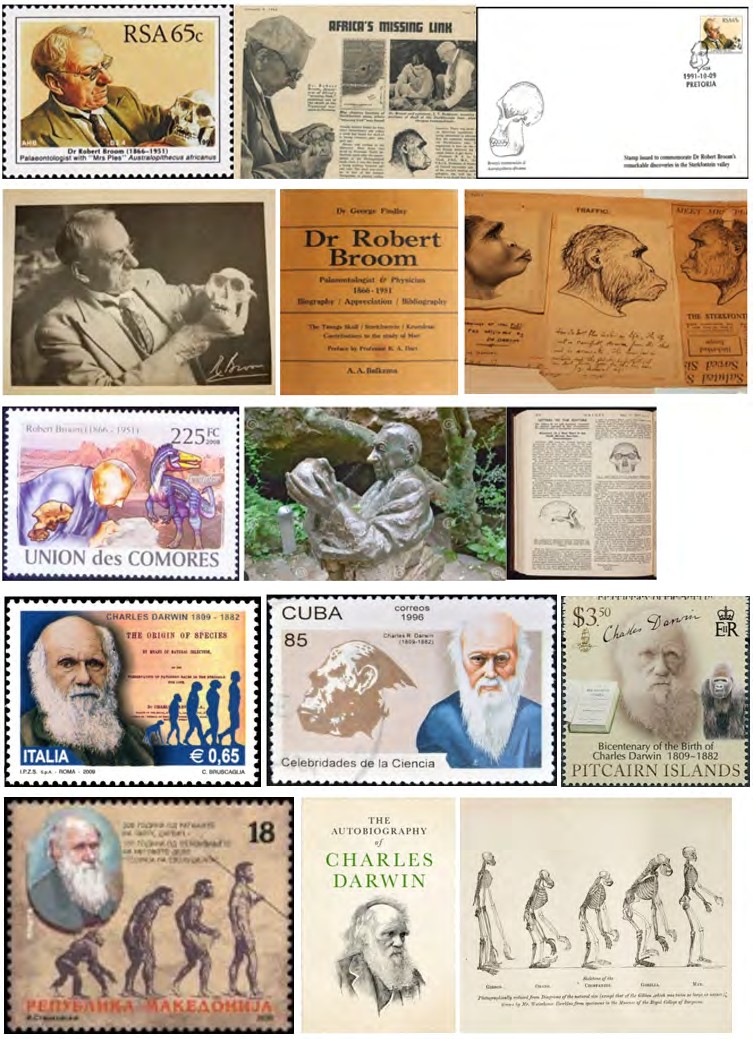
My story about evolutionary changes of the human skull and its ancestors, I would like to start with the presentation of a group of scientists, paleoanthropologists, who dealt with this issue, in the reflection of philatelic means of collecting. This is the famous paleoanthropologist Dr. Robert Broom (1866-1951), who dealt with the issue of studying the structure of the found skull of the Australopithecus Africans [1, 2, 3, 4, 5, 6] (Figure 1).
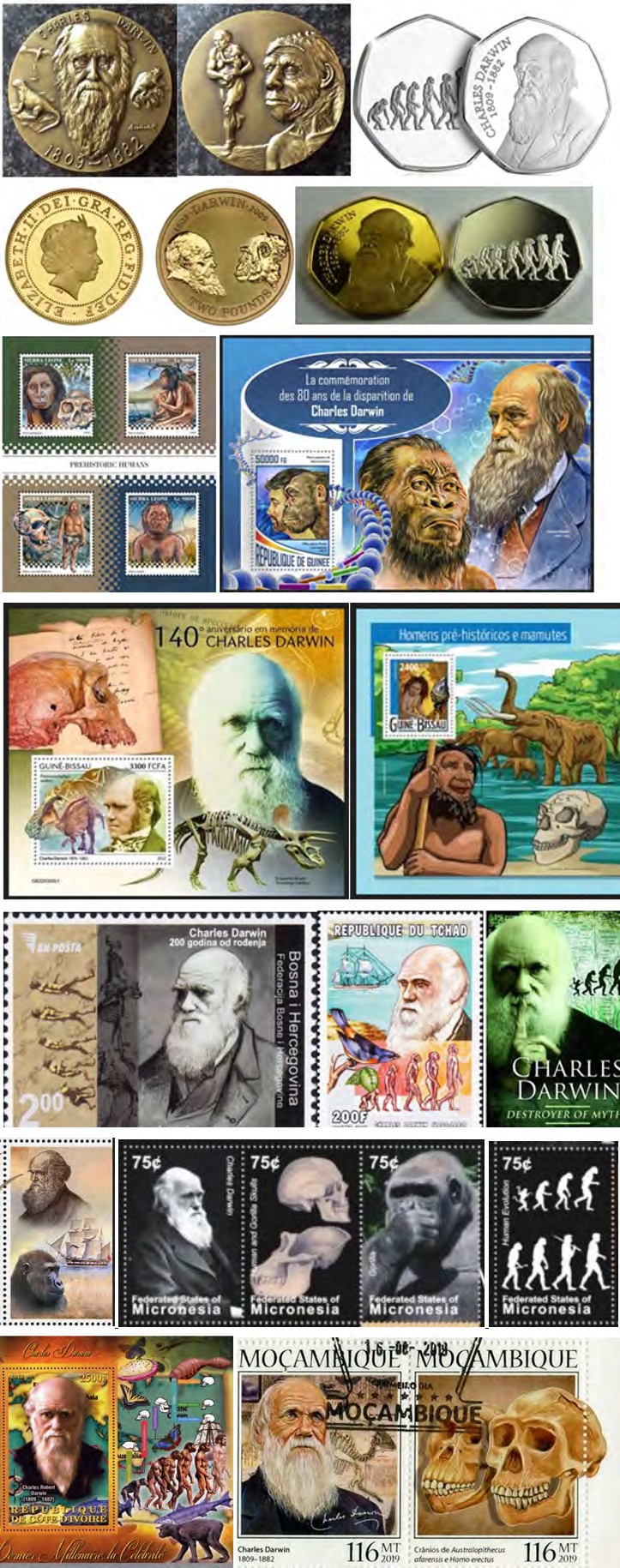
For many years, paleoanthropology and evolutionary change were dealt with by Charles Darwin (1809-1882), the famous English scientist and founder of the theory of evolution [7, 8, 9] (Figure 2).
![Figure 3: Rudolf Virchow in the reflection of philately and numismatics. Figure 4, presents a selection of collection materials devoted to the French paleoanthropologist Marcellin Boule (1861-1942) [14].](/fulltextimages/11731/fig_3.png)
The famous German pathologist Rudolf Virchow was also very active in anthropology, including paleoanthropology [10, 11, 12, 13] (Figure 3).
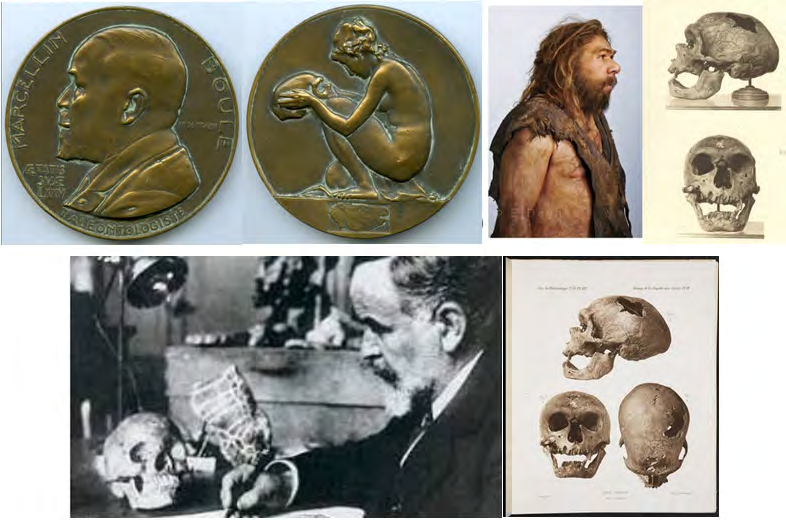
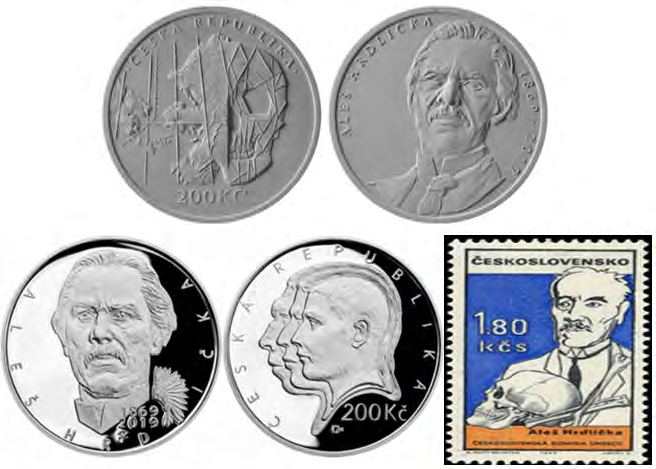
![Figure 4: Marcellin Boule (1861-1942). De Montsalvy aux hommes fossiles. Figure 5 shows a small collection dedicated to the famous Czech paleoanthropologist Aleś Hrdlička (1869), who devoted many years to the study of the remains, including the skulls of ancient people [1-6,15-20].](/fulltextimages/11731/fig_4.png)
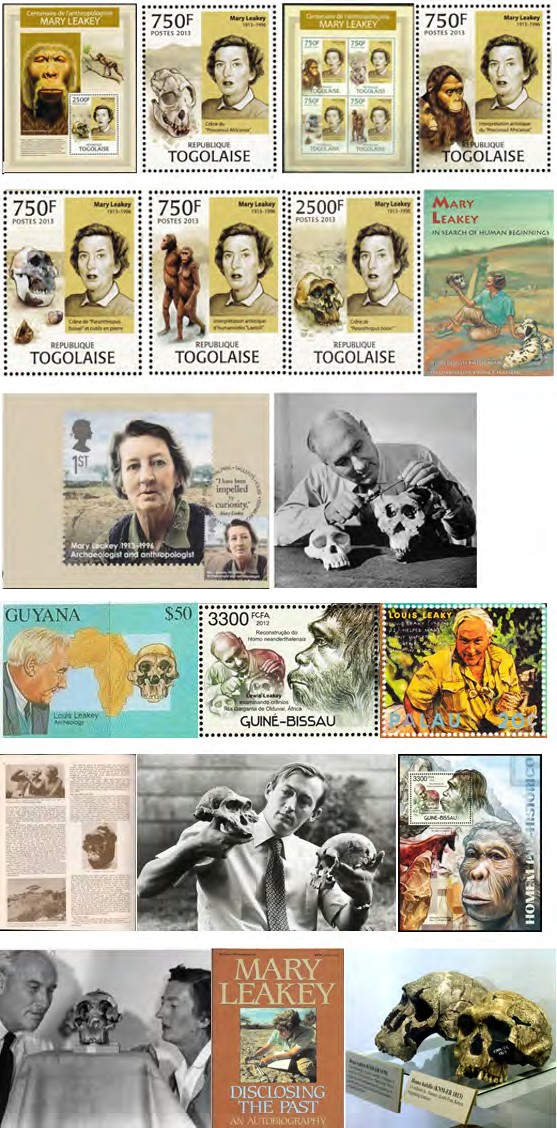
Also, among modern paleoanthropologists, it is well known the name of the scientist-researcher of the bone remains of the ancestors of modern humans - Mary Leakey (1913-1996) and her husband - Levis Leakey [21, 22, 23, 24, 25, 26]. In Figure 4, in addition to a selection of stamps dedicated to the spouses, presented - a book about them, and their discovery, as well as - their photos with skulls of australopithecines found by them [21, 22, 23, 24, 25, 26]. Also, among modern paleoanthropologists, it is well known the name of the scientist-researcher of the bone remains of the ancestors of modern humans - Mary Leakey (1913-1996) and her husband - Levis Leakey [21, 22, 23, 24, 25, 26]. In Figure 4, in addition to a selection of stamps dedicated to the spouses, presented - a book about them, and their discovery, as well as - their photos with skulls of australopithecines found by them [21, 22, 23, 24, 25, 26] (Figure 6).
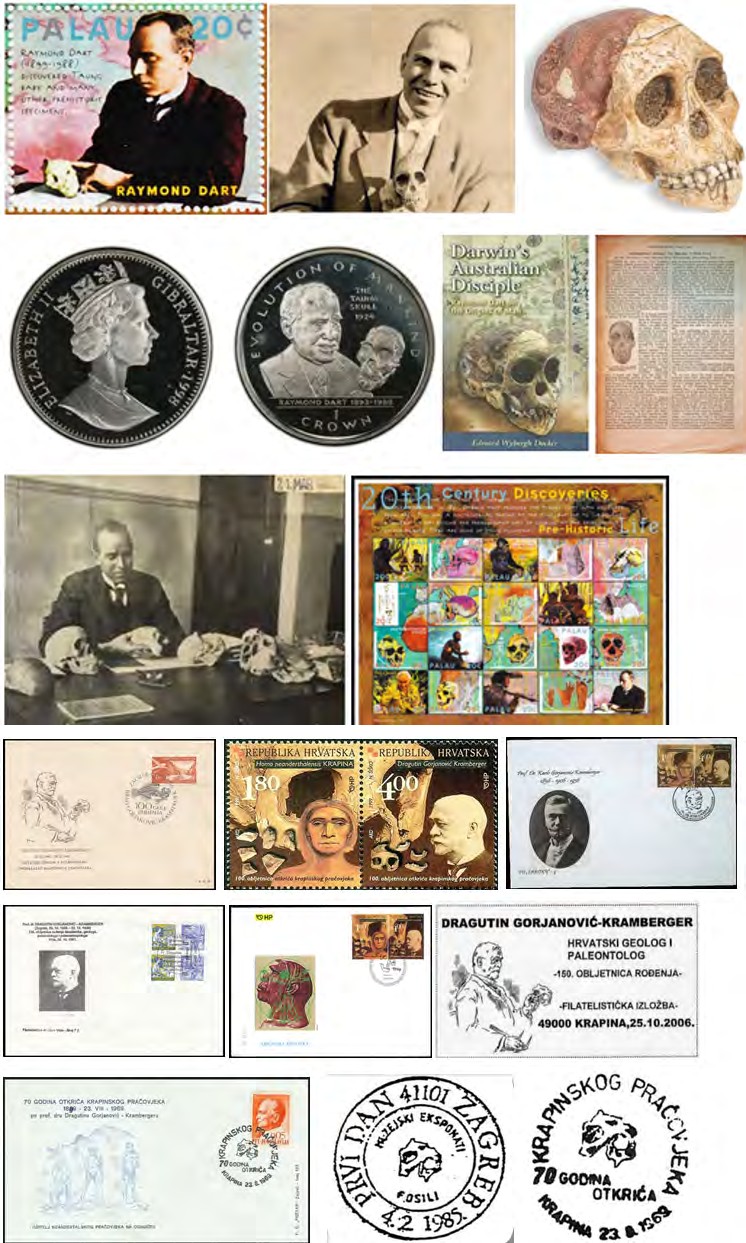
Among paleoanthropologists, the scientific work of Raymond Dart (1899-1988) is well known [27, 28, 29, 30] (Figure 7).
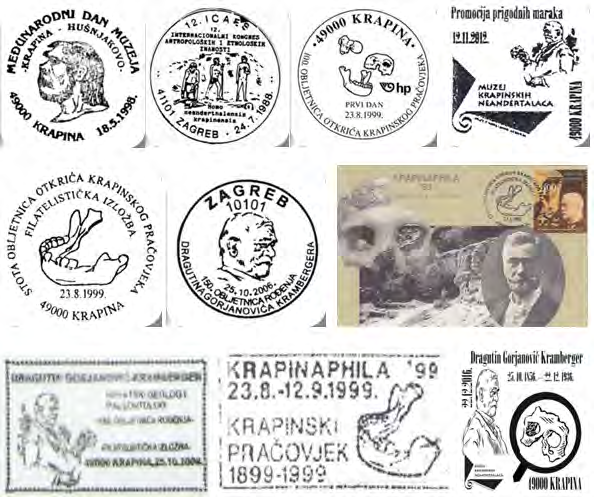
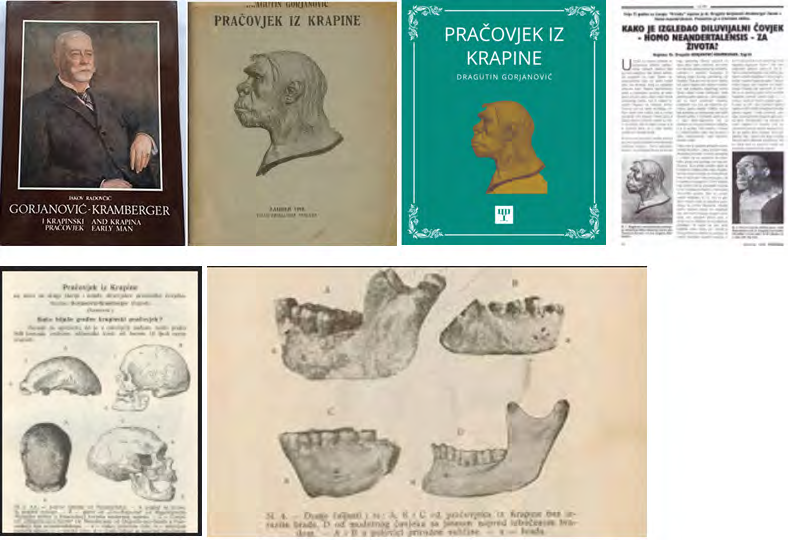
The Croatian scientist Dragutin Gorjanović Kramberger (1856-1936) made a significant contribution to the development of world anthropology. He is the author of works devoted to descriptive paleoanthropology of Neanderthal remains found in Croatian mountains [31, 32, 33, 34] (Figure 8).
It should be noted that the remains of ancient, prehistoric humans/hominids are found all over the world, but quite a few have been discovered in Africa, China and Australia. They find both whole skulls and their separate fragments, as well as those or other parts of skeletons of ancient human ancestors. Long and laborious work on restoration and reconstruction of these remains allows, in many cases, to restore their appearance. In Figure 2, there is a small philatelic selection, depicting the appearance, and skulls of the ancestors of modern man and, in particular - their skulls, in the process of human evolution [1, 2, 3, 4, 5, 25, 33, 35]. These include skulls, of such human predecessors as Figure 9.
- Homo Habilis;
- Homo erectus;
- Homo Naledi;
- Various species of Australopithecus: Australopithecus Boisei; Africanus;
- Homo sapiens neanderthalensis;
- Cro-Magnon.
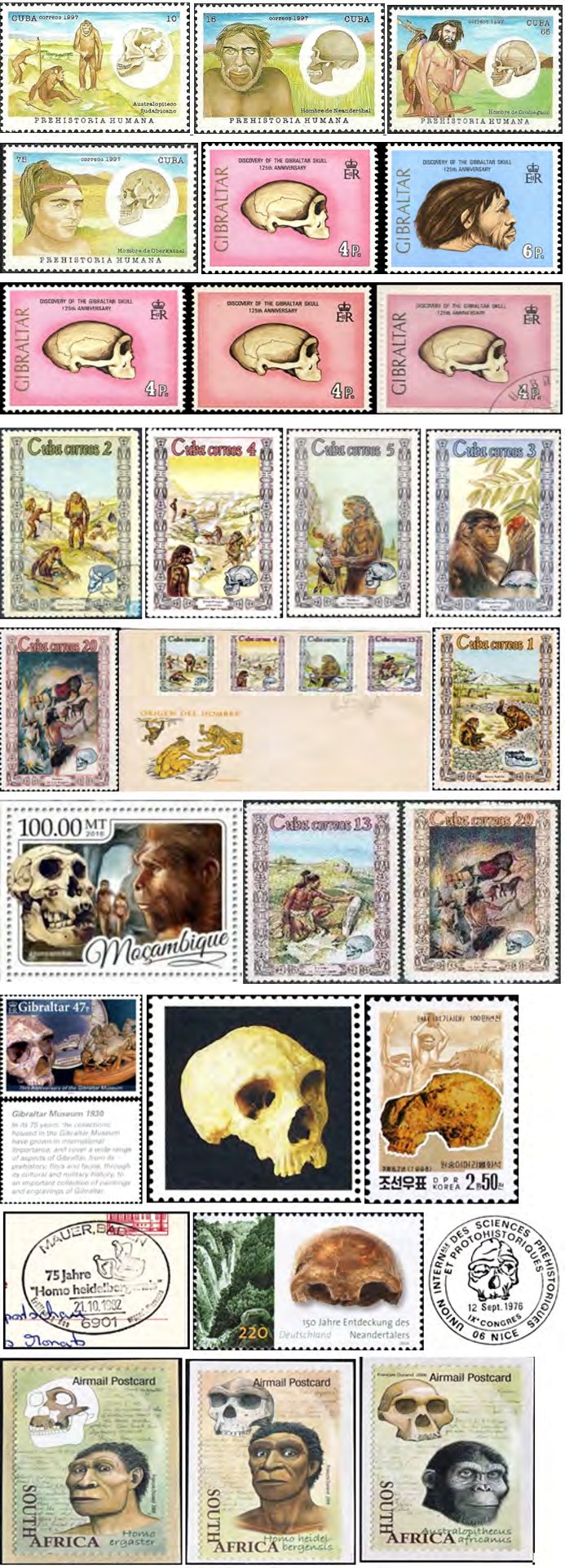
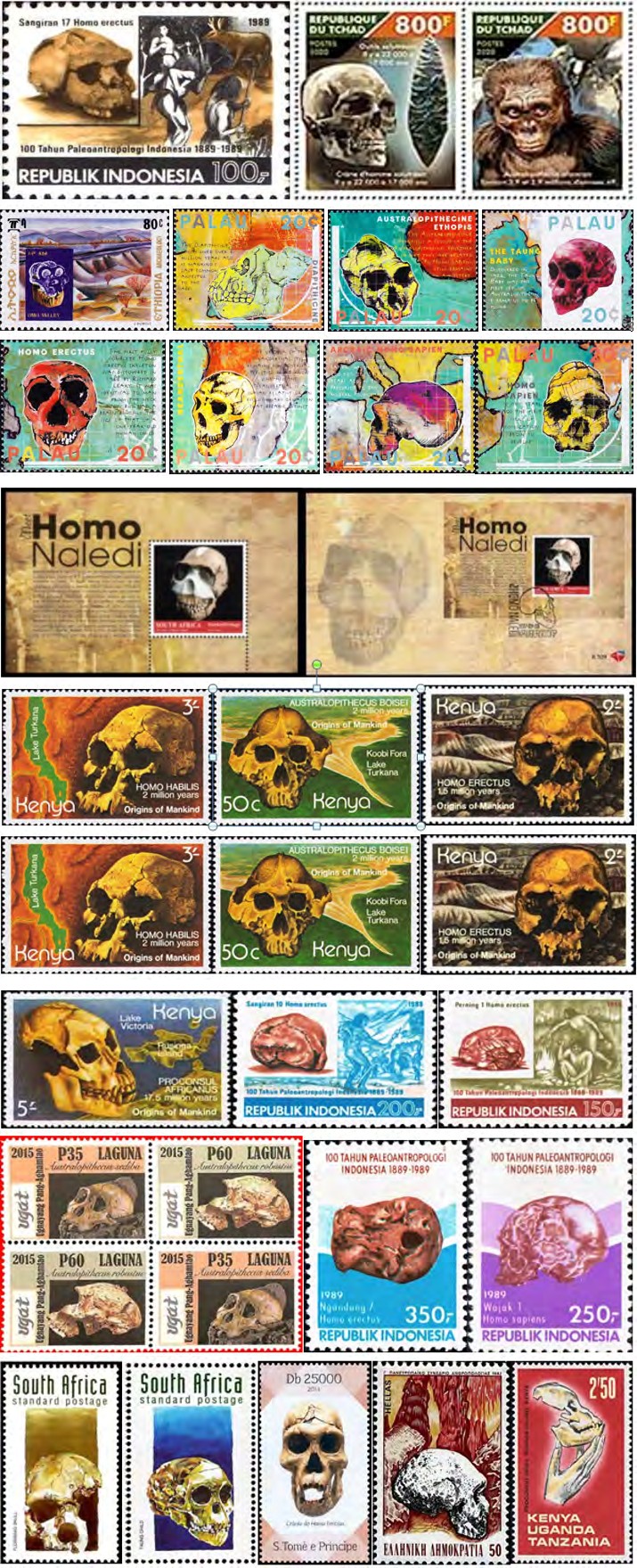
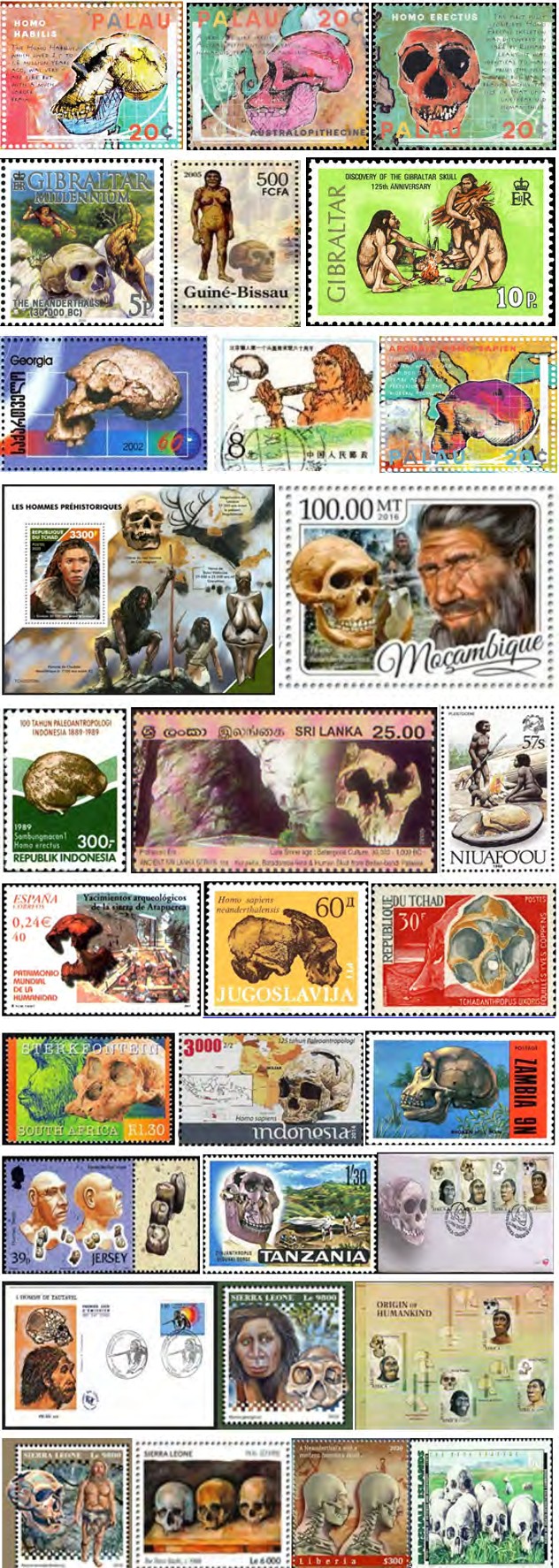
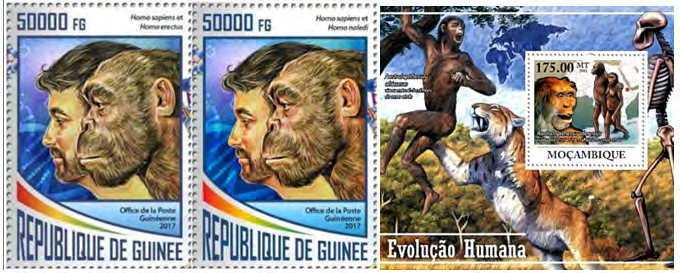
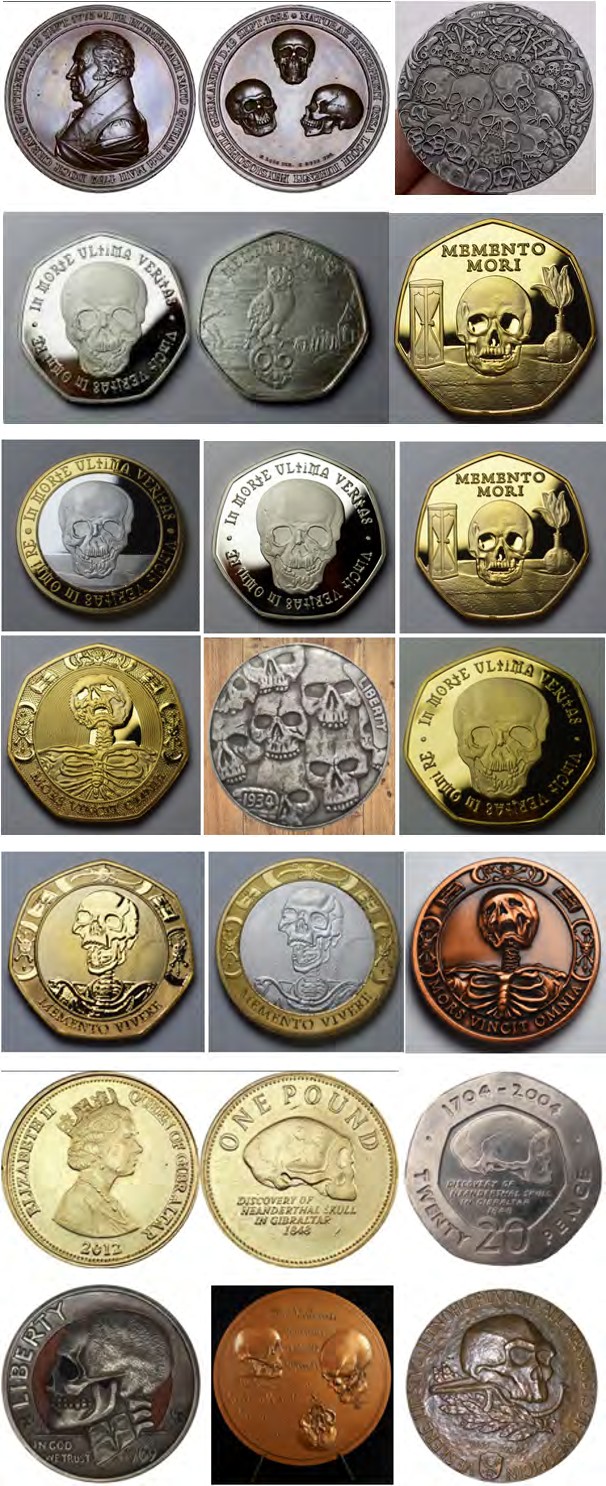
The following Figure 10, shows a numismatic selection, consisting of commemorative table medals (part of which, presented in the obverse and reverse), as well as commemorative coins, from different countries of the world, which, thematically united by the image of human skull, both modern and prehistoric [1, 2, 3, 4, 5, 25, 33, 35]. It should be noted that there are thousands of commemorative coins and medals with the image of the human skull as a close-up, or as an image element, as well as stylized images, such as skull with bones, with hair and in headdresses, with flowers or other elements of artistic decoration. The author of the article, consciously did not use such, as illustrations in the article. Only numismatic screenshots, with anatomical correctness, of the presented specimen, images of the human skull were used, as well as presents a small philatelic selection - postage stamps of different countries, with the image of the skull of a modern man [35, 36, 37, 38, 39]. The image of the human skull, presented (most often), in both direct and lateral projections, in both singular and plural.
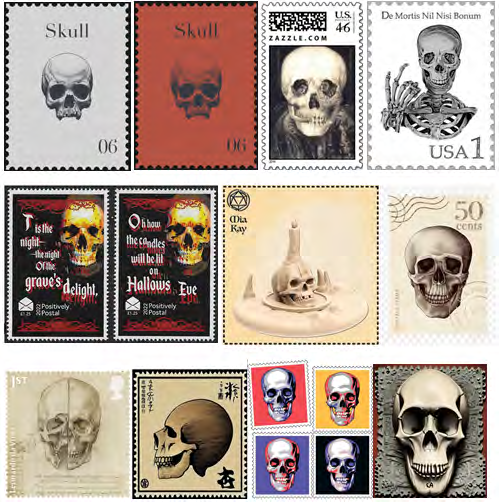
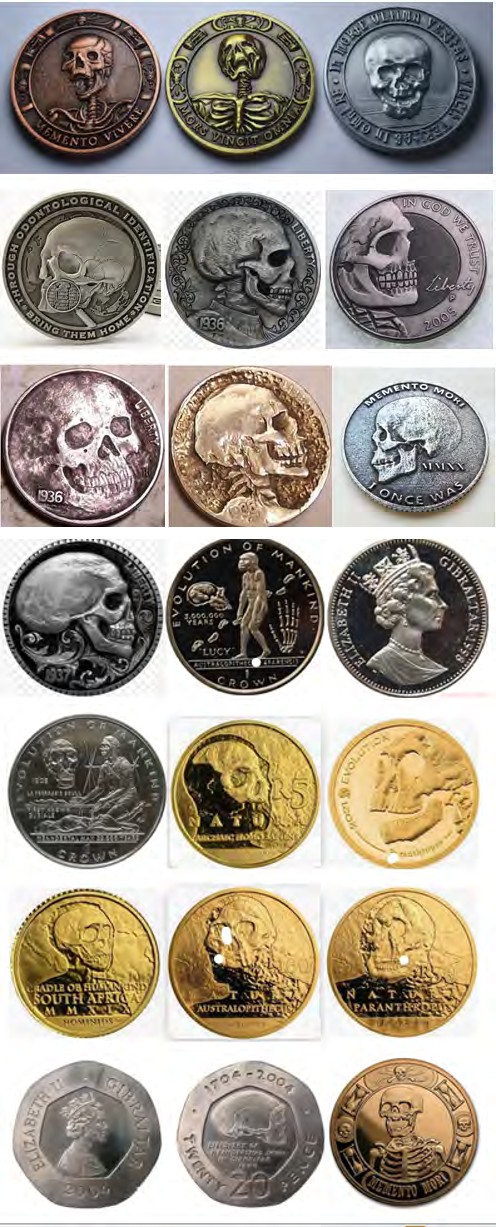
Figure 11 shows a large numismatic selection, commemorative medals and coins, the subject line of which is the image of the human skull, in different angles [35, 36, 37, 38, 39, 40].
Conclusion
The author of this article, accessibly and creatively, has managed to reveal in full enough volume a question of dynamics of evolutionary changes, the human skull, from prehistoric, ancient human ancestors and nowadays, in reflection of such means of collecting, as philately and numismatics. The use, as illustrative material, screenshots of philatelic, numismatic materials, books and photos, enriched, and appropriately decorated the article. В The article uses 129 screenshots of philatelic materials, 34 – numismatic materials, 5 – photographs, and 4 – screenshots of books about the featured heroes of the article.
References
-
Stamp Community Forum, Anthropology and Archaeology.
-
Stampboards, Paleoanthropology and Early Man Life.
-
Life on Stamps Life on Stamps, Paleoanthropology and Early Man.
-
HipStamp, Prehistoric Humans Stamp Nean.
-
Stampboards, Paleoanthropology and Early Man Lif.
-
Linda Hall Library, Robert Broom.
-
Arts & Co. Arts & Collections, Discovering the Age of Charles Darwin.
-
eBay, Сharles darwin coin.
-
CostlyCoins, Charles Darwin £2 Coin.
-
Acta Scientific, Human Anatomy.
-
NumisBids, Hellmuth Kricheldorf Verlag eK Auc.
-
LotSearch, Hugo Kaufmann.
-
Encyclopedia Britannica, Rudolf Virchow, Bio.
-
De Montsalvy aux hommes fossiles, Marcellin Boule.
-
Alchetron, Robert Broom.
-
Rakuten Kobo, The Autobiography of Chrdlicka.
-
Aleš Chrdlička (1869-1943), anthropologist, Stamp, Postal stamps, Postage stamps.
-
Databank, Belskie, Abram - Dick Johnson’s.
-
Czechoslovakia Jan Kolda (1972) bronze Medal.
-
Stamp Community Forum, Human Anatomy On Stamps.
-
eBay, Mary Leakey Togo Mint 5460.
-
The New York Times, Richard Leakey, Kenyan Fossil Hunt.
-
Science Museum Group Collection, Photograph of Paleoanthropo.
-
Massive Science, 4 incredible fossils found by pal.
-
Stamp Community Forum, Skeleton Stamps.
-
Portal do Filatelista Temático, Paranthropus Boisei.
-
South Afric Encyclopedia Britannica, Raymond A Dart.
-
Toowong and District Historical Society, Raymond Dart, Palaeontologi.
-
The Alexander Center, Dart and the Double Spiral.
-
Numista, 1 Crown - Elizabeth II (Raym).
-
Colnect, Stamp, Dragutin Gorja.
-
Filatelija Hunjak, Arheologija: Hrvatska dopisnica 38.
-
Paleophilatelie.eu; paleontology.
-
Njuškalo, Pračovjek Iz Krapin.
-
Numismatic Bibliomania Society, Numismagram Medal Selections.
-
AliExpress, African Cameroon Cathe.
-
Online Coin Club, Gold Ounce (2019) Austra.
-
Numista, 1 Crown - Elizabeth II.
-
Etsy, Memento Mori Silver Reminder Coin Owl/skull.
-
The Commemorative Coin Company, Memento Mori ‘Skull.
- Pattern of Breast Lesions in Ovu Inland, Delta State, South Southern Nigeria
- Morphometric Analysis of the Human Femur: Exploring Platymetric and Robusticity Indices Among the Nigerian Population
- Anatomical Variation of Arteria Lusoria: Clinical Implications for Dysphagia Lusoria and Surgical Risk
- Morphometric Study of the Vertebral Body and Pedicle of Typical Cervical Vertebrae Using Radiological Image
- Epigenetic Mechanisms Driving Human Evolutionary Changes
- Neuroprotective Effects of Ginkgo Biloba Extract on Bilateral Common Carotid Artery Ischaemic Stroke Induced in Wistar Rat