
Determinants of Farmers’ Investments in Soil Fertility Management and Conservation Innovations in the Potato Cropping Systems in the Highlands of South-Western Uganda
An allied project “Enabling Rural Innovations – ERI†was introduced in the potato farming systems in the highlands of south-western Uganda with the objective to empower farmers to invest in soil fertility management and conservation through enhanced knowledge in soil management attributes and profitable market linkages. The objective of this paper was to assess the determinants of farm households' decision to adopt soil fertility management and conservation innovations in potato-grown fields. Household surveys were conducted on 104 households that had consistently grown and sold potato in urban and non-urban markets in five consecutive years. It was revealed that enhancements of farmers’ knowledge in soil fertility management and market linkages did not influence farmers’ investments in soil fertility improving innovations. Nonetheless, enhancements influenced farmers’ adoption of trenches and woodlots as mechanisms of controlling soil erosion and surface runoff within and outside potato-grown fields, respectively. Adoption of soil fertility management and conservation innovations in potato-grown fields was influenced by household characteristics other than the age of the household head. Number of soil fertility management and conservation innovations adopted by households was significantly influenced by household wealth category, number of potato fields owned, household size and education level of the household head.
Introduction
Soil nutrient exhaustion and erosion have become a major concern in the highlands of south-western Uganda, as in many regions of Sub Saharan Africa (SSA) [1].
Although soils in the highlands of south-western Uganda were once considered to be among the most fertile in the SSA, problems of soil nutrient exhaustion and erosion have intensified in recent decades [2]. Estimated that soil nutrient losses in the highlands of south-western Uganda
were among the highest in the country [3]. This has led to low potato productivity, unsustainable land use and poverty among rural households [4]. Area of land under potato production increased by 6.12 % between 2011 and 2016 [5]. The annual demand for potato is estimated to be over 850,000 tones with urban demand outpacing rural demand. With the increasing urbanization, changing eating habits by the majority youth and high population growth, chips consumption is set to rise by 50% over the next decade offering the potato industry huge opportunities for enterprise development and economic growth [5].
In a survey conducted in 2001 in the highlands of south-western Uganda, more than half of households reported soil nutrient exhaustion, erosion and lack or minimal use of improved soil fertility management and conservation innovations as direct causes of low soil fertility [6]. On the other hand, poor access to profitable markets was reported as a major underlying cause of soil fertility decline and erosion [6]. In response, the International Center for Tropical Agriculture (CIAT), in partnership with the National Agricultural Research Organization (NARO) and Africare-Uganda, engaged potato farmers in a development and research project titled “Enabling Rural Innovations-ERI” [7]. The ERI- project was designed to empower potato farmers in the highlands of south-western Uganda in improved soil fertility management and conservation in potato-grown fields through enhanced profitable urban market linkages [8].
Farmers were sensitized and trained in soil fertility management and conservation for sustainable potato production using the farmer field school approach [8]. After two years of hands-on training and selecting appropriate soil fertility improving and conservation innovations, 120 households under the ERI-project had improved potato yields [9]. The ERI-project farmers were later linked to a fast food restaurant (NANDOS) and other potato processing outlets in Kampala city located 350 km away from them [9]. Through a Memorandum of Understanding between potato producers and processors, 5.6 ton of potato tubers were sold every fortnight to urban markets at relatively higher prices compared to non-urban markets [7]. Hence, in addition to enhanced market linkages, this study was conducted to assess socio- economic determinants of adoption of soil fertility management and conservation innovations in potato production systems in the highlands of south-western Uganda. Critical determinants could be used to guide in the formulation of a policy on soil fertility management and conservation for sustainable potato production in Uganda.
Materials and Methods
Study Area and Characteristics of Farming System
The study was conducted in 2010 in Kamuganguzi Sub County in Kabale district in the highlands of southwestern Uganda. Kabale district is located at 1.35o S and 30.02o E with relief that ranges between 1791 and 2000 meters above sea level. Arable land is highly fragmented, with average land holding of approximately 0.5 acres (Figure 1A & B) [10].
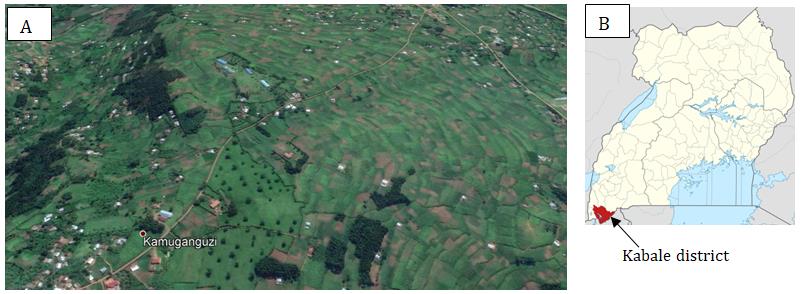
Figure 1A & B: Aerial map showing intensity of land fragmentation and cultivation in Kamuganguzi Sub County (A) – Kabale district (B).
It has a population of 50,312 in a radius of 7 km [11]. It has bimodal rainfall of 1,800 mm per year on average. The short and long rains are in March-May and September-January, with peaks in April and November, respectively. A major dry season occurs in June-August [12]. The soils on hill slopes are ferralitic in nature, having low pH and productivity. Valley bottoms have histosols with thick top soils that have high organic matter and productivity [12].
Participating households in the study were identified from the Alliance ERI-project records and community meetings. Households that participated in the ERI-project activities were in three parishes (Katenga, Buranga and Kicumbi). Non-ERI-project households were also in three parishes (Kasheregyenyi, Kyasano and Mayego). A total of 120 households who had gone through ERI-project activities; and 227 households that had not been in the ERI-project but growing potato for non-urban markets were selected using attendance and community residence lists, respectively. The latter group was selected to depict how the situation would be without the ERI-project interventions. Verification of selected farmers producing potato for sale was done through records at the collection centers for urban market linked farmers. Farmers not linked to urban markets were ascertained by verifying the presence of potato fields. Under the ERI-project, farmers who consistently sold potato to urban markets were selected from an ERI-project lists indicating names of farmers and volumes of potato brought for bulk marketing over the period of five years. On the other hand, non-ERI-project households were selected during community meetings with potato farmers identifying fellow members who had consistently produced potato for non-urban markets for at least five years.
Sampling Procedure and Sample Size
Among the 120 households with urban market linkages, 76 households had consistently supplied potato to the market for at least five consecutive years. Hence, 68 households were purposively selected using a formula adopted from after cluster analysis based on wealth categories (Eq. i) [13]. On the other hand, all the 46 households that consistently produced potato for non- urban markets were considered for interviews.
[ ( ) ] ( )
Where; n – sample size N – Population size e – Level of significance [ ( ) ]
Data Collection
Focus Group Discussions (FGDs) and household surveys were conducted to capture data on household characteristics as well as the nature and number of soil fertility management and conservation innovations used by households in potato-grown fields. The data captured included (i) types of farmer-market access, (ii) wealth endowment of the household, (iii) gender of the household head, (iv) age of the household head, (v) education level of the household head, (vi) household size, (vii) use of hired labor, and (viii) number of potato-grown fields. During FGDs, household typologies were developed based on stratification according to wealth categories and gender of the household heads. Criteria used for placement of households in different wealth categories were (i) nature of the main house, (ii) possession and number of farm animals, (iii) number of fields, (iv) nature of schools attended by children, (v) number of meals eaten per day, (vi) nature of transport used, and (vii) number of bags of potato harvested.
Data Analyses
Household characteristics and soil fertility management and conservation data were subjected to an extensive data cleaning process for consistency, completeness and correctness using a micro-soft Excel spreadsheet. Consistency checking included systematic reviewing to avoid data duplication. Some data categories were re-categorized or collapsed, depending on the inconsistencies or similarities observed.
Using the R-statistical package, descriptive statistics that included frequencies, percentage distributions and comparison of means were evaluated. Assessment of categorical data for demographic characteristics was done by percentage and standard errors of distributions using cross-tabulations. The level of significance was determined by standard errors of means. The independent variables were (i) market types, (ii) wealth categories of households, (iii) use of hired labor, (iv) characteristics of the household head (gender, age, education level and marital status) and, (v) household size. The dependent variables included use of soil fertility management and conservation innovations. A decision tree forest model was developed to assess the influence of different factors on farmers’ decisions to use one or more soil fertility management and conservation innovations.
Hence, multiple regression analyses were done so as to understand the determinants of adoption of soil fertility management and conservation innovations (Eq. ii). During the analysis, the predictor variables that were not significant were eliminated so as to get the best fit model.
( ) ( ) Where, ( ) . ( )
( ) .
Results and Discussion
Influence of Household Characteristics on Adoption of Soil Fertility Management and Conservation Innovations
Adoption of soil fertility management and conservation innovations was affected by socio-economic factors at different levels (Table 1). Age of the household head had no significant influence on farmers adoption of any of the seven promoted soil fertility management and conservation innovations (p>0.05). Enhancing farmers’ knowledge and skills in soil nutrient management and conservation as well as linkage to urban markets had significant influence on farmers’ adoption of woodlots and trenches (p<0.05).
| Agro- forestry | |||||||||||||||||||||||||||||||||||||||||||||||
| FYM | Fertilizers | Woodlots | Trenches | G | rass bund | s | Fallows | ||||||||||||||||||||||||||||||||||||||||
| Factor | |||||||||||||||||||||||||||||||||||||||||||||||
| Definition | X2 | p | -valu | e | X2 | p | -valu | e | X2 | p | -valu | e | X2 | p | -valu | e | X2 | p | -valu | e | X2 | p | -valu | e | X2 | p | -valu | e | |||||||||||||||||||
| Type of market | |||||||||||||||||||||||||||||||||||||||||||||||
| Market | |||||||||||||||||||||||||||||||||||||||||||||||
| accessed by | 0 | 0.97 | 1 | 0.31 | 5 | . | 7 | 0.02 | 4 | . | 8 | 0.03 | 1.6 | 0.21 | 0.1 | 0.2 | 0 | . | 1 | 0.61 | |||||||||||||||||||||||||||
| type | |||||||||||||||||||||||||||||||||||||||||||||||
| farmers | |||||||||||||||||||||||||||||||||||||||||||||||
| Wealth | Household | ||||||||||||||||||||||||||||||||||||||||||||||
| category | typology based | 0 | 0.97 | 1 | 2. | 6 | 0.01 | 11 | 0.01 | 1 | 2. | 3 | 0.01 | 4 | 6. | 6 | 0 | 6 | 0.11 | 2 | 1. | 3 | 0 | ||||||||||||||||||||||||
| (WC) | on WC | ||||||||||||||||||||||||||||||||||||||||||||||
| Household | |||||||||||||||||||||||||||||||||||||||||||||||
| Gender | typology based | 0 | 0.95 | 0 | 0.91 | 0 | 0.83 | 7 | . | 9 | 0.01 | 3.9 | 0.06 | 0 | 0.94 | 2 | . | 1 | 0.14 | ||||||||||||||||||||||||||||
| on gender | |||||||||||||||||||||||||||||||||||||||||||||||
| Age of the | |||||||||||||||||||||||||||||||||||||||||||||||
| Age | 3 | . | 1 | 0.21 | 4 | . | 1 | 0.13 | 1 | . | 9 | 0.39 | 0 | . | 9 | 0.6 | 1.8 | 0.41 | 0.7 | 0.72 | 0 | 0.96 | |||||||||||||||||||||||||
| household head | |||||||||||||||||||||||||||||||||||||||||||||||
| E | ducation level o | f | |||||||||||||||||||||||||||||||||||||||||||||
| Education | the household | 6 | 0.05 | 8 | . | 3 | 0.02 | 11 | 0 | 7 | . | 2 | 0.03 | 7.3 | 0.03 | 3.2 | 0.2 | 4 | . | 6 | 0.05 | ||||||||||||||||||||||||||
| head | |||||||||||||||||||||||||||||||||||||||||||||||
| Number of | |||||||||||||||||||||||||||||||||||||||||||||||
| Househol | d | ||||||||||||||||||||||||||||||||||||||||||||||
| household | 3 | . | 2 | 0.2 | 5 | 0.08 | 3 | . | 2 | 0.2 | 0 | . | 5 | 0.8 | 1 | 1. | 8 | 0 | 2.4 | 0.31 | 0 | . | 6 | 0.78 | |||||||||||||||||||||||
| size | |||||||||||||||||||||||||||||||||||||||||||||||
| members | |||||||||||||||||||||||||||||||||||||||||||||||
| Use of hired | |||||||||||||||||||||||||||||||||||||||||||||||
| H | ired labo | r | 7 | . | 2 | 0.01 | 7 | . | 2 | 0.01 | 1 | . | 9 | 0.16 | 4 | . | 1 | 0.04 | 7.1 | 0.01 | 5.3 | 0.02 | 5 | 0.03 | |||||||||||||||||||||||
| labor | |||||||||||||||||||||||||||||||||||||||||||||||
| N | o. of field | s | Fields cultivated | 1 | 5. | 3 | 0 | 9 | . | 8 | 0.01 | 1 | 1. | 7 | 0 | 18 | 0 | 1 | 5. | 7 | 0 | 1 | 3. | 8 | 0 | 9 | . | 7 | 0 |
Table 1: Effects of socio-economic factors on use of soil fertility management and conservation innovations.
It had no significant influence on the adoption of the five of seven soil fertility management and conservation innovations promoted in the highlands (p>0.05). Potato is grown on the hill-slopes during rainy seasons while in dry seasons potato production occurs in the valley bottoms. Soil erosion is mostly on hill-slopes and farmers under urban market linkages use trenches within potato-grown fields.
Highly degraded fields were often bare and experienced gully erosion. In order to reduce damage in potato-grown fields, woodlots were planted on the highly degraded fields to slow down surface runoff and erosion. Household wealth category had significant influence on farmers’ adoption of mineral fertilizers, woodlots, trenches, agro-forestry and fallows (p<0.05). Resource rich households had relatively more land on which to practice some of the soil fertility management and conservation innovations that required space. Such household could also afford mineral fertilizers for potato production. On the other hand, resource poor households had limited land on which to construct soil conservation barriers and could not afford expensive mineral fertilizers. Hence, such households could not integrate some of the innovations such as mineral fertilizers, fallows, trenches, agro-forestry and woodlots in potato growing systems. Gender had significant influence on farmers’ adoption of trenches as a measure against soil erosion and surface runoff (p<0.05). Land was owned by men who access and use. Land in the highlands of south- western Uganda, just like all other areas in the country, is owned through purchase, rent (lease) and inheritance. Land is often inherited by men and therefore women have limited ownership, access and use of it. Construction of trenches was labor intensive and required specialized tools such as spades and pick axes.
Male-headed households had more resources compared to female headed ones and therefore could afford to use trenches as a soil conservation measure in potato-grown fields. Nonetheless, gender had significant influence in the use of the other six soil fertility and conservation innovations in the potato-grown fields (p>0.05).
Education level of the household head had significant influence on farmers’ adoption of mineral fertilizers, woodlots, trenches, agro-forestry and fallows (p<0.05). Household heads with post-primary education often were able to comprehend literal extension materials given out during training. They took longer period in school and therefore had classroom and practical lessons in soil fertility management and conservation. The interface between extension workers and such farmers was often longer and therefore more knowledge and skills were given to them.
Household size had significant influence on farmers’ adoption of agro-forestry (p<0.05). However, it did not have significant influence on farmers’ adoption of the other soil fertility management and conservation innovations (p>0.05). Agro-forestry also was observed as source of timber, wood-fuel, poles and stakes. Therefore, it was an additional source of household income to cater for the demands of large household sizes. Harvesting poles, stakes and fuel wood which had immediate use required labor. Labor was often more available with households with more family members to work on the highly fragmented fields located on the undulating landscape.
Use of hired labor and number of fields cultivated had significant influence on adoption of farmyard manure, mineral fertilizers, trenches, agro-forestry and fallows as a means of improving soil fertility and conserving the soils (p<0.05). Also adoption of woodlots was significantly influenced by number of fields. Use of hired labor was one of the indicators of wealth endowments of the households. Therefore, households that were able to hire labor had resources to use these soil fertility management and conservation innovations. Use of fallows, trenches and woodlots required farmers to have adequate land. For instance, construction of trenches required one meter width in which to use and trenches were constructed at intervals within the field. On the other hand, woodlots occupied land for years before that land is brought back to cultivation. Similarly, use of fallow as a means of soil fertility rejuvenation required farmers to put the land to rest for a number of seasons without cultivation. Nonetheless, the fallow period is often one or two seasons under natural fallows, which is commonly used. Given that most farmers hardly used any mineral fertilizers, short fallow periods continually led to soil nutrient mining and erosion. Farmers with limited a number of fields placed them under continuous cultivation without rest and hardly used any of the seven promoted soil fertility and conservation innovations. These practices exacerbated soil degradation in form of soil nutrient mining and erosion and explain the low potato yields in the highlands of south-western Uganda [10].
Adoption of trenches was significantly influenced by number of cultivated fields, use of hired labor, education level of the household head, gender of the household head and household wealth category (p<0.05). Trenches, an innovation for soil conservation required reservation of strips of land to be constructed. Effectiveness of trenches as a soil conservation measure in potato-grown fields depended on their number, size and spacing between them. This measure for soil conservation was not adopted by farmers with few fields to compensate land taken by trenches. Construction of trenches required hired labor and specialized tools such as pick-axes and spades. Hence, trenches were often used by resource rich households that had the capacity to use hired labor and specialized tools. Use of trenches was common in potato-grown fields for household heads with post-primary education. Farmers with post-primary education were able to adopt the use of trenches in potato-grown fields because they were able to read and comprehend extension literal materials as guides to construction of soil conservation measures in the field. Such farmers often consulted extension workers for guidance. They also learnt about soil conservation while in school. Hence, the grasp of knowledge in soil conservation depended on the length of time farmers got exposed while in schools. Gender of the household head was an important factor in adoption of trenches as a soil conservation measure in potato-grown fields. Land belonged to men and therefore, men often had ownership, access and use of the land compared to women. Furthermore, male-headed households had more land compared to female-headed ones. Since trenches required land for their construction, they were more common with the male-headed households. Female- headed households were often more constrained in terms of resources. Therefore, low adoption of trenches was observed in female headed households.
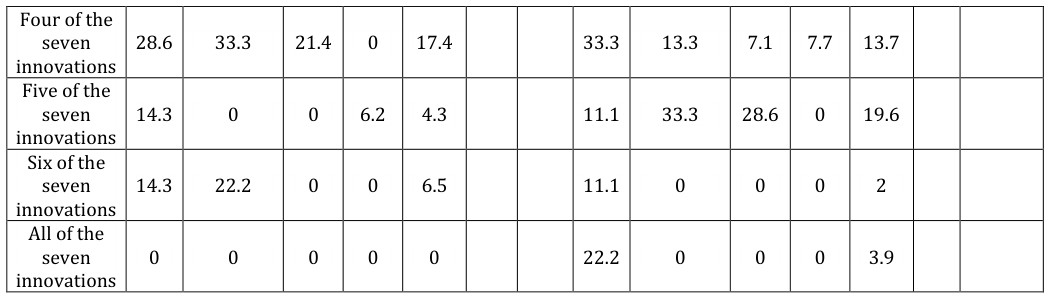
Wealth endowment had significant influence on the number of soil fertility management and conservation under urban market-linkages (p<0.05). On the other hand under non-urban market linkages, number of soil fertility management and conservation innovations adopted by households were not significantly different (p>0.05). There were high proportions of households that were resource constrained under urban market linkages that did not adopt any of the seven promoted soil fertility management and conservation innovations (Table 3). This was because some of the promoted innovations required farmers to have some land to spare and also to have resources in order to use the innovations. For example, use of farmyard manure required households to have either livestock to produce manure or resources to purchase the manure. Land in the highlands of south- western Uganda was highly fragmented with no access roads. This required hired labor to carry manure and incorporate it into the soil, making it less affordable to most households.
Enhancing farmers’ knowledge on soil nutrient management and market linkages had no significant influence on adoption of farmyard manure, mineral fertilizers, agro-forestry, grass bunds and fallows (p>0.05). Nonetheless, adoption of farmyard manure was significantly influenced by use of hired labor, education level of the household head and number of cultivated fields (p<0.05). Farmyard manure was bulk in nature and required intensive use of labor to use it under high land fragmentation that existed in the highlands of south- western Uganda [14]. Use of labor was associated with households that were resource rich to pay workers and also had livestock for manure production. Keeping livestock also required land and knowledge or skills. Hence, use of farmyard manure in potato-grown fields was common with households with more fields in which to use the material other than providing space for keeping livestock or producing pastures. Use of farmyard manure was more profitable with households that had large a number of fields due to high costs of labor. Farmers with post-primary education were able to use farmyard manure in potato-grown fields due to experiences and skills gained while in schools.
Influence of Wealth Endowment Under Market Linkages on Number of Adopted Soil Fertility Management and Conservation Innovations
| Non-urban | Urban | |||||||||||||||||||||||||||||||||||||||||||
| i | Number of | s | ||||||||||||||||||||||||||||||||||||||||||
| nnovation | very | V | p- | e | very | |||||||||||||||||||||||||||||||||||||||
| Rich | Moderate | Poor | Total | X2 | Rich | Moderate | Poor | Total | X2 | p-Value | ||||||||||||||||||||||||||||||||||
| poor | alu | poor | ||||||||||||||||||||||||||||||||||||||||||
| None of the | ||||||||||||||||||||||||||||||||||||||||||||
| seven | 0 | 22.2 | 14.3 | 43.8 | 23.9 | 24.5 | 0.14 | 0 | 0 | 21.4 | 46.2 | 17.6 | 3 | 5. | 1 | 0.01 | ||||||||||||||||||||||||||||
| innovations | ||||||||||||||||||||||||||||||||||||||||||||
| One of the | ||||||||||||||||||||||||||||||||||||||||||||
| seven | 14.3 | 11.1 | 28.6 | 31.2 | 23.9 | 0 | 13.3 | 0 | 15.4 | 7.8 | ||||||||||||||||||||||||||||||||||
| innovations | ||||||||||||||||||||||||||||||||||||||||||||
| Two of the | ||||||||||||||||||||||||||||||||||||||||||||
| seven | 28.6 | 11.1 | 28.6 | 6.2 | 17.4 | 22.2 | 20 | 21.4 | 23.1 | 21.6 | ||||||||||||||||||||||||||||||||||
| innovations | ||||||||||||||||||||||||||||||||||||||||||||
| Three of the | ||||||||||||||||||||||||||||||||||||||||||||
| seven | 0 | 0 | 7.1 | 12.5 | 6.5 | 0 | 20 | 21.4 | 7.7 | 13.7 | ||||||||||||||||||||||||||||||||||
| innovations |
Table 2: Influence of wealth categories under market linkages on number of adopted soil fertility management and conservation inn
- Four of the seven innovations
- 28.6
- 33.3
- 21.4
- 0
- 17.4
- 33.3
- 13.3
- 7.1
- 7.7
- 13.7
- Five of the seven innovations
- 14.3
- 0
- 0
- 6.2
- 4.3
- 11.1
- 33.3
- 28.6
- 0
- 19.6
- Six of the seven innovations
- 14.3
- 22.2
- 0
- 0
- 6.5
- 11.1
- 0
- 0
- 0
- 2
- All of the seven innovations
- 0
- 0
- 0
- 0
- 0
- 22.2
- 0
- 0
- 0
- 3.9
Table 3: Influence of wealth categories under market linkages on number of adopted soil fertility management and
Farmers under urban market linkages used a number of alternatives in an effort to improve soil fertility and conserve soils depending on the resources at their disposal. Majority of the households were able to use two of the seven promoted soil fertility management and conservation innovations. Resource rich households were able to adopt up to seven soil fertility management and conservation innovations compared to other categories of households. Resource constrained households hardly used any of the promoted soil fertility management and conservation innovations due to high prices, low availability and limited land to use [15].
Influence of Gender Under Market Linkages on Number of Adopted Soil Fertility Management and Conservation Innovations
Number of soil fertility management and conservation innovations adopted by households was not significantly influenced by gender under urban market linkages (p>0.05). On the other hand, gender had significant influence on the number of soil fertility management and conservation innovations adopted by the households under non-urban market linkages (p<0.05). The highest proportion of the female headed households (38.5%) adopted none of the seven promoted soil fertility management and conservation innovations (Table 3). Female headed households often had limited resources in terms of land and livestock for manure production. They were also unable to purchase them. This was because they were constrained in terms of resources and therefore could not afford to use most of the promoted soil fertility management and conservation innovations [16]. In the highlands of south-western Uganda, as elsewhere in the county, customs assigned home and reproductive roles to women, which limited their commercial potential and therefore not investing in soil fertility management and conservation innovations. They mostly produced potato for home consumption rather for household income.
On the other hand, the highest proportion of the male headed households (30.3 %) adopted one of the seven soil fertility management and conservation innovations. None of the male or female headed households adopted all the seven soil fertility management and conservation innovations. Farmers often had logical decisions to adopt a number of soil fertility management and conservation innovations depending on the resources available and how these could perform in niches where potato was grown.
Education level of the household head had significant influence on the number of soil fertility management and conservation innovations adopted by the households (p<0.05). High proportions of household heads without formal education under urban (36.4 %) and non-urban (45.0%) market linkages adopted none of the seven promoted soil fertility management and conservation innovations (Table 4). Under non-urban market linkages, most household heads without formal education adopted one (36.8 %) and four (26.3 %) of the seven promoted soil fertility management and conservation innovations. Lack of education, which is often associated with poverty, was a dis-incentive to farmers’ adoption of soil fertility management and conservation innovations. Lack of education caused farmers to be less aware of soil degradation problems and often attributed challenges of soil degradation beyond their control. Lack of education led to low farmers’ skills in addressing challenges associated with soil nutrient decline and erosion.
| Non-Urban | Urban | ||||||||||||||||||||||||||||||
|---|---|---|---|---|---|---|---|---|---|---|---|---|---|---|---|---|---|---|---|---|---|---|---|---|---|---|---|---|---|---|---|
| Number of | |||||||||||||||||||||||||||||||
| Male Heade | d | h | Female | e | Male Heade | d | F | emale heade | d | ||||||||||||||||||||||
| Innovations | T | ota | l | X2 | p | -Valu | e | Tota | l | X2 | p | -Valu | e | ||||||||||||||||||
| house | eaded hous | house | house | ||||||||||||||||||||||||||||
| N | one of the seve | n | |||||||||||||||||||||||||||||
| 18.2 | 38.5 | 23.9 | 7.1 | 0.01 | 15.6 | 21.1 | 17.6 | 7.6 | 0.37 | ||||||||||||||||||||||
| innovations | |||||||||||||||||||||||||||||||
| One of the seven | |||||||||||||||||||||||||||||||
| 30.3 | 7.7 | 23.9 | 9.4 | 5.3 | 7.8 | ||||||||||||||||||||||||||
| innovations | |||||||||||||||||||||||||||||||
| Two of the seven | |||||||||||||||||||||||||||||||
| 15.2 | 23.1 | 17.4 | 18.8 | 26.3 | 21.6 | ||||||||||||||||||||||||||
| innovations | |||||||||||||||||||||||||||||||
| T | hree of the seve | n | |||||||||||||||||||||||||||||
| 9.1 | 0 | 6.5 | 6.2 | 26.3 | 13.7 | ||||||||||||||||||||||||||
| innovations | |||||||||||||||||||||||||||||||
| F | our of the seve | n | |||||||||||||||||||||||||||||
| 15.2 | 23.1 | 17.4 | 15.6 | 10.5 | 13.7 | ||||||||||||||||||||||||||
| innovations | |||||||||||||||||||||||||||||||
| Five of the seven | |||||||||||||||||||||||||||||||
| 3 | 7.7 | 4.3 | 25 | 10.5 | 19.6 | ||||||||||||||||||||||||||
| innovations | |||||||||||||||||||||||||||||||
| Six of the seven | |||||||||||||||||||||||||||||||
| 9.1 | 0 | 6.5 | 3.1 | 0 | 2 | ||||||||||||||||||||||||||
| innovations | |||||||||||||||||||||||||||||||
| All of the seven | |||||||||||||||||||||||||||||||
| 0 | 0 | 0 | 6.2 | 0 | 3.9 | ||||||||||||||||||||||||||
| innovations | |||||||||||||||||||||||||||||||
Table 4: Influence of gender under market linkages on numbers of adopted soil fertility management and conservation innovations.
| Number of | |||||||||||||||||||||||||||||||||||||
|---|---|---|---|---|---|---|---|---|---|---|---|---|---|---|---|---|---|---|---|---|---|---|---|---|---|---|---|---|---|---|---|---|---|---|---|---|---|
| Non-urban | Urban | ||||||||||||||||||||||||||||||||||||
| innovations | |||||||||||||||||||||||||||||||||||||
| No formal | p | Post | V | p- | e | e | No forma | l | p | Post | Total y | V | p- | e | |||||||||||||||||||||||
| Primary | T | ota | l | X2 | P | rimar | y | Total | X2 | ||||||||||||||||||||||||||||
| education | rimary | alu | ducation | rimar | alu | ||||||||||||||||||||||||||||||||
| None of the seven | 45 | 10.5 | 0 | 23.9 | 21.093 | 0.049 | 36.4 | 0 | 33.3 | 17.6 | 24.25 | 0.043 | |||||||||||||||||||||||||
| innovations One of the seven | 15 | 36.8 | 14.3 | 23.9 | 4.5 | 7.7 | 33.3 | 7.8 | 9 | ||||||||||||||||||||||||||||
| innovations Two of the seven | 15 | 15.8 | 28.6 | 17.4 | 22.7 | 23.1 | 0 | 21.6 | |||||||||||||||||||||||||||||
| innovations Three of the seven | 10 | 5.3 | 0 | 6.5 | 22.7 | 7.7 | 0 | 13.7 | |||||||||||||||||||||||||||||
| innovations Four of the seven | 10 | 26.3 | 14.3 | 17.4 | 4.5 | 23.1 | 0 | 13.7 | |||||||||||||||||||||||||||||
| innovations Five of the seven | 5 | 0 | 14.3 | 4.3 | 4.5 | 30.8 | 33.3 | 19.6 | |||||||||||||||||||||||||||||
| innovations Six of the seven | 0 | 5.3 | 28.6 | 6.5 | 0 | 3.8 | 0 | 2 | |||||||||||||||||||||||||||||
| innovations All of the seven innovations | 0 | 0 | 0 | 0 | 4.5 | 3.8 | 0 | 3.9 |
Table 5: Influence of education on number of adopted soil fertility management and conservation innovations.
Socio-economic factors that best described the model that favored farmers’ adoption of at least one of the seven promoted soil fertility management and soil conservation innovations were (i) market type, (ii) age of the household head, and (iii) wealth category of the household and household size. Adoption of at least one of the seven promoted soil fertility management and conservation innovations was significantly influenced by (i) wealth category of the household, (ii) education level of the household head, and (iii) household size (Table 5).
| Factor | Estimate | Std. error | Z-value | Pr(>|z|) | ||||||||||
|---|---|---|---|---|---|---|---|---|---|---|---|---|---|---|
| Intercept | 3.0772 | 1.5887 | 1.937 | 0.05276 | ||||||||||
| Market type | 1.2555 | 0.7377 | 1.702 | 0.08878 | ||||||||||
| Age | -1.7371 | 0.9217 | -1.885 | 0.05948 | ||||||||||
| Wealth category | -1.119 | 0.4353 | -2.57 | 0.01016 * | ||||||||||
| Education | 3.3408 | 1.0734 | 3.112 | 0.00186 ** | ||||||||||
| Household size | 2.1964 | 0.8696 | 2.526 | 0.01155 * | ||||||||||
| Significant codes: 0 ‘*’ 0.001 ‘’ 0.01 ‘*’ 0.05 ‘.’ 0.1 ‘ ’ 1 |
Table 6: Influence of socio-economic factors on farmers’ adoption of at least one of the promoted soil fertility management and c
At least one of the seven soil fertility management and conservation innovations promoted was most likely adopted by households with more resources, post- primary education and large families.
Socio-economic factors that led to significant adoption of at least three soil fertility management and conservation innovations were (i) wealth category of the household, and (ii) number of fields owned by the household (p<0.05). Nonetheless, types of farmer-market linkages and age of the household head had no significant influence on adoption of at least three soil fertility management and conservation innovations (p>0.05). Hence, wealth endowment of the household and number of fields owned by the households were significant factors in farmers’ decisions to adopt at least three soil fertility management and conservation innovations.
Socio-economic factors that best describe the model that favor adoption of at least three soil fertility management and conservation innovations were (i) market type, (ii) age of the household head, (iii) number of fields, and (iv) wealth category of the household.
| Factor | Estimate | Std. error | Z-value | Pr(>|z|) | ||||||||||
|---|---|---|---|---|---|---|---|---|---|---|---|---|---|---|
| Intercept | 0.2313 | 0.8623 | 0.268 | 0.78847 | ||||||||||
| Market type | 0.6946 | 0.5114 | 1.358 | 0.174384 | ||||||||||
| Age | 0.2613 | 0.5167 | -0.506 | 0.613061 | ||||||||||
| Number of fields | 2.0098 | 0.5311 | 3.785 | 0.000154 *** | ||||||||||
| Wealth category | -0.5663 | 0.2571 | -2.202 | 0.027644 * | ||||||||||
| Significant codes: 0 ‘*’ 0.001 ‘’ 0.01 ‘*’ 0.05 ‘.’ 0.1 ‘ ’ 1 |
Table 7: Influence of socio-economic factors on farmers’ adoption of at least three of the promoted soil fertility management and
Enhanced farmers’ knowledge and skills in soil fertility management and conservation did not significantly influence farmers’ adoption of at least three of the promoted soil fertility management and conservation innovations (p>0.05). Resource rich households with more fields were more likely to adopt at least three soil fertility management and conservation innovations compared to their counterparts with few. Likewise, On the other hand, adoption of at least four soil fertility management and conservation innovations were best determined by (i) type of farmer-market linkages, (ii) wealth category of the household, and (iii) number of fields owned by the household.
households constrained with resources were less likely to adopt at least three soil fertility management and conservation innovations.
| Factor | Estimate | Std. error | Z-value | Pr(>|z|) | ||||||||||
|---|---|---|---|---|---|---|---|---|---|---|---|---|---|---|
| Intercept | 0.1654 | 0.8091 | 0.204 | 0.8381 | ||||||||||
| Market type | 0.2632 | 0.4776 | 0.551 | 0.5816 | ||||||||||
| Wealth category | -0.5271 | 0.2446 | -2.155 | 0.0312 * | ||||||||||
| Number of fields | 0.2495 | 0.5142 | 0.485 | 0.6275 | ||||||||||
| Signif. codes: 0 ‘*’ 0.001 ‘’ 0.01 ‘*’ 0.05 ‘.’ 0.1 ‘ ’ 1 |
Table 8: Influence of socio-economic factors on farmers’ adoption of at least four soil fertility management and conservation inn
Nonetheless, wealth category of the households had significant influence on farmers adoption of at least four soil fertility management and soil conservation innovations (p<0.05) (Table 7). Hence, four soil fertility management and conservation innovations were most likely to be adopted by resource rich households compared to other wealth categories. This was mainly associated with cost of the innovations, hired labor and high number of fields that were often afforded by resource-rich households.
Conclusions
Enhancing farmers’ knowledge on soil fertility management and conservation and increasing their access to urban profitable markets did not increase farmers’ adoption of soil fertility management innovations. However, it had considerable influence on adoption of woodlots and trenches as measures to control soil erosion coming into and within potato-grown fields.
Farmers had a choice of numbers on soil fertility management and conservation innovations to use in potato production systems. The number of soil fertility management and conservation innovations adopted depended mainly on household wealth category, household size, number of fields owned, gender and education level of the household head. On the other hand, enhancing farmers’ knowledge and linking them to profitable urban markets did not significantly influence on the number of soil fertility management and conservation innovations adopted by farmers.
References
-
Karamage F, Zhang C, Liu T, Maganda A, Isabwe A (2017) Soil erosion risk assessment in Uganda. Forests 8(2): 1-20.
-
Chenery EM (1960) An introduction to the soils of the Uganda Protectorate. Uganda: Department of Agriculture.
-
Nandwa SM, Bekunda MA (1998) Research on nutrient flows and balances in East and Southern Africa: state-of-the-art. Agric Ecosyst Environ 71(1- 3): 5-18.
-
Muzira R, Tenywa JS, Basamba T (2018) Linking Soil Conservation in Potato Production Systems in the Highlands of Southwestern Uganda to Gender and Farmer-Market Types. OALib 5(4): 1-10.
-
Charles Gordon Smith HEH, El-Kammash MM (2016) Agriculture Sector Strategic Plan ‘Final Draft.
-
Serunkuuma D, Pender J (2001) Land Management in Uganda: Characterization of Problems and Hypotheses about Causes and Strategies for Improvement Project on Policies for Improved Land Management in Uganda.
-
Ferris S, Kaganzi E (2005) Linking farmers to markets : the Nyabyumba potato farmers in Uganda. Highlight No. 22. CIAT in Africa 22: 2.
-
Kaaria S, Njuki J, Abenakyo A, Delve R, Sanginga P (2008) Assessment of the Enabling Rural Innovation (ERI) approach: Case studies from Malawi and Uganda. Nat Resour Forum 32(1): 53-63.
-
Kaaria S, Abenakyo A, Alum W, Asiimwe F, Best R, et al. (2008) Enabling Rural Innovation: Empowering Farmers to take advantage of Market Opportunities and improve livelihoods. pp: 19.
-
Nkonya E (2002) Soil conservation practices and non -agricultural land use in the south western highlands of Uganda.
-
Mbabazi P, Bagenda R, Muzira R (2003) Participatory Land Degradation Assessment in the Highlands of Kabale District, Southwestern Uganda. pp: 83.
-
NEMA (National Environmental Authority) (2009) Environmental Sensitivity Atlas for the Albertine Graben.
-
Diwekar U, David A (2015) Uncertainty Analysis and Sampling Techniques. BONUS Algorithm for Large Scale Stochastic Nonlinear Programming pp: 9-25.
-
Laudati AA (2010) The encroaching forest: Struggles over land and resources on the boundary of Bwindi Impenetrable National Park, Uganda. Soc Nat Resour An Int J 23(8): 776-789.
-
Sanginga N, Woomer PL (2009) Integrated Soil Fertility Management in Africa: Principles, Practices and Deveolpmental Process.
-
Chianu JN, Chianu JN, Mairura F (2012) Mineral fertilizers in the farming systems of sub-Saharan Africa. A review. Agron Sustain Dev 32(2): 545-566.
- Enhancement of Vegetative Growth and Fruit Yield in Cucumber (Cucumis sativus L.) via Spiritual Blessing (Biofield) Energy Intervention
- Production of Açaí (Euterpe oleracea Mart.) under Different Agroforestry System Management Intensities in Amazonian Floodplain (Varzea) Forests
- Coffee and the Production Region: What is the Secret to the Expression "Quality"?
- Experiential Agripreneurship Training in Sub-Saharan Africa: Integrating a Business Incubator into Postgraduate Livestock Education at the University of Buea
- Advances in Agricultural High-Quality Development
- Linking Compost Residue to ABAGE in Plants - a Short Note