
Herbal Egyptian Plants: Siddr Tree (Ziziphus spinachristi L.) Instead of (Herbal Egyptian Plants Siddr Tree (Ziziphus spinachristi L.))
Siddr tree (Ziziphus spinachristi L.) has been grown in Egypt since ancient times; Pharos planted the tree in the Nile valley over a long period of time, and it is still growing in Egyptian gardens today, particularly in Upper Egypt (Figure 1).
Short Communication
Siddr tree (Ziziphus spinachristi L.) has been grown in Egypt since ancient times; Pharos planted the tree in the Nile valley over a long period of time, and it is still growing in Egyptian gardens today, particularly in Upper Egypt (Figure 1).
This tree is known by different names, Ziziphus trees, Jujube trees, or Christ’s thorn in English. In Arabic, the tree known as ‘Siddr’ is mentioned in the Holly Quran. Furthermore, the tree has edible fruit, known in Arabic as buckthorn”Nabq”.
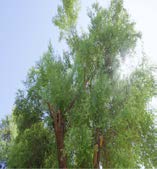
Siddr tree is one of the Ziziphus genus, the origin of the tree is the tropical and subtropical regions of South Asia up to the Arab region in Africa and West Asia. It is also widely spread in hot and humid regions in tropical and subtropical regions worldwide. It is a thorny fruit tree, spreading through the Middle East and Arabia [1]. Furthermore, it is grown in many parts of Africa especially in Sudan, whereas it is growing as indigenous tree in the forests [2]. Currently, there are Persian varieties with large fruits were introduced and cultivated in the new areas [3]. The tree is distinguished by its ability to benefit from all parts, as all parts of the plant have medicinal value. In addition, its wood was used in the manufacture of furniture, and the fruits were a permanent component of the daily diet in ancient Egyptian civilization. In addition, fruits are used as food and medicine in folk medicine till now.
Mature Nabq fruits are a valuable source of numerous imperative natural compounds due to their pharmacological and therapeutic characteristics as anti-inflammatory, antioxidant, and analgesic.
The trees were cultivated along the Nile valley and used in ancient Egyptian recipes to treat swelling, pain, and heat. The exudates of trees still used in folk medicine in Egypt and the Arab region to treat a wide range of diseases, especially those accompanied by inflammation and used to treat swellings, pain, and heat.
On the other hand, modern pharmacological research indicates that tree extract has the anti-inflammatory, anti- hyperglycemic, anti-hypertensive, and anti-microbial effects of fruits and exudates [4].
The Siddr tree is considered the most famous tree used by the Pharaohs in ancient Egypt due to its many benefits, including:
- Provide shade.
- Using its wood in furniture making.
- Use its high-nutrition fruits to prepare meals.
- In addition to medical uses and prescriptions. Botanical Siddr tree (Ziziphus spinachristi L.) is one of the genus Ziziphus that belongs to the Rhamnaceae family. It is an evergreen shrub with thorny branches grown in subtropical and semi-dry regions like the south Mediterranean.
Moreover, it is considered one of the few native tree species in the Arab region [5, 6]. Siddr tree tolerates growth in semi-arid environments and abiotic conditions; it withstands high temperatures, soil salinity, and drought conditions [6].
Climate conditions affect the quality of fruits, as there is a positive correlation between the quality of fruits and the availability of moisture, sunny and dry conditions [7].
Benefits of Tree
The tree is characterized by the medicinal value and beneficial effect of all its parts, fruits, leaves, and stem extracts are used therapeutically due to their high content of phenolic compounds, organic and fatty acids, and antioxidants [1].
Currently, fruits and leaves usually represent the most used parts, while wood is used in the manufacture of traditional furniture in the local community.
Fruits are used for fresh consumption in the daily diet or processing in the production of jam, sweets, and as additives to bread. Flowers are also used by honey bees.
Nutritional Benefits of Fruits
Fresh consumption is the traditional use of Nabq fruits in the Middle East due to their well-known health properties; it is also used as a part of daily food [8].
Ripe fruits of Siddr trees “Nabq” are highly nutritious and beneficial to the human body due to their higher contents of various nutrients, they are rich in carbohydrates, protein, fats, organic acids, minerals, carotene, vitamins, and ascorbic acid [4, 7].
The Phytochemical Composition of Tree Extract
Screening of the extracts was carried out in the RCFF laboratory at the Agriculture Research Center in Egypt according to the methods described by Trease GE, et al. [9] for the determination of active components. Data in Table 1 showed that the extract of Z. spinachristi grown under Egyptian conditions contains various components, among others such as β-Caroten, β-Ionone, Flavonoids, Stearic acid, Glaucine, Phytol, as well as Salicylic acid, β-Sitorsterol, flavonoids, lipids, protein, and free sugar, which were in agreement with previous research by Abdel-Wahhab MA, et al. [10] who reported that extracts of Z. spinachristi possess a protective effect against aflatoxicosis. Moreover, Abalaka ME, et al. [4], Adzu B, et al. [11] claimed that it has anti- conceptive properties in rats and has a calming effect on the central nervous system.
The fruits and leaves are currently considered the most widely used parts of the plant, while all parts of the plant have medicinal benefits. Moreover, the tree could be used for protecting as hedges and fences, or as windbreaks and shelterbelts, setting sandy hills, and creating an excellent habitat for honey bees [1].
| No | Substances |
|---|---|
| 1 | 2-Hexadecanol |
| 2 | 3,3,78-Tetramethyloxyfla |
| 3 | Androstadienedione |
| 4 | Colchicine |
| 5 | Esculetin |
| 6 | Flavon,3',4',6,7-tetramethoxy |
| 7 | Gentisic acid |
| 8 | Glaucine |
| 9 | Hexa-hydro-farnesol |
| 10 | Isoflavonone,6,7,-dimethoxy |
| 11 | Octadecanoic acid |
| 12 | Phytol |
| 13 | Propyl gallate |
| 14 | Quinoline |
| 15 | Salicylic acid |
| 16 | Stearic acid |
| 17 | Tetra-O-methylfisetin |
| 18 | β-Caroten |
| 19 | β-Ionone |
| 20 | β-Resorcylic acid |
| 21 | β-Sitorsterol |
Table 1: ** Main components of Z. Spina Christi extract*.
*Analyzed was done in RCFF laboratory- ARC- Egypt. Table 1: Main components of Z. Spina Christi extract*.
Nabq fruit is often consumed fresh and used in the production of jams, candy, and juices Pareek S, et al. [12] or dried to produce additives like flour [8]. While the maturity stage is the determined factor for the purpose of use, fruits at the beginning of the maturity stage are used for fresh consumption, while fully ripe fruits are appropriate for drying [13]. On the other hand, immature fruits have more antibacterial and antioxidant activity than ripe fruits, due to their higher content of phenolic and flavonoid compounds compared to ripe fruits [14]. Also, delay in harvesting fruits cause physiological disorder that reduces their marketing value.
Conclusion
Siddr tree (Ziziphus spinachristi L.) has grown in Egypt since the prehistory period. Pharoses planted trees for different purposes, and now there are old trees growing in Upper Egypt for a long period over a long Nile valley. The tree is characterized by the medicinal value and beneficial effect of all its parts, fruits, leaves, and stem extracts are used therapeutically due to their high content of phenolic compounds, organic and fatty acids, and antioxidants.
Currently, fruits and leaves are the main parts used due to the higher content of lipids, protein, salicylic acid, and free sugar. Moreover, tree extracts have medicinal effects and are used therapeutically due to their antibacterial and antioxidant characteristics, as they contain valuable components that contain β-Caroten, β-Ionone, Flavonoids, Stearic acid, Glaucine, Phytol, as well as Salicylic acid and β-Sitorsterol. On the other hand, mid-ripe fruits have more antibacterial and antioxidant activity.
References
-
Mishra T, Paice AG, Bhatia A (2011) Use of seeds of malay apple (Ziziphus mauritiana) and related species in health and disease. In: Preedy VR, Watson RR, et al. (Eds.), Nuts and Seeds in Health and Disease Prevention pp: 733-739.
-
Saied AS, Gebauer J, Hammer K, Buerkert A (2008) Ziziphus spina-christi L. Willd: a multipurpose fruit tree. Genetic Resources and Crop Evolution 55: 929-937.
-
Baghazadeh-Daryaii L, Sharifi-Sirchi GR, Samsampoor D (2017) Morphological, phytochemical and genetic diversity of Ziziphus spina–christi L des. In: south and southeastern of Iran. Journal of applied research on medicinal and aromatic plants 7: 99-107.
-
Abalaka ME, Daniyan SY, Mann A (2010) Evaluation of the antimicrobial activities of two Ziziphus species (Ziziphus mauritiana L. and Ziziphus spinachristi L.) on some microbial pathogens. African Journal of Pharmacy and Pharmacology 4(4): 135-139.
-
Norouzi E, Erfani-Moghadam J, Fazeli A, Khadivi A (2017) Morphological variability within and among three species of Ziziphus genus using multivariate analysis. Scientia Horticulturae 222: 180-186.
-
Singh V, Guizani N, Essa MM, Rahman MS, Selvaraju S (2012) In vitro antioxidant activities of Ziziphus spina- christi fruits (red date) grown in Oman. Biotechnol 11(4): 209-216.
-
Sharif N, Jaskani MJ, Abbas Naqvi S, Awan FS (2019) Exploitation of diversity in domesticated and wild ber (Ziziphus mauritiana lam.) germplasm for conservation and breeding in Pakistan. Sci Hortic 249: 228-239.
-
Yahia Y, Benabderrahim MA, Tlili N, Bagues M, Nagaz K (2020) Bioactive compounds, antioxidant and antimicrobial activities of extracts from different plant parts of two ziziphus mill. Species. PLOS ONE 15(5): e0232599.
-
Trease GE, Evans WC (1989) Pharmacognosy. In: 13th (Edn.), Bailere Traiadal, London, UK, pp: 69.
-
Abdel-Wahhab MA, Omara EA, Abdel-Galil MM, Hassan NS, Nada SA, et al. (2007) Ziziphus spina-christi extract protects against Aflatoxin B1-intitiated hepatic carcinogenicity. Afr J Trad CAM 4(3): 248-256.
-
Adzu B, Amos S, Amizan MB, Gamaniel K (2003) Evaluation of the antidiarrhoeal effects of Zizyphus spina- christi stem bark in rats. Acta tropica 87(2): 245-250.
-
Pareek S, Yahia EM (2013) Postharvest biology and technology of ber fruit. Horticultural Reviews 41: 201- 240.
-
Reche J, Almansa MS, Hernández F, Amorós A, Legua P (2021) Physicochemical and antioxidant capacity of jujube (Ziziphus jujuba mill.) at different maturation stages. Agronomy 11(1): 132.
-
Aldhanhani AR, Ahmed ZF, Tzortzakis N, Singh Z (2022) Maturity stage at harvest influences antioxidant phytochemicals and antibacterial activity of jujube fruit (Ziziphus mauritiana Lamk. and Ziziphus spina-christi L.). Annals of Agricultural Sciences 67(2): 196-203.
- Enhancement of Vegetative Growth and Fruit Yield in Cucumber (Cucumis sativus L.) via Spiritual Blessing (Biofield) Energy Intervention
- Production of Açaí (Euterpe oleracea Mart.) under Different Agroforestry System Management Intensities in Amazonian Floodplain (Varzea) Forests
- Coffee and the Production Region: What is the Secret to the Expression "Quality"?
- Experiential Agripreneurship Training in Sub-Saharan Africa: Integrating a Business Incubator into Postgraduate Livestock Education at the University of Buea
- Advances in Agricultural High-Quality Development
- Linking Compost Residue to ABAGE in Plants - a Short Note