
Unleashing Biotic Interactions through Agroecological Designs to Stabilize Crop Productivity and Enhance Resilience
In a planet under polycrisis (climate change, high input costs, ecological degradation, armed conflicts, etc.) the challenge is to transition agroecosystems based on external inputs to one dependent on ecological processes. This will require agroecologists to test new diversification designs that will potentiate beneficial above and below ground biodiversity interactions at the farm and landscape level, so that soil quality, plant health, productivity and resilience emerge from processes such as optimized soil biological activation, nutrient cycling and biological pest regulation. Such approach enhances resiliency to biotic and abiotic stresses and increases farmers ecological, genetic, water, energy, technological and food sovereignty.
Introduction
Agriculture is essential for human livelihoods and is considered a vital activity to achieving zero hunger, biodiversity conservation and climate stabilization, among other major goals of sustainable development. This mission however is being undermined by the ecological toll of modern agriculture: increased deforestation and soil erosion, lower soil fertility, loss of about 60% of global terrestrial biodiversity, polluted water bodies via nitrogen runoff leading to eutrophication of rivers and lakes and creating dead zones in oceans [1].
To feed the world and produce biomass for animal feed, biofuels, etc., industrial agriculture has expanded at the expense of wild ecosystems occupying about 80% of the global arable land with ecologically narrow and genetically homogeneous monocultures, highly susceptible to insect pests, pathogens and weeds. More than 5.2 billion pounds of pesticides are applied annually worldwide to control such pests [2]. In addition, industrial agriculture emits about 30% percent of total greenhouse gas emissions, thus becoming a major driver of climate change [3]. Paradoxically modern agroecosystems are also highly vulnerable to climate variability [4]. This vulnerability became even more apparent with the COVID-19 pandemic and the Russia-Ukraine war, all signs on how unprepared modern agroecosystems are to unforeseen crisis.
Given this reality it could be argued that the vulnerable ecological state of industrial agriculture and its dependence on external energy inputs represents a major threat to the long-term sustainability of food production systems and thus humanity’s food security. A major transformative change in agricultural design and management is needed. The challenge is to transition agroecosystems based on inputs to one dependent on ecological processes. The task for agroecologists lies in the design of new agroecosystems which potentiate the beneficial above and below ground biodiversity interactions at the farm and landscape level, so that soil quality, plant health, crop productivity and resilience emerge from the optimization of ecological processes rather than from the application of external inputs.
Charting a pathway for the future of agriculture requires detailed place-based knowledge and site specific strategies on how to enhance and manage agrobiodiversity to reduce dependence from agrochemicals and provide resilience to climate change and other stresses. There is a need to better understand how agrobiodiversity interactions can be manipulated to unleash ecological services and maximize resource-use efficiency for sustainable crop production. Taking greater advantage of beneficial on-farm interactions entails collaboration among traditional, experiential, and multi-disciplinary scientific sources of knowledge.
Complex Interactions in Biodiverse Agro ecosystems
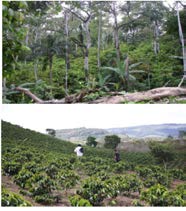
Studies conducted in complex farming systems managed by indigenous farmers and peasants in the developing world, have revealed that the stability, resilience and long term performance of complex farming systems (i.e., polycultures and agroforestry systems) is tied to high levels of species and genetic diversity in time and space, and the interactions emerging from high levels of plant, animal and microbial biodiversity [5]. In such systems plant, animal and microbial biodiversity engage in beneficial biological synergisms that trigger key ecological processes such as soil biota activation, nutrient cycling, biological pest regulation, pollination, etc (Figure 1). This realization has inspired contemporary farmers and researchers to promote practices that enhance the functional biodiversity of agroecosystems, such as cover crops, green manures, intercropping, agroforestry and crop– livestock mixtures. The adoption of such diversification practices generally leads to complex interactions with favorable changes in soil quality, plant health, productivity and overall resilience [6].
Yield Enhancing Interactions
Increasing plant diversity in agroecosystem is known to affect aboveground and belowground agroecosystem functioning. A key outcome is the yield advantage of diversified cropping systems over monocultures expressed as the Land Equivalent Ratio (LER) [7]. Higher total output in diversified farms results from a variety of mechanisms including more efficient use of resources (light, water, nutrients, etc.) and reduced insect pest, disease and weed damage [7].
Diversified systems generally show higher yield stability especially in response to annual weather variability. A classic study by Natarajan M, et al. [8] showed that all intercrops tested over yielded consistently at five levels of moisture availability and the rate of over yielding increased with water stress such that the relative differences in productivity between monocultures and polycultures became more accentuated as stress increased. In another study conducted in east Africa, although drought reduced maize grain yield, water stress did not impact pigeon pea grain yield. Maize- pigeon pea was the only intercrop that consistently required less land than its corresponding monocultures to produce the same yield under drought [9].
Higher productivity in diverse agroecosystems is linked to the processes of complementarity or facilitation and resource partitioning.
Complementarity and Facilitation
Above Ground Interactions: Recent meta-analyses suggest that crop diversification strategies lead to regulation of insect pest densities and reduced crop damage due to natural enemy enhancement or from a combination of ecological mechanisms such as changes in host-finding and insect movement [10]. An example is the ‘push–pull’ system developed by scientists in Africa for management of stemborer pests which exploits behavior-modifying stimuli to manipulate the distribution and abundance of stemborer pests and their natural enemies [11]. The system involved intercropping maize with a repellent plant, Desmodium uncinatum (push) and planting an attractive trap plant Napier grass, Pennisetum purpureum (pull) as a border crop around this intercrop to attract colonization away from maize. The process of stem borer control was mediated by chemically mediated interactions involving release of attractant semiochemicals from the trap plants and repellent semiochemicals from the intercrops [12]. Many natural enemies of pests (predators and parasitoids) depend on plant-provided resources (e.g., nectar, pollen, neutral insects and shelter) for fecundity and longevity. As these resources are scarce in monocultures, a habitat management strategy consists in introducing floral resources in the form of annual flower strips within crop fields, in order to harbor beneficial insects [13]. In Swiss winter wheat fields strong reductions in cereal leaf beetle (CLB) density and plant damage caused by CLB occurred in fields with flower strips compared with control fields. Another study in Switzerland reported higher parasitization rates of lepidopterous pests by Hymenopteran wasps on cabbage crops near adjacent flower strips than in open fields [14]. Exploiting the direct links between flower strips, pest control and reduced crop damage, benefits farmland biodiversity and the autonomy of farmers in terms of pest-control measures.
Below Ground Interactions: Root interactions between intercropped plants play an important role in overyielding via the uptake of nitrogen and other nutrients or the more effective use of soil resources. When the roots of maize and fava beans intermingle, yields, N and P uptake increase. It is possible that phosphorus that is mobilized by faba bean may have been made available for maize and that the nitrogen fixed by faba beans was transferred to maize. In P poor soils maize overyielding resulted from its uptake of phosphorus mobilized by the acidification of the rhizosphere by faba bean roots which released organic acids and protons [15]. Similarly root exudates of flavonoids (signaling compounds for rhizobia) from maize increase root hair deformation and nodulation in faba bean. When peanut and maize grew together, phtyosiderfore released by maize roots mobilized Fe (III) benefiting the iron nutrition of the peanut plant, whereas in monoculture peanuts suffered from iron deficiency. Clearly facilitation processes in intercropping systems are driven by rhizosphere micro-organisms activated by root exudates [16].
Increasing crop diversity and subsequently root complexity, is an effective strategy to promote root diversity and root exudation which in turn creates rhizosphere microhabitat heterogeneity enhancing microbial diversity, biomass and enzymatic activity [17]. Enhanced crop diversity led to shifts in soil microbial community composition, encouraging several plant-growth promoting microbes including bacteria such as Rhizobium, Arthrobacter, Bacillus, Alcaligens, Rhodococcus, Methylobacterium, Pseudomonas and Azospirillum spp. Many of these microorganisms are known for their roles in plant nutrition, growth promotion, hormone regulation and stress control. Fungi such as Trichoderma spp. protect against pathogens and many plants obtain water and essential macro and micronutrients from mycorrhizal fungi [18]. Root exudates played a key role in increased bioavailability of soil P in tomato-onion intercropping, and enhanced available P was correlated with high populations of Bacillus, Pseudomonas and Trichoderma [19].
Resource Partitioning: This process can be enhanced by enabling one species in the mixture to access limiting nutrients at different times during the growing season or from deeper depths of the soil profile thereby reducing competitive interactions [20]. Many species over yield in polycultures because its growth season and rooting depth differ from the companion crop. Maize plants intercropped with chickpea and faba bean had increased root length than in monocultures which improved P uptake [21]. Root length density in the topsoil of wheat improved significantly when intercropped with maize, contributing to greater P uptake and higher yield production [22]. In grain legume-cereal intercrops grown at variable nitrogen levels, grain legumes exhibited higher interspecific competitive ability at lower soil nitrogen levels, while the cereal component performed best at higher soil nitrogen levels [23].
Relay intercropping allows each crop to exploit, during its growth period, greater amounts of soil nutrients, water and light than it could in a monoculture. When wheat or soybean are grown with maize, they stop growing and are harvested by the time maize reaches its highest growth rate, therefore competition between the two crops is minimized. In well-designed relay systems, each crop can exploit, during its growth period, greater amounts of soil nutrients, water and light than it could in a monoculture, thus giving a greater total harvest than could monoculture by itself [24].
Designs for Optimizing Biotic Interactions in Modern Agroecosystems
Given the new climate change scenarios, the search for practical steps to break the monoculture nature of modern agroecosystems and thus reduce their ecological vulnerability is an imperative. Diversified cropping systems, especially those including legumes, have been proposed to enhance food production and resilience while reducing input dependence and environmental impacts [25].
Crop Rotations: Crop rotation in a way mimics the ecological succession in natural ecosystems. The temporal sequence of crops in a rotation, with plant species displaying different nutrient demands, that buildup soil fertility and break the life cycles of weeds, insect pests and pathogens benefits long term productivity. A metanalysis synthesizing 11,768 yield observations from 462 field experiments comparing legume- based and non-legume crop rotations showed that legumes enhanced the yield of cereals (rice, wheat and maize) by 20% especially in low-input and low-diversity agricultural systems [26].
Under drought scenarios evidence across multiple sites in the U.S. and Canadian Corn Belt showed that rotational diversification reduced corn yield losses by 14 to 90%. Rotations along with other practices such as green manures, cover crops and application of compost, increase soil organic matter which enhances soil biological activity and water holding capacity [27].
Strip Intercropping: Strip intercropping is a modern version of intercropping, adapted to large extensions and mechanization [28]. In such systems each crop is grown in a narrow strip of land of about 1–2 m wide that contains several rows of the same crop species. The adjacent strip has several rows of the other crop, and strips of the two crops alternate in time. The yields achieved in strip intercropping were on average 29% greater than from monocultures of the same crops, while using 36% less nitrogen fertilizer [29]. Consistently across studies, the yield benefits from intercropping occur even when less fertilizer is used, with the added benefit of reducing nitrogen and phosphorous that enters groundwater, streams, rivers, lakes, and oceans.
Yield advantages occur mainly because of seasonal differences in the growth, maturation and height of the two crops grown. Studies with corn and soybean strips four to twelve rows wide have demonstrated increased corn yields (5 to 26 %) and decreased soybean yields (-8.5 to -33 %) as strips get narrower. Wider strips were most advantageous, with substantial economic returns over the sole crops [30]. Total intercrop yields were higher than those of sole crop maize and soybean, and the land equivalent ratios of the intercropping systems were above 1.3. The yield of the intercropped maize increased with bandwidth reduction at the same plant density [31]. This advantage is critical to farmers who desperately need to cut on costs of production, as input costs have skyrocketed with the Russia-Ukraine war.
Cover Crops: In modern fruit orchards and vineyards, the introduction of cover crops improves the physical, chemical and biological soil properties, optimizing nutrient use efficiency and reducing the dependency of crops on external nutrient supplies. Root deepening and above- and belowground residues from cover crops contribute to develop soil structure and a pore network that favors soil biota. In particular, cover crop root exudates (amino acids, proteins, organic acids, sugars, phenolics, secondary metabolites, etc.) provide an energy supply for rhizosphere micro-organisms as well as invertebrates which progressively transform freshly dead organic matter into humus while nutrients are progressively released to the trees and vines [31]. Cover crops can enhance colonization of mycorrhizal fungal species (Glomus aggregatum, G. etunicatum, G. mosseae, G. scintillans) as long as there is close contact between grapevine roots and cover crop roots [32]. In Switzerland increasing crop diversity led to shifts in soil microbial community composition, and in particular to an increase of several plant-growth promoting microbes, including bacteria of the genus Actinobacteria. These shifts in community composition subsequently led to a 15 -35% increase in crop yield in 2 and 4-species mixtures [33].
Legume cover crops are important not only because they fix nitrogen, but they can also reduce soil erosion and mitigate the effects of drought in the long term since the mulch conserves soil moisture. Cover crops build vertical soil structure as they promote deep macropores in the soil, allowing more water to penetrate during the rainy season and thus improve soil water storage [34].
Organic No till Farming: Some no-till farmers use cover crops in rotational schemes instead of synthetic herbicides. Plants such as cereal rye and hairy vetch can be killed by mowing with an innovative no-till roller/crimper at a sufficiently late stage in their development and cut close to the ground.
These plants generally do not regrow significantly, and the clippings form an in situ mulch through which vegetables can be transplanted with no or minimal tillage [35]. The mulch hinders weed seed germination and seedling emergence, often for several weeks. As they decompose, many cover crop residues release allelopathic compounds that suppress weed growth. This inhibition is caused by phytotoxic substances that are passively liberated through decomposition of plant residues. There is a long list of green manure species that have phytotoxic effects. This effect is usually sufficient to delay the onset of weed growth until after the crop’s minimum weed- free period, which makes post plant cultivation, herbicides or hand weeding unnecessary, yet exhibiting acceptable crop yields [36].
Perennialization: One promising approach to expanding ecosystem services (hydrologic regulation and water purification, biotic regulation and microclimate regulation) in agroecosystems is through promotion of woodlots, hedgerows, old-field fallows and pastures around crop fields. Several forms of perennial vegetation can increase landscape complexity and resource heterogeneity, thereby promoting habitats for diverse communities of beneficial organisms that help control pests and pathogens and provide pollination services in adjacent crop fields [37].
There are many examples of parasitism rates or natural enemy abundances being higher at the edges of fields than in the middle, indicating that the effect of bordering vegetation is limited to only a few crop rows downwind as natural enemies exhibit a gradual decline in crop fields with increasing distance from borders [38]. This poses an important limitation for the use of vegetation borders, as the colonization of natural enemies is limited to field borders leaving the middle rows of the crop fields void of biological control protection.
To overcome this limitation, establishment of corridors containing many flowering species, which connect to the bordering vegetation but cut across the crop fields, is a sound strategy. The idea is that such corridors serve as a biological highway for movement and dispersal of predators and parasitoids into the center of the fields, as demonstrated in an organic vineyard in northern California [39].
Conclusions
Exploiting the advantages of beneficial biodiversity mediated interactions in agroecosystems requires a process of conversion from a high-input monoculture management system to a diversified system with low or no external inputs. The agroecological aim is to enhance food provisioning through practices aimed at increasing several ecosystem services including soil fertility, pollination, and natural pest control [40]. A complex community of functional organisms (soil biota, antagonists, beneficial insects, etc.) in an agroecosystem is favored by enhanced plant diversity, leading to more interactions among associated arthropods and microorganisms which are part of above and below ground food webs. As diversity increases, so do opportunities for beneficial interactions between species, benefitting agroecosystem sustainability (Figure 2).
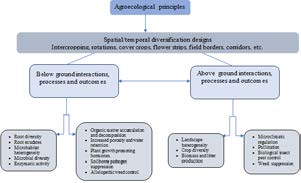
This implies a redesign of farming systems which consists in the establishment of an ecological infrastructure that through plot to landscape-scale diversification, encourage ecological interactions that trigger key ecological processes that regulate agroecosystem function (organic matter accumulation and decomposition, soil biological activation, nutrient cycling and retention, water storage, pest/disease regulation, etc.) [41].
Once the ecological infrastructure is in place and ecological functions are re-established, vegetational designs at the field and landscape level (cover crops, polycultures, field borders, etc.), start lending ecological services to the farm and key processes such as soil biological activation, nutrient cycling, pest regulation, etc. are set in motion. In this way the need for external inputs is reduced and production costs start decreasing as the agricultural system transitions from one dependent on external inputs to one that relies on ecological processes [42].
References
-
Horrigan L, Lawrence RS, Walker P (2002) How Sustainable Agriculture Can Address the Environmental and Human Health Harms of Industrial Agriculture. Environmental Health Perspectives 110(5): 445-456.
-
FAOSTAT (2023) Food and Agriculture Statistics.
-
Clark MA, Domingo NG, Colgan K, Thakrar SK, Tilman D, et al. (2020) Global food system emissions could preclude achieving the 1.5 and 2 C climate change targets. Science 370(6517): 705-708.
-
Fischer G, Shah MM, Van Velthuizen HT (2002) Climate Change and Agricultural Vulnerability: Special Report to the UN World Summit on Sustainable Development. International Institute for Applied Systems Analysis, Austria.
-
Altieri MA (2004) Linking ecologists and traditional farmers in the search for sustainable agriculture. Frontiers in Ecology and the Environment 2(1): 35-42.
-
Gliessman SR, Engles E, Krieger R (1998) Agroecology: ecological processes in sustainable agriculture. CRC press.
-
Lithourgidis AS, Dordas CA, Damalas CA, Vlachostergios DN (2011) Annual intercrops: an alternative pathway for sustainable agriculture. Australian Journal of Crop Science 5(4): 396-410.
-
Natarajan M, Willey RW (1986) The effects of water stress on yield advantages of intercropping systems. Field Crops Research 13: 117-131.
-
Renwick LL, Kimaro AA, Hafner JM, Rosenstock TS, Gaudin AC (2020) Maize-Pigeonpea Intercropping Outperforms Monocultures under Drought. Frontiers in Sustainable Food Systems 4: 562663.
-
Letourneau DK, Armbrecht I, Rivera BS, Lerma JM, Carmona EJ, et al. (2011) Does plant diversity benefit agroecosystems? A synthetic review. Ecological applications 21(1): 9-21.
-
Cook SM, Khan ZR, Pickett JA (2007) The use of push- pull strategies in integrated pest management. Annu Rev Entomol 52: 375-400.
-
Khan ZR, Midega CA, Bruce TJ, Hooper AM, Pickett JA (2010) Exploiting phytochemicals for developing a push–pull crop protection strategy for cereal farmers in Africa. Journal of experimental botany 61(15): 4185- 4196.
-
Nicholls CI, Altieri MA (2004) Designing Species‐Rich, Pest‐Suppressive Agroecosystems through Habitat Management. Agroecosystems Analysis 43: 49-61.
-
Tschumi M, Albrecht M, Entling MH, Jacot K (2015) High effectiveness of tailored flower strips in reducing pests and crop plant damage. Proceedings of the Royal Society B: Biological Sciences 282(1814): 20151369.
-
Li L, Tilman D, Lambers H, Zhang FS (2014) Plant diversity and overyielding: insights from belowground facilitation of intercropping in agriculture. New phytologist 203(1): 63-69.
-
Inal A, Gunes A, Zhang F, Cakmak I (2007) Peanut/maize intercropping induced changes in rhizosphere and nutrient concentrations in shoots. Plant physiology and biochemistry 45(5): 350-356.
-
Stefan L, Hartmann M, Engbersen N, Six J, Schöb C (2021) Positive effects of crop diversity on productivity driven by changes in soil microbial composition. Frontiers in microbiology 12: 660749.
-
Schilling G, Gransee A, Deuhel A, Ležoviž G, Ruppel S (1998) Phosphorus availability, root exudates, and microbial activity in the rhizosphere. Zeitschrift für Pflanzenernährung und Bodenkunde 161(4): 465-478.
-
Zhang F, Li L (2003) Using competitive and facilitative interactions in intercropping systems enhances crop productivity and nutrient-use efficiency. Plant and Soil 248: 305-312.
-
Rahman MKU, Wang X, Gao D, Zhou X, Wu F (2021) Root exudates increase phosphorus availability in the tomato/potato onion intercropping system. Plant and Soil 464: 45-62.
-
Chen P, Song C, Liu XM, Zhou L, Yang H, et al. (2019) Yield advantage and nitrogen fate in an additive maize- soybean relay intercropping system. Science of the Total Environment 657: 987-999.
-
Li L, Yang S, Li X, Zhang F, Christie P (1999) Interspecific complementary and competitive interactions between intercropped maize and faba bean. Plant and Soil 212: 105-114.
-
Bedousac L, Justes E (2011) A comparison of commonly used indices for evaluating species interactions and intercrop efficiency: Application to durum wheat-winter pea intercrops. Field Crops Research 124(1): 25-36.
-
Kakraliya SK, Singh U, Bohra A, Choudhary KK, Kumar S, et al. (2018) Nitrogen and legumes: a meta-analysis. Legumes for soil health and sustainable management, pp: 277-314.
-
Koohafkan P, Altieri MA, Gimenez EH (2012) Green agriculture: foundations for biodiverse, resilient and productive agricultural systems. International Journal of Agricultural Sustainability 10(1): 61-75.
-
Zhao J, Chen J, Beillouin D, Lambers H, Yang Y, et al. (2022) Global systematic review with meta-analysis reveals yield advantage of legume-based rotations and its drivers. Nature Communications 13(1): 4926.
-
Bowles TM, Mooshammer M, Socolar Y, Calderón F, Cavigelli MA, et al. (2020) Long-term evidence shows that crop-rotation diversification increases agricultural resilience to adverse growing conditions in North America. One Earth 2(3): 284-293.
-
Machado S (2009) Does intercropping have a role in modern agriculture?. Journal of Soil and Water Conservation 64(2): 55-57.
-
Francis CA, Jones A, Crookston K, Wittler K, Goodman S (1986) Strip cropping corn and grain legumes: A review. American Journal of Alternative Agriculture 1(4): 159- 164.
-
West TD, Griith DR (1992) Effect of strip-intercropping corn and soybean on yield and profit. Journal of Production Agriculture 5(1): 107-110.
-
Scavo A, Fontanazza S, Restuccia A, Pesce GR, Abbate C, et al. (2022) The role of cover crops in improving soil fertility and plant nutritional status in temperate climates. A review. Agronomy for Sustainable Development 42(5): 93.
-
Baumgartner K, Smith RF, Bettiga L (2005) Weed control and cover crop management affect mycorrhizal colonization of grapevine roots and arbuscular mycorrhizal fungal spore populations in a California vineyard. Mycorrhiza 15(2): 111-119.
-
Stefan L, Hartmann M, Engbersen N, Six J, Schöb C (2021) Positive Effects of Crop Diversity on Productivity Driven by Changes in Soil Microbial Composition. Front Microbiol 12: 660749.
-
Chalise KS, Singh S, Wegner BR, Kumar S, Pérez‐Gutiérrez JD, et al. (2019) Cover crops and returning residue impact on soil organic carbon, bulk density, penetration resistance, water retention, infiltration, and soybean yield. Agronomy Journal 111(1): 99-108.
-
Moyer J (2010) Organic No-Till Farming. Rodale Press, Emmaus.
-
Altieri MA, Lana MA, Bittencourt HV, Kieling AS, Comin JJ, et al. (2011) Enhancing crop productivity via weed suppression in organic no-till cropping systems in Santa Catarina, Brazil. Journal of Sustainable Agriculture 35(8): 855-869.
-
Asbjornsen H, Hernandez-Santana V, Liebman M, Bayala J, Chen J, et al. (2014) Targeting perennial vegetation in agricultural landscapes for enhancing ecosystem services. Renewable Agriculture and Food Systems 29(2): 101-125.
-
Tscharntke T, Bommarco R, Clough Y, Crist TO, Kleijn D, et al. (2007) Conservation biological control and enemy diversity on a landscape scale. Biological Control 43: 294-309.
-
Nicholls CI, Parrella M, Altieri MA (2001) The effects of a vegetational corridor on the abundance and dispersal of insect biodiversity within a northern California organic vineyard. Landscape Ecology 16: 133-146.
-
Bommarco R, Kleijn D, Potts SG (2013) Ecological intensification: harnessing ecosystem services for food security. Trends in ecology & evolution 28(4): 230-238.
-
Altieri MA (2002) Agroecology: The science of natural resource management for poor farmers in marginal environments. Agriculture, Ecosystems and Environment 93(3): 1-24.
-
Nicholls CI, Altieri MA, Vazquez L (2016) Agroecology: principles for the conversion and redesign of farming systems. J Ecosyst Ecography.
- Enhancement of Vegetative Growth and Fruit Yield in Cucumber (Cucumis sativus L.) via Spiritual Blessing (Biofield) Energy Intervention
- Production of Açaí (Euterpe oleracea Mart.) under Different Agroforestry System Management Intensities in Amazonian Floodplain (Varzea) Forests
- Coffee and the Production Region: What is the Secret to the Expression "Quality"?
- Experiential Agripreneurship Training in Sub-Saharan Africa: Integrating a Business Incubator into Postgraduate Livestock Education at the University of Buea
- Advances in Agricultural High-Quality Development
- Linking Compost Residue to ABAGE in Plants - a Short Note