
Effect of Integrated Use of Lime and Vermicompost on Faba Bean Productivity and Selected Chemical Properties of the Soil in Acid Prone Areas of Ethiopia
Soil acidity is one of land degradation problem that reduces land’s ability to provide ecosystem services which has stayed as an eminent problem limiting crop production and productivity in Ethiopia. To counteract this problem sustainably, development of regenerative agricultural strategy that aimed not simply at sustaining the current state of soils and ecology, rather at enhancing an array of different schemes such as conservation agriculture, integrated soil fertility management technology comprising inorganic and organic soil amendment and others are substantial. On-station experiment were conducted at Damotu FTC for three consecutive cropping seasons (2019, 2020 and 2021) to examine the integrated use of lime and vermicompost on faba bean productivity and the soil chemical properties. Two rates of lime (2.6 t ha-1 and 1.3 t ha-1), two level of vermicompost (4.6 t ha-1and 2.3 t ha-1 ) and two rates of NP fertilizer (46 N/18 P2O5 and 23 N/9 P2O5 )were combined systematically along with one control and standard check arranged in RCB design with three replications.. Three years mean result showed that a significantly highest number of pod per plant (13) were recorded from the combined use of 2.3 t ha-1 of vermicompost, 1.3 t ha-1 of lime and 46 N/18 P2O5. The trend is quite similar in biomass production and seed yield of faba bean where a significantly higher yield of grain (2.95 t ha-1) was obtained from the same input combination which outscored the control treatment by more than 100%. The soil analysis results revealed that soil pH increased from 5.19 (strongly acidic) to 6.21 (slightly acidic), while exchangeable acidity decreased from 1.7 to 0.13 cmol kg-1 under combined application of 4.6 t ha-1 of vermicompost and 2.6 t ha-1 of lime without the use of NP fertilizer. Higher values of TN and Av.P was obtained from the application of 2.3 t ha-1 of vermicompost and 2.6 t ha-1 of lime along with recommended NP fertilizer. The result of this investigation suggested that the integrated use of lime and vermicompost along with sub-optimal application rates of chemical NP fertilizer could increase faba bean yield significantly and improve soil chemical properties in acidic soil condition.
Derb Kifle, Yohannse H/yesus*, Getahun Dereje, Fikadu Mosisa, Mussefa Redi, Geremew Taye and Gezahagni Tamru
Ethiopian Institute of Agricultural Research, Holeta Agricultural Research Center, Ethiopia *Corresponding author: Yohannse H/yesus, Ethiopian Institute of Agricultural Research, Holeta Agricultural Research Center, Ethiopia, Email: yhabteyesus@yahoo.com
Introduction
Ethiopia faces a wide set of soil fertility problems, which require approaches that go beyond the application of chemical fertilizers- the only practice applied to date. Core constraints include topsoil erosion, soil acidity, significant depletion of organic matter due to widespread use of biomass as fuel, depleted macro and micronutrients, deterioration in soil physical quality, and soil salinity [1].
Soil acidity and element toxicity arising from it can be ameliorated by using organic and inorganic means. Soil organic matter complexes with Al and other polyvalent cations consume them from the soil solution and the colloidal exchange site [2]. During the decomposition of plant and animal debris, a whole range of organic compounds is released from the debris and/or synthesized by the decomposer microorganisms that strongly bind to aluminum [3]. Humic substances can form complexes with polyvalent metal ions, such as Al, due to their unusually high number of O - O-containing functional groups, which include COOH, phenolic, enolic, alcoholic OH, and C=O. The mechanisms involved in the reactions of Al with organic matter are complex and probably involve simultaneous chelating, adsorption, and co-precipitation [4]. It has been shown that Al toxicity could also decrease due to its complexion to high- molecular-weight organic compounds [5].
Lime reclamation is the most efficient, globally acclaimed inorganic commercial amendment and effective means of alleviating the soil acidity problem [6]. Soils are limited to reduce the harmful effects of low pH (aluminum or manganese toxicity) and to add calcium and magnesium to the soil. The decrease in exchangeable Al by lime is mainly a function of the rise of soil pH. Toxic levels of soluble and exchangeable aluminum (Al) can be almost eliminated by raising the pH beyond 5.5 with lime. Application of organic materials alone or in combination with Liming requirements helped in the maintenance of acid soil and crop productivity. Thus the integration of Organic and liming requirement sources may improve and sustain crop yields without degrading soil fertility status [5].
However, liming practice and Vermicomposting exercised during earlier periods were not based on research results relating to the lime requirement of different soils and different crops at the study area. The extent of benefit that can be obtained with liming and vermicompost was also not well known. Thus, this experiment was conducted to determine the effects of vermicompost and lime and their combined use on soil acidity amelioration, crop productivity, and selected chemical properties of the soil.
Materials and Methods
Description of the Study Area
The experiment was conducted on station in Farmers Training Center (FTC) at Damotu Kebele of Ejere district as a permanent plot experiment (Figure 1).
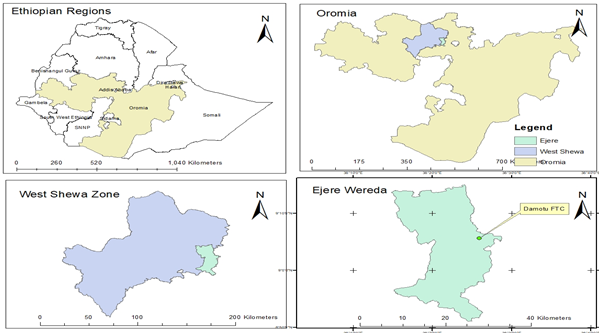
Figure1: Location Map of the Study Area.
Experimental Procedure
A composite soil sample was collected from the surface layer of the whole experimental field before treatment application and from each treatment plot after harvest at a depth of 20 cm for measurement of the major soil properties. Post-harvest soil sampling and analysis were done to examine the residual effect of the organic and inorganic soil acidity amendment on the prescribed soil properties.
Soil Laboratory Analysis
Soil chemical properties were tested using the standard laboratory procedure. The pH of the soil was measured potentiometrically using a pH meter with a combined glass electrode in soil water ratio of 1:2.5 as described by Brady C, et al. [7]. The base titration method which involves saturation of the soil sample with 1M KCl solution and titrating with sodium hydroxide was employed to determine exchangeable acidity as described by Rowell Dl [8]. Organic carbon was determined using the wet oxidation method [9]. The total N content of the soil was determined using the Kjeldahl method [10]. Available soil phosphorus was extracted by the Bray II procedure Bray RH, et al. [11] and determined calorimetrically by spectrophotometer.
Lime and Vermicompost Rating and Fertilization
The materials used as soil acidity ameliorant were vermicompost (VC) and ground limestone of known composition. The amount of lime was determined based on the soil’s exchangeable acidity and bulk density within 0.2cm depth of the soil, a method adapted from Kamprath EJ [12] whereas the quantity of vermicompost was estimated based on its N-equivalency.
Both soil conditioners were applied to a well-prepared experimental plot one month ahead of planting by mixing them with the soil in the plow depth. The planting material used in the experiment was a recently released variety of faba-bean locally known as ‘Gebelicho’.
Treatment and Experimental Design
The experiment comprised ten treatments each with different rates of lime and vermicompost arranged in systematic combination which were laid out as a randomized complete block design (RCBD) with three replications.
Data Collection and Analysis
Agronomic data of the test crops such as plant height, spike length, number of pods per plant, and number of seeds per plant were measured from five plants randomly selected from middle rows of each plot at harvesting whereas biomass and grain yields were recorded from the central rows of each plot. Both soil and crop data were managed using the EXCEL computer software and were subjected to analysis of variance using the General Linear Model of SAS [13]. Treatment means were separated using the Least Significant difference test at an alpha level of 5 %.
Result and Discussion
Selected Soil Properties before Treatment Application
The results of soil analysis before treatment application are indicated in Table 1. According to the laboratory analytical result, the soil of the study area was sandy clay loam in texture Jones CA [14], very strongly acidic in reaction as rated by Tekalign T [15], and low in Available P which is probably attributed to high P fixing capacity of the soil at the area.
| Test result | |
|---|---|
| pH H₂O (1:2.5) | 4.29 |
| Av. Phosphorus(ppm) | 8.52 |
| Oc (%) | 1.5 |
| Sand (%) | 48.3 |
| Clay (%) | 36.4 |
| Silt (%) | 15.4 |
| Texture class | Sandy |
| Bulk density(g/cm³) | 1.28 |
| Ex. Acidity (cmol/kg) | 1.7 |
Table 1: Selected Soil Properties of the Study Area.
Vermicompost was prepared from crop residues of maize and soya bean, cow dung, and topsoil by using red earthworm (Eisenia fetida). The laboratory analytical result of the vermicompost chemical properties is shown in Table 2. The vermicompost had N and P of (1.51%) and (0.9%) respectively which are rated higher in comparison to that of the soil entity. The vermicompost’s pH was moderately alkaline (8.07) and had organic Carbon (19.67%) and a low C: N ratio (13.73). The contracted C: N ratio of this vermicompost indicates that there is a high potential of mineralization of soil organic matter for the release of nutrients such as N and p, and therefore their availability in soil for plant use.
| parameters | value |
|---|---|
| pH (1:2.5H O) 2 | 8.07 |
| Oc (%) | 19.64 |
| TN (%) | 1.43 |
| C:N | 13.73 |
| P (%) | 0.9 |
| Ec (mS cm-1) | 3.12 |
Table 2: Selected Chemical Properties of the Vermicompost Utilized in the Experiment
pH=Power of hydrogen activity; C=Carbon; N=Nitrogen; P=Phosphorus and EC=Electrical conductivity. Table 2: Selected Chemical Properties of the Vermicompost Utilized in the Experiment
Effects of Lime and Vermicompost on Yield and Yield Component of Faba Bean
The result of the study indicated that the number of pods per plant of faba bean was significantly affected by the mutual effect of lime and vermicompost. A blend use of lime and vermicompost resulted in a higher number of pods per plant compared to the control treatment (Table 3). The result also showed that dry biomass yield and seed yield of faba bean were significantly affected by the combined effect of lime and vermicompost. A combination of lime and vermicompost resulted in higher grain yield than that with lime or vermicompost used individually (Table 3). The highest grain yield (2.95 tons/ ha) was recorded from the use of 50% rec.VC + 50% rec. lime + rec. NP that corresponds to 2.6 t ha-1 of vermicompost and 1.3 t ha-1 of lime respectively, which improved the yield significantly and gave a grain yield advantage of 136% over the no input experimental unit. This could be due to the integrated effect of lime and vermicompost that raised the soil pH, reduced the exchangeable acidity (neutralizing the effect of Al and H), enhanced faba bean root performance, complex formation of organic matter with polyvalent metal ions such as Al that in turn affected the solubility and availability of most of the plant nutrients, raised the level of exchangeable base status and improved crop performance. A similar finding was reported in the experiment conducted in the northwestern highland of Ethiopia with similar soil acidity conditions using lime and compost where the combined application marked a faba bean grain yield advantage of 104% obtained from the plot that received 4t/ha of compost and 3.6 t/ha of lime compared to the non-treated control treatment plot [16]. The growth and yield responses to adding lime in the combination might be attributed to the decrease in exchangeable Al3+ content and to an increase in exchangeable Ca2+, and stimulated P nutrition and increased P content in the tissue of faba bean. The yield parameters such as grain per pod, grain yield, straw yield, biological yield, and thousand-grain weights were found to be significantly (P< 0.05) influenced by the application of sole and combined organic and inorganic treatments (Table 3). In the same way Ayodele OJ, et al. [17], suggested that vermicompost enhanced faba bean response to lime and fertilizer application through the improvement in soil pH, available P and exchangeable Ca and Mg, and reduction in Al, Fe and Mn.
| Trt.no | Treatment | Nppt | Bmwt (t/ha) | Gyld (t/ha) | Tgwt | Nppt | |
|---|---|---|---|---|---|---|---|
| 1 | Control/no lime/ | 5.77e | 4.61d | 1.25d | 615 | 5.77e | |
| 2 | Rec. NP | 8.11d | 5.22cd | 2.6a-c | 709 | 8.11d | |
| 3 | Rec. VC + Rec. NP | 9.66cd | 5.41b-d | 2.39c | 721 | 9.66cd | |
| 4 | Rec. lime + Rec. NP | 11a-c | 6.25b | 2.38c | 717 | 11a-c | |
| 5 | Rec. VC+Rec. lime+50% Rec. NP | 11.2a-c | 5.85bc | 2.76ab | 711 | 11.2a-c | |
| 6 | 50% Rec.VC+Rec. lime+Rec. NP | 12.33ab | 5.83bc | 2.52bc | 715 | 12.33ab | |
| 7 | Rec.VC+50% Rec. lime + Rec. NP | 11.44a-c | 6.07bc | 2.78ab | 716 | 11.44a-c | |
| 8 | 50%Rec.VC+50%Rec.lime+Rec. NP | 13a | 6.05bc | 2.95a | 733 | 13a | |
| 9 | 50 % Rec. VC + 50 % Rec. lime + 50 % Rec. NP | 10.66bc | 8.02a | 2.84a | 713 | 10.66bc | |
| 10 | Rec. VC + Rec. lime | 10.33bc | 5.82bc | 2.55a-c | 703 | 10.33bc | |
| CV | 20.7 | 16.4 | 15.2 | 4.92 | 20.7 | ||
| LSD | 1.11 | 502.8 | 0.197 | NS | 1.11 |
Table 3: Performance of Faba Bean as Influenced by Combined use of Lime and Vermicompost.
Soil Properties after Harvest (Table 4)
| Trt.No | Test parameters | pH(1:2.5 H O) 2 | Ex.Acidity (meq/100g) | Oc (%) | TN (%) | Av.P (ppm) |
|---|---|---|---|---|---|---|
| 1 | Control/No amendment/ | 5.19d | 1.23a | 1.62b | 0.178d | 16.21 |
| 2 | Rec. NP | 5.23cd | 0.786ab | 1.86ab | 0.183b-d | 16.79 |
| 3 | Rec. VC + Rec. NP | 5.35cd | 0.695ab | 1.87ab | 0.187a-d | 16.83 |
| 4 | Rec. lime + Rec. NP | 6.13a | 0.234d | 1.82ab | 0.186a-d | 18.16 |
| 5 | Rec. VC + Rec... lime+50% Rec. NP | 6.00a | 0.151d | 1.94a | 0.190a-c | 18.07 |
| 6 | 50% Rec.VC + Rec. lime + Rec. NP | 6.00a | 0.182d | 1.86ab | 0.180cd | 18.43 |
| 7 | Rec.VC+50% Rec. lime + Rec. NP | 5.73b | 0.213d | 1.95a | 0.191ab | 18,54 |
| 8 | 50%Rec.VC+50%Rec.lime+Rec. NP | 5.7b | 0.374b-d | 1.87ab | 0.185b-d | 19.14 |
| 9 | 50 % Rec. VC + 50 % Rec. lime + 50 % Rec. NP | 5.66bc | 0.312cd | 1.91ab | 0.194a | 18.83 |
| 10 | Rec. VC + Rec. lime | 6.21a | 0.132d | 1.88ab | 0.182b-d | 17.76 |
| CV | 4.15 | 28.5 | 6.9 | 5.67 | 20.9 | |
| LSD | 0.226 | 0.345 | 0.123 | 0.01 | NS |
Table 4: Soil Chemical Properties as Affected By the Integrated Use of Lime and Vermicompost.
The statistical analysis of soil data indicated that application of vermicompost with lime, increase soil nitrogen content of the experimental soil significantly (Table 4). Significant difference of the observed soil fertility status observed in this study pertaining to total nitrogen to the fact that applying lime and compost enhances nutrient mineralization and availability to plant up take. Liming acid soils enhanced release of P from soil and make it readily available for plant uptake which might be due to improved root growth where Al toxicity is alleviated, allowing a greater volume of soil for root elongation. In consent to the present finding Zengeni R, et al. [18] also indicated that indigenous rhizobium numbers is increased with vermicompost application, which serve as a source of C and provide a favorable environment for bacterial multiplication and concluded that the contribution of lime in reducing soil acidity, food and energy derived from VC and the role of P in nodule formation and overall growth of faba bean were the important effects observed from the combination of lime and vermicompost treatments (Figure 2).
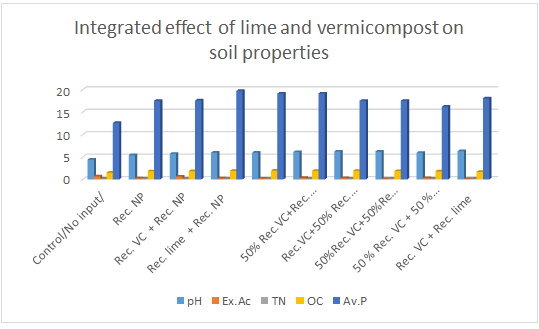
PH=Potential of hydrogen ion, Ex.ac=Exchangeable acidity, OC=Organic Carbon, TN=Total Nitrogen and Av.P= Available Phosphorus Figure 2: Synergetic Effect of Lime and Vermicompost on Soil Chemical Properties.
The application of lime and vermi-compost has increased soil organic carbon (OC) from 1.62% to 1.95% at the rate of rec.VC+50% rec. lime + Rec. NP (Table 4). This value of organic carbon content is medium as per the rating established by Tekalign T [15], OC content of soil. The increment of soil OC in response to lime alone was about 18.3% over the control. The application of Vermicompost also has increase soil OC from 1.53% to 1.86% at the rate of 4.6t VC ha-1 (Table 4), accounting about 21.5% increment over the control. The highest OC recorded from the combined use of lime and VC had witnessed to be superior to the separate effects of lime and vermicompost. Effects of liming and vermicompost application on net mineralization of organic matter has attributed to a reduction of Al toxicity and an increase in soil pH result in an increase of total microbial activity and a release of labile organic matter [19]. Vermicompost used in the experiment might also be a source of soil nitrifiers and decomposers, which can possibly be the reason for significance effects on organic carbon contents of soils [20, 21, 22, 23].
Conclusion and Recommendation
Even though soil acidity and low nutrient availability are major hindrance to agricultural productivity in different part of the country, there were no considerable research undertakings done on combined use of organic and inorganic amendments for ameliorating this problem in the study area, Damotu FTC, Ethiopia. Therefore, this study was conducted to evaluate the combined application of lime and vermicompost (VC) on selected soil chemical properties and faba bean productivity. The experiment consisted of different rates of lime and vermicompost systematically combined in RCBD in factorial arrangement with three replications [24, 25].
The result of the study indicated that the highest grain yield was recorded from the use of 50 % rec.VC + 50% rec. lime along with recommended rate of inorganic fertilizer that corresponds to 2.3 t ha-1 of vermicompost and 1.3 t ha-1 of lime respectively, which improved the yield by more than 100% and gave a grain yield advantage of 136% over the non-amended experimental unit. In the same manner, highest values of most of the soil chemical properties after harvest were scored from the combination of lime and vermicompost.
As results of this study clearly indicated that the synergetic effect of lime and vermicompost could improve soil property and faba bean grain yield, it can be concluded that combined use of chemical /lime/and organic/ vermicompost/ amendment is far better effective than the separate effects of lime and vermicompost in ameliorating the adverse effects of soil acidity and improving crop productivity in acid soil disposed area of the country.
Conflict of Interests
The authors have not declared any conflict of interests.
Acknowledgement
The authors would like to thank the Ethiopian Institute of Agricultural Research for its financial support to execute the research experiment. They also acknowledge field workers and other staff of the Soil Acidity Management Program for their support during field work.
References
-
Amare H, Priess JA, Veldkamp E, Lesschen JP (2006) Smallholders soil fertility management in the Central Highlands of Ethiopia: implications for nutrient stocks balances and sustainability of agroecosystems. Nutrient Cycling in Agroecosystems 75: 135-146.
-
Stevenson FJ (1994) Humus chemistry: genesis, composition, reactions. Humus soil biochemistry. J Chem Educ 72(4): 93.
-
Okpara DA, Muoneke CO, Ihediwa N (2007) Influence of liming on the performance of high yielding soybean verities in the south eastern Nigeria. Journal of Agriculture Food Environment and Extension 6(2).
-
Haynes RJ (1984) Effects of liming on phosphate availability in acid soils. Plant and Soil 68: 289-308.
-
Opala PA (2011) Comparative effects of lime and organic materials on selected soil chemical properties and nutrient uptake by maize in an acid soil. Archives of Applied Science Research 3(1): 96-107.
-
Munroe R, Murdock L (1993) Liming acid soils. Department of agronomy, Princeton Research & Education Center, Virginia.
-
Brady C, Weil N (2016) The nature and Properties of Soils. In: 9th (Edn.), Macmillan publishing Company, New York, pp: 780.
-
Rowell DL (1994) Soil science: Methods & Applications. Addison Wesley Longman Singapore Publishers, UK, pp: 350.
-
Walkley AJ, Black IA (1934) Estimation of soil organic carbon by the chromic acid titration method. Soil Sci 37: 29-38.
-
Jackson ML (1967) Soil Chemical Analysis. Prentice-Hall of India, pp: 498.
-
Bray RH, Kurtz LT (1945) Determination of Total Organic and Available Phosphorus in soils. Soil Science 59: 39- 45.
-
Kamprath EJ (1984) Crop response to lime on soils in the tropics, Agronomy and soil Science Society of America, Madison Wisconsin, USA. In: Adams F (Ed.), Soil Acidity and Liming. 2nd (Edn.), Agronomy Monograph 12: 349- 368.
-
SAS Institute (2004) SAS/ACCESS users guide. SAS Inst, USA.
-
Jones CA (1983) Effect of soil texture on critical bulk densities for root growth. Soil Science Society of America Journal 47: 1028-1211.
-
Tekalign T (1991) Soil, plant, water, fertilizer, animal manure and compost analysis. Working document No. 13. International Livestock Research Center for Africa, Addis Ababa.
-
Endalkachew F, Kibebew K, Asmare M, Bobe B (2018) Yield of faba bean (_Vicia faba_ L.) as afected by lime, mineral P, farmyard manure, compost and rhizobium in acid soil of Lay Gayint District, northwestern highlands of Ethiopia. Agric Food Secur 7: 16.
-
Ayodele OJ, Shittu OS (2014) Fertilizer, lime and manure amendments for Ultisols formed on coastal plain sands of southern Nigeria. Agric Forest Fish 3(6): 481-488.
-
Zengeni R, Mpepereki S, Giller KE (2006) Manure and soil properties affect survival and persistence of soyabean nodulating rhizobium in smallholder soils of Zimbabwe. Appl Soil Ecol 32(2): 232-242.
-
Tekalign M, Haque I (1987) Phosphorus status of some Ethiopian soils: I. Sorption characteristics. Plant and Soil 102(2): 261-266.
-
Anetor MO, Ezekie AA (2007) Lime effectiveness of some fertilizers in a tropical acid alfisol. University of Ibadan, Nigeria.
-
Fageria NK, Baligar VC (2008) Ameliorating soil acidity of tropical Oxisols by liming for sustainable crop production. Advances in agronomy 99: 345-399.
-
Opala A, Peter MO, Francis N, Muyekho (2018) Effects of lime and fertilizer on soil properties and maize yield in acid soils of Western Kenya potential soil acidification risk under dry land agriculture in the Mlondozi district in the Mpumalanga Province of South Africa. South African Journal of Plant and Soil 26: 244-253.
-
Paradelo R, Virto I, Chenu C (2015) Net effect of liming on soil organic carbon stocks: A review. Agriculture Ecosystem and Environment 202(1): 98-107.
-
Negese W, Wogi L, Geleto T (2021) Responses of Acidic Soil to Lime and Vermicompost Application at Lalo Asabi District, Western Ethiopia. Science Research 9(6): 108- 119.
-
Chau MK, VO TG, Pham NM, Ingvar SN (2010) Effects of compost and lime amendment on soil acidity and N availability in acid sulfate soil. 19th World Congress of Soil Science, Australia.
- Enhancement of Vegetative Growth and Fruit Yield in Cucumber (Cucumis sativus L.) via Spiritual Blessing (Biofield) Energy Intervention
- Production of Açaí (Euterpe oleracea Mart.) under Different Agroforestry System Management Intensities in Amazonian Floodplain (Varzea) Forests
- Coffee and the Production Region: What is the Secret to the Expression "Quality"?
- Experiential Agripreneurship Training in Sub-Saharan Africa: Integrating a Business Incubator into Postgraduate Livestock Education at the University of Buea
- Advances in Agricultural High-Quality Development
- Linking Compost Residue to ABAGE in Plants - a Short Note