
The Variation Effect of Solvents on the Physicochemical Properties Baobab (Ophelussitularius) Seeds Oil
It is remarkable to notice that Baobab seeds are normally discarded in Sudan, without knowing the great wealth hidden. The present study was conducted to determine physicochemical properties of Baobab (Ophelussitularis) seeds oil and select proper solvent for oil extraction from seeds which contain approximately 22-45%, used n-hexane and ethanol as solvents, leaching was done by solid extraction method. Physicochemical properties of the Baobab seeds oil were evaluated by standard and established methods. Oils and solvents were separated using rotary evaporator, recovery solvent were 91.2% and 75% for n-hexane and ethanol respectively. The obtained Baobab oils color were golden yellow (reddish yellow) not effected by type of solvent, it showed resistance to change in color, results showed the maximum Baobab oil yields were 16% and 13.5 % for n-hexane and ethanol respectively. Crude protein CP was found to be13.475 g/100 g, oil content was 13.26 g/, Saponification value SV 338.4925 g and 406.725 g/100 g for Baobab oil extracted with n-hexane and ethanol respectively. Results were obtained for ash content, crude fiber, acid value, FFA and rheological properties. Physicochemical properties indicated that n-hexane was more suitable to extract Baobab oil more than ethanol and recover easy. The difference was clearly visible in PV, AV and μ, while n-hexane yields pure oil more than ethanol. All those results detected that seeds of Baobab are beneficial if they extracted using n-hexane. It is recommended to conduct additional research on this issue and insert other solvents to select the best solvent and study the effect of different solvents on the properties of resulting oil.
Introduction
Dry lands of Africa are popular for a wide range of natural products. These play critical role in terms of food security, health, income and ecological services. Baobab (Adansonia digitata L.) is an indigenous fruit tree related with the Savannah dry lands of sub-Saharan Africa. Baobab is extremely important to humans and animals in the dry areas of Africa because it offers shelter, clothing, medicine and a source of nutrition as well as raw material for many useful items [1].
Baobab oil is almost flavourless and fluid at room temperature. Alone or in combination, it is traditionally used to treat various ailments such as fever, diarrhea, cough and dysentery. Baobab seeds also contain minerals and proteins [2]. Baobab seeds are semi fluid, gently scented and golden yellow color, it is highly stable though with a variable shelf life ranging from 2 to 5 years.
Oil is used in wound care treatment and bath oil preparations, moisturizer and massages oil, and is used for hot oil hair bathtubs. Oil are used in many ways for food texturing, frying, manufacture of soap, cosmetics, detergent and oils paint. Various authors have considered Baobab seed oil to be an essential food source for dietary supplementation. Seeds oil are particularly essential sources of vitamins D and E, which were founded in Baobab oil, including vitamins A, D, E and K [3].
Increase in the demand for Baobab seed oil worldwide by the cosmetic industries has been reported in recent years thereby increasing the commercial value and importance of this coveted African tree. Baobab seed oil, is one such ingredient, which has rapidly become popular on global markets [4].
The present study was conducted to determine physicochemical properties of Baobab (Ophelussitularis) seeds oil and select proper solvent for oil extraction among n-hexane and ethanol.
Material and Methods
Description of the Study Area
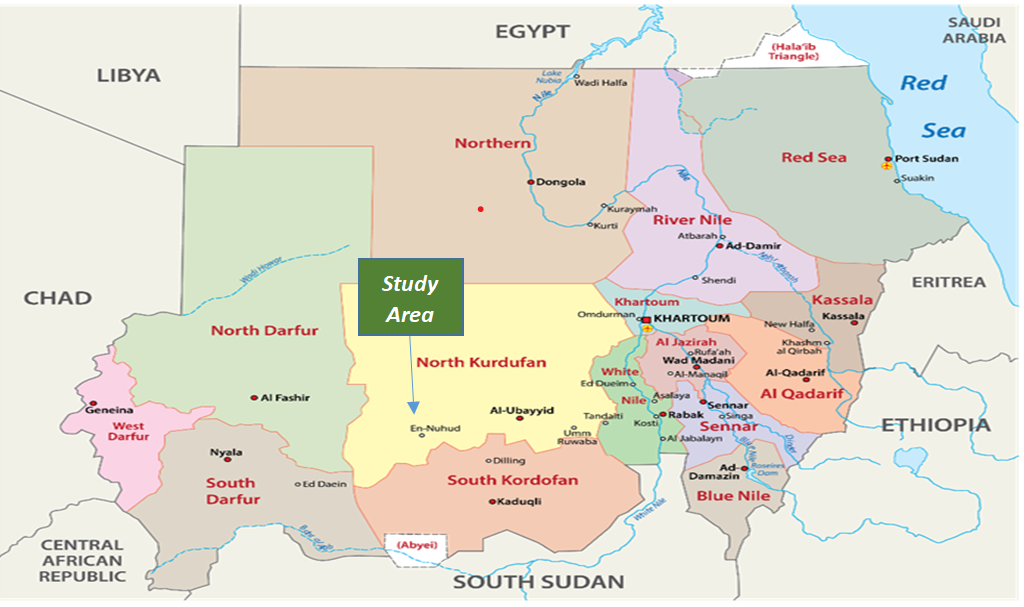
Kordofan state is one of the central state of Sudan, it occupies the center part although trends to be a little western, between longitude 16, 30 - 30,9ο’ North 32, 35 - 40,36ο’East, it bordered to the north by Northern state, from the north-east by Khartoum state, from the east by White Nile state, from the west by Darfur state and from south by South Sudan. Kordofan state occupies a land area of 240,974 km2. The climate of Kordofan is hot and semi-arid with mean annual rainfall varying from 300 mm in the north to over 900 mm in the south, rainfall is concentrated in a single short season which increases in reliability and length from May to October. The region depends on rain fed agriculture. Kordofan lands are known to be agricultural, and the most important product Arabic gum, peanuts, sesame, Baobab, hibiscus and it is at the forefront in the export of watermelon, cotton, millet and corn [5].
Sample Collection
Matured and fresh fruits of Baobab were harvested from (El- Nuhud city), Sudan, which located in Kordofan state, Sudan. The city located in the western part of Kordofan state. Sampling was collected randomly without consideration of tree fruit amount, fruit size or tree height characterize 3-7 trees in each source from each Baobab tree.
Sample Preparation
Fruit shell was manually cracked using hammer to extracted fruits, seeds were soaked in water for about one hour, washed by hand to remove residual of pulp and fiber, and they were diffused on the drying trays mantled with an absorbent (paper towels).
Left overnight on the laboratory bench to lost moisture gained during seeds washing. Seeds were put on the dryer at 70οC for 1 hour to reached constant moisture content, then packed in polyethylene bag. Dried seeds were crushed and milled into powder using the electrical crusher.
Solvent Extraction
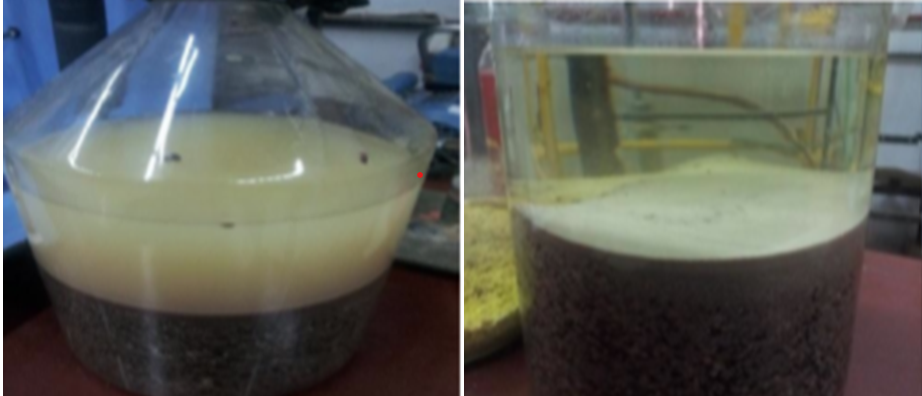
Extraction was carried out by soaking the powder of baobab seeds for 48 hr in an enclosed glass jar with two solvents (n-hexane and ethanol), with ratio Baobab seed powder weight to solvent Volume 1:5. Leaching was done by solid extraction method, solvents were separated from the extract oil with the rotary evaporator at 40°C.
Oil Separation
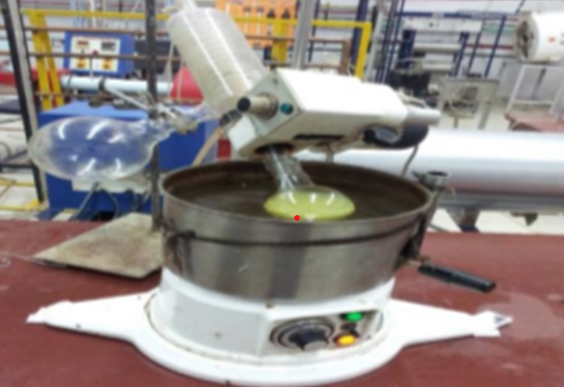
Some chemical procedures require a quick and effective separation of substances through evaporation. The Rotary Evaporator is a tool which puts the separable substance under vacuum and heats evenly through a spinning motion, causing one component to evaporate and leaving the first component behind.
Physicochemical Analyses
Determination of Density (ρ)
The density of the oil was determined by the dry pycnometer filed with prepared sample in such a manner to prevent trap of air bubbles after removing the cap of the side arm.
The stop per was inserted in pycnometer immersed immediately in water bath 30.0±0.2 and hold for 30 minutes. Any oil came off the capillary opening for the pycnometer stopper was wiped out carefully. The bottle removed from the bath, cleaned and dried thoroughly.
The cap of the side arm removed and quickly the bottle weighed ensuring the temperature did not failed below 25°C [6].
( ) ( ) $$ \rho \left(\frac {g}{m l}\right) = \frac {W 2 - W 1 (g)}{V (m l)} $$
Where, W2 bottle weight with oil, W1 weight of empty bottle and V volume of oil.
Determination of Refractive Index
The refractive index of oil was determined by method of AOAC [6]. The refract meter was first adjusted at 1.3330 at 25οC with pure distilled water as a blank reading. A drop of the oil was placed in the instrument and telescope was adjusted so that the cross hairs were distinct and in focus. The adjustment of the knob was rotated until the lower part of the field was dark and the upper part was light and a clear definite boundary appeared. The coarse adjustment knob was moved first and then the fine adjustment knob until the boundary line coincided with the intersection of the cross hair in the telescope; the instrument was read when temperature is stable. Refractive index value read directly from refract meter.
Determination of Oil Content
Lipid was determined according to the method of AOAC [6] using Soxhlet apparatus follows: An empty clean and dry exhaustion flask was weighed. About 2 gram of sample was weighed and placed in a clean extraction thimble and covered with cotton wool. The thimble was placed in an extractor.
Extraction was carried out for eight hours with petroleum ether. The heat was regulated to obtain at least fifteen siphoning per hour. The residual ether was dried by evaporation. The flask was placed in an oven at 105°C till it dried completely and then cooled in a desiccators and weighed.
$$Oil\% = \frac{Wo(g)}{Ws(g)} \times 100$$
Where Wo oil weight and Ws seeds sample weight.
**Determination of Ash Content (AC)**
Ash content of the sample was determined according to the method of AOAC [6], 2 g of sample were placed in a clean dry pre-weighed crucible, and then the crucible with its content ignited in a muffle furnace at about 550oC for 3 hours or more until light grey ash was obtained. The crucible was removed from the furnace to desiccators to cool and then weighed. The crucible was reignited in the furnace and allowed to cooling until a constant weight was obtained.
$$AC\% = \frac{[W1(g) - W2(g)]}{Ws(g)} \times 100$$
Where, W1 weight of pot with ash, W2 weight of empty pot and Ws, sample weight.
**Determination of Saponification Value (SV)**
Determining of saponification value method by AOAC [6], a 2 g of the oil was weighed in a 25 ml conical flask to which 5 ml of 0.5 ml alcohol and 20 ml of 0.5 M alcoholic KOH solution were added.
Also 5 ml of 0.5 alcoholic KOH solution were added for the blank and both were refluxed for an hour, after cooling. The contents of the flasks were titrated against 0.5 M HCl using phenolphthalein as indicator. The difference in titer between that of the blank and the sample solution is equivalent to the amount of the fatty acid present.
$$SV = \frac{56.1 \times N(HCl)(M) \times [v0 - v1(ml)]}{Ws(g)} \times 100$$
Where, V0, V1, are the volume of hydrogen chloride required by blank and sample, respectively, N is the concentration of hydrogen chloride and Ws, sample weight.
**Determination of Peroxide Value (PV)**
The method described by AOAC [6], 5 g of sample was delivered into conical flask with stopper. About 25 ml of solvent (15 ml acetic acid+10 ml chloroform) were added and gently shake to dissolve the sample completely. The air inside flask gently replace with nitrogen to remove remaining oxygen. One ml of saturated potassium iodide was added and immediately seals the flask and gently shakes it for one minute. The flask left at room temperature 15 to 20oC in dark room. 30 ml of pure water were added, and the flask sealed and stirred. Titration with 0.01mol/L sodium thiosulphate was performed to measure peroxide value.
$$PV = \frac{[T(ml)*M]*100}{Ws(g)}$$
Where T, Titration of stander, M Molarity of stander and Ws, sample weight.
**Determination of Acid Value (AV)**
About 5 of cooled oil sample accurately was weighed in a 250 ml conical flask and 50 ml added to 100 ml of freshly neutralized hot ethyl alcohol and about one ml of phenolphthalein indicator solution. The mixture was boiled for about five minutes and titrated while hot against standard sodium hydroxide shaking vigorously during the titration, determined by standard methods [6]. The oil mixed thoroughly before weighing. The weight of the oil taken for the estimation and the strength of the alkali used for titration shall be such that the volume of alkali required for the titration does not exceed 10 ml.
$$AV = \frac{[56.1 \times T(ml)*M]}{Ws(g)}$$
$$FFA = \frac{AV}{2}$$
Where, T Titration of stander, M Molarity of stander and Ws, sample weight.
**Statistical Analysis**
The Statistical analysis of Baobab oil results was done using Microsoft Excel (2007) - version 12.0.4518.1014, the results performed in three repetitions and expressed as mean.
**Results and Discussion**
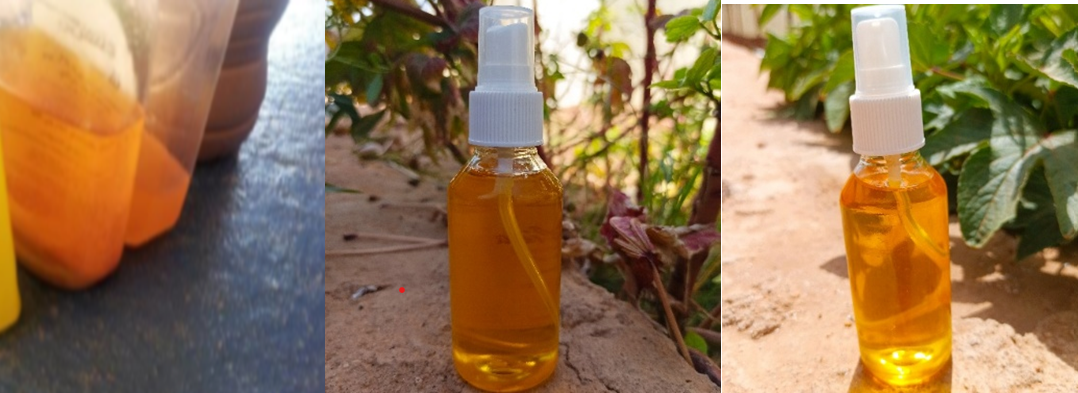
The results showed that gained acidic oils were (reddish yellow) golden yellow color, fixed and liquid at room temperature of 25°C, it was consistent with previous results which proved Baobab oil is golden yellow, fixed and non-volatile oil with light nutty scent [7].
After performed the extraction process used solvent, each of n-hexane and ethanol were separated from oil. Obtained oil and solvent were weighted. Grater extraction oil was achieved by n-hexane also largest quantity recovered from 91.2% more than ethanol which found 75% (Table 1).
| Solvent | Seeds (g) | Solvent (L) | Oil (ml) | Solvent Recovery (%) |
|---|---|---|---|---|
| n-Hexane | 500 | 2.5 | 80 | 91.20% |
| Ethanol | 500 | 2.5 | 67.5 | 75% |
Table 1: Baobab oil yield extracted by solvents.
Physicochemical Properties of Baobab Oil
The study was conducted in order to found out the nutritional content of Baobab seed and oil varied with two different types of solvent (n-hexane and ethanol). The proximate analysis was determined in percentage and the values presented on Table 2.
The moisture test important to determine whether seeds were ready for use, moisture content of the seed was determined to be 23.70 % which much higher than that found to be 5.02% and 4.80% as obtained by Ajayi IA, et al. [8] and Murray SS, et al. [9] respectively.
Ash analysis measured the amount of minerals present, ash value found 2.99 % lower when compared with literature that obtained by Ajayi IA, et al. [8], which are 7.50% and 7.61% respectively, but closer to 3.45% [4, 10].
The protein content is 13.48%, which is lower than 20.13% and 36.60% determined by Ajayi IA, et al. [8] and Murray SS, et al. [9] respectively. Crude fibre obtained is lower than that obtained by Ajayi IA, et al. [8] and higher than value obtained by Nkafamiya I, et al. [11] which found 49.72% and 6.71% respectively. The high seed protein content is a reflection of high amino acid content within the seed tissue.
Baobab seed oil content is 13.26% found within the range obtained by Osman MA [12] and Ajayi IA, et al. [8] which are 12.25 and 33.00% respectively for the same plant.
Baobab seed contains high oil content indicating that it is a promising source of oils.
The obtained yield was agreeable with a literature stating that Baobab seed contains 22-45% oil, this value is represented in terms of lipid or fat content.
The Carbohydrate content was found to be 46.57 % which within the range obtained by Murray SS, et al. [9] and Proll J, et al. [13] which are 11.2% and 56.75% respectively.
| Parameter | Value |
|---|---|
| Moisture (MC) % | 23.7 |
| Ash Content (AC) % | 2.99 |
| Organic matter (OM) % | 97.01 |
| Crude Protein (CP) % | 13.48 |
| Crude Fiber (CF) % | 39.63 |
| Oil content (OC) % | 13.26 |
| Carbohydrate % | 46.57 |
| Energy (kcal/g) | 4.11 |
Table 2: Proximate Analysis of Baobab Seeds.
The results of physicochemical properties of the Baobab seeds oil shown in table 3, The physical characters were studied to different aspects as physical state density were 0.89 and 0.88 g/cm3, viscosity were 62.80 and 64.58 mm2/s, refractive index were 1.4510 and 1.3730, for oil extracted by hexane and ethanol respectively.
While, the literature had reported that Baobab oil density value was ranged from 0.1950 to 1.0240 g/cm3, this is agree to the obtained value [14].
Refractive index is the ratio of light in a vacuum to its velocity in specific medium. RI is can be used as objective method for evaluation rancidity in edible oils and fats.
RI gained were within normal range of vegetables oils. Oil viscosity were much higher than obtained value 32.53 mm2/s. RI for Baobab seeds oil was closed to that reported by Ibrahim AMA, et al. [4] 1.4666 it was acceptable within values of literature studies.
The saponification values measured were 338.49 and 406 mgKOH/g respectively for Baobab oils extracted with hexane and ethanol. This fluent variation noted between the obtained values of extracted oils can be referred to the physicochemical properties of the solvents used in process. Baobab oil gained had much higher than saponification value reported in literature which ranged 133-200 mgKOH/g of oil according to Nkafamiya I, et al. [11]. This refers to oil be also be used in soap making since its saponification value falls within the range of these oils the term “Unsaponifiable Matter” in oils or fats.
Peroxide value is used as a measure the extent to which rancidity reactions has occurred during storage. A high peroxide value for any oil shows the fact that the oil has less resistance to lipolytic hydrolysis and oxidation while a low peroxide value shows otherwise. The peroxide values obtained were 1.42 and 1.72 mEq/kg for oil extracted with n-hexane and ethanol respectively these values were lower than that reported by Proll J, et al. [13] which is 6.6 meq O2/ kg. PV amounts were lower than that found by Erwa YI, et al. [15] and Ibrahim AMA, et al. [4] which is 6.6 and 3.22meq O2/kg. It is within the range of 0-10 mEq/kg stipulated for freshly prepared oil, oils PV below 10 meq/kg are considered fresh.
The peroxide indicates the rancidity process, whereby the higher the peroxide value is higher oxidation level and the worsening of lipids, it was increased with the storage. The low value of peroxide is an indication of low level of acidity of the oil and also suggests the high level of antioxidant, decomposition of peroxides which results in the formation of aldehydes and higher acidity. Theoretically, oil that shows a high amount of peroxide value is more prone to undergo rancidity that affects the total quality of the oil [4]. The Acid values are used to measure the extent to which glycerides in the oil has been decomposed by lipase and other physical factors such as light and heat. The acid values found in this study 1.96 and 2.90 mgKOH/g for oil extracted by hexane and ethanol respectively, hexane value were within range of recommended for cooking oil which is 0.00- 3.00 mgKOH/g [16].
The experiments showed that extracted Baobab oil varied in quantity and purity based on the type of solvent used, that affected in oil physicochemical properties (Table 3).
The overall results of this analysis show that Baobab seed is contain valuable amount of oil, energy, protein and minerals. The obtained results in this study were acceptable and similar to previous studies. The obtained results in this study were acceptable and similar to previous studies. Comparing the obtained properties oil extracted using n-hexane is better than ethanol, because ethanol contained gummy substance dissolved, which resulted in deviation of properties from stander.
| Hexane | Ethanol | |
|---|---|---|
| Color | Golden yellow | Golden yellow |
| Density 25°C (g/ml) | 0.89 | 0.88 |
| Viscosity (mm²/s) | 62.8 | 64.58 |
| RI | 1.451 | 1.373 |
| TSS (°Brix) | 64 | 32 |
| Peroxide value (mEq/kg) | 1.42 | 1.72 |
| Acid Value (mgKOH/g) | 1.96 | 2.9 |
| Saponification value (mgKOH/g) | 338.49 | 406.72 |
| Non-Saponification Value (NSV) | 337.49 | 403.73 |
| FFA (mgKOH/g) | 1.96 | 2.89 |
Table 3: Physiochemical properties of Baobab seed oil.
Conclusion
Physicochemical properties indicated that n-hexane was more suitable to extract Baobab oil more than ethanol and recover easy. The differences were clearly visible in PV, AV and µ, while n-hexane yield pure oil more than ethanol. All those results detected that seeds of Baobab are beneficial if they extracted using n-hexane.
Study summary found that Baobab seed oil is contain worth amount of oil, protein and saponification value. In these great characteristics it is easy and safe to include in useful cosmetics products. Baobab seeds oil cosmetics it will be one of the best additions to cosmetics. Baobab oil became desirable significantly especially for industrial and cosmetics products. Referring on the results obtained, Baobab oil features are surprising and favorable to be introduced into several items or use it as crude oil.
Recommendations
It is recommended to conduct additional research on this issue and insert other solvents to select the best solvent and study the effect of different solvents on the properties of resulting oil.
References
-
Ibrahim AMA, Yassin KEE (2018) Extraction of Oils from the seeds of Baobab (Ophelussitularius) and Balanites (Aegilopsgeniculata). University of Khartoum, Sudan.
-
Razafimamonjison G, Tsy JMLP, Randriamiarinarivo M, Ramanoelina P, Rasoarahona J, et al. (2017) Fatty Acid Composition of Baobab Seed and Its Relationship with the Genus Adansonia Taxonomy. Chemistry and Biodiversity 14 (8): e1600441.
-
Babiker S, Mirghani MES, Saleh MM, Kabbashi NA, Alam M, et al. (2017) Evaluation of antioxidant capacity and physicochemical properties of Sudanese baobab (Adansonia digitata) seed-oil. International Food Research Journal 24: 441-445.
-
Ibrahim AMA, Yassin KEE (2021) Formulation of Cosmetics Containing Sudanese Baobab (_Andasonia_ _digitata L._) Seed Oil in Kordofan State. Greener Journal of Agricultural Sciences 11(4): 213-221.
-
Alabadi AAH (1975) Pattern and models of major cities in Sudan. Arab League Educational, Cultural and Scientific Organization. Institution of Arab Research and Studies pp: 98-99.
-
AOAC (1990) Official Methods of Analysis. In: 15th (Edn.), Association of Official Analytical Chemists, Arlington, VA, USA.
-
Ibrahim AMA, Yassin KEE (2021) Effects of Storage on Fatty Acids Composition and Chemical properties of Sudanese Baobab (_Adansonia digitata L._) Seed Oil in Kordofan and Blue Nile states. International Journal of Agriculture and Biological Sciences pp: 68-77.
-
Ajayi IA, Oderinde RA, Kalogbola DO, Ukponi JU (2006) Oil of Under-utilized Legumes from Nigeria. J Food Chem 99(1): 115-120.
-
Murray SS, Schoeninger MJ, Bunn HT, Pickering TR, Marlett JA (2001) Nutritional Composition of some wild Plant Foods and Honey used by Hadza Forages of Tanzania. Journal of Food Composition and Analysis 14(1): 3-13.
-
Lockett TC, Calvart CC, Grivetti EL (2000) Energy and Micronutrient Composition of Dietary and Medicinal Wild Plant Consumed during Drought. Study of Rural Fulani, Northeastern Nigeria. International Journal of Food Science and Nutrition 51(3): 57-72.
-
Nkafamiya I, Osemeahon S, Dahiru D, Umaru H (2007) Studies on the chemical composition and physicochemical properties of the seeds of baobab (_Adasonia digitata_). African Journal of Biotechnology 6(6): 756-759.
-
Osman MA (2004) Chemical and Nutrient Analysis of Baobab (_Adansonia digitata_) fruit and seed protein solubility. Journal of plant foods for human nutrition 59(1): 29-33.
-
Proll J, Petzk KJ, Ezeagu IE, Metges CC (1998) Low Nutritional Quality of Unconventional Tropical Crops Seed in Rats. Journal Nutri 128(11): 2014-2022.
-
Singh HK, Yusup S, Wai CK (2016) Physicochemical Properties of Crude Rubber Seed Oil for Biogasoline Production. Procedia Engineering 148: 426-431.
-
Erwa YI, Ali MA, Khalid AE, Omer BA, Ishag OO (2019) Proximate Composition, Mineral Elements Content and Physicochemical Characteristics of A. Digitata L Seed Oil. International Journal of Pharma Bio Sciences 10(4): 119-126.
-
Oderinde RA, Ajayi IA, Adewuyi A (2009) Characterization of seed and seed oil of Hura crepitans and kinetics of degradation of the oil during heating. Electronic Journal Environment Agriculture Food Chemistry 8: 201-208.
- Enhancement of Vegetative Growth and Fruit Yield in Cucumber (Cucumis sativus L.) via Spiritual Blessing (Biofield) Energy Intervention
- Production of Açaí (Euterpe oleracea Mart.) under Different Agroforestry System Management Intensities in Amazonian Floodplain (Varzea) Forests
- Coffee and the Production Region: What is the Secret to the Expression "Quality"?
- Experiential Agripreneurship Training in Sub-Saharan Africa: Integrating a Business Incubator into Postgraduate Livestock Education at the University of Buea
- Advances in Agricultural High-Quality Development
- Linking Compost Residue to ABAGE in Plants - a Short Note