
The Effects of Water Stress on Mung Bean (Vigna radiata L.): Variability in the Growth, Biomass & Stomatal Opening
Mung bean (Vigna radiata) is widely cultivated across Asia and has gained popularity in various cuisines due to its high nutritional value. Rich in protein, dietary fiber, minerals, vitamins, and bioactive compounds like polyphenols and peptides, mung beans are considered a valuable functional food. The present experiment aimed to study the effects of water stress on the growth and yield of mung beans by applying varying water treatment volumes (20, 30, 40, 50, and 60 ml). Key growth parameters measured included stomata size on the stem and leaves, the number of leaves, average plant height, and biomass, all assessed after one week of growth. Water was supplemented every two days, and progress was monitored over the course of the week. The study found that the different volumes of water had a significant impact on the growth patterns, leaf count, biomass, and stomatal opening in the stem and leaves of the mung beans. The results suggest that while an adequate amount of water is essential for maximizing mung bean yield, excessive water can hinder growth by disrupting nutrient balance and other physiological processes. Therefore, to achieve optimal growth and yield in mung beans, careful management of water supply is crucial.
Abbreviations
ETR: Electron Transfer Rate; WUE: Water Usage Efficiency.
Introduction
Mung bean Vigna radiata (Fabaceae or Leguminosae family) is a legume plant widely cultivated in Asia such as India, China, Korea, and Thailand Nair R, et al. [1]. Mung bean is gaining popularity as a functional food for promoting good health due to its rich content of protein, fibre, minerals, vitamins, and substantial amounts of bioactive compounds such as polysaccharides, polyphenols, and peptides Hou D, et al. [2]. The distribution of mung beans increased in the Australia, USA, and Africa as this short-term legume adapted to various environments Nair GN, et al, [3]. In addition to being the prime source of human food and animal feed, it plays an important role in maintaining soil fertility by enhancing the soil’s physical properties and fixing atmospheric nitrogen Naik, et al. [4]. The moisture content present in the pods at the time of harvest is 13–15%, and to enhance the storage life, the moisture content should be brought down to 12% by drying. Despite the abundant germplasm resources of mung beans, the diversity of nutritional composition is still unknown. Due to the importance of mung bean and its products, it is necessary to investigate water stress and phytochemical compounds across various genotype [5].
Water availability is one of the abiotic stresses inhibiting crop growth. Water is needed for decreasing environmental temperature, helps in nutrient transportation from the soil to the leaf, and optimizes photosynthesis. Water constitutes a significant part of the protoplasm, accounting for 85% to 90% of the total weight of crop tissue Sosiawan H, et al. [6]. Metabolic processes, including photosynthesis, are negatively affected if a plant is under water stress. Previous studies have demonstrated the decrease in photosynthesis of leaves is usually caused by stomatal limitation under mild to moderate drought conditions and non-stomatal limitation under severe drought conditions [7].
Despite the widespread cultivation and nutritional significance of mung beans (V. radiata), there is a limited understanding of how water stress impacts their growth, yield, and nutritional composition across different genotypes. Given that water availability is a crucial factor influencing plant metabolic processes, including photosynthesis, the lack of detailed knowledge on how varying water conditions affect mung bean physiology, particularly stomatal behavior, biomass accumulation, and phytochemical content, poses a challenge for optimizing cultivation practices. This gap in knowledge is critical, as it hinders efforts to maximize mung bean productivity and nutritional quality, especially in regions facing water scarcity or unpredictable climatic conditions.
Therefore, this study aims to investigate the effect of water stress on mung bean growth and its productivity in water-deficient conditions, under laboratory conditions.
Materials and Methods
Mung Bean Preparation
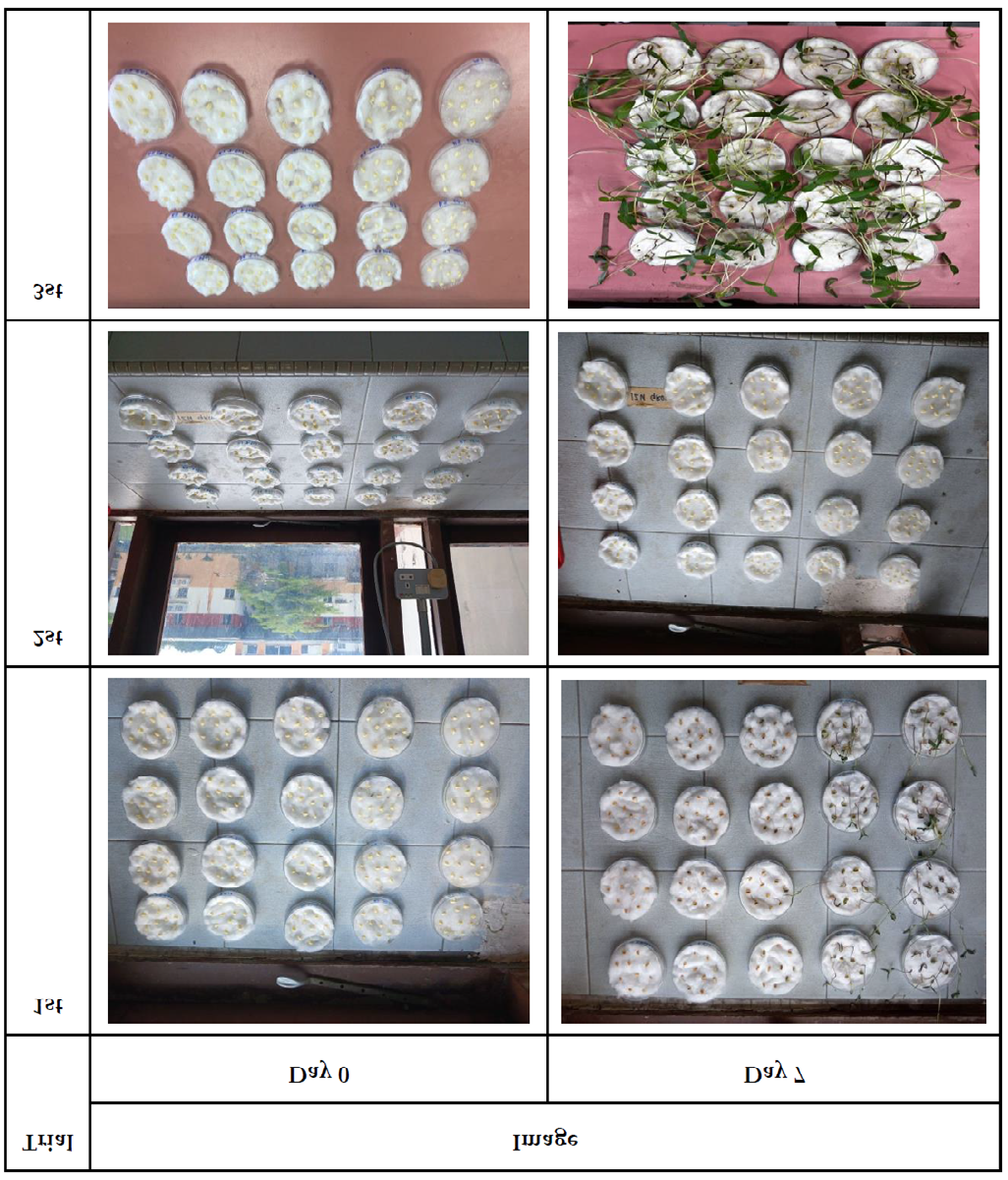
A total of 200 mung beans (V. radiata) inside a 100 mL beaker was immersed in tap water from 10 am to 2 pm. These freshly immersed mung beans with prominent hypocotyl (embryonic shoot) and radicle (embryonic root) were then meticulously selected to be cultivated. The seed coat was removed using forceps. Ten selected mung beans were randomly placed onto a moistened cotton wool (about 1.5 g) in each of the 100 mm Petri dishes, with four replicates (R1, R2, R3, R4) per treatment group. To study the mung bean growth under water stress, moistened cotton wool was prepared with five different water volumes (control: 60 mL, 20 mL, 30 mL, 40 mL, and 50 mL), each using a 1:1 ratio of tap water and distilled water. These Petri dishes were strategically positioned adjacent to a window (Table 1) to ensure consistent exposure to natural light conditions, mimicking realistic growth environments for mung beans. The progression of mung bean growth was observed over a week, accompanied by the regular supplementation of water treatments at two-day intervals. After a week, the growth parameters like its length, fresh biomass, number of leaves, and stomatal opening per mung bean were noted down. All the experiments were repeated at least three times.
Stomatal Opening and Data Analysis
The stomatal opening of the mung bean was captured under an Olympus CX33 HD Digital Microscope and digital camera Accu-Scope Excelis camera (Olympus Corporation, Japan). One specimen of mung bean from each treatment was selected, and the leaf and stem were cut into small segments for microscopic observation. These segments were placed onto the glass slide, and a drop of distilled water was added before carefully covering them with a coverslip to avoid air bubbles. The prepared slides were then observed under the digital microscope. Stomatal opening in both stems and leaves was measured using CaptaVision software, a built-in software in the digital microscope. The observable gap in the stomata represented the variability in stomatal openings (μm).
Microsoft Excel (Microsoft Corporation, Redmond, WA, USA) were used to represent all the graphs and calculate the average height, number of leaves, stomatal opening (leaf, stem) and biomass of mung beans in different water treatments.
Results and Discussion
Stomatal Opening
Figure 1 shows the observation of stomata size on the stem of mung bean in different levels of water stress.
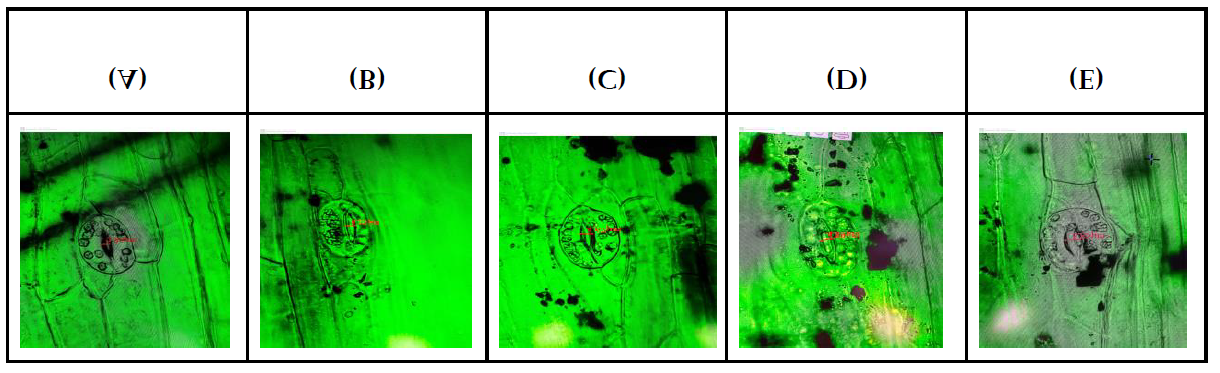
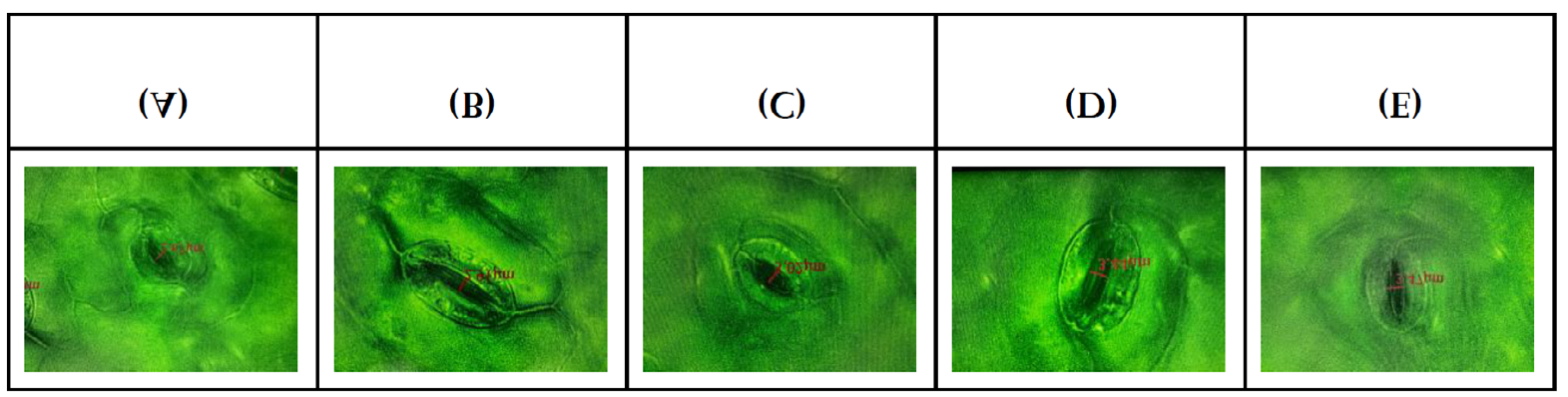
Figure 2 shows the observation of stomata size on leaves of mung bean in different levels of water stress.
From the experiment, the pattern of stomata size on stems in different water stresses can be explained in Figures 3 & 4.
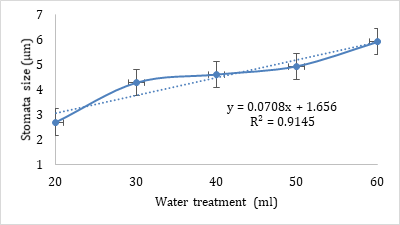
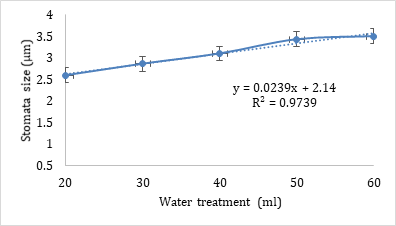
As the water volume treatment increases through 20, 30, 40, 50 and 60 ml, the average stomata size on mung bean stems increases from 2.7, 4.28, 4.61, 4.94 and 5.91 μm, respectively. A similar pattern was also observed on the stomatal part of the leaves where, as the water volume treatment increases from 20, 30, 40, 50, and 60 ml, the average stomata size on mung bean leaf also increases from 2.59, 2.86, 3.10, 3.43, 3.50 μm respectively. Water stress causes stomata to close, alters the electron transfer rate (ETR), exacerbates photoinhibition brought on by too much light, and reduces both the rate of photosynthesis and the number of pigments involved in photosynthesis Verma KK, et al. [8]. This is because stomatal density was positively connected with stomatal conductance, net CO2 assimilation rate (An), and water usage efficiency (WUE), and the stomatal size was reduced with water deficiency [9]. The ABA signal in guard cells initiates a complex signalling cascade involving nitric oxide (NO), hydrogen peroxide (H2O2), guard cell-specific OST1 kinase, changes in cytosolic calcium levels, and calcium oscillations. These events regulate ion channels, like GORK1, which control ion efflux, water loss, and, ultimately, stomatal closure Melotto M, et al. [10]. Hence reducing the stomata size on both leaf and stem during severe water stress such as drought.
Biomass
As shown in Figure 5, the average mung bean biomass for 20 ml water treatment was 0.0344 grams. The biomass of mung beans decreased to 0.0168 for 30 ml water treatment and increased for 40- and 50 ml water treatment, which were 0.0371 gram and 0.0907 gram, respectively. The 60 ml water treatment gave a lower biomass reading, at 0.0607 grams. Higher water treatment can increase plant stomatal opening due to improved hydration and turgor pressure within the leaf cells. When plants receive ample water, stomata can open wider, allowing for enhanced CO2 uptake, which fuels photosynthesis.
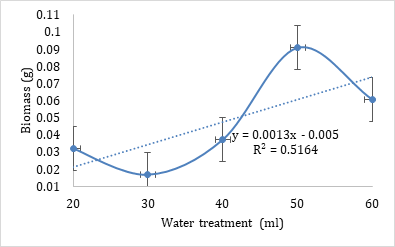
With more CO2 available, plants can produce more sugars and other organic compounds through photosynthesis, ultimately leading to the growth of leaves and increased biomass. However, mung beans were incapable of handling the high treatment of water, especially in the early phases of growth, as it limits nodule activity and nitrogen fixation while lowering oxygen concentration surrounding the roots of the mung bean plants Kumar P, et al. [11]. These results are comparable to the previous Sadeghipour O [12] which stated that water stress decreased the biomass of mung beans, focusing on the lack of irrigation to the mung bean in their findings. As seen in the results, lower water treatment of mung bean can have low biomass compared to medium water treatment, such as 40 ml and 50 ml, which have significantly bigger biomass. A similar result can also be found in research done by Ranawake AL, et al. [13] that water stress at any growth stage of mung bean reduces leaf development and significantly decreases both final grain yield and biomass. Thus, reduced growth of mung beans results in lower mung bean biomass.
Growth Length
Sufficient water availability is essential for preserving the turgor pressure inside plant cells, promoting healthy tissue growth. The cell wall of mung bean is a complex structure made up of structural proteins and carbohydrate polymers that stretch to take on a size and form that allows it to stably tolerate internal pressure. Given that it promotes expansion, turgor pressure is thought to be the driving force behind this process Beauzamy L, et al. [14]. The connection between water availability and the growth of mung beans is investigated by varying water quantities across treatments, ranging from 60 ml to 20 ml.
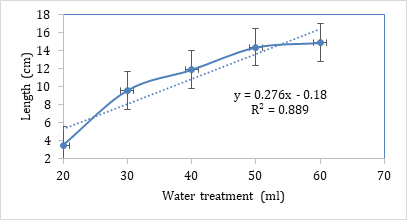
After analyzing the mung bean lengths recorded in Figure 6 after one week of growth, different results were obtained. Notably, the control group, given the maximum amount of water (60 ml), showed the longest average plant length (14.9 cm). As the water volume decreased to 50 ml, 40 ml, 30 ml, and finally 20 ml, the average length of plants in the other treatments gradually decreased. Those receiving the least amount of water (20 ml) had an average length of 3.5 cm, notably shorter than the rest. There appears to be a correlation between the decreasing water quantities and the steady decline in mung bean length. Various physiological mechanisms can be responsible for the observed reduction in mung bean length when subjected to water stress.
Water stress has a major effect on cell elongation, an essential plant development mechanism. Reduced water availability affects the turgor pressure of cells, which limits their ability to expand and elongate. In meristematic tissues, such as the apical meristems of shoots and the terminals of roots that are responsible for primary growth, turgor has been found to decrease with size when stress levels remain constant due to the water supply being close to the growth threshold [15].
To mount a stress response, ABA levels greatly accumulate, inhibiting germination and causing growth to slow down Brookbank BP, et al. [16] Increased abscisic acid (ABA) levels in response to a water deficit cause a variety of adaptive reactions, most notably stomatal closure, that are intended to preserve water and ensure plant life. Stomatal closure reduces carbon intake and biomass formation while preserving water by blocking the entry of carbon dioxide (CO2), which is necessary for photosynthesis. Thus, reduced photosynthetic activity in the presence of water stress causes an overall decrease in plant growth and length.
Number of Leaves
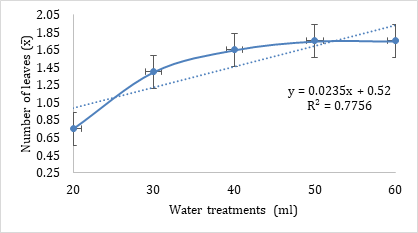
From Figure 7, the average number of mung bean leaves for 20 ml water treatment is 0.75 x̅. Then, it increases to
1.40 x̅ for 30 ml water treatment and 1.60 x̅ for 40 ml water treatment. After that, the average number of leaves increased to 1.75 x̅ for 50 ml water treatment and remained consistent for 60 ml water treatment. Thus, the trend indicates that as the volume of water increases, the average number of mung bean leaves tends to rise ranging from 0.75 to 1.75 across different water treatment volumes. The highest average number of leaves (1.75) observed at both 50 ml and 60 ml water treatments suggests that these volumes may represent an optimal range for promoting mung bean leaf growth under the specific conditions of this experiment.
These results are comparable to the findings of Mahajan G, et al. [17] which this study observed the highest seed yield when Mung bean plants were grown without any perceived abiotic stress. Specifically, the presence of water stress during the reproductive stage significantly reduced yield. This finding aligns with the principle that adequate water availability is crucial for plant growth, as water serves as a key component in various physiological processes, including photosynthesis, nutrient uptake, and cell expansion. In this case, the mung bean plants in the experiment might have exhibited the highest leaf counts at 50 ml and 60 ml water treatments due to the optimal balance of water availability and oxygenation within the root zone that facilitates nutrient uptake and metabolic activity. However, it’s essential to recognize that there may be a threshold beyond which increasing water volume does not result in further increases in leaf count or may even have adverse effects [18].
The lowest average number of leaves (0.75) is observed at 20 ml water treatments. Kalaydjieva R, et al. [19] reported that water acts as a photosynthetic material, if the amount is reduced, it will inhibit photosynthetic synthesis, affecting the process of growth and formation of organs from plants. Water plays a crucial role in photosynthesis, serving as a reactant in the light-dependent reactions in plant cells’ chloroplasts. When water availability is limited, as in the case of the 20 ml water treatment, the rate of photosynthesis may be compromised. Kalaydjieva R, et al. [19] highlight that reduced water availability inhibits photosynthetic synthesis, potentially due to limitations in the availability of water molecules for light-dependent reactions. This can lead to a decrease in the production of ATP and NADPH, hindering the plant’s ability to synthesise organic compounds essential for growth and development. As a result, the growth and formation of organs, such as leaves, may be impaired under conditions of water scarcity.
Conclusions
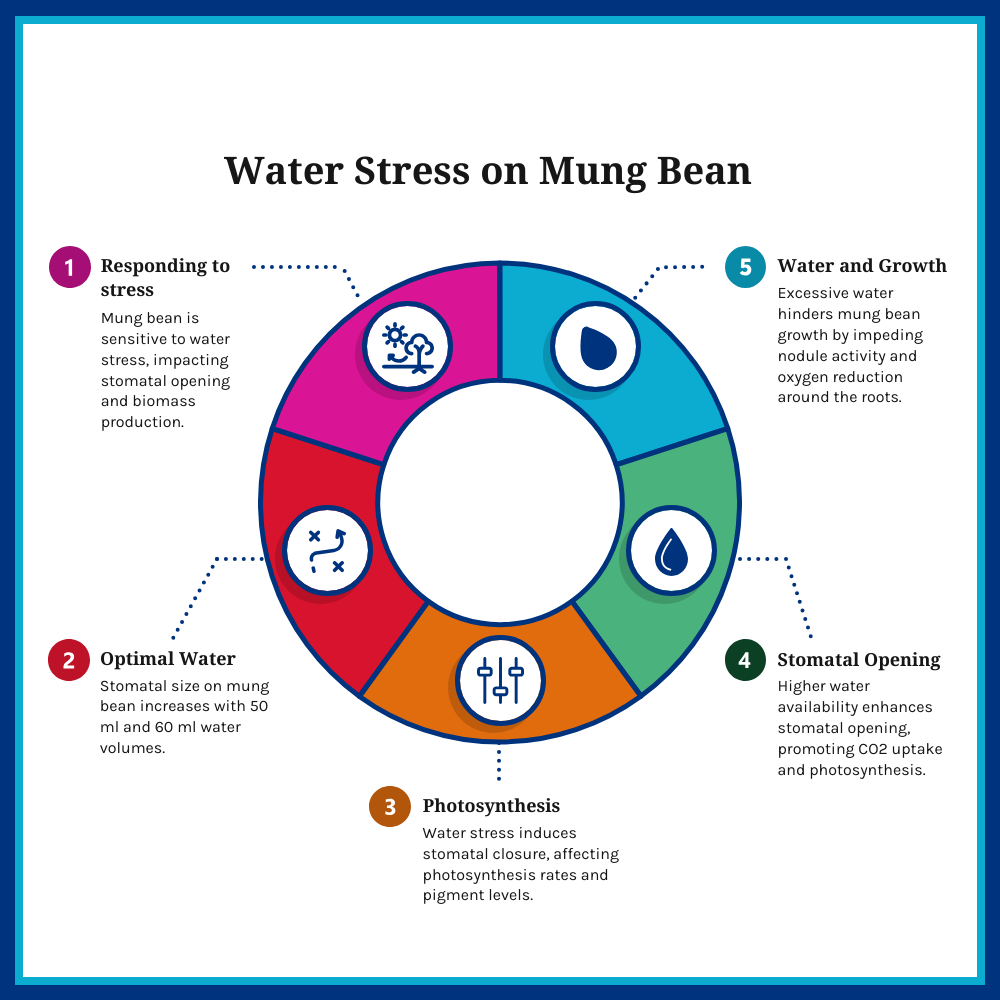
Mung bean is sensitive to water stress and water stress significantly affects stomatal opening, shoot biomass production, length of mung bean, and number of mung bean leaves produced. Under optimal water volumes such as 50 ml and 60 ml, stomatal size on mung bean stems and leaves increases. Water stress prompts stomatal closure, affecting photosynthesis rates and pigment levels. Higher water availability leads to increased stomatal opening of mung bean, enhancing CO2 uptake and photosynthesis. Excessive water can hinder mung bean growth, especially in the early stages, by impeding nodule activity and nitrogen fixation, as well as reducing oxygen around the roots, ultimately leading to decreased biomass. Sufficient water availability is essential for preserving the turgor pressure inside plant cells, which promotes the growth of healthy tissue. As the water volume decreased to 50 ml, 40 ml, 30 ml, and finally 20 ml, the average length of plants in the other treatments gradually decreased. This experiment suggests that higher water volumes tend to promote more leaf growth, peaking at 50 ml and 60 ml treatments, indicating an optimal range. Adequate water availability is crucial for plant growth, facilitating physiological processes like photosynthesis and nutrient uptake. However, excessive water can lead to nutrient leaching and disrupt nutrient balance. The overall water stress on the V. radiata from the present laboratory study is well depicted in Figure 8.
Acknowledgements
The authors would like to express their utmost gratitude to the Department of Biology, Faculty of Science, Universiti Putra Malaysia (UPM) for giving them the opportunity and providing ample facilities to conduct the experiment session successfully.
Conflict of Interest
There is no conflict of interest for this study.
References
-
Nair R, Schreinemachers P (2020) Global Status and Economic Importance of Mungbean. In: Nair R, Schafleitner R, et al. (Eds.), The Mungbean Genome, Compendium of Plant Genomes, Springer, USA, pp: 1-8.
-
Hou D, Yousaf L, Xue Y, Hu J, Wu J, et al. (2019) Mung Bean (_Vigna radiata L_.): Bioactive Polyphenols, Polysaccharides, Peptides, and Health Benefits. Nutrients 11(6): 1238.
-
Nair RM, Pandey AK, War AR, Hanumantharao B, Shwe T, et al. (2019) Biotic and Abiotic Constraints in Mungbean Production-Progress in Genetic Improvement. Frontiers in plant science 10: 1340.
-
Naik GN, Abhirami P, Venkatachalapathy N (2020) Mung bean. In: Pulses 1st (Edn.), Springer International Publishing, USA, pp: 213-228.
-
Wang F, Huang L, Yuan X, Zhang X, Guo L, et al. (2021) Nutritional, phytochemical and antioxidant properties of 24 mung bean (_Vigna radiata L_.) genotypes. Food Production, Processing and Nutrition 3: 1.
-
Sosiawan H, Adi SH, Yusuf WA (2021) Water-saving irrigation management for mung bean in acid soil. IOP Conference Series: Earth and Environmental Science 648: 012144.
-
Wang Z, Li G, Sun H, Ma L, Guo Y, et al. (2018) Effects of drought stress on photosynthesis and photosynthetic electron transport chain in young apple tree leaves. Biology open 7(11): 035279.
-
Verma KK, Song XP, Zeng Y, Li DM, Guo DJ, et al. (2020) Characteristics of Leaf Stomata and Their Relationship with Photosynthesis in _Saccharum officinarum_ Under Drought and Silicon Application. ACS Omega 5(37): 24145-24153.
-
Xu Z, Zhou G (2008) Responses of leaf stomatal density to water status and its relationship with photosynthesis in a grass. Journal of Experimental Botany 59(12): 3317- 3325.
-
Melotto M, Underwood W, He SY (2008) Role of stomata in plant innate immunity and foliar bacterial diseases. Annual Review of Phytopathology 46(1): 101-122.
-
Kumar P, Pal M, Joshi R, Sairam RK (2012) Yield, growth and physiological responses of mung bean [_Vigna radiata_ _(L._) Wilczek] genotypes to waterlogging at vegetative stage. Physiology and Molecular Biology of Plants 19(2): 209-220.
-
Sadeghipour O (2009) The Influence of Water Stress on Biomass and Harvest Index in Three Mung Bean (_Vigna_ _radiata_ (L.) R. Wilczek) Cultivars. Asian Journal of Plant Sciences 8(3): 245-249.
-
Ranawake AL, Dahanayaka N, Amarasingha UGS, Rodrigo WDRJ, Rodrigo UTD, (2012) Effect of Water Stress on Growth and Yield of Mung Bean (_Vigna radiata L_). Tropical Agricultural Research and Extention 14: 4.
-
Beauzamy L, Nakayama N, Boudaoud A (2014) Flowers under pressure: ins and outs of turgor regulation in development. Annals of Botany 114(7): 1517-1533.
-
Ali O, Cheddadi I, Landrein B, Long Y (2023) Revisiting the relationship between turgor pressure and plant cell growth. New Phytologist 238(1): 62-69.
-
Brookbank BP, Patel J, Gazzarrini S, Nambara E (2021) Role of basal ABA in plant growth and development. Genes 12(12): 1936.
-
Mahajan G, Wenham K, Chauhan BS (2023) Mungbean (_Vigna radiata_) Growth and Yield Response in Relation to Water Stress and Elevated Day/Night Temperature Conditions. Agronomy 13(10): 2546.
-
Thomas, Robertson MJ, Fukai S, Peoples MB (2004) The effect of timing and severity of water deficit on growth, development, yield accumulation and nitrogen fixation of mungbean. Field Crops Research 86(1): 67-80.
-
Kalaydjieva R, Zlatev A (2015) Influence of irrigation regime on the leaf area and leaf area index of French bean (_Phaseolus vulgaris_ L.). Emirates Journal of Food and Agriculture 27(2): 171.
- Enhancement of Vegetative Growth and Fruit Yield in Cucumber (Cucumis sativus L.) via Spiritual Blessing (Biofield) Energy Intervention
- Production of Açaí (Euterpe oleracea Mart.) under Different Agroforestry System Management Intensities in Amazonian Floodplain (Varzea) Forests
- Coffee and the Production Region: What is the Secret to the Expression "Quality"?
- Experiential Agripreneurship Training in Sub-Saharan Africa: Integrating a Business Incubator into Postgraduate Livestock Education at the University of Buea
- Advances in Agricultural High-Quality Development
- Linking Compost Residue to ABAGE in Plants - a Short Note