
Morphological and Anatomical Characteristics of Colchicum kotschyi Boiss. (Colchicaceae)
In this study, the morpho-anatomical characteristics of Colchicum kotschyi Boiss. Morphological characteristics of the corms,leaves and flowers are presented and the habitat of the species is illustrated with photographs. Corm lengths, number ofleaves, leaf width and length, number of flowers, perianth parts, anther-filament lengths were determined.Anatomical features of the corm, leaf and stem are shown in photographs. Transverse sections were taken from the middlepart of the corm, leaf and stem. The upper and lower leaf surfaces were examined. The anatomical characteristics of C. kotschyiwere discussed for the first time in this study. The anatomical features of C. kotschyi are similar to some Colchicums. It wasdetermined that there were differences in the number of spongy parenchyma cell layers in the anatomical appearance of theleaf.
Topdemir S¹* and Kucuk S²
¹Department of Field Crops, Ataturk University, Turkey ²Department of Pharmaceutical Botany, Anadolu University, Turkey leaf.
Keywords: Colchicum; Morphological; Anatomical
Abbreviations
FMF: Familial Mediterranean Fever.
Introduction
Colchicaceae family is distributed in Asia, Africa, Eurasia and North America with 19 genera [1, 2, 3, 4]. The genus Colchicum L. has 52 taxa, about half of which are endemic to Turkey [4, 5, 6]. Colchicum kotschyi is known as ‘Acıçiğdem’ in Anatolia [7].
Turkey has been a gene centre for important plant resources due to its rich phytogeography. Colchicum species are divided into two main groups according to their flowering in spring and autumn [8, 9]. Turkey has an important position in terms of natural distribution areas for Colchicum species [9]. These species are used in the treatment of many diseases in folk and modern medicine because they carry colchicine alkaloid. It is used in the treatment of diseases such as Gout, familial mediterranean fever (FMF), leukaemia [10], behcet’s disease, psoriasis, hodgkin lymphoma, and skin cancer [11], amiloidosis, cirrhosis, Behçet’s disease and psoriasis [11, 12], osteoarthritis, inflammations, jaundice, and erectile impotence in various publics [13, 14].
Colchicum L. shows that Turkey is an important gene center with its high species and endemism rate (35%). Most of the species (60%) flower in the fall. There is systematic confusion in this group. This situation raises important systematic problems [15]. Molecular systematic studies on this subject have started to be carried out today [4, 16]. For this reason, it is also important to determine the systematic, morphological and anatomical characteristics of Colchicum species.
Colchicum has a very important place in the field of medicine due to its secondary metabolites and active substances. For this reason, it is very important to protect and understand the nomenclature of medicinal plants with morphological and anatomical studies. In this study, morphological and anatomical characters of Colchicum kotschyi species growing naturally in Muş province were elucidated.
Material and Methods
Plant Material
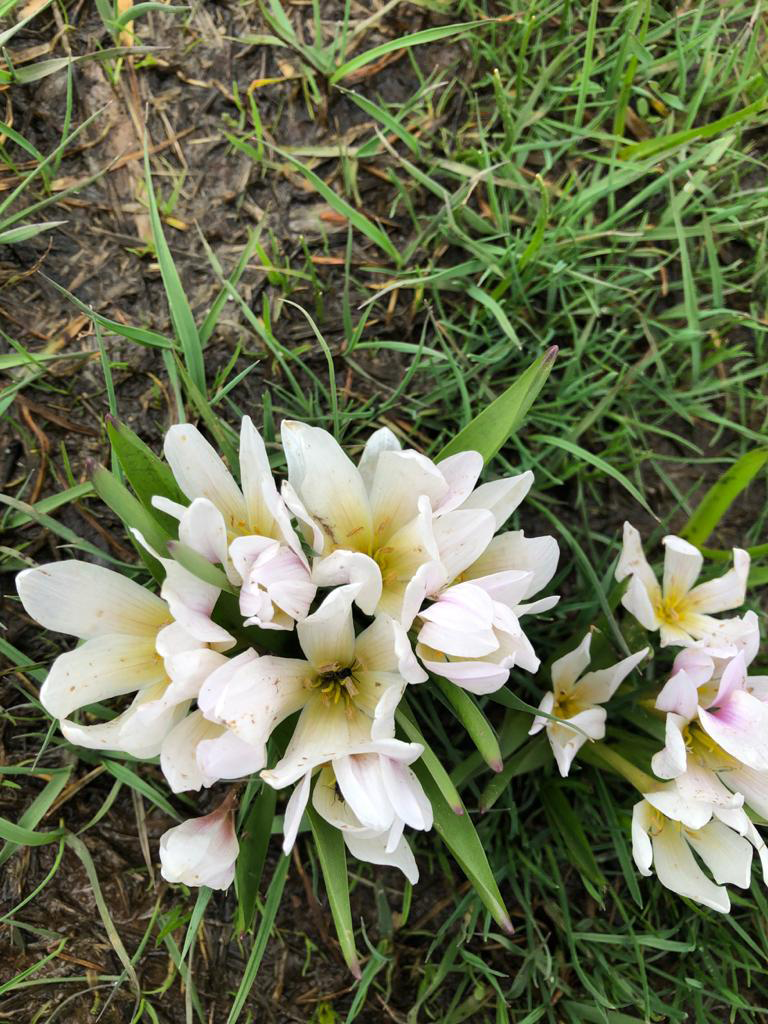
The flowering aerial parts of Colchicum kotschyi were collected from B8 Muş: Muş Taşo Cemetery (38°43’58 “N, 41°30’01 “E), wetland, 2100 m, 29.03.2020. The species identification was made by Sıraç TOPDEMİR and Sevim KÜÇÜK (Figure 1).
Methods
Morphological
Morphological measurements were made on 15 samples. Corm, leaf number, leaf length-width, flower number, perianth dimensions, filament and anther lengths were measured. Anatomical The specimens collected for morphological character measurements were preserved in a way not to damage the organs. Samples taken for anatomical studies were stored in 70% ethyl alcohol. For anatomical studies, transverse sections were taken from the centre of the root, stem and leaves of mature and flowering plants and superficial sections were taken from the top and bottom of the leaves with a razor blade. The sections were fixed with glycerine gelatin and photographs were taken with a light microscope Nikon ECLIPSE E200.
Results and Discussion
Morphological Results
In the morphological measurements, the mean values of the plant parts were as follows: corm size 1.5-4.5 x 0.7- 2.5 cm, number of leaves 2-3, leaf width and length 10-17 x 0.7-2.5 cm, number of flowers 1-3, perianth parts 2.3- 4.5 cm, filament 0.4-1.5 cm, anther 0.3 cm. In a literature review, C. szovitsii, C. triphyllum, C. burtii, C. umbrosum, C. bornmuelleri species were examined morphologically and anatomically. The maximum and minimum values of the morphological measurements of the species in this study are as follows: Corm; 1.5-5 x 1-3 cm, Leaves numbers; 2-6, Leaves length x witdh; 5-19 x 0.2-5.5 cm, Flowers numbers; 1-4, Perianth segments; 1-7 x 0.3-3 cm, Filament: 0.5-3 cm, Anther: 0.2-1.3 x 0.1-0.4 cm [17]. In another study, morphological measurements of C. boissieri C. minutum C. munzurense C. leptanthum species were made and the largest and smallest measurements of the species were given as follows: corm; 1.2-6.5 cm, perianth segments; 1-3.5 x 0.1-3 cm, Stamens; 1-3 cm, filaments: 4-25 mm, anthers: 2-8 mm [6]. In the morpho-anatomical study conducted in Iraq with C. szovitsii species, the measurements of this species were reported as corm; 10-30 x 15-45 mm, leaf number; 2-3, leaf length and width; 7-12 x 100-140 mm, flower number; 1-5, perianth tube length; 1-1.5 mm, filament; 7-11 mm, anther; 1.5-5 mm [3]. In another study conducted in Izmir/Turkey, morphological measurements of Colchicum boissieri species: C. boissieri corm; 3-5.5 cm, cataphyll 3-7.5 cm, number of leaves; 2-3, leaf length-width; 11-20 cm x 2-6 mm, number of flowers; 1 (-2), Perigonium tube; 4.4-13 cm, anther; 4-10 x 1 mm, stylus; 7-15 cm [18]. It was found as a result of morphological examinations of different Colchicum species collected from Şanlıurfa, Adıyaman and Mardin (Turkey). C. crocifolium Boiss.; flowers 1-30 cm, filaments 4-8 (-9) mm, anthers 2-4 mm, C. szovitsii Fisch. and Mey.; corm ovoid 1.5-4 x 1-3 cm, flowers (1-) 2-6 (-9), filaments 7-11 mm, anthers 2-4 (-5) x 1 mm, C. cilicicum (Boiss.) Dammer; corm (3-) 3. 5-5.5 (-6) x 2. 5-4 (-5) cm, petals 3-4 rarely 5, flowers 2-5 (-7), filaments 2.5-3.5 cm, anthers 6-10 (-15) x 1 mm, C. serpentinum Woron. ex Miscz. corm 2-4 x 1-2 cm, leaves 3 (-4), petals (1-) 2-5 (-10), filaments 6-10 mm, anthers 3-5 (-5. 5) x 1-1.5 mm, in C. persicum Baker; corm 3.5-7.5 x 2-4 cm, flowers 2-6 (-9), stamens (1.2-) 1.5-3.3 cm, anthers (4-) 5-10 (-13) mm [15].
The values differ due to the difference between the species studied here and the species subject to our study. This can also be explained by adaptations due to elevation, location, soil structure and climate.
| No | Corm (cm) | Leaves numbers | Leaves length x witdh (cm) | Flowers numbers | Perianth segments (cm) | Filament (cm) | Anther (cm) |
|---|---|---|---|---|---|---|---|
| 1 | 2.2 x 2.5 | 3 | 15-17 x 2-2 | 3 | 3.8-4.5-3.6 | 0.6-1 | 0.3 |
| 2 | 3 x 1.8 | 2 | 15-15 x 1-1.1 | 2 | 2.5-3-3.5 | 0.9-1.5 | 0.3 |
| 3 | 2.2 x 1.2 | 2 | 11-12 x1.7-1.6 | 2 | 2.3-2.6 | 0.7-1 | 0.3 |
| 4 | 2 x 1.5 | 2 | 10.5-11 x 1.7-1.3 | 2 | 3.5-3.5 | 0.6-0.9 | 0.3 |
| 5 | 2.5 x 2 | 2 | 13.7-14.9 x 2-2 | 3 | 3-3-3.2 | 0.7-0.8 | 0.3 |
| 6 | 2.2 x 1.3 | 2 | 12.6-13 x 1.8-1.5 | 2 | 3-3.5 | 0.6-0.9 | 0.3 |
| 7 | 2 x 1.9 | 3 | 13.7-14.5-15 x 2.1- 1-1.7 | 2 | 3.4-4 | 0.6-1 | 0.3 |
| 8 | 4.5 x 2 | 2 | 12-12.9 x 1.5-1.3 | 2 | 3.5-4.3 | 0.4-0.8 | 0.3 |
| 9 | 2.1 x 1.4 | 2 | 11.2-11.3 x 1.4-1 | 2 | 2.8-3.4 | 0.6-0.9 | 0.3 |
| 10 | 2 x 1.2 | 2 | 10-10.7 x 1.9-1.5 | 1 | 4.3 | 0.7-0.9 | 0.3 |
| 11 | 1.5 x 1.4 | 2 | 12.4-13.3 x 2.5-2.5 | 2 | 3.1-3.1 | 0.7-1 | 0.3 |
| 12 | 2 x 1.4 | 2 | 10-10.7 x 1.9-1.5 | 1 | 3.5 | 0.7-1.1 | 0.3 |
| 13 | 2 x 1 | 2 | 11.9-12 x 0.7-0.5 | 1 | 3.4 | 0.5-0.8 | 0.3 |
| 14 | 1.5 x 0.7 | 2 | 16-16.7 x 1.7-1.6 | 2 | 3.2-3.5 | 0.6-0.8 | 0.3 |
| 15 | 2 x 1.3 | 2 | 10.6-10.8 x 1.5-1.3 | 1 | 2.9 | 0.6-1 | 0.3 |
Table 1: Morphological Measurement Findings of Colchicum kotschyi.
Anatomical Results
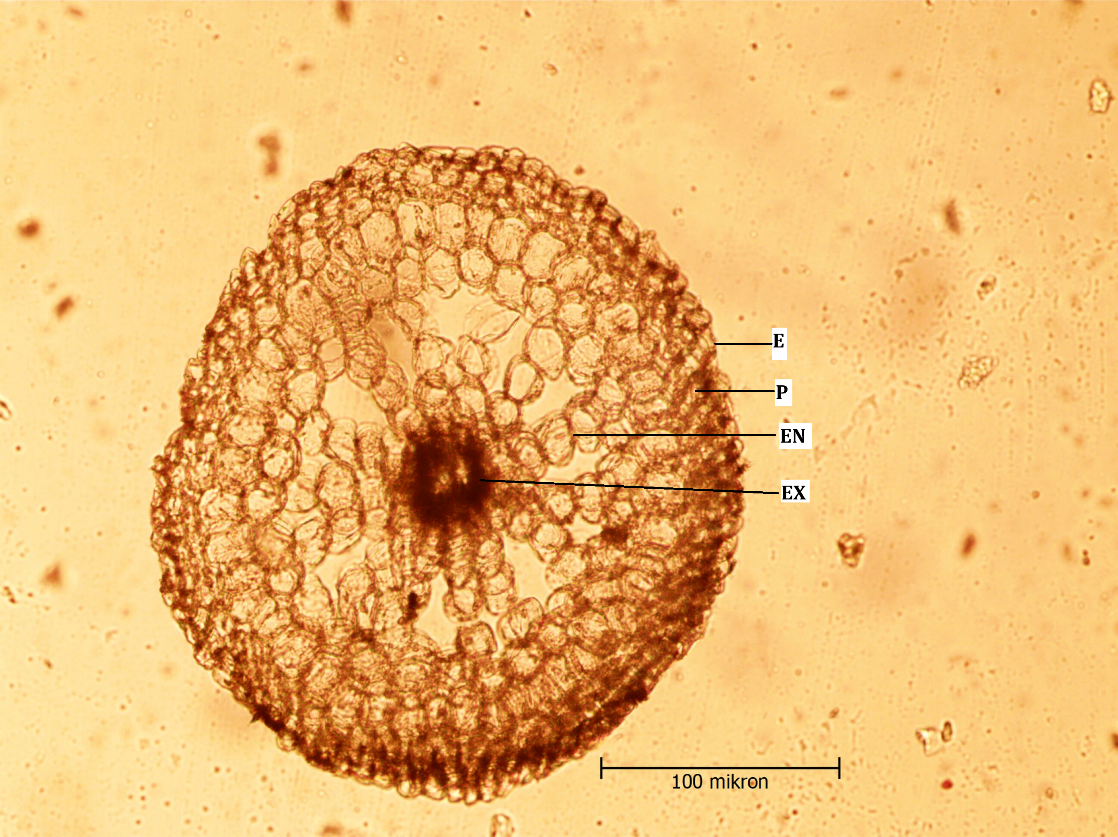
Root Epidermis single-row and irregularly shaped. Parenchyma 2-3-rowed and cylindrical. Endodermis 5-6-rowed hexagonal, oblong and irregularly shaped, cells about twice the size of parenchyma cells. Phloem-xylem cells densely indistinct in the exodermis (Figure 2). In the root sections of C. szovitsii, C. triphyllum, C. burtii, C. umbrosum, C. bornmuelleri species: epidermis; 1-2 layers, cortex; 3-7 layers, xylem; 3-4 arches, metaxylem; 1-2 rows [17]. In the study conducted in Uzbekistan, the root structure of C. autumnale was determined as: corolla; 4-5 rows, protoxylem; 4, metaxylem; 1 row [19]. In the anatomical study of the root of Colchicum boissieri, the upper and lower parenchyma cells are 2-3 layered, elongated and oval in shape, and the sponge parenchyma is usually polygonal in shape with 2-3 layers [18]. The species under investigation are different from the species in the literature, making anatomical comparisons difficult. However, since they are in the same genus, they were examined and it can be said that the differences are factors such as species, climate, altitude and soil structure.
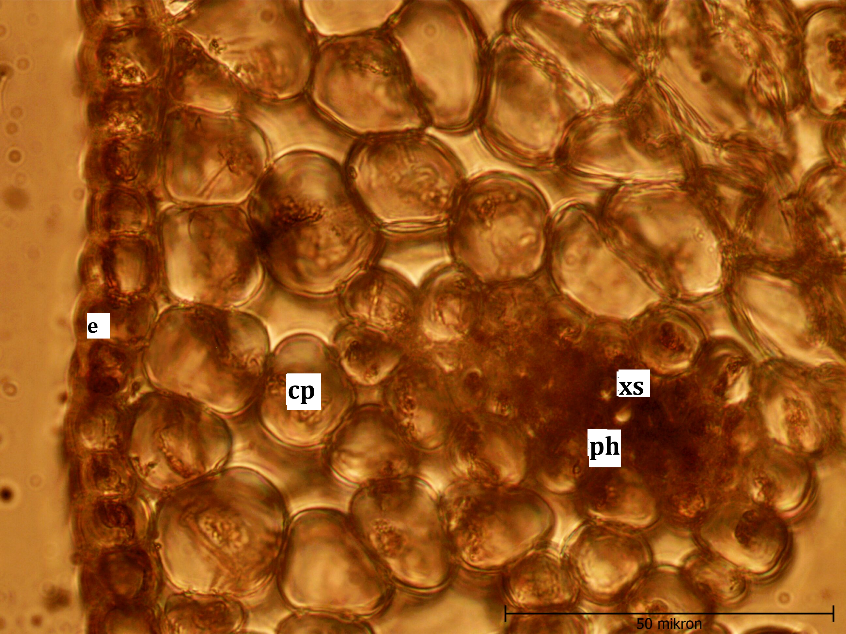
Stem Epidermis one-rowed rounded. cortical parenchyma 4-5-rowed irregularly shaped. Phloem and xylem cells dense, indistinct (Figure 3).
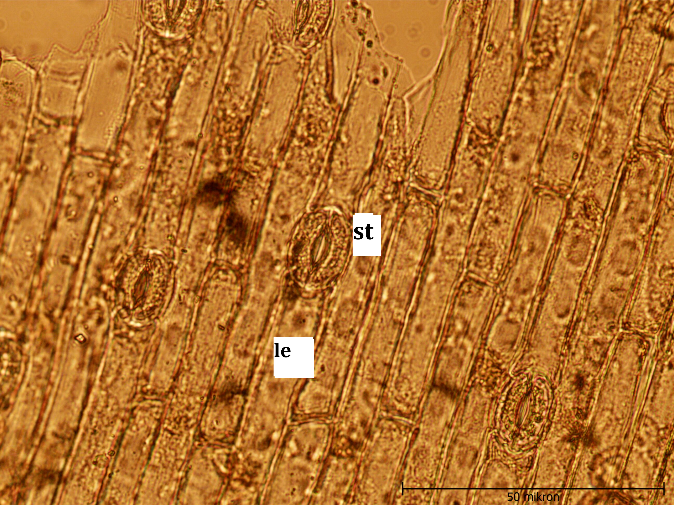
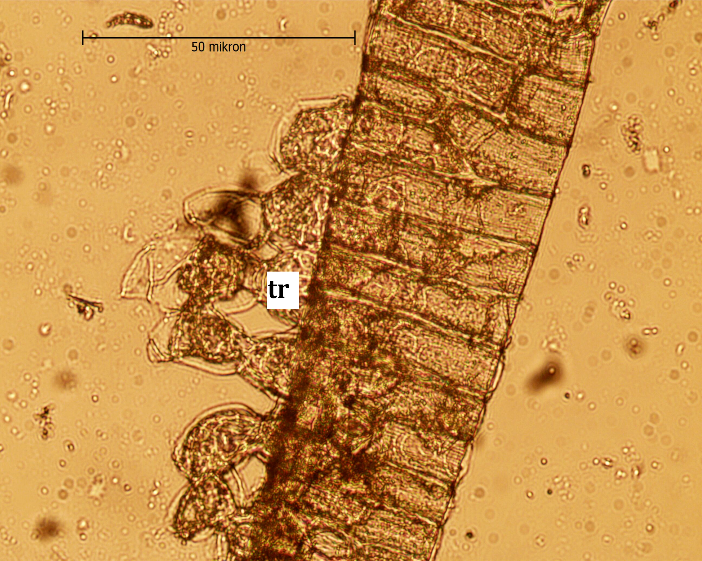
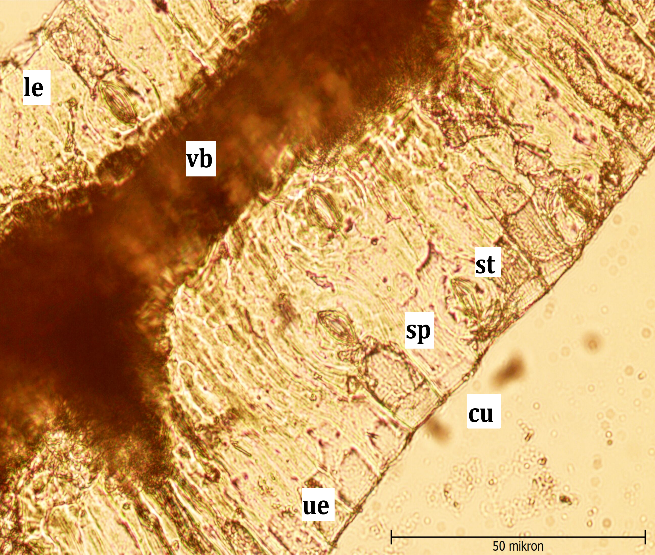
Leaf In trichomes, head and stem 1-celled, upper and lower epidermis in rectangular single rows in upper and lower surface sections. Anomocytic stomata on upper and lower surface. Leaf longitudinal section with upper and lower epidermis cells in a single row, square and oblong. There
is a thin layer of cuticle above the epidermis. Stomata are prominent. Sponge parenchyma oblong in 2-3 rows (Figures 4 & 5). In the leaf anatomy of C. szovitsii, the mesophyll consists of spongy layers of irregular parenchyma (chlorenchyma) cells. In the center is a vascular bundle of the collateral type, equal in size, with the xylem towards the upper surface and the phloem towards the lower surface [3]. In the anatomical study conducted with C. szovitsii, C. triphyllum, C. burtii, C. umbrosum, C. bornmuelleri species; the cuticle of C. szovitsii and C. bornmuelleri species were thick and the other species were thin and the stomatal types were anomocytic and leaf types were isolateral in all species. Palisate parenchyma was 2-3 layered in all species, 2-4 layered in C. burtii, sponge parenchyma was 3-4 layered in C. szovitsii and C. triphyllum, 2-4 layered in C. burtii, 2-3 layered in C. umbrosum, 1-2 layered in C. bornmuelleri. Vascular bundle type was collateral in all species [17]. In the leaf anatomy of Colchicum boissieri, it was reported that the epidermal cells are long and rectangular in shape and there are anomocytic stomata on the upper Upper and Lower Leaf Cross-Section
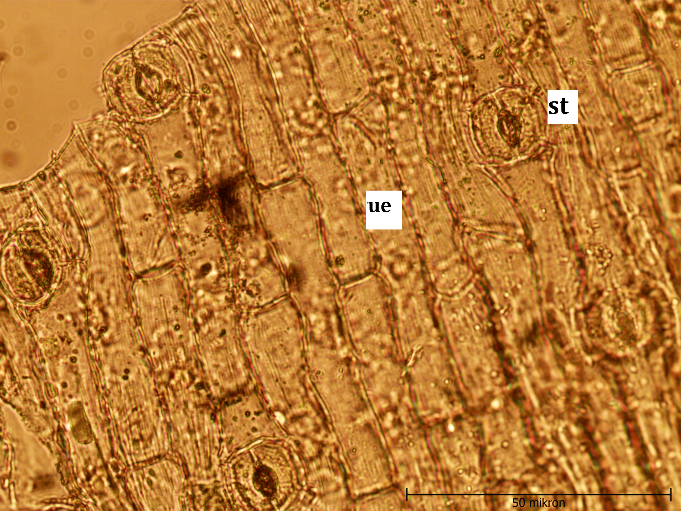
and lower surfaces of the leaf. The lower epidermal cells are narrower than the upper ones and the cuticle is parallel in the upper and lower surface views [18]. In the study of Colchicum autumnale leaf anatomy, the outer epidermis is covered with a thin layer of cuticle. The epidermis has anomalies of the anomocytic type with a size of 25.5 μm. The mesophyll is located between the upper and lower epidermis and is mainly composed of parenchyma and palisade cells. The oarenchyma and palisade cells are thin-walled, round, angular, elongated, filled with numerous chloroplasts and crystals [19]. As a result of the literature review, it was concluded that the studies could not be compared with our study due to the difference in species and since they have the same genus characteristics, the comparison was made in this status. The cuticle layer was found to be thin in most Colchicum species, the epidermis had the same characteristics compared to other species and was unicellular. The stomatal type was found to be anomosytic in almost all species studied in the literature.
Leaf Longitudinal Cross-Section
Conclusions
This study elucidated the botanical characteristics of C. kotschyi species using morphological and anatomical techniques. The anatomical characteristics of this species have been studied for the first time.
We believe that the elaboration of this medically important species with morphological and anatomical studies will be a source for further studies. As a result, the botanical characteristics of C. kotschyi species have not been studied before, making it impossible to compare them. However, C. kotschyi shows morpho-anatomical similarities with members of its genus, but with some minor differences. Most of these differences are in morphological measurements and are thought to be related to geographical, climatic and soil characteristics. It was determined that there were differences in the number of spongy parenchyma cell layers in the anatomical appearance of the leaf. Anatomical characters were found to be the same in almost all members of the genus Colchicum.
Conflicts of Interest
The author declares that he/she has no conflict of interest with any financial, personal or other relationships with other persons or organisations related to the material discussed in the article.
References
-
Vinnersten A, Reeves G (2003) Phylogenetic relationships within Colchicaceae. Am J Bot 90(10): 1455-1462.
-
Sapra S (2013) Colchicine and its various physicochemical and biological aspects. Med Chem Res 22(2): 531-547.
-
Jbarah SH, Al-Rawi AAF (2024) Morphological and Anatomical Study to the _Colchicum szovitsii_ from Colchicaceae Family in Iraq. J Biotechnol Res Cent 18(1): 59-66.
-
Morgil H, Unlu O, Boztas K, Tulum I, Oz G (2024) Comparative analysis of the complete chloroplast genome of endemic Colchicum baytopiorum CD. BRICKELL. Rev Bras Bot 47(3): 637-647.
-
Brickell C (1984) Colchicum L. In: Davis PH (Ed.), Flora of Turkey and the East Aegean Islands, 8th ed., Edinburgh: Edinburgh University Press pp: 329-351.
-
Di̇nç Düşen O, Sümbül H (2007) A Morphological Investigation of _Colchicum_ L. (Liliaceae) Species in the Mediterranean Region in Turkey. Turkish Journal of Botany 31(5): 373-419.
-
Güner A, Aslan S, Ekim T, Vural M, Babaç MT (2012) Türkiye Bitkileri Listesi (Damarlı Bitkiler). İstanbul: N. Gökyiğit Botanik Bahçesi & Flora Araştırmaları Derneği Yayınları.
-
Kaya E (2010) Türkiye’nin Doğal Süs Bitkileri Kataloğu. Atatürk Bahçe Kültürleri Merk. Araştırma Enstitüsü Yayınları 91: 272.
-
Uysal E, Kaya E (2019) Türkiye Florasında Doğal Olarak Yetişen ve İlkbaharda Çiçeklenen Farklı Acı Çiğdem (Colchicum spp.) Türlerine Ait Toprakların Bazı Fiziksel ve Kimyasal Özellikleri,” Bahçe 48(1): 9-18.
-
Kavalalı G (2014) Bitkisel Aktif Madde Olan Kolşisin’in Etnofarmakolojik Yönden Değerlendirilmesi. Lokman Hekim J 4(1): 16-18.
-
Toplan GG, Gürer C, Mat A (2016) Importance of Colchicum species in modern therapy and its significance in Turkey. J Pharm Istanbul Univ 46(2): 129-144.
-
Küçük S, Ocak A, Canım B (2016) Morphological and anatomical investigations on some species Colchicum L. Bangladesh J Bot 46(1): 223-231.
-
Karakaya S, Gülçin I, Topal F, Göger G, Bona GE, et al. (2022) Screening of antimicrobial, antioxidant, antidiabetic activities, anatomical and morphological properties of _Colchicum speciosum_ Steven (Colchicaceae). Protoplasma 259(6): 1493-1506.
-
Zarei L, Naji-Haddadi S, Pourjabali M, Naghdi N, Tasbih-Forosh M, et al. (2017) Systematic review of anti-rheumatic medicinal plants: An overview of the effectiveness of articular tissues and joint pain associated with rheumatoid arthritis. J Pharm Sci Res 9(5): 547-551.
-
Akan H, Satil F (2005) Morphological and anatomical investigations on some species of _Colchicum_ L. occurring in South East Anatolia, Turkey. J Biol Sci 5(4): 402-410.
-
Şahín EC (2024) Preliminary insights into the phylogeny of _Colchicum_ species. KSÜ Tarım ve Doğa Dergisi 7(2): 351-360.
-
Küçük S, Ocak A, Canım B (2016) Morphological and anatomical investigations on some species of _Colchicum_ L. Bangladesh J Bot 46(1): 223-231.
-
Sevgi E, Küçüker O (2011) Morpho-anatomical observations on _Colchicum boissieri_ Orph. in Turkey. IUFS J Biol Short Commun 53(2): 53-61.
-
Boboev S, Makhkamov T, Rainer W, Zafar M, Yuldashev A (2023) Anatomical and phytochemical studies and ethnomedicinal uses of _Colchicum autumnale_ L. Ethnobotany Research and Applications 25(6): 1-9.
- Enhancement of Vegetative Growth and Fruit Yield in Cucumber (Cucumis sativus L.) via Spiritual Blessing (Biofield) Energy Intervention
- Production of Açaí (Euterpe oleracea Mart.) under Different Agroforestry System Management Intensities in Amazonian Floodplain (Varzea) Forests
- Coffee and the Production Region: What is the Secret to the Expression "Quality"?
- Experiential Agripreneurship Training in Sub-Saharan Africa: Integrating a Business Incubator into Postgraduate Livestock Education at the University of Buea
- Advances in Agricultural High-Quality Development
- Linking Compost Residue to ABAGE in Plants - a Short Note