
Novel Docetaxel Formulation (NDLS) in Low Cardiac Reserve Ovarian Cancer
Ovarian cancer in patients with a history of breast carcinoma is not uncommon. We report here a case of successful management of a patient with ovarian cancer with omental tissue metastasis in a 40-year-old woman having poor ejection fraction with a prior history of breast cancer. The patient presented with enlarged ovaries with solid cystic masses suggestive of poorly differentiated metastatic carcinoma. In view of poor ejection fraction (heart failure) in the ovarian cancer patient, nanosomal docetaxel lipid suspension (NDLS, DoceAqualip) in combination with carboplatin was used in a neoadjuvant setting followed by surgical resection. This is the first such case report showing the successful treatment of carcinoma of ovary, with omental tissue metastasis, with DoceAqualip in a neoadjuvant setting followed by bilateral salpingo-oophorectomy in a patient having heart failure with a prior history of breast carcinoma.
Introduction
Breast cancer is the most common cancer in women, accounting for 6.7 million new cancer cases with 3.5 million deaths worldwide in 2012, which is expected to increase to 9.9 million cases and 5.5 million deaths annually, by 2030 [1, 2]. Patients with breast cancer have an increased risk of ovarian cancer, especially who have mutations in the high penetrance genes BRCA1 and BRCA2. The risk of developing ovarian cancer is high in breast-cancer patients diagnosed before the age of 40 years or with a family history of breast cancer [3]. Inherited mutations in the genes BRCA1 and BRCA2 or other unidentified genes may cause hereditary breast and ovarian cancer syndrome (HBOC) [4].
According to the National Comprehensive Cancer Network (NCCN) guidelines, the therapeutic armamentarium for ovarian cancer remains either laparotomy or total abdominal hysterectomy or bilateral salpingo-oophorectomy with comprehensive staging, or unilateral salpingo-oophorectomy. For patients with bulky stages III/IV who are poor surgical candidates, evaluation is recommended to consider neoadjuvant chemotherapy with interval debulking surgery. Ultrasound and/or abdominal/pelvic computed tomography (CT)/magnetic resonance imaging (MRI), evaluation of CA-125 or other tumor markers and tissue diagnosis are required prior to chemotherapy initiation. Chemotherapy with a combination of taxane and carboplatin followed by surgery as indicated by tumor response and potential respectability is preferred as per NCCN guidelines [5]. We report here a case of poorly differentiated carcinoma of ovary with omental tissue metastasis in a patient with poor ejection fraction, who had a prior history of breast cancer. The patient was treated with DoceAqualip (a nanosomal docetaxel lipid suspension; NDLS) and carboplatin chemotherapy followed by total hysterectomy with bilateral salpingo-oophorectomy. This is the first such case report showing a successful treatment of ovarian cancer with metastasis of omental tissues in a patient with heart failure having poor ejection fraction, who had a prior history of breast carcinoma, in a neoadjuvant setting with DoceAqualip based regimen.
Case Report
A 40-year-old woman presented with complaints of abdominal pain and breathlessness from the past 7 days. Medical history revealed that she was a premenopausal woman with hypertension. She was a follow-up case of biopsy proven ductal carcinoma of the right breast (Stage pT2pN1M0), immune histochemistry proven triple negative, treated with six 3-weekly cycles of chemotherapy with a combination of paclitaxel 250 mg and epirubicin 140 mg, 3 years back. The patient had normal ejection fraction (60%). Filgrastism 300 µg was administered in each cycle. She underwent right modified radical mastectomy (MRM) with axillary clearance followed by adjuvant external beam radiotherapy (EBRT) to the right chest wall and supraclavicular fossa with 6 MV photons in a conventional conformal technique for a total dose of 50 Gy/25 fractions over a period of 36 days. For the present complaints, a diagnostic laparoscopy was done, which showed poorly differentiated carcinoma of ovary and omental tissues. Further, a contrast- enhanced computed tomography (CECT) of abdomen and pelvis showed enlarged ovaries with solid cystic masses of size 4.5x3.1 and 3.7x4.2 cm with close approximation to each other (Figure 1a). These masses showed a loss of fat plane with the posterior surface of uterus and the anterior surface of rectum, however, no intra luminal extension was noted within the rectum. Anterior to the uterus, the omentum showed multiple nodular as well as mass like deposits, which led to omental caking of ~5 cm thickness. These lesions had no intervening fat plane with the anterior surface of uterus. A nodular omentum deposit of size 2.3x2.0 cm was noted on the right side anterolaterally as high as the level of the right kidney. Few other omental deposits were noted at the level of umbilicus and the left lumber region. Mild to moderate ascites was present in both abdomen and pelvis. Serum tumor biomarker CA125 level was found to be 1973.9 U/mL, which suggested metastatic epithelial carcinoma deposits in omental tissue. Histopathologial examination showed omental tissue infiltrated by malignant tumor cells arranged in a solid acinar pattern with glandular pattern at places, and mitotically active tumor giving an impression of metastatic carcinoma in omentum. Whole body fluorodeoxyglucose (FDG) F-18 positron emission tomography/computed tomography (PET-CT) revealed heterogeneously enhanced abnormal FDG avid solid cystic mass suggestive of tumor metastasis/Krukenbergtumor. Immunohistochemistry (IHC) of the omental biopsy for additional tumor biomarkers confirmed that it was a poorly differentiated metastatic carcinoma likely to be of ovarian primary in a known case of breast carcinoma.
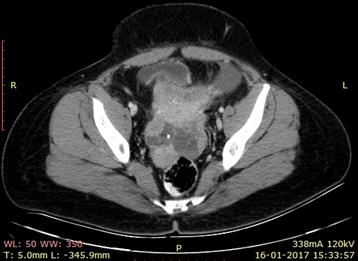
Figure 1a: CECT scan image showing solid cystic masses in ovaries suggestive of epithelial carcinoma. The patient also had a history of hypertension and she presented with heart failure with a poor ejection fraction of ~30%. This poor ejection fraction also influenced the treatment as to the choice of chemotherapy agent. Chemotherapy was planned with DoceAqualip, due to the possibility of fluid retention with conventional docetaxel, along with carboplatin for 3 weekly cycles. DoceAqualip 100 mg (at 60 mg/m2 as per DuBois formula), and carboplatin 600 mg were administered intravenously for 3 cycles (DoceAqualip 1 hr infusion on Day 1, Carboplatin 2 hr infusion on Day 2 of each cycle). She was also administered intravenous chlorpheniramine maleate 1 mL and hydrocortisone 100 mg on Day 1, and pegfilgrastim 6 mg subcutaneously on Day 3 of each cycle. Following the second cycle of chemotherapy, ultrasonography (USG) of abdomen and pelvis showed reduced bulky cystic ovaries (right: 4.25x2.38x3.91 cm, left: 3.32x2.23x1.78 cm) with solid components on the right side and few serosal nodules on the uterus (Figure 1b). CA-125 levels reduced to 9.3 U/mL, which is within the normal limits (range: 2-35). After completing 3 cycles of chemotherapy, her USG abdomen and pelvis did not show sizeable residual peritoneal carcinosis (Figure 1c). CA-125 levels further reduced to 3.6 U/mL, again within the normal limits. Surgery was planned and total hysterectomy with bilateral salpingo-oophorectomy was performed. Histopathological examination showed deposits of poorly differentiated carcinoma in both the ovaries and omental tissues.
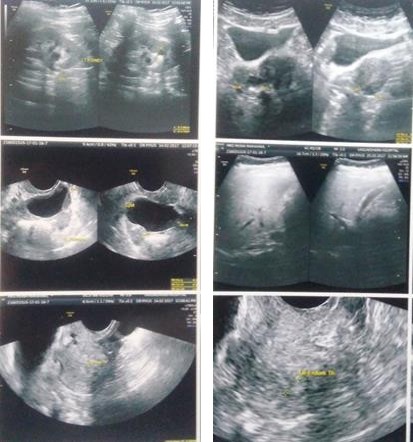
Figure 1b: USG image showing reduced solid cystic masses in ovaries after second chemotherapy cycle.
Figure 1c: USG image showing no solid cystic masses in ovaries after third chemotherapy cycle. The patient’s heart failure was managed with ivabradine 5 mg BD, digoxin (0.25 mg OD) and, spironolactone (50 mg) plus torsemide (10 mg) OD. There were no adverse events reported including hypersensitivity reactions or any other serious adverse event during the treatment with DoceAqualip and carboplatin. No abnormal laboratory investigations were reported during the 3 cycles of treatment.
Outcome and Follow-up
Post-surgery, she was administered 3 cycles of DoceAqualip 100 mg and carboplatin 600 mg. Her CA125 levels were measured every month continuously for 3 months and were found to be within the normal range (2- 35 U/mL). Hematological abnormalities (such as low hemoglobin, reduced red blood cells and platelets) were observed post-surgery, which were self-limiting. Ultrasonography of abdomen and pelvis done post- surgery did not reveal any evidence of residual/recurrent mass in the ovaries (Figure 2a). Follow-up USG abdomen and pelvis done for the next 3 months (Figure 2b) did not reveal any residual masses. The patient was continuously followed-up and was found to be doing well with no concerns after 1 year following the treatment. Consent was obtained from the patient for the publication of this case report and informed consent document was signed by the patient.
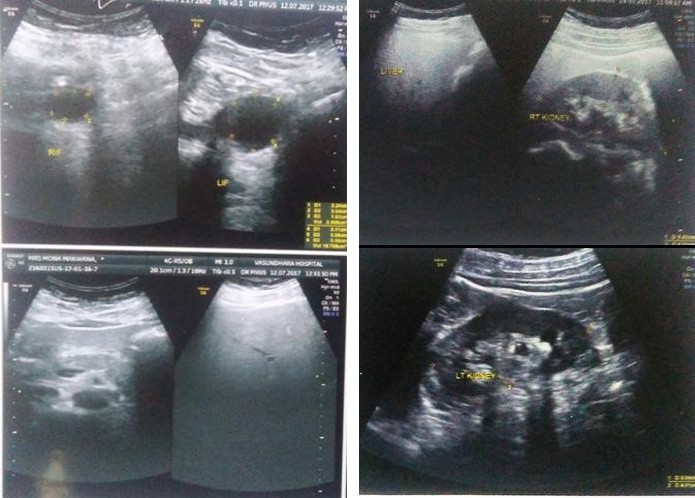
Figure 2a: USG image post-surgery showing no cystic masses.
Figure 2b: Follow-up USG image after 6 months post- surgery showing no cystic masses.
Discussion
The most common cancer type with leading cause of death in women is breast cancer. Women with a prior history of breast cancer are at a high risk for developing ovarian cancer [2, 6], especially, in patients with BRCA1/BRCA2 mutations [3]. Women with a family history of breast cancer carry the highest risk of ovarian cancer after breast cancer, which could be due to an inherited mutation in the BRCA1 or BRCA2 genes, or HBOC syndrome, which is linked to an increased risk of ovarian cancer [7]. This report presents a case of a patient with a prior history of ductal breast carcinoma (triple negative) treated with chemotherapy followed by surgery and radiotherapy. Three-years later, the patient developed metastatic ovarian cancer and was successfully treated with neoadjuvant DoceAqualip and carboplatin chemotherapy followed by surgery. The genetic cause
| [11] | . Furthermore, three Phase II studies have also | ||||
|---|---|---|---|---|---|
| demonstrated the efficacy and safety of docetaxel 70– | |||||
| 75 mg/m2 plus carboplatin to AUC 5–6 every 3 weeks in | |||||
| women with stage III–IV ovarian cancer, with an overall | |||||
| response ranging from 81-87% [ | 12-14] | . Docetaxel and | |||
| carboplatin regimen showed similar efficacy with | |||||
| improved safety profile as compared with paclitaxel- | |||||
| carboplatin regimen as first-line therapy for epithelial | |||||
| ovarian cancer in an international Phase III randomized | |||||
| trial conducted by the SGCTG | [15] | . In this study, patients | |||
| were treated with carboplatin to AUC 5 plus either | |||||
| docetaxel 75 mg/m2 infused over 1 hr or paclitaxel | |||||
| 175 mg/m2 infused over 3 hrs. The clinical response rate | |||||
| was higher in the docetaxel arm (66%) compared with | |||||
| the paclitaxel arm (62%) | [15] | . A prospective, multicenter | |||
| Phase II trial (PRIMOVAR) has demonstrated that in the | |||||
| treatment of advanced epithelial ovarian cancer, | |||||
| docetaxel and carboplatin combination treatment |
schedule with two preoperative cycles is a reasonable option [16]. The conventional docetaxel formulation has dose limiting toxicities of acute hypersensitivity reactions and fluid retention [17, 18]. Moderate fluid retention occur in 27.2% patients while severe fluid retention in 6.5% patients [19]. The toxicities could be attributed to the surfactant polysorbate-80 and ethanol. Furthermore, fatal anaphylaxis and infusion related toxicities are also observed. To overcome such toxicities, premedication with anti-histamine and corticosteroid are generally given, however, life-threatening hypersensitivity reactions still may occur despite premedication [20]. Several new formulations based on novel drug delivery system (NDDS) platforms have been developed to address these toxicity issues. DoceAqualip, a nanosomal docetaxel lipid suspension (NDLS), is the only approved NDDS formulation of docetaxel, which has been developed by using Generally Recognized as Safe (GRAS) lipids by the US Food and Drug Administration, and is devoid of polysorbate-80 and ethanol. The novel formulation is based on ‘Aqualip Technology’ patented in Europe, Japan and Canada, while the filed US patent is under review. The efficacy and tolerability of DoceAqualip has been demonstrated in comparison with conventional docetaxel in the treatment of breast cancer [21]. Furthermore, DoceAqualip has shown a promising overall response and tolerability without the need of corticosteroid premedication in the treatment of breast cancer, advanced gastric adenocarcinoma, ovarian cancer, cervical cancer, hormone refractory prostate cancer, and non-small cell lung cancer [21, 22, 23, 24]. Conventional docetaxel may cause transient increase in brain natriuretic peptide (BNP) concentration, a decrease in E: A ratio, and an increase in deceleration time, even in patients with normal cardiac function, which are suggestive of induction of heart failure in patients with left ventricular dysfunction [25]. In the current patient, ejection fraction was very poor (~30%), hence, DoceAqualip was preferred over conventional docetaxel to avoid the potential risk of worsening of the condition due to the possible fluid retention. This is the first case report regarding the use of DoceAqualip in the treatment of ovarian cancer. In the current report, DoceAqualip and carboplatin combination followed by surgery achieved a complete response in an ovarian cancer patient with heart failure who had a prior history of breast cancer. Overall, the treatment was well- tolerated, and no serious adverse event was reported. Hematological abnormalities such as low hemoglobin, reduced red blood cells and platelets were observed, which were self-limiting. Follow-up investigations up to 1 year did not reveal recurrence of the carcinoma. The current report highlights the efficacy and safety of DoceAqualip in the treatment of ovarian cancer.
Conclusions
DoceAqualip (nanosomal docetaxel lipid suspension, NDLS), a novel docetaxel formulation devoid of polysorbate-80 and ethanol, in combination with carboplatin was effective and well-tolerated in the treatment of ovarian cancer in a patient with heart failure. DoceAqualip can be an option to treat patients with ovarian cancer and needs to be further confirmed in larger populations in clinical studies.
Acknowledgements
We would like to thank Mr. Shreekant Sharma (Lambda Therapeutic Research) for his support in developing the concept/medical writing, additional editorial support and follow-up with the journal/publisher, Dr. Venugopal Madhusudhana (Lambda Therapeutic Research) for additional editorial assistance and Mr. Ashish Sharma (Intas Pharmaceuticals Ltd.) for co-ordination for data acquisition.
Conflict of Interest
Drs. Nisarg Joshi and Mujtaba Khan are employees of Intas Pharmaceuticals Ltd.
Funding
The case report development was supported by Intas Pharmaceuticals Ltd.
References
-
Ghoncheh M, Pournamdar Z, Salehiniya H (2016) Incidence and Mortality and Epidemiology of Breast Cancer in the World. Asian Pac J Cancer Prev 17(S3): 43-46.
-
Torre LA, Islami F, Siegel RL, Ward EM, Jemal A (2017) Global Cancer in Women: Burden and Trends. Cancer Epidemiol Biomarkers Prev 26(4): 444-457.
-
Bergfeldt K, Rydh B, Granath F, Gronberg H, Thalib L, et al. (2002) Risk of ovarian cancer in breast-cancer patients with a family history of breast or ovarian cancer: a population-based cohort study. Lancet 360(9337): 891-894.
-
Pruthi S, Gostout BS, Lindor NM (2010) Identification and Management of Women With BRCA Mutations or Hereditary Predisposition for Breast and Ovarian Cancer. Mayo Clinic Proceedings 85(12): 1111-1120.
-
NCCN Clinical Practice Guidelines in Oncology. Ovarian Cancer Including Fallopian Tube Cancer and Primary Peritoneal Cancer. Version 5.2017. February 02, 2018.
-
Hunn J, Rodriguez GC (2012) Ovarian cancer: etiology, risk factors, and epidemiology. Clin Obstet Gynecol 55(1): 3-23.
-
American Cancer Society. What Are the Risk Factors for Ovarian Cancer?
-
Ryberg M, Nielsen D, Skovsgaard T, Hansen J, Jensen BV, et al. (1998) Epirubicin cardiotoxicity: an analysis of 469 patients with metastatic breast cancer. J Clin Oncol 16(11): 3502-3508.
-
Nielsen D, Jensen JB, Dombernowsky P, Munck O, Fogh J, et al. (1990) Epirubicin cardiotoxicity: a study of 135 patients with advanced breast cancer. J Clin Oncol 8(11): 1806-1810.
-
Smith LA, Cornelius VR, Plummer CJ, Levitt G, Verrill M, et al. (2010) Cardiotoxicity of anthracycline agents for the treatment of cancer: systematic review and meta-analysis of randomised controlled trials. BMC Cancer 10: 337.
-
Vasey P, Atkinson R, Coleman R, Crawford M, Cruickshank M, et al. (2001) Docetaxel-carboplatin as first line chemotherapy for epithelial ovarian cancer. British journal of cancer 84(2): 170-178.
-
Kolevska T, Smith D, Wertheim I (2001) A phase II study of docetaxel and carboplatin in the treatment of sub-optimally debulked stage III and IV ovarian cancer (Abstract). Proc Am Soc Clin Oncol 20: 2497.
-
Myer A, Huober J, Goerner R (1999) Chemotherapy with carboplatin/docetaxel and recurrent epithelial ovarian cancer (Abstract). Proc Am Soc Clin Oncol 20: 1465.
-
Vorobiof D, Rapoport B, Mahomed R (2001) A phase II first line study of docetaxel and carboplatin (CBDCA) in patients with ovarian cancer (Abstract). Proc Am Soc Clin Oncol 20: 880.
-
Vasey PA (2002) on behalf of Scottish Gynaecological Cancer Trials Group. Survival and longer-term toxicity results of the SCOTROC study: docetaxel– carboplatin (DC) vs paclitaxel–carboplatin (PC) in epithelial ovarian cancer (EOC) (Abstract). Proc Am Soc Clin Oncol 20: 804.
-
Polcher M, Mahner S, Ortmann O, Hilfrich J, Diedrich K, (2009) Neoadjuvant chemotherapy with carboplatin and docetaxel in advanced ovarian cancer-a prospective multicenter phase II trial (PRIMOVAR). Oncol Rep 22(3): 605-613.
-
Norris LB, Qureshi ZP, Bookstaver PB, Raisch DW, Sartor O, et al. (2010) Polysorbate 80 hypersensitivity reactions: a renewed call to action. Community Oncology 7(9): 425-428.
-
Semb KA, Aamdal S, Oian P (1998) Capillary protein leak syndrome appears to explain fluid retention in cancer patients who receive docetaxel treatment. J Clin Oncol 16(10): 3426-3432.
-
Taxotere (2015) (docetaxel) Injection Concentrate, Intravenous Infusion (IV). Prescribing Information. sanofi-aventis U.S. LLC, Bridgewater, NJ 08807.
-
Wang GS, Yang KY, Perng RP (2001) Life-threatening hypersensitivity pneumonitis induced by docetaxel (taxotere). Br J Cancer 85(9): 1247-1250.
-
Ahmad A, Sheikh S, Taran R, Srivastav SP, Prasad K, et al. (2014) Therapeutic efficacy of a novel nanosomal docetaxel lipid suspension compared with taxotere in locally advanced or metastatic breast cancer patients. Clin Breast Cancer 14(3): 177-181.
-
Ashraf MSR, Khan MA, Shah M, Bhat Y, Wani ZA, et al. (2016) Efficacy and safety of a novel nanosomal docetaxel lipid suspension (NDLS) as an anti cancer agent a retrospective study. Ann Oncol 27(9): 156.
-
Naik R, Khan MA (2017) Doceaqualip in a patient with prostate cancer who had an allergic reaction to conventional docetaxel: A case report. Molecular and Clinical Oncology 6(3): 341-343.
-
Prasanna R, Bunger D, Khan MA (2018) Efficacy and safety of DoceAqualip in a patient with locally advanced cervical cancer: A case report. Mol Clin Oncol 8(2): 296-299.
-
Shimoyama M, Murata Y, Sumi KI, Hamazoe R, Komuro I (2001) Docetaxel induced cardiotoxicity. Heart 86(2): 219-219.
- Cancer Diagnosis from RNA Sequence of Blood Cells by Using AI
- Field Cancerization in Oral Cavity, Case Report and Review of Literature. Oncologic Program Salud Integral Hospital, Managua, Nicaragua
- Identification of B Lymphocytes in Cancer Patient’s Blood
- A Case Report of a Breast Cancer Patient Developing Pneumonitis as a Result of Abemaciclib Therapy
- Immune Checkpoint Therapeutics for Today’s Fight and Beyond
- The Amalgamated Sophomore-Gonadoblastoma