
Isolation and In Vitro Screening of Lactic Acid Bacteria from Some Local Brewed Drinks, Rotten Fruits, Pig Hindgut and their Characterization
The aim of this study was to screen, isolate and characterize Lactic acid bacteria from brewed drinks, certain rotten fruits and hindguts of pigs, using biochemical and Polymerase Chain Reaction (PCR) methods and to compare them with patented probiotics. Briefly, 200 ml each of Local brews kunu zaki, nono and burukutu were purchased separately from five different points and later pooled to form one liter each. Near rotten pineapples (17) and oranges (3) were purchased, and segments of the hindgut (cecum, colon and rectum) of six slaughtered pigs were collected. Bacteria growths were identified according to their morphological and biochemical characteristics. An in vitro fermentation of four grains, namely: sorghum (Sorghum bicolor) yellow and red varieties, Millet (Pennisetum americanum) and Maize (Zae mays) were later performed using the isolated Lactobacillus bacteria from the local brews, fruits and pig hindgut and compared with the patented bacteria. This process was repeated with 0.01ml of an over -night culture of MRS broth concentration containing one of the two 105 and 107 Cfu/ml Lab isolate from local drinks, fruits and pig hindgut isolates. Selected fermenters from pig hindgut and burukutu successfully decreased pH of Millet, Maize and Sorghum from 6 to 3.80 and from 6 to 3.92 respectively hence can be used as fermenters. Molecular confirmation of Lactobacillus species in pig hind gut and burukutu using direct PCR method and the amplification of the genomic DNA showed that the genus level of Lactobacillus was the same for all the isolates and the homology analysis inferred from the 16S RNA sequence clearly verified that all the strains were Lactobacillus species. L. casei and L. acidiphilus were identified as species type from burukutu. But none from pig hind gut. Therefore it was concluded that Millet, Maize and Sorghum can be effectively usedas components of fermented pig diets and that local brewed drink; burukutu and pig hind gut content are good sources of Lactobacillus bacteria for fermentation of feed for feeding pigs.
Introduction
Lactic acid bacteria (LAB) are Gram positive, catalase negative, facultative anaerobic, acid-tolerant, non-spore, rod shaped (bacillus) or spherical (coccus) bacteria whose major metabolic end-product of carbohydrate fermentation is lactic acid [1]. This trait has linked LAB with food fermentation, as acidification inhibits the growth of spoilage agents. LAB is integral to many African fermented foods [2, 3, 4]. In most African countries, cereals from wide range of grains are used to produce indigenous fermented foods, nonalcoholic and alcoholic beverages. The use of probiotics in agriculture and livestock farming has increased recently because of the increase awareness of their potentials as alternatives to antibiotics used as growth promoters, and for their ability to control specific enteric pathogens [5]. For these reasons, the development of effective probiotic products that can be licensed for animal use continues to receive attention [6, 7]. Currently, there is a wide variety of molecular strategies, such as PCR with specific primers, which are available for the determination of the species diversity of Lactobacillus [8].
This study was carried out to screen several fruits and fermented drinks for potential sources of novel probiotics, the isolation of probiotic LAB candidates and to identify the isolated fermenters using PCR method.
Materials and Method
Sample Collection
Fruits and Local Grain Brew: Fruit Markets in different areas of Samaru town in Kaduna state Nigeria were visited and rottening seasonal fruits (oranges and pineapple) were purchased from different batches at different locations. Five (5) 200 ml each of local brews namely, Kununzaki, nono nonalcoholic drinks and “Burukutu” (an alcoholic drink) were purchased at five different points into sterile plastic seal bags and brought to Nutritional laboratory of the department of Veterinary Medicine, A.B.U. Zaria, within 24 h of purchase but were not utilized until 48 h later, to allow for natural fermentation to occur before routine analysis. A hundred fold serial dilutions of the collected samples was made by adding 0.1 ml of the homogenized stock of each of the collected samples to 9.9 ml of normal saline to obtain 105 and107 dilutions.
Pig Intestine (Pig Hindgut)
Segments of the ceacum, colon and rectum (all containing ingesta) from six slaughtered pigs were each collected in 500 ml sterile Pyrex bottles then flushed with carbon dioxide and brought immediately to the Nutritional laboratory of the department of Veterinary Medicine, A.B.U. Zaria. The collected segments of the hindgut were cut open using a pair of surgical scissors and thumb forceps and contents transferred into another set of sterile Pyrex bottles and processed according to standard procedures as described by Aljassim and Rowe [9]. Briefly, 5 g of ingesta from each segment was mixed with 45ml of Thioglycolate broth in a plastic stomacher bag and then homogenized for 60 sec with the stomacher laboratory blender (Stomacher 400 circular, UK). The homogenized sample was then strained using four layers of sterilized cheese cloth. The filtrate was then used to make a serial dilution by adding 0.1 ml of the homogenized stock to 9.9 ml of normal saline to obtain 10-5 and10-7 dilutions.
Culture of Processed Samples
From each dilution 0.1 ml was then sub-cultured aseptically into MRS (deMan Rogosa and Sharpe, Oxoid UK) agar [10] using pour plate technique, all plates were then incubated at 37˚C for 24-48 h in anaerobic condition to provide an optimal environment for growing Lactobacilli. The Gram positive and rod shaped isolates were then purified by streak plating using the MRS medium. The bacteria were characterized using microscopic morphological examination and by conventional biochemical test according to the methods of Sneath, et al. [11] (Table 1).
Isol Oxida
Gram
Catal test
Mot test
Indol
Growthr
Growthr
at 45oc Sucro Gluco Fruct Galact Malto Manno Lactos
$$ \begin{array}{c c c c c c c c c c c c c c c c c} \mathrm {I s o l} 1 & - & + & - & - & - & + & + & \pm & + & + & - & + & + & \pm \\ \mathrm {I s o l} 2 & - & + & - & - & - & + & + & - & + & - & - & - & - & \pm \\ \mathrm {I s o l} 3 & - & + & - & - & - & + & \pm & - & + & - & - & - & - & - \\ \mathrm {I s o l} 4 & - & + & - & - & - & + & \pm & \pm & + & - & + & - & - & \pm \\ \mathrm {I s o l} 5 & - & + & - & - & - & + & - & - & + & - & - & - & + & \pm \\ \mathrm {I s o l} 6 & - & + & - & - & - & + & - & + & + & - & - & - & + & \pm \\ \mathrm {I s o l} 7 & - & + & - & - & - & + & - & - & + & - & - & - & + & - \\ \mathrm {I s o l} 8 & - & + & - & - & - & + & - & \pm & + & - & - & - & - & - \\ \mathrm {I s o l} 9 & - & + & - & - & - & + & - & - & + & - & - & - & \pm & - \\ \mathrm {I s o l} 1 0 & - & + & - & - & - & + & - & - & + & - & - & - & - & \pm \end{array} $$
- (+): positive; negative; (-): variable result (±)
- Key: Isol: isolate; Oxida: isolate; Catal: catalase; Mot-motility; Fruct: fructose; Galact: galactose; Malto: maltose; Manno: mannose.
Table 1: Summary of Biochemical test for identification of Lactobacillus species.
PHASE I (Control): In Phase I or control phase of the experiment, four different grains namely: sorghum (Sorghum bicolor) of yellow and red varieties, millet, (Pennisetum americanum) and maize, (Zea mays) were purchased from Samaru market, Zaria, Kaduna State, Nigeria. The grains were cleaned by destoning and removal of unwanted grains and particles from the selected grains. The grains were weighed using a mettler weighing balance then crushed into appropriate particles sizes using a commercial grinding machine, and then separated (Sorghum 1.5Mm in diameter, Millet 0.7 Mm, Maize 3mm in diameter using a sieve with 2Mm in diameter aperture which allowed only fine and very fine particles to pass, according to their various sizes). The broken grains were then weighed using a mettler weighing balance and 200gm of each grain-type was put into a tight lid 20 l laboratory flask in duplicate. Distilled water (500ml) was measured using a measuring cylinder and dispensed into each of the flask containing the grains and stirred thoroughly with a sterilized spatula to ensure homogeneity. A pH meter was used to measure the acidity of each seeped grain for 24 h at two hours interval (0, 2, 4, 6…24), and recorded. 10 µl of an over-night isolate culture of MRS broth containing one of the two 107 or 109 CFU/ml LAB isolates from local drinks and those from Pig A sample, each from burukutu and pig hindgut, and 4(four) other samples collected aseptically from nono, kununzaki, starter culture for dairy and tablet (patented pig supplement) were brought to the laboratory in ice box to be used as positive controls. Polymerase Chain Reaction: The obtained PCR product was subjected to gel electrophoresis for identifying the product size (Table 2).
Isolation and Identification of Lactobacillus
| Genus/species | Primer name | Sequence 5’→3’ | Annealing temp. | Reference | ||
|---|---|---|---|---|---|---|
| (°C) | ||||||
| Lactobacillus | Lac 1 | agcagtagggaatcttcca | 58 | Walter et al. (2001[12]) | ||
| Lac 2 | attycaccgctacacatg | |||||
| L. acidophilus | Aci I | tctaaggaagcgaaggat | 62 | Tilsala-Timisjärvi & Alatossava (1997[13]) | ||
| Aci II | ctcttctcggtcgctcta | |||||
| L. casei- group | Lcas-1N | gcccttaagtgggggataac | 64 | Markiewicz & Biedrzycka (2005[14]) | ||
| Lcas-2N | tagagtttgggccgtgtctc | |||||
| L.delbrueckii ssp. bulgaricus/lactis | LLB1 | aagtctgtcctctggctgg | 61 | Torriani, et al. (1999[15]) | ||
| LB1 | aaaaatgaagttgtttaaagtaggta | |||||
| L. helveticus | Lhel-1N | gcagcagaaccagcagattt | 66 | Markiewicz, et al. (2008[16]) | ||
| Lhel-2N | gcatcattgccttggtaagc | |||||
| L. johnsonii | 16S II | actaccagggtatctaatcc | 58 | Walter, et al. (2000[17]) | ||
| Joh16S I | gagcttgcctagatgatttta | |||||
| L. rhamnosus | Pr I | Cagactgaaagtctgacgg | 60 | Walter, et al. (2000[17]) | ||
| Rha II | gcgatgcgaatttctattatt |
Table 2: Selected primers used for Lactobacillus species identification.
The selected bacteria with the profile of LAB as previously described table 1 biochemical test and those isolates showing very slow acidity level 8 h from commencement of fermentation in comparison with the patented bacteria were selected but those that fermented earlier than 8 h were discarded.
Composition of the Grains and Innoculants
The composition of the five different cereal milled grains and the lactobacillus inoculated for the fermentation were: S= Sorghum (Sorghum bicolor) yellow and red varieties; M = Millet; (Penniseteum americanum); Maize (Zea mays) white and yellow varieties. Patented Probiotic I (L1) = Bacillus subtilis and Bacillus pumilis(Sano-Life-Pro-F, UK, London). Patented Probiotic II (L2) PSTAB Pig supplement (SkySlo- Supplement, UK). Patented Probiotic III (L3) = Lactobacillus acidiphilus. (Sano-Life-Pro-F, UK).
Data Analyses
Data on fermentation test, weight gain, hematology and faecal shedding of Escherichia coli obtained from the in vitro trial and the various treatments of the two forms
Results
The pH of fermented Red sorghum was 5.84±0.01 to 5.51±0.02 from 0 to 6h at the beginning of the experiment. The pH decreased to 4.98±0.07 at 12 hours into the experiment. However, a pH of 4.27 ±0.01, 4.27±0.04, 4.26 ±0.02, 4.31±0.04 and 4.31±0.35 was observed at 14 hours to 22h when the pH became steady. There was a sharp decrease of pH at the end of the experiment at 24h with an average of 3.83±0.03 Figure1. Shows the in vitro fermentation of red sorghum inoculated with Lactobacillus, isolated from burukutu, over a period of 24h. Fermentation of millet commenced at 0 to 6 hours with values between 6.07±0.15 and 5.74±0.03. The pH decreased further to 4.2±0.01 at 10 h during the experiment. The pH decreased sharply to 3.83±0.01 4 h later at 14 h and there was no visible change observed till termination of the experiment at 24 h with pH values of 3.82±0.04, 3.81±0.42 and 3.77±0.42. The pH change observed in millet fermented with Lactobacillus and monitored over a period of 24h is represented in Figure 1.
Fermentation of sorghum commenced 6h after seeping with water and the pH decreased gradually from
5.90±0.01 to 4.27±0.02. The pH decrease progressed steadily until 8 h with an average of 4.20±0.10 to 3.95±0.05 before it maintained a constant state till the end of the experiment at 24 h with an average of 3.95±0.05. For yellow sorghum with lactobacillus isolated from burukutu is as shown in Figure 1. Fermentation of maize with isolated lactobacillus from burukutu showed that between 0 to 6 h, the pH was between 5.03±0.01 and 5.01±0.05 with no observed change. The pH began to decrease gradually to 3.90±0.02 at 12 hours. And then became steady thereafter to the termination of the experiment at 24 h. Figure 1.
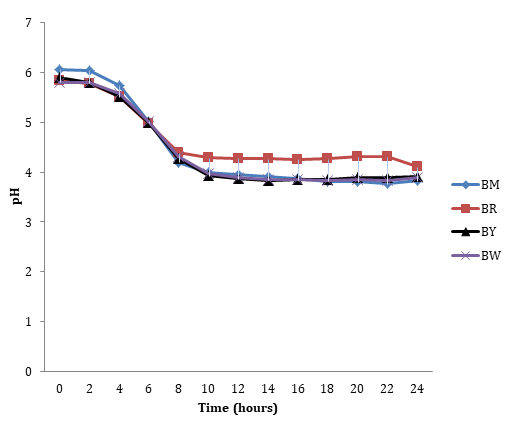
Figure 1: In vitro pH changes of inoculated grains using Lactobacillus isolated from “Burukutu” over 24 h. Key: BM= Millet fermented with lactobacillus isolated from “Burukutu” BR= Red sorghum fermented with lactobacillus isolated from “Burukutu” BY= Yellow sorghum fermented with lactobacillus isolated from “Burukutu” BW= Maize fermented with lactobacillus isolated from “Burukutu” Researching into the the Invitro fermentation of millet with Lactobacillus isolate from pig hindgut, monitored over a period of 24hours, showed a simultaneous decrease in acidity which started from the 4th hour of fermentation average pH of 6.17±0.01 to 6.05±0.21 and then to 5.74±0.04 to 4.93±0.02 to the 8th hour from the 10 hours, an average of 3.83±0.03 was maintained up to the 24th hour.
Fermentation of Red Sorghum showed a continuous decrease from start with an average pH of 5.19±0.00 at 0 hours to 8 hours with an average of 5.34±0.02. Six (6) hours later at 18 hours there was a significant decrease in pH to 4.04±0.03. The pH decreased sharply 2 hours later to 3.84±at 20 hours and from there sharply increased at 22 hours with a pH of 4.29±0.01 then it decreased at the end of the experiment at 24 hours with an average of 3.68±0.05 Figure 2.
With regards to fermented yellow sorghum, it decreased from 5.85±0.06 at start to 5.36±0.10 at 6th hour from commencement of the experiment and later decreased to 4.10±0.50 by the 10th hour of the experiment, and thereafter to 3.91±0.15 from 12th hour to the end of the experiment at 24 hours Figure 2. The pH of fermented maize dropped between 0 hours to 2 hours at an average pH of 5.87±0.01 to 5.55±0.03 then gradually decreased to 4.87±0.25 5 hours later, it thereafter sharply dropped to 3.98±0.13, by the 8th hour and by the 18th hour to 3.75±0.12 was maintained at 3.75±0.12 till the 24th hours Figure 2.
It was observed that the time of fermentation of experimental grains corresponded with approximate duration of peristalsis of ingested food to the intestine where probiotics’ beneficial actions are exerted.
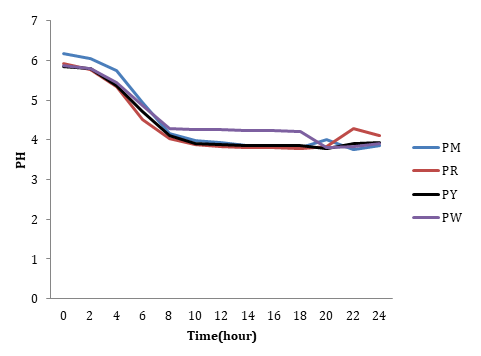
Figure 2: In vitro pH changes of inoculated grains using Lactobacillus isolated from “Pig hindgut” over 24h. Key: PM = Millet fermented with lactobacillus isolated from “Pig hindgut” PR = Red sorghum fermented with lactobacillus isolated from “Pig hindgut” PY = Yellow sorghum fermented with lactobacillus isolated from “Pig hindgut” PW = Maize fermented with lactobacillus isolated from “Pig hindgut” In vitro Fermentation of Grains with Patented Probiotics (Bacillus subtilis and Bacillus pumilis) A lag phase was initially noticed between 0 to 2 h with no activity in the fermentation of red sorghum grains. The pH started decreasing gradually from 5.00 ± 0.02, 4.93 ± 0.01, 4.91 ± 0.01, 4.87 ± 0.04 and 4.75 ± 0.03 between 2 to 8 h, then to an average range of 4.66 ± 0.02 to 4.16 ± 0.05 between 8 to 14 h and remained steady at 4.16 ± 0.05 to 24 h Figure 3. For the fermentation of yellow sorghum there was an average pH of 5.03 ± 0.02 to 4.82 ± 0.01 between 0 to 2 h of fermentation. Then a gradual decrease of 4.39 ± 0.14 pH was observed from 2 to 10 h, a slight decrease to 4.29 ± 0.15 at 12 hours, and then decreased to 14 h, and this was maintained until termination of the experiment at 24 h Figure 3.
For the fermentation of millet there was a slight decrease in pH from 5.15 ± 0.01 at 0 h to 4.86 ± 0.02, 6 hours later and to 4.12 ± 0.32 at 14 h, and this remained in a steady until 24 h Figure 3. The pH of fermented white maize was steady between 4.96±0.04 to 4.90±0.02 at 0 to 8 h of the commencement of the experiment. The pH started decreasing from 4.74±0.70 between 10 h to 14 h. The pH then became steady till the end of the experiment at 24 h with an average of 3.99±0.35 Figure 3.
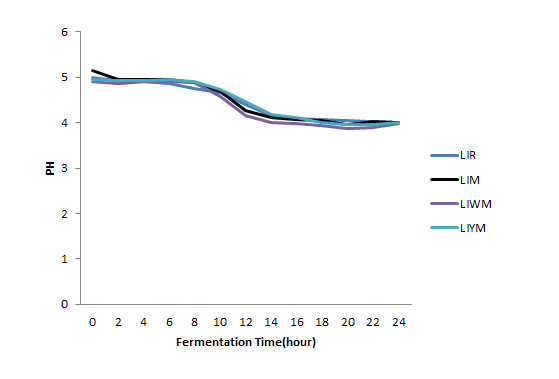
Figure 3: In vitro pH changes of inoculated grains using patented Lactobacillus bacteria containing “Bacillus subtilils and Bacillus pumilis over 24 h. Key: LIR= Millet fermented with lactobacillus isolated from Patent Probiotic I LIM= Red sorghum fermented with lactobacillus isolated from Patent Probiotic I LIWM= Yellow sorghum fermented with lactobacillus isolated from Patent Probiotic I LIYM= Maize fermented with lactobacillus isolated from Patent Probiotic I An in vitro Fermentation of Grains with Patent Probiotic II (Pig stabilizer 400 (R)) The pH changes in Red sorghum fermented with a patent probiotic supplement II (pig stabilizer) decreased slightly at 2 h with an average of 4.90±0.01 and moderately decreased to 4.66±0.01 at 10 h then down to 4.45±0.07 and 4.23±0.45 at 14 h and maintained steadily to the end of the experiment Figure 4. That of white sorghum also fermented with patent probiotic supplement II at the start of the experiment decreased slightly from 4.895±0.01 at 10 h to 4.60±0.01 it decreased more to 4.01±0.00 at 16 h and was remained so to the end of the experiment Figure 4.
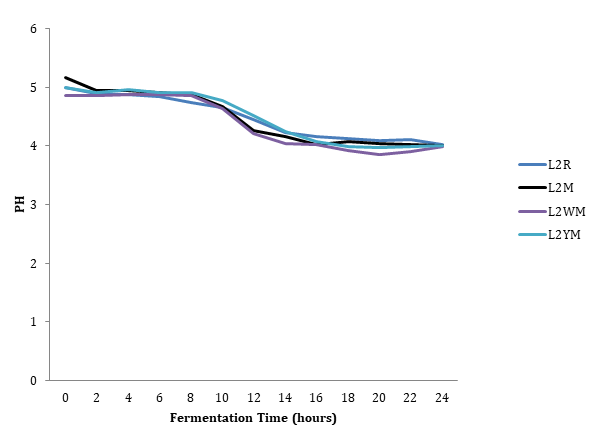
Figure 4: In vitro pH changes of inoculated grains using patented probiotic II bacteria used as supplement (Pig stabilizer) over 24 h. Key: L2R= Millet fermented with lactobacillus isolated from Patent Probiotic II L2M= Red sorghum fermented with lactobacillus isolated from Patent Probiotic II L2WM= Yellow sorghum fermented with lactobacillus isolated from Patent Probiotic II L2YM= Maize fermented with lactobacillus isolated from Patent Probiotic II For millet fermented with patent probiotic supplement II. The pH values at the inception of the experiment decreased slightly at 2 hours with an average of 4.95±0.02 it moderately decreased to 4.87±0.00 at 8 hours furthermore to 4.02± 0.00 at 16 h and was maintained steadily to the end of the experiment at 24 h Figure 4. In the In vitro fermentation of white maize incubated with a patent probiotic supplement II (pig stabilizer). There was a lag phase in the pH between 0 to 8 hours with an average of 4.85± 0.02. Then decreased from 8 to 10 h, 10 and from 12 h to 14 h with an average of 4.64±0.02, 4.22±0.01 and 4.04±0.03. A moderate decrease was observed at 16 h with an average of 4.02±0.00. However, a steady state was maintained from 16 h till the end of the experiment with an average of 3.99±0.25 Figure 4.
In vitro fermentation of compounded pig feed with the five selected Lactobacillus bacteria The Lactobacillus isolates gotten from burukutu produced no fermentation between 0 and 6 h, but from the 6 h with decrease in pH value with an average of 6.20±0.02 and further to an average of 4.89 ± 0.13 by the 12 h and further with an average of 3.98 ± 0.06 when the experiment was terminated Figure 5.
The Lactobacillus isolates from pig hindgut inoculated into the commercial feed, produced no fermentation between 0 and 8 h, but from the 8 h with a pH of 6.22 ± 0.01 and down to 6.11 ± 0.00 by 10h followed by a steady decrease up to the 14 h with an average value of 5.90 ± 0.04 and thereafter to the 20h with a pH of 4.15 ± 0.07 and then dawn to a pH of 3.51 ± 0.04 by the 24hr Figure 5. For the control feed which had no added Lactobacillus bacteria, there was no change in the pH until about the 12 h when the pH began to drop from 6.37 ± 0.02 to an average of 5.96 ± 0.00, and pH continued to decrease steadily till the 14 h with an average 5.55 ± 0.00 then to 4.07 ± 0.00 at the 24 h Figure 5.
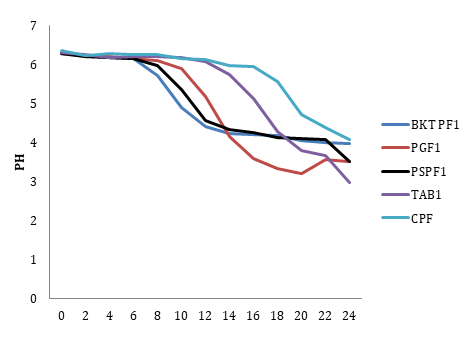
Figure 5: In vitro pH Changes of compounded pig feeds inoculated with Lactobacillus Bacteria and locally Sourced Lactobacillus Bacteria Species over a period of 24h Duration. Key: BKT PF1: Burukutu + Compounded pig feed PGF1: Pig hindgut + Compounded pig feed PSPF1: Probiotic I + Compounded pig feed TAB1: Probiotic II + Compounded pig feed CPF: Probiotic III + Compounded pig feed In the case of Lactobacillus isolates from patented probiotic I (Bacillus pumilis, Bacillus subtilis and Pig stabilizer) there was no fermentation between 0 to 8 h, but from the 8 h, fermentation began to occur with a pH of 5.37 ± 0.16 and steadily to 4.57 ± 0.11at the 14 h. then dropped sharply to 4.33 ± 0.12 at the 16 h. and this was maintained till the 24 h with a pH value of 3.52 ± 0.04 Figure 5. The feed inoculated with probiotic II (Lactobacillus acidiphilus), showed no observed changes in pH until about the 8 h when a pH of 6.19 ± 0.10 was observed. Followed by a sharp decrease in pH between 12 and 14 hs with averages of 6.07 ± 0.04 to 4.29 ± 0.10 and then a steady decline up to 18 h with a pH of 5.53 ± 0.10 and then to the 2 h with an average of 3.00±0.57 until 24 h Figure 5.
Results
Plate 1 Show Results for PCR Characterization
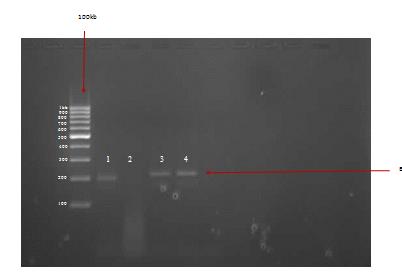
The isolates from burukutu (BKT) and pig hind gut (PGUT) were identified to belong to the genus Lactobacillus from PCR results with Lac1 and Lac2 primers (Figure 6). The PCR amplications using specific primers revealed the presence of Lactobacillus casei in the isolate from burukutu (Figure 7).
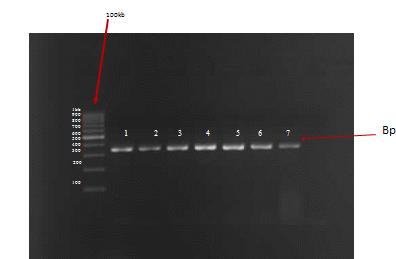
The Genomic DNA for all Lactobacillus in the two isolates (1&2) and those of the positive control (3-7) showed bands at 310bp, indicative of genus Lactobacillus.
Discussion
Reduction in the pH of maize, millet and sorghum with various LAB and the patented probiotic bacteria treatments were evident after 6 to 8 h, while in the fermentation of substrate with the patented bacteria also showed a gradual decrease in pH which had a similar trend with isolates from BKT and PGUT). These pH values are similar to those reported by Moran, et al. (2006[18]), who reported pH values as low as below 3.80 using back slopping with pre-fermented feed after 24 h of fermentation. A 24h fermentation of coarse grains, with several LAB derived from food products like kununzaki, oranges, pineapples, pig intestine and burukutu showed pronounced decrease in pH levels. BKT and PGUT isolates were selected because they showed promising fermentable properties similar and even better than the patented LAB in a 24 h test period. It was equally observed that the pH values obtained in the substrate during the 24 h of incubation were good and desirable attributes of good probiotic bacteria with respect to fermented liquid feed incubated under similar conditions as reported by Canibe, et al. [19], Scholten, et al. [20]. Berrada, et al. [21] reported that the time from entrance of feed into the stomach to release of fermenting bacteria from the stomach is 90 min. However, further digestive processes have longer residence time, hence there is need for the fermenting bacteria to be resistant to the stressful condition of the stomach and upper intestine before it goes further down to perform it activity in the lower intestine. This is why gradual fermenters where chosen. The slight increase in pH during the first two hours of incubation as observed from all the isolates BKT, PGUT isolates and the patented bacteria isolates can be attributed to the acid binding capacity of the dietary ingredients as was observed by Scholten, et al. [20]. During fermentation of liquid feed, Inoculants ensured a more rapid drop in pH, a higher level of LAB proliferated to produce lactic acid, which lowered the pH level of the mixture. This agrees with the report of Adams and Nicolaides [22] and Van Winsen, et al. [23]. The Progressive decrease in pH levels in the control and experimental feeds agrees with findings by Jensen and Canibe [19]; Niba, et al. [24] and Missotten, et al. [25]. The control substrate showed a drop in pH from 14 to 24 h after water was added to it. This can be attributed to the prolonged steeping of the control feed which allowed other epiphytic lactic acid bacteria to proliferate and reduce the pH of the substrate. This was also observed by Scholten, et al. [26] in an experiment using control diet.
From this study, significant reductions in the pH of millet and sorghum for LAB isolates in BKT and PGUT treatments commenced from 2 h and continued decreasing until the 7 to 8 h before it maintained a plateau. This initial fermentation of substrate in the treatment groups could be as a result of the reduction in particle size which increased the surface area for amylolytic enzyme action which resulted in a rapid fermentation of glucose and fructose as reported by Niba, et al. [24]. Niba, et al. [24] in a similar work using different grains with different particle sizes for poultry and was observed that grains with coarse particle sizes produced comparable or higher lactic acid concentrations in most treatments, indicating that moderate grain processing may be enough to permit production of bio safe levels of lactic acid in fermented feed. Similarly Anguita, et al. [27] reported that reduction in particle size, increased hydrolysis of starch especially for raw cereals.
BKT isolates were observed to decrease pH of substrate at a faster rate than PGUT and patented probiotic isolates and this may be that they contain an aggressive strain which has the ability to reduce the pH of the substrate quickly before maintaining a steady state for a long period. This observation was also made by Geary, et al. [28] on their work Pediococcus acidilactici as a probiotic isolate. A 24 h fermentation pH values for millet and sorghum in both BKT and PGUT recorded the highest acidity level compared to other substrates. Charalampopoulos, et al. [29] indicated that L. plantarum NCIMB 8826 isolated from human saliva had a homo fermentative pattern for cereal based substrates with significant depletion of glucose, fructose, maltose and sucrose, indicating that lactic acid concentrations in BKT and PGUT fermentations for both grains may be generally higher than corresponding values for the patented probiotic isolates after 24h fermentation. Fermentation rates for patented probiotic isolates were almost the same in all the isolates this may be so because the isolates are patented and are hetero fermenters as compared to those in BKT and PGUT which only have homo fermenters.
Despite the fact that the total acid pH of millet was almost double that of sorghum and maize, its pH was still slightly lower (3.83) than those of maize (3.90) and sorghum (3.92). This may be related to a higher buffering capacity in millet as compared to maize or sorghum. This finding was also reported by Niba, et al. [24]. This result presents millet as a grain of choice for pig feed as compared with sorghum and maize. The fermentation of commercial feed, elicited by both locally sourced and patented Lactobacilli commenced at a suitable time (6 to 8h) as compared to the control commercial experimental sample which commenced fermentation at 16h later. It can be inferred that the duration of fermentation with fermenters is sufficient to allow peristaltic movement through the upper gastrointestinal tract through the intestine for probiotics to exert their beneficial action while the control sample exceeded their transient time.
In the current study, the genus level of Lactobacillus was the same for all the isolates. The homology analysis inferred from the 16S RNA sequence clearly verified that all of the strains were Lactobacillus species. Lactobacillus casei and Lactobacillus acidophilus were identified as species type from burukutu. This agrees with the findings of Hassan, et al. [30], who reported the presence of this organism in Cereal-Based Probiotic Beverages. This species of LAB were found to have the ability of lowering pH and producing growth inhibitory concentration of lactic acid bacteria in the invitro studies [30]. The analysis in this study could not confirm any lactobacillus specie in the pig hindgut. This could be as a result of protocol inconsistency and systemic error particularly with regards to primer choice which is an important factor in the 16S RNA studies as observed by Tremblay, et al. [31] or it could be due to freezing of pig hindgut content prior to DNA extraction as demonstrated by Metzler-Zebeli, et al. [32] which is said to significantly reduce the resultant DNA yield, absolute bacterial abundance and modifies the bacterial profile when compared to immediate DNA extraction from fresh faeces.
However, the result obtained by the conventional method cannot be discarded completely but it can be regarded as giving a clue or presumptive result which can be confirmed by special primer design and other molecular methods. Lactobacillus casei is one of the probiotic bacteria supplement used in fermenting feed for weaned pigs which have previously been reported to inhibit enterotoxigenic E. coli (ETEC) [33]. Thus identifying this species in this study is of great significance.
Conclusion
- The pHs of the 4 different grains used in fermentation were observed to give low levels of acidity with the 4 treatments used and the control.
- Of the four different grains used, Millet and sorghum showed slightly higher mean pH values (3.83) than maize (3.92) and sorghum (3.90) and therefore millet and sorghum can be effectively used as components of fermented pig diets.
- BKT and PGUT are good sources of Lactobacillus that can be used in fermenting pig feed.
- Selected fermenters from PGUT and BKT successfully decrease pH of carbohydrate substrate in pig feeds hence are good sources of Lactobacillus that can be used in fermenting pig feed.
- Lactobacillus acidiphilus and Lactobacillus casei candidates were isolated and identified from BKT.
- Molecular identification using the Direct PCR method confirmed the presence of Lactobacillus casei in the grain brewed drink (burukutu).
References
-
Felis GE, Dellaglio F (2007) Taxonomy of Lactobacilli and Bifidobacteria. Curr Issues Intest Microbiol 8(2): 44-61.
-
Suzzi G (2011) From wild strain to domesticated strain: the philosophy of microbial diversity in foods. Front Microbio 2: 169.
-
Oluwajoba SO, Akinyosoye FA, Oyetayo VO (2013) In Vitro Screening and Selection of Probiotic Lactic Acid Bacteria Isolated from Spontaneously Fermenting. Advance Microbiology 3(4): 309-316.
-
Mokoena MP, Mutanda T, Olaniran AO (2012) Neotanal mortality of pigs in Nsukka, Southeast Nigeria. African Journal Biotechnology 11(68): 13228-13234.
-
Tellez G, Pixley C, Wolfenden RE, Layton SL, Hargis BM (2012) Probiotics/direct fed microbials for Salmonella control in poultry. Food Research International 45(2): 628-633.
-
Patterson JA, Burkholder KM (2003) Application of prebiotics and probiotics in poultry production. Poultry Science 82(4): 627-631.
-
Menconi A, Kallapura G, Latorre JD, Morgan MJ, Pumford NR, et al. (2014) Identification and Characterization of Lactic Acid Bacteria in a Commercial Probiotic Culture. Biosci Microbiota Food Health 33(1): 25-30.
-
Morris CE, Bardin M, Berge O (2002) Microbial biodiversity: approaches to experimental design and hypothesis testing in primary scientific literature from 1975 to 1999. Microbiol Mol Biol Rev 66(4): 592-616.
-
Al Jassim, RAM Rowe JB (1999) Better understanding of acidosis and its control. Armidale NSW, Department of Animal Science, University of New England 12: 91-97.
-
Guessas B, Kihal M (2004) Characterization of lactic acid bacteria isolated from Algerian arid zone raw goats’ milk. African Journal of Biotechnology 3(6): 339-342.
-
Sneath PHS, Mair NS, Sharpe ME, Holt, JC. (2009) Berger’s Manual of systematic bacteriology. Baltimore, Williams and Wikins.
-
Walter J, Hertel C, Tannock GW, Lis CM, Munro K (2001) Detection of Lactobacillus, Pediococcus, Leuconostoc, and Weisella species in human feces by using group-specific PCR primers and denaturing gradient gel electrophoresis. Applied Environmental Microbiology 67(6): 2578-2585.
-
Tilsala-Timisjärvi A, Alatossava T (1997) Development of oligonucleotide primers from the 16S-23S rRNA intergenic sequences for identifying different dairy and probiotic lactic acid bacteria by PCR. Int J Food Microbiol 35(1): 49-56.
-
Markiewicz L, Biedrzycka E, Bielecka M (2005) Differentiation of dairy Lactobacillus strains using PFGE method. Żywność 2(47): 216-222.
-
Torriani S, Zapparoli G, Dellaglio F (1999) Use of PCR- based methods for rapid differentiation of Lactobacillus delbrueckii subsp. bulgaricus and Lactobacillus delbrueckii subsp lactis. Appl Environ Microbiol 65(10): 4351-4356.
-
Markiewicz LH, Wasilewska E, Bielecka M (2008) Identification of Lactobacillus strains present in fermented dairy products and their differentiation using molecular methods. Pol J Food Nutr Sci 58(2): 251-256.
-
Walter J, Tannock GW, Tilsala-Timisjarvi A, Rodtong S, Loach DM, et al. (2000) Detection and identification of gastrointestinal Lactobacillus species by using denaturing gradient gel electrophoresis and species- specific PCR primers. Appl Environ Microbiol 66(1): 297-303.
-
Moran CA, Scholten RH, Tricarico JM, Brooks PH, Verstegen MW (2006) Fermentation of wheat: Effects of backslopping different proportions of pre- fermented wheat on the microbialand chemical composition. Arch Anim Nutr 60(2): 158-169.
-
Canibe N, Jensen BB (2003) Fermented and nonfermented liquid feed to growing pigs: Effect on aspects of gastrointestinal ecology and growth performance. J Anim Sci 81(8): 2019-2031.
-
Scholten RH, Rijnen MM, Schrama JW, Boer H, van der Peet-Schwering CM, et al. (2001a) Fermentation of liquid coproducts and liquid compound diets. Part 2. Effects on pH, acid-binding capacity, organic acids and ethanol during a 6-day storage period. J Anim Physiol Anim Nutr 85(5-6): 124-134.
-
Berrada N, Lemeland JF, Laroche G, Thovenot, P, Piaia M (1991) Bifidobactrium from Fermented Milk: Survival during Gastic Transit. J Dairy Sci 74(2): 409- 413.
-
Adams MR, Nicolaides L (1997) Review of the sensitivity of different foodborne pathogens to fermentation. Food Control 8(5-6): 227-239.
-
Van Winsen RL, Lipman L, Biesterveld S, Urlings BAP, Snijders JMA, et al. (2000). Mechanism of Salmonella reduction in fermented pig feed. Journal of Science Food Agriculture 81(3): 342-346.
-
Niba AT, Kouchika H, Kudi AC, Beal JD, Brooks PH (2013) Effect of micro-organism and particle size on fermentation of sorghum and maize for poultry feed. African Journal of Biotechnology 12(26): 4147-4157.
-
Missotten JAM, Michiels J, Degroote J, De Smet S (2015) Fermented liquid feed for pigs: an ancient technique for the future. J Anim Sci Biotechnol 6(4).
-
Scholten R (2001) Fermentation of liquid diets for pigs. Ph.D. Thesis. Wageningen University, The Netherlands.
-
Anguita M, Gasa J, Martin-Orue SM, Perez JF (2006) Study of the effect of technological processes on starch hydrolysis, non-starch polysaccharides solubilization and physicochemical properties of different ingredients using a two-step in vitro system. Animal Feed Science and Technology 129(1-2): 99- 115
-
Geary TM, Brook PH, Beal JD, Campbell A (1999) Effect on weaner pig performance and diet microbiology of feeding a liquid diet acidified to pH 4 with either lactic acid or through fermentation with Pediococucus acidilactici. Journal of Science Food Agriculture 79(4): 633-640.
-
Charalampopoulos D, Pandelella SS Webb C (2002) Growth studies of potentially probiotic lactic acid bacteria in cereal-based substrates. Journal of Applied Microbiology 92(5): 851-859.
-
Hassan ZH, Zwartkruis-Nahuis JTM, de Boer E (2012) Occurrence of Vibrio parahaemolyticus in retailed seafood in the Netherlands. International Food Research Journal 19(1): 39-43.
-
Tremblay J, Singh K, Fern A, Kirton ES, He S, et al. (2015) Primer and platform effects on 16S rRNA tag sequencing. Frontier Microbiology 6: 771.
-
Metzler-Zebeli BU, Lawlor PG, Magowan M, Zebeli Q (2016) Effect of Freezing Conditions on Faecal Bacterial Composition in Pigs. Animal MDPI 6(3).
-
Lee JH, Stein BD (2011) Antimicrobial Activity of a Combination of Mume Fructus, Schizandrae Fructus, and Coptidis Rhizoma on Enterophemorrhagic Escherichia Coli O26, O111, and O157 and its effect on Shiga Toxin Releases. Foodborne Pathogenic Disease 8: 643-646.
- Antifungal Activity of New Acetophenone Derivatives
- Interconnected Microbiomes Human Health Within an Environmental Framework
- Silkworm-Based Vaccine Production for H5N1: A One Health Approach to Pandemic Preparedness
- Microbial Diversity and Lipolytic Activity of Bacteria and Fungi from Oil-Contaminated Sites in Makurdi Metroplois
- Antibiotic Resistance Profile of Bacteria Isolated at the Central Laboratory of the National Hospital Center of Nouakchott
- Epidemiology and Sensitivity to Antibiotics of Germs Isolated from Blood Cultures in the Laboratory of the National Hospital Center of Nouakchott-Mauritania