
Anthelmintic Activity of Methanolic Extract of Strychnos Colubrina L Bark
Strychnoscolubrina L. (Loganiaceae) is being used in traditional medicine for a variety of ailments. One successive standard and three crude extract of its barks were subjected for anthelmintic activity on adult Indian earthworm pherithima posthuma. The successive methanol extract have shown potent anthelmintic activity in pherithima posthuma with 12.33±0.33, 8.00±0.58, 4.33±0.67 as paralysis time and 38.3±3.76, 27.21±2.18, 15.17±1.28 as death time (mean ± S.E.M) for 100 mg/ml, 250mg/ml and 500mg/ml respectively. The crude methanol has shown moderate anthelmintic activity in pherithima posthuma. All the concentration prepared was paying dose dependent anthelmintic activity
Introduction
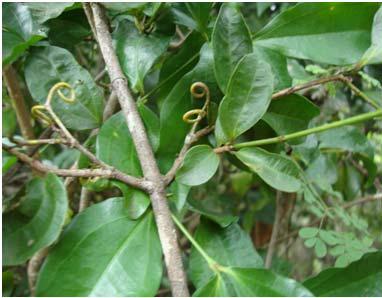
Strychnos colubrina L. (Loganiaceae) is Large, climbing shrubs. Rare in the moist shades along ravines showed in (Figure 1). While this tax on is known to occur in Western Peninsular India covering parts of Karnataka and Kerala. The genus Strychnos, the largest genus of the family Loganiaceae, was first described by Linnaeus, comprises about 200 species, which may be subdivided into three geographically separated groups widely distributed around the world's tropics: one in Africa with 75 species; one in America with 73 species; and one in Asia (including Australia) with 44 species. Strychnos colubrine L. is a medium sized glabrous deciduous tree having a height of 6-18 meters. It is indigenous to India [1, 2, 3]. Wood is used to cure fever. Root is anthelmintic, also useful to the treatment of Rheumatism, cutaneous disorders. Fruit is used to prevent Mania [4]. The tribal people of Veligonda hills used the root part of this plant for the snake bite. The study aimed to evaluate antihelminthetic activity, in which the crude methanol has shown moderate anthelmintic activity in pherithima posthuma. All the concentration prepared was paying dose dependent anthelmintic activity.
Materials and Methods
Collection and Preparation of Extracts
The plant material was collected from the plant Strychnoscolubrina L. Which are collected during the month of December at Sekuru, Guntur (Dist) of Andhra Pradesh. Then it was authentified by Dr SM. Khasim, professor, Department of Botany and Microbiology, Acharya Nagarjuna University, Nagarjuna nagar, Guntur. The shade dried bark was powdered and extracted with soxhlet apparatus using hydro alcoholic (yield 5.8%).
Chemicals and Instruments
All chemicals used in the study were pure. Brewer’s yeast was purchased from SD fine chemicals, Mumbai. Reference standard Albendazole obtained from Cipla Ltd, Bangalore as a free sample.
Preliminary Phytochemical Screening
Preliminary Phytochemical screening was performed by using standard protocol.
Anthelmintic Activity
Experimental worms: All the experiments were carried out in Indian adult earthworms (pherithima posthuma) due to its anatomical resemblance with the intestinal roundworm parasites of human beings. They were collected from moist soil and washed with water to remove all fecal matter.
Administration of Albendazole: Albendazole (20 mg/ml) was prepared by using 0.5%W/v of CMC as a suspending agent as administered as per method of extract.
Experimental method: The anthelmintic activity was performed according to the method. On adult Indian earthworm Pherithimaposthuma as it has anatomical and physiological resemblance with the intestinal round worm parasites of human beings. Pherithima posthuma was placed in Petri dish containing three different concentrations 100, 250, 500mg/ml of methanolic extract of bark of strychnos colubrina. Each Petri dish was placed with two worms and absorbed for paralysis and death. Mean time for paralysis was noted when no movement of any sort could be absorbed except when the worm was shaken vigorously. The time death of worm in minutes was recorded when worms neither moved when shaken nor when given external stimuli. The results were compared with reference compound Albendazole (20mg/ml) treated samples [5].
Results and Discussion
Anthelmintic activity was performed as per earlier procedure reported. The activity was measured with the time taken for paralysis and death of pherithima posthuma (earth worm) in drug solution. This study selected three different concentrations such as100, 250, and 500mg/ml of methanolic extract of strychnos colubrina bark. Albendazole was used as standard control. Carboxymethylcellulose (CMC) used as negative control to find out the interference of polymer as well as with the drug in the activity. The study revealed the most significant activity at 500mg/ml of 4.33±0.67 and death time of 15.17±1.28 for the drug extract and also the study observed the significant dose dependent activity at lower concentrations. The activity may be due to the presence of alkaloidal content in the methanolic extract of the drug [5] (Table 1) (Figure 2).
| Pheretima Posthuma | |||||||||
|---|---|---|---|---|---|---|---|---|---|
| Concentration | Paralysis (P) | ||||||||
| Extract | |||||||||
| (mg/ml) | Paralysis | Death Time | |||||||
| Standard (Albendazole) | 20 | 28.71±1.8 6 | 32.90±6.85 | ||||||
| Methanolic extract | 100 | 12.33±0.3 3 | 38.3±3.76 | ||||||
| 250 | 8.00±0.58 | 27.21±2.18 | |||||||
| 500 | 4.33±0.67 | 15.17±1.28 |

Conclusion
In conclusion, this study provides evidences for the anthelmintic activity of Strychnos colubrina L. which could partly contribute to its ethno medical use. However, further investigation is required to isolate the active constituents responsible for this activity and to elucidate the exact mechanism of action.
Acknowledgement
The authors are thankful to management of Vignan Pharmacy College, Vadlamudi for providing facilities to do this tiny research work.
References
-
Mali RG, Wadekar RR (2008) _in vitro_ anthelmintic activity of Baliospermum montanum muell. arg roots. Indian J Pharm Sci 70(1): 131-133.
-
Satish Kosalge B, Ravindra Fursule A (2009) Investigation of _in vitro_ anthelmintic activity of Thespesia lampas (CAV.). Asian Journal of Pharmaceutical and Clinical Research 2(2): 200-204.
-
Goswami S, Pandey A, Tripathi P, Singh A, Rai A (2011) An _in vitro_ evaluation of the anthelminthic of hedychium spichatumrhizomes and zingiber zerumbet rhizomes on the pheritima posthuma model: A comparitive study. Pharmacognosy Res 3(2): 140-142.
-
Doss A (2009) Preliminary phytochemical screening of some Indian medicinal plants. Anc Sci Life 29: 12- 16.
-
Pankaj N, Ranveer B, Amandeep Singh, Deepak Nanda (2011) Medicinal plant studies influenced by the biotechnological methods. An update review. International journal of pharma and Biosciences 2(2): 501-508.
- Acido Labile or Gastro Irritant Apis and Enteric Release in Galenic Practice: An Overview
- A Study on Knowledge, Attitude and Practice of Hand Hygiene among Healthcare Professionals at a Tertiary Care Hospital, India
- Influence of Inoculum Concentration on In Vivo Incubation Period of Emmia lacerata, Pathogenesis and Management of Wilt in Pepper (Capsicum annuum L.)
- Vanilla’s Chemistry
- Marine Anti-Cancer Compounds and Adverse Effects of Global Warming on Oceans: An Overview
- Serological Investigation of Chikungunya Virus Antibody among Malaria-Suspected Febrile Patients in Some Healthcare Facilities in Rivers State