
Vanilla’s Chemistry
Among Orchidaceae, only vanilla (Vanilla planifolia Andr.) is farmed for human consumption. Mexico gave this plant to the world as a gift, and it has been utilized for many things over the years. This crop's characteristic perfume is not present in the green pod; instead, it develops during the curing process, which varies based on the nation and growing region. Flavor and scent are the two most prominent fragrant qualities that emerge from cured vanilla pods. Over time, vanillin has become indispensable for usage in the food, pharmaceutical, and cosmetic industries as well as in medicine. Owing to the expensive price of genuine vanilla, different methods have been used to create vanillin, which is the primary molecule present in vanilla extracts or concentrates made by employing microbial cultures in a variety of chemical and microbiological procedures. The vanilla industry is one of many agro-industries and industries that produce garbage. Since the composition of vanilla waste (residues or by-products) has not been well investigated, it offers an intriguing avenue for research and potential high-value molecule production.
Introduction
Vanillin is the most famous fragrance compound and supreme flavor molecule. Whenever something containing vanilla is encountered, one is likely to find a lacuna in the conversation for ‘vanillin’. Vanilla, the most beloved orchidaceous plant, is found throughout Mexico. Vanilla beans, the only commercial sources of natural vanillin [1], appear distinct in the scale of economic output and catalog creams. Its ability to color and make flavor compounds accessible is the foundation of the food flavoring and coloring industry. Gourmet chefs, perfumers, confectioners, and beverage manufacturers are all attracted to it [2]. Vanilla beans remarkably rank in a register of spices dating back to 980 A.D. The moth-borne vanilla plant was discovered in 1520 in Mexico’s homeland.
Allured at the exteriors, the fragrant organic chemistry, timeline myths, agricultural background, and mighty aroma sport of vanillin are categories that can absorb only narrative moments of typical vanillin [3]. Millions, or perhaps billions, of person-hours researching, developing, growing, processing, manufacturing, packaging, and marketing vanillin attended to define its duty. Little is recognized about vanillin by those not inclined to the enterprise interior. Vanilla and vanillin chemistry are independent of the rules and limitations of natural products or bioproducts. The story of how man achieved a sumptuous vanilla character is rendered in these pages [4].
Definition of Vanillin
The climbing vanilla plant’s beans were originally used to extract the flavor of vanilla. Vanillin makes up the majority of a vanilla bean’s composition; additional ingredients include formic, capric, and acetic acids. The breadth of the vanillin market is very vast. There is a need for nature-identical vanillin in a variety of items, including soaps, sweet meats, cakes, cookies, ice cream, and pharmaceuticals [5]. The world’s largest market for vanillin is the United States; other major consumers of vanillin include Japan, France, West Germany, Spain, the Netherlands, and the United Kingdom. The two countries that produce the most predial vanillin are France and America [6]. Although it has an excellent supply of natural vanilla seeds, India does not currently produce vanillin using the vanilla method. The global market for flavorings is substantial. It is mostly expanding in poorer nations [7].
Vanilla’s main taste component is widely acknowledged to be vanillin, a member of the most significant class of flavoring compounds. The cured seeds of some species of a genus of orchids unique to this continent, including Vanilla planifolia and Vanilla pompons, contain concentrated forms of it. The main producing species is Vanilla planifolia, which is native to Madagascar [8]. Natural foods taste different from those that contain vanillin, which has a very pleasant taste. However, because of its exorbitant cost, it is generally utilized in a synthetic or diminished form. Vanillin is a mixture of intense disagreement and hard work [9]. Three very different but related compounds have been given the title “vanillin.” Currently, the vanilla orchid vine’s pods- which fetch exorbitant prices—are the only source of vanillin in the economics group. In order to fulfill the ever- growing need for vanillin, however, chemists have widely found innovative, affordable, and easily accessible vanillin structures. Among them is vanillin, the most traditional and well-known flavoring. Even when another name is more appropriate than “vanillin,” the term “vanillin” is still used. These days, regardless of the source, the name “vanillin” solely refers to the 4-hydroxy-3-methoxy-benzaldehyde [10]. Vanillin can technically originate from any linear molecule that possesses this group. No matter where it comes from, the resulting vanillin has the same distinct and mouthwatering flavor as the natural product when it is purified of impurities and used in crystallized form. Since vanillin only occurs in concentrated form in vanilla orchid seeds, its practical application demands that vanillin be synthesized from natural materials, including carbon atoms [11].
Historical Background
Pre-Columbian Mesoamerican cultures grew vanilla as a flavoring; the Aztecs used it to flavor chocolate during Hernán Cortés’ invasion of their region. Around the year 1520, both chocolate and vanilla were introduced to Europeans [12].
As a relatively pure substance, Vanillin was first isolated by Nicolas-Theodore Gobley in 1858. To do this, he dried out a vanilla essence by evaporating it and then using hot water to recrystallize the resulting particles [13]. The chemical structure was determined in 1874 by Wilhelm Haarmann and Ferdinand Tiemann the German chemists, who also discovered a way to synthesize vanillin from coniferin, an isoeugenol glycoside that is present in pine bark [14]. In Holzminden, Germany, Tiemann, and Haarmann established Haarman & Reimer, and began the first industrial manufacture of vanillin by using their method. In1876 Karl Reimer extracted vanillin from guaiacol [15]. In the late 1800s, Semisynthetic vanillin derived from the eugenol in (clove oil) was commercially accessible [16].
In the 1930s, when the lignin contained in the waste from the processing of Sulfite pulping which created wood pulp used in the paper industry—supplanted clove oil production, the availability of synthetic vanillin increased dramatically. Sixty percent of the global market for vanillin synthetic was provided by a single pulp and paper factory located in Ontario by 1981 [17]. However, the industry has evolved of wood pulp, and the lignin wastes have become less desirable as source of raw materials for the synthesis of vanillin. The majority of synthetic vanillin is now produced in two steps using the petrochemical precursors glyoxylic acid and guaiacol, however some is still created from lignin wastes [18].
Rhodia started selling biosynthetic vanillin made from rice bran that was created by microorganisms reacting with ferulic acid. This was done in 2000. This substance, which is marketed under the label Rhovanil Natural, costs $700/ kg, making it more expensive than the $15/kg petrochemical vanillin [19]. But unlike vanillin made from lignin or guaiacol, this flavoring is naturally occurring.
Occurrence
As vanilla’s primary flavor and scent component, vanillin is most noticeable. About 2% of the dry weight of cured vanilla pods contains vanillin; on premium cured pods, comparatively pure vanillin may show up as white frost on the pod’s exterior.
Vanillin, in smaller quantities, adds to the aroma profiles of a wide flavor range of foods, including butter, olive oil, raspberries, and lychees. Certain wines and beverages acquire vanillin through aging in oak (wine) barrels [20]. By heat treatment and from other compounds we can obtain the Vanillin. Thus, vanillin enhances the aroma and flavor of maple syrup and coffee, and grain products such as corn tortillas and oatmeal [21, 22].
Chemical Properties and Characteristics of Vanillin
Chemical Structure and Composition
Vanillin’s complex chemical structure is responsible for many of its unique qualities and uses, making it a well- known ingredient in both the culinary and medicinal domains. Vanillin, which is defined chemically as 4-hydroxy- 3-methoxybenzaldehyde, has a benzene ring with three functional groups that help with molecular interactions. Its distinct arrangement highlights both its potential as a bioactive molecule and adds to its distinctive flavor profile [23]. Similar to vanillin, research shows that secondary metabolites frequently display substantial biological activity as a result of their chemical makeup, which includes vital vitamins and alkaloids that affect human health [24]. Furthermore, the incorporation of vanillin into wellness candies and other health-focused goods highlights how its chemical characteristics can improve nutritional value without sacrificing flavor [25]. These results imply that knowing the chemical structure of vanillin is essential to maximizing its application in a variety of sectors show (Figure 1).
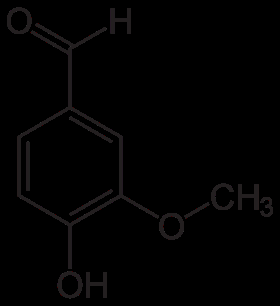
Molecular Structure of Vanillin and Its Functional Groups
The aromatic ring and other functional groups that vanillin, a phenolic aldehyde, possesses give it a distinctive molecular structure and are essential to its chemical behavior. The hydroxyl (-OH) and aldehyde (-CHO) groups contribute to the substance’s reactivity and solubility, while the benzene ring provides stability. Vanillin’s capacity to interact with other molecules is enhanced by these functional groups, which is especially important for applications involving flavor and aroma [26]. Furthermore, as mentioned in earlier studies highlighting the significance of molecular interactions within related molecules, the presence of these groups enables vanillin to exhibit antioxidant capabilities [27]. Therefore, comprehending the structural subtleties of vanillin not only facilitates the understanding of its sensory attributes but also provides opportunities for synthetic modifications of the substance in the food and pharmaceutical industries, reiterating the conclusions drawn from structural genomics regarding the importance of protein features in advancing biochemical research [28].
Physical and Chemical Properties
The main ingredient giving vanilla its distinct flavor and perfume, vanillin, has important physical and chemical characteristics that affect how the food and fragrance industries use it. Vanillin is available in crystalline form and can be extracted or manufactured. Its solubility, volatility, and thermal stability are important properties that determine how well it works in various formulations [29]. For example, vanillin’s water solubility index (WSI) can influence how well it integrates into other goods; therefore it’s critical to formulate it precisely when using it in cooking. Furthermore, studies showing that the addition of particular additives changed the final products’ moisture content and hardness demonstrate how incorporating vanillin into different matrices might change those matrices’ chemical properties [30]. These modifications impact vanillin’s sensory qualities as well as its usefulness in ready-to-eat foods, emphasizing the complex interplay between its chemical and physical characteristics [31].
Solubility, Melting Point, and Stability of Vanillin
The solubility, melting point, and stability of vanillin are important aspects of organic chemistry that impact its use in the food and polymer industries, among other domains. Excellent solubility in polar and non-polar solvents is a need for the use of vanillin, a phenolic aldehyde produced from lignin, in flavoring and aroma compounds. Its melting point, which is between 81 and 83 °C, guarantees that it will remain stable under typical circumstances, allowing it to be processed and added to a variety of goods [32]. Moreover, vanillin’s stability during cyclodehydration reactions emphasizes its potential to create high-performance materials with favorable mechanical properties, such as tensile strength and elasticity, when used as a precursor for synthesizing polymers, such as poly (ether benzoxazole) (PEBO) [33]. Thus, comprehending these chemical characteristics opens the door for novel applications in biobased materials while also highlighting the adaptability of vanillin [34].
Production
Natural Production
The seed pods of (Vanilla planifola), that native to Mexico and is currently cultivated in tropical regions worldwide, are used to extract natural vanillin. The world’s greatest producer of natural vanillin is currently Madagascar.
Green seed pods lack the flavor and odor of vanilla, but when harvested, they have vanillin in as β-D-glycoside [35]. Following harvest, a months-long curing procedure develops its taste; specifics vary according on the region producing the vanilla, but the general process goes like this: To stop the living plant tissues from continuing their processes, seed pods are in hot water was blanched firstly. After that, the pods are sun- and sweat-soaked for a period of one to two weeks. They are placed in the sun during the day, but at night they are wrapped in fabric and placed in airtight boxes to become sweaty. Vanillin is released as a free molecule by the enzymes in the pods during this process, which turns them a dark brown color. The pods are then dried and stored for a few more months, which helps the tastes to develop even more. Although they haven’t been extensively explored in the natural vanilla industry several techniques have been reported for curing vanilla in a few days as opposed to months. The emphasis here is on creating a high-end product using tried-and-true processes rather than on novel ideas that might change the flavor profile of the final product [36].
Among the 200 or so flavor components present in vanilla, vanillin makes up the majority (approximately 2% of the cured beans’ dry weight).
Chemical Synthesis
The supply of vanilla beans is no longer able to meet the demand for vanilla flavoring. As of 2001, the annual demand for natural vanillin was 12,000 tons, while only 1800 tons were produced [37]. Chemical synthesis was used to create the remaining material. Less than twenty years after it was originally discovered and isolated, in 1874–1875, from eugenol, vanillin was synthesized first, which is present in clove oil. Eugenol was used to commercially make vanillin up until the 1920 s [38]. Later on, it was produced synthetically from “brown liquor,” a sulfite reaction byproduct used to make wood pulp, which contained lignin [39]. Strangely, although using waste materials, the process of lignin is no longer widely used due to environmental concerns; instead, the majority of vanillin is now made from guaiacol, a petrochemical raw material [40]. There are multiple ways to synthesize vanillin from guaiacol [41]. The most important of them is now Rhodia’s two-step method, which has been used since the 1970s and involves an electrophilic aromatic substitution reaction between guaiacol and glyoxylic acid. By using oxidative decarboxylation, the resultant vanilmandelic acid is further transformed into vanillin [42]. In the International Medical Center of Japan, Mayu Yamamoto was awarded an Ig Nobel Prize in October 2007 for her discovery of a method for removing vanillin from cow feces [43]. The most significant of these is the two-step process practiced by Rhodia since the 1970s, in which guaiacol (1) reacts with glyoxylic acid by electrophilic aromatic substitution. The resulting vanillylmandelic acid (2) is then converted via 4-Hydroxy-3-methoxyphenylglyoxylic acid (3) to vanillin (4) by oxidative decarboxylation (Figure 2).
Uses of Vanillin
The most popular application of vanillin is as a flavoring, primarily in desserts. Vanillin makes up 75% of the market for flavoring chocolate and ice cream, with smaller amounts found in baked products and confections. [44]. Also, Vanillin is used in perfumes, the industry of fragrance, and to cover up offensive tastes or smells in cleaning supplies, medications, and animal feed. Pharmaceuticals and other fine compounds have been produced using vanillin as a chemical intermediary. As of 2004, just 13% of the global vanillin market was accounted for by this use, although in 1970 more than half of the output of the spice was employed in the synthesis of other compounds [45]. Vanillin is a common ingredient in sweet meals, but it’s also a key component in many other products, including household goods, personal care products, and perfumes.
Most of us associate the word vanillin with mouthwatering pies and sweets. Nonetheless, vanillin is utilized in a wide range of sectors, including food, cosmetics, and pharmaceuticals, because of its special qualities. This article will examine the various uses of vanillin in more detail [46].
Vanillin in the Food and Beverage Industry
Among the flavoring agents most frequently employed in the food and beverage sector is vanillin. It adds a rich, creamy vanilla flavor to a range of products, including beverages, sweets, and baked goods. Additionally, many processed foods are enhanced in flavor by the use of vanillin as a food additive.
Vanillin has demonstrated antioxidant and antibacterial qualities in addition to its flavoring qualities. It is an important component in food preservation because it stops yeast and mold from growing in the finished product, increasing its stability and resistance to deterioration over time [47].
Masking Properties of Vanillin
Adding vanillin at the right amount can effectively mask offensive odors and tastes. Vanillin, for instance, neutralizes the bitterness of the cocoa bean when added to dark chocolate. Yeast’s flavor note no longer affects bread and cakes, and vanillin can cover up the taste of protein sources like soy or whey that you don’t want in drinks and bars [48].
Vanillin in the Cosmetics Industry
Another large market for vanillin is the cosmetics sector. Its sweet and pleasant aroma makes it a popular fragrance in perfumes, body lotions, and other personal care items. For example, it’s frequently found in lipsticks and lip balms [49].
Vanillin can lessen or even completely replace the requirement for fossil-based preservatives found in cosmetics and other personal care products because of its natural antibacterial and antioxidant qualities. Stated differently, it may aid in mitigating the potential impact of parabens on the production of hormones [50].
Vanillin in Agriculture
Although vanillin isn’t usually used in agriculture directly, its ability to promote plant development and shield crops from pests and diseases makes it a useful raw ingredient for fungicides, for instance. Vanillin can be employed as a plant growth regulator in agriculture, for example [51]. According to research, vanillin increases the rate of photosynthetic rate, chlorophyll content, and growth of roots and shoots in some plants, including tomato plants. Increased agricultural yields and quality may result from this. Another application for vanillin is as a natural insecticide. According to studies, vanillin has fungicidal and insecticidal qualities that make it useful against a variety of pests and illnesses that might harm crops. For instance, it has been discovered that vanillin works well against tomato leaf miner, a frequent insect that can seriously harm tomato plants [52].
Vanillin in Pharmaceuticals
In the pharmaceutical industry, vanillin is perhaps most commonly used as a flavoring agent. This is to improve the taste of medications that may be unpleasant or bitter. However, vanillin is also used as an ingredient in the manufacture of medication for Parkinson’s disease, bipolar disorder and allergies, amongst others [53].
Vanillin as Building Block in Plastics and Resins
Vanillin can be utilized as a building block in polymers and resins, taking the place of hazardous and environmentally detrimental compounds, in addition to all the previously listed applications. Vanillin’s three functional groups (ether, hydroxyl, and aldehyde) provide a plethora of options for polymer synthesis [54]. Studies have demonstrated that synthesized vanillin-based epoxy has better mechanical qualities than DEGBA-based substitutes.
An agent for cross-linking: Vanillin can be used in thermosetting resins and polymers as a cross-linking agent. To strengthen and extend the life of these materials, cross- linking agents are added. A plasticiser: Vanillin has been studied as a potential plasticiser for biodegradable polymers. Plasticisers are added to polymers to improve their flexibility and make them easier to process [55].
Conclusion
Vanilla was a common ingredient in desserts and medicine throughout Europe, used to treat everything from fevers to hysteria. The culinary applications of vanilla have not evolved significantly since its discovery in Mesoamerica, but some of its traditional medical benefits have progressed from folklore to scientific verification. Further fundamental scientific and clinical research on vanillin and its modes of action as an anticarcinogen and anticlastogen may hold the key to vanilla’s medical future. Additionally, vanillin might be helpful as an aromatic anxiety remedy and a natural preservative. One of the most popular flavorings in cooking nowadays is vanilla. Research may establish a new legacy for the fragrant orchid if it is successful in making vanillin available orally for therapeutic purposes.
References
-
Olatunde A, Mohammed A, Ibrahim MA, Tajuddeen N, Shuaibu MN (2022) Vanillin: A food additive with multiple biological activities. European Journal of Medicinal Chemistry Reports 5: 100055.
-
Gallage NJ, Moller BL (2015) Vanillin–bioconversion and bioengineering of the most popular plant flavor and its de novo biosynthesis in the vanilla orchid. Mol plant 8(1): 40-57.
-
Nicholas J, Melinda J, Arjan N (2003) Vanillin. Photochemistry 63: 505-515.
-
Achterholt S, Priefert H, Steinbu A (2000) Identification of Amycolatopsis sp. strain HR167 genes, involved in the bioconversion of ferulic acid to vanillin. Appl Microbiol Biotechnol 54: 799-807.
-
Marton A, Kusz E, Kolozsi C, Tubak V, Zagotto G, et al. (2016) Vanillin analogues o-vanillin and 2,4,6-trihydroxybenzaldehyde inhibit NFĸB activation and suppress growth of A375 human melanoma. Anticancer Res 36(11): 5743-5750.
-
Iannuzzi C, Borriello M, Irace G, Cammarota M, Maro AD (2017) Vanillin affects amyloid aggregation and non- enzymatic glycation in human insulin. Sci Rep 7: 1-14.
-
Kundu a, Mitra A (2013) Flavoring extracts of Hemidesmus indicus roots and vanilla planifolia pods exhibit in vitro acetyl cholinesterase inhibitory activities. Plant foods Hum Nutr 68(3): 247-253.
-
Sadeer NB, Sinan KI, Cziaky Z, Jeko J, Zengin G, et al. (2020) Assessment of the pharmacological properties and phytochemical profile of Bruguiera gymnorhiza (L.) Lam using in vitro studies, in silico docking, and multivariate analysis. Biomolecules 10(5): 731.
-
Kanedi M, Nurhidayah S, Nurcahyani E, Widiastuti E (2019) Fruit extract of vanilla (Vanilla planifolia Andrews) lowers total blood glucose in alloxan-induced hyperglycemic mice. Eur J Pharm Med Res 6: 314-316.
-
Kundu (2017) Vanillin biosynthetic pathways in plants, Planta 245(6): 1069-1078.
-
Fache M, Boutevin B, Caillol S (2015) Vanillin, a key- intermediate of biobased polymers. Eur Polym J 68: 488- 502.
-
Blank I, Alina S, Werner G (1992) Potent odorants of the roasted powder and brew of Arabica coffee”. Zeitschrift für Lebensmittel-Untersuchung und -Forschung A 195: 239-245.
-
Brenes M, Aranzazu G, Pedro G, Jose JR, Antonio G (1999) Phenolic Compounds in Spanish Olive Oils. J Agric Food Chem 47(9): 3535-3540.
-
Buttery RG, Louisa CL (1995) Volatile Flavor Components of Corn Tortillas and Related Products. Journal of Agricultural and Food Chemistry 43(7): 1878-1882.
-
Mark JWD, Kerler J, Verpoorte R (2001) Vanilla Production: Technological, Chemical, and Biosynthetic Aspects. Food Reviews International 17(20: 119-120.
-
Lawrence EJ, Formanek K, Kientz G, Mauger F, Maureaux V, et al. (1997) Vanillin. Kirk-Othmer Encyclopedia of Chemical Technology 4th (Edn.), 24: 812-825.
-
FRIDGE (2004) Study into the Establishment of an Aroma and Fragrance Fine Chemicals Value Chain in South Africa, Part Three: Aroma Chemicals Derived from Petrochemical Feedstocks. National Economic Development and Labor Council.
-
Gobley NT (1858) Recherches sur le principe odorant de la vanille. Journal de Pharmacie Chimie 34: 401-405.
-
Helmut G, Werner G (1995) Odorants of extrusion products of oat meal: Changes during storage. Zeitschrift für Lebensmittel-Untersuchung und -Forschung a 196: 22-28.
-
Hocking MB (1997) Vanillin: Synthetic Flavoring from Spent Sulfite Liquor. Journal of Chemical Education 74: 9-16.
-
Kermasha S, Goetghebeur M, Dumont J (1995) Determination of Phenolic Compound Profiles in Maple Products by High-Performance Liquid Chromatography. Journal of Agricultural and Food Chemistry 43(3): 708- 716.
-
Lampman GM, Jennifer A, Wayne B, Hanssen O, Kenneth K, et al. (1977) Preparation of vanillin from eugenol and sawdust. Journal of Chemical Education 54(12): 776- 778.
-
Hassan SA, Lateef SM (2021) Synthesis, structural, thermal and biological studies for new Schiff base derived from Isoniazid and it’s complexes with metal ions. Egyptian Journal of Chemistry 64(7): 3235-3243.
-
Peter KC, Terry EA (1998) Gas Chromatography/ Olfactory Analysis of Lychee (Litchi chinesis Sonn. Journal of Agricultural and Food Chemistry 46(6): 2282- 2286.
-
Reimer K (1876) Ueber eine neue Bildungsweise aromatischer Aldehyde. Berichte der deutschen chemischen Gesellschaft 9(1): 423-424.
-
Hassan SA, Lateef SM, Majeed IY (2018) Structural, Spectral and Thermal Studies of New Bidentate Schiff Base Ligand Type (NN) Derived from Mebendazol and 2-Aminobenzothaizol and its Metal Complexes and Evaluation of their Biological Activity. Journal of Global Pharma Technology 10: 307-317.
-
Roberts DD, Terry EA (1996) Effects of Heating and Cream Addition on Fresh Raspberry Aroma Using a Retronasal Aroma Simulator and Gas Chromatography Olfactometry. Journal of Agricultural and Food Chemistry 44(12): 3919-3925.
-
Rouhi AM (2003) Fine Chemicals Firms Enable Flavor and Fragrance Industry. Chemical and Engineering News 81(28): 54.
-
Tiemann F, Haarmann W (2001) Ueber das Coniferin und seine Umwandlung in das aromatische Princip der Vanille. Berichte der Deutschen Chemischen Gesellschaft 7(1): 608-623.
-
Van NJH (1983) Vanillin. Kirk-Othmer Encyclopedia of Chemical Technology. New York: John Wiley & Sons, pp: 704-717.
-
Carole V, Augustin S, Catherine L, Michel M (1993) Ellagitannins and lignins in aging of spirits in oak barrels. Journal of Agricultural and Food Chemistry 41(11): 1872-1879.
-
Walton NJ, Mayer MJ, Arjan N (2003) Vanillin. Phytochemistry 63(5): 505-515.
-
Lirdprapamongkol K, Sakurai H, Kawasaki N, Saitoh Y, Yasushi A, et al. (2005) Vanillin suppresses in vitro invasion and in vivo metastasis of mouse breast cancer cells. Eur J Pharm Sci 25(1): 57-65.
-
King AA, Shaughnessy DT, Mure K, Joanna L, William OW, et al. (2007) Antimutagenicity of cinnamaldehyde and vanillin in human cells: global gene expression and possible role of DNA damage and repair. Mutat Res 616(1-2): 60-69.
-
Hassan SA, Hassan WF (2022) Structural and Spectral studies of new mixed Ligand complexes for 2-Amino- 4-nitrophenol with some Metallic ions and Evaluation their Biological Activities. Research Journal of Pharmacy and Technology 15(8): 3634-3640.
-
Mimica DN, Bozin B, Sokovic M, Simin N (2004) Antimicrobial and antioxidant activities of Melissa officinalis L. (Lamiaceae) essential oil. J Agric Food Chem 52(9): 2485-2489.
-
Wood JM, Decker H, Hartmann H, Chavan B, Rokos H, et al. (2009) senile hair graying: H2O2-mediated oxidative stress affects human hair color by blunting methionine sulfoxide repair. FASEB J 23(7): 2065-2075.
-
Hassan SA (2022) Synthesis and characterization of mixed ligand complexes from curcumin and new schiff base derived from isatin for some metallic ions and evaluation biological activities. RJPT 15(4): 1537-1542.
-
Duran S, Karran P (2003) Vanillins: A novel family of DNA–PK inhibitors. Nucleic Acids Res 31(19): 5501- 5512.
-
Salloom HK, Lateef SM, Hassan SA (2020) Structural, Spectral and Thermal Studies of Novel Tridentate Schiff Base Ligand Type (NOO) as Donor Atoms Derived from Nalidixic Acid and 4-Aminoantipyrine and Metal Complexes and Evaluation of their Biological Activity. Journal of Global Pharma Technology 12: 26-36.
-
Kadeche L, Bourogaa E, Saoudi M, Boumendjel A, Djeffal A, et al. (2016) Ameliorative effects of vanillin against metribuzin-induced oxidative stress and toxicity in rats. Int J Pharm Pharmaceut Sci 9(1): 56-62.
-
Youssef A (2016) possible antidepressant effects of vanillin against experimentally induced chronic mild stress in rats. Beni-Suef Univ J Basic Appl Sci 5(2): 187- 192.
-
Alwan TB, Hassan SA (2023) Thermodynamic Studies of Cu (II) complex of new bidentate Schiff base ligand type (NO) derived from Mebendazol. Egyptian Journal of Chemistry 66(1): 563-572.
-
Priefert H, Rabenhorst J, Steinbuchel A (2001) Biotechnological production of vanillin. Appl Microbiol Biotechnol 56(3-4): 296-314.
-
Kareem A, Ahmed T, Hassan SA, Abdalhadi SM (2024) Polycystic Ovary Syndrome: pathogenesis, management, and treatment with metals and organic compounds. Cellular, Molecular and Biomedical Reports 4(1): 54-64.
-
Chou TH, Ding HY, Hung W, Liang CH (2010) Antoxidative characteristics and inhibition of alpha-melanocyte- stimulating hormone-stimulated melanogenesis of vanillin and vanillic acid from Origanum vulgare. Exp Dermatol 19: 742-750.
-
Alkayar ZT, Ismail AA, Ani NM, Alekseevna FA, Saeed AM, et al. (2023) Reverse Phase Liquid Chromatography for Cetrimide Determination in Pure and Pharmaceutical Preparations. RJPT 16(12): 5581-55815.
-
Fouad A, Melhim WA (2018) Vanillin mitigates the adverse impact of cisplatin and methotrexate on rat kidneys. Hum Exp Toxicol 37: 937-943.
-
Alwan TB, Rajab MA, Hassan SA (2022) the effect of nanoparticle and fiber reinforcement on composites used in some applications of internal combustion engine parts. Egyptian Journal of Chemistry 65(132): 411-416.
-
Martins S, Mussatto S, Martinez AG, Montanez S, Aguilar C, et al. (2011) bioactive phenolic compounds: production and extraction by solidstate fermentation. Biotechnol Adv (2011) 29(3): 365-373.
-
Ghazi HF, Taher TM, Mahmood S, Hassan SA, Nafakh RT, et al. (2021) Post-COVID-19 among Iraqi Population: Symptoms and Duration: Post-COVID-19 Symptoms and Duration. Borneo Epidemiology Journal (2021) 2(2): 107-116.
-
Elseweidya M, Askara M, Elswefya S, Shawky M (2017) Vanillin as a new modulator candidate for renal injury induced by cisplatin in experimental rats. Cytokine 99: 260-265.
-
Hassan SA, Lateef SM, Majeed IY (2020) Structural, Spectral and Thermal studies of new bidentate Schiff base ligand type (NO) derived from Mebendazol and 4-Aminoantipyrine and its metal complexes and evaluation of their biological activity. RJPT 13(6): 3001- 3006.
-
Abuhamdah S, Thalji D, Abuirmeileh N, Bahnassi A, Salahat I, et al. (2017) Behavioral and neurochemical alterations induced by vanillin in a mouse model of alzheimer’s disease. Int J Pharmacol 13: 573-582.
-
Kaur B, Chakraborty D (2013) Biotechnological and molecular approaches for vanillin roduction: a review. Appl Biochem. Biotechnol 169(4): 1353-1372.
- Acido Labile or Gastro Irritant Apis and Enteric Release in Galenic Practice: An Overview
- A Study on Knowledge, Attitude and Practice of Hand Hygiene among Healthcare Professionals at a Tertiary Care Hospital, India
- Influence of Inoculum Concentration on In Vivo Incubation Period of Emmia lacerata, Pathogenesis and Management of Wilt in Pepper (Capsicum annuum L.)
- Marine Anti-Cancer Compounds and Adverse Effects of Global Warming on Oceans: An Overview
- Serological Investigation of Chikungunya Virus Antibody among Malaria-Suspected Febrile Patients in Some Healthcare Facilities in Rivers State
- Pharmaceutical Applications of White Button Mushroom (Agaricus Bisporus)