
Benzimidazole: A Versatile Moiety
Benzimidazole is a promising nitrogen-containing nucleus with extensive pharmacological activity, some of which are listed in this article, such as antiprotozoal, anthelmintic, antipsychotic, antiparasitic, antifungal, and antiulcer and many others. This article briefly covers the benzimidazole nucleus synthesis method, as well as the chemical and physical properties of benzimidazole for better understanding of chemistry and to aid in the development of newer synthetic methods.
Introduction
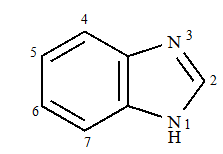
Benzimidazole is two fused ring structures linked at 4- and 5-position imidazole ring 1 at each other. This heterocyclic organic compound is an important drug substance. It is the most widely used organic moiety with a plethora of pharmacological activity. N-ribosyl-dimethylbenzimidazole compound is most commonly known in nature as axial ligand for cobalt-containing vitamin Vit. B12 [1].
This group of compounds has many practical utilizations in various fields such as antifungal [2, 3], antiviral [4, 5], antibacterial [4, 6], anti-inflammatory [5, 7], antibacterial [8, 9], anthelmintic [4, 10], anticancer [3, 11], antiulcer [6, 12], antihypertensive [1]. In the past few years, benzimidazole and its derivatives have got much concern due to their chemotherapeutic importance. Currently the synthesis of novel benzimidazole derivatives remains a significant topic of medicinal research. Benzimidazole and their derivatives are receiving much more importance due to strong application in medicine praxis, because they are showing significant activity in treating several diseases [13].
There are different kinds of pharmacokinetic and pharmacodynamic properties are associated with benzimidazole derivative. Benzimidazole nucleus is one of the bioactive heterocyclic compounds that show a wide range of biological activities. This nucleus clearly forms an integral component of vitamin B12. The pharmacological activities of the benzimidazole containing moiety has been well known. Albendazole, Mebendazole and Thiabendazole are extensively used as anthelmintic drugs [9].
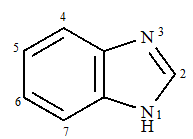
Physical Properties of Benzimidazoles
The melting point of various benzimidazoles showed that the insertion of a substituent into 1-position basically reduces the melting point. Benzimidazoles with the imide nitrogen are generally soluble in polar solvents and less soluble in organic solvents [2, 4, 10, 12, 14, 15, 16, 17, 18, 19, 20, 21]. The solubility of nonpolar solvents can be increased by adding other non- polar substituents at different positions of benzimidazole nucleus. The introduction of polar groupings into the molecule, by contrast, increases the solubility in polar solvents. Benzimidazole distilles over 300 ° C unchanged. Benzimidazoles are typically soluble in dilute acids due to their weak basic nature and are considerably less basic than imidazoles; which are usually soluble in dilute acids; benzimidazoles have adequate acidity to make them usually soluble in aqueous alkali which form N-metallic compounds. Benzimidazoles exhibit the same acidic properties as imidazole, resulting in resonance-stabilization of the nucleus. The less basic solution may be more suitable to solubilize more acidic benzimidazole, like potassium carbonate solution [1, 10].
Chemical Properties of Benzimidazole
Benzimidazole Nucleus Reactions
The benzimidazole ring has improved the degree of stability. Concentrated sulfuric acid, hot hydrochloric acid as well as alkalis are ineffective on benzimidazole [2, 11]. Only under extreme conditions benzene ring of benzimidazole breaks due to oxidation. Except under restricted conditions, the benzimidazole ring is very resistant to reduction [20].
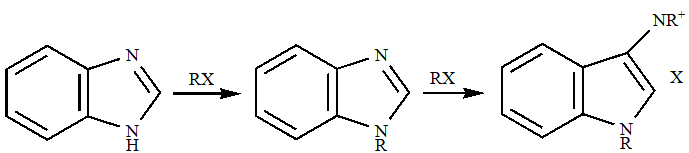
Alkylation
Under more vigorous conditions, 1-alkylbenzimidazoles can be produced by alkylation of benzimidazole with alkyl halides and even 1,3-dialkylbenzimidazolium halides. Benzimidazoles can also react to the metals, Grignard reagents and acylating agents. The Manich bases were also formed by benzimidazoles following a formaldehyde and piperidine reaction [18].
Hydrogenation and Dehydrogenation Reactions
Benzimidazole reductions were assumed to be stable until quite recently. Negative results were found in catalytic reduction of benzimidazole using nickel as a catalyst even under high pressure. 2-cyclohexylbenzimidazole was found with 2-Phenylbenzimidazole alone. 2-(p-dimethylaminostyryl) at atmospheric pressure benzimidazole with nickel leads to hydrogenation only after saturation [1, 10].

Halogenation
After treating aqueous acid solution of 2,5(or 2,6)-dimethylbenzimidazole with an Saturated solution of bleaching powder at 0-5 ̊C forms 1-chloro-2,5(or 2,6)-dimethylbenzimidazole . Most of the same reactions of the compounds such as 2-methyl or methylene group of 2-methylbenzimidazoles shows similarity in activity of the methyl group of α-picoline, quinaldine as well as methyl ketones. Because of electron attracting nature of benzimidazole ring, it brings a positive character to the carbon atom of the 2-methyl group like the pyridine and quinoline ring [1, 10].

Synthesis Process of Benzimidazole
Reaction of OPDA with Salicylic Acid
O-phenylenediamine (12mmol) and salicylic acid (36mmol) are used for synthesis of Benzimidazole in the presence of 4N HCl (40ml) and refluxed for 4hrs, then allowed to be cooled at room temperature. Approximately
81% of percentage yield of the compound was obtained [14].
Reaction of OPDA with Acetyl Salicylic Acid
O-phenylenediamine (12mmol) and acetyl salicylic acid are used for synthesis of benzimidazole 6 in the presence of 4N HCl (40ml) and at room temperature. 81.4% of percentage yield of the compound was obtained [16].

Reaction of OPDA with Benzoic Acid
Benzimidazole was synthesized by O-phenylenediamine (12mmol) and benzoic acid (36mmol) in the presence of 4N HCl (40ml) and refluxed for 4hrs. Then it is allowed to be cooled at normal temperature. The percentage yield of the compound was found to be 83% [12, 14].

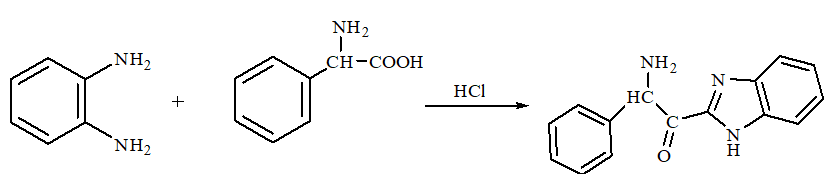
Reaction of OPDA with Phenyl Glycine
Benzimidazole was synthesized by o-phenylenediamine (12mmol) and phenyl glycine (36mmol) in the presence of
4N HCl (40ml) and refluxed for 4hrs. Then it is allowed to be reached at room temperature. The percentage yield of the compound was found to be 82% [12, 16].
| Activity | Groups at 2-position | Groups at 3-position | Groups at 5, 6-position |
|---|---|---|---|
| Antimicrobial | Aryl halo, methyl | Oxadiazolyl, triazolyl, oxazolyl, diazolyl, thiadiazolyl, azetidone via methyl group | Nitro, halo, amino |
| Anticonvulsant | Mercapto, alkyl, arylthiourea, mercaptothiazolidinone | Oxadiazole | Halo |
| Antiparasitic | Trifluoromethyl, carbamate, pyrimidinone, Ethyl acetate, thieno | Alkyl | Chloro, methoxy |
| Antidiabetic | Oxadiazole, Pyridine | Methyl | Methyl |
| Antihypertensive | Alkyl, aryl, triflouromethyl group | Substituted benzyl | Methoxy, chloro, amino |
| Antoxidant | Antioxidant Aryl dimethoxy, homopiperazine | Thiadiazole | Halo |
| Antiviral | Coumarin, 2-ethyl-N-pyrrole, aryl nitro, aryl anilido | --- | Coumarin, 2-ethyl-N-pyrrole, aryl nitro, aryl anilido |
| Anticancer | Pyrimidin-5-carbonitrile, azetidin-2- one, pyrazin, pyrrole, aryl, N-methyl pyrrole, pyridine, dicholoro | methyl-fluorophenyl, Methoxyphenethyl | Carboxylic acid, Methyl, chloro, cyano |
| Anti- inflammatory | Methyl amino, styryl, alkyl, aryl, mercapto | Mannich base, sulphonyl | Halo, nitro, amino |
Table 1: SAR studies shows that introduction of various groups at 2, 3, 5 and 6-positions of benzimidazole ring enhances the effe
Pharmacological Activities of Benzimidazole Derivatives
Drugs in this class differ from all other in that they are intended to prevent growth/kill the infecting microorganism. Treatment of systemic infections with specific drugs that selectively conquer the infecting microorganism without significantly disturbing the host. From this they are termed as bacteriostatic and bactericidal respectively [22].
Anthelmintic
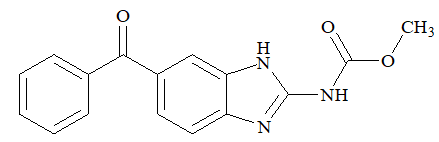
These are the drugs that either kill or expel invading helminths. Thiabendazole, Mebendazole, and Albendazole are some of benzimidazole nucleus containing dugs [19].
Anti-Ulcer Drugs
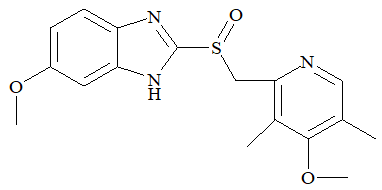
These are the drugs which supress both basal and stimulated gastric acid secretion. Pantoprazole, Rabeprazole, Lansoprazole, Omeprazole are few of the benzimidazole ring containing drugs etc [15].
Anti-Psychotic Agents
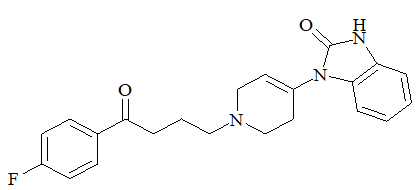
Individuals deteriorating into psychosis become increasingly autistic. Patient has trouble in understanding reality and their own conditions. Droperidol, pimozide, and benperidol are some drugs which contains benzimidazole nucleus as parent moiety [14].
Anti-Protozoal Agents
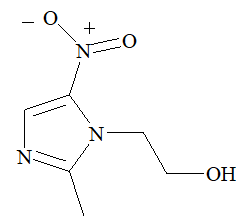
The amoebiasis caused by E. histolytica is treated by these drugs. The cytotoxicity is exerted by damaging DNA and which in turn causes DNA helix destabilization strand breakage. metronidazole, benznidazole are the antiprotozoal drugs containing imidazole nucleus in their structures [23].
Antifungal
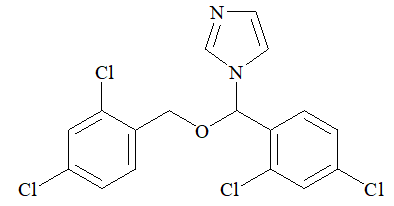
These drugs are choice of treatment for superficial and deep fungal infections. Fungal infections are known as mycoses and are classified into superficial infections (scalp, skin, nails) and systemic infections (deeper tissues and organs) some conditions are blastomycosis, histoplasmosis, candidiasis, coccibiomycosis etc. Commonly available antifungal agents having imidazole nucleus are Clotrimazole, Miconazole, Ketoconazole [5, 7, 24].
Conclusion
The present studies show that benzimidazole is a nucleus that can be used potentially in drug discovery area and medicines as it has wide spectrum biological activities. Moreover existing literature reveal importance of benzimidazole nucleus as potential entity for treating microbiological intervention and they are associated with some adverse effects like mild pruritus, rash, transient liver pain, gastric pain, alopecia, anorexia, nausea, vomiting and headache. Therefore, this substrate has a great scope for the discovery of newer, modified and surprising derivatives. Benzimidazole nucleus is a unique structural scaffold which acts as an interesting template for combinatorial as well as medicinal chemistry so in near future it provides a fabulous pedestal for design and development of new leads to treat multiple diseases.
References
-
Srestha Nomi, Janmajoy Banerjee, Srivastava S (2014) A review on chemistry and biological significance of benzimidazole nucleus. IOSR J Pharma 4(12): 28-41.
-
Ramanpreet W, Hedaitullah MD, Naaz SF, Iqbal K, Lamba HS (2011) Benzimidazole derivatives–an overview. Int J Res Pharm Chem 1(3): 565-574.
-
Enumula S, Pangal A, Gazge M, Shaikh JA, Ahmed K, et al. (2014) Diverse pharmacological aspects of benzimidazole derivatives: A Review. Res J Chem Sci 4(4): 78-88.
-
Kamal S, Chhabr S, Shrivastava SK, Mishra P (2013) Benzimidazole: a promising pharmacophore. Medicinal Chemistry Research 22(11): 5077-5104.
-
Santosh PC, Pandeya SN, Pathak AK (2012) Benzimidazole: a versatile chemical entity. ChemInform 43(14).
-
Avinash P, Ganguly S, Surana S (2008) A systematic review of benzimidazole derivatives as an antiulcer agent. Rasayan J Chem 1(3): 447-460.
-
Singh N, Pandurangan A, Rana K, Anand P, Ahmad A, et al. (2012) Benzimidazole: A short review of their antimicrobial activities. International current pharmaceutical journal 1(5): 119-127.
-
Keshav A, Wakode S (2018) Synthesis, Characterization and Biological Evaluation of Benzimidazole Derivatives. International Journal of Pharmaceutical Sciences Research 9(2): 617-624.
-
Mohammad S, Mazumder A (2017) Benzimidazoles: A biologically active compounds. Arabian Journal of Chemistry 10: 157-173.
-
Rao GE, Babu PS, Koushik OS, Sharmila R (2016) A review on chemistry of benzimidazole nucleus and its biological significance. International Journal of Pharmaceutical Chemical & Biological Sciences 6(2): 227-232.
-
Singh N, Kumar G, Singh M, Singh ND (2017) Antibacterial Activity of Benzimidazole Derivatives: A Mini Review. Research & Reviews: Journal of Chemistry 6(3): 18-28.
-
Divya BS, Ramesh K, Poornima N (2012) Synthesis and Characterization Of Novel Benzimidazole Derivatives. International Journal of Pharma and Bio Sciences 2(2)143-149.
-
Balram S (2014) A Short Review on Potential Activities of Benzimidazole Derivatives. Pharma Tutor 2(8): 110- 118.
-
Ansari KF, Lal C (2009) Synthesis and evaluation of some new benzimidazole derivatives as potential antimicrobial agents. European journal of medicinal chemistry 44(5): 2294-2299.
-
Jayaveera, Kumarnallasivan P, Vijaianand PR, Venkatnarayanan R (2011) Benzimidazole: an attractive pharmacophore in medicinal chemistry. International Journal of Pharmaceutical Research 3(3): 19-31.
-
Singh RP, Dhankar R, Bhardwaj S, Gupta M, Kumar (2011) Synthesis and antimicrobial studies of novel benzimidazole derivatives. Journal of Applied pharmaceutical science 1(4): 127-130.
-
Amita V, Joshi S, Singh D (2013) Imidazole: Having versatile biological activities. Journal of Chemistry.
-
Maruthamuthu, Rajam S, Stella PCR, Bharathi Dileepan AG, Ranjith R (2016) The chemistry and biological significance of imidazole, benzimidazole, benzoxazole, tetrazole and quinazolinone nucleus. Journal of Chemical and Pharmaceutical Research 8(5): 505-526.
-
Alam F, Dey BK, Sharma K, Chakraborty A, Kalita P (2017) Synthesis, antimicrobial and anthelmintic activity of some novel benzimidazole derivatives. International Journal of Drug Research and Technology 4(3): 31-38.
-
Monika G, Mohan C (2016) Development of drugs based on imidazole and benzimidazole bioactive heterocycles: recent advances and future directions. Medicinal Chemistry Research 25(2): 173-210.
-
Alasmary FAS, Snelling AM, Zain ME, Alafeefy AM, Awaadet AS, et al. (2015) Synthesis and evaluation of selected benzimidazole derivatives as potential antimicrobial agents. Molecules 20(8): 15206-15223.
-
Yerragunta V, Patil P, Srujana S, Devi R, Gayathri R, et al. (2014) Benzimidazole Derivatives and its Biological Importance: A Review. Pharma Tutor 2(3): 109-11.
-
Keri RS, Hiremathad A, Budagumpi S, Nagaraja BM (2015) Comprehensive Review in Current Developments of Benzimidazole‐Based Medicinal Chemistry. Chem Biol Drug Des 86(1): 19-65.
-
Kumar CV, Pathak D, Singh S (2014) Benzimidazole: As potential biological active agent. International Research Journal Pharm 5(12): 861-875.
- Acido Labile or Gastro Irritant Apis and Enteric Release in Galenic Practice: An Overview
- A Study on Knowledge, Attitude and Practice of Hand Hygiene among Healthcare Professionals at a Tertiary Care Hospital, India
- Influence of Inoculum Concentration on In Vivo Incubation Period of Emmia lacerata, Pathogenesis and Management of Wilt in Pepper (Capsicum annuum L.)
- Vanilla’s Chemistry
- Marine Anti-Cancer Compounds and Adverse Effects of Global Warming on Oceans: An Overview
- Serological Investigation of Chikungunya Virus Antibody among Malaria-Suspected Febrile Patients in Some Healthcare Facilities in Rivers State