
Hydrochar an Innovative Solution for Sustainable Environmental Applications
Hydrochar is a carbon-rich material made from biomass using hydrothermal carbonization. It is gaining interest as a potential alternative to fossil fuels and soil amendment. However, hydrochar production requires careful management to minimize potential environmental issues such as feedstock availability, greenhouse gas emissions, water usage and contamination, waste management, and long-term impacts on soil quality and ecosystem health. Further research is necessary to optimize the production process and to understand its environmental impacts. Hydrochar has varied applications, including soil remediation, fuel source, and building material, but its production must be carefully managed to minimize negative environmental impacts. Proper management and optimization of hydrochar production can help to maximize its potential benefits while minimizing negative environmental impacts. Therefore, further research is crucial to optimize the hydrothermal carbonization process for different feedstocks and to better understand the long-term environmental impacts of hydrochar production and application.
Introduction
Hydrochar, also known as hydrothermal carbon or biocarbon, is a solid material rich in carbon that is produced by the hydrothermal carbonization (HTC) of biomass [1]. The HTC process mimics the natural coal formation process by subjecting biomass to high pressure and temperature in the presence of water, resulting in the production of a solid product (hydrochar) and a liquid byproduct (aqueous phase) [2, 3]. Hydrochar has attracted attention in recent years due to its potential as a renewable energy source and its environmental applications [4, 5]. In this paper, we will explore the history, preparation, and applications of hydrochar in environmental fields. The HTC process has been studied for over a century, with the first patent for the process filed in 1913 [6]. However, it was not until the 1970s that research into HTC gained momentum, with the discovery of its potential as a coal substitute. In the early 2000s, interest in hydrochar increased due to its potential as a renewable energy source and its environmental applications [7].
Since then, numerous studies have been conducted to investigate the properties and applications of hydrochar [8, 9, 10]. In this paper, we will delve into the history, preparation, and various applications of hydrochar in environmental fields. Hydrochar has been used for soil amendment, wastewater treatment, carbon sequestration, and as a fuel for energy generation, among other applications [4]. Its potential as a sustainable and environmentally friendly alternative to fossil fuels has led to extensive research and exploration of its properties and potential applications.
Research Problem
Despite the increasing interest in hydrochar as a sustainable environmental solution, there is a lack of comprehensive understanding of its potential applications, limitations, and the most efficient production methods. Therefore, the research aims to investigate and evaluate the environmental and economic benefits of hydrochar in various fields, including agriculture, wastewater treatment, and energy production, and to highlights the optimized and cost-effective production methods.
Preparation Technique
Hydrochar preparation involves the hydrothermal carbonization (HTC) process of biomass. Various types of biomass feedstocks can be used for hydrochar production, including agricultural wastes, forestry residues, and energy crops [11]. The HTC process mimics the natural coal formation process by exposing biomass to high pressure and temperature in the presence of water [2]. During the HTC process, the biomass is mixed with an aqueous solution and heated in a reactor vessel at temperatures ranging from 180-250°C and pressures ranging from 10-40 bar for a period of 30 minutes to 24 hours [12]. The high temperature and pressure conditions cause the decomposition of the biomass, resulting in the formation of hydrochar as a solid product and an aqueous phase as a liquid byproduct [5]. The properties of hydrochar can vary depending on the feedstock and processing conditions used. Hydrochar produced from lignocellulosic biomass has been found to have high carbon content, low oxygen content, and high heating value. Furthermore, hydrochar produced from different biomass feedstocks has been shown to have different surface areas, pore volumes, and pore sizes, which affect its applicability in various fields. Therefore, the selection of the appropriate biomass feedstock and processing conditions is crucial for obtaining hydrochar with desired properties for specific applications [11, 13].
Hydrochar Chemical Structure
The chemical structure of hydrochar varies depending on the feedstock and process conditions used for hydrothermal carbonization. Hydrochar typically consists of carbon, organic and inorganic compounds, nitrogen, and sulfur. The carbon content in hydrochar can range from 40% to 90% depending on the feedstock and process conditions. Hydrochar produced from lignocellulosic biomass, such as wood or agricultural waste, typically has a higher carbon content than hydrochar produced from more complex feedstocks, such as municipal solid waste or sewage sludge [1, 14].
The organic compounds in hydrochar consist of various functional groups, such as carboxylic acids, phenols, and ketones. These functional groups can affect the reactivity and stability of hydrochar, as well as its potential applications [15]. Inorganic compounds, such as phosphorus, potassium, and calcium, are also present in hydrochar, and can contribute to its potential as a soil amendment [16].
Nitrogen and sulfur are two elements commonly found in hydrochar and can have important implications for its potential use in soil remediation. Nitrogen can enhance plant growth and soil fertility, while sulfur can act as a nutrient source and improve soil pH. However, excessive nitrogen and sulfur content in hydrochar can potentially lead to environmental issues, such as eutrophication and acidification of soils and water bodies [17].
The chemical structure of hydrochar can also be influenced by the hydrothermal carbonization process conditions, such as temperature, pressure, and residence time. These process parameters can affect the chemical composition and structure of hydrochar and can potentially impact its potential applications. For example, hydrothermal carbonization at higher temperatures and pressures can lead to the formation of more stable and recalcitrant hydrochar, which may have a longer-term impact on soil quality and carbon sequestration [18].
Overall, the chemical structure of hydrochar is complex and influenced by a variety of factors. Understanding the chemical composition and structure of hydrochar is important for optimizing its production process and identifying potential applications in various fields [19].
Hydrochar characterization
There are several standard methods for characterizing hydrochar, which can provide valuable information on its chemical composition, physical properties, and potential applications. One commonly used method is proximate analysis, which measures the elemental composition of hydrochar, including carbon, hydrogen, nitrogen, sulfur, and oxygen. This can provide insight into the fuel properties and potential energy applications of hydrochar [20].
Another standard method for characterizing hydrochar is ultimate analysis, which provides a more detailed analysis of the elemental composition of hydrochar. This includes the determination of organic and inorganic carbon, as well as the presence of trace elements, such as metals and halogens [21]. Other methods for characterizing hydrochar include Fourier-transform infrared (FTIR) spectroscopy, which can provide information on the functional groups present in hydrochar, and thermogravimetric analysis (TGA), which can measure the thermal stability and degradation of hydrochar. Additionally, scanning electron microscopy (SEM) and X-ray diffraction (XRD) can provide information on the physical properties and morphology of hydrochar [22].
Standard methods for characterizing hydrochar can be important for ensuring consistency and quality in the production process, as well as identifying potential applications and optimizing process conditions. However, it is important to note that the characterization of hydrochar is a complex process and can be influenced by a variety of factors, including feedstock, process conditions, and analysis methods. Therefore, a combination of characterization techniques may be necessary to fully understand the properties and potential applications of hydrochar [4].
Environmental Impacts of Hydrochar Production
Hydrochar production can have both positive and negative environmental impacts. Here are some of the environmental issues related to hydrochar production:
Feedstock Availability
One potential environmental issue with hydrochar production is the availability of suitable feedstocks. If large amounts of agricultural or forestry residues are used as feedstock, this can potentially compete with other land uses, such as food production or wildlife habitats [23].
Greenhouse Gas Emissions
Hydrochar production can potentially result in greenhouse gas emissions, particularly if fossil fuels are used for energy or if the process is not optimized to minimize emissions. However, if renewable energy sources are used and the process is optimized, hydrochar production can potentially result in net carbon sequestration [24].
Water Usage and Contamination
Hydrothermal carbonization requires significant amounts of water, which can potentially strain local water resources. In addition, if the hydrochar production process is not properly managed, it can potentially result in water contamination through the release of pollutants [25].
Waste Management
Hydrochar production can potentially result in waste products such as liquid effluent or ash, which require proper management to prevent environmental harm [26].
Land Application
One potential environmental benefit of hydrochar production is its use as a soil amendment, which can improve soil fertility and reduce greenhouse gas emissions from soils. However, the long-term environmental impacts of hydrochar application on soil quality and ecosystem health are still being studied [27].
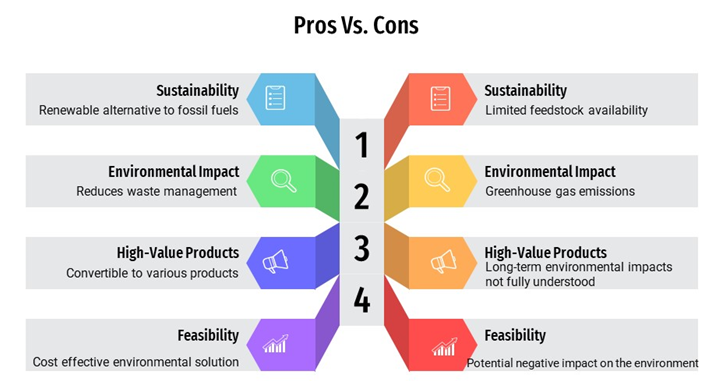
Overall, the environmental impact of hydrochar production depends on a range of factors, including the specific feedstock and production process used, as well as the management practices employed. Proper management and optimization of hydrochar production can help to minimize negative environmental impacts while maximizing potential benefits [28]. Pros Vs. Cons of hydrochar production can be summarized in (Figure 1).
Hydrochar Production Process
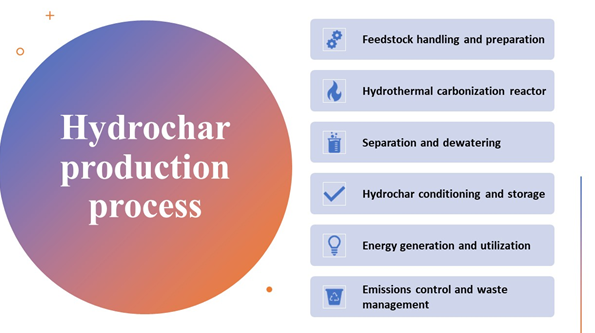
The components of a hydrochar factory may vary depending on the size of the facility and the specific process being used [29]. However, here are some of the common components that may be found in a hydrochar factory as explained in (Figure 2).
Feedstock Handling and Preparation
This component includes equipment for receiving, storing, and preparing the biomass feedstock for hydrothermal carbonization. It may include grinders, shredders, and conveyors.
Hydrothermal Carbonization Reactor
This is the main component of the hydrochar factory and is used to convert the biomass feedstock into hydrochar through high-pressure, high-temperature treatment.
Separation And Dewatering
After hydrothermal carbonization, the hydrochar slurry is separated from the liquid phase and dewatered to reduce the water content. This may be done using equipment such as centrifuges, filter presses, or vacuum dewatering systems.
Hydrochar Conditioning and Storage
The hydrochar may need to be conditioned to achieve the desired properties and may be stored in silos or other storage containers.
Energy Generation and Utilization
The hydrochar factory may incorporate systems for generating and utilizing energy from the hydrochar production process, such as steam turbines or gas engines.
Emissions Control and Waste Management
The hydrochar factory may include equipment and systems for controlling emissions, such as scrubbers or filters, as well as waste management systems for handling byproducts or waste materials generated during the production process.
It’s worth noting that the components and layout of a hydrochar factory can vary significantly depending on the specific process being used and the desired product outputs.
Opportunities and Limitations of Hydrochar
Opportunities and limitations of hydrochar production can be summarized in (Table 1).
| Limitations | |
|---|---|
| Sustainable alternative to fossil fuels | Limited feedstock availability |
| Soil amendment | Greenhouse gas emissions |
| Reduces waste management needs | Water usage and contamination |
| Potential for carbon sequestration | Long-term impacts on soil quality and ecosystem health |
| Can be produced from various biomass sources | Chemical structure and quality heavily influenced by process conditions |
| Can be converted to various high-value products | More research needed to fully understand long-term environmental impacts |
| Can enhance soil fertility and improve crop yields | Potential negative impact on food security if biomass is diverted from food production |
Table 1: Opportunities and limitations of hydrochar production.
Opportunities
Renewable Energy Source: Hydrochar is made from biomass, which is a renewable energy source. This makes it a sustainable alternative to fossil fuels [30].
Carbon Sequestration: Hydrochar has the potential to sequester carbon and reduce greenhouse gas emissions [31]. This can help mitigate the effects of climate change.
Soil Remediation: Hydrochar can be used to improve soil properties and reduce the bioavailability of heavy metals and organic pollutants in soil [31].
Wastewater Treatment: Hydrochar can be used as an effective adsorbent for the removal of heavy metals and organic pollutants from wastewater [32].
Cost-Effective: The production of hydrochar is relatively simple and can be done on a small scale, making it a cost- effective alternative to traditional wastewater treatment methods [33].
Limitations of Hydrochar Production
Energy-Intensive: The hydrothermal carbonization process requires high pressure and temperature, which can be energy-intensive [34].
Feedstock Availability: The availability of biomass feedstocks for hydrochar production can be limited in certain regions [35].
Hydrochar Quality Variability: The quality of hydrochar can vary depending on the feedstock used and the process conditions [28].
Limited Research: More research is needed to fully understand the properties and applications of hydrochar, including its long-term stability and potential environmental impacts [36].
Competition for Land Use: The production of biomass for hydrochar may compete with other land uses, such as food production or habitat conservation [4].
Results Interpretation
The data presented in this study reveals that the production of hydrochar can have both positive and negative impacts on the environment. Potential environmental issues associated with hydrochar production include challenges with sourcing sufficient feedstock, greenhouse gas emissions, water usage and contamination, waste management, and land application. It’s important to note that the specific environmental impacts of hydrochar production depend on various factors such as the type of feedstock used, the production process employed, and the management practices employed [37]. Therefore, it is crucial to optimize and manage hydrochar production practices effectively to minimize negative environmental impacts while maximizing benefits. In light of these findings, further research must be conducted to better comprehend the long-term environmental impacts of producing hydrochar, especially with regards to its land application as a soil amendment [38].
Overall, this study underscores the significance of employing responsible and sustainable hydrochar production practices to reduce its negative environmental impact. In recent years, the production and use of hydrochar have garnered significant attention, including its potential as a sustainable and eco-friendly alternative to traditional fossil fuels. While the data suggests the benefits of hydrochar production, it’s important to consider the potential environmental impacts that can, and do, occur [39]. The findings of this study highlight the need for responsible and sustainable hydrochar production practices that prioritize minimizing negative environmental impacts. One potential environmental impact of hydrochar production is greenhouse gas emissions [24]. Depending on the production process used, hydrochar production can contribute to carbon emissions, which can further exacerbate climate change [40]. In addition to this, the production of hydrochar requires a substantial amount of water, and practice in areas experiencing water scarcity could negatively impact water quantities available for agricultural and domestic uses [1].
Another environmental concern related to hydrochar production is the potential for water contamination. The production of hydrochar involves the use of large quantities of water, which can result in waste products and effluents that may contain pollutants, such as heavy metals, and various toxins [36]. As a result, proper waste management techniques that prioritize the protection of the environment and public health will be critical in minimizing these impacts [4]. Overall, while the production and use of hydrochar offer several benefits, it is essential to understand and consider the negative environmental consequences that can result. By adopting responsible and sustainable hydrochar production practices that prioritize the mitigation of environmental impacts, the potential benefits of hydrochar could be leveraged while minimizing any negative effects.
Conclusion
In conclusion, hydrochar production has garnered significant interest due to its potential as a sustainable alternative to fossil fuels and as a soil amendment. However, its production requires careful management to minimize potential negative environmental impacts such as limited feedstock availability, greenhouse gas emissions, water usage and contamination, waste management, and long- term impacts on soil quality and ecosystem health. Various feedstocks and process conditions can affect the chemical structure and quality of hydrochar, making characterization and optimization of the production process crucial. Despite its potential benefits, more research is needed to fully understand the long-term environmental impacts of hydrochar production and application. Proper management and optimization of hydrochar production can help maximize its benefits while minimizing negative environmental impacts. Therefore, the adoption of responsible and sustainable hydrochar production practices is crucial, and the potential benefits of hydrochar could be leveraged.
References
-
Hesham A, Awad Y, Jahin H, El Korashy S, Maher S, et al. (2021) Hydrochar for Industrial Wastewater Treatment: An Overview on its Advantages and Applications. J Environ Anal Toxicol 11(3): 1-8.
-
Gallifuoco A, Taglieri L, Scimia F, Papa A, Di Giacomo G (2017) Hydrothermal carbonization of Biomass: New experimental procedures for improving the industrial Processes. Bioresource technology 244(1): 160-165.
-
Li F, Li Y, Novoselov K, Liang F, Meng J, et al. (2023) Bioresource Upgrade for Sustainable Energy, Environment, and Biomedicine. Nano-Micro Letters 15: 35.
-
Khosravi A, Zheng H, Liu Q, Hashemi M, Tang Yet, et al. (2022) Production and characterization of hydrochars and their application in soil improvement and environmental remediation. Chemical Engineering Journal 430(4): 133142.
-
Ma R, Fakudze S, Liu S, Wei Y, Chen J, et al. (2023) Surfactants/citric acid catalyzed hydrothermal carbonization of pomelo peel for solid fuels: Conversion mechanism and combustion performance. Fuel 342: 127762.
-
Zhuang X, Liu J, Zhang Q, Wang C, Zhan H, et al. (2022) A review on the utilization of industrial biowaste via hydrothermal carbonization. Renewable and Sustainable Energy Reviews 154: 111877.
-
Szostak K, Hodacka G, Długosz O, Pulit-Prociak J, Banach M (2022) Sorption of mercury in batch and fixed-bed column system on hydrochar obtained from apple pomace. Processes 10(10): 2114.
-
Ebrahimi M, Friedl J, Vahidi M, Rowlings D W, Bai Z, et al. (2022) Effects of hydrochar derived from hydrothermal treatment of sludge and lignocellulose mixtures on soil properties, nitrogen transformation, and greenhouse gases emissions. Chemosphere pp: 135792.
-
Said A, Tekasakul S, Phoungthong K (2020) Investigation of hydrochar derived from male oil palm flower: Characteristics and application for dye removal. Pol J Environ Stud 29(1): 807-815.
-
Shakiba A, Aliasghar A, Moazeni K, Pazoki M (2023) Hydrothermal Carbonization of Sewage Sludge with Sawdust and Corn Stalk: Optimization of Process Parameters and Characterization of Hydrochar. BioEnergy Research 1-12.
-
Liu M, Kavindi G. A. G. Lei, Z (2023) Environmental sustainability-based comparison for production, properties, and applications of biochar and hydrochar. Current Developments in Biotechnology and Bioengineering 1st(Edn.), Elsevier.
-
Picone A, Volpe M, Giustra M G, Di Bella G, Messineo A (2021) Hydrothermal carbonization of lemon peel waste: Preliminary results on the effects of temperature during process water recirculation. Applied System Innovation 4(1): 19.
-
Kambo H S, Dutta A (2015) A comparative review of biochar and hydrochar in terms of production, physico- chemical properties and applications. Renewable and Sustainable Energy Reviews 45: 359-378.
-
He C, Giannis A, Wang J Y (2013) Conversion of sewage sludge to clean solid fuel using hydrothermal carbonization: hydrochar fuel characteristics and combustion behavior. Applied Energy 111: 257-266.
-
Djandja O S, Liew R K, Liu C, Liang J, Yuan H, et al. (2023) Catalytic hydrothermal carbonization of wet organic solid waste: A review. Science of The Total Environment 873:162119.
-
Wang L, Chi Y, Du K, Zhou Z, Wang F, et al. (2022) Hydrothermal Treatment of Food Waste for Bio-fertilizer Production: Regulation of Humus Substances and Nutrient (N and P) in Hydrochar by Feedwater pH. Waste and Biomass Valorization 838(1): 155900.
-
Zhang S, Sheng K, Yan W, Liu J, Shuang E, et al. (2020) Bamboo derived hydrochar microspheres fabricated by acid-assisted hydrothermal carbonization. Chemosphere pp: 128093.
-
Sharma HB, Sarmah AK, Dubey B (2020) Hydrothermal carbonization of renewable waste biomass for solid biofuel production: A discussion on process mechanism, the influence of process parameters, environmental performance and fuel properties of hydrochar. Renewable and sustainable energy reviews pp: 109761.
-
Shen Y (2020) A review on hydrothermal carbonization of biomass and plastic wastes to energy products. Biomass and Bioenergy 134: 105479.
-
Sangare D, Bostyn S, Moscosa-Santillan M, Belandria V, García-Alamilla P, et al. (2022) Hydrothermal carbonization of cocoa shell: hydrochar characterization, kinetic triplets, and thermodynamic aspects of the process. Biomass Conversion and Biorefinery pp: 1-16.
-
Liu H, Basar I A, Nzihou A, Eskicioglu C (2021) Hydrochar derived from municipal sludge through hydrothermal processing: A critical review on its formation, characterization, and valorization. Water Research 199: 117186.
-
Taskin E, De Castro, Bueno C, Allegretta I, Terzano R, et al. (2019) Multianalytical characterization of biochar and hydrochar produced from waste biomasses for environmental and agricultural applications. Chemosphere 233: 422-430.
-
Cavali M, Junior N L, De Sena J D, Woiciechowski A L, Soccol C R, et al. (2022) A review on hydrothermal carbonization of potential biomass wastes, characterization and environmental applications of hydrochar, and biorefinery perspectives of the process. Science of The Total Environment 857(3): 159627.
-
Hou P, Feng Y, Wang N, Petropoulos E, Li D, et al. (2020) Win-win: Application of sawdust-derived hydrochar in low fertility soil improves rice yield and reduces greenhouse gas emissions from agricultural ecosystems. Science of the Total Environment 748: 142457.
-
Tsarpali M, Arora N, Kuhn JN, Philippidis GP (2021) Beneficial use of the aqueous phase generated during hydrothermal carbonization of algae as nutrient source for algae cultivation. Algal Research 60: 102485.
-
Liu H, Hu G, Basar I A, Li J, Lyczko N, et al. (2021) Phosphorus recovery from municipal sludge-derived ash and hydrochar through wet-chemical technology: A review towards sustainable waste management. Chemical Engineering Journal pp: 129300.
-
Si H, Zhao C, Wang B, Liang X, Gao M, et al. (2023) Liquid-solid ratio during hydrothermal carbonization affects hydrochar application potential in soil: Based on characteristics comparison and economic benefit analysis. Journal of Environmental Management 335: 117567.
-
Afolabi O O, Sohail M, Cheng YL (2020) Optimisation and characterisation of hydrochar production from spent coffee grounds by hydrothermal carbonisation. Renewable Energy 147(1): 1380-1391.
-
López R, González-Arias J, Pereira F, Fernández C, Cara-Jiménez J (2021) A techno-economic study of HTC processes coupled with power facilities and oxy- combustion systems. Energy 219: 119651
-
Lee J, Hong J, Jang D, Park K Y (2019) Hydrothermal carbonization of waste from leather processing and feasibility of produced hydrochar as an alternative solid fuel. Journal of environmental management 247: 115- 120
-
Huang J, Feng Y, Xie H, Wu P, Wang M, et al. (2023) A bibliographic study reviewing the last decade of hydrochar in environmental application: history, status quo, and trending research paths. Biochar 5: 12.
-
Li Y, Tsend N, Li T, Liu H, Yang R, et al. (2019) Microwave assisted hydrothermal preparation of rice straw hydrochars for adsorption of organics and heavy metals. Bioresource technology 273: 136-143.
-
Luo X, Huang Z, Lin J, Li X, Qiu J, et al. (2020) Hydrothermal carbonization of sewage sludge and in-situ preparation of hydrochar/MgAl-layered double hydroxides composites for adsorption of Pb (II). Journal of Cleaner Production 258: 120991.
-
Jang E S, Ryu D Y, Kim D (2022) Hydrothermal carbonization improves the quality of biochar derived from livestock manure by removing inorganic matter. Chemosphere 305: 135391.
-
Wang C, Huang R, Sun R (2020) Green one-spot synthesis of hydrochar supported zero-valent iron for heterogeneous Fenton-like discoloration of dyes at neutral pH. Journal of Molecular Liquids, pp: 114421.
-
Khairy GM, Hesham AM, Jahin HES, El Korashy SA, Awad YM (2022) Green synthesis of a novel eco- friendly hydrochar from Pomegranate peels loaded with iron nanoparticles for the removal of copper ions and methylene blue from aqueous solutions. Journal of Molecular Liquids pp: 120722.
-
Wang T, Zhai Y, Zhu Y, Li C, Zeng G (2018) A review of the hydrothermal carbonization of biomass waste for hydrochar formation: Process conditions, fundamentals, and physicochemical properties. Renewable and Sustainable Energy Reviews 90: 223-247.
-
Nizamuddin S, Mubarak N, Tiripathi M, Jayakumar N, Sahu J, et al. (2016) Chemical, dielectric and structural characterization of optimized hydrochar produced from hydrothermal carbonization of palm shell. Fuel 163: 88- 97.
-
Berge ND, Li L, Flora JR, Ro KS (2015) Assessing the environmental impact of energy production from hydrochar generated via hydrothermal carbonization of food wastes. Waste Management 43: 203-217.
-
Yuan X, Wang J, Deng S, Suvarna M, Wang X, et al. (2022) Recent advancements in sustainable upcycling of solid waste into porous carbons for carbon dioxide capture. Renewable and Sustainable Energy Reviews pp: 112413.
- Acido Labile or Gastro Irritant Apis and Enteric Release in Galenic Practice: An Overview
- A Study on Knowledge, Attitude and Practice of Hand Hygiene among Healthcare Professionals at a Tertiary Care Hospital, India
- Influence of Inoculum Concentration on In Vivo Incubation Period of Emmia lacerata, Pathogenesis and Management of Wilt in Pepper (Capsicum annuum L.)
- Vanilla’s Chemistry
- Marine Anti-Cancer Compounds and Adverse Effects of Global Warming on Oceans: An Overview
- Serological Investigation of Chikungunya Virus Antibody among Malaria-Suspected Febrile Patients in Some Healthcare Facilities in Rivers State