
Insights into Mefenamic Acid-Induced Allergic Reactions: A Comprehensive Clinical and Research Review
This study investigates the incidence of Drug Rash with Eosinophilia and Systemic Symptoms (DRESS) syndrome associated with the over-the-counter non-steroidal anti-inflammatory drug (NSAID) mefenamic acid. Approximately 10% of individuals exposed to mefenamic acid experience DRESS syndrome, a severe and potentially fatal allergic reaction characterized by fever, skin rash, lymphadenopathy, hematological abnormalities, and internal organ involvement. Leukocytosis with eosinophilia (90%) and mononucleosis (40%) has been linked to certain cases, emphasizing the diversity of clinical presentations. The causative medication must be promptly discontinued upon identification of DRESS syndrome, with documented evidence indicating improved prognosis with early drug removal. Despite the severity of these reactions, the study sheds light on the alarming accessibility of mefenamic acid and other banned medications in developing nations, particularly exemplified by the Indian Pharmacopoeia Commission’s alert on mefenamic acid issued on December 7, 2023. The lack of effective law enforcement and medical awareness poses significant challenges, allowing banned drugs, including Nimesulide and Rofecoxib, to persist in the market despite being banned by the USFDA. This research underscores the critical need for global collaboration to address regulatory gaps, enhance medical awareness, and enforce stringent measures to restrict the availability of harmful medications in developing nations. Urgent attention to these issues is imperative to safeguard public health and ensure the effective implementation of drug regulations on a global scale
Introduction
Mefenamic acid, or 2-[(2,3-dimethylphenyl) amino] benzoic acid, is its chemical formula [1]. In watery solutions, the mefenamic acid is weakly soluble [2]. It has the ability to reduce inflammation without being an NSAID [3]. Despite its antipyretic, anti-inflammatory, and analgesic properties, mefenamic acid is mostly used to reduce pain. Dysmenorrhea or mild- to- moderate acute discomfort is suitable conditions for mefenamic acid therapy. It reduces prostaglandin synthetase activity by attaching to COX-1 and COX-2 receptors. Rheumatoid arthritis, osteoarthritis, dysmenorrhea, mild to moderate discomfort, inflammation, and fever are among the conditions it is used to treat [4].
Due to its poor solubility over the pH range of 1.2- 7.5, mefenamic acid is categorised as class II in the biopharmaceutical classification system [5]. NSAIDs, or non-steroidal anti-inflammatory drugs, are among the most commonly prescribed and over-the-counter (OTC) medications used globally. Around 10% of people get DRESS syndrome, or drug rash with eosinophilia and systemic symptoms, a severe allergic reaction that can be fatal that is brought on by specific drugs. It appears two to eight weeks after the medication is administered and is marked by fever, skin rash, lymphadenopathy, hematological abnormalities, and involvement of internal organs. Leucocytosis with eosinophilia (90%) and/or mononucleosis (40%) is linked to several instances. As soon as DRESS syndrome is identified, the causing medication needs to be stopped. In fact, it has been said that the prognosis improves with an earlier drug discontinuation [6].
Drug Profile
Mefenamic Acid: Mefenamic acid is a non-steroidal anti-inflammatory drug (NSAID) with analgesic, anti- inflammatory, and antipyretic properties. It is commonly used to alleviate pain and inflammation associated with various conditions, including musculoskeletal disorders and menstrual pain.
Chemical Structure
![Figure 1: Structure of Mefenamic acid. Mefenamic acid is chemically described as N-[(2,3- dimethylphenyl)amino] benzoic acid, and it belongs to the anthranilic acid derivatives.](/fulltextimages/11957/fig_1.png)
Mechanism of Action: Mefenamic acid exerts its therapeutic effects by inhibiting the activity of cyclooxygenase (COX) enzymes, specifically COX-1 and COX-2. This inhibition reduces the production of prostaglandins, which are mediators of pain, inflammation, and fever.
Pharmacokinetics
Absorption: Mefenamic acid is well-absorbed after oral administration.
Metabolism: It undergoes hepatic metabolism primarily via CYP2C9, resulting in the formation of active metabolites.
Elimination: The drug and its metabolites are primarily excreted through the kidneys, with a small percentage excreted in the faeces.
Indications:
- Relief of mild to moderate pain.
- Treatment of primary dysmenorrhea (menstrual pain).
- Management of musculoskeletal conditions.
Dosage Forms: Mefenamic acid is available in various forms, including tablets and capsules, for oral administration.
Adverse Effects: Common side effects include gastrointestinal discomfort, nausea, vomiting, and headache. Serious adverse effects may include gastrointestinal bleeding, ulceration, and cardiovascular events.
Contraindications
- Known hypersensitivity to Mefenamic acid or other NSAIDs.
- History of gastrointestinal bleeding or perforation.
- Severe renal or hepatic impairment.
- Third trimester of pregnancy. Drug Interactions: Mefenamic acid may interact with anticoagulants, antiplatelet drugs, angiotensin-converting enzyme (ACE) inhibitors, and diuretics, potentially increasing the risk of bleeding and renal complications.
Warnings and Precautions:
- Increased risk of cardiovascular events.
- Potential for gastrointestinal bleeding and ulcers.
- Renal impairment and fluid retention.
- Contraindicated in pregnancy, particularly in the third trimester.
Mefenamic Acid Alert in Formation
Mefenamic acid-induced toxicity, particularly associated with Drug Rash with Eosinophilia and Systemic Symptoms (DRESS) syndrome, manifests as a severe drug reaction characterized by notable clinical features, including rash, fever, lymphadenopathy, hematological abnormalities, and organ involvement. This necessitates immediate and attentive medical intervention due to the potential life- threatening nature of the condition.
On December 7, the India Pharmacopeia Commission (IPC) took a significant step by issuing a drug safety alert specifically addressing the concerns related to mefenamic acid. Mefenamic acid, a commonly utilized non-steroidal anti-inflammatory drug (NSAID), is implicated in adverse reactions leading to DRESS syndrome. The issuance of this alert by IPC underscores the importance of addressing and mitigating the potential risks associated with the use of mefenamic acid.
This regulatory communication serves as a vital notification to healthcare professionals, emphasizing the need for heightened vigilance, prompt diagnosis, and appropriate management when encountering cases potentially linked to mefenamic acid-induced toxicity or DRESS syndrome. The alert from IPC contributes to the on-going efforts to ensure drug safety and public health by raising awareness about the potential risks associated with mefenamic acid, enabling healthcare practitioners to make informed decisions in patient care.
Regulatory Bodies Involved in Specific Ban of Drugs
Table 1 describes the regulatory bodies which play crucial roles in evaluating, approving, and monitoring drugs, and they have the authority to ban or restrict specific medications if they pose risks to public health.
| Abbreviation | Regulatory Bodies | Countries |
|---|---|---|
| FDA | Food and Drug Administration | United state |
| EMA | European Medicines Agency | European Union |
| TGA | Therapeutics Goods and Administration | Australia |
| CDSCO | Central Drugs Standards Control Organization | India |
| NAM | National Agency for Medicines | Finland |
| BfArM | Federal Institute for Drugs and Medical Devices | Germany |
Table 1: Regulatory bodies name involved for the banned of drug.
General Procedure Involves in Ban of Drug
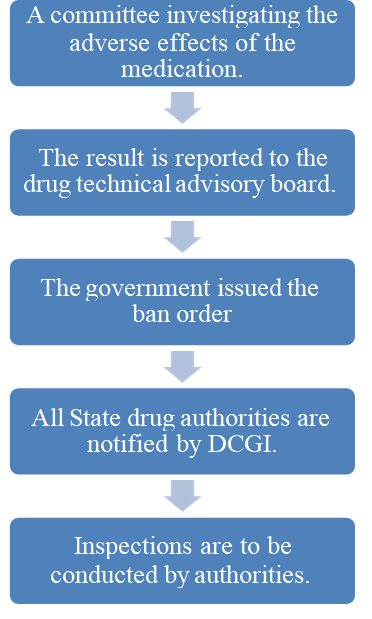
The Drug Technical Advisory Board (DTAB) in India is the final authority on imposing a ban. An executive committee examines the harmful effects of the drugs and reports the results to the DTAB. If any drug is found to have harmful side effects, the Government issues the ban order and all manufacturers and wholesalers are asked not to stock the particular medicine. The DCGI notifies all state drug authorities, pharmacists associations and manufacturers about the ban of the drug. Authorities are instructed to carry out inspections. Licenses of pharmacists stocking banned drugs can be revoked under the Drug and Cosmetics Act Officials at the Drug Controller of India (DCGI) office, however, had a different take on the issue of banned drugs. “Screening of irrational or harmful drugs is an on-going exercise and over 79 categories of formulations: have been banned so far. With a view to ensuring proper dispensing and rational use of drugs, packing has been standardized.
Even after a drug gets market approval, safety and efficacy is continuously examined on the basis of information received through pharmacovigilance, post- marketing surveillance and information received from other countries. India’s contribution to the world wide collection of data on the side effects of different drugs is dismal. Countries like Ireland, Switzerland and Italy with a population of about 4 million, 33million and 57 million respectively, had submitted 25, 33 and 225 adverse drug reactions on Nimesulide. Inspite of worldwide has drugs such as “Nimesulide, Phenyl propanolamine, Analgin,” etc is being sold in India”, When a very profitable drug is banned abroad for its adverse effects, interest groups in India resist similar action here.
List of Combination Banned
| Sr. No. | Combination of Banned Drug |
| 1 | Nimesulide+Paracetamol Dispersible Tablet |
| 2 | Amoxicillin Bromhexine |
| 3 | Pholcodine+Promethazine |
| 4 | Dextromethorphan+Chlorpheniramine Guaiphenesin+Ammonium Chloride |
| 5 | Chlorpheniramine+Codeine Phosphate Menthol Syrup |
| 6 | Phenytoin+Phenobarbitonesodium |
| 7 | Ammonium Chloride Sodium Citrate Chlorpheniramine Maleate Merishok (100mg) |
| 8 | Phenytoin+Phenobarbitonesodium |
| 9 | Bromhexine+Dextromethorphan+Ammonium Chloride +Menthol |
| 10 | Chlorpheniramine Maleate+Codeine Syrup |
| 11 | Pholcodine+Promethazine |
| 12 | Fixed dose combination of Chlorpheniramine maleate + Dextromethorphan + Guaiphenesin + Ammonium |
| 13 | Ammonium Chloride+Bromhexine+Dextromethorphan |
| 14 | Salbutamol+Hydroxyethyl theophylline bromhexine |
| 15 | Salbutamol+Bromhexine. |
Table 2: Some Irrational fixed dose drug combination banned drugs.
Case Reports [11,12]
Case 1: The presented case involves a three-year-old boy admitted with chills, rigor, and intermittent fever for two days. Treatment with a mefenamic acid and paracetamol combination resulted in a temporary reduction in fever, but the subsequent development of dark-colored urine raised concerns. The medical history indicated a prior urinary tract infection at the age of two, with an otherwise unremarkable family history of immunological or hematological disorders. Clinical examination revealed signs of icterus, moderate pallor, and a minor fever. Vital signs were within normal limits, and abdominal examination showed an enlarged liver 3 cm below the right costal border, while the spleen was not palpable. Systemic tests, except for the urinary symptoms, were unremarkable. Laboratory investigation revealed abnormalities, including a high total leukocyte count (27,300), hemoglobin level of 5.5 and a packed cell volume (PCV) of 17.2%. Differential leukocyte count showed 70% neutrophils and 7% lymphocytes. Reticulocyte count was elevated at 13%, and the total platelet count was 1.51 lakh. Dimorphic anaemia, leukocytosis, and absolute neutrophilia were observed. Case 2: The presented case involves a 47-year-old man with a history of long-term mefenamic acid use for gouty arthritis since 1975. The patient’s medication history indicates a gradual reduction in mefenamic acid dosage over the years, totaling approximately 4,200 capsules. Other notable medical history includes left renal calculus surgery in 1977, the development of hypertension, and the recent manifestation of hematuria in May 1985. Laboratory investigations revealed hemoglobin levels within the normal range (12.5g/ dl), slightly elevated urea (7.8mmol/l), elevated creatinine (200pmol/l), and elevated uric acid (580pmol/l). Urinalysis demonstrated the presence of 26,000 red blood cells per liter, 10 leukocytes, and two plus proteins. Notably, the aspirin ferric chloride urine test was negative. A subsequent urine analysis two weeks later showed no abnormalities. The intravenous urogram (IVU) revealed bilateral papillary necrosis, suggesting a potential renal pathology. The negative aspirin ferric chloride urine test and the transient nature of urinary abnormalities in the repeat analysis add complexity to the case. The patient’s history of long-term mefenamic acid use, along with the surgical history and hypertension, raises concerns about the potential nephrotoxic effects of the medication. The bilateral papillary necrosis observed on the IVU aligns with the clinical presentation of renal pathology. Case 3: The case involves a 58-year-old woman who presented in December 1984 with recurrent, one- month- long episodes of hematuria. She has a history of hypertension for almost a decade and has been using mefenamic acid (500 mg) capsules for the past two years, totaling approximately 1,000 capsules, to manage osteoarthritis in both knees. The patient denies using any additional painkillers and has no history of diabetes or tuberculosis. Laboratory investigations revealed a hemoglobin level of 12.9g/dl, urea of 7.4mmol/l, creatinine of 120pmol/l and uric acid of 424mol/l. Urinalysis showed no organisms on culture, absence of leukocytes, epithelial cells or casts and a minimal amount of protein. The aspirin ferric chloride urine test was negative. Intravenous urogram (IVU) revealed bilateral papillary necrosis. Case 4: The presented case involves an 18-year-old student admitted to the hospital’s casualty department following a generalized convulsion. The patient exhibited symmetrical tonic- clonic movements, suggestive of sympathetic over activity. Key clinical parameters included a blood pressure of 140/90 mmHg, a pulse rate of 130/min in sinus rhythm, and a nasopharyngeal temperature of 36.5°C.For toxicological investigation, an intravenous line was established, and blood was drawn, revealing the presence of methylene blue (103 g/ml). Initial intervention included delivering 100% oxygen through a face mask, administering 80 mg of diazepam intravenously, and subsequently injecting 20 mg of etomidate. A 4% lignocaine topical solution was sprayed into the throat and vocal cords, and an endotracheal tube was inserted. A second intravenous dose of 20 mg of etomidate was administered. Gastric aspiration was performed using a nasogastric tube, followed by the insertion of 30 g of activated charcoal and 40 g of sodium sulfate into the stomach at ten- minute intervals.
The patient was transferred to the critical care unit, where continuous positive airway pressure breathing was initiated. Pancuronium was administered for muscle relaxation, and diazepam was given for sedation, with continuous monitoring of vital signs. Arterial blood gas estimates confirmed normal oxygenation, a chest radiograph showed no cardiac or pulmonary abnormalities, and a urine catheter was inserted to monitor renal function. Laboratory investigations revealed a low serum potassium value of 3.1 mmol/l. The comprehensive approach to management, including airway support, gastric decontamination, and continuous monitoring, reflects a thorough response to a toxicological emergency. Regular monitoring of vital signs, renal function, and potassium levels is imperative for optimal patient care and recovery. The identified methylene blue in the blood may be indicative of a specific poisoning or exposure, warranting further investigation into the causative agent. Case 5: The presented case involves a 24-year-old man admitted to the hospital after being hit by a car, resulting in injuries including a separation of the left distal femoral epiphysis (Salter II fracture) and a closed fracture of the right proximal shaft. Following the reduction of the epiphyseal fracture, a plaster cast was applied to immobilize the left lower limb. The right femur fracture was treated with open reduction and intramedullary fixation using a nail seven days later. During the postoperative course, the patient experienced episodes of minor bleeding on the 10th and 16th postoperative days, both of which were controlled with compression dressings. However, on the evening of the 21st postoperative day, the patient presented with considerable bleeding from the right leg. A tight compression bandage was applied around the thigh to achieve hemostasis and 1.5 liters of blood were administered. Tests for a clotting disorder yielded negative results and the distal vascular supply to the foot normal. Additionally, there was no localized swelling in the right thigh.
Different Brands of Mefenamic Acid Present In Indian Market
Meftal Spas is a combination medication that typically contains: Mefenamic Acid: It is a non-steroidal anti-inflammatory drug (NSAID) that helps reduce pain, inflammation and fever. Dicyclomine: This is an antispasmodic that works by relaxing smooth muscles in the gastrointestinal tract. It can help alleviate muscle spasms and cramps. Meftal Spas is commonly prescribed for conditions such as menstrual cramps (dysmenorrhea) and abdominal pain associated with irritable bowel syndrome. Ponstan: Ponstan is a brand name for a medication that contains mefenamic acid as its active ingredient. Mefenamic acid is a nonsteroidal anti-inflammatory drug (NSAID) commonly used to relieve pain, inflammation, and fever. It’s often prescribed for conditions like menstrual pain, mild to moderate pain and certain types of arthritis. It’s commonly used to alleviate pain and inflammation associated with conditions like menstrual pain, mild to moderate pain, and certain types of arthritis Mefacid: Mefacid 500mg Tablet is a common painkiller used to treat aches and pains. It blocks chemical messengers in the brain that tell us we have pain. It is effective in relieving pain caused by headache, migraine, nerve pain, toothache, sore throat, period (menstrual) pains, arthritis and muscle aches. Gefplus: This Tablet contains mefenamic acid and paracetamol as its active molecules. It works by reducing the formation of certain chemicals that causes the sensation of pain. This Tablet is also useful in treating pain due to sprain, strain and injury, post-operative pain and dental pain.
Availability Of Banned Drug In India
| List | Drugs |
|---|---|
| Oxyphenbutazone | Amidopyrine |
| Phenformin | Valdecoxib |
| Rofecoxib | MepacrineHCl(Quinacrineanditsalts) |
| NimesulideAvailable | Tetracycline/Oxytetracyline/Demeclocycline liquid oral preparations |
| Phenylpropanamine | Penicillinskin/eyeointment |
| Metamizole | Methaqualone |
| Cisapride | Fenfluramine |
| Furazolidone | Astemizole |
| Piperazine | Dexfenfluramine |
| Pergolide | Rofecoxib |
| Droperido | Phenformin |
| Quiniodochlo | Terfenadine |
| Cerivastanin | Methapyriline(and itssalts) |
| Analgin | Rosiglitazone |
| Bepride | Practolol |
| Cisronm | Nialamide |
| Cefaclor | Phenacetin |
Table 3: List of drugs prohibits for manufacture and sale though under drugs and cosmetic act by ministry of health and family we
Oxyphenbutazon: Oxyphenbutazone, a metabolite of phenylbutazone, is an NSAID. It has been used for episceleritis, osteoarthritis, and rheumatoid arthritis etc. the severe adverse effects of oxypbenbutazone, which provide upward thrust to in addition headaches encompass allergic reactions, stomach pain, blurred vision. Metamizole: Metamizole (Dipyrone) belongs to a collection of drugs that eliminate pain and reduce fever. Metamizule can cause damage to the bone marrow (granulocytopenia, agranulocytusis, hemolytic anemia, aplastic anemia.), digestive problems etc. Cisapride: Cisapride is a “PROKINETIC AGENT” that used for treatment of gestroesophageal reflux disease (GERD). There is no proof it’s miles powerful for this use in children, proof for its use in constipation is now no longer clear. It has been found to cause cardiac arrhythmias (abnormal coronary heart rhythms). Cerivastanin: Cericastatin prevents the risk of stroke and coronary heart attack it functions with the aid of using blocking away the enzymes in the liver that is responsible in the production of cholesterol inside the body. There are numerous facet consequences related with the aid of using the use of CERIVASTATIN, for example- diarrhoea, nasal congestion, constipation, headache and hearthurn, muscle damage, sexual problems, fever, issue in respiratory etc. Droperidol: Droperidol is an Antidopaminergic drug used as an antiemetic and antipsychotic. It also regularly used for neuroleptanalgesia anaesthesia and sedation in intensive-care treatment, but it causes dysphoria, sedation, hypotension resulting from peripheral alpha adrenoceptor blockade, prolongation of qte programming language which can lead to extra pyramidal facet consequences together with dystonic response disorder, uncontrollable muscle movements of your lips. Nimesulide: Nimesulide is a non-steroidal anti-inflammatory drug, used for painful inflammatory conditions, back pain, dysmenorrheal, postoperative. Furazolidone: Furazulidone is a Nitrofuran Antibacterial. It is marketed under the brand call furoxane, furazolidon has been used in human and veterinary medicine. In humans it has used to deal with diarrhoea and enteritis caused by microorganism or protozoan infections. It has been used to deal with cholera and bacteremic salmonellosis, and helicobacter pylori infections, it has many side effects, and as with different nitro furans generally, minimum inhibitory concentrations additionally produce systemic toxicity (tremors, convulsions, peripheral neuritis, gastrointestinal disturbance, depressions of spermatogenesis). Nitrofurazone: Nitrofurazone is bactericidal for maximum pathogens that usually motive floor pores and skin infections. Topical nitrofurazone is indicated as an adjunctive therapy second and third degree burns. The unfavourable consequences had been decided the idea in their ability medical significances itching, rash and swelling.
Thioridazine: Thioridazine is an antipsychotic medicinal drug known as a phenothiazine. It is used to deal with schizophrenia. But it can motive a life-threatening coronary heart rhythm pain, osteoarthritis and fever. Caution should be exercised in sufferers with records of belly problem, high blood pressure, fluid retention, stomach discomfort, heartburn, stomach cramps, nausea, vomiting, diarrhoea, headache, dizziness and drowsiness, blood in urine and kidney failure [7, 8, 9, 10, 11, 12, 13].
Conclusion
The literature reports and reviews by regulatory agencies highlight the concerning prevalence of Drug Rash with Eosinophilia and Systemic Symptoms (DRESS) syndrome associated with certain medications. Despite regulatory alerts, a specific drug, implicated in DRESS syndrome, continues to be available over the counter in India, with documented adverse effects.
This study synthesizes existing literature data, providing valuable consumer information on the persistence of banned drugs in the market. The observed illegal sale of these drugs, including the one under regulatory alert, as over-the- counter medications in India, raises significant public health concerns. The literature survey not only underscores the need for immediate regulatory intervention but also serves as a foundation for future research. The comprehensive overview of the current scenario, coupled with its simplicity, positions this study as a valuable resource for further investigations. Future research endeavors can build upon this literature survey, leveraging its insights to address the challenges posed by the availability and misuse of banned drugs in the Indian market.
References
-
Adam A, Schrimpl L, Schmidt PC (2000) Some physicochemical properties of mefenamic acid. Drug development and industrial pharmacy 26(5): 477-487.
-
Balali M, Proudfoot A, Critchley J, Prescott L (1981) Mefenamic acid overdosage. The Lancet 317(8234): 1354-1356.
-
Sakhare R, Pekamwar S, Kadam R, Kanthale S (2016) Development and Validation of Stability Indicating Rp-Hplc Method for Simultaneous Estimation of Mefenamic Acid and Dicyclomine Hydrochloride in Bulk and in Pharmaceutical Solid Dosage Form. Journal of Pharmaceutical and Bioscience 7(9): 26.
-
Rajat S, Kumar M, Kumar P, Abhishek S, Krishna K (2019) An insight of non-steroidal anti- inflammatory drug mefenamic acid: A review. GSC Biological and Pharmaceutical Sciences 7(2): 52-59.
-
AbuJ A, Mecca G, Jumaa S, Thawabteh A (2015) Mefenamic acid prodrugs and codrugs two decades of development. World Journal of Pharmaceutical Research 4(6): 2408-2429.
-
Indian Pharmacopeia (2022) Indian Pharmacopeia Commission Ministry of Health and Family Welfare Government of India pp: 2836.
-
Vitthal KS, Shinde S, Bhausaheb W (2022) Review on banned drugs in India. International Research Journal of Modernization in Engineering Technology and Science 4(11).
-
Kemisetti D, Manda S, Aukunuru J, Chinnala K, Rapaka N (2014) Synthesis of prodrugs of mefenamic acid and their in vivo evaluation. International Journal of Pharmacy and Pharmaceutical Sciences 6(7): 437-442.
-
Mishra R, Pradhan S, Mishra MM (2020) Mefenamic acid induced autoimmune hemolyticanemia-A case report. The Journal of Medical Research 6(3): 67-69.
-
Shaji J, Lodha S (2020) Regulatory status of banned drugs in India. Indian Journal of Pharmaceutical Education and Research 44(1): 86-94.
-
Long C, Finlay A, Marks R (1992) Fixed drug eruption to mefenamic acid: a report of three cases. British Journal of Dermatology 126(4): 409-411.
-
Shipton E, Muller F (1985) Severe mefenamic acid poisoning-a case report. South African Medical Journal 67(20): 823-824.
-
Sunitha D, Hemalatha K, Sudhakar M (2016) Banned drugs: A review. Asian Journal of Pharmaceutical Research 6(4):205-216.
- Acido Labile or Gastro Irritant Apis and Enteric Release in Galenic Practice: An Overview
- A Study on Knowledge, Attitude and Practice of Hand Hygiene among Healthcare Professionals at a Tertiary Care Hospital, India
- Influence of Inoculum Concentration on In Vivo Incubation Period of Emmia lacerata, Pathogenesis and Management of Wilt in Pepper (Capsicum annuum L.)
- Vanilla’s Chemistry
- Marine Anti-Cancer Compounds and Adverse Effects of Global Warming on Oceans: An Overview
- Serological Investigation of Chikungunya Virus Antibody among Malaria-Suspected Febrile Patients in Some Healthcare Facilities in Rivers State