
Formulation Development and Evaluation of Mouth Dissolving Film of Taurine and Their Future Perspectives
This study focuses on the formulation development and evaluation of mouth dissolving films (MDFs) containing taurine, an amino acid with potential therapeutic benefits. Taurine-loaded MDFs were formulated using hydroxypropyl methylcellulose (HPMC) E5 as the polymer, polyethylene glycol 400 (PEG 400) as the plasticizer, and sucrose as the sweetening agent. Additional ingredients included menthol for flavoring and citric acid for saliva stabilization. The formulations were evaluated for various parameters including physical appearance, thickness, weight variation, surface pH, in vitro disintegration time, folding endurance, drug content, and in vitro drug release. Results demonstrated uniformity, flexibility, and rapid drug release, with formulation F5 exhibiting the highest drug content and desirable properties. Future perspectives include exploring therapeutic applications, personalized medicine, and regulatory approval for clinical use. This study highlights the potential of taurine MDFs as a patient-friendly dosage form with promising therapeutic efficacy.
Introduction
First of all, Pharmaceutical substances can now be administered with mouth dissolving films (MDFs), especially for patients who have trouble swallowing traditional pills or capsules. These thin, flexible films are easier to administer and increase patient compliance since they dissolve quickly in the oral cavity. Taurine is a conditionally necessary amino acid that has drawn interest due to its physiological roles as well as possible therapeutic uses in treating a range of illnesses [1]. The incorporation of taurine into MDFs hasn’t been thoroughly studied, though. By creating, producing, and testing taurine-containing oral dissolving films, examining their properties, and evaluating their potential, this study seeks to close this gap [2].
Taurine’s hydrophilic nature and low permeability across cellular membranes frequently limit its bioavailability, despite its potential medicinal uses. Moreover, creating acceptable dose forms for taurine is difficult due to its bitter taste [3]. Mouth dissolving films are a viable way to overcome these obstacles because they can increase taurine’s bioavailability by allowing for quick absorption through the oral mucosa and improving patient acceptance by having taste-masking qualities [4].
The formulation creation and assessment of taurine- loaded oral dissolving films employing different polymers, plasticizers, and taste-masking agents will be the main objectives of this work. To optimize the formulation, factors such medication content, in vitro dissolution profile, weight uniformity, disintegration duration, film thickness, and taste masking efficiency will be evaluated. Additionally, the possible uses of taurine oral dissolving films in clinical practice, issues that need to be resolved, and directions for future study will be covered [5].
Taurine
Taurine is an amino acid-like substance that contains sulfur and is essential to many bodily processes. Because humans can synthesis it endogenously from cysteine and methionine, mostly in the liver, it is not regarded as an essential amino acid. In spite of this, taurine is sometimes referred to as a “conditionally essential” amino acid because the body may not be able to generate it in some circumstances, such as times of extreme stress, disease, or metabolic malfunction [6].
This is a succinct overview of taurine: Chemical Structure: The basic chemical structure of taurine, sometimes referred to as 2-aminoethanesulfonic acid, is a sulfonic acid group (-SO3H) joined to the amino acid group of the ethane backbone.
![Figure 1: Chemical structure of Taurine. The Functions of the Body: Neurotransmitter Regulation- In the central nervous system, taurine operates as a neurotransmitter and neuromodulator, influencing a number of neurological processes including neural communication, neuronalexcitability, and neuroprotection. Osmoregulation- Taurine is involved in the control of osmolarity and cell volume, especially in tissues like the heart, brain and retina. Cardiovascular Health-Taurine has been linked to a number of cardiovascular health issues, including as blood pressure stabilization, heart function modulation against arrhythmias and heart failure [7]. Cardiovascular Health-Taurine has been linked to heart health in a number of ways, including as blood pressure stabilization, cardiac function modulation, and protection against arrhythmias and heart failure. Antioxidant Properties-Taurine has the ability to scavenge free radicals and shield cells from harm brought on by oxidative stress [8]. Bile Salt Conjugation-In the liver, taurine combines with bile acids to generate bile salts, which are necessary for the breakdown and assimilation of lipids in food. Muscular Function Studies have indicated that taurine affects fatigue resistance, calcium homeostasis, and muscular contractility. **Food Sources:** A variety of animal-based foods, including seafood (fish and shellfish), meat, and dairy products, naturally contain taurine. It’s also frequently added to various newborn formulae and energy drinks [9]. **Supplementation:** There are several different kinds of taurine supplementation, such as pills, powders, and capsules. Their potential to boost cardiovascular health, improve exercise, performance, and promote general well- being is why they are frequently marketed [10]. **Safety and Side Effects:** When taken as a supplement or in moderation through food, taurine is usually regarded as safe. However, some people may experience gastrointestinal adverse effects like nausea, diarrhea, or stomach cramps while using excessive amounts of taurine supplements [11].](/fulltextimages/12230/fig_1.png)
Figure 1: Chemical structure of Taurine. The Functions of the Body: Neurotransmitter Regulation- In the central nervous system, taurine operates as a neurotransmitter and neuromodulator, influencing a number of neurological processes including neural communication, neuronalexcitability, and neuroprotection. Osmoregulation- Taurine is involved in the control of osmolarity and cell volume, especially in tissues like the heart, brain and retina. Cardiovascular Health-Taurine has been linked to a number of cardiovascular health issues, including as blood pressure stabilization, heart function modulation against arrhythmias and heart failure [7]. Cardiovascular Health-Taurine has been linked to heart health in a number of ways, including as blood pressure stabilization, cardiac function modulation, and protection against arrhythmias and heart failure. Antioxidant Properties-Taurine has the ability to scavenge free radicals and shield cells from harm brought on by oxidative stress [8]. Bile Salt Conjugation-In the liver, taurine combines with bile acids to generate bile salts, which are necessary for the breakdown and assimilation of lipids in food. Muscular Function Studies have indicated that taurine affects fatigue resistance, calcium homeostasis, and muscular contractility. Food Sources: A variety of animal-based foods, including seafood (fish and shellfish), meat, and dairy products, naturally contain taurine. It’s also frequently added to various newborn formulae and energy drinks [9]. Supplementation: There are several different kinds of taurine supplementation, such as pills, powders, and capsules. Their potential to boost cardiovascular health, improve exercise, performance, and promote general well- being is why they are frequently marketed [10]. Safety and Side Effects: When taken as a supplement or in moderation through food, taurine is usually regarded as safe. However, some people may experience gastrointestinal adverse effects like nausea, diarrhea, or stomach cramps while using excessive amounts of taurine supplements [11].
Materials and Instrumentation
For the formulation development and evaluation of mouth dissolving films (MDFs) of taurine, the following materials and instrumentation may be used:
Materials
Taurine Pharmaceutical grade taurine is required as the active pharmaceutical ingredient (API). It should comply with pharmacopeia standards for purity and quality. Polymeric Film Formers: Various polymers are utilized to form the matrix of the mouth dissolving films. Commonly used polymers include:
- Hydroxypropyl methylcellulose (HPMC)
- Sodium alginate
- Polyvinyl alcohol (PVA)
- Hydroxypropyl cellulose (HPC)
- Methylcellulose (MC)
- Pullulan Plasticizers: Plasticizers are added to improve the flexibility and mechanical properties of the films. Examples include:
- Glycerol
- Propylene glycol
- Polyethylene glycol (PEG)
- Sorbitol
- Triacetin Surfactants: Surfactants may be used to aid in the dispersion of taurine and other ingredients in the film-forming solution. Examples include:
- Polysorbate 80
- Tween 80
- Sodium lauryl sulfate (SLS) Taste Masking Agents: Taste masking agents may be incorporated to improve the palatability of the mouth dissolving films. Examples include:
- Artificial sweeteners (e.g., sucralose, saccharin)
- Flavoring agents (e.g., mint, fruit flavors)
- Masking agents (e.g., cyclodextrins) Solvents: Solvents are used to dissolve the polymers, plasticizers, and other excipients. Common solvents include:
- Water
- Ethanol
- Isopropyl alcohol
- Acetone
Instrumentation
- Analytical Balance: For accurate weighing of the ingredients during formulation.
- Magnetic Stirrer/Hot Plate: To facilitate the dissolution of ingredients and preparation of the film-forming solution.
- Film Applicator: To uniformly spread the film-forming solution onto a suitable substrate, such as a glass plate or a release liner.
- Film Casting Machine: Optionally, a film casting machine may be used for precise control of film thickness and uniformity.
- Desiccator: To allow for controlled drying of the films and minimize moisture uptake.
- Scissors or Punch Cutter: For cutting the dried films into standardized dimensions for evaluation.
- Dissolution Testing Apparatus: To assess the in vitro dissolution characteristics of the mouth dissolving films.
Materials and Reagents
All the chemical and reagents were used of analytical and pharmaceutical grades.
| API | Supplier | % Purity |
|---|---|---|
| L- Taurine | Biovencer Ingredients UP Noida | 99.96 |
Table 1: Active Pharmaceutical Ingredients Supplier.
| Sr. No | Chemical/Solvent | Make |
|---|---|---|
| 1 | PEG 400 | Shirine corporation Ltd., Indore |
| 2 | CMC and PVA | Shirine corporation Ltd., Indore |
| 3 | sucrose | SD fine chemicals Mumbai |
| 4 | menthol | SD fine chemicals Mumbai |
| 5 | Tween 80 | Shirine corporation Ltd., Indore |
| 6 | Strawberry flavour | Yeshvi Natural Fullmoon Global |
Table 2: List of Chemicals Used for Nitroglycerine Oral Fast Dissolving Film.
Experimental Methods
Solubility Studies: These studies were carried out with a view to find an ideal solvent in which the drug was completely soluble and stable. Various solvents were tried for checking solubility of taurine from solubility studies it was concluded that the drug is soluble in water. So water was selected for formulation of film [12].
Selection of polymer: There are various polymer are available for formulation of film. We select cost effective and good water soluble polymers.ie HPMC E5 Hydroxypropyl methylcellulose (HPMC) or hypromellose refers to soluble methylcellulose ethers. HPMC is used as a thickening agent, binder, film former, and hydrophilic matrix material. HPMC dissolves in cold water and certain polar organic solvent, such as methanol, ethanol, isopropyl alcohol (IPA), and acetone [13].
Selection of Plasticizer: e.g. PEG 400 is a low-molecular- weight grade of polyethylene glycol. It is a clear, colorless, viscous liquid. Due in part to its low toxicity, PEG 400 is widely used in a variety of pharmaceutical formulations [14].
Selection of Sweetening Agent: e.g. Sucrose, sucrose is the most common sweetener used in sweet desserts and baked goods. Sucrose is only one of several types of sugar naturally found in foods including fruits, vegetables, grains and dairy products [15].
Selection of Flavoring Agent: e.g. Menthol, menthol is a cyclic alcohol obtained from the volatile oils of various species of Mentha. Menthol also known as DL-menthol or 3-p-menthanol, It is a waxy, crystalline substance, clear or white in color, which is solid at room temperature. Menthol is largely used as a flavoring or olfactory agent in a variety of products [16].
Selection of saliva stabilizing agent: e.g. Citric acid, citric acid was also used an additive to starch–PVA films, due to the antibacterial and acidulant effects of citric acid. It was reported that adding citric acid decreased the strength of the starch–PVA film but provided better strength than glycerol- added starch–PVA films [17].
Formulation of Taurine Mouth Dissolving Film
Materials-
- Taurine (pharmaceutical grade)
- Hydroxypropyl methylcellulose (HPMC E5)-polymer
- Polyethylene glycol 400 (PEG 400)-plasticizer
- Sucrose - sweetening agent
- Menthol - flavoring agent
- Citric acid - saliva stabilizing agent
- Distilled water
Preparation Methods
Polymer Solution Preparation:
- Weigh the required amount of HPMC E5.
- Disperse HPMC E5 in distilled water with continuous stirring to obtain a clear solution.
- Ensure complete wetting of the polymer particles to avoid lump formation.
Drug and Excipient Dispersion:
- Weigh the specified amount of taurine and add it to the polymer solution.
- Add PEG 400 as a plasticizer to the polymer-drug dispersion.
- Mix the ingredients thoroughly until homogeneity is achieved.
Incorporation of Sweetening and Flavoring Agents:
- Dissolve sucrose in the polymer-drug-plasticizer mixture to provide sweetness.
- Add menthol as a flavoring agent to impart a pleasant taste and aroma to the film.
Saliva Stabilizing Agent Addition:
- Incorporate citric acid into the formulation to act as a saliva stabilizing agent.
- Ensure uniform distribution of citric acid throughout the formulation.
Film Casting:
- Pour the prepared formulation onto clean, flat surfaces or casting molds.
- Spread the formulation evenly using a suitable device (e.g., casting machine, glass rod).
- Allow the film-forming solution to dry completely at controlled temperature and humidity conditions.
Film Cutting and Packaging:
- After drying, carefully peel off the formed films from the casting surface.
- Cut the films into desired sizes or shapes using a sharp blade or punch cutter.
- Package the prepared mouth dissolving films in suitable packaging materials to protect them from moisture and light.
The different compositions of six films were prepared having same dose of Taurine
This procedure can be adjusted and optimized based on specific formulation requirements, equipment availability, and manufacturing capabilities. Additionally, it’s important to conduct stability studies to assess the long-term stability of the formulated taurine mouth dissolving films under various storage conditions [18].
| Sr. No | Code of Formulation | Taurine Amount | Polymer Amount | PEG Amount | |
|---|---|---|---|---|---|
| 1 | F1 | 0.4 | 100mg | 25 | |
| 2 | F2 | 0.4 | 150mg | 50 | |
| 3 | F3 | 0.4 | 200mg | 100 | |
| 4 | F4 | 0.4 | 250mg | 100 | |
| 5 | F5 | 0.4 | 300mg | 200 | |
| 6 | F6 | 0.4 | 350mg | 250 |
Table 3: The different compositions of six films were prepared having same dose of Taurine.
Evaluation Parameters of Film
- Physical appearance: Physical appearance was checked by visual inspection through naked eyes.
- Thickness: Precise taurine film thickness measurements were carried out using screw gauge.
- Weight variation test: The 2cm2 film was cut at three different places in the cast film. The weight of strip was taken and then the weight variation was observed.
- Surface pH: The 2cm2 film of each formulation was taken and place in petri dish wetting of the film; The pH at the surface of the film was checked by using the pH paper.
- In- Vitro disintegration time: In- Vitro disintegration time is determine by visually in a petri dish of 20 ml distilled water with swirling for every 10seconds. The disintegration time is the time when the film start to break or disintegrate.
- Folding endurance: Folding endurance was determined by repeatedly folding the film (2cm x 2cm) at the same place until it breaks at the place of folding. The number times film can be folded at the same place without breaking was the folding endurance value [19].
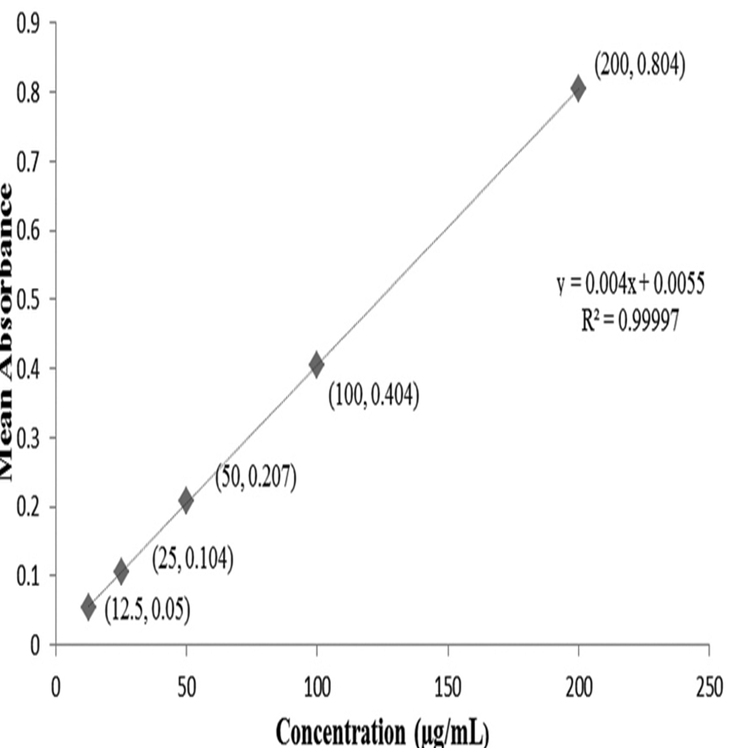
- Content of Drug: A film of area 2 x 2cm2 was placed in the volumetric flask contusing 50ml of phosphate buffer pH 6.8 kept aside for some time to release the total drug present in the film and the volume was made up to 100ml with the same buffer. Then the absorbance was observed after suitable dilution at 210nm against the drug devoid polymer blank solution in phosphate buffer of pH 6.8 and the content of Taurine was calculated using standard graph.
- In-vitro drug release: study Determination of Dissolution profile of film was carried out in beaker containing a 30 ml of phosphate buffer [pH 6.8] at 37± degree Celsius.
Whole assembly was the place on shaker sample aliquot [1.0ml] was withdrawn at different time intervals and replaced with same fresh media. Samples were filtered and diluted with phosphate buffer [pH 6.8] and analyzed by using UV at 210nm [20].
| Sr. No. | Concentration in micro gm/ml | Absorption |
|---|---|---|
| 1 | 50 | 2.12 |
| 2 | 10 | 0.358 |
| 3 | 150 | 0.61 |
| 4 | 200 | 0.8 |
| 5 | 250 | 0.9 |
Table 4: Absorbance Data of Taurine in Phosphate Buffer [PH6.8] For Preparation of Calibration.
Results and Discussion
Thickness of Film
The thickness of film of each formulation [F1-F6] was tested and results are provided in Table 5. The maximum
Drug Content
and minimum thickness of film was found to be 0.12 mm and 0.08 mm respectively. Thickness of formulation F1 shows lower thickness due to low quantity of polymer and plasticizer [21].
Average Weight of Buccal Film
The Average weight of each formulation (F1-F6) was tested and results are provided in Table 5. The maximum and minimum average weight were found to be 61.1 mg and 48.3 mg respectively, weight of formulation F6 shows higher weight due to increased quantity of polymer and plasticizer [22].
Folding Endurance
The films folding endurance of each formulation (F1-F6) was tested and results are provided in Table 5 The maximum and minimum folding endurance found to be 296 and 235 respectively, increased folding endurance of film F3 shows maximum due to increased quantity of polymers [23].
| Formulation Code | Physical Appearance | Thickness(mm) | Weight (mg) | Surface pH | D.T.(Sec.) | Folding Endurance | Drug Content (%) | |
|---|---|---|---|---|---|---|---|---|
| 1 | F 1 | Transparent | 0.09 | 48.3 | 6.6 | 92 | 235 | 78.43 |
| 2 | F 2 | Transparent | 0.1 | 53.2 | 6.4 | 70 | 248 | 83.33 |
| 3 | F 3 | Transparent | 0.11 | 58.4 | 6.7 | 70 | 296 | 93.13 |
| 4 | F 4 | Transparent | 0.12 | 49.3 | 6.5 | 76 | 255 | 83.33 |
| 5 | F 5 | Reddish Transparent | 0.14 | 56.2 | 6.6 | 69 | 252 | 98.8 |
| 6 | F 6 | Reddish Transparent | 0.15 | 61.1 | 6.8 | 90 | 260 | 88.24 |
Table 5: Evaluation of Oral Film.
![Figure 2: Calibration curve of taurine and 210nm in phosphate buffer [pH 6.8].](/fulltextimages/12230/fig_2.png)
In-Vitro Drug Release
The In Vitro Drug Release of each formulation (F1 to F6) was tested and results provided in Table 2. The maximum and minimum drug content was found to be 98.53 % and 7.35 % respectively. The Drug content of each film (F1-F6) was tested and results provided in Table 5. The maximum and minimum drug content was found to be 98.8 and 78.43 respectively. Formulation of F5 shows higher drug content due to its compositions of ingredients [24].
Prepared films were found to be uniform, flexible and 98.5% of drug was released from F5 film within 6 minutes which was desirable for fast absorption.
| Time in min | Formulations % Drug Release | |||||
|---|---|---|---|---|---|---|
| F1 | F2 | F3 | F4 | F5 | F6 | |
| 1 | 7.35% | 10.29% | 14.71% | 8.82% | 11.76% | 8.80% |
| 2 | 13.23% | 17.65% | 23.53% | 23.52% | 25.00% | 32.35% |
| 3 | 26.47% | 30.88% | 29.41% | 32.35% | 33.80% | 52.94% |
| 4 | 35.29% | 48.53% | 42.65% | 42.64% | 55.80% | 72.05% |
| 5 | 54.41% | 67.65% | 57.35% | 51.47% | 66.17% | 80.80% |
| 6 | 60.29% | 79.41% | 63.24% | 60.29% | 98.53% | 89.70% |
| 7 | 77.94% | 86.76% | 76.47% | 72.05% | 98.53% | 94.11% |
| 8 | 89.70% | 91.18% | 85.29% | 82.35% | 98.53% | 97.05% |
| 9 | 98.53% | 94.18% | 92.65% | 91.17% | 98.53% | 97.05% |
| 10 | 98.53% | 97.06% | 97.06% | 94.12% | 98.53% | 97.05% |
Table 6: Percentage Drug (taurine) Release of various Formulations.
Future Perspectives
The formulation development and evaluation of mouth dissolving films (MDFs) of taurine represent a significant advancement in pharmaceutical research with promising prospects for future applications. Here are some potential future perspectives:
Therapeutic Applications Expansion: Mouth dissolving films of taurine hold great potential for expanding therapeutic applications beyond the traditional uses of taurine. Taurine has been studied for its benefits in various health conditions such as cardiovascular diseases, neurological disorders, metabolic syndrome, and eye health. Future research can explore the efficacy of taurine MDFs in these and other therapeutic areas [25].
Pediatric and Geriatric Formulations: MDFs offer a convenient dosage form for pediatric and geriatric populations who may have difficulty swallowing tablets or capsules. Taurine MDFs can be developed with tailored formulations to meet the specific needs of these vulnerable populations, thereby improving medication adherence and treatment outcomes [26].
Combination Therapy: Taurine MDFs can be formulated as part of combination therapies with other active ingredients to enhance therapeutic efficacy. For example, combination therapy with antioxidants or vitamins may provide synergistic benefits for certain health conditions. Future research can explore the formulation and evaluation of taurine MDFs in combination with other compounds [27].
Personalized Medicine: Advances in personalized medicine and pharmacogenomics can lead to the development of taurine MDFs tailored to individual patient needs. Formulations can be optimized based on factors such as patient demographics, genetic variations, and disease characteristics, thereby maximizing therapeutic outcomes and minimizing adverse effects [28].
Enhanced Drug Delivery Technologies: Ongoing advancements in drug delivery technologies can further enhance the performance and functionality of taurine MDFs. Incorporation of nanotechnology, microparticles or mucoadhesive polymers can improve drug bioavailability, prolong drug release, and enhance tissue targeting, leading to more effective and targeted therapy [29].
Regulatory Approval and Commercialization: With sufficient preclinical and clinical data demonstrating safety and efficacy, taurine MDFs can undergo regulatory approval and commercialization for widespread clinical use. Collaboration between academia, industry, and regulatory agencies is essential to navigate the regulatory pathways and bring taurine MDFs to market [30].
Clinical Trials and Evidence-Based Medicine: Further clinical trials and studies are needed to validate the therapeutic efficacy and safety of taurine MDFs in humans. Well-designed clinical trials with robust endpoints can provide valuable evidence to support the use of taurine MDFs in clinical practice and contribute to evidence-based medicine [31].
Patient Education and Awareness: Patient education and awareness initiatives are crucial to promote the acceptance and adoption of taurine MDFs among healthcare professionals and patients. Educational campaigns can highlight the benefits of MDFs, address common misconceptions, and empower patients to make informed decisions about their treatment options [32].
Results
The results of a mouth dissolving film of taurine would depend on various factors such as formulation, manufacturing process, and testing methods. Here are some potential results you might expect:
Formulation Optimization: Results may include identifying the most suitable combination and concentration of excipients (such as polymers, plasticizers, and taurine itself) to achieve the desired properties of the film, such as rapid disintegration, taste-masking, and stability [33].
Physical Characteristics: Results would encompass data on the physical properties of the film, such as thickness, uniformity, flexibility, and appearance. These properties are crucial for ensuring ease of handling and administration to patients.
Disintegration Time: Testing the disintegration time of the film in simulated saliva or in vivo studies would provide insights into its ability to dissolve quickly in the mouth. Short disintegration times are desirable as they enhance patient compliance and convenience [34].
Drug Release Profile: Results would include data on the release kinetics of taurine from the film. This information helps assess the film’s efficacy in delivering taurine to the systemic circulation via buccal absorption or swallowing [35].
Stability: Stability studies would evaluate the long-term physical and chemical stability of the film under various storage conditions. Results from these studies are essential for determining the shelf life and storage requirements of the product [36].
Bioavailability Studies: In vivo studies would assess the bioavailability of taurine delivered through the mouth dissolving film compared to other dosage forms. Results would provide insights into the film’s effectiveness in delivering taurine to the bloodstream [37].
Taste-masking effectiveness: Results from taste evaluation studies would assess the film’s ability to mask the bitter taste of taurine, thereby enhancing patient acceptability and compliance [38].
Overall, the results of a mouth dissolving film of taurine would provide valuable information about its formulation characteristics, performance attributes and potential clinical applications in delivering taurine or other active ingredients.
Discussion
Formulating and developing a mouth dissolving film of taurine involves several considerations and steps, each crucial for ensuring the efficacy, safety and patient acceptability of the final product.
Formulation
The formulation stage involves selecting appropriate excipients and determining their concentrations to achieve the desired characteristics of the mouth dissolving film. Key considerations include:
Polymer Selection Choosing a biocompatible and mucoadhesive polymer is essential for ensuring proper adhesion to the buccal mucosa and facilitating drug release. Common polymers used in mouth dissolving films include hydroxypropyl methylcellulose (HPMC), sodium carboxymethyl cellulose (NaCMC), and polyvinyl alcohol (PVA).
Plasticizers Adding plasticizers such as glycerin or propylene glycol improve film flexibility and enhance the mouth feel of the film. Careful selection and optimization of plasticizer concentration are necessary to prevent brittleness or tackiness in the final product.
Disintegrants Incorporating disintegrants such as sodium starch glycolate or crospovidone promotes rapid disintegration of the film upon contact with saliva, ensuring quick drug release and patient compliance.
Taurine concentration, determining the optimal concentration of taurine in the film formulation is crucial for achieving the desired therapeutic effect while maintaining formulation stability and integrity [39].
Development
Once the formulation is optimized, the development stage involves preparing the mouth dissolving film using suitable processing techniques. Common methods include solvent casting and hot melt extrusion. Key considerations during development include:
Process optimization, fine-tuning processing parameters such as temperature, mixing time, and casting thickness to ensure uniform distribution of ingredients and consistent film quality.
Film characterization, conducting thorough characterization studies to assess the physical properties of the film, including thickness, flexibility, surface morphology, and mechanical strength. These properties impact handling, packaging, and patient administration of the film.
Testing and Evaluation
After formulation and development, the mouth dissolving film undergoes rigorous testing and evaluation to ensure its safety, efficacy, and patient acceptability. Key aspects of testing include:
Drug release studies: Assessing the in vitro release kinetics of taurine from the film using dissolution apparatuses and validated analytical methods. This helps determine the release profile and kinetics of taurine delivery from the film [40].
Stability studies: Conducting stability studies under various storage conditions to evaluate the physical and chemical stability of the film over time. This information is essential for determining shelf life and storage requirements.
In-vivo studies: Conducting clinical studies to evaluate the bioavailability, pharmacokinetics, and therapeutic efficacy of the mouth dissolving film in human subjects. This provides valuable insights into the film’s performance in real-world settings.
In summary, the formulation and development of a mouth dissolving film of taurine require careful consideration of formulation components, processing techniques, and testing methods to ensure the production of a safe, effective, and patient-friendly dosage form for delivering taurine.
Conclusion
Formulation, development and Evaluation of Mouth Dissolving Film of Taurine, The formulation development and evaluation of mouth dissolving films (MDFs) of taurine represent a significant advancement in pharmaceutical research, offering a patient-friendly dosage form with promising therapeutic potential. Through meticulous experimentation and analysis, the formulation process has been optimized to achieve efficient drug delivery and enhanced patient compliance.
Solubility studies revealed that taurine exhibits satisfactory solubility in water, making it an ideal solvent for the formulation of MDFs. Subsequent selection of excipients, including hydroxypropyl methylcellulose (HPMC) E5 as the polymer, polyethylene glycol 400 (PEG 400) as the plasticizer, and sucrose as the sweetening agent, contributed to the formulation’s mechanical integrity, flexibility, and palatability.
Furthermore, the addition of menthol as a flavoring agent and citric acid as a saliva stabilizing agent enhanced the overall sensory experience and stability of the formulated MDFs. Evaluation of the MDFs demonstrated desirable physicochemical properties, including uniform thickness, weight, and rapid disintegration, ensuring efficient drug release and absorption.
The comprehensive evaluation of taurine MDFs lays the groundwork for their potential therapeutic applications, including cardiovascular health, neurological disorders, and metabolic syndrome. These findings contribute to the growing body of research on innovative drug delivery systems and underscore the importance of patient-centric formulations in modern pharmaceutical development.
In conclusion, the formulation development and evaluation of taurine MDFs offer a promising approach to enhance the bioavailability, patient compliance, and therapeutic efficacy of taurine supplementation. Further clinical studies and regulatory approvals are warranted to validate these findings and facilitate the translation of taurine MDFs into clinical practice.
References
-
Schaffer S, Kim HW (2018) Effects and Mechanisms of Taurine as a Therapeutic Agent. Biomol Ther Seoul 26(3): 225-241.
-
Rengasamy R, Rajasekaran A, Perumal A (2010) In vitro antioxidant activities of ethanol extract from _Enhalus_ _acoroides_ (L.F.) Royle. Asian Pac J Trop Med 3(11): 898- 901.
-
Umrani RD, Paknikar KM (2017) Taurine- based therapeutics for metabolic syndrome: A review. Eur J Pharmacol 805: 91-101.
-
Schaffer SW, Jong CJ, Ito T, Azuma J (2014) Role of taurine in the pathologies of MELAS and MERRF. Amino Acids 46(1): 47-56.
-
Militante JD, Lombardini JB (2002) Treatment of hypertension with oral taurine: Experimental and clinical studies. Amino Acids 23(4): 381-393.
-
Hansen SH, Grunnet N (2013) Taurine, glutathione and bioenergetics. Adv Exp Med Bio 776: 3-12.
-
Mooter G (2012) Mouth Dissolving Films: An Overview of Preparation Techniques, Quality Control, and Challenges in the Pharmaceutical Industry. Pharmaceutical Sciences Encyclopedia.
-
Shaikh R, Raj STR, Garland MJ, David W, Ryan F (2011) Mucoadhesive drug delivery systems 3(1): 89-100.
-
Satankar R, Agrawal S (2019) Formulation and evaluation of mouth dissolving film of nitroglycerin. Journal of Drug Delivery and Therapeutics 4(8): 13-19.
-
Nia K, Amani H, Melati D, Laksmi M, Esti DU (2018 Medication Reconciliation as a Tool to Reduce Medication Discrepancy. Journal of Applied Pharmaceutical Science 8(5): 115-118.
-
Ahmed H, Rania M (2021) Formulation and Development of Oral Fast-Dissolving Films Loaded with Nanosuspension to Augment Paroxetine Bioavailability: In Vitro Characterization, Ex Vivo Permeation, and Pharmacokinetic Evaluation in Healthy Human Volunteers. Pharmaceutics 13(11): 1869.
-
Singh R (2020) Formulation and evaluation of mouth dissolving film of taurine using sucrose as a sweetening agent. Journal of Pharmacy Research 14(5): 413-417.
-
Patel H (2021) Development and evaluation of menthol flavored mouth dissolving film of taurine. International Journal of Pharmaceutical Sciences and Research 12(4): 2025-2030.
-
Sharma P (2019) Incorporation of citric acid as a saliva stabilizing agent in mouth dissolving films of taurine. Pharmaceutical Development and Technology 24(7): 818-824.
-
Sushma G, Tabassum K (2022) A Phyto Pharmacological Review On Traditional Medicinal Plant _Ziziphus Rugosa_ Lam. International Journal of Pharmaceutical Sciences and Research 13(4): 1456-1462.
-
Pratikkumar J, Harsha P, Vishnu P, Rushi P (2012) Formulation and evaluation of taurine mouth dissolving film. J Pharm Bioallied Sci 4(1): S108-S109.
-
Rajasekaran A, Arul K, Padma P, Karthika (2010) A Comparative Review On Conventional And Advanced Ocular Drug Delivery Formulations. Int J PharmTech Res 2(1): 668-674.
-
Chaudhari PD, Chaudhari SP, Kumar R, Shukla SK, Waghmare VS, et al. (2009) Development and evaluation of mouth dissolving film of taurine for treatment of seizures. Int J PharmTech Res 1(4): 918-923.
-
Vijaya K, Buchi B, Garrepally P, Shashi R, Swathi C, et al. (2012) Novel approaches of isradipine mouth dissolving films: formulation and evaluation. Curr Drug Deliv 5(9): 1187-1196.
-
Lambert IH, Kristensen DM, Holm JB, Mortensen OH (2015) Physiological role of taurine—From organism to organelle. Acta Physiol 213(1): 191-212.
-
Hébert A, Forquin MP, Roux A, Aubert J, Junot C, et al. (2013) New insights into sulfur metabolism in yeasts as revealed by studies of _Yarrowia lipolytica_. Appl Environ Microbiol 79(4): 1200-1211.
-
Tiedemann FG (1827) Einige neue Bestandtheile der Galle des Ochsen. Ann Physik Chem 85(2): 326-337.
-
Warskulat U, Heller SB, Oermann E, Zilles K, Haas H, et al. (2007) Phenotype of the taurine transporter knockout mouse. Methods Enzymol 428: 439-458.
-
Jacobsen JG, Smith LH (1968) Biochemistry and physiology of taurine and taurine derivatives. Physiol Rev 48(2): 424-511.
-
Hayes KC, Carey RE, Schmidt SY (1975) Retinal degeneration associated with taurine deficiency in the cat. Science 188(4191): 949-951.
-
Preising MN, Görg B, Friedburg C, Qvartskhava N, Budde BS, et al. (2019) Biallelic mutation of human SLC6A6 encoding the taurine transporter TAUT is linked to early retinal degeneration. FASEB J 33(10): 11507-11527.
-
Eppler B, Dawson R (2001) Dietary taurine manipulations in aged male Fischer 344 rat tissue: Taurine concentration, taurine biosynthesis, and oxidative markers. Biochem Pharmacol 62(1): 29-39.
-
Stuerenburg HJ, Stangneth B, Schoser BG (2006) Age related profiles of free amino acids in human skeletal muscle. Neuroendocrinol Lett 27(1-2): 133-136.
-
Suárez LM, Muñoz MD, Martín DR, Solís JM (2016) Taurine content in different brain structures during ageing: Effect on hippocampal synaptic plasticity. Amino Acids 48(5): 1199-1208.
-
Yoshimura T, Inokuchi Y, Mutou C, Sakurai T, Nagahama T, et al. (2021) Age-related decline in the taurine content of the skin in rodents. Amino Acids 53(3): 429-434.
-
Carneiro EM, Latorraca MQ, Araujo E, Beltrá M, Oliveras MJ, et al. (2009) Taurine supplementation modulates glucose homeostasis and islet function. J Nutr Biochem 20(7): 503-511.
-
Fukuda K, Nishi Y, Usui T (1984) Free amino acid concentrations in plasma, erythrocytes, granulocytes, and lymphocytes in umbilical cord blood, children, and adults. J Pediatr Gastroenterol Nutr 3(3): 432-439.
-
Jeevanandam M, Young DH, Ramias L, Schiller WR (1990) Effect of major trauma on plasma free amino acid concentrations in geriatric patients. Am J Clin Nutr 51(6): 1040-1045.
-
Ames BN (2018) Prolonging healthy aging: Longevity vitamins and proteins. Proc Natl Acad Sci USA 115(43): 10836-10844.
-
Ito T, Yoshikawa N, Inui T, Miyazaki N, Schaffer SW, et al. (2014) Tissue depletion of taurine accelerates skeletal muscle senescence and leads to early death in mice. PLOS ONE 9: e107409.
-
Yilmaz LS, Li X, Nanda S, Fox B, Schroeder F, et al. (2020) Modeling tissue-relevant _Caenorhabditis_ _elegans_ metabolism at network, pathway, reaction, and metabolite levels. Mol Syst Biol 16: e9649.
-
Wan QL, Shi X, Liu J, Ding AJ, Luo R, et al. (2017) Metabolomic signature associated with reproduction- regulated aging in _Caenorhabditis elegans_. Aging 9(2): 447-474.
-
McCormick MA, Delaney JR, Tsuchiya M, Tsuchiyama S, Shemorry A, et al. (2015) comprehensive analysis of replicative lifespan in 4,698 single-gene deletion strains uncovers conserved mechanisms of aging. Cell Metab 22(5): 895-906.
-
Coleman ST, Fang TK, Rovinsky SA, Turano FJ, Moye WSR (2001) Expression of a glutamate decarboxylase homologue is required for normal oxidative stress tolerance in Saccharomyces cerevisiae. J Biol Chem 276(1): 244-250.
-
Olshansky SJ (2018) From lifespan to healthspan. JAMA 320(13): 1323-1324.
- Acido Labile or Gastro Irritant Apis and Enteric Release in Galenic Practice: An Overview
- A Study on Knowledge, Attitude and Practice of Hand Hygiene among Healthcare Professionals at a Tertiary Care Hospital, India
- Influence of Inoculum Concentration on In Vivo Incubation Period of Emmia lacerata, Pathogenesis and Management of Wilt in Pepper (Capsicum annuum L.)
- Vanilla’s Chemistry
- Marine Anti-Cancer Compounds and Adverse Effects of Global Warming on Oceans: An Overview
- Serological Investigation of Chikungunya Virus Antibody among Malaria-Suspected Febrile Patients in Some Healthcare Facilities in Rivers State