
A Review on Formulation and In-Vitro Evaluation of Sustained Release Tablet of Isoniazide by Using Natural and Synthetic Polymer
The goal of this study was to combine many polymers to create an isoniazide tablet with a sustained release. In this piece of work, guar gum, xanthum gum, and eudragit L100 are the polymers employed. The FTIR and UV analyses suggested that there was no bond formation between the medication and the polymer. The DSC results rejected any association or complex arrangement between the drug and the polymer that released the drug. This involves determining the drug's melting point, evaluating its solubility, and analysing it with a UV spectrophotometer. The definitions were established using a variety of assessment characteristics, such as Angle of repose, Bulk Density, Hardness, Friability, and Drug content uniformity
Introduction
The infectious agent that causes tuberculosis (TB) is Mycobacterium tuberculosis. According to the World Health Organization’s (WHO) Global Tuberculosis 2017 Report, there were an estimated 10.4 million new cases of tuberculosis (TB) worldwide in 2016. Of these cases, 65 percent were in men, 28.1% were in women, and 6.9% were in children. In Africa, seventy-four percent of new cases of tuberculosis (TB) were linked to HIV/AIDS carriers. 490000 of the anticipated 600000 extra cases of rifampicin-resistant tuberculosis (MDR-TB) that year were found to have involved drug resistance. In addition to HIV/AIDS, tuberculosis (TB) is the leading infectious agent-related cause of death worldwide. In 2016, an estimated 1.3million people died from tuberculosis, and 374000 more people who were HIV positive also died from the disease [1].
Treatment of Tuberculosis
In order to avoid medication resistance, mortality, and transmission, the primary objective of TB therapy is to guarantee a cure without relapse. The course of treatment is prolonged, and the effective use of many medications is necessary. To stop MDR-TB from developing, treating active TB with a single medication should not be tried, and adding a single drug to a failed regimen should be avoided. According to WHO recommendations, TB treatment should entail a multi-drug regimen that includes daily administration of rifampicin (RIF), isoniazid (INH), pyrazinamide (PZA), and ethambutol (ETB) for two months during the initial intense phase. There after a 4- month continuation phase during which RIF and INH are given either daily or three times per week [2].
Sustained Release Drug Delivery System
Controlled release, extended release, protracted action, sustained release, and depot release these are the several names for drug delivery systems that are intended to provide a long-lasting therapeutic impact by slowly releasing medicine following the administration of a single dosage. Reducing the frequency of dosing or increasing the medication’s efficacy by localization at the site of action, lowering the dosage needed, or ensuring consistent drug administration are the main objectives when creating sustained release delivery systems. First, a single dosage for the duration of treatment whether it be for a few days or a week, as in the case of an illness, or throughout the patient’s lifetime, as in the case of diabetes or hypertension is what the ideal drug delivery systems would need. Secondly, it ought to administer the active ingredient straight to the location of action, reducing the likelihood of adverse reactions [3].
Need of Study
- The frequency of drug administration is reduced; hence patient compliance can be improved.
- The blood level oscillation characteristic of multiple dosing of conventional dosage forms is reduced.
- Better control of drug absorption can be attained, since the high blood level peaks that may be observed after administration of a dose of a high availability drug can be reduced.
- The characteristic blood level variations due to multiple dosing of conventional dosage forms can be reduced.
- The total amount of drug administered can be reduced, thus: a) Maximizing availability with minimum dose b) Minimize or eliminate local side effects c) Minimize or eliminate systemic side effects d) Minimize drug accumulation with chronic dosing [4].
Advantages
- Patient compliance
- Reduced ‘see-saw’ fluctuation
- Total dose reduction
- Improvement of deficiency in treatment
- Economy
Disadvantages
Dose dumping
- Dose dumping may occur with faulty formulation.
- Reduced potential for dose adjustment.
- Cost is more than conventional dosage form.
- Increase potential for first pass metabolism.
- For proper medication patient education is necessary.
6. Possible reduction in systemic availability. 7. Poor in vivo and in vitro correlations [5].
Drug Profile- Isoniazid (ICH)
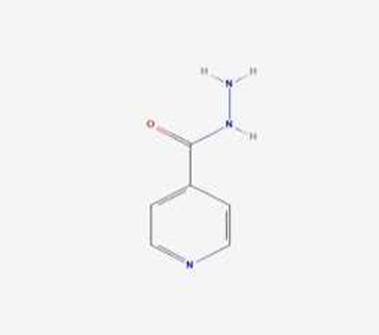
Molecular weight: 137.14 Chemical formula: C6H7N3O Category: Anti-tubercular drug. Dose: 300mg daily or up to 1g twice weekly. Description: Isoniazid appears as odorless colorless or white crystals or white crystalline powder. Taste is slightly sweet at first and then bitter. pH (1% aqueous solution) 5.5- 6.5. pH (5% aqueous solution) 6-8. (NTP, 1992) Solubility: Freely soluble in water; sparingly soluble in ethanol (95%); slightly soluble in chloroform; very slightly soluble in ether. Storage: Store in well-closed, light- resistant containers. Absorption and Fate: Isoniazid is readily absorbed from the GIT. Peak concentration of about 3 to 8µg per ml appears in blood after a fasting dose of 300mg by mouth. The rate and extent of absorption of Isoniazide is reduced by food. Uses and Administration: Isoniazid is a hydrazide derivative that is the mainstay of the primary treatment of pulmonary and extra pulmonary tuberculosis. Isoniazid given in the initial and continuation phase of short- course tuberculosis regimens. The usual adult dose is 300mg daily by mouth on an empty stomach. Children’s dose varies between 5mg per body-weight daily. All with the maximum of 300mg daily.
Pharmacodynamics
Isoniazid is a bactericidal agent active against organisms of the genus Mycobacterium, specifically and M. kansasii. It is a highly specific agent, ineffective against other microorganisms. Isoniazid is bactericidal when mycobacteria grow rapidly and bacteriostatic when they grow slowly.
Mechanism of Action
Since isoniazid is a prodrug, bacterial catalase is required for its activation. Specifically, activation is linked to mycobacterial reduction and a process that results in the formation of an oxyferrous enzyme complex. Isoniazid prevents the synthesis of mycoloic acids, which are crucial building blocks of the bacterial cell wall, once it is activated. Isoniazid is bacteriocidal against actively growing intracellular and extracellular organisms at therapeutic concentrations. In particular, isoniazid forms a covalent adduct with the cofactor to block InhA, the enoyl reductase from Mycobacterium tuberculosis. The sluggish, tight- binding competitive inhibitor of InhA is the INH- NAD adducts.
Polymer Profile
Xanthum Gum
Nonproprietary Names: Xanthan Gum (BP)
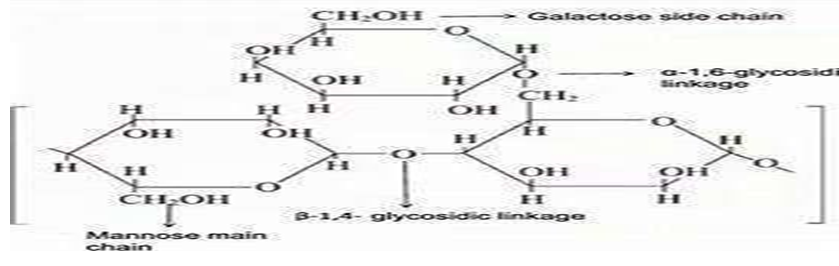
1. Synonyms: Corn sugar gum; polysaccharide B-1459; Vanzan 2. USP NF- xanthani gummi; Xantural 3. Molecular weight: 933.748 g·mol−1, Chemical formula: (C35H49O29) n 4. The USP32–NF27 describes xanthan gum as a high molecular weight polysaccharide gum. It contains D-glucose and D-mannose as the dominant hexose units, along with D-glucuronic acid, and is prepared as the sodium, potassium, or calcium salt. 5. Functional Category: Gelling agent; stabilizing agent; suspending agent; sustained-release agent; viscosity- increasing agent. 6. Description: Xanthan gum occurs as a cream- or white- colored, odorless, free flowing, and fine powder. 7. Applications in Pharmaceutical Formulation or Technology: Xanthan gum is widely used in oral and topical pharmaceutical formulations, cosmetics, and foods as a suspending and stabilizing agent. It is also used as a thickening and emulsifying agent. It is nontoxic, compatible with most other pharmaceutical ingredients, and has good stability and viscosity properties over a wide pH and temperature range [6].
Gaur Gum
Nonproprietary Names: BP: Guar Galactomannan USP-NF: Guar Gum
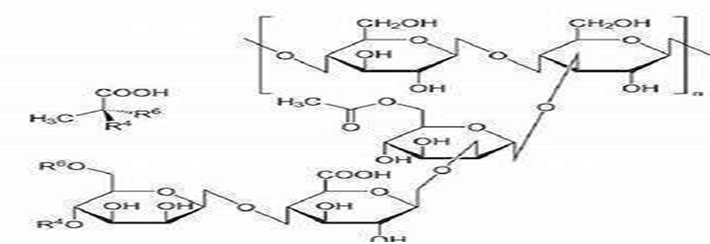
1. Synonyms: E412; Galactosol; guar flour; guar galactomannanum; jaguar gum; Meyprogat; Meyprodor; Meyprofin. 2. Molecular Formula: C10H14N5Na2O12P3, Molecular Weight: 535.145283 3. Functional Category: Suspending agent; tablet binder; tablet disintegrant; viscosity increasing agent. 4. Applications in Pharmaceutical Formulation or Technology: Guar gum is a galactomannan, commonly used in cosmetics, food products, and pharmaceutical formulations. It has also been investigated in the preparation of sustained-release matrix tablets in the place of cellulose derivatives such as methylcellulose. 5. Description: Guar gum, also called guaran, is a galactomann polysachharide extracted from Guar beans that has thickening and stabilizing properties useful in food, feed, and industrial applications. The guar seeds are mechanically dehusked, hydrated, milled and screened according to application. 6. It is typically produced as a free-flowing, off-white powder.
Eudragit L100
1. Molecular Formula: C8H12O4 2. Molecular Weight: 172.18g/mol
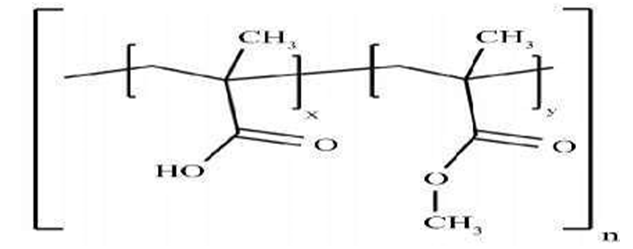
1. Description: EUDRAGIT L100 is a solid substance in form of a white powder with a faint characteristic odor. It is a polymer based on methacrylic acid and ethyl acrylate, containing an anionic copolymer. The ratio of the free carboxyl groups to the ester groups is approximately 1:1.
Challenges for the Preparation of Sustained Release Dosage Form
A Poor Correlation between In Vitro and In Vivo: In dosage forms for sustained release, the rate of drug release is gradually decreased to achieve drug release, which may occur over a significant portion of the gastrointestinal tract. The “Absorption window,” as it is known, therefore becomes crucial and contributes to inadequate drug absorption in- vivo despite great in-vitro release characteristics. Dose Dumping: This could significantly increase a drug’s body concentration, causing negative effects or even drug- induced poisoning. The relatively high amount of medicine in a formulation with sustained release delivery is released gradually when there is dose dumping. In the event of powerful drugs with a limited therapeutic index, such as phenobarbital, dose dumping might result in fatalities. Limited Options for Choosing the Appropriate Dose within the Unit: The dose adjustments for conventional dosage forms are much simpler, for example, a tablet can be divided into two parts. Sustained release dosage types may make this seem to be more difficult. A fractured dosage form could result in the loss of the sustained release characteristic. Patient variation: Individuals may require a different amount of time for the dosage form-released medication to be absorbed. Different individuals respond differently to co- administration of other medications, food intake or lack of it, and gastrointestinal tract residence time. Additionally, it causes the patient’s clinical responses to differ [7].
Method of Preparation of Isoniazid Tablets
Different Isoniazid tablet formulations were prepared by wet granulation method according to the formula. Granulation: Take prepared mixture powder and add small quantity of distilled water. Then granules were prepared by pass the mixture through the 20 mesh sieve. Collect the all granules on the filter paper and allow to drying. Drying: The prepared granules are allowed to drying by using hot air oven. The granules are leave in the hot air oven about 1-2hours. The granules should be not drier and not less dry. Lubrication: After the drying magnesium stearate and talc is add in the granules for the lubrication. Punching: Prepared granules are allowed to punching by using single unit tablet punching machine. The tablets of isoniazid were prepared allow to store in a well closed container till used. Lubricants are helped in the punching of tablets [8].
Materials and Methods
| Ingredients | Role | |
|---|---|---|
| 1 | Isoniazid | Anti-tuberculosis agents |
| 2 | Xanthan gum | Natural Sustained release polymer |
| 3 | Guar gum | Natural Sustained release polymer |
| 4 | Eudragit L100 | Synthetic Sustained release polymer |
| 5 | Microcrystalline cellulose (MCC) | Direct compression binder |
| 6 | Lactose | Diluent |
| 7 | Magnesium stearate | Lubricant |
| 8 | Talc | Glidant |
Table 1: Angle of Repose.
Table: 1 Characterisation of Drug.
Organoleptic Properties
Colour, odour and appearance Isoniazid is evaluated for parameters like colour, odour. Evaluation of post compression parameters for prepared tablets Angle of repose: The angle of repose was calculated using the following formula Tan θ = h/r Where, Tan θ = Angle of repose, h = Height of the cone, r = Radius of the cone base
| Sr. No | Flow ability | Angle of Repose |
|---|---|---|
| 1 | Excellent | <25 |
| 2 | Good | 25-30 |
| 3 | Passable | 30-40 |
| 4 | Very poor | >40 |
Table 2: Angle of Repose.
Bulk density: The bulk density was calculated using the formula: Bulk Density = M /Vo Where, M = weight of sample, Vo = apparent volume of powder Tapped density: The tapped density was calculated, in gm per L, using the formula: Tapped density = M / V Where, Tap= Tapped Density M = Weight of sample V= Tapped volume of powder Measures of powder compressibility: Compressibility Index is calculated using the following formulas: Carr’s Index = [(tap-b)/tap] × 100 Where, b = Bulk Density, Tap = Tapped Density.
| Carr’s Index | Compressibility | |
|---|---|---|
| 1 | Excellent | 5-15 |
| 2 | Good | 12-16 |
| 3 | Fair | 18-2 |
| 4 | Slightly | 23-28 |
| 5 | Poor | 28-35 |
| 6 | Very poor | 35-38 |
| 7 | Extremely poor | >40 |
Table 3: Compressibility Index.
Formulation Development of Tablets
All the formulations were prepared by direct compression. The compositions of different formulations are given. The tablets were prepared as per the procedure given below and aim is to prolong the release of Isoniazide. Total weight of the tablet was considered as 400mg. Evaluation of Post Compression Parameters for Prepared Tablets: The designed formulation tablets were studied for their physicochemical properties like weight variation, hardness, thickness, friability and drug content. Weight Variation Test: To study the weight variation, twenty tablets were taken and their weight was determined individually and collectively on a digital weighing balance. The average weight of one tablet was determined from the collective weight. The weight variation test would be a satisfactory method of deter mining the drug content uniformity. The mean and deviation were determined. The percent deviation was calculated using the following formula. % Deviation = (Individual weight – Average weight/Average weight) × 100 Hardness: For each formulation, the hardness of three tablets was determined using Monsanto hardness tester and the average is calculated and presented with deviation. Thickness: Average thickness for core and coated tablets is calculated and presented with deviation. Friability: It is measured of mechanical strength of tablets. Roche friabilator was used to determine the friability. It is expressed in percentage as % Friability = [(W1-W2)/W] × 100 Where, W1 = Initial weight of three tablets W2 = Weight of the three tablets after testing Determination of Drug Content: Tablets were tested for their drug content. Ten tablets were finely powdered quantities of the powder equivalent to one tablet weight of isoniazide were accurately weighed, transferred to a 100ml volumetric flask containing 50ml water and were allowed to stand to ensure complete solubility of the drug. The mixture was made up to volume with water. The solution was suitably diluted and the absorption was determined by UV–Visible spectrophotometer. The drug concentration was calculated from the calibration curve [9].
Application of Release Models on Dissolution Profile
Zero order release rate kinetics: To study the zero– order release kinetics the release rate data are fitted to the following equation. F = Ko t Where, ‘F’ is the drug release at time‘t’, ‘Ko’ is the zero order release rate constant. The plot of % drug release versus time is linear. First order release rate kinetics: The release rate data are fitted to the following equation Log (100-F) = kt A plot of log cumulative percent of drug remaining to be released vs. time is plotted then it gives first order release. Higuchi release model: To study the Higuchi release kinetics, the release rate data were fitted to the following equation.
F= k t1/2
Where, ‘k’ is the Higuchi constant. In Higuchi model, a plot of % drug release versus square root of time is linear. Korsmeyer and Peppas release model- The mechanism of drug release was evaluated by plotting the log percentage of drug released versus log time according to Korsmeyer- Peppas equation. The exponent ‘n’ indicates the mechanism of drug release calculated through the slope of the straight Line. Mt/ M∞ = K tn Where, Mt/ M∞ is fraction of drug released at time ‘t’, k represents a constant, and ‘n’ is the diffusional exponent, which characterizes the type of release mechanism during the dissolution process. Hixson-Crowell release model: (100-Qt)1/3 = 1001/3– KHC.t Where, k is the Hixson-Crowell rate constant. Hixson-Crowell model describes the release of drugs from an insoluble matrix through mainly erosion.
In-Vitro Dissolution Studies
Formulated tablets were put through an in vitro dissolving test using a paddle-style USP type I / device running at 100 revolutions per minute and maintaining a 37°C water bath. Dissolution was maintained in 900 ccs of simulated stomach fluid for two hours and in simulated intestinal fluid for an additional eight hours. A UV-visible spectrophotometer was used to detect the emission of various medications at specific wavelengths over time.
Conclusion
To prepare sustained release tablets by using natural and synthetic polymers, so it can be determined among which polymer shows better results. To determine whether, which polymer is superior and assure the quality of pharmaceutical dosage. We can be using this literature survey for further study in future much more help full as is describes in simple study.
Pharmaceutical companies are now utilizing sustained- release dosage forms advantages and growing acceptance by formulating various active pharmaceutical ingredients (APIs) as sustained-release matrix tablets to enhance patient outcomes. Considering the future, more drugs are being loaded with sustained-release matrix tablet.
Authors’ contributions
All authors contributed equally
Conflict interests
There are no conflicts of interest many of the authors concerning the publishing this manuscript.
Consent for Publication
All authors agree to have read the manuscript and authorize the publication the final version of the manuscript.
Availability of Data and Material
The data used in this study are available and will be provided by the corresponding author on A reasonable request.
Funding statement
Not applicable.
Author’s declaration statements
Ethics approval and consent to participate Not applicable.
References
-
Qurrat AJ, Muhammad IM, Muhammad NJ, Imran M, Shahid MI (2017) formulation and in vitro evaluation of sustained release matrix tablets using cross linked natural gum. Journal of pharmaceutics science 30(2): 355-362.
-
Sarika P, Ashutosh B, Deepak S (2013) sustained release matrix technology and recent advanced in matrix drug delivery system, a review. International journal of drug research and technology 3(1): 12-20.
-
Qiu y (2000) Handbook of pharmaceutical controlled release technology. 1st (Edn.), new York marcel Dekker pp: 575-609.
-
Jantzen GM (1995) Modern Pharmaceutics. sustained ad controlled -release drug delivery system. 4th (Edn.), CRC Press.
-
Brahmankar DM, Sunil J (2009) Biopharmaceutics and pharmacokinetic A Treatise. 2nd (Edn.), valley Prakashan pp: 399-401.
-
Zalte HD, Saudagar RB (2013) Review the sustained- release matrix tablet. International Journal of Pharmacy and Biological Sciences 3(4): 17-29.
-
Solanki DM, Mohit M (2020) Studies on drug release kinetics and mechanism from sustained-release matrix tablets of isoniazid using natural polymers obtained from Dioscorea alate. International Journal of Chemical technology 13(3): 166-173.
-
R Rastogi, Sultana Y, Aqil M, Ali A, Kumar S, et al. (2007) Alginate microspheres of isoniazid for oral sustained drug delivery. International journal of Pharmaceutics 334(1-2): 71-77.
-
Gopikrishna A, Ramu B, Srikanth, Rajkamal B (2016) Formulation of isoniazid sustained release formulation by using carbopol 934 P. International journal of Applied pharmaceutical sciences and research 1(2): 60-69.
- Acido Labile or Gastro Irritant Apis and Enteric Release in Galenic Practice: An Overview
- A Study on Knowledge, Attitude and Practice of Hand Hygiene among Healthcare Professionals at a Tertiary Care Hospital, India
- Influence of Inoculum Concentration on In Vivo Incubation Period of Emmia lacerata, Pathogenesis and Management of Wilt in Pepper (Capsicum annuum L.)
- Vanilla’s Chemistry
- Marine Anti-Cancer Compounds and Adverse Effects of Global Warming on Oceans: An Overview
- Serological Investigation of Chikungunya Virus Antibody among Malaria-Suspected Febrile Patients in Some Healthcare Facilities in Rivers State