
Review on Tropical Carriers of Antifungal Drug Therapy
Among the most prevalent conditions affecting the skin are fungus infections. OTC and oral antifungal medications are used in treatment regimens. Considering the potential negative effects of oral treatment, the topical method is usually favoured. Soon, traditional products like gels, ointments, and creams may become obsolete due to advancements made in formulation. When used to treat cutaneous fungal infections, a number of carrier systems that are packed with antifungal medications have shown encouraging outcomes. These more recent carriers include liposomes, ethosomes, liposomes, Microemulsion, and lipid systems such solid lipid nanoparticles and nanostructured lipid carriers. Penetration enhancer vesicles are another example of these newer carriers. Compared to cream and ointment, gel and composition have superior stability and application qualities. Among the most prevalent dermatology issues are skin interactions resulting from fungal infections. The most effective treatment for cutaneous infections is topical medication.
Introduction
Oral medication delivery is the most widely used mode of administration; yet, in cases where the medicine has a high hepatotoxicity, it presents significant challenges. Topical formulations may be developed to circumvent this limitation and increase the efficacy of most anti-fungal drugs, especially those that target fungal infections. Every medical condition calls for a specific and appropriate course of treatment. In fact, it’s thought that treating a patient’s ailment with the least amount of harm to their health is the primary goal of any therapy [1]. Applying topical medications externally is meant to have a localizing effect on one or more skin layers. Topical drug delivery systems use a wide range of pharmaceutical dosage forms, including semisolids, liquid formulations, sprays, and solid powders. The semisolid topical medication delivery formulations that are most commonly used are gels, creams, and ointments [2].Their effects can be either fungicidal or fungistatic, depending on the agent used. It is advised to use fungus agents as they have fewer side effects when taken orally. Another advantage of topical formulation is the prevention of drug interactions, which are more common when drugs are taken orally [3].
Three Primary Purposes for Topical Formulation
Due to their emollient qualities, they aid in hydrating the skin 1. To repair a damaged or undamaged skin or to protect the skin form external factors. 2. Using topical medicine
Benefits of Topical Pharmaceutical Delivery Include
- Prevents problems with GI medication absorption brought on by changes in pH, enzyme activity, and drug interactions with meals, beverages, and other oral medications [4].
- This route is utilized in cases where other administration methods (such as oral administration, intravenous injection) are not working, such as in cases of vomiting, dysphagia, resistant youngsters, or diarrhoea.
- Because this method of medicine distribution is non- invasive and does not involve parenteral therapy’s discomfort, patient acceptance is less intrusive and without the pain associated with parenteral therapy.
- Prevents the first-pass effect, which could lead to the inactivation of enzymes by the liver and digestive systems.
- Lower dosage in comparison to oral dosage types.
- The capacity to dissolve a wide variety of medications with different chemical properties, enabling combination therapy using a single transdermal gel.
- Increases adherence by allowing for a longer course of treatment with just one application.
- The skin is less greasy and simpler to remove.
Drawbacks of Topical Medicine Delivery
- It is not appropriate for drugs that cause skin irritation or sensitivity [5].
- The cost of topical medicines is higher than that of conventional dosage forms.
- The delivery system’s surface area and the dose that needs to be given during the chronic stage of sickness limit the route.
Characteristics of Gel
- The optimum gelling agents for use in pharmaceutical or cosmetic formulations should be safe, inert, and unable to react with other ingredients [6, 7].
- The preparation’s gelling ingredient should, when stored, have a suitable solid-like character that breaks quickly under shear forces from shaking the bottle, squeezing the tube, or applying it topically.
- It ought to protect against microbial assault with the proper antibacterial action.
- The topical gel ought not to be sticky.
Fungal Infection Mycoses, a prevalent type of fungal infection, are just one example of the many physiological and environmental variables that can lead to the development of fungal illnesses. As long-term infections can arise from breathing in fungus spores or from localized colonization on the skin, mycoses typically begin in the lungs or on the skin. Fungal skin infections affected 984 million people worldwide in 2010 and were the fourth most prevalent illness. Fungi are eukaryotic (meaning they have many cells) and are widespread in nature. Like mushrooms, fungus, yeast, and molds can all be seen with the unaided eye and appear in a variety of forms. The fungal disease affects billions of people and claims the lives of about 1.5 million people [8].
Not, withstanding the continued neglect of this issue by public health professionals, fungal deaths remain an infrequent concern. Moderate fungal infection has been linked to cancer, organ transplantation, asthma, and the use of corticosteroids. Not all fungi are dangerous to humans; just a tiny portion can, under specific conditions, spread illness. Fungi can disseminate their spores by direct collection, inhalation, or other means. The skin, lungs, and nails are the primary organs affected by fungal infections, but the infections can also spread to the internal organs through the skin and result in a systemic infection. Fungal infections, or mycosis, are different from most bacterial ailments. Since fungal infections are uncommon among viral and bacterial diseases, there is less interest in health surveillance, which leads to a lack of understanding about illness prevention.
Antifungal Drugs and Their Modes of Action
There are currently five common types of antifungal drugs available for both topical and systemic treatments:
- Azoles
- Polygenes
- Echinocandins
- Allylamines
- Pyrimidine Analogues The potential cellular targets and mechanism of action of these drugs, the azole class of drugs, which comprises the imidazole’s (and ketoconazole) and triazoles (fluconazole and voriconazole), has been the most successful in facilitating the creation of several antifungal substances for use in medicine. These medications are effective against Candida species and other fungi, and they are palatable due to their numerous delivery options [9].
Azoles inhibit sterol 14a-demethylase, an essential enzyme in the formation of sterols. They also convert lanosterol into ergosterol, which is required to maintain the fluid and stable nature of fungal cell membranes. Conversely, polyene antimycotics, such as amphotericin B and nystatin, sequester membrane sterols and use hydrophobic interactions to create membrane holes and fungal cell death. Capsofungin, micafungin, and anidulafungin are examples of the semisynthetic lipopeptides known as echinocandins, which work against Aspergillus and Candida species by inhibiting the growth of fungal cell walls.
These drugs work as fungistatic agents by inhibiting the 1,3-8-0-glucan synthase enzyme, which is encoded by the FKS gene family and required for the synthesis of important 1,3-8-0-glucan components found in the cell walls of numerous fungi. Because allylamine medicines inhibit ergosterol production, which slows down fungal development, they are often used to treat superficial dermatophytoses. Naftifine and terbinafine are two of these drugs that block squalene. Epoxidase that converts squalene into lanosterol. Drugs such as 5-fluorocytosine (5-FC), an analogue of pyrimidine, work well against some species of Cryptococcus and Candida. Via cytosine permeases, 5-FC penetrates cells where it is transformed into 5-fluorouracil, which subsequently prevents the synthesis of proteins by interfering with the synthesis of both DNA and RNA nucleic acids. Apart from these primary mechanisms, it has been noted that both miconazole and amphotericin B induce oxidative stress while exhibiting more potent antifungal properties. Moreover, new targets within the cell, such as the inhibition of griseofulvin’s capacity to assemble microtubules, the suppression of sordarin’s capacity to synthesize proteins, and the inhibition of triphenylethylenes capacity to signal calcineurin.
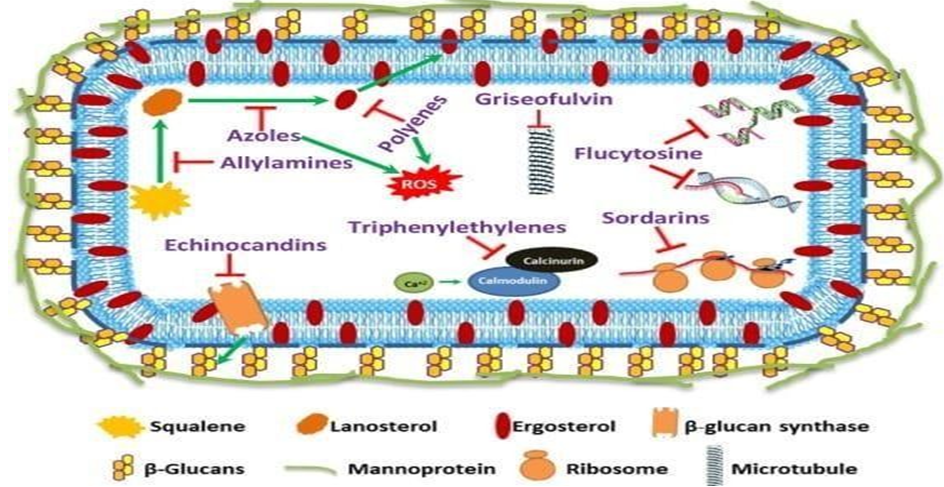
Figure1: New Cellular Targets Including Mode of Action of Antifungal Drugs.
| Sr. No | Examples |
|---|---|
| 1 | Fluconazole |
| 2 | Amphotericin B |
| 3 | Ketoconazole |
| 4 | Itraconazole |
| 5 | Terbinafine |
| 6 | Tioconazole |
| 7 | Clotrimazole |
| 8 | Moinetasone |
| 9 | Fucidic acid |
Table 1: Antifungal Drugs Available in Market.
Nano Sponges: A “Nano sponge” is a novel kind of material composed of tiny particles with a hollow that is only a few nanometer’s wide. There are numerous materials that can be used to plug these tiny holes. The durability of drugs and molecules that are only occasionally soluble in water can be improved by these microscopic particles’ ability to carry both lipophilic and hydrophilic medicinal substances [10].
Targeting pharmaceutical delivery systems has long been a goal in the effort to achieve desired results. Although the medication delivery method with nanosponges was once restricted to the surface, it is now possible to inject them intravenously (IV) in addition to orally. The three dimensional scaffold or network of polyester nanosponges has the potential to break down organically. To create Nanosponges, these polyesters are dissolved in a solution containing a cross linker. Polyester often degrades naturally, therefore in this instance; the body doesn’t break it down too much. The disintegration of the nanosponges’ framework results in the unfavourable release of the loaded drug molecules.
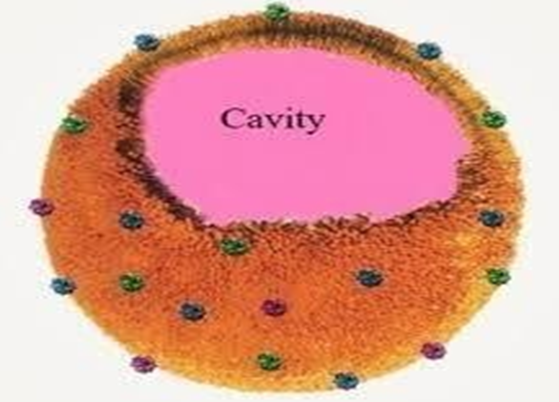
Amphiphilic Gel: Methods of self-assembly based on amphiphilic macromolecules present unprecedented chances to develop novel materials for cutting-edge nanotechnology applications. Recent research indicates that the thermodynamic incompatibility of the various blocks results in a spatial organization into ordered morphologies on the Nano scale, which produces unique structural features. One of the main examples of how extraordinarily precise cellular functions can be carried out in bio systems is the assembly of several amphiphilic macromolecular components and their coordinated actions [11].
Other medication administration techniques, such as topical, inhalation, and ophthalmic, are also being studied. The ideal psoriasis treatment has yet to be discovered since the drug must accumulate in the skin area rather than the circulation. Consequently, non-ionic surfactant-only Amphiphilic gels have been created for topical drug delivery. Many drugs can be dissolved in the gels and possibly given via and into the skin because the surfactants enhance skin penetration. The potential of these cyclosporine-containing amphiphilic gels to irritate skin while taking the form of patches was investigated [11].
The skin is composed of multiple layers, each with distinct properties and functions. The skin’s outermost layer, or epidermis, has two main purposes: it acts as a barrier to keep out harmful substances and microbes and to restrict the body’s capacity to lose water and other ions to the environment. Cornfield cells embedded in a lipid matrix make up the stratum corneum, the uppermost layer (Elias 1983). This impermeable layer prevents medications from reaching the skin and protects the body from the outside environment. Any product applied topically will therefore initially come into contact with this layer [12]. The process of treating a cutaneous condition by topically administering a medication formulation is known as topical drug delivery. This method is used when a localized cutaneous condition, such as a fungal infection, manifests itself or when other drag delivery routes, like oral, sublingual, rectal, and parental, are insufficient. The drug is absorbed by the skin in the topical delivery system and goes to the site of action to produce a therapeutic effect. For both local and systemic disorders, topical medication delivery is a well-liked therapeutic strategy. The pace at which a medicine releases from a topical preparation is directly influenced by the physiological properties of the carrier. The primary benefit of a topical administration system is its ability to avoid first-pass metabolism [13].
The term “micro emulsion” is derived from the size of the particles. Because the drug particles are tiny, they can easily permeate the skin and reach their intended site of action. The gel will hold the micro emulsion in place for a long period of time and aid in the drug’s continual release. These days, there’s a major threat to civilization from a number of viral infections that are becoming more prevalent. Severe infections are brought on by skin conditions such as tinea corporis, tinea pedis, and tinea capitis. One technique that can help the drag easily penetrates the skin and provides a rapid net of action is emulgel [14].
Microemulsion: A thermodynamically stable, optically isotropic colloidal dispersion with a droplet width typically ranging from 10 to 100 nm is referred to as a “micro emulsion.” It is made up of the proper concentrations of an aqueous phase, an oil phase, a co-surfactant, and a surfactant. The bioavailability of poorly soluble medications in relation to macro emulsions has been extensively studied.
In these circumstances, they provide a feasible scheme. Micro emulsions exhibit remarkable levels of penetration and absorption due to their small droplet size and extremely low surface tension. In addition to the conventional oral route, these flexible carriers are becoming more and more popular and are being used in several different administration routes [15].
Micro emulsions are superior to traditional emulsions, suspensions, and micellar solutions, as well as colloidal systems under study. As such, they may be used as replacement drug carriers. For the administration of parenteral, topical, transdermal, ophthalmic, percutaneous, and oral medications, they provide controlled or prolonged drug release. These medication delivery techniques show great promise. Increased solubility of hydrophobic drugs, bioavailability, thermodynamic stability, spontaneous synthesis, and simplicity of manufacturing and scaling up are some of their benefits. In addition, inverted micellar structure micro emulsions may be less comedogenic than creams or solutions [16].
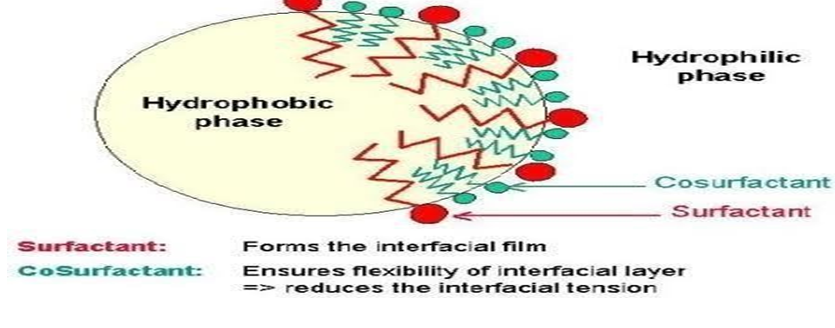
Nanoemulsion: An improved drug administration system has been developed in response to the primary drawbacks of conventional drug delivery methods. This review offers a comprehensive overview of a Nano emulsion technology. The goal of Nano emulsions, also known as Nanosized emulsions, is to improve the way that active pharmaceutical ingredients are delivered. When two immiscible liquids are combined into a single phase using a co-surfactant and surfactant, often known as an emulsifying agent, the resulting systems are thermodynamically stable isotropic systems. The typical size of a Nano emulsion droplet is 20-200nm. The main differences between an emulsion and a Nano emulsion are the size and shape of the particles dispersed in the continuous phase. Giving a general grasp of its idea and preparation process is the aim of this review [15, 16].
Colloidal particle systems in the submicron size range, known as Nano emulsions, are used to transport drug molecules. Their diameters vary from 10 to 1,000nm. These carriers are solid spheres with a negatively charged, lipophilic, amorphous surface. Magnetic nanoparticles can be used to increase the site specificity. As a medication delivery technique, they maximize the medicine’s therapeutic efficacy while minimizing negative effects and adverse reactions.
Conclusion
Key uses include immunization, liver enzyme replacement therapy, cancer treatment, and the control of reticular endothelial system (RES) infections. An emulsion is a biphasic system in which the other phase contains deeply distributed microscopic droplets whose diameters range from 0.1 to 100µm [15].
In contrast to Other Dosage Forms, Nanoemulsion Offers a Number of Advantages.
- Increased absorption rate [16]
- Decreased variability in absorption
- Protection against oxidation and hydrolysis in O/W Nano emulsions
- Lipophilic drug delivery after solubilisation
- Water-insoluble medication dose form, increased bioavailability of various drugs
- The ability to mix lipophilic and hydrophilic drugs
- Delivery systems that enhance the overall efficacy of dosage
- When applied as safe, non-irritating cutaneous and mucosal membrane delivery methods; and [4]
Drug release regulated by a precisely controllable liquid film with regulated hydrophilicity or lipophilicity and thickness [17, 18, 19, 20, 21, 22, 23].
References
-
Nayana GS, Neema G (2018) Formulation and Evaluation of Oxiconazole Nitrate Gel for Transungual Delivery. Saudi Journal of Medical and Pharmaceutical Sciences 4(10): 1141-1148.
-
Godge GR, Bharat SC, Shaikh AB, Radhawan BB, Raskar MA, et al. (2023) Formulation Perspective in Topical Antifungal Drug Therapy: A review. Journal of Drug Delivery and Therapeutics 13(5): 110-119.
-
Eman A, Maha N, Omaima S, Nabaweya AEG (2015) Rrcent Advances in topical carrier of antifungal agents. Indian J Dermatol Venereol Leprol 81(5): 457-463.
-
Howard CA, Loyd VA (2005) Ansel’S Pharmaceutical Dosage Forms and Drug Delivery Systems. Lippincott Williams & Wilkins pp: 407-440.
-
Verma A, Singh S, Kaur R, Upendra KJ (2013) Topical Gels as Drug Delivery Systems: A Review. Int J Pharm Sci Rev Res 23(2): 374-382.
-
Carter SJ (2022) Dispersed system, In: Cooper and Gunn’s Tutorial Pharmacy. CBS publishers and Distributers pp: 68-72.
-
Lieberman HA, Rieger MM, Banker GS (2005) Pharmaceutical Dosage Form: Disperse System 2nd (Edn.), CRC Press pp: 399-421.
-
Kiran KR, Alwae RP, Nancharaibn YN (2022) Fungal infections: Pathogenesis, Antifungals and alternate treatment approachs. Curr Res Microb Sci 27:3:100137.
-
Vure P, Neeraj K, Prabhat RM (2007) Amphiphilic gel as potential carrier for a Topical drug delivery 14(2): 75- 85.
-
Sahu GK, Sharma H, Gupta A, Kaur CD (2015) Advancement in Microemulsion Based Drug Delivery Syestem for better Therapeutic Effects. International Journal of Pharmaceutical Sciences and Developmental Research 1(1): 8-15.
-
Hemendrasinh JR, Dhruti PM (2015) A Review on Pharmaceutical Gel, International Journal of Pharmaceutical Sciences 1(1): 33-47.
-
Glotzer SC, Solomon MJ (2007) Anisotropy of Building Blocks and Their Assembly into Complex Structures. Nature Materials. Nat Mater 6(8): 557-562.
-
Kumar N, Sexena CA (2019) Novel approach for topical drug delivery system- Emelgel. Trends in Pharmaceuticals and Nanotechnology 1(2): 27-28.
-
Gurpreet K, Singh SK (2018) review of Nanoemulsion formulation and characterization Technique. Indian Journal of Pharmaceutical science 80(5): 781-789.
-
Kaur LP, Garg R, Gupta GD (2010) Topical gels, A review. Research Journal of Pharmacy and Technology 3(1): 123-127.
-
Paye M, Barel AO, Maibach (2005) Handbook of Cosmetic Science and Technology 4th (Edn.), CRC Press.
-
Swarupanjali PA, Gauniya PS, Das PS, Rohit B (2018) Evolutionary Aspect of Antifungal Topical Gel-A Review. IJRRPAS 8(1): 15-30.
-
Nikam VK, Kotade KB, Gaware VM, Dolas RT, Dhamak KB, et al. (2011) Transungual drug delivery system: A review. Pharmacol online 1(1): 126-139.
-
Amichi B, Grunwald MH (1998) Adverses drug reaction of the new oral antifungal agents – Terbinafine, fluconazole and iraconazole. International journal of Dermatol 37(6): 410-415.
-
Gupta AK, Chow M, Danial CR, Aly R (2003) Treatments of tinea pedis. Dermatol Clin 21(3): 413-462.
-
Saeeda W, Singh S, Shariqe A (2021) Fungal Disease of Gynocologyal Aspects: A review. scholar’s International Journal of obstrics and Gynecology 4(9): 360-368.
-
Sriaandhal SL, Malitha AS (2022) A review on Emerging application of Emelgel as Topical Drug delivery ststem. World Journal of Advanced Research and Review 13(1): 452-463.
-
Nadish K, Vineetha PD, Krishananad KK, Shabaraya AR (2022) A versatile Novel drug delivery system. International Journal of Pharmaceutical science review and research 76(1): 151-156.
- Acido Labile or Gastro Irritant Apis and Enteric Release in Galenic Practice: An Overview
- A Study on Knowledge, Attitude and Practice of Hand Hygiene among Healthcare Professionals at a Tertiary Care Hospital, India
- Influence of Inoculum Concentration on In Vivo Incubation Period of Emmia lacerata, Pathogenesis and Management of Wilt in Pepper (Capsicum annuum L.)
- Vanilla’s Chemistry
- Marine Anti-Cancer Compounds and Adverse Effects of Global Warming on Oceans: An Overview
- Serological Investigation of Chikungunya Virus Antibody among Malaria-Suspected Febrile Patients in Some Healthcare Facilities in Rivers State