
A New Era of Healthcare: The Convergence of Artificial Intelligence and Pharmaceuticals
Artificial intelligence (AI) is involved with computer system that deals with solving complex problems using symbolic programming. This model helps to reduce the time and save money while give a better way to understand the relationship between different formulations and processes parameters. The use of AI has been growing fast in the pharmaceutical industry. This paper focuses on the advantage of AI in several fields of the pharmaceutical zone such as drug discovery, Quality control, drug development, and clinical trials design etc. to mention a few names that helps to reduce the workload of humans and also achieve the goals in a short period. AI is a broad term that covers areas including artificial neural network (ANN) and machine learning (ML). Using ML allow for exact prediction and identification of pattern.
History of AI
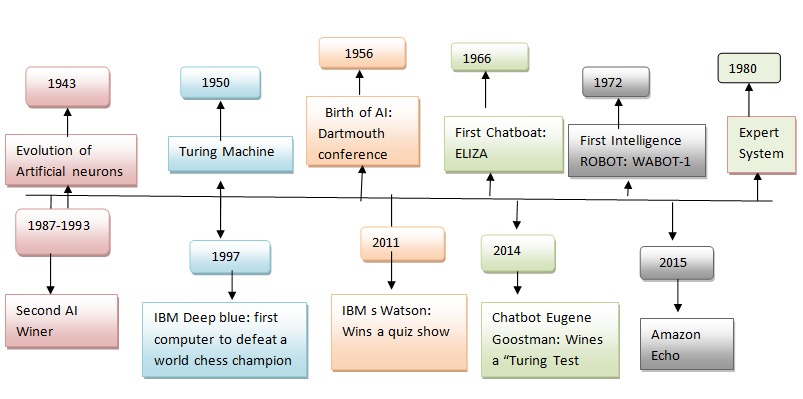
The concept of using computers to imitate intelligent behavior & critical thinking was first explained by Alan Turing in 1950. In the book computer and intelligence, Turing explained a simple test which is known as the “Turing test” to determine whether the computer was capable of human intelligence. 6 years later, the word AI was first adopted by American computer Scientist John McCarthy in 1956 when he held the first-time academic conference on the subject. The researchers emphasized showing algorithms which can solve mathematical problems. Joseph Weizenbaum produces the first chatbot in 1966, named ELIZA. The first intelligent humanoid robot was set up in Japan which was named as WABOT-1 in 1972 [1]. In the 1980s, David Rumelhart and John Hopfield promotes a “deep learning” system that permits computers to gain knowledge using experience & at the same time Edward Feigenbaum presented expert systems that imitated the decision-making procedure of a human expert. In the year 1997 IBM Deep Blue computer program was capable to beat a chess champion, Garry Kasparov. In 2011, IBM’s Whatson won the quiz show “Jeopardy” where it had to solve the complicated questions & riddles. In December 2016, IBM Watson announced a partnership with Pfizer’s research to accelerate drug discovery in immune-oncology [2] (Figure 1).
Introduction
The artificial intelligence (AI) is a duplicate of the human brainpower through the action of computers and able those to think like humans and mimic their action and to reduce the workload of humans and achieve the goals in a short period and it can manage a large number of materials with increased self-regulation. The main focus of artificial intelligence to find useful information processing problem and give a summarize account of how to resolve them. Artificial intelligence is a system which involves networks and modern devices that can work like human mind…machine learning (ML) is a kind of subset of artificial intelligence concept that has power to learn separately and to make better from practices without express schedule Basile AO, et al. [3]. A further set of machine learning known as deep learning that engaged neural networks and gain knowledge from the huge volume of experimental features. According to Mckinsey global survey, the fast advancement in artificial intelligence tends to overall transform the way of performance customs to the community.
According to a current report, machine learning and large data positively impact the health care sector. Machine learning technique is utilized to a wide variety of fields in public health care sector including disease identification & diagnosis, drug discovery & development, clinical trial design and pandemic breakout prediction. In clinical trial phases, machine learning & natural language processing (NLP) had been utilized for patient volunteers & selection and clinical trial design. Applications of AI had been greatly popular in drug analysis & numerous pharmaceutical industries have setup the partnership with AI companies. Now a day’s several companies using AI models for drug reprofling and finding new uses from old drugs [4, 5].
Networks & Tools of Artificial intelligence
There are several methods involve in AI such as understanding expression, reasoning compound examine & among them, an elemental sample of machine learning. Machine learning which is characterized by the algorithm process and learning independently procedure which takes place by the process of generally very big data set. Deep learning is a group of machine learning which is related terms of neural networks. Neural networks are computerized version and their functions are situated on human neurology. The primary unit of neural networks, as “perceptron” similar to human being neurology, resembles the transmission of electrical impulses in the human being intelligence [6] (Figures 2 & 3).
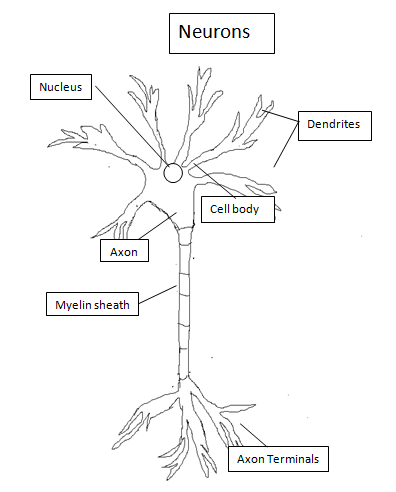
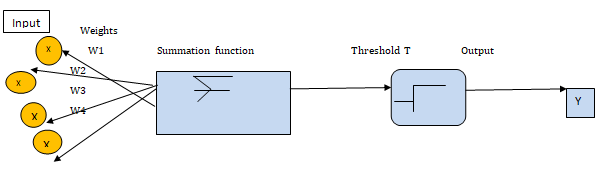
ANN is a subset of interconnected units of nodes, everyone accepts an unconnected input from a set of nodes, finally, change it to an input either single or multi- connected utilizing algorithms process to resolve complicated problems.
There are various types of Networks in Artificial Neural Networks
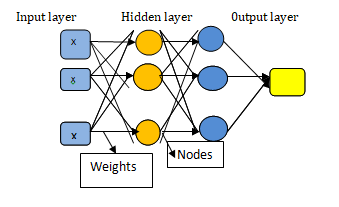
1) A multilayer perceptron (MLP) is most frequently used neural networks architecture due to its less complexity and capacity to generate satisfying result for the non- linear relationship and these are multi- layer between input and output layers which are known as a hidden layer. The MLP has wide applications including identification, optimization, and pattern recognition & MLP is also called as feed forward neural networks.
2) Recurrent neural networks (RNNs) types of artificial neural network in which secret layers neurons has self-linked. They include a loop, having capabilities to memorize relations and store information.
3) Convolutional neural networks (CNNs) are a sequence of dynamic systems with localized connections, identified by their topology & they have extensive use in work like profile recognition, biological system processing, and video processing, object detection and processing complex brain function. The major aim of ANN was to resolve the problems, involving many tools that have been developed based on the networks to resolve a major given sophisticated problem and need appropriate instruction and hands on knowledge of standard operating procedure, such methods can be supervised and unsupervised learning technique. This technique can also be utilized for the fast identification about disease. It was proved by its capability to detect cancer of the breast only (Figure 4).
The Classes of Layers can be Described as Following
- Input layer: This layer gives details from external word to the network. There is no use of computational representation in any of the input layer- they only precede on the details to the secret nodes.
- Output layer: This layer is the last in the networks and is responsible for generating the final result for a given input.
- Hidden layer: This layer is situated between input and output of the algorithm. The duty of this layer has to alter the inputs that come into the network.
The Lifecycle of Pharmaceutical Products in AI
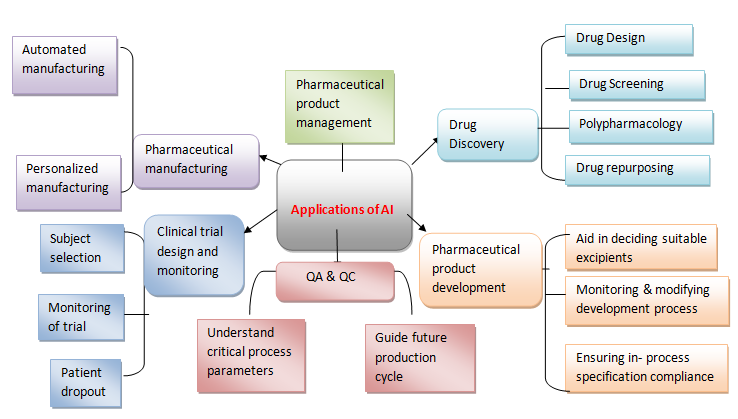
AI and neural networks have been playing a critical role in the pharmaceutical industry. It begins from drug development and development to manufacture and marketing. It helps to take the right decision and provide a better treatment for patients & to maintain the clinical data & use it for future drug development. Eularis declare recently the release of E-VAI, the newest progress in smart ML system provide upcoming generation analysis & decision making to pharmaceutical marketing worldwide. E-VAI change profession for marketers struggling & get benefit from their marketing. There are various applications in AI in drug discovery, and developments are summarized [7, 8] (Figure 5).
AI in Drug discovery
The overall process from the discovery of a new molecule to the marketing of a drug can take 10-15 years, and these processes are very complicated, time consuming, and expensive task. To achieve a successful result of a new drug is to intimidate and prevalent the most challenging role of drug synthesis because of their vast size of the chemical space that is approximate sequence of 1060 molecules. The new technology that AI have convert expert tools that could be used everywhere in several phases of drug synthesis such as new drug design, drug target validation and identification, drug repurposing enhancing the Research & Development efficiency aggregation and AI based decision making system to enroll patients for clinical trials [9].
The vast devices and new automation applied by AI may demonstrate to be a blessing to the public health department because of their capacity to observe lead compound and give a fast drug target validation and enhancing of the design of the drug structure & finally leading to reduce the expenditure and save the time including analysis of a new drug molecule.
The application of ML technology in the discovery of drug molecules and the development, especially in the course of the early stages has demonstrated valuable. QSAR (Quantitative structure-activity relationship) modeling is a computational field can fast prediction of large number of compounds or simple physical & chemical parameters but also they provide numerous biological actions like drug efficacy, ligand binding activities, and adverse effects of compounds. At the same time QSAR model is faces some obstacles such as experimental data error, shortage of experimental validation and small training sets. To get control of these challenges, the latest generation of AI, such as deep learning algorithm was also strongly applied for bioactivity modeling of drug with the help of increasing data size and computational tool. It can a carryout for security and efficacy characterization of drug substance based on the complex data structure and analysis. AI can be used perfectly in various areas of drug discovery include chemical synthesis, drug repurposing, drug screening, drug design & polypharmacology [10, 11].
AI in Drug design
Prediction of the Protein Target Structure
During the time of developing of a drug particle, it is required to select the exact goal for better medication. Various proteins are included in the advancement of the illness and certain events they are overreactions. Therefore, for particular targeting of disorder, it is important to determine the structure of the protein target to give the drug design molecule. In recent times, AI can help to predict structure- based drug discovery utilize the data of 3D chemical environment of protein target site for drug design molecule, In that manner support to predict the reaction of the target compound as well as a safety consideration before their production and synthesis.
Deep mind has recently established a portion of AI program is known as “Alpha fold” that can exact predict the structure of protein that it will fold into in a matter of days. To prediction the structure of a protein can be used to determine the 3-D shape of a protein from it’s an amino acid series. The Alpha fold can assist to improve the better response and more efficient drug discovery by identifying the structure of many humans proteins involved in disease. This technique such as alpha fold that is capable to find the exact structure of protein which is proved by exact prediction of 25 out of 43 structures. According to AI Qurashi, to predict the structure of the protein by RNN. The writer includes three phases (i.e. assessment, computation, geometry) name a recurrent geometric network (RGN). AI Qurashi predicted AI method would be fast than alpha fold about time is taken to predict the structure of protein [12].
predictions of Drug Protein Interaction
Exact identification of potential interaction between drug and protein target is a very crucial step in drug discovery. For drug exposes it’s a better therapeutic effect, it should be first engage and bind to the protein receptor. The prediction of drug interaction with a receptor or protein is required to get to know about its ability and effectiveness and restrict polypharmacology and permitting the repurposing of drugs. Drug target interaction is a main experimentation sector within the location of drug discovery. It introduces the recognition of the interaction between chemical compounds and protein targets in the human body [13].
Drug repositioning is the determination of interaction between drug and target protein in pharmaceutical science. Conventionally large-scale validation with the help of chemical experiment is the costly and time ingesting, while drug repurposing can excessively decrease the cost and time. Most of the proven efficacy with the help of in-vivo interaction with their target molecule such as enzyme, ion channels, nuclear receptor, and G-protein receptors. Numerous AI techniques had been applied in the exact prediction of ligand – protein interaction, to make sure to provide a greater therapeutic effect.
De Novo Design
AI in de-novo design is a computational technique that generates new active molecules without any source of the compound. This is a technique that generate new chemical organization primarily based on the knowledge with respect to biological goal(receptor) or its recognized active binders (ligand observed to good binding or inhibitory activity towards the receptor) in a cost reliable manner. An amazing method which is composed two artificial neural networks, an encodes network and adecodes network. The encodes network transform the chemical structure explained by SMILES representation into a real price nonstop vector from the latent space. The decodes network ability to change vectors from the latent area into chemical system. This point was utilized to find for optimal solution in latent space by an in-silico method and to return change these vectors into a real molecule [14].
By means of the decodes network. Recursive neural network (RNN) has additionally been strongly applied for de-Novo design. RNN take consecutive details as input due to the fact of SMILES string encode chemical structures in a series of letters, RNN were used for technology of chemical structure. Popova et al. proposed the reinforcement learning for structural evaluation approach for de-novo drug molecule, which involve two deep neural networks-generative and predictive that are educated individually however working together to produce new target chemical libraries. In this, the generative version generates an extra precise molecule in name of SMILE string primarily based on stack augmented reminiscence network and predictive models are obtained to forecast the desired features of the generated compounds. The participation of AI within the de-novo design of molecules can be helpful in the pharmaceutical department because of its numerous benefits like supplying us virtual knowledge and at the same time maximization of the already learned data and also recommend possible manufacturing routes for compounds prime to development and design [15].
Role of AI in Drug Screening
The entire procedure can take 10-15 years and expenses US 28 billion on average. Still, 9 out of 10 molecules failed in phase 2nd clinical trials design and regulatory approval. Drug screening is a process to determine the new drug against a chosen target for a particular disease normally including high throughput screening (HTS), where in libraries of chemicals are tested for their ability to modify the targets. There are several pharmaceutical companies such as Roche, and Pfizer have joined with IT sector companies to promote a stage for the discovery of treatment options in sectors like oncology and cardiology disease. The phases of AI are explained below.
Prediction of the Physical and Chemical Parameters
Physical and chemical properties of drug including hydrogen bonding, aqueous solubility, ionization of drug, distribution coefficient, and accidentally influence to ADME parameters and its target receptors and thus, it must be involved when screening of a novel drug molecule. AI has been applied to predict physical and chemical properties.
Such as ML usage huge amount of datasets generates during compound optimization carried out formerly to train the program. The solubility parameter in di methyl sulfoxide (DMSO) is a critical step in pharmaceutical companies during early phases of drug discovery. The compounds are non-soluble in atomized HTS and in that manner lost for experimental facts, they might be low water solubility and thus be non –bioavailable. There have done only a few examine in which involve ML method were used for the division of molecules as soluble and non-soluble in DMSO [16].
Quantitative structure-property relationship (QSPR) mode is developed by Zhang, et al. [5]. to identify the 6 physicochemical parameters of environmental chemicals to get from Environmental Protection Agency (EPA) is known as Estimation program interface (EPI) suits. The main strategy of QSPR is to determine the optimum quantitative relationship which can be used for the prediction of the properties of molecular structure. Neural networks are situated on the ADME predictors and ALGOPS program that have been utilized to predict lipophilicity & solubility of compounds [17].
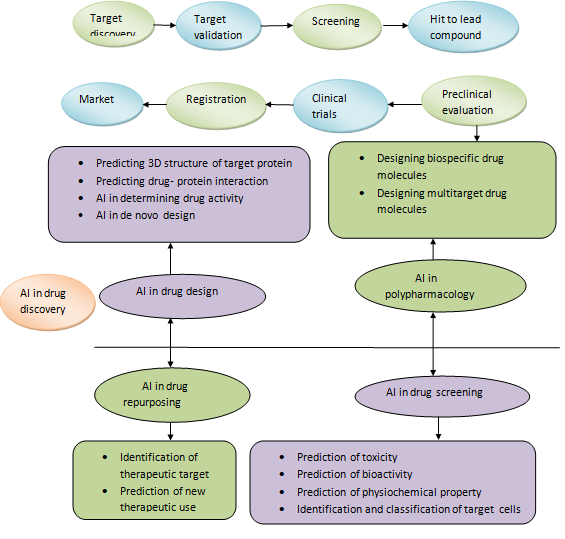
Figure 6: Traditional drug discovery and role of artificial intelligence in drug discovery. Prediction of Bioactivity The target protein or receptor with high affinity is based on the efficacy of the drug molecule. If the target protein will not be capable to provide the therapeutic effect in that manner drug molecule do not show any interaction with the receptor or protein. For example, it may have feasible that established drug molecule relate with unexpected receptors or protein, cause harmful effect. Drug-target binding affinity (DTBA) indicates the strength of interaction between a drug and its target. The major advantages of synthesizing drug target prediction as binding affinity regression task. AI primarily–based method can determine the binding affinity of drug molecules by involving the functions or similarities
Prediction of the Toxicity
Toxicity testing of new drug particles is playing an important role for drug development process. The toxicity prediction of any drug molecules is an important to keep away from toxic effect. Safety of a drug is a crucial challenge to convey novel drugs to the marketplace. Unpredictable toxicities are a prime source of attrition throughout clinical trial study and post marketing safety create unneeded morbidity and mortality. TargeTox and PrOCTOR are also used for prediction of toxicity. TargeTox is a term of biological network target is based on the toxicity of drug risk prediction approach in this method, the aim of exact identification of toxic drug compounds where entities close together that have a similar biological network tends to share functional properties. It can generate information about protein network data of pharmacological target parameters in merge with ML to predict drug toxicity [19, 20]. PrOCTOR is a goal primarily- based prediction toxicity program in which includes network details and also covers chemical parameters into its achievement. Chemical parameters of drug compounds like surface area, molecular weight, and quantitative estimation of drug likeness in addition to information of protein target to develop a PrOCTOR and It also helps to develop FDA approved drug and after released adverse drug reaction. Deep convolutional neural networks (CNN) are a subset of DL network that had been utilized to predict toxicity of a drug from pictures of cells. Pretreatment with a group of medicines and it also helps to estimate the cytotoxicity of drugs [21].
Role of AI in Drug Repositioning
Drug repositioning is also referred as drug re profiling or drug repurposing. It is a process identifying novel therapeutic uses from existing drugs. It is a technique in discovering drug candidates with new pharmacological and therapeutic response. Drug repurposing is a profitable and successful strategy because it permits the entry of the drug immediately to phase 2nd clinical trial study without passing the phase 1st of clinical trials and toxicity testing again & reduce the cost and time for the medicines to reach market. In silicon methods, predicting pharmacological effects of drug molecules using transcription data that consist of numerous biological methods done with DL reported. The DL method is based on the excessive-level representation of data utilizing deep neural networks (DNN) that is basically flexible multilayer system and consist of interconnecting artificial nerve cells that carry out several transformation data. According to Aliper, et al. [1] it becomes proved that DNNs can categorize the mechanism of action of complex drugs at the pathway stage. They found that DNNs is utilized as a classifying drug action into therapeutic classes according to their therapeutic effect, toxicity, and function classes [22].
Another new generation of AI method utilized in silica medicine is reinforcement learning. The benefit of this AI method is that it’s slightly based on learning from sets of data; in this manner the networks can have the tendency to recognize the definite strategies in drug design system. The recently develop in deep learning framework i.e. Generative adversarial network (GAN) architecture to produce excessive- resolution pictures with photo-realistic details is dependent on the given textual descriptors adversarial networks. There are many computational tools like ML and AI technology in this field may be utilized technique to accelerate the whole process.
Role of AI in Polypharmacology
It is a design or use of the pharmaceutical sector that act on multiple targets or disease pathways. It is an emerging as the next paradigm drug discovery. The phenomenon include “one-disease multiple target” paradigm. There are many databases like- zinc, pubchem, drug binding and binding DB give information related to molecule pathways. AI can be utilized to investigate those databases to identify the polypharmacological medium. A successful short story about AI model in designing polypharmacological medium which was presented within the literature the writers discovered competitive tools, DeepDDI, for greater knowledge of drug- drug interaction and related procedure and prediction of substitute form of drugs for intentional scientific use in absence of in negative health effects.
Role of AI in Advancing Pharmaceutical Product Development
The development of new drug candidates is the procedure to propose a novel drug to the marketplace a lead compound has been determined by the method of drug analysis. Drug development through clinical trial testing generates a high risk of failure due to the human Error in data processing and candidate monitoring. The reason is that it actually takes a long time and complex procedure which is directly impact to market. In this field AI can update the older clinical trials and highly defect values. The uses of numerous computational tools including Quantitative structure property relationship (QSPR) solving the complex problems usually encountered during formulation design such as dissolution, stability problem, solubility and tensile strength. Decision support tools based on AI algorithm that helps to select excipients based on the physical and chemical properties of the drugs. Using the knowledge base, the systems monitor the quantity of excipients, type, and nature desired to meet as per the specification [23, 24].
Several mathematical models, like finite element method (FEM), discrete element modeling (DEM) & computational fluid dynamics (CFD) & that have been study about the effect of the flow properties of powder on tablet compression and die-filling procedure. A Combination of DEM with CED has been utilized for imitating the die-filling procedure under the impact of both vacuum and air. CED also can be utilized to characterize the effect of table geometry on the dissolution form. These mathematical models are combined with an AI system has been demonstrated to be a huge assist in the fast manufacturing of pharmaceutical products.
Various authors have generated a prototype of a hybrid system by linking expert system (ES) with ANN to the development of optimal formulation for direct filling hard gelatin capsules. An Expert system is a computational tool that helps to resolve a complex problem and to give decision making capability like a human expert. AI system in the form of expert system has started to be utilized only to provide support for the process of formulation. The function of model expert system (MES) is the formulation decision type and provides related decision rules for formulation recommendation is dependent on the input parameters. ANN module utilized back propagation learning network is the prediction module that integrates formulation parameters and the desired actions, together managed by the control module.
Role of AI in Pharmaceutical Manufacturing
The growing complexity of the pharmaceutical manufacturing process and expanding demand for higher capacity, greater flexibility, and high products quality. Novel manufacturing system are trying to provide humanoid intelligence to devices, constantly converting the manufacturing system. AI in manufacturing is an important role in a novel process referred to cost effective, efficient, and safe technology. USFDA promoted process analytical technology (PAT) is a machine for managing pharmaceutical manufacturing, analyzing, & designing process by the measurement of the difficult process which directly impact on the critical quality attributes. The combination of AI with PAT may prove to be useful in production process control along with support in the total improvement of the method by using computerized ML. CFD method utilized Reynolds-Average Navier Stocks (RANs) solver technology along with turbulence modeling of several stages that study of effect of agitation and stress in numerous types of laboratory equipments influencing the Automation of many pharmaceutical techniques. Advanced approaches involved direct numerical simulation (DNS) and large eddy simulation (LES) to solve complex flow problems in manufacturing process [25].
The tablet classifier and Meta classifier are utilized as AI tools for the human operator to control the manufacturing process that helps to predict the products quality of the end product, showing mistakes in production of the tablet. A patent can prove system that has ability to determine the relationship between dosage regimen and drug for every patient, utilizing a processor receiving patient details and according to design, the desired transdermal drug delivery system.
The latest chemputer stage support digital automation for the manufacturing and synthesis of particles, including several chemical codes and handling by utilizing a scripting language called chemical assembly. Sildenafil, diphenhydramine hydrochloride and rufinamide has been successfully applied in synthesis and manufacturing field with the purity and yield much like to manual synthesis. ANN linked with fuzzy models that have studied about the relation between capping problem and machine setting to decrease tablet capping on the manufacturing process.
Role of AI in Clinical Trial Study
It is a group of research activities in which studies about the new tests and treatment and evaluates their impact on human health outcomes. Clinical trials study for pharmaceutical and therapeutic tools after various chances for non-success. It can generate from shortage of successful, some issues with protection, a deficiency of founding to complete trials and also some other factors like failure to maintain GMP guidelines, failure to maintain FDA guidelines and some problems with patient recruitment. It takes approx. 10-15 years and cost billions to come out of the new drug in the marketplace. The rapid increase of the use of AI and its subgroups, deep learning (DL) and machine learning (ML) to decrease these failures of current clinical trial design [26].
AI can increase accuracy and fast analysis of medical imaging in clinical trials. Patient recruitment takes 1/3rd of the clinical trials schedule. The achievement of a clinical trial design could be certified by means of the enlisting of appropriate patients and in any other cases guide to -90% of the unsuccessful instance. AI can help to recognize disease of patients for enrollment in phase 2nd and 3rd clinical trial by using patient-particular genome expose profile study which can assist in early prediction available drug target within the patient chosen. Machine learning and deep learning algorithm have ability to change by means of supplying in advance, healthcare and accurate diagnose, giving new direction for the understanding of disease, provide fast process and more energetic service transport and making therapeutic care more accessible to those who needful it. Preclinical trial of molecules and also predicting primary compound prior the begin of clinical trial through the other hand of AI, like other reasoning methods and predictive ML, assists in the fast Prediction of the primary compounds that would transfer clinical trials design with consideration of the chosen patient population. Give up of sufferers from clinical trials study report due to the unsuccessful of 35% of the clinical trials system and need extra enrolling for the ending of the clinical phases, leading to a misuse of money and time. This can be escaped by to follow the protocols in clinical trial and close monitoring. Ai cure was developed mobile software that observed daily medicines consume by patients with schizophrenia in a stage 2nd trial, that expanding adherence charge of patients by 30% and confirming the successful ending of the clinical trial study [27].
Role of AI in Quality Control and Quality Assurance
Quality assurance is a procedure –oriented, & it focuses on preventing quality defects and quality control is a procedure–oriented, and focused on identifying quality defects in manufactured products. Evaluation tests on the products design and to maintain batch to batch uniformity & also need individual interference. This may not be the first rate technique in every case, displaying the requirement of AI application at this phase. FDA regulates standard for ensuring the quality of drug products with current Good Manufacturing Practice by presenting a QBD application. This approach can give a better knowledge of the crucial actions including pharmaceutical line that may have an effect on the final output of the pharmaceutical product. AI linked with its network and technologies can make sure a best quality assurance of the product, decrease wastage material and increase income to the pharmaceutical companies [28].
An electronic lab notebook is also known as electronic laboratory notebook is an automated data entry platform, linked with elegance, brilliant technique can make sure the best quality assurance of the product. The impact of total quality management system using Data mining can be utilized as a profitable approach in making the hard decisions, generating new automation for intelligent quality control system. considered the dissolution study, this is a very main tool used to prove the relationship between different formulations and to the measurement of the batch to batch consistency of the matrix controlled-release theophylline pellets with the help of ANN, which accurately predicted the dissolution testing out of the system with an error.
ANNs-system monitoring a pharmaceutical freeze- drying process. This methodology is based on the self- adaptive evaluation strategy is linked with back propagation algorithm. This artificial neural network is capable to predict the temperature of the product and broad of the dried cake at a coming time for the given working conditions lastly assisting to keep a check on the quality of the final products. Gams et al. utilized a relationship of AI &human work, where introductory data from manufacturing batches were decision tree developed and examined. In the future these were again converted into regulations and examined by the administrator to lead the production sequence [29].
Role of AI in Pharmaceutical Product Management
Role of AI in Market Positioning
It is a procedure of establishing the image or identity of a product or brand in the marketplace to connect the customers for buying them. Market positioning of product must be maintained across the life of the product or brand. It is a crucial part of almost all business strategies for every company to create their own special position in the market. Viagra, the brand name of the drug sildenafil which was used in the marketing and where the corporation focused not only for the cure of erectile disorder in men however also focused on the others related problems influencing quality of life. It is a very difficult task to maintain the position of the product or brand remains the same in the market for every pharmaceutical company. But with the assists of various e-commerce and technology- based stage, it becomes easy for every pharmaceutical organization to get the real popularity of their logo or product within the public area [30]. AI in marketing is presently achieving importance, due to increasing computing tools; reduce computing costs, the availability of large data, and the advance of ML model.
Various platforms like search engine marketing (SEM) has emerged as a crucial online marketing action that have played an important role in the reputed position of the product in the marketplace and certified by the internet advertising bureau. Every company trying to maintain the ranking of their internet site greater than another company, providing brand position in a short period. Particle swarm optimization and statistical analysis model is linked with the neural network giving the best idea related to the market and playing a critical part in the position of the product in the market [31].
Role of AI in Market Prediction and Analysis
The achievement of a pharmaceutical company pretends in marketing and developing and long-term advancement of its business. Actually, with the entry of huge funds, the profit of the research & development in the pharmaceutical company is fall down due to the lack of success of companies to adopt new advertising technologies. Nowadays non-stop advancement in digital platforms, it will become easier for the prediction of a new advertising methodology. AI based decision making models helps to greater knowledge about the pharmaceutical market and it explores for the prediction of a new marketing methodology. AI technology helps to design the frame of the market by presenting an extensive analysis of the elemental requirement associated with the product from the consumer’s opinion and understanding the need of the market and AI based technology are also introducing product online. AI software makes utilization of digital platforms to hold the attention of the customers on the product and generate awareness in public domain and also physician showing advertisement and directly them to the product area on a single click. This method also uses a real language processing tool to examine code words entered by consumers & associate them to the chancing of buying the product [32, 33].
Various pharmaceutical companies are launching their online platform like 1mg, Netmeds, Ask Apollo and Medline, to satisfy the incomplete requirement of the patients. To offer24/7 accessibility higher rate comparison, time saving and offer and exclusive deals. Numerous Businesses to business (B2B) describes online order transaction between businesses and have declared self-service technology that permits free survey of best healthy products, easily obtained by giving its statements, track their shipping and place orders. Market prediction is also necessary for several pharmaceutical distribution corporations that may use AI in this area which includes “Business Intelligent Smart Sales Prediction Analysis utilized a relationship with time series forecasting and actual time. This approach assists companies to predict the selling of the product in advance to avoid customer loss due to shortages and also prevent costs of extra stock [35].
AI in Product Cost
AI improves efficiency and accelerates transformation processes in product costing. AI “for Predictive Costing” lead to start several scenarios join with experts from industry and research using large data & AI in product costing. AI assists to decrease the product cost &also it enhances the performances and product quality. Navetti price point is a unique pricing software solution that has ability to decide the rate of their output, recommend the companies can adopt the same to help in cost of the product. It reduces the manufacturing process rate and also gives better analysis with the assists of the different computational program and algorithm.
Conclusion
AI has a positive impression on the entire field in the pharmaceutical industry. Presently, the AI & ANN are widely examine in the establishment of different pharmaceutical dosage form and health care department involving drug analysis to market to health maintenance. The advancement of AI, continuously focus to decrease challenges faced by pharma companies, affect the drug manufacturing process & overall lifecycle of the product which is able to describe the increase in the number of creations in this field. AI is not only modifying the way the pharma industry but also contribution to drug manufacturing company’s innovative ways to increase the brand value. The current health care areas is facing various complicated problems, like increased rate of drugs & therapies and the public needs particular significant changes in this area.
Using the modern AI- based model will not only accelerate the time require for the product to enter the marketplace but will also boost the quality of a product and give the overall safety of the manufacturing process & supply greater usage of available sources together with cost efficient and expanding the significance of automation. 60% of businessmen are thinking to appliance pharma field, and AI should not enhance the product quality but also helps to decrease the rate of the product. There are various big companies such as Novartis, Johnson & Johnson, Roche, Pfizer are already beginning to invest the money in ML& AI. Many pharmaceuticals companies are partnered with AI system to take the advantage of it.
References
-
Aliper A, Plis S, Artemov A, Ulloa A, Mamoshina P, et al. (2016) Deep Learning Applications for Predicting Pharmacological Properties of Drugs and Drug Repurposing Using Transcriptomic Data. Molecular Pharmaceutics 13(7): 2524-2530.
-
Balakin KV, Savchuk NP, Tetko IV (2006) In Silico Approaches to Prediction of Aqueous and DMSO Solubility of drug-Like Compounds: trends, Problems and Solutions. Current Medicinal Chemistry 13(2): 223- 241.
-
Basile AO, Yahi A, Tatonetti NP (2019) Artificial Intelligence for Drug Toxicity and Safety. Trends in Pharmacological Sciences 40(9): 624-635.
-
Carnero A (2006) High Throughput Screening in Drug Discovery. Clinical and Translational Oncology 8(7): 482-490.
-
Deng H, Jia Y, Zhang Y (2018) Protein Structure Prediction. International Journal of Modern Physics B 32(18): 1840009.
-
Franco GD, Santurro M (2021) Machine Learning, artificial neural networks and social research. Quality & Quantity 55(3): 1007-1025.
-
Drăgoi EN, Curteanu S, Fissore D (2013) On the Use of Artificial Neural Networks to Monitor a Pharmaceutical Freeze-Drying Process. Drying Technology 31(1): 72-81.
-
Fogel DB (2018) Factors Associated with Clinical trials that fail and opportunities for improving the likelihood of success: A Review. Contemporary Clinical Trials Communications 11: 156-164.
-
Hemalatha K, Rani KU (2017) Advancement in Multi- Layer Perceptron Training to Improve Classification Accuracy. International Journal on Recent and Innovation Trends in Computing and Communication 5(6): 353-357.
-
Hessler G, Baringhaus KH (2018) Artificial Intelligence in Drug Design. Molecules 23(10): 2520.
-
Huang MH, Rust RT (2021) A Strategic Framework for artificial intelligence in marketing. Journal of the Academy of Marketing Science 49(1): 30-50.
-
Kalyane D, Sanap G, Paul D, Shenoy S, Anup N, et al. (2020) Artificial Intelligence in the Pharmaceutical Sector: Current Scene and Future Prospect. In The Future of Pharmaceutical Product Development and Research Elsevier, pp: 73-107.
-
Kaul V, Enslin S, Gross SA (2020) History of Artificial Intelligence in Medicine. Gastrointestinal Endoscopy 92(4): 807-812.
-
Krishnaveni CH, Arvapalli S, Sharma JVC (2020) Artificial intelligence in pharma industry, pp: 37-50.
-
Lamberti MJ, Wilkinson M, Donzanti BA, Wohlhieter GE, Parikh S, et al. (2019) A Study on the Application and Use of Artificial Intelligence to Support Drug Development. Clinical Therapeutics 41(8): 1414-1426.
-
Lysenko A, Sharma A, Boroevich KA, Tsunoda T (2018) An Integrative Machine Learning Approach for Prediction of Toxicity-Related Drug Safety. Life Science Alliance 1(6): e201800098.
-
Mak KK, Pichika MR (2019) Artificial Intelligence in Drug Development: Present Status and Future Prospects. Drug Discovery Today 24(3): 773-780.
-
Mehta CH, Narayan R, Nayak UY (2019) Computational Modeling for Formulation Design. Drug Discovery Today 24(3): 781-788.
-
Paul D, Sanap G, Shenoy S, Kalyane D, Kalia K, et al. (2021) Artificial Intelligence in Drug Discovery and Development. Drug Discovery Today 26(1): 80-93.
-
Popova M, Isayev O, Tropsha A (2018) Deep reinforcement learning for de novo drug design. Science Advances 4(7): eaap7885.
-
Ramchoun H, Amine M, Idrissi J, Ghanou Y, Ettaouil M (2016) Multilayer Perceptron: Architecture Optimization and Training. International Journal of Interactive Multimedia and Artificial Intelligence 4(1): 5.
-
Rantanen J, Khinast J (2015) The Future of Pharmaceutical Manufacturing Sciences. Journal of Pharmaceutical Sciences 104(11): 3612-3638.
-
Reddy AS, Zhang S (2013) Polypharmacology: drug discovery for the future. Expert Review of Clinical Pharmacology 6(1): 41-47.
-
Rudrapal M, Khairnar SJ, Jadhav AG (2020) Drug Repurposing (DR): An Emerging Approach in Drug Discovery. In: Badria FA (Ed.). Drug Repurposing - Hypothesis, Molecular Aspects and Therapeutic Applications. IntechOpen, UK.
-
Shafiei F, Saeidifar A (2017) QSPR Study of Some Physicochemical Properties of Sulfonamides Using Topological and Quantum Chemical Indices 39: 366-373.
-
Thafar M, Raies AB, Albaradei S, Essack M, Bajic B (2019) Comparison Study of Computational Prediction Tools for Drug-Target Binding Affinities. Frontiers in Chemistry 7: 782.
-
Zhao L, Ciallella HL, Aleksunes LM, Zhu H (2020) Advancing computer-aided drug discovery (CADD) by big data and data-driven machine learning modeling. Drug Discovery Today 25(9): 1624-1638.
-
Search Engine Marketing (SEM).
-
Market Positioning, Creating an Effective Positioning Strategy.
-
News (2021) Artificial Intelligence for Predictive Costing.
-
E-VAI - the Artificial Intelligence Platform from Eularis Changes the Rules of the Marketing in Pharma.
-
Artificial Neural Networks/Cybiant.
-
Smith S (2021) Pharma Companies Using Artificial Intelligence in Drug Discovery.
- Hydrogen Peroxide Scavenging by Methanolic Extracts of Coriander: An In Vitro Antioxidant Study
- Aromatherapy in Palliative Care: A Fragrant Quest for Relief
- Empowering Women, Securing Futures: Contraception’s Role in Socioeconomic Progress in India
- Effect of Crospovidone, Croscaramellose Sodium in Combination on the Drug Release of Anti diabetic Medication in Tablet Form
- Knowledge, Attitudes, Anxiety, and Preventive Behaviors Regarding Covid-19 Affliction among Healthcare Workers in Pakistan
- “Competitive Landscape and Brand Equivalents: Implications for ANDA (Abbreviated New Drug Application) Approval”