
Potential Beneficial Biological Activities of Greek Herbs: A Brief Review
The aim of the present brief review is to summarize the potential beneficial biological activities of several Greek herbs: Matricaria chamomilla (Asteraceae), Laurus nobilis (Lauraceae), Hypericum perforatum (Hypericaceae), Rosmarinus officinalis (Lamiaceae),Origanum dictamnus (Lamiaceae), Origanum majorana (Lamiaceae), Origanum vulgare (Lamiaceae), Sideritis syriaca (Lamiaceae), Salvia officinalis (Lamiaceae), Mentha pulegium (Lamiaceae), Satureja thymbra (Lamiaceae), and Thymus vulgaris (Lamiaceae). Through the exploration of their diverse biological activities and bioactive compounds, this brief review aims to contribute to the understanding of the therapeutic potential of Greek herbs in various industries, including traditional medicine, cosmetics, food preservation, and biopharmaceuticals.
Background
According to the Merriam-Webster Dictionary herb is ‘’a plant or plant part valued for its medicinal, savory, or aromatic qualities’’ [1]. The biodiversity of flora in Greece is remarkable, with approximately 6,300 species and subspecies thriving in diverse soil and climatic conditions. This abundance is unique compared to larger European countries. Many of these species are endemic to Greece, meaning they are found nowhere else [2]. It is recognized that a significant portion of modern medications are derived from plants. Plants that contain a high concentration of volatile components are characterized as aromatic, which evaporate and give a characteristic odor, which is pleasant to humans. Usually the smell is due to a mixture of volatile substances produced by the plants, known as essential oils [2]. Medicinal plants are characterized by at least some part of them producing chemical compounds with therapeutic effects for humans. Some plants are both aromatic and medicinal, making it difficult to categorize them distinctly. The use of aromatic and medicinal plants in traditional medicine, as well as in the food and cosmetic industries, is extensive. The active compounds found in plants, such as essential oils, flavonoids, and terpenes, are valued not only in pharmaceuticals but also in industries like cosmetics and food additives for their biological activities [2]. Biological activity is “the capacity of a specific molecular entity to achieve a defined biological effect” on a target, and it is measured by the activity or concentration of a molecule required to cause that activity, and biological activity is always measured by biological assay [3]. Biological assays have an advantage in the standardization and quality control of heterogeneous botanical products. These products may contain mixtures of biologically active components from the same or intentionally combined botanical sources. Oftentimes, a desired biological response is achieved through a combination of biologically active plant components, where the proportions of individual compounds can vary between batches while still maintaining acceptable biological activity levels. Therefore, analysing a single component in these mixtures using physical or chemical methods may not provide complete satisfaction. The screening of extracts for biological activity, selection of “active” extracts, fractionation guided by biological assays, and identification and utilization of biologically active compounds are crucial steps in this process [4].
The aim of the present brief review is to summarize the potential beneficial biological activities of several Greek herbs: Matricaria chamomilla (Asteraceae), Laurus nobilis (Lauraceae), Hypericum perforatum (Hypericaceae), Rosmarinus officinalis (Lamiaceae), Origanum dictamnus (Lamiaceae), Origanum majorana (Lamiaceae), Origanum vulgare (Lamiaceae), Sideritis syriaca (Lamiaceae), Salvia officinalis (Lamiaceae), Mentha pulegium (Lamiaceae), Satureja thymbra (Lamiaceae), and Thymus vulgaris (Lamiaceae). The significance of this brief review is to contribute to the existing literature by providing valuable insight into the potential beneficial biological activities of a variety of Greek herbs, including their medicinal, aromatic, and therapeutic properties. By summarizing the biological activities of these herbs, this review contributes to the understanding of the diverse range of bioactive compounds present in Greek flora and their potential applications in biopharmaceuticals, cosmetics, and food additives.
Potential Beneficial Biological Activities of Greek Herbs
Matricaria Chamomilla (Asteraceae)
Matricaria chamomilla (Asteraceae) has a wide range of biological activities, including antioxidant, antibacterial, antifungal, antiparasitic, antidiabetic, anticancer, and antiinflammatory effects. These activities make it useful in traditional medicine for treating various diseases, as well as in industries such as food preservation and phytosanitary control. The plant’s essential oils and extracts contain over 120 constituents, including terpenoids, phenolic compounds, and flavonoids. Encapsulation of these compounds can enhance their biological activities and applications. It has been studied for its potential usage and applications in gastrointestinal disorders, skin conditions, anxiety, and sleep disorders. It can be administered orally, topically, or inhaled as an essential oil [5].
Laurus Nobilis (Lauraceae)
Laurus nobilis (Lauraceae) extract of leaf essential oil contains monoterpenes and their oxygenated derivates, together with sesquiterpenes, diterpenes and esters. The biological activities exhibited by different parts of L. nobilis are nematicidal, antioxidant, insecticidal, antibacterial, antifungal, acaricidal, and anticonvulsant. It has been studied for its potential usage and applications in the treatment of conditions such as arthritis, diabetes, and gastrointestinal disorders. Its antioxidant properties make it a potential candidate for the development of new pharmaceuticals [6].
Hypericum Perforatum ( Hypericaceae)
Hypericum perforatum (St. John’s wort) extracts have a variety of biological activities, including antidepressant, neuroprotective, nootropic, anxiolytic, antibacterial, cytotoxic, anti-inflammatory, analgesic, hypoglycaemic effects, and other types of activity. These effects are attributed to the presence of secondary metabolites such as naphthodianthrons, flavonoids, and other phenolic compounds, as well as lipophilic substances including phloroglucinol derivatives and terpenoids. Individual compounds isolated from St. John’s wort, such as hypericin, hyperforin, amentoflavone, and others, have also been studied for their biological activities. It has been studied for its potential usage and applications in the treatment of mild to moderate depression, anxiety, and sleep disorders. The plant is available in various forms such as capsules, tablets, tinctures, and oils [7].
Rosmarinus Officinalis (Lamiaceae)
Rosmarinus officinalis (Lamiaceae) has important constituents which are biologically active and the main target of scientific studies as carnosic acid, carnosol, and rosmarinic acid. The herb presents anticancer, antioxidant, anti-infectious, antidepressant, neuroprotective, cholinergic, anti-inflammatory and analgesic biological effects. It has been studied for its potential usage and applications in the treatment of multiple ailments including headaches and muscle pain. Its anti-infectious properties make it a common ingredient in skincare products. Furthermore, it is used in culinary practices for its flavor enhancement and preservation properties [8].
Origanum Dictamnus (Lamiaceae)
Origanum dictamnus (Lamiaceae) essential oil presents antimicrobial, antioxidant, and antiproliferative biological activities. The main biologically active chemical compounds identified in the essential oil were carvacrol, γ-terpinene, p-cymene, linalool, and caryophyllene. These compounds were found to be effective against a range of bacteria, yeasts, and fungi, as well as exhibiting significant antioxidant and cytotoxic effects on cancer cells. It has been studied for its potential usage and applications in the treatment of wounds, soothe pain, and ease childbirth, but also used as an antirheumatic, oxytocic, stomachic, and vulnerary [9].
Origanum Majorana (Lamiaceae)
Origanum majorana (Lamiaceae) biological activities include anti-allergic, antihypertensive, anti-diabetic, antibacterial, antifungal, antioxidant, antiparasitic, anticancer, nephrotoxicity protective, anti-inflammatory, analgesic, anti-pyretic, hepatoprotective, and antimutagenic effects. It contains bioactive chemical compounds such as thymol, carvacrol, tannins, hydroquinone, arbutin, methyl arbutin, vitexin, orientin, thymonin, triacontan, sitosterol, cis-sabinene hydrate, limonene, terpinene, camphene, diosmetin, luteolin, and apigenin, which contribute to its diverse biological properties. It has been traditionally used in culinary practices as a spice due to its flavour-enhancing properties. In addition to its gastronomic uses, it has been studied for its potential usage and applications in the treatment of gastrointestinal issues and as an antimicrobial agent. The plant has also been used topically for its potential wound-healing properties [10].
Origanum Vulgare (Lamiaceae)
Origanum vulgare (Lamiaceae) essential oils have been demonstrated to possess antioxidant, antibacterial, antifungal, diaphoretic, carminative, antispasmodic, and analgesic biological activities. The bioactive chemical compounds present in Origanum vulgare (Lamiaceae) essential oils include mono- and sesquiterpenes, with carvacrol identified as the main component responsible for its antimicrobial potential. Additionally, the essential oils contain phenols and other components that contribute to their antibacterial activity. It has been studied for its potential usage and applications in the treatment of digestive issues, and inflammatory conditions. Additionally, the plant is commonly used as a culinary herb in cooking to add flavour to various dishes [11].
Sideritis Syriaca (Lamiaceae)
Sideritis syriaca (Lamiaceae) presents anti-inflammatory, antimicrobial, antioxidant, analgesic, antirheumatic biological activities. The bioactive chemical compounds found in Sideritis syriaca (Lamiaceae) decoction included hypoelatin and isoscutellarein diglucosides, as well as phenylpropanoids such as verbascoside, martynoside, lavandulifolioside, and chlorogenic acid. It is commonly consumed as a tea to treat respiratory conditions such as coughs, colds, and bronchitis. It has been studied for its potential usage and applications in managing inflammatory conditions. Additionally, it has been used for its calming and sedative properties [12].
Salvia Officinalis (Lamiaceae)
Salvia officinalis (Lamiaceae) indicates various biological activities including anticancer, anti-inflammatory, antinociceptive, antioxidant, antimicrobial, hypoglycemic, hypolipidemic, and memory-enhancing effects. The major bioactive compounds found in Salvia officinalis (Lamiaceae) include alkaloids, carbohydrates, fatty acids, glycosidic derivatives, phenolic compounds, terpenes/terpenoids, and waxes. It has been studied for its potential usage and applications in the treatment of digestive issues, sore throat, and respiratory infections. It is also used topically to aid in wound healing and reduce inflammation. Additionally, this herb is commonly added to culinary dishes for flavour and aroma [13].
Mentha Pulegium (Lamiaceae)
Mentha pulegium (Lamiaceae) biological activities presents antioxidant, antimicrobial, anticancer, anti- hemolytic, and anticoagulant properties. The most significant biologically active chemical compounds present in Mentha pulegium (Lamiaceae) extract include neophytadiene, luteolin, chrysoeriol, and kaempferol. It has been studied for its potential usage and applications in the treatment of stomach issues (like indigestion and bloating) and in helping with respiratory conditions (such as coughs and asthma) [14].
Satureja Thymbra (Lamiaceae)
Satureja thymbra (Lamiaceae) biological activities include antimicrobial, antioxidant, cytotoxic, antiviral, antinociceptive/analgesic, antileishmanial , anti- inflammatory effects. The most significant biologically active chemical compounds of Satureja thymbra (Lamiaceae) are terpenes (thymol, carvacrol etc.), phenolic acids (the most common is rosmarinic acid), flavonoids, fatty acids, enzymes, tocopherols, triterpene acids, and phytosterols. It has been studied for its potential usage and applications in the treatment of digestive issues and infections and in promoting wound healing. Moreover, the herb has been used for its pleasant aroma [15].
Thymus Vulgaris (Lamiaceae)
Thymus vulgaris (Lamiaceae) has anti-inflammatory, antibacterial, antiviral, antioxidant and insecticidal biological activities. The most common bioactive chemical compounds of Thymus vulgaris (Lamiaceae) are thymol and carvacrol. Its usage and applications include its incorporation into topical formulations for its potential antimicrobial and antioxidant properties. Moreover, it has been studied for its potential usage and applications in the treatment of respiratory conditions such as coughs and bronchitis due to its anti- inflammatory, antibacterial, and antiviral activities. It is also a culinary herb [16].
Discussion
The diversity of flora in Greece offers a plethora of herbs with significant potential for beneficial biological activities. Greek herbs such Matricaria chamomilla (Asteraceae), Laurus nobilis (Lauraceae), Hypericum perforatum (Hypericaceae), Rosmarinus officinalis (Lamiaceae), Origanum dictamnus (Lamiaceae), Origanum majorana (Lamiaceae), Origanum vulgare (Lamiaceae), Sideritis syriaca (Lamiaceae), Salvia officinalis (Lamiaceae), Mentha pulegium (Lamiaceae), Satureja thymbra (Lamiaceae), and Thymus vulgaris (Lamiaceae) have been extensively studied for their medicinal, aromatic, and therapeutic properties. These herbs contain a wide array of bioactive compounds such as carvacrol, thymol, hypericin, carnosic acid, carnosol, and rosmarinic acid, which contribute to their diverse biological activities. The bioactive compounds found in these herbs exhibit a range of biological activities, including antioxidant, antibacterial, anti-inflammatory, anticancer, analgesic, neuroprotective, antiviral, antifungal, antiparasitic, and antidiabetic effects. Figure 1 shows common biological activities and bioactive chemical compounds of Greek herbs.
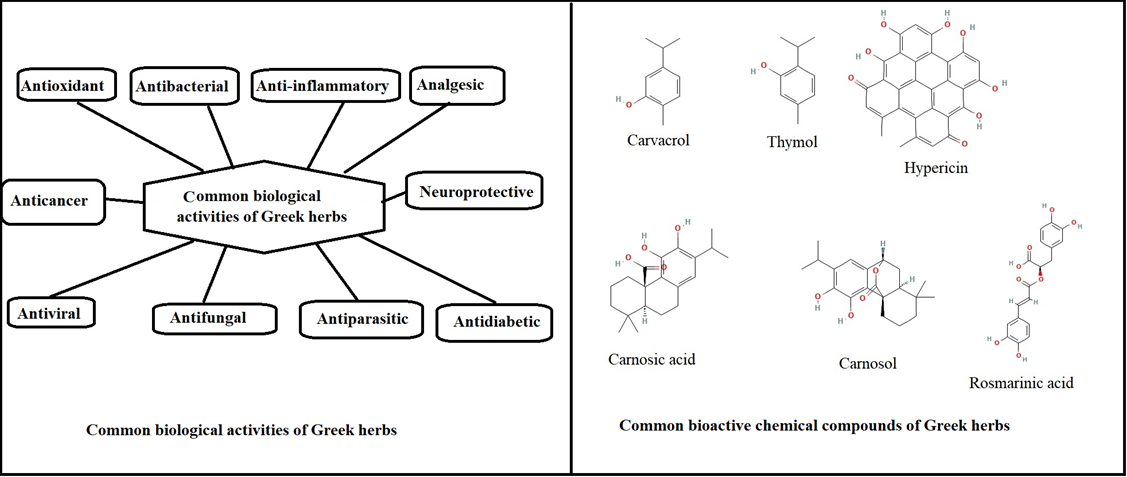
These activities make these herbs valuable in traditional medicine for treating various diseases, as well as in industries such as food preservation, cosmetics, and biopharmaceuticals. Biological assays are crucial in the standardization and quality control of botanical products, especially when dealing with mixtures of biologically active compounds. The screening of extracts for biological activity, fractionation guided by biological assays, and identification of biologically active compounds are essential steps in harnessing the potential of Greek herbs for various applications. Overall, the findings presented in this brief review highlight the significant potential of Greek herbs for beneficial biological activities. Further research and development in this area can lead to the discovery of new bioactive compounds and the development of novel products in biopharmaceuticals, cosmetics, and food additives. The rich biodiversity of Greek flora offers a wealth of opportunities for exploring the therapeutic and medicinal properties of these herbs, paving the way for innovative solutions in various industries. However, it is crucial to consider certain key factors when utilizing plant-derived compounds, including the potential for interactions with conventional medications, adherence to recommended dosages, awareness of potential toxicities and adverse effects, and the necessity of seeking guidance from qualified healthcare professionals (physicians, pharmacists, biologists). In any case, caution is required when administering to pregnant women, lactating women, children up to 12 years of age, serious illnesses, history of allergies [2]. Additional research, including in vitro, in vivo, and clinical trials, is essential to elucidate the potential health benefits of plant derivatives, determine optimal dosages, understand dose-response relationships, assess drug interactions, evaluate bioavailability, investigate long- term effects, and ensure overall safety.
Conclusion
In conclusion, the diverse range of Greek herbs, including Matricaria chamomilla (Asteraceae), Laurus nobilis (Lauraceae), Hypericum perforatum (Hypericaceae), Rosmarinus officinalis (Lamiaceae), Origanum dictamnus (Lamiaceae), Origanum majorana (Lamiaceae), Origanum vulgare (Lamiaceae), Sideritis syriaca (Lamiaceae), Salvia officinalis (Lamiaceae), Mentha pulegium (Lamiaceae), Satureja thymbra (Lamiaceae), and Thymus vulgaris (Lamiaceae), exhibit a wide array of potential beneficial biological activities. These herbs contain bioactive compounds such as carvacrol, thymol, hypericin, carnosic acid, carnosol, and rosmarinic acid, which contribute to their diverse range of biological effects, including antioxidant, antibacterial, anti-inflammatory, anticancer, analgesic, neuroprotective, antiviral, antifungal, antiparasitic, and antidiabetic properties .Furthermore, the rich biodiversity of Greek flora provides ample opportunities for further exploration and research in utilizing these herbs for various applications in traditional medicine, cosmetics, food preservation, and pharmaceuticals. It is imperative to conduct thorough biological assays, fractionation, and identification of bioactive compounds to ensure quality control and standardization of these botanical products. While the potential health benefits of these herbs are promising, caution must be exercised in their usage, especially in vulnerable populations such as pregnant women, lactating women, children under 12 years of age, individuals with serious illnesses, and those with a history of allergies [2]. Moreover, collaboration with healthcare professionals, including physicians, pharmacists, and biologists, is essential to ensure safe and effective utilization of plant-derived compounds. Future research should focus on in vitro, in vivo, and clinical trials to further elucidate the health benefits, optimal dosages, safety profiles, and potential interactions of Greek herbs, leading to the development of innovative and sustainable solutions in various industries.
Conflict of Interests
The author declares that he has no conflict of interests. The appearance of herbs references in the publication is not an approval of the herbs or their effectiveness, quality or safety.
Funding
No funding was provided for this publication.
References
-
Herb (2024) Merriam-Webster.
-
Lazari D (2018) Aromatic-Medicinal Plants in the Pharmacy [Power-Point Presentation]. School of Pharmacy, Department of Pharmacognosy- Pharmacology, Aristotle University of Thessaloniki.
-
Mariod AA, Tahir HE (2022) Biological Activities, Definition, Types and Measurements. Multiple Biological Activities of Unconventional Seed Oils, pp: 17-28.
-
McLaughlin JL, Rogers LL (1998) The Use of Biological Assays to Evaluate Botanicals. Drug Information Journal 32(2): 513-524.
-
Mihyaoui AEI, Silva JCGED, Charfi S, Castillo MEC, Lamarti A, et al. (2022) Chamomile (Matricaria chamomilla L.): A Review of Ethnomedicinal Use, Phytochemistry and Pharmacological Uses. Life (Basel) 12(4): 479.
-
Chahal KK, Kaur M, Bhardwaj U, Singla N, Kaur A (2017) A Review on Chemistry and Biological Activities of Laurus Nobilis L. Essential Oil. Journal of Pharmacognosy and Phytochemistry 6(4): 1153-1161.
-
Budantsev AL, Prikhodko VA, Varganova IV, Okovityi SV (2021) Biological Activity of Hypericum Perforatum L.(Hypericaceae): A Review. Pharmacy & Pharmacology 9(1): 17-31.
-
Andrade JM, Faustino C, Garcia C, Ladeiras D, Reis CP, et al. (2018) Rosmarinus Officinalis L.: an Update Review of its Phytochemistry and Biological Activity. Future Science OA 4(4): FSO283.
-
Mitropoulou G, Fitsiou E, Stavropoulou E, Papavassilopoulou E, Vamvakias M, et al. (2015) Composition, Antimicrobial, Antioxidant, and Antiproliferative Activity of Origanum Dictamnus (Dittany) Essential Oil. Microbial Ecology in Health and Disease 26(1): 26543.
-
Bouyahya A, Chamkhi I, Benali T, Guaouguaou FE, Balahbib A, et al. (2021) Traditional Use, Phytochemistry, Toxicology, and Pharmacology of Origanum Majorana L. Journal of Ethnopharmacology 265: 113318.
-
Falco ED, Mancini E, Roscigno G, Mignola E, Scafati O, et al. (2013) Chemical Composition and Biological Activity of Essential Oils of Origanum Vulgare L. Subsp. Vulgare L. Under Different Growth Conditions. Molecules 18(12): 14948-14960.
-
Goulas V, Exarchou V, Kanetis L, Gerothanassis IP (2014) Evaluation of the Phytochemical Content, Antioxidant Activity and Antimicrobial Properties of Mountain Tea (Sideritis Syriaca) Decoction. Journal of Functional Foods 6: 248-258.
-
Ghorbani A, Esmaeilizadeh M (2017) Pharmacological Properties of Salvia Officinalis and its Components. Journal of Traditional and Complementary Medicine 7(4): 433-440.
-
Rajhi AMH, Qanash H, Almuhayawi MS, Jaouni SKA, Bakri MM, et al. (2022) Molecular Interaction Studies and Phytochemical Characterization of Mentha Pulegium L. Constituents with Multiple Biological Utilities as Antioxidant, Antimicrobial, Anticancer and Anti- Hemolytic Agents. Molecules 27(15): 4824.
-
Tepe B, Cilkiz M (2016) A Pharmacological and Phytochemical Overview on Satureja. Pharmaceutical Biology 54(3): 375-412.
-
Reddy PV, Kandisa RV, Varsha PV, Satyam S (2014) Review on Thymus Vulgaris Traditional Uses and Pharmacological Properties. Med Aromat Plants 3(164): 2167-0412.
- Origin, Evolution, and Functional Impact of Short Insertion- Deletion Variants in Human Genomes: A Review
- Harnessing Molecular Glues for Next-Generation Vaccine, Cancer and Cardiovascular Disease Drug Development: A Comprehensive Review
- Lateral Cervical Epidermal Inclusion Cyst in a Paediatric Patient: A Rare Case Report
- Malarial Plasmodium Falciparum with Hepatitis B and C Virus Infections among Blood Donors in Ife Central Local Government Area, Ile Ife, Osun State, Nigeria
- Withanolides and Withaferin A- What’s next in Ashwagandha Research
- Designing of Dual Pulse Photoacoustic Tomography for Imaging of Drug-Response and Tumor Growth