
Biopsychosocial Causality in General Medicine: Knot, Ball, and Tangle
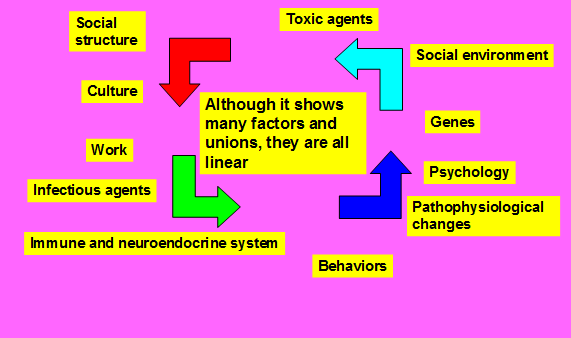
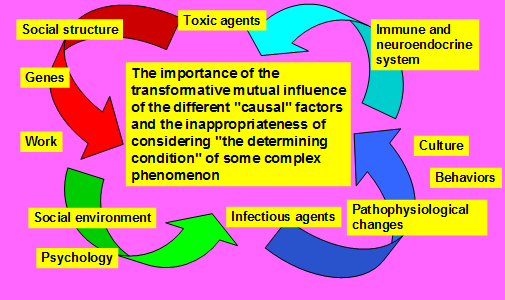
Frequently causal models are established which, although they can show many factors, their connections are all linear. But what sense can have for a general practitioner the inexpressive formula that tells him separately the cause and the conditions, even if the conditions (for example the social ones) can be of immeasurably greater importance than "the cause"? Biopsychosocial causality emphasizes the importance of the transforming mutual influence of the different inter-acting "causal" factors, and points out the irrelevance of considering a "determining condition". Disease (bacterial, parasitic, cancer, vascular, autoimmune, etc.) is an ecosystem and many of its components are interactions in a community: emergency, growth, dissemination, regression, and resistance. Cause and effect constantly change place; from the psychosocial to the biological, and vice versa. The epidemiological cause-effect relationship is a process of displacement or transaction from an incomplete material to a more complete one; from a manifest material to another latent one. In epidemiology, when we try to estimate the effect of a possible cause, it is not taken into account that the confusion depends on how the variables interact in the individuals. There are no noncommunicable diseases and communicable diseases, there are no organic and functional diseases, there are no biological, psychological and social diseases separated from each other. In this model the doctor-patient relationship is a part of the skein or "tangle" of causes and effects. Biopsychosocial causes give rise to scenarios that behave like the arguments of "television series films": the characters, which are interconnected directly or tangentially with each other, get into the next mess or muddle before leaving the latter, this means that there are several storylines at the same time (two or three at least), where several causal stories are interwoven, and also all of them have moments of knots, or entanglements , or skeins, or mess, noise, jumble, confusion, disorder, which partly overlap for each character, and where there is no final outcome. And what does the general practitioner need to know in this knot, or tangle of causes of health and disease? He must find "the system that defines the problem", the set of relevant variables affected by the problem.
Introduction
Causality is an important concept when considering how an organism maintains health, why the disease arises in a healthy person, and how to intervene to change the course of a disease [1].
In epidemiology courses for general practitioners (GPs) it is common practice to do some exercises to reflect on causality. One can be the exercise of a ball of yarn or rope whose participants are going to represent causes ... forming a network or spider that relates everything ... Another exercise can be to be on a train to experience what is lived in relation to others: we feel that the train in which we are, is moving when looking at how another train passes, which is the one that really moves. At the beginning the participants are a little perplexed with these exercises, not only by the enormous network that constitutes the explanation of the problem, but because their proposals for intervention are easily refuted by being aware of the tremendous existing causal network.
Other exercise could be view the film "The Wild Child" (L'Enfant sauvage, 1970, directed by François Truffaut), that is inspired by the story of Victor de Aveyron, a wild child captured in the French forests, and that deals with the importance of socialization process in the human being, and the implications of his absence [2]. The film makes us wonder about the cause of the child's savage state: biological or psychological?
As in the old studies of criminology, it is worth asking: What is the cause? Is delinquent behavior innate? The atavistic criminal can be recognized due to a series of physical stigmas or anomalies, such as, for example, the excessive development of the cerebellum, asymmetry of the face, abnormal dentition, and what is considered to be the most atavistic characteristic in criminals, namely, the dimple in the middle of the occipital; the criminal was considered in absolute terms as an abnormal being, a deviation with biological or psychological cause.
Thus, in the components of the bio-psycho-social sequence: the first component was the most important, and the last -social- was rarely taken into account. Or the other way around, the idea of crime as a social product: crimes and criminals are a product (cause) of society, and at the same time, instruments and victims of the same society. And also, it could be said that in some cases, the crime (the disease) must be understood as a survival strategy.
The usual (biomedical) is to think that "something" happened and that caused the symptoms; the "something" is attacked and the symptom picture is over. But: What sense can it have, for a GP, who wants to know why a patient fell ill with tuberculosis and why he fell ill precisely of this and not of another disease, the inexpressive formula that separately points out the cause (M. tuberculosis) and the conditions (means, exchange, inheritance, etc.), especially if this formula does not offer any idea about the true correlation between such cause and such conditions? Moreover, what sense can it have, if from another point of view, the conditions (for example the social ones) can be of immeasurably greater importance than "the cause"?
The cause, understood as an external factor, is only one of the indispensable conditions that it sometimes plays (it "seems" to play sometimes), but not always, the main role. However, such a "cause" is largely undefined and in complex situations it serves more as a source of confusion than as an adequate guide; obviously, it is not possible to affirm at all, outside a certain situation, that one or the other factor (the external or the internal) constitutes "the cause." Moreover, such a claim is only possible based on arbitrariness.
The cause is not a unidirectional action from the external to the internal or from the internal to the external, but an interaction of the same that necessarily causes an effect. However we have to assume that this interaction occurs in every integral system as a relationship in which cause and effect constantly change place. Or that, in light of the universal connection of the phenomena, the cause and the effect passes to each other and become universal connection and interaction. Obviating the interaction contradicts the concrete nature of the truth and implies drawing conclusions outside the law of the universal connection of phenomena. So, for example, the problem, however intrapsychic, is never detached from the context of the person [3, 4].
In general medicine there are no isolated individuals, but in reference to others, in relation to others and their contexts (for example, as was observed by paratroopers and astronauts, the speed of fall is not noted, but in relation to referents). When we believe that we intervene in isolated individuals, such as when treating an organic disease in an individual (for example, pain), or dealing with drugs a mental disorder that we define as an alteration of cerebral neurotransmitters, we are never treating only an individual, but the changes in that person (relief of pain, improvement of depression) have repercussions on relationships with other individuals and contexts and these changes reverberate again on the patient, etc. So, the intervention unit is the individual plus its context: relationships, connections, and links between actors. The individual, family, and community care, and the bio, psycho, and social, are an indivisible whole, and thus clinical attention will be well made when simultaneously taking into account those sides of the same coin [5, 6].
In this scenario, this article aims to help reflect on the importance of the biopsychosocial causal concept from the point of view of general medicine.
There is no environment (context) independent of the organism (actor, protagonist, subject, person, "the self") (Table 1). Multiple connections give rise to sequences of causes in which the actors or organisms both create the systems in which they are as they are transformed by them. Consequently, mutual causal relationships occur: circular causality; ecological causality [8].
Discussion
From Anatomoclinical Causality to Physiological Causality
Between the anatomopathological data and the causes that cause it, something happens that escapes us; far from being the first cause of all the phenomena that have been observed, they are themselves the effect of a particular disorder in the intimate action of our organs; As the pathological anatomy locates the headquarters better, it seems that the disease retreats more deeply to the intimacy of an inaccessible process.
In addition, there are other questions: Do all diseases have their correlative in an injury? Laennec admits the division of diseases into "two great classes": those that are accompanied by an obvious lesion in one, or several organs: those that have been designated for many years under the name of "organic diseases"; and those that do not leave in any part of the body a constant alteration to which its origin can be attributed: they are what were called "nervous or functional diseases." Hence, there is the need for a physiological medicine, "that observes life, not the abstract life, but the life of the organs and in the organs, in relation to all the agents that can exert some influence on them [7].
From Physiological Causality to Circular or Ecological Causality
| Etiology | Pathogenesis | ||
|---|---|---|---|
| Causal Approaches | Example | ||
| (Why?) | (How?) | ||
| BIOMEDICAL APPROACH Single, monofactorial monocausalism Although it accepts the participation of social factors in the determination and in other aspects of the health / disease processes, they are denied at the same time the capacity to cause biochemical or physiological alterations directly; so that the importance of the so- called social factors can be considered secondary or trivial and their position in the causal "networks", "chains" or "ecological triads" is secondary or distant | External or internal factors that act on organisms | Internal process in which the organism breaks in some way with the exterior | The person became ill with tuberculosis because in his weakened organism penetrated M. Tuberculosis. That is, Mycobacterium Tuberculosis is the cause of tuberculosis. |
| BIOPSICOSOCIAL APPROACH There is a whole series of conditions or causal maze (an agent, a certain character of the external or social environment and the internal environment, etc.) that are required by the disease and where none can be considered absolutely principal, once and for all; the interaction, which in principle denies the principality of any participant, prevents it, and it does so based on being a process of mutual transforming influences. | The components of the interaction constitute the etiology | It is the mutual interaction of the external and the internal | M. Tuberculosis plus its interaction with other conditions present in the host simultaneously cause the effect of primary tuberculosis |
Table 1: Biomedical Causality and Biopsycosocial Causality
Human behaviors are not mechanistic: fixed patterns of passive reaction to external stimuli. On the contrary, any behavior is the result of coordination, learning, and adjustment of multiple causes and their results or changes.
It must be remembered that individual illness depends on relationships and in turn it produces consequences in the social, cultural, economic, environmental and political where it takes place. Therefore, the clinical activity of the general practitioner (GP) should always have a relational dimension even if you work with patients, who at first glance seem to be "alone". The patients are in relational contexts (families, social groups, neighbourhoods) and immersed in social networks that suppose resources, influences and connections [9].
An organism is ill in relation to the solicitations of the external world, or of the alterations of its functioning, or of its anatomy. After many vacillations in its march, medicine follows, at last, the only way that can lead it to the truth: the observation of the relations of man with the external modifications, and of the organs of men with one another. For example, the biological effects of the psychosocial context can explain the differences in health between groups with different economic levels: differences in the neuroendocrine response of "fight or flight" produces psychological and metabolic alterations.
Although psychiatric disorders are classified as non- communicable diseases, this classification is too rigid and limiting. There is evidence of the communicability of psychiatric disorders through three major pathways: infectious and ecological, familial, and sociocultural communicability. Current interventions and policies that conceptualise psychiatric illnesses as non- communicable mostly focus on the individual. By applying strategies from infectious disease and chronic illness prevention models within a socioecological framework to the psychiatric illnesses will be possible to treating the patient with the psychiatric disorder (host) as early as possible, providing benefits to their family and the community, and preventing transmission to others [10].
Pathogens and cancers are widespread health risks in the human population. It is possible to better understand the disease and its treatment when it is done from an ecological perspective: the disease as an ecosystem and many of its components as interactions in a community. Biological etiological agents (bacterial, parasitic pathogens and cancers) multiply within humans, and an ecosystem framework is needed to understand the diseases and the major components and interactions in the ecosystems of bacterial and cancer diseases: emergency, growth, dissemination and regression; resistance to antibiotics and resistance to chemotherapy in cancers etc [11, 12]. There is a difference between how a causal effect occurs in an individual and what our methods assume about how a causal effect occurs when we estimate its effect in a population. In an individual, the causal effect of exposure on disease occurrence results from the interaction of several causal factors in that individual, not from a single factor in isolation. The result of this interaction within an individual determines an individual’s causal type (e.g., doomed, exposure causative, exposure preventive, immune) with respect to a particular exposure contrast and target (etiologic) time period. In a population, the causal effect of exposure on disease frequency depends on the distribution of causal types of individuals in that population, not necessarily on the population distribution of covariates. Yet in epidemiology, when we attempt to estimate the effect of a potential cause of interest, we (through the methods we use) usually do not account for this within individual causal interaction. This failure to account for within-individual causal interactions has interesting implications for causal inference. So, confounding is a “team sport”: single variables do not confound by themselves; confounding depends on how variables interact in individuals, not just on how variables are distributed within and across populations. Because confounding depends on how variables interact in individuals, methods that ignore causal interactions in individuals are not guaranteed to be confounding identification methods [13].
Social Determinants of Health
Frequently causality models are established, which although they show many factors and unions, are all linear (Figure 1), and thus are out-dated or are only a version of social medicine under the prism of the biological model. Models can not only guide us, they can also limit our thinking. The work of the GP suggests that there should be two-way connections. Of course, it is easier to study unicausal and unidirectional models (biological model) than multicausal and multidirectional (Biopsicosocial model -BPS). For the understanding of the biological effects of social determinants, we must bear in mind that the BPS model does not refute the biomedical model, it broadens it and modifies it incorporating relevant psychosocial factors.
This would be how two so different diseases can have a common predisposition. Cardiologists treat heart disease and psychiatrists treat depression without being attentive to each other ... Likewise, the physiological response to chronic stress has long been recognized as a potent modulator in the occurrence of atherosclerosis. Several epidemiological studies have shown that chronic stress is an independent risk factor for the development of vascular disease and for increased morbidity and mortality in patients with pre- existing coronary artery disease. One possible mechanism for this process is that chronic stress causes endothelial injury, directly activating macrophages, promoting foam cell formation and generating the formation of atherosclerotic plaque [15].
Likewise, the Type A behaviour pattern has implications for more contemporary approaches to the relationship between psychosocial risks and benefits in relation to disease processes. This includes the On the other hand, another example is cancer incidence which is inexplicably high in cold countries. The possible reasons or cause for this phenomenon could be related to: evolutionary adaptation to extreme cold, the genetic background of Nordic people, the experimentally proven rapid growth and metastasis of tumours at low temperatures, high concentration of certain air pollutants at cold environments, low levels of serum Vitamin D, over diagnosis by the medical doctors and high quality of the health system in Nordic countries, and lifestyle parameters in cold countries [17].
In short, it could be said, generalizing, that this network or tangle, or epidemiological disorder (biopsychosocial) implies the fact that each diagnosis made is nothing but an artifact based on the organization, level of medical assistance, and level where it stops the causal epidemiological reflection.
Psychosocial Factors in Biomedical Problems and Vice Versa
There are 3 types of psychological and social factors relevant to medical problems: 1. Adverse life experiences, such as chronic events and stressors; 2.
Psychological predispositions that can protect or favour vulnerability to stress; and 3. Factors of the social environment, such as support or social isolation. A key issue in the development of the BPS model is to understand the paths through which psychosocial factors influence medical illnesses. There are 2 major causal pathways that connect the disease with psychosocial factors:
- The behavior. From the psychosocial to the biological: Psychosocial factors such as work stress, depression, or lack of social support can favour choices of unhealthy lifestyles, such as alcohol, smoking, sedentary lifestyle, unhealthy diet, risky sexual practices, or lack of therapeutic compliance. And vice versa, from the biological to the psychosocial: the biological process affects CNS and can contribute in many of the psychological experiences associated with the disease. Disease behaviour reduces activity levels, reduces social interactions, suppresses appetite, reduces sexual behaviour, alters sleep patterns, or decreases learning ability, which accompanies many diseases.
- The physiological from the psychosocial to the biological: for example, high blood pressure can be linked to stressors.
There are connections between psychosocial factors and infections; there is extensive evidence that chronic stress, depression and other psychological factors are associated with decreased immune responses. Chronic moderate psychological stress is associated with inflammatory processes, producing endothelial dysfunction. Also, psychosocial factors can act as modulators, as in autoimmune diseases, where the co-variation of life stress with severity of the disease has been documented. And vice versa, from the biological to the psychosocial: cancer treatment induces immune activation and can produce depressive symptoms; Depressive symptoms that are associated with acute coronary events and other diseases can be a product of the inflammatory components of the disease.
And what do we need to know, from the point of view of the GP, about the organism (the individual, the family, the community) in terms of causes of health and disease? How can we organize the almost unlimited data and variables that can be collected from the organisms (the individual, the family, the community)? Well, it depends on the use you think of doing with that information. It is not about collecting and organizing the almost unlimited data that can be obtained. An orientation for this is summarized in finding "the system that defines the problem", which means the set of relevant variables affected by the problem, both in terms of maintenance (cause) or changes (treatment) [18].
Biopsychosocial causality emphasizes the importance of the transformative mutual influence of the different "causal" factors and, consequently, indicates the inappropriateness of considering "the determining condition" of some complex phenomenon (for example the determining condition of any infectious disease) to a certain factor. Such phenomena require a whole series of inter-acting conditions, so that none of them can be considered absolutely principal once and for all (Figure 2). In addition, it should be noted that, from the moment in which the application of scientific methodology has discovered and allows to conclude that the so-called social factors participate in some process of determining the disease (at the origin, in the course or in the operating mechanism) there is no reason to consider minor its importance in relation to that of other participating factors, nor to assign them secondary or distant positions, while noting that there are no reasons to attach greater importance to them than to other factors [19]. In other words, there are no noncommunicable diseases and communicable diseases, there are no organic and functional diseases, there are no biological, psychological and social diseases separated from each other.
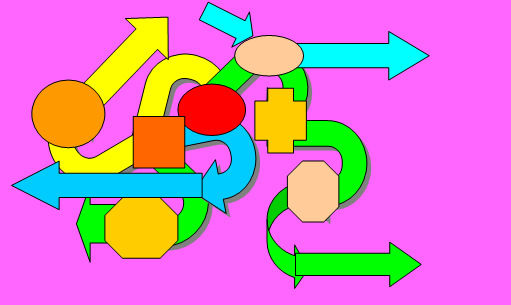
The reflection on the biopsychosocial causality makes us see that the causal chain does not behave like the argument of a "classic story", where there is a line from the beginning, with a knot and an outcome. On the contrary, in real epidemiology (biopsychosocial) causes give rise to certain arguments or scenarios that behave like the arguments of "television series films": the characters, which are interconnected directly or tangentially with each other, get into the next mess or muddle before leaving the latter, this means that there are several storylines at the same time (two or three at least), where several causal stories are interwoven, and also all of them have moments of knots, or entanglements , or skeins, or mess, noise, jumble, confusion, disorder ..., which partly overlap for each character, and where there is no final outcome. In the biopsychosocial epidemiology there is no main argument or causal line (from which the most important or essential events that happen to the patient throughout the clinical history or even throughout the patient’ life are produced and specified), which is how biomedical causality is generally described; even though this biomedical causality admits argumental lines or secondary causes. In the biopsychosocial causality there are several causal lines interspersed, and all are main (Figure 3). The epidemiological conceptualization and the practical application of this mixture or tangle of continuous causal lines, with vertices of successive and superimposed cyclones, is to be done, at least in general medicine.
The BPS model that was proposed by George L. Engel in 1977 to better reflect the development of illness through the complex interaction of biological factors (genetic, biochemical, etc), psychological factors (mood, personality, behavior, etc.), and social factors (cultural, familial, socioeconomic, medical, etc.) [20, 22], had the bad luck to be developed just at the moment when pharmacology expanded sharply with new effective drugs for a large set of diseases in all specialties non-surgical However, the BPS model maintains its validity, and in fact, for the GP not to look into the tangle of relevant causes of the patient is not to be aware of a basic law of Nature: the "American billiard ball" effect. Health problems and human behavior cannot be explained only in linear and individual terms. Thus, for example, the family context is relevant to understand the behavior of its members, in the same way that a pool table contains balls that affect others, through their contact with each other. In this way, the family affects the health of its members and is affected by them. In this model of complex and non-linear causality, the GP itself, the family practice, and the doctor-patient relationship, are local professional complex adaptive systems, and must be included in the skein of causes and effects [23, 24, 25, 26, 27].
Likewise, not being aware of the causal "tangle", may not see the interesting experience on the history of H. Pylori that some GPs have: their eradication in white middle class patients has been very effective; However, immigrants have a recurrence of symptoms. Engel, based on the General Theory of Systems, conceptualized a hierarchy of systems, but did not get to the detail of the interactions between systems at different levels. He did not explain what happens, for example, when there is an interaction between the personal and social level or between the biochemist and the staff. Thus, the representations of medical science sometimes imply that a symptom or a disease has a single cause (for example H. pylori: on the one hand its discovery shows that peptic ulcer is not a psychosomatic disease, and on the other, already that not everyone with HP infection develops an ulcer, there is obviously a place for psycho- social factors as contributors or even as necessary causes). However, talking about the cause of a disease presupposes a large set of antecedent factors that are forgotten. It is necessary to understand the influence of non-biological factors in biological ones [28, 29].
The epidemiological cause-effect relationship is a process of displacement or transaction from an incomplete material to a more complete one; from a darker material to a lighter one; from a manifest material to another latent [1, 30].
In short, the coexistence and influence of multiple biopsychosocial causes is a clear fact, and with it the multimorbidity including co-infections and sets of vascular, metabolic, respiratory and mental pathologies, among others [31]. George Engel introduced the BPS model as an alternative to replace the reductionist biomedical model more than 40 years ago. However, despite the increasing evidence in favor of the BPS model, a significant change towards it has not occurred. The BPS model is a model that incorporates thoughts, beliefs, behaviors, and the social context and interactions with biological processes, to better understand and manage disease and disability. In this model the biological, psychological and social processes are integrated and inseparable. For example, thoughts and feelings cannot be separated from the biological processes that occur in the brain. That is, it is like knot, or tangle, or muddle, or skein, as the writer Gadda said [32]. Currently, no more evidence is needed on the causal BPS model to convince professionals, but more ideas. It is ideas that really influence people. The evidence alone is not enough.
References
-
Evans DW, Lucas N, Kerry R (2017) The form of causation in health, disease and intervention: biopsychosocial dispositionalism, conserved quantity transfers and dualist mechanistic chains. Med Health Care Philos 20(3): 353-363.
-
The Wild Child. Wikipedia.
-
Sagatovsky VN, Antipov IG (1966) About the correlation between the concepts "cause", "condition". "etiology" and "pathogenesis". Vestu Akad Med Nauk SSSR 21(1): 34-40.
-
Selva Sutter EA (1999) Universidad Centroamericana José Simeón Cañas. Departamento de Salud Pública. San Salvador.
-
Turabian JL (2017) Psychosocial Factors and Organic Disease: Two Sides of the Same Coin. Chronicle of Medicine and Surgery 1(1): 44-46.
-
Turabian JL (2018) The Concept of Co-Treatment or Ecological Treatment in General Medicine. Int J Glob Health 1: 1.
-
Foucault M (1991) El nacimiento de la clínica. Una arqueología de la mirada médica. México: Siglo XXI Editores.
-
Whitfield J (2001) Fish fertilize trees. Wild salmon and trees have a mutually beneficial relationship. Nature.
-
Turabian JL (2019) Relational Treatment. Chronicle of Medicine and Surgery 3(2): 334-338.
-
Wainberg ML, Helpman L, S Duarte CS, Vermund SH, Mootz JJ, et al. (2018) Curtailing the communicability of psychiatric disorders. Lancet Psychiatry 5(11): 940-944.
-
Hochberg ME (2018) An ecosystem framework for understanding and treating disease. Evol Med Public Health 2018(1): 270-286.
-
Turabian JL (2018) Ecological analysis in general medicine. Fam Med Care 1(1): 1-2.
-
Maldonado G (2013) Toward a clearer understanding of causal concepts in epidemiology. Ann Epidemiol 23(12): 743-749.
-
O’Nei A (2013) The Relationship Between Coronary Heart Disease (CHD) and Major Depressive Disorder (MDD): Key Mechanisms and the Role of Quality of Life. Eur J Psychol 9(1).
-
Yao B, Meng L, Hao M, Zhang Y, Gong T, et al. (2019) Chronic stress: a critical risk factor for atherosclerosis. J Int Med Res 0(0): 1-12.
-
Schneiderman N, McIntosh RC, Antoni MH (2019) Psychosocial risk and management of physical diseases. J Behav Med 42(1): 16-33.
-
Voskarides K (2019) The “cancer–cold” hypothesis and possible extensions for the Nordic populations. Scandinavian J Public Health.
-
Rolland JS (1994) Families, illness, and disability. An integrative treatment model. New York: Bassic Books.
-
White P (2005) Biopsychosocial medicine. An integrated approach to understanding illness. New York: Oxford University Press.
-
Engel GL (1977) The need for a new medical model: a challenge for biomedicine. Science 196(4286): 129-136.
-
Engel GL (1980) The clinical application of the biopsychosocial model. Am J Psychiatry; 137(5): 535-544.
-
Engel GL (1989) The Need for a New Medical Model: A Challenge for Biomedicine. Holistic Medicine 4(1): 37-53.
-
Miller WL, McDaniel RR, Crabtree BF, Stange KC (2001) Practice Jazz: Understanding Variation in Family Practices Using Complexity Science. J Fam Pract 50(10): 872-878.
-
Turabian JL (2018) Doctor-Patient Relationship Epidemiology and its Implications on Public Health. Epidemol Int J 2(3): 000116.
-
Turabian JL (2018) Pharmacological Non- Prescription, Doctor-Patient Relationship and Biopsychosocial Approach: Foreign Lands or Foreign Travelers? Arch Commun Family Med 1(2): 39-42.
-
Turabian JL (2019) The placebo effect from the biopsychosocial perspective of general medicine: non-effective interventions that are, in fact, effective. Int J Fam Commun Med 3(1): 16-21.
-
Turabian JL (2019) Doctor-Patient Relationships: A Puzzle of Fragmented Knowledge. J Family Med Prim Care Open Access 3: 128.
-
Turabian JL (2018) Biopsychosocial Concept is the Characteristic that Distinguishes the Practice of General Practitioner/Family Doctor. J Gen Pract (Los Angel) 6: 2.
-
Turabian JL (2018) Approach Based on Holistic Model in General Medicine and Public Health: The Ice Cream Cone Effect. SF J Pub Health 2: 3.
-
Turabian JL (2019) Interpretation of the Reasons for Consultation: Manifest and Latent Content. the Initiation of the Diagnostic Process in General Medicine. Arch Community Family Med 2(1): 1-8.
-
Turabian JL (2018) Coinfection: Notes for Reflection on the Approach in General Medicine. J Infect Dis Res 1(1): 8-15.
-
Veivo H, Montier JP, Nicol F, Ayers D, Hjartarson B, et al. (2018) Beyond Given Knowledge: Investigation, Quest and Exploration in Modernism and the Avant-Gardes. 1st (Edn.), De Gruyter, pp: 425.
- Epidemiological Surveillance and Rumors on Social Media
- Awareness and Treatment of Uncontrolled Hypertension in US Overweight/Obese Youths Aged 16–24 Years, NHANES 2021–2023
- Strengthening EPI Through Parental Engagement: Lessons from Dhaka Slums for IA-2030
- Mothers Knowledge of the Prevalence, Causes, Effects, Prevention and Control of Diarrhoea among Children in Ife East Local Government Area, Ile Ife, Osun State, Nigeria
- Covid-19 Reinfections Case Series from October 2023 to October 2024 in A General Medicine Office in Toledo (Spain)
- Water Contact! One Risk Too Many: Risk Factors Associated with Schistosoma haematobium infection in Osun State, Nigeria