
The Relationship between Job Stress and Musculoskeletal Disorders among Midwives
Job stresses can increase the prevalence of musculoskeletal disorders (MSDs) in midwifery job, and reduce the efficiency and quality of their services. Therefore, this study was conducted to determine the prevalence of MSDs among midwives and to examine the relationship between job stress and the prevalence of MSDs in different regions their body. This was descriptiveanalytical and cross-sectional study. The study population included all midwives working in public and private hospitals of Kerman in 2019. According to the research community, 74 midwives were selected as a sample of research, by Census method. For data collection, Standard Nordic Musculoskeletal Questionnaire (NMQ) and Altmeyer job stress questionnaire were used. The data were analyzed with descriptive and analytical statistics (Pearson correlation, t-test and Chi square test) methods by SPSS 16 software. In this study 78.4 % of subjects had experienced discomfort or pain in the past 12 months at least in one body part. The most frequent symptoms of MSDs were observed in the three parts of body, feet with a frequency of 39.2% (29 persons), and knees and back each one 35.1% (26 persons). Also in this study, the relationship between musculoskeletal disorders and job stress was dignificant (P
Introduction
In the last few decades all over the world, including our country, due to the increase of female workers with a different personality structure and more vulnerable to tensions, paying attention to the phenomenon of occupational tensions in women has gained particular importance. Because women play a prominent role in the internal affairs of families and psychological pressures in their work environment can lead to an increase in personal, family, and social disorders in addition to threatening their physical and mental health [1]. In a study that was conducted to compare job burnout between male and female doctors, a higher prevalence of job burnout (caused by job stress) was found in female doctors than in male doctors [2]. Also, in 2006, mental disorders, especially depression, anxiety, and tension, were reported as one of the most important reasons for long-term sick leave (more than 12 months) among Swedish women (33%) and as the second reason for men’s sick leave (25%) [3]. The job of midwifery, despite having potential physical, mental, and psychological pressures, is given to women based on the necessity and religious and customary beliefs of our country. This issue emphasizes the importance of paying attention to improving the physical and mental health of this segment of society, and in such conditions, spending time, energy, knowledge, and even large capital in this field, in addition to having economic justification, is considered a necessity. On the other hand, the quality of healthcare services is affected by many factors, including the physical and mental health of employees working in healthcare centers such as hospitals. Midwives and nurses make up a large part of healthcare workers worldwide, and more than 80% of the patient’s medical care is under their responsibility [4].
One of the common causes of musculoskeletal disorders (MSDs) is occupational injuries and disability in developing countries and the most common cause of work-related disability and, as a result, imposing financial and medical costs [5, 6, 7, 8]. Musculoskeletal disorders related to work (WMSDs) are considered the main cause of loss of work time, increasing costs, and human injuries in the workforce, and one of the biggest occupational health problems in industrialized countries [8]. These disorders constitute nearly 48% of all work-related diseases [9]. In the United States, such injuries have caused the loss of working time for more than 600,000 employees, costing 45 billion dollars per year [7, 10]. These disorders are among the most important issues faced by ergonomists all over the world [8, 11, 12].
The World Health Organization has introduced work- related musculoskeletal disorders as multi-causal diseases, unlike most of the work-related diseases whose cause is known, and considers reasons such as organizational, mental, and psychological factors to be involved in the occurrence of these disorders [13, 14]. Other researchers author name [15, 16] have introduced physical, psycho- social author name [15, 17], and personal factors as risk factors for musculoskeletal disorders by conducting various studies [15]. The dangerous factors that play a role in the occurrence of these injuries can be bio-mechanical factors such as unfavorable body posture, applying force, lifting and carrying heavy loads, work with repetitive movements and on-site work, environmental factors such as psychological, organizational, individual and the ambient temperature was divided [8, 16, 18]. In the field of providing medical services, there are various occupational factors such as increasing physical activity, lifting heavy objects [19], lifting patients, and moving them to another place [20], as well as personal factors like obesity, age, and sex mentioned [5, 21]. In addition, there is a close relationship between these disorders and improper use of body mechanics. Improper postures during work such as bending [22], turning the neck, sitting [23], standing [20], and performing manual activities [15] are among the most important of these. Job stress is a harmful physical and mental reaction that occurs as a result of the interaction between the person and the environment and is caused by the lack of coordination between the work needs and the abilities and desires of the person [24, 25].
Job stress can be associated with many psychological problems such as anxiety, depression, nervous exhaustion, Irritability, aggressiveness, sudden emotional discharge, overeating, impulsive behavior, nervous laughter, inability to make decisions, poor concentration, low attention, mental breaks, and sensitivity to criticism, as well as physical disorders such as migraine headaches, increased heart rate, and blood pressure.
Cardiovascular diseases, skeletal-muscular pains, pulmonary and digestive disorders, kidney diseases, and rheumatoid arthritis, as well as organizational problems such as absenteeism, job change, low production, alienation from colleagues, job dissatisfaction, reduction in organizational commitment, and job performance decline. The quality of work should be accompanied [24]. Based on the conducted research, factors such as constant confrontation with patients, responsibility for the health of patients, carrying out clinical processes, dealing with dying patients, lack of sufficient equipment or defects in their work, dealing with emergency and unpredicted situations, etc., And a lot of noise in the workplace, rotating work shifts and the place of duty were identified as stress factors for employees’ careers [26, 27]. Therefore, the effects of these stressful factors on healthcare workers can disrupt their mental health and the prevalence of musculoskeletal disorders, and as a result, lead to a decrease in the quality of healthcare services and a threat to patients.
Until now, many ergonomic studies have been conducted in the field of musculoskeletal disorders and related factors, and the role of some harmful physical factors in the work environment in the occurrence of these disorders has been proven [5, 15, 22, 28]. In this regard, limited research has been done in the field of psychological factors of the work environment and the potential effect of psychosocial factors on musculoskeletal disorders. Analyzing the role of psychological factors in the development and prevalence of musculoskeletal disorders can help to understand and reduce work-related musculoskeletal diseases and disabilities [13]. Therefore, in this research, job stress, which is a part of the midwifery profession, was considered as a possibly important and effective factor in the prevalence of musculoskeletal disorders, and this study aims to determine the prevalence of musculoskeletal disorders in different areas of midwives’ bodies. And the relationship between these disorders and occupational stress was formed.
Materials and Methods
This cross-sectional study was conducted among all midwives working in public and private hospitals in Kerman. The sample size was considered to be 100 people using the census method. Exclusion criteria included having a work history of less than one year, a history of bone surgery and accidents, scoliosis, fracture, pregnancy, osteoporosis, and mental illnesses. Accordingly, according to the size of the studied community, all people were requested to participate in the study if they wish. Questionnaires were given to the people who were willing to participate in the study and they were asked to complete the questionnaires carefully the completed questionnaires were collected at the same time by the researchers. Some parts of the collected data (26 subjects) were not used for various reasons; some subjects left the work in the middle of work shifts and some were diagnosed with hypertension during the test. Finally, 74 questionnaires were collected from midwives working in two hospitals. Government and three private hospitals of Kerman were obtained.
In this research, the Nordic Standard Questionnaire (NMQ) was used to investigate musculoskeletal disorders. The Nordic questionnaire has been successfully used by ergonomics and occupational health specialists in various studies [5, 15, 22, 28, 29]. This questionnaire includes sections on the personal characteristics of the samples, including age, height, weight, marital status, work experience, educational qualification, and dominant hand, as well as the section related to skeletal-muscular disorders of the neck, upper back, thigh area, and knee area and the ankle area. Also, it determines the duration of suffering from these complications and the degree of limitation created in different organs of the body, and the prevalence of skeletal- muscular complications. In this study, the effect of body mass index on skeletal-muscular disorders was also considered. Body mass index was obtained by dividing weight by the square of height (in meters) and divided into four groups: thin (body mass index less than 5.18), normal (body mass index 5.18-25), overweight (body mass index body weight [25, 26, 27, 28, 29, 30] and obese (body mass index greater than 30) were divided.
Altmeier’s job stress questionnaire was used to measure job stress. This 28-question questionnaire is graded from 1 to 4 on a 4-point Likert scale. Obtaining a score of 28 or less indicates negligible stress, 29 to 57 mild stress, 58 to 86 moderate stress, and 87 to 112 severe stress [24]. The validity and reliability of this questionnaire to test the level of job stress among the employees working in the country’s hospitals have already been confirmed. Shahraki and colleagues used the retest method to standardize the job stress questionnaire. Based on this, the tool was distributed among 10 hospital employees with an interval of one week, and the final results of both stages were calculated using the Pearson correlation test, and the reliability of the tool was 0.86 [24].
Descriptive statistics (mean and standard deviation) and analytical statistics (Pearson’s correlation coefficient, independent t-test, and chi-square) were used to analyze the data, and a significance level of 0.05 was considered. In this research, all ethical considerations were observed, coordination was done with hospital officials, the objectives of the research were fully explained to the participants and they were assured that all related information would remain confidential and the general results of the study would not be mentioned. And the hospital where they work will be published.
Results
The subjects studied in this research were 74 midwives working in the maternity ward of Kerman hospitals, of which 58.41% (43 people) were working in public hospitals and 9.41% (31 people) were working in private hospitals. All the studied people were in the age range of 23 to 48 years old. Table 1 shows some demographic characteristics and working conditions of the studied midwives.
| Variable | Mean (SD)*or N (%)** | |
|---|---|---|
| Age (year) | 32.9 (5.55) | |
| Height (cm) | 162.28 (4.85) | |
| Weight (Kg) | 62.69 (8.90) | |
| Work experience (year) | 8.81 (7.95) | |
| Body mass index | Underweight | 2 (2.7) |
| Normal weight | 50 (67.6) | |
| Overweight | 19 (25.7) | |
| Obesity | 3 (4.1) | |
| Marital status | Single | 24 (32.4) |
| Married | 50 (67.6) | |
| Level of Education | Associate | 4 (5.4) |
| Bachelor | 70 (94.6) | |
| Dominant hand | Right | 69 (93.24) |
| Left | 5 (6.76) | |
| Type of hospital | Public | 43 (58.1) |
| Private | 31 (41.9) | |
| Total | 16 (50) |
Table 1: Demographic characteristics of midwives studied (n=74). *for quantity variables; **for qualitative variables Among midwi
Table 1: Demographic characteristics of midwives studied (n=74). *for quantity variables; **for qualitative variables Among midwives studied, 58 people (78.4%) had discomfort or pain in at least one body part, and 37% of them went to a doctor or physiotherapist for this reason. The highest frequency of skeletal-muscular disorders was seen in three parts of legs, with 2.39% (29 people), knees and waist, each with 35.1% (26 people). Also, the frequency percentage of back, neck, shoulders and wrists were 8.33% each (25 people) and elbows and thighs were 13.5% each (10 people). Table 2 show the prevalence of skeletal-muscular disorders among the body parts of midwives under investigation.
| Body Regions | |||||||||
|---|---|---|---|---|---|---|---|---|---|
| Variable | Neck | Shoulders | Upper back | Elbows | Wrists/ Hands | Low back | Hips/ Thighs | Knees | Ankles/ Feet |
| During the last 12 months | 25 (33.8) | 25 (33.8) | 10 (13.5) | 25 (33.8) | 25 (33.8) | 26 (35.1) | 10 (13.5) | 26 (35.1) | 29 (39.2) |
| During the study | 20 (17) | 12 (16.2) | 6 (8.1) | 15 (20.3) | 13 (17.6) | 19 (25.7) | 6 (8.1) | 21 (28.4) | 19 (25.7) |
Table 2: The prevalence of musculoskeletal disorders among midwives studied.
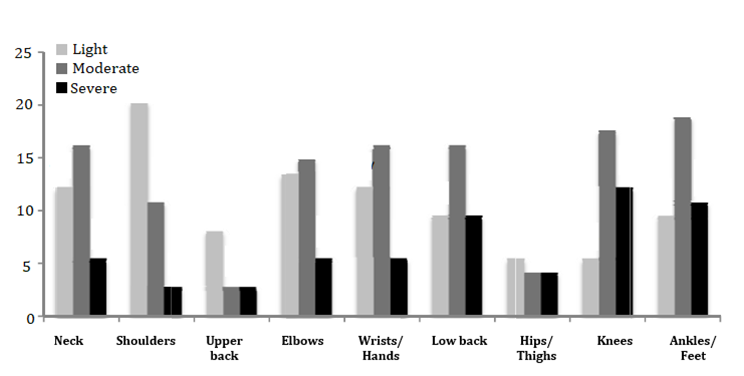
Figure 1 shows the quality of the musculoskeletal complaints of the participants. Table 2 also shows the prevalence of occupational stress among midwives working in public and private hospitals.
| Type of hospital | |||
|---|---|---|---|
| Job stress | Public, N (%) | Private, N (%) | Total, N (%) |
| Light | 0 (0) | 1 (1.35) | 1 (1.35) |
| Moderate | 36 (48.65) | 24 (32.43) | 60 (81.08) |
| Severe | 7 (9.64) | 6 (8.11) | 13 (17.57) |
| Total Stress | 43 (58.11) | 31 (41.89) | 74 (100) |
Table 3: Frequency of job stress among the studied midwives according to the type of hospital.
In this research, there was no significant relationship between job stress and some demographic characteristics of people such as age, height, weight, marital status, level of education, and dominant and dominant hand. Also, the average score of midwives’ occupational stress was obtained from the maximum score of 112.
Discussion
Researchers have presented three theories in evaluating the effect of occupational stress on the occurrence of skeletal-muscular symptoms. The first theory states that the psychological factors of the work environment can directly increase the mechanical life load on people, and the effect of these psychological tensions can be seen in the position of the body parts, movements, and the application of forces. A second theory emphasizes the effect of psychological factors of work on skeletal-muscular disorders through the physiological mechanisms of the body.
In this case, the occurrence of mental stress causes muscle tension and increased hormone secretion, which in the long run leads to organ changes and the development or aggravation of skeletal-muscular symptoms, especially cumulative trauma disorders (CTD). The third theory refers to the effect of psychological factors in reducing a person’s ability to cope with diseases, which in turn can affect the occurrence of skeletal-muscular symptoms [13, 30]. In this framework, Coronel University researchers found a strong relationship between job stress and increased blood pressure and anger. In the continuation of their research, they stated that people with high blood pressure will experience Also; high CTD is most likely the cause of high blood pressure, causing double blood pressure in the internal canal of the carpal tunnel and ultimately leading to a person suffering from Carpal tunnel syndrome [31]. Of course, the diagnosis of the effect of psychological factors on the occurrence of symptoms of skeletal-muscular disorders becomes ambiguous due to the interference of different physical factors.
Psychologists and researchers have studied the role of tension in different situations. Meanwhile, the effect of stress on healthcare workers, especially midwifery professionals, is much more impressive due to the complexity of their work and is known as an important and influential factor. The job of midwifery has stressful factors unique to this profession, especially in the delivery room. These special factors include possibly unsuitable physical environment, observation of patient’s pain and suffering, dealing with midwifery emergencies, the burden of responsibility for the health of patients, etc [26]; which are always considered a threat to the mental and physical health of this group. The results of this study showed that most of the midwives in the study (81%) have experienced a moderate intensity of job stress, which is in line with the results of the study of Anjazab and his colleagues in the study of job stress midwives in Yazd government hospitals has [26]. The research conducted in Britain showed that 47% of midwives have moderate stress levels and 6% suffer from severe stress [27]. In a similar study on 147 midwives in Turkish hospitals, a moderate level of job burnout was obtained. During the research he conducted to investigate the level of stress of midwives in the delivery room, Makin concluded that 30% of the researched units have an unfavorable mental state. People’s characteristics such as age, gender, work experience, ambition, and personality type can also affect the capacity to deal with tensions [13]. In this study, there was no significant relationship between the age and work history of midwives and their job stress, which indicates that the job stress of the midwives under study is independent of these factors and its direct relationship to the nature of the midwifery job.
Researchers know that the high workload and lack of employees cause stress to people, the physiological response of which is shown in the form of muscle tension and ultimately skeletal-muscular disorders [12]. In the present study, a significant relationship between skeletal-muscular disorders and midwives’ occupational stress was found, which is consistent with the study of Habibi and colleagues in the study of the relationship between back discomfort and psychosocial and ergonomic factors in nurses in the emergency department of Isfahan hospitals [12]. In another similar study, Chobineh and colleagues did not find a significant relationship between psychological stress and the incidence of skeletal-muscular disorders among nurses in Shiraz hospitals [6], which is not consistent with the present study.
According to the findings of this research, 78% of people have suffered from some degree of skeletal-muscular disorders during the past year, which indicates the high prevalence of these disorders in the studied midwives community. In this study, the highest frequency of skeletal- muscular disorders of midwives was seen in three parts of the legs, knees, and waist, while the frequency of disorders in other parts of the back, neck, shoulders, and wrists was also high, and this is while the researchers in the study of disorders Skeletal-muscular midwives of Hamedan city observed the highest frequency of these disorders in the back, shoulder and wrist organs [22]. In the present study, a significant relationship was found between the prevalence of symptoms of musculoskeletal disorders of the neck, wrists, and knees with the work history of people, which indicates that the prevalence of symptoms also increases with the increase of work history. The results of the study by Holder and colleagues also confirm this also, in the current study, there was a significant relationship between the occurrence of neck pain symptoms and the age of people, which indicates the prevalence of neck pain in older people. The researchers conducted in the field of the effect of the height factor indicate that taller people are more exposed to the risk of musculoskeletal pain, especially back pain [5], however, in this study, no significant relationship was found between these two variables. According to Lorso, body mass index can make a person prone to skeletal-muscular disorders. The results of the present study confirm his opinion because, in this study, a significant relationship between body mass index and the occurrence of symptoms of skeletal-muscular disorders of knee, elbow, and thigh organs was obtained. In the study of Sharifnia SH, et al. [5] body mass index had a significant relationship with back pain. Endo and colleagues and Alfredson 4 and colleagues did not find a significant relationship between marital status and musculoskeletal symptoms, which is consistent with the results of the present study.
The results of the present study showed that excessive stress can cause skeletal-muscular disorders. Among the limitations of this study, we can point out the investigation of job stress only in midwives working in the hospitals of the center of the province, which are equipped with operating rooms, and as it is certain that the centers. Treatment Cities and villages have less medical equipment and human resources. Therefore, it is expected that the tension among the midwives working in these clinics will be much more intense due to different environmental and management conditions. Therefore, more specialized research is recommended to evaluate the role of other factors such as the type and amount of equipment in maternity hospitals, non- occupational tensions, and psychological pressures caused by managerial and social factors can occur in the occurrence of occupational tension.
Conclusion
According to the result of this research, it can be concluded that job stresses can presumably intensify physical side effects including musculoskeletal disorders. Also, the prevalence of musculoskeletal disorders in midwives under studied was high. Therefore, holding training courses about standard body postures while doing job tasks and avoiding inappropriate body posture will be important.
References
-
Molaie B, Mohamadi M, Habibi A, Zamanzadeh V, Dadkhah B, et al. (2011) A study of job stress and its related causes among employed women in Ardabil city. Ardabil University of Medical Sciences 11(1): 76-85.
-
Marshall RE, Zahorodny W, Passannante MR (1998) Burnout among neonatologists and pediatricians. Neonatal Intensive Care 11: 16-18.
-
Peterson U, Demerouti E, Bergstrom G, Samuelsson M, Asberg M, et al. (2008) Burnout and physical and mental health among Swedish healthcare workers. J Adv Nurs 62(1): 84-95.
-
Smith DR, Mihashi M, Adachi Y, Koga H, Ishitake T (2006) A detailed analysis of musculoskeletal disorder risk factors among Japanese nurses. J Safety Res 37(2): 195- 200.
-
Sharifnia SH, Haghdoost AA, Hajihosseini F, Hojjati H (2011) Relationship between the musculoskeletal disorders with the ergonomic factors in nurses. Koomesh 12(4): 372-378.
-
Choobineh A, Rajaeefard A, Neghab M (2007) Perceived demands and musculoskeletal disorders among hospital nurses. Hakim Research Journal 10(2): 70-75.
-
Hosseini M, Varmazyar S, Safari A (2010) Posture assessment of hospital personals of Qazvin University of Medical Science using rapid entire body assessment and its relationship with musculoskeletal disorders. Qom University of Medical Sciences Journal 3(4): 1-7.
-
Rahimi FH, Hashemi NN, Choobine A, Heidari H, Tabatabaee SH (2011) Risk factors assessment cause musculoskeletal disorders in painting workshops of furniture industry. Qom University of Medical Sciences Journal 4(2): 35-45.
-
Helander M (1995) A guide to the ergonomics of manufacturing. USA.
-
Maul I, Loubli T, Klipstein A, Krueger H (2003) Course of low back pain among nurses: A longitudinal study across eight years. Occup Environ Med 60(7): 497-503.
-
Engkvist IL (2008) Back injuries among nurseses: A comparison of the accident processes after a 10-year follow-up. Saf Sci 46(2): 291-301.
-
Habibi E, Kianpour AA, Hosseini SM (2011) Evaluation of work-related psychosocial and ergonomics factors in relation to low back discomfort in emergency unit nurses. Health System Research 6(4): 752-761.
-
Hoogendoorn WE, Van Poppel MNM, Bongers PM, Koes BW, Bouter LM (2000) Systematic review of psychosocial factors at work and private life as risk factors for back pain. Spine 25(16): 2114-2125.
-
World Health Organization (1985) Identification and control of work-related diseases. World Health Organ Tech Rep Ser 714: 1-71.
-
Mohammadfam I, Kianfar A, Afsar TB (2010) Hazard assessment of musculoskeletal disorders in an industrial company with QEC and LUBA methods and compare them. Iran Occupational Health 7(1): 54-60.
-
Choobineh A, Tabatabaee SH, Behzadi M (2009) Musculoskeletal problems among workers of an Iranian sugar-producing factory. Int J Occup Saf Ergon 15(4): 419-424.
-
Devereux JJ, Vlachonikolis IG, Buckle PW (2002) Epidemiological study to investigate potential interaction between physical and psychosocial factors at work that may increase the risk of symptoms of musculoskeletal disorder of the neck and upper limb. Occup Environ Med 59(4): 269-277.
-
Choobineh A (2007) Posture evaluation methods in occupational ergonomics. Tehran, Fanavaran, pp: 1-27.
-
Alexopoulos EC, Burdorf A, Kalokerinou A (2003) Risk factors for musculoskeletal disorders among nursing personnel in Greek hospitals. Int Arch Occup Environ Health 76(4): 289-294.
-
Karahan A, Bayraktar N (2004) Determination of the usage of body mechanics in clinical settings and the occurrence of low back pain in nurses. Int J Nurs Stud 41(1): 67-75.
-
Bahrami A, Akbari H, Namayandeh M, Abdollahi N (2009) Assessment of the musculoskeletal complaints of Kashan university hospitals staffs in 2006. Journal of Kashan University of Medical Sciences 12(5): 33-38.
-
Ozgoli G, Bathaee A, Alavi MH, Mirmohammad AM (2006) Assessment of the musculoskeletal complaints and its related risk factors in midwives working in Hamadan. Iran Occupational Health 3(1-2): 37-42.
-
Bot SDM, Terwee CB, Van der Windt DAWM, Van der Beek AJ, Bouter LM, et al. (2007) Work-related physical and psychosocial risk factors for sick leave in patients with neck or upper extremity complaints. Intern Arch Occup Environ Health 80(8): 733-741.
-
Shahraki VA, Mardani HM, Sanchuli J, Hamedi SS (2011) Assessment of the relationship between mental health and job stress among nurses. Journal of Jahrom University of Medical Sciences 8(3): 34-40.
-
Yao SQ, Tian L, Pang BD, Bai YP, Fan XY, et al. (2008) Investigation on job stress of pediatricians and nurses working in pediatric department. Chinese journal of industrial hygiene and occupational diseases 26(9): 529.
-
Anjazab B, Farnia F (2000) Survey relationship between job stress with behavioral and mental responses in midwives working in public hospitals of Yazd in 1999. The journal of Shahid Sadoughi University of Medical Sciences 10: 32-38.
-
Mollart L, Skinner VM, Newing C, Foureur M (2013) Factors that may influence midwives work-related stress and burnout. Women Birth 26(1): 26-32.
-
Saraji GN, Ebrahimy L, Fouladi B (2007) A survey on ergonomic stress factors of musculoskeletal system in Iranian carpet restoration workers. Tehran University Medical journal 65(1): 25-32.
-
Descatha A, Roquelaure Y, Chastang JF, Evanoff B, Melchior M, et al. (2007) Validity of Nordic-style questionnaires in the surveillance of upper-limb work- related musculoskeletal disorders. Scand J Work Environ Health 33(1): 58.
-
Van Tulder MW, Koes BW, Bouter LM (1997) Conservative treatment of acute and chronic nonspecific low back pain: A systematic review of randomized controlled trials of the most common interventions. Spine 22(18): 2128.
-
Moon S (1996) A psychosocial view of cumulative trauma disorders. Implication for occupational health and prevention. In: Moon SD, et al. (Eds.), beyond biomechanics. Psychosocial aspects of musculoskeletal disorders in office work; Bristol, PA: Taylor and Francis, pp: 109-143.
- The Expanding Landscape of Road Rage: A Systematic Review of Conflicts Involving Drivers, Pedestrians, and Micromobility
- Validating Cognitive Models of Royal Navy Performance on Control Systems
- Comparing Standard and State-of-the-art Firefighter Coats on Postural Balance and Gait in a Live Burn Environment
- Investigating the Integration of Telemedicine into Clinicians Workflow: A Review of Methods
- Risk Assessment of Ergonomic Factors in a Textile Firm by RULA, REBA and Fine Kinney Methods
- Impact of Self-Esteem Training on Individuals with Disabilities Aged 17-30