
Musculoskeletal Disorders Prevalence among Sewing Machine Operators of Sewing Workplaces in Kerman City
Work-related musculoskeletal disorders are one of greatest occupational problems in industrialized and developing countries, and whereas becoming switches to major challenge between worker and employers. The aim of present study was determination the prevalence musculoskeletal disorders among sewing machine operators of sewing workplaces in Kerman. In this cross-sectional study, 297 workers that working in 170 sewing workplaces in Kerman as research population by census method were selected. Nordic Questionnaire was used for data collection. The data were analyzed using Chi-square statistical test under SPSS 16 software. In this study 50.5 percent of subjects in the past 12 months and 34.3 percent of them in during one week before the study had experienced discomfort or pain at least in one body part. Highest frequency symptoms of musculoskeletal disorders was observed in lower back, later than the lower back, knee, upper back, neck and ankles had highest frequent. Also, in this study a significant relationship between musculoskeletal disorders of lower back, shoulder, neck and tailors work experience were obtained. Results of this study did show that workplace is the most important cause of the incidence musculoskeletal disorders in tailors under research. Therefore, the interventional programs include optimizing the design of workstations and chairs used in sewing workplace and also providing ergonomic principles training courses for improving work conditions of workers that working in sewing workplaces should be considered.
Introduction
Musculoskeletal disorders are disorders related to muscles, tendons, sheaths of tendons, peripheral nerves, joints, bones, ligaments and blood vessels, which are caused by repeated and long-term stress or as a result of sudden trauma such as slipping [1, 2]. In the last decade, disabilities caused by work-related musculoskeletal disorders (WMSDs) have increased [3]. So that these disorders have become a major challenge between workers and employers [4]. Work-related musculoskeletal disorders accounted for 34% (487,900 cases) of all injuries and illnesses in the United States. Meanwhile, these disorders have become the most expensive health problems of modern industrial societies [3].
These disorders impose a considerable cost directly to the health care systems and indirect damages far more to the production systems of the United States of America and Canada [4]. So that in a 15-year study, it was found that the cost of compensation paid to American workers due to back musculoskeletal disorders is more than 128 million dollars, that is, 0.97 dollars of compensation has been paid for each working hour [5]. In addition, such injuries cause the loss of working time of more than 600,000 employees per year and have an indirect cost of between 45-54 billion dollars [6]. Skeletal-muscular disorders are one of the most important issues faced by ergonomists all over the world [7, 8]. In our country, these disorders are the second most common diseases after heart diseases [5].
Unfortunately, in our country, there is no research that addresses the issue of musculoskeletal disorders caused by work from various aspects, and such disorders caused by work remain unknown in terms of cost, prevalence, incidence, occupations involved, etc. It may be said that their prevalence and occurrence in developing countries, including our country, is more serious [9, 10]. Epidemiological studies clearly show that among the risk factors in the work environment, including repetitive tasks, body posture while doing work, the amount of force applied, the duration of exposure, the work environment, the atmospheric conditions of the work environment, psycho-social factors, and personal characteristics. There is a relationship with skeletal-muscular disorders [11, 12]. Although the mechanical load imposed on the body in work activities is not the only effective factor of musculoskeletal disorders, it is considered the most severe and effective factor [2].
Such discomforts are likely to occur in any profession and industry, as they have become one of the common problems in most work environments. The American National Institute of Occupational Safety and Health has classified work-related diseases and complications based on their national importance, and in this respect, work-related musculoskeletal injuries are the second most important after occupational respiratory diseases [13]. Research conducted in other countries, especially industrialized countries, in the field of musculoskeletal injuries related to sewing work has indicated that this kind of disorders are critical in sewing Workplace workers [14, 15]. If these people have experienced pain in their hands, shoulders, wrists and neck while performing their duties [12, 16]. A cohort study was conducted on Danish workers with herniated lumbar discs over a 10-year period; The results of this study indicated a high risk of this disorder in sewing machine users [17]. Also, the research conducted in a car assembly factory in England showed that the number of upper limb diseases among the users of sewing machines who were engaged in sewing seat covers was such that the said Workplace had to be closed [13].
Researchers believe that the impact of working conditions on the occurrence of musculoskeletal disorders related to work can be understood when people’s working conditions are properly understood, and only through the careful investigation and research of ergonomic experts, preventive programs can be proposed and implemented effectively by Kurdish [18]. Due to the fact that sewing machines are used in many jobs, such as Workplaces for the production of clothes, shoes, airplane and car interiors, etc., and on the other hand, there are repetitive tasks, unfavorable body positions, doing work with force and static activity. Muscles are one of the main causes of musculoskeletal disorders in the human upper body. Therefore, there is a possibility of skeletal-muscular disorders in all jobs that have the above-mentioned conditions. Sewing Workplaces are one of the workplaces whose employees are exposed to all the above-mentioned factors. Based on this, it is necessary to examine the ergonomics of sewing machine users in order to determine the prevalence of work-related musculoskeletal disorders in this segment of the working community. Therefore, this study was conducted with the aim of determining the prevalence of these disorders and also providing preventive solutions.
Materials and Methods
In this cross-sectional study, all employees of sewing Workplaces covered by tailors’ guild in Kerman city were selected as the research community and were studied. The study exclusion criteria included less than 1 year of work experience, history of bone surgery and accidents, scoliosis, fracture, pregnancy, and osteoporosis. Therefore, participants who met the above criteria were excluded from the study. Accordingly, according to the size of the studied population, all participants were requested to participate in the research if they wish. Questionnaires were given to the participants who were willing to participate in the study and they were asked to complete the questionnaires carefully and then the completed questionnaires were collected at the same time by the researchers, and finally 297 questionnaires were collected from wheel users. The number of working tailors in 170 tailoring Workplaces in Kerman city was collected.
In this research, the Nordic Musculoskeletal Questionnaire (NMQ) was used to investigate musculoskeletal disorders. Nordic Questionnaire has been successfully used by ergonomics and occupational health specialists in various studies. This questionnaire includes sections on the personal characteristics of the samples, including age, height, weight, marital status, work history, educational qualification and dominant hand, as well as the section related to musculoskeletal disorders of the neck, upper back, thigh area, knee area and is the ankle area; This tool also determines the duration of these complications and the amount and degree of limitation created in different organs of the body, the prevalence of musculoskeletal complications in participants. Chi-square statistical test was used to analyze the data and a significance level of 0.05 was considered. In this research, all ethical considerations were observed, coordination was done with the tailors guild, the objectives of the research were fully explained to the participants and they were assured that all relevant information will remain confidential and the general results of the study will not be mentioned. And the Workplace of his workplace will be published.
Descriptive statistics (mean and standard deviation) and analytical statistics (Pearson’s correlation coefficient, independent t-test, and chi-square) were used to analyze the data, and a significance level of 0.05 was considered. In this research, all ethical considerations were observed, coordination was done with hospital officials, the objectives of the research were fully explained to the participants and they were assured that all related information would remain confidential and the general results of the study would not be mentioned. And the hospital where they work will be published.
Results
The participants of this research were made up of 297 sewing machine users working in 170 sewing Workplaces in Kerman. Of these participants, 70% (208 participants) were men and 30% (89 participants) were women. All the studied participants were in the age range of 14 to 77 years old. Table 1 shows some demographic characteristics and working conditions of the studied tailors. The highest frequency of musculoskeletal disorders related to the back was 50.5%, while the lowest was related to the elbows at 7%. Figure 1 shows the prevalence of skeletal-muscular disorders among the body parts of the examined tailors. In this study, 87 participants (29.3 percent) were under 4 years old, 67 participants (22.5 percent) were between 5 and 9 years old, 45 participants (15.3 percent) were between 10 and 14 years old, and 98 participants (32.9 percent) percent) had 15 to 19 years of sewing experience. In this study, there was a significant relationship between the prevalence of symptoms of musculoskeletal disorders in the neck, shoulder, and back with work experience and age (Table 2); Also, a significant relationship was found between the musculoskeletal disorders of the neck and wrist, respectively, with the level of education and the gender of the participants (Table 3).
| Variable | Mean (SD)*or N (%)** | |
|---|---|---|
| Age (year) | 31.40 (12.30) | |
| Height (cm) | 169.00 (8.70) | |
| Weight (Kg) | 69.8 (12.62) | |
| Work experience (year) | Less than 4y | 87 (29.20) |
| 05-09 | 67 (22.70) | |
| 10-14 | 45 (15.30) | |
| 15-19 | 98 (32.90) | |
| Gender | Male | 208 (70.03) |
| Female | 89 (29.97) | |
| Marital status | Single | 127 (42.80) |
| Married | 170 (57.20) | |
| Level of Education | under diploma | 172 (57.90) |
| Diploma and above | 125 (42.10) | |
| Dominant hand | Right | 287 (93.60) |
| Left | 19 (6.40) | |
| Total |
Table 1: ** Demographic characteristics of Sewing Machine Operators studied (n=297).
For quantity variables; for qualitative variables. Table 1:** Demographic characteristics of Sewing Machine Operators studied (n=297).
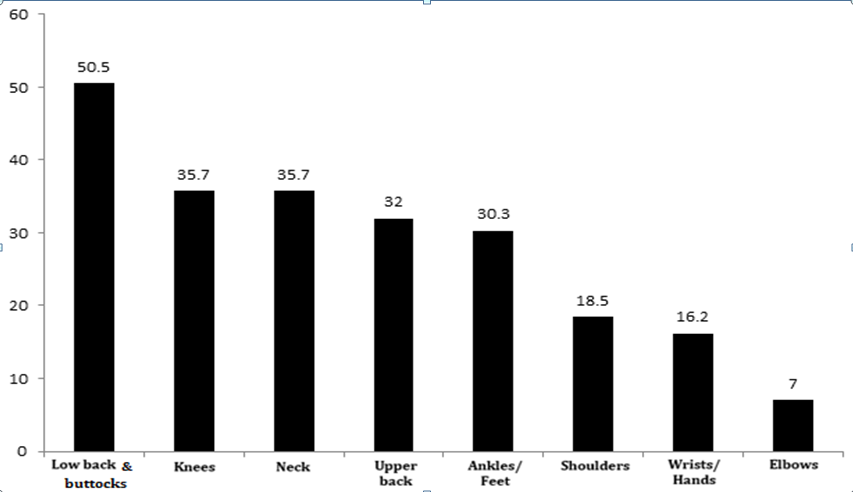
In terms of having a history of musculoskeletal disorders in the last 7 days and 12 months, the results showed that 34.3% and 50.5% had problems in the back area, respectively. After the lower back, knee, back, neck and ankle problems were the most frequent. The discomfort leading to the highest rates of absenteeism was related to back pain (31.6 percent), followed by neck pain (20.9 percent), knee (18.2 percent), back (16.5 percent) and Ankles (15.5%) had the most pain, which caused them to stop working in the past year. Absence from work due to musculoskeletal problems was reported in 41.4% of participants due to back problems, 40% neck problems, 30.5% shoulder problems and 20% wrist problems. In terms of the frequency of occurrence of problems, the highest frequency of occurrence of problems in all areas of the body was once or more in a week and once or more in a month.
| Body Regions >20 N (%) | Age (year) | Work experience (year) | |||||||||
|---|---|---|---|---|---|---|---|---|---|---|---|
| >20 N (%) | 2-30 N (%) | 31-40 N (%) | <40 N (%) | *P-value | <4 N (%) | 5-9 N (%) | 10-14 N (%) | 14< <4 N (%) | *P-value | ||
| Neck | yes | 9 (8.18) | 39 (7.30) | 23 (1.41) | 36 (5.54) | <0.0001 | 15 (4.17) | 23 (3.34) | 17 (8.37) | 51 (6.52) | <0.0001 |
| no | 39 (3.81) | 88 (3.69) | 33 (9.58) | 30 (5.45) | 71 (6.82) | 44 (7.65) | 28 (2.62) | 46 (4.47) | |||
| Shoulders | yes | 11 (9.22) | 42 (1.33) | 28(50.00) | 37 (1.56) | <0.0001 | 21 (4.24) | 22 (8.32) | 21 (7.46) | 52 (6.53) | <0.0001 |
| no | 37 (1.77) | 85 (9.66) | 28(50.00) | 29(9.43) | 65 (6.75) | 45 (2.67) | 24 (3.53) | 45 (4.46) | |||
| Low back | yes | 18 (5.37) | 61(48.0) | 25 (6.44) | 42 (6.63) | 0.034 | 30 (9.34) | 36 (7.53) | 24 (3.53) | 56 (7.57) | 0.013 |
| no | 30 (5.62) | 66 (52.0) | 31 (4.55) | 24 (4.36) | 56 (1.65) | 31 (3.46) | 21 (7.46) | 41 (3.42) | |||
| Wrists | yes | 14 (2.29) | 24 (9.18) | 17 (4.30) | 15 (7.22) | 0.28 | 18 (9.20) | 19 (4.28) | 10 (2.22) | 21 (6.21) | 0.7 |
| no | 34 (8.70) | 103(1.81) | 39 (6.69) | 51 (3.77) | 68 (1.79) | 48 (6.71) | 35 (8.77) | 76 (4.78) | |||
| Total | 48 (100) | 127 (100) | 56 (100) | 66 (100) | 86 (100) | 67 (100) | 45 (100) | 97 (100) |
Table 2: The Prevalence of Musculoskeletal Disorders in Sewing Machine users according to Age and Work Experience (*Chi- Square T
| Gender | Level of Education | ||||||||
|---|---|---|---|---|---|---|---|---|---|
| Body Regions | Male (n=208) N (%) | Female (n=89) N (%) | Total (n=297) N (%) | *P-value | Illiterate and primitive N (%) | Middle and high school N (%) | Diploma and above N (%) | Total (n=297) N (%) | *P-value |
| Neck | 69 (64.5) | 38 (35.5) | 107(100) | 0.076 | 25 (23.8) | 32 (30.5) | 48 (45.7) | 105(100) | 0.039 |
| 139(73.2) | 51 (26.8) | 190(100) | 24 (27.3) | 30 (34.1) | 34 (38.6) | 88 (100) | |||
| Shoulders | 76 (64.4) | 42 (35.6) | 118(100) | 0.056) | 25 (21.7) | 39 (34.0) | 51 (44.3) | 115(100) | 0.171 |
| 132(73.7) | 47 (26.3) | 179(100) | 51 (24.7) | 67(32.5) | 88 (42.8) | 206(100) | |||
| Low back | 100(68.5) | 46 (31.5) | 146(100) | 0.332 | 28 (19.3) | 51 (35.2) | 66 (45.5) | 145(100) | 0.486 |
| 108 (71.5) | 43 (28.5) | 151(100) | 21 (17.1) | 55 (44.7) | 47 (38.2) | 123(100) | |||
| Wrists | 58 (65.2) | 31 (34.8) | 89 (100) | 0.003 | 9 (13.4) | 27 (40.3) | 31 (46.3) | 67 (100) | 0.609 |
| 169 (81.2) | 39 (18.8) | 208(100) | 40(17.6) | 79 (34.8) | 108(47.6) | 227(100) |
Table 3: The prevalence of musculoskeletal disorders in sewing machine users according to gender and Level of Education (*Chi- Sq
Among those who had musculoskeletal disorders in different parts of the body, in most cases, the duration of the disorder was reported as 1-7 days. In almost ⅔ cases there was a decrease in work activity and in almost ⅓ cases there was a decrease in daily entertainment due to musculoskeletal disorders in the neck, shoulder, back and wrist. The longest period of not doing daily activities due to musculoskeletal disorders was between 1 and 7 days in all four studied areas.
Discussion
Skeletal-muscular disorders, especially in the upper body, have a high prevalence in industrialized societies [19, 20]. Musculoskeletal disorders of the neck and shoulders (WRMSDs-NS) are associated with the type of occupations and physical load required, such as farm work, patient care, and other occupations [2]. In this regard, neck and shoulder disorders are seen in jobs with a high static load, such as dentistry, working in visual and video terminals, sewing machine users [2, 21, 22], office workers [23], especially computer users [24, 25].
The researchers of the Institute of Epidemiology and Social Medicine of Aarhus University, Denmark, in their studies on 424 sewing machine users working in a textile factory, found that the use of sewing machines for a period of more than 8 years led to cumulative skeletal-muscular disorders in the neck and People’s shoulders turn [19]. In most similar studies, researchers identified skeletal-muscular disorders mostly in the neck and shoulders [12]. Based on this, in their research, Pant et al. investigated only skeletal-muscular disorders of the hands and wrists [26], although Veema et al. It is consistent (Figure 1). Silita and Thatcher, in an ergonomic study of 157 female sewing machine operators working in the textile industry in Botswana, South Africa, found a high prevalence of musculoskeletal pain and discomfort in the back, neck, and shoulders of these participants [12]; The results of this research are similar to the present study in terms of observing pain in the mentioned areas [12].
One of the strengths of the current study was to investigate the prevalence of musculoskeletal disorders by gender. Researchers believe that the prevalence of musculoskeletal disorders is more common among women than men [20]. They believe that although men and women have the same job, they cannot have the same way of performing the task as men [27]. The female workers working in these Workplaces sit for a long time on four legs without a back and have a body position leaning forward. Therefore, about 68% of female employees suffer from back pain. 35% of them reported pain in their lumbar region. The incompatibility of the human- machine system, improper body posture during work, fatigue, inconsistency between the activity of eyes, hands and feet are the main problems of sewing workers [15]. Nevertheless, today women are exposed to monotonous and repetitive duties and heavy work duties such as providing medical services, cleaning and using sewing machines [20]. Skeletal- muscular disorders of the neck and shoulder are much more in seamstress women compared to women working in non-repetitive jobs [28]. Also, the symptoms of anxiety and depression, the prevalence of all kinds of disabilities, and the amount of use of different drugs are also higher in the group of tailors than the employees of other occupations [29]. The type and severity of skeletal-muscular discomforts is such that it forces a large number of them to change their jobs or quit their jobs [30]. Based on this, the researchers stated that the main cause of upper limb diseases among sewing machine operators who were engaged in the work of sewing seat covers in a car assembly factory in England was unfavorable body positions while performing work activities [13].
In sewing Workplaces, some of the existing potential risks are related to workstation components such as chairs, tables, sewing machine pedals, as well as tasks related to sewing and transporting raw and production materials. The workers of these Workplaces often have unfavorable conditions of the wrist, forearm, arm, neck, shoulder and spine. Long-term use of the pedal also causes the workers to adopt an unfavorable body position, and if the pedal is too close or far from them, it requires a more unfavorable body position.
Long-term work in static positions, sitting or standing, also causes pain in the back, neck, and buttocks, and the blood flow in the lower limbs also decreases. This is despite the fact that sewing work in small industrial units of clothing production has short-term cycles and requires repeated movements of hands and feet [15]. Sewing machine users perform precise tasks in a sitting position and relatively fast rhythm with cycles of 30 to 60 seconds [17]. Also, the activity pattern of shoulder muscles in industrial sewing is such that it causes fatigue in the neck and shoulders [14]. In the studies conducted by Mr. Zhang and his colleagues, it was found that during 200 minutes of using a sewing machine, an average load on the left root of the cervical vertebrae (LCES), the right root of the cervical vertebrae (RCES), the left side of the upper trapezius muscle (RUT) is entered; They also stated that the muscle load on the right side of the body is significantly higher than the left side [2].
In the present study, the effect of the demographic factors of the investigated community on the prevalence of musculoskeletal disorders was also discussed. The results of this study showed that there is a significant difference in the prevalence of musculoskeletal disorders of the neck, shoulder and back in different age groups (Table 2). Meanwhile, Muslimi et al showed different results in a study during which they examined skeletal-muscular disorders of sewing machine users in a shoe factory. Because they found a statistically significant relationship between age and skeletal- muscular disorders of elbows, thighs, knees and ankles [5].
The results of the present research showed that the musculoskeletal disorders in the studied tailors had a high prevalence in the waist, knee, back, neck and ankle areas respectively. There is a similarity between these results and the results of Nag et al.’s research [15], which showed that 68% of all employees studied in clothing production sewing Workplaces suffered from back pain and 35% of them suffered from lumbar pain. The reason for the differences can be found in the type and number of risk factors in the Workplaces. In a study, Wong et al investigated factors affecting the reduction of neck and shoulder pain in 247 sewing machine users. The results of this study showed that the reduction of physical workload and the absence of overtime should be considered until those suffering from musculoskeletal disorders related to work are treated or the design of ergonomic interventions in the workplace in order to manage musculoskeletal disorders related to people. The newcomer should be employed [31]. Identifying possible risk factors in sewing Workplaces and their relationship with skeletal-muscular disorders is not included in the goals of this research; But the research of factors such as daily working hours [11, 32], work history [21], payment of wages for the number of products produced, unfavorable body positions while doing work [11, 18, 23], performing repetitive tasks [11, 33], the amount of force applied, individual factors and psycho-social factors [11] have been implicated in the creation of such disorders. Therefore, high levels of such risk factors in sewing Workplaces have caused an increase in musculoskeletal disorders in this profession.
Conclusion
The results of this research showed that working in the occupational environment is the most important cause of skeletal-muscular problems in the studied tailors. Therefore, intervention strategies should be considered including optimizing the design of workstations and chairs in sewing Workplaces, as well as providing training courses on ergonomic principles in order to improve the working conditions of workers in sewing Workplaces. Considering the high prevalence of musculoskeletal disorders in the studied tailors, it can be concluded that there are high levels of risk factors related to such disorders in the mentioned Workplaces; therefore, further research is suggested to investigate and identify.
References
-
Shah SM, Joshi RK (2024) Risk Assessment of Work- Related Musculoskeletal Disorders among Tailors in Vadodara City. Indian Journal of Physiotherapy and Occupational Therapy 18(1): 90-95.
-
Zhang F, He L, Wu S, Li J, Ye K, et al. (2011) Quantify work load and muscle functional activation patterns in neck- shoulder muscles of female sewing machine operators using surface electromyogram. Chinese Medical Journal- Beijing 124(22): 3731-3737.
-
Wang PC, Rempel DM, Hurwitz EL, Harrison RJ, Janowitz I, et al. (2009) Self-reported pain and physical signs for musculoskeletal disorders in the upper body region among Los Angeles garment workers. Work 34(1): 79- 87.
-
Silverstein B, Clark R (2004) Interventions to reduce work-related musculoskeletal disorders. Journal of Electromyography and Kinesiology 14(1): 135-52.
-
Aghili MMM, Asilian H, Poursafa P (2012) Evaluation of Musculoskeletal Disorders in Sewing Machine Operators of a Shoe Manufacturing Factory in Iran. International Journal of Industrial Ergonomics 62(Suppl 3): S20-S25.
-
Maul I, Lubli T, Klipstein A, Krueger H (2003) Course of low back pain among nurses: a longitudinal study across eight years. Occupational and environmental medicine 60(7): 497-503.
-
Algethami SN, Alharthi KT (2023) Occupational back pain among rehabilitation nurses in Taif Rehabilitation center. Medical Science 27: e17ms2687.
-
Joseph L, Vasanthan L, Standen M, Kuisma R, Paungmali A, et al. (2023) Causal relationship between the risk factors and work-related musculoskeletal disorders among professional drivers: A systematic review. Human factors 65(1): 62-85.
-
Helander M (1995) A Guide to the Ergonomics of Manufacturing. 2nd (Edn.), CRC Press, Boca Raton, USA, pp: 408.
-
Helander M, choobine ART (2001) Human Factors Engineering in Manufacturing and Industry. Tacher Publication.
-
Graves RJ, Way K, Riley D, Lawton C, Morris L (2004) Development of risk filter and risk assessment worksheets for HSE guidance--Upper Limb Disorders in the Workplace. Applied Ergonomics 35(5): 475-484.
-
Sealetsa OJ, Thatcher A (2011) Ergonomics issues among sewing machine operators in the textile manufacturing industry in Botswana. Work: A Journal of Prevention, Assessment and Rehabilitation 38(3): 279-289.
-
Stack T, Ostrom LT (2023) Occupational ergonomics: A practical approach. John Wiley & Sons, New Jersy, USA.
-
Bispo LG, da Silva JM (2024) Risk factors for work-related musculoskeletal disorders among workers in Brazil: A structural equation model approach. International Journal of Industrial Ergonomics 99: 103551.
-
Abate AE, Hailemariam SS (2023) Improving work- related musculoskeletal disorders for sewing machine operators in Ethiopia. International Journal of Occupational Safety and Ergonomics 29(2): 573-585.
-
Su JM, Chang JH, Indrayani NL, Wang CJ (2023) Machine learning approach to determine the decision rules in ergonomic assessment of working posture in sewing machine operators. Journal of Safety Research 87: 15-26.
-
Wang PC, Ritz BR, Janowitz I, Harrison RJ, Yu F, et al. (2008) A Randomized Controlled Trial of Chair Interventions on Back and Hip Pain among Sewing Machine Operators: The Los Angeles Garment Study. Journal of Occupational and Environmental Medicine 50(3): 255-262.
-
Collins RM, Janse Van Rensburg DC, Patricios JS (2011) Common work-related musculoskeletal strains and injuries. South African Family Practice 53(3): 240-246.
-
Andersen JH, Gaardboe O (1993) Prevalence of persistent neck and upper limb pain in a historical cohort of sewing machine operators. American journal of industrial medicine 24(6): 677-687.
-
Ozturk N, Esin MN (2011) Investigation of musculoskeletal symptoms and ergonomic risk factors among female sewing machine operators in Turkey. International Journal of Industrial Ergonomics 41(6): 585-591.
-
Kiritkumar BK, Pothiraj P (2023) Prevalence of work- related musculoskeletal disorders and analysis of working posture using rapid entire body assessment tool amongst the sewing machine operators in a garment industry: a cross sectional study. International Journal of Community Medicine and Public Health 10(11): 4388.
-
Wang PC, Ritz B, Rempel D, Harrison R, Chan J, (2005) Work organization and work-related musculoskeletal disorders for sewing machine operators in garment industry. Annals of Epidemiology 15(8): 655.
-
Ortiz-Hernaindez L, Tamez-Gonzailez S, Martıinez- Alcantara S, Mendez-Ramıirez I (2003) Computer use increases the risk of musculoskeletal disorders among newspaper office workers. Archives of medical research 34(4): 331-342.
-
Kallenberg LAC, Hermens HJ, Vollenbroek-Hutten MMR (2006) Distinction between computer workers with and without work-related neck shoulder complaints based on multiple surface EMG parameters. International Journal of Industrial Ergonomics 36(10): 921-929.
-
Nino V, Claudio D, Monfort SM (2023) Evaluating the effect of perceived mental workload on work body postures. International Journal of Industrial Ergonomics 93:103399.
-
Mahendran S, Tiwari RR (2024) Prevalence of work- related musculoskeletal disorders and quality of life assessment among garment workers in Tiruppur district, Tamil Nadu. International Journal of Occupational Safety and Ergonomics 30(1): 146-152.
-
Tondre S, Deshmukh T, Pokale R (2023) Optimisation of sewing workstation parameters to reduce low back compressive load for sewing operator. 1st (Edn.), Recent Advances in Material, Manufacturing, and Machine Learning, CRC Press, USA, pp: 8.
-
Kaergaard A, Andersen JH, Rasmussen K, Mikkelsen S (2000) Identification of neck-shoulder disorders in a 1 year follow-up study. Validation of a questionnaire- based method. Pain 86(3): 305-310.
-
Brisson C, Vezina M, Vinet A (1992) Health problems of women employed in jobs involving psychological and ergonomic stressors. Women & Health.
-
Seidu RK, Ofori EA, Eghan B, Fobiri GK, Afriyie AO, et al. (2024) A systematic review of work-related health problems of factory workers in the textile and fashion industry. Journal of Occupational Health 30: uiae007.
-
Wang PC, Harrison RJ, Yu F, Rempel DM, Ritz BR (2010) Follow-Up of neck and shoulder pain among sewing machine operators: The Los Angeles garment study. American journal of industrial medicine. 53(4): 352-360.
-
Fouad AM, Fahim AE, Bedewy AA, Al-Touny A, Al- Touny SA (2024) Work-related musculoskeletal complaints and ergonomic risk factors among Egyptian anesthesiologists: a cross-sectional study. BMC Public Health 24(1): 279.
-
Kaergaard A, Andersen JH (2000) Musculoskeletal disorders of the neck and shoulders in female sewing machine operators: prevalence, incidence, and prognosis. Occupational and environmental medicine 57(8): 528-534.
- The Expanding Landscape of Road Rage: A Systematic Review of Conflicts Involving Drivers, Pedestrians, and Micromobility
- Validating Cognitive Models of Royal Navy Performance on Control Systems
- Comparing Standard and State-of-the-art Firefighter Coats on Postural Balance and Gait in a Live Burn Environment
- Investigating the Integration of Telemedicine into Clinicians Workflow: A Review of Methods
- Risk Assessment of Ergonomic Factors in a Textile Firm by RULA, REBA and Fine Kinney Methods
- Impact of Self-Esteem Training on Individuals with Disabilities Aged 17-30