
Status and Distribution of Indian Peafowl (Pavo Cristatus) in Different Altitudinal Gradients and Habitats in the Meghamalai Forests Areas, Western Ghats of Tamil Nadu
The distribution of Indian Peafowls in the Meghamalai forest area was studied in all the available habitats. The habitats includes southern dry deciduous scrub forest (SDSF), southern dry mixed deciduous forest (SDMDF), southern moist mixed deciduous forest (SMMDF), southern sub-tropical hill forest (SSTHF) and Miscellaneous and plantation forests (MISC+PL). The overall encounter rate of Indian peafowl in the study area was 1.86/km walked. The highest encounter rate was estimated in the SDSF habitat (ER=3.5/km walked). The minimum encounter rate was recorded in the SSTHF (ER=0.35/km walked). The other habitats such SDMDF (3.07), SMMDF (1.72) and Misc Plantation (0.71) were showed the moderate number of encounter rate of Indian peafowl Meghamalai forest areas. The present study revealed the distribution of Indian Peafowls in different habitats and the wide range of altitudinal gradients (altitude 330 to 950 msl) in the Meghamalai forest areas. This study also revealed that the populations of Indian Peafowls were found higher number in particular habitat when compared to others and it showed the fondness in the open areas of forests in the study area.
Introduction
The Indian Peafowl is regarded as protected species through the Indian Wildlife Protection Act (1972) and listed as least concern (LC) by the International Union for Conservation of Nature (IUCN). According to Bird Life International [1] Pavo cristatus is a threatened species. Even though there are several threats against this species and for their survival in many parts of the fragmented areas in the country. The Indian Peafowl is native to south Asia, but introduced and semi feral in many other parts of the world. The Indian Peafowl is under the inclusion of Order Galliformes, Family Phasianidae, Genus Pavo and the species is cristatus [2].
Many workers draw particular attention to the need of quantitative accurate and comprehensive maps of species distribution and abundance. Without such a database in many fragmented areas it will not be possible to plan priorities in conservation. Hence this species is highly emphasized and it is essential to take up an in depth research on the population and habitats in the fragmented areas in the southern parts of India. Keeping in view, the aforesaid facts, that term study on Indian Peafowl at the Meghamalai forests, Tamil Nadu, Western Ghats was studied. The present study is focused mainly on the population in different seasons during the period of 2013 to 2014 in the Meghmalai forests, Western Ghats south India.
The Indian subcontinent is home for wide range of flora and fauna owing it’s to varied range climatic, topographic and vegetation structure. The present survey is not only served as first step to determine the distribution and abundance of a species but also it helped in understanding its habitat requirements. Miller [3] highlighted the importance of distribution and abundance of species in assessing the status. Knowledge of the number in a population is a prerequisite for effective wildlife resource management.
Conroy and Noon [4] opined that in gaining a useful understanding of the conservation status of a particular species, the biologists must have information on the distribution of the species, and occupancy of available and relative population estimates. It is reported that estimates or measures of a population are useful making comparisons of related species of populations of the same species in different habitats or of the same population at different times. The selection might thus be expected to exert rather strong influences on habitat selection patterns [5, 6, 7]. No detailed information is available on abundance and distribution of Indian Peafowl. The current study has not only served as a first step to determine the distribution and abundance of a species by also it helped in understanding its habitat requirements. The objectives the study was to document the distribution of Indian Peafowl and its abundance in different seasons in the Meghamalai Forests, Western Ghats.
Materials and methods
Study area
The Theni forest division (9º 31-10 º 10’N, 77 º 20’-77 º 40’E) is located in Theni district, Tamil Nadu, south India. This area forms part of the Western Ghats and it is located on the boundary of Tamilnadu and Kerala state. This forest covers an area of 723 sq.km. It comprises of Bodi, Cumbum, Gudalaur, Varushanadu and Meghamalai forest ranges in which Meghamalai range was chosen to study the population of Indian Peafowl. At present most of the forest area has declared as Meghamalai Wildlife Sanctuary. The elevation ranges from 300 m to 1965 m. The rainfall varies between 700mm and 2000 mm. The important rivers are Periyar, Suruliyar, Palar and Vaigai. The forest types [8] are classified into southern dry deciduous scrub forest (SDSF), southern dry mixed deciduous forest(SDMDF), southern moist mixed deciduous forest (SMMDF), southern sub-tropical hill forest (SSTHF) and miscellaneous and plantation forests (MISC+PL).
The study on the abundance and distribution of Indian Peafowl was carried out from November 2017 to October 2018. The standard line transects method described by Burnham, et al. [9] was adopted and followed. The length of each line transect was laid depends on the availability of habitats in study area. The data on sighting, number, perpendicular distance, date, time, habitat type and attitude were recorded. The abundance of Indian Peafowl was estimated by using the data on Distance software [9, 5]. The Encounter Rate (ER) of Indian peafowl sightings was obtained in different habitats and altitudes. The habitat availability, use of habitats by Indian Peafowl, microhabitat variables were also studied.
Results and Discussion
Encounter rate of Indian Peafowl in different Habitats
The distribution of Indian Peafowls was sighted in all the habitats. The sightings of Indian peafowl were expressed in the encounter rate (ER= n/km walked in the study area). The habitats includes southern dry deciduous scrub forest (SDSF), southern dry mixed deciduous forest (SDMDF), southern moist mixed deciduous forest (SMMDF), southern sub-tropical hill forest (SSTHF) and Miscellaneous and plantation forests (MISC+PL). The overall encounter rate of Indian peafowl in the study area was 1.86/km walked. The highest encounter rate was estimated in the SDSF habitat (ER=3.5/km walked). The minimum encounter rate was recorded in the SSTHF (ER=0.35/km walked). The other habitats such SDMDF (3.07), SMMDF (1.72) and Misc Plantation (0.71) were showed the moderate number of encounter rate of Indian peafowl Meghamalai forest areas (Table 1 & Figure 1).
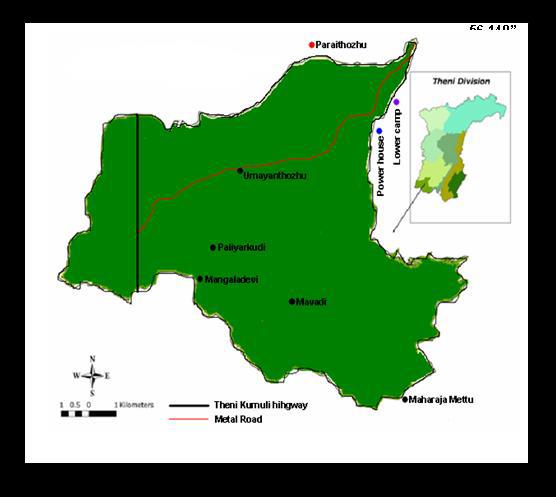
Map 1: Distribution Map of Peafowl (Pavo cristatus) at Theni Forest Area.
Encounter Rate of Indian Peafowl in different Altitudinal Gradients
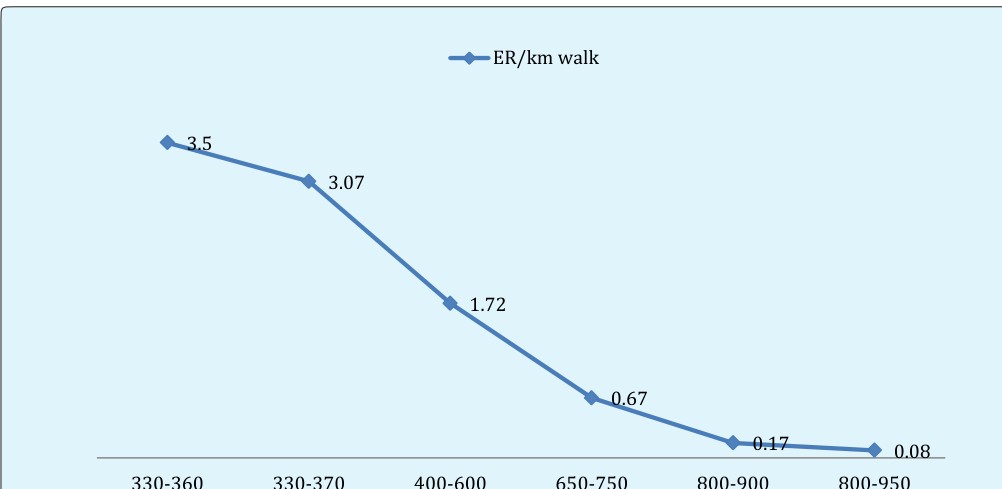
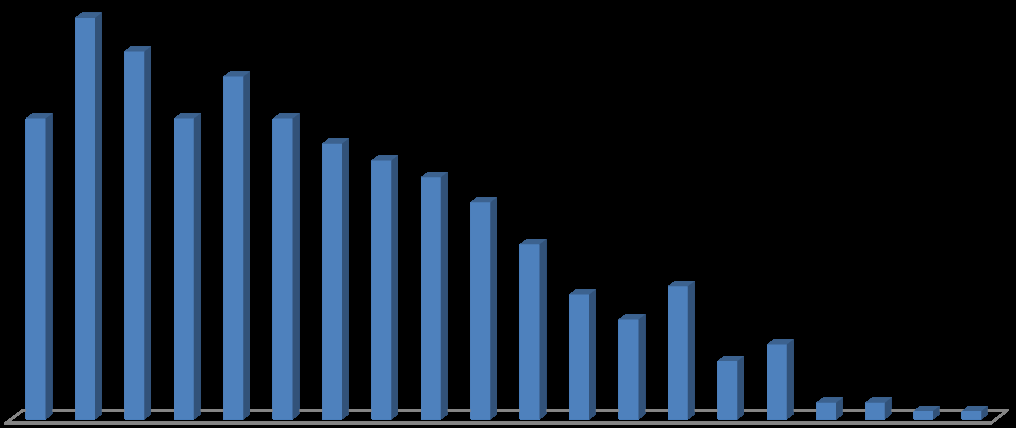
In the study area, there is a wide range of altitudinal gradients which are described. The six different altitudinal groups in the study areas such namely Group I (330-360 m), Group II (330-370m), Group III (400-600), Group IV (650-750), Group V (800-900) and Group IV (800-950) as discussed. The Indian peafowls were recorded with varied range in different groups of altitudinal gradients. The maximum number of encounter rafte was in the Group I (ER=3.5/km walked) and the minimum encounter rate was noticed in the Group VI (ER=0.08/km walked). The abundance of Indian peafowl in the other altitudinal groups such Group II, Group III, Group IV and Group V were moderate encounter rate The sightings of Indian Peafowls were recorded in all the twenty transects in different locations in the Meghamalai forest area. The high number of encounter rate (ER=4/km walked) was noticed in the Transect 2 (Manjanoothu Odai). The low number of encounter rate was obtained (ER=0.08/km walked) in the transect number 19 (Vellimalai roadside) and 20 (Vellimalai roadside). The other transects were moderate encounter rate was recorded (Table 3 & Fig 3).
(ER=3.07/km walked, ER=1.72/km walked, ER=0.67/km walked and ER=0.17/km walked) respectively (Table 2 & Figure 2).
Encounter Rate of Indian Peafowl in different Transects (Locations)
| S | l. No | Habitats Types | ER/Km (n) | Lower Confidence Limit (95%) | Upper Confidence Limit (95%) | |||||||||
|---|---|---|---|---|---|---|---|---|---|---|---|---|---|---|
| 1 | SDSF | 3.5 | 1.75 | 4.28 | ||||||||||
| 2 | SDMDF | 3.07 | 1.41 | 4.13 | ||||||||||
| 3 | SMMDF | 1.72 | 1.33 | 2.91 | ||||||||||
| 4 | MISC+PL | 0.71 | 0.57 | 1.86 | ||||||||||
| 5 | SSTHF | 0.35 | 0.12 | 0.82 | ||||||||||
| Overall | 1.86 | 0.76 | 3.54 |
Table 1: Encounter Rate of Indian Peafowl in different habitats in Meghamalai forest area during 2017-2018.
| Altitude Groups | Group I | Group II | Group III | Group IV | Group V | Group IV | ||||||||||||||
|---|---|---|---|---|---|---|---|---|---|---|---|---|---|---|---|---|---|---|---|---|
| Altitude (msl) | 330-360 | 330-370 | 400-600 | 650-750 | 800-900 | 800-950 | ||||||||||||||
| ER/Km walk (n) | 3.5 | 3.07 | 1.72 | 0.67 | 0.17 | 0.08 |
Table 2: Encounter Rate of Indian Peafowl in different Altitudinal groups in Meghamalai forest area during 2017-2018.
| ER/Km walk | |||||||||||||||||
|---|---|---|---|---|---|---|---|---|---|---|---|---|---|---|---|---|---|
| Transect No | Location | Habitat/forest Type | Altitude (m) | No. individuals (n) | |||||||||||||
| (n) | |||||||||||||||||
| 1 | Manjanoothu Odai | SDSF | 330-360 | 36 | 3.0 | ||||||||||||
| 2 | Manjanoothu Odai | SDSF | 330-360 | 48 | 4.0 | ||||||||||||
| 3 | Manjanoothu | SDMDF | 330-370 | 44 | 3.67 | ||||||||||||
| 4 | Manjanoothu village | SDMDF | 330-370 | 36 | 3.0 | ||||||||||||
| 5 | Manjanoothu Road | SDMDF | 330-370 | 41 | 3.42 | ||||||||||||
| 6 | Manjanoothu Road | SDMDF | 330-370 | 36 | 3.0 | ||||||||||||
| 7 | Manjanoothuparai-1 | SDMDF | 330-370 | 33 | 2.75 | ||||||||||||
| 8 | Manjanoothuparai-2 | SDMDF | 330-370 | 31 | 2.58 | ||||||||||||
| 9 | Bommarajapuram-1 | SMMDF | 400-600 | 29 | 2.42 | ||||||||||||
| 10 | Bommarajapuram-2 | SMMDF | 400-600 | 26 | 2.17 | ||||||||||||
| 11 | Nochi Odai | SMMDF | 400-600 | 21 | 1.75 | ||||||||||||
| 12 | Sampuluthozhu Pallam | SMMDF | 400-600 | 15 | 1.25 | ||||||||||||
| 13 | Arasaradi | SMMDF | 400-600 | 12 | 1.0 | ||||||||||||
| 14 | Arasaradi Road | MISC+PL | 400-600 | 16 | 1.33 | ||||||||||||
| 15 | Enbathanju Acre | SSTHF | 650-750 | 7 | 0.58 | ||||||||||||
| 16 | Enbathanju Acre-river | SSTHF | 650-750 | 9 | 0.75 | ||||||||||||
| 17 | Vellimalai | SSTHF | 800-950 | 2 | 0.17 | ||||||||||||
| 18 | Vellimalai river side | SSTHF | 800-900 | 2 | 0.17 | ||||||||||||
| 19 | Vellimalai estate | MISC+PL | 800-950 | 1 | 0.08 | ||||||||||||
| 20 | Vellimalai roadside | SSTHF | 800-950 | 1 | 0.08 | ||||||||||||
| Overall | 446 | 1.86 |
Table 3: Encounter Rate of Indian Peafowl in different Altitudinal gradients in Meghamalai forest area during 2017-2018.
ER/Km Lower Confidence Limit (95%) Upper Confidence Limit (95%)
4.28 4.13
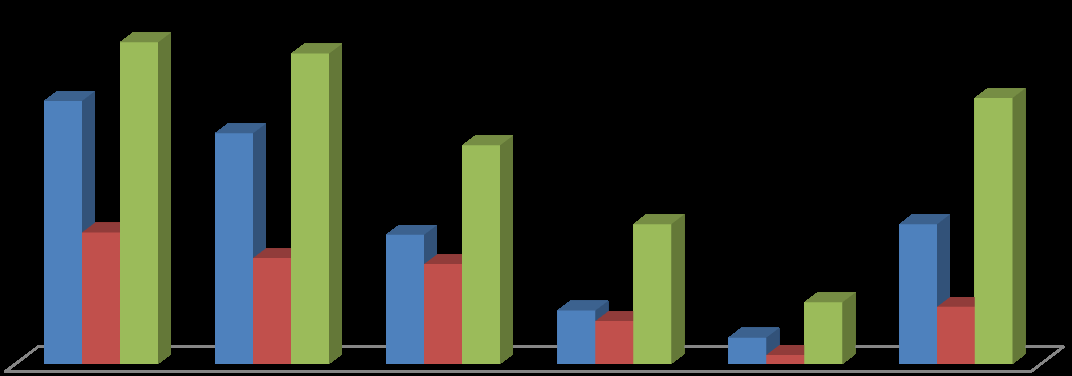
0.12 Figure 1: Encounter Rate of Indian Peafowl in different Habitats in the Meghamalai forest area during 2017-2018 (ER=n/km walk)
Discussion
The distribution of Indian Peafowls was sighted in all the habitats in the study area such southern dry deciduous scrub forest, southern dry mixed deciduous forest, southern moist mixed deciduous forest, southern sub-tropical hill forest and Miscellaneous and plantation forests. The highest encounter rate was estimated in the SDSF habitat and the minimum encounter rate was recorded in the SSTHF. The other habitats such SDMDF, SMMDF and Misc Plantation were obtained the moderate number of encounter rate of Indian peafowl Meghamalai forest areas.
The present study revealed the distribution of Indian Peafowls in all the wide range of altitude 330 to 950 msl in the Meghamalai forest areas. This study also revealed that the distributions of Indian Peafowls were found in the all groups of altitudinal gradients in the study area. The abundance of Indian peafowl in the Meghamalai forests particularly high in the lower altitudinal group when compared to the other groups.
Sathyanarayana and Veeramani [10] reported at Tamilnadu, the abundance of Indian Peafowls in scrub jungle may be due to the availability of sufficient food plants, insects, roosting tress and good ground cover for breeding and protection. According to Subramanian, et al. [11] the Grey jungle fowl prefers mostly scrub jungle when compared to southern sub-tropical hill forests and further stressed that the ground litters and fruiting plants plays significant role for Grey jungle fowl [12]; and Subramanian, et al. [13], Veeramani [14], Johnsingh and Murali [15] stated that more abundance of Indian Peafowls were recorded in scrub jungle in Mudumalai Wildlife sanctuary.
The rare sightings of Indian Peafowl in SSTHF in the study area may be a high altitude and sparse availability of shrubs and bushes. The present study on abundance and distribution revealed that Indian Peafowl densities in the study area were highest in the summer season and similarly the maximum densities were noticed in the Deciduous habitats when compared to higher altitudinal habitats such hill forest. It seems to be an ideal microhabitat variables as well as clearings in the summer and it may be the preference of open areas. Ahmed and Musavi [16] have observed 65% white-crested Kalij pheasants in the scrub jungle when compared to other habitats Ranikhet, Kumaun, in the Himalayas. Silva, et al. [17] stated that the thorn scrub vegetation in Ruhuna National Park is ideal for the Ceylon Junglefowl especially in the dry season. According to Gaston [18], Easa [19], the line transect method is the simplest method to get an index of pheasant population and can be carried out at any time of year. Hence this method is most suitable to estimate the abundance of pheasants. Easa [19] reported the reappearance Indian peafowl in Parambikulam area in Kerala. Ramesh kumar, et al. [20] studied the high encounter rate in the Southern Deciduous Scrub Forest habita habitat in the Meghamalai forest in 2014. The present study also recorded highest number of abundance in the Transect number 2 (lower elevation and Southern Deciduous Scrub Forest habitat). The lowest encounter was in the transect 19 and 20 (higher elevation and Southern Sub-Tropical Hill forest habitat).
The more abundance of Indian Peafowls in scrub jungle may be due to the availability of sufficient food plants, insects, roosting tress and good ground cover for breeding and protection purposes. Peafowl prefers mostly scrub jungle when compared to southern sub-tropical hill forests and may be a reason for the ground litters and fruiting plants plays significant role. The rare sightings of Indian Peafowl in SSTHF in the study area may be a high altitude and sparse availability of shrubs and bushes.
Conclusion
The distribution of Indian Peafowl was obtained in all the habitats in the study area with the wide range of altitude. The sightings of Indian Peafowls were found in all the transects in the study areas. The overall encounter rate of Indian peafowl in the study area was 1.86/km walked. The maximum number was in the SDSF habitat and minimum number was recorded in the SSTHF habitat. In the other habitats such SMMDF, MISC+PL and SDMDF, were obtained the moderate densities of Indian Peafowl respectively.
The present study revealed the distribution of Indian Peafowls in different habitats and the wide range of altitudinal gradients (altitude 330 to 950 msl) in the Meghamalai forest areas. This study also revealed that the populations of Indian Peafowls were found higher number in particular habitat when compared to others and it showed the fondness in the open areas of forests in the study area.
References
-
Bird Life International (2012) Pavo cristatus. IUCN Red List of Threatened Species. International Union for Conservation of Nature.
-
Ali S, Ripley SD (1980) Handbook of the birds of India and Pakistan. 2nd (Edn.), Oxford University Press, pp: 123-126.
-
Miller RJ (1994) Mapping the diversity of Nature. Chapman and Hail, London.
-
Conroy MJ, Noon BR (1996) Mapping of species richness for conservation of biological diversity: Conceptual and methodological issues. Eco App 6(3): 763-773.
-
Lack D (1993) Habitat selection in birds. J Animal Eco 2: 239-262.
-
Ramesh K, McGowan P (2009) On the current status of Indian Peafowl Pavo cristatus (Aves: Galliformes: Phasianidae): keeping the common species common. J Threatened Taxa 1(2): 106-108.
-
Odum EP (1950) Bird population of high lands (North Carolina) Plateau in relation to plant succession and avian invasion. Eco 31(4): 587-605.
-
Champion HG, Seth SK (1968) A revised survey of Forest types of India. Government of India, New Delhi.
-
Burnham KP, Anderson DR, Laake JK (1980) Estimation of density from line transects sampling of biological populations. Wildlife Monograph 72: 1-292.
-
Sathyanarayana MC, Veeramani A (1993) Roosting tree used by Indian Peafowl at Tamil Nadu. In: Pheasant in Asia 1992. Jenkins D (Ed.), World Pheasant Symposium held in Srinaagar, Kashmir, pp: 1-3.
-
Subrmanian C, Ramesh Kumar C, Sathyanarayana MC (2008) Microhabitat use by Grey junglefowl (Gallus soneratii) at Theni Forest Division, Western Ghats, south India. Int J Appl Eco Environ Res 6(4): 57-64.
-
Subramanian C, Kambarajan P, Sathyanarayana MC (2000) Grey Junglefowl surveys in Theni Forest Division, Western Ghats, south India. International Galliformes symposium, Nepal Proceeding.
-
Subramanian C (2002) Habitat associations of Grey Junglefowl Gallus soneratii in the Western Ghats: A Ph.D Synopsis. Tragopan UK (16): 32-33.
-
Veeramani A (2013) Ecological study of the Indian Peafowl (Pavo cristatus) in Mudumalai Wildife Sanctuary, Nilgiri Biospher Reserve. Abstract, NBRSJC held in Government Arts College-Udhakamanadalam, Tamil Nadu, pp: 80.
-
Johnsingh AJT, Murali S (1978) "The ecology and behaviour of the Indian Peafowl (Pavo cristatus) Linn. of Injar". J Bombay Nat Hist Socie 75(4): 1069-1079.
-
Ahmed A, Musavi AH (1993) Preliminary ecological studies in 1991 on the white-crested Kalij pheasant at Ranikhet, Kumaun, Himalayas, Uttar Pradesh, India. In: Pheasant in Asia 1992. Jenkins D, (Ed.), World Pheasant Association, Reading, UK, pp: 73-75.
-
Silva M, Dissanayake SRB, Santiapillai C (1992) Status of the ceylon junglefowl in Ruhuna National Park, Srilanka. J World Pheasant association, pp: 62-66.
-
Gaston AJ (1980) Census techniques for Himalayan pheasants including notes on individual species. J World Pheasant Association 5: 40-53.
-
Easa PS (1990) Reappearance of Common Peafowl ''Pavo cristatus'' Linn. in Parambikulam Wildlife Sanctuary, Kerala. J Bombay Natural Hist Society 87(2): 292-293.
-
Rameshkumar C, Kalaiyarasi G, Subramanian C (2017) Density and distribution of Indian Peafowl (_pavo cristatus_) in the meghamalai Forests, Tamil Nadu, Western Ghats of Southern India. Int J Adv Res 5(8): 789-794_._
- Lessons to Learn: Trees are More than the Lungs of the World
- Community Forestry Enterprises as a Model for Sustainable Forest Development: The Case Of The "Baja Tarahumara" in Chihuahua, Mexico
- Ecological and Socio-Economic Impacts of Chromolaena odorata and Mesosphaerum suaveolens, Two Invasive Alien Species in Central and Southern Benin, West Africa
- Epigenetic Sustainability: Modeling the Human Factor as a Natural Resource through Science 4.0 and the NR3C1 Biological Pilot
- Growth-at-Risk: A Framework for Assessing Economic Vulnerability
- The Rural Territory as a Socioecological System for the Management of Public Policy for Sustainable Rural Development