
Lessons to Learn: Trees are More than the Lungs of the World
Over recent decades, trees have typically been seen as a hindrance to intensive agriculture, resulting in their clearance from farmland. This is a misunderstanding of the importance of trees and their numerous environmental, social, and economic benefits to mankind within farming systems.
The Ecological and Environmental Functions of Trees
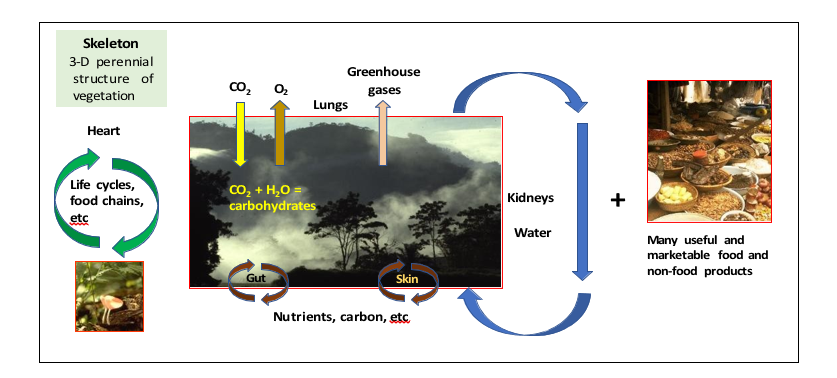
We frequently hear statements that “trees are the lungs of the world”. This analogy is a gross understatement about the value of trees in our landscapes. So, let’s consider the environmental benefits that trees provide. Firstly, as the statement suggests, trees and forests do indeed exchange oxygen and carbon dioxide with the atmosphere during the processes of photosynthesis and carbohydrate metabolism. Of course, the magnitude of these exchanges depends on the species, their size, as well as the densities and configurations of them in the landscape. Continuing this bodily analogy, like kidneys, trees process water taking it up from the soil and transpiring it into the atmosphere as water vapour (Figure 1). This is also part of the photosynthesis process in which carbon dioxide and water are converted into carbohydrates for energy and growth. Together with water evaporated from the surface of leaves, this water vapour forms clouds and, when cooled, is condensed to fall as precipitation which moistens the soil. It is then available for uptake by plant roots and is lifted back up to the leaves for carbohydrate production, so completing the hydrological cycle. At the landscape level, this cycle is known as the ‘biotic pump’ in which the transpired moisture in the atmosphere is advected downwind to fall as rain somewhere else.
At the soil surface, moisture and organic matter combine with the fine roots of plants to form a dense network holding nutrients near the soil surface. This has beneficial effects on soil structure enhancing aeration and water holding capacity while also providing some protection from soil erosion. So, following our bodily analogy, this network is like the ‘skin’ of the earth. In addition, it is here at the soil surface that the network of roots combines with networks of fungal mycelia, bacteria, and small arthropods. They engage in the numerous processes associated with the decomposition of organic matter and the recycling of carbon and nutrients for plant growth. These nutrients are then taken up and absorbed into tissues in ways that mimic the digestion and absorption of foods in the ‘gut’. They are then sequestered in the biomass.
The perennial woody structure of trees creates a three- dimensional ‘skeleton’ which shades the understorey creating a diverse array of ecological niches. These microclimates vary in light, temperature and humidity providing habitat for a wide range of colonizing life forms. Here they engage in their vital life cycles and food chains above- and below-ground which regulate predation, herbivory and reproduction, all of which are fundamental to a balanced and functioning ecosystem. These processes determine the complex ecological functions that control the health of the ecosystems. It is these complex relationships between trees and the millions of other organisms that ensure the provision of the critical environmental services. These services determine the outcomes of the balancing tricks necessary for ecologically healthy regeneration and a sustainable life [1]. This is a central function and so is akin to the ‘heart’ of the ecosystem. Some may say it is also like the brain as there is also sensory perception affecting growth and development. This is mediated through competition and/or symbiosis and mutualism.
When ecosystems are out of balance, there are greater risks of environmental disasters like flooding, landslides, climate change and the incidence of pest attacks and disease pandemics. So, I would argue that in addition to being the lungs of the world, trees are also the kidneys, skin, gut, heart and skeleton of the world. Together they are the essential ‘life blood of the planet’.
In this discussion, we also need to recognize that the species Homo sapiens is the top predator and the top herbivore in global ecosystems, thus a sustainable future must ensure that rural landscapes meet the needs of humanity. Of course, agriculture has been developed to feed growing human populations, but currently it often comes at a cost to the environment. In this respect there is much that trees can do to reduce the negative impacts of agriculture in ways that also better meet the needs of people. In particular, we need to appreciate the social and economic benefits that can be derived from natural resources, especially the indigenous trees which in the past have provided the day- to-day needs of hunter-gatherers. Today, these trees are still sources of traditionally important food, medicinal and other useful products.
Enhancing the Social Benefits of Trees
Across the ages, tree products have been critical for human livelihoods and for the social and cultural development of rural populations; and even for survival. In this respect we can consider the services that trees provide as those of a town. For example, the trees can be likened to a supermarket, a hardware store for building materials, a drug store, or even a factory for the manufacture of fertilizers or an energy hub.
In addition, they can be likened to museums and churches for the protection of traditions and culture; while investments in the cultivation of these resources equate to savings in a High Street bank. Furthermore, the local wildlife can benefit from the provision of community habitat and services such as those of homes and real estate, hotels for migrants, a venue for over-wintering or summer visitors, and even a nightclub for nocturnal creatures!
Expanding the Economic Benefits of Trees
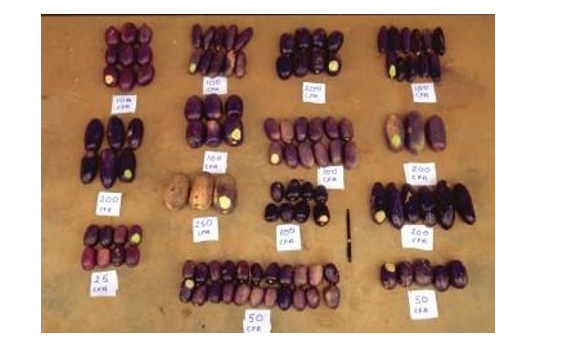
Most people associate trees with timber and fuelwood, both of which are commonly traded in local markets. However, there are many other useful tree products which are informally traded, such as fruits and nuts, bark and leaves. These important trees have been overlooked by science and have been described as the ‘Cinderella,’ species the Trees of Life. They are the guardians of seldom appreciated tree-to- tree genetic variation (Figure 2) which has the potential to be a future ‘gold mine’ for communities in tropical countries. This neglected and underutilized resource can be easily captured in the form of elite cultivars by the application of standard and low-cost horticultural propagation. This is possible even in remote rural communities without access to electricity and piped water.
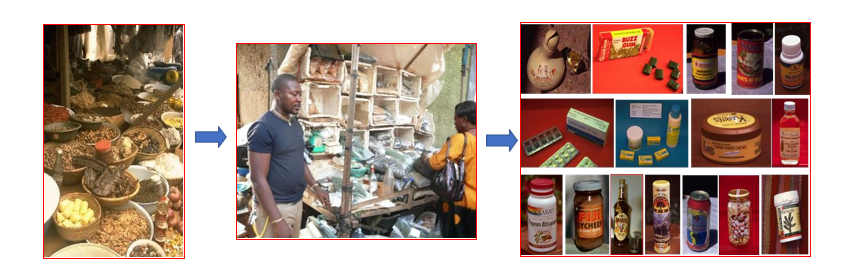
Over the last 35 years much has been written about the decentralized participatory domestication of dozens of these useful and marketable indigenous Cinderella tree species [2, 3]. The capture of elite individual trees through domestication and then their subsequent cultivation by smallholder farmers is now becoming a worldwide programme involving numerous research teams in many countries around the world [4]. Crucially, in addition to offering substantial livelihood benefits to rural populations, these products can be processed for much wider trade to generate much-needed income. This in turn provides the incentive to develop local enterprises and create off- farm employment to further increase product quality and enhanced shelf life for even wider trade. All this can be further developed leading to new businesses and cottage industries; with potential expansion into larger scale, value- adding industries (Figure 3) increasing the economic value of these trees and their products many-fold.
The generation of income from enhanced trade and new entrepreneurism goes well beyond material wealth as it is also fundamental to the rehabilitation of degraded social and human capital. With a source of income people can afford to purchase farm inputs like fertilizers and to gain access to health and education, and to invest in new physical infrastructure like village tree nurseries, roads, bridges, transport and storage facilities. This creates new physical and financial capital for further economic growth. Indeed, for subsistence farmers living in extreme poverty, income gives access to better lifestyles derived from the environmental functions and social services flowing from domesticated trees and the marketing of their products. In this way it offers a complete transformation of their lives in ways that are otherwise impossible.
Land Maxing through Integrated Ecological, Social and Economic Benefits from Trees
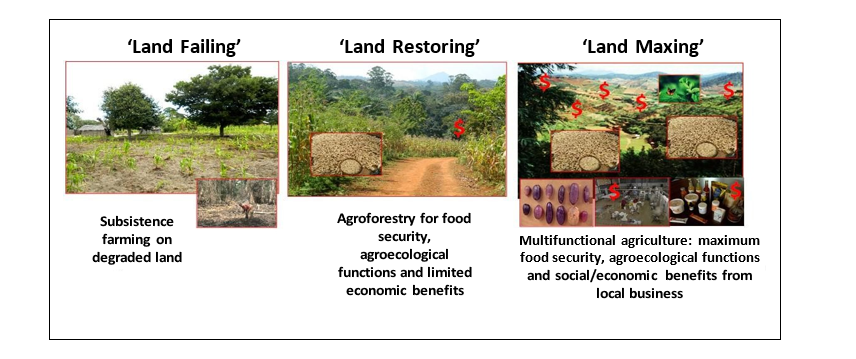
For decades now, there have been international calls for the sustainable intensification of agriculture and rural development in Developing Countries. Many of these reports have recognized that ‘business as usual is not an option”, but despite numerous efforts there has been insufficient progress in finding new ways forward. However, in the last few years a more holistic approach has emerged based on the domestication and commercialization of indigenous tree species as described above. This offers a generic and highly adaptable solution to reboot the planet by addressing the failures of subsistence farming systems and to meet the livelihood needs of local people through the expansion of the rural economy [5]. This has been described as ‘Land Maxing’ because it restores degraded natural, social and human capital while creating new physical and financial capital (Figure 4). Central to this, it closes the very common ‘yield gaps’ in staple food cropping systems resulting in substantially enhanced food and nutritional security because of greater productivity and more sustainable farming systems [3]. This reduces pressures from deforestation and land degradation by allowing the cultivation of a smaller area of land, so restoring wildlife habitat and mitigating climate change. In parallel, farming households gain access to income, employment and business opportunities which stimulate community development.
In practice, therefore, Land Maxing addresses the causes of failure in farming systems of many small-scale farmers in the tropics and subtropics by making them both more productive and much less damaging to the environment. This is important as it alleviates the causes of deforestation and land degradation, in ways that free the farmers from poverty and social injustice. Obviously, there is a long way to go to achieve all the above beneficial environmental, social and economic impacts attributable to trees. Hopefully, however, Land Maxing gives both hope and long-term aspirations for us to rise to the challenges posed by the big global issues facing humanity and the planet. The wisdom that underpins all this potential is for us to live on the profits of all these different types of capital, rather than depleting the capital assets themselves.
References
-
Leakey RRB (2014) The role of trees in agroecology and sustainable agriculture in the tropics. Annual Review of Phytopathology 52: 113-133.
-
Leakey RRB (2012) Living with the Trees of Life. In: 1st (Edn.), Towards the Transformation of Tropical Agriculture, CABI, Wallingford, UK, pp: 200.
-
Leakey RRB (2024) Living with the Trees of Life. In: 2nd (Edn.), A practical guide to the rebooting of the planet through tropical agriculture and putting farmers first, CABI, Wallingford, UK, pp: 250.
-
Leakey RRB, Tientcheu Avana ML, Awazi NP, Assogbadjo AE, Mabhaudhi T, et al. (2022) The future of food: domestication and commercialization of indigenous food crops in Africa over the third decade (2012-2021), Sustainability 14: 2355.
-
Leakey RRB (2020) A re-boot of tropical agriculture benefits food production, rural economies, health, social justice and the environment. Nature Food 1: 260-265.
- Community Forestry Enterprises as a Model for Sustainable Forest Development: The Case Of The "Baja Tarahumara" in Chihuahua, Mexico
- Ecological and Socio-Economic Impacts of Chromolaena odorata and Mesosphaerum suaveolens, Two Invasive Alien Species in Central and Southern Benin, West Africa
- Epigenetic Sustainability: Modeling the Human Factor as a Natural Resource through Science 4.0 and the NR3C1 Biological Pilot
- Growth-at-Risk: A Framework for Assessing Economic Vulnerability
- The Rural Territory as a Socioecological System for the Management of Public Policy for Sustainable Rural Development
- Transition Risks in a Small Open Economy: An EDSGE Model with Blue Firms, Financial Frictions and Macroprudential Policy