
Predation of wolves on feral horses in Apennines Areas of Southern Italy: A Case Study Report
Although wolf predation on horses is generally low, it can be significant where horses are grazed extensively and there are low densities of wild prey, such as in Southern Europe. The economic damage of wolf predation on horses can have a major impact in certain situations involving free-ranging horse populations and the topic needs more attention. This is the case of Spain, Portugal and Italy where it is possible to find many examples of wolf predations on feral horses. The main factor predisposing horses to wolf pre¬dation worldwide is the free-ranging management system. In Italy special attention is given to the horses bred in a particular area of the Southern Apennines: the Pentro horses; they represent a rare endangered equine population of Molise Region with its owns genetic characterisation. The losses of horses caused by wolves predations increase exponentially from year to year. Considering the very low number of Pentro Horses, any prey represents a considerable loss from a morphological and genetical point of view. Consequently, the predation phenomena represent a considerable limit to the selection and maintenance of these horses. This is why it was decided to create a special database with the aim of monitoring, analyzing and preventing predatory phenomena and consequently to keep under control the number of predatory events by the wolf. The database was processed by collection of data concerning: when the predation take place, the age of the preyed equines, the type of injury and the parts of the body injured or removed by the wolf, the body location of the damage and the recognition and value of money compensation. The data collected evidenced how there is a need for innovative approaches to prop¬erly mitigate predation and support the traditional free-ranging husbandry system with its high ecologi¬cal and cultural value.
Introduction
Throughout history, the wolf has faced threats of extinction and today the increase in the number of heads of this species represents an ecological recovery. The wolf recolonization started naturally in the 1980s first in northern Apennines [1] and then from the 1990s in the Alps [2, 3].
Now the species is expanding and is present in all the Alps, coming from both the Apennines-western Alps and from the northeast. Locally high wolf predation on horses is reported in many parts of southern Europe. In Italy wolf predations on horses are observed in most part of the Italian territory, such as in the Abruzzo region [4], in the Northeastern Apennines [1], in Northern Italy [2, 3] and in Southern Apennines [5-
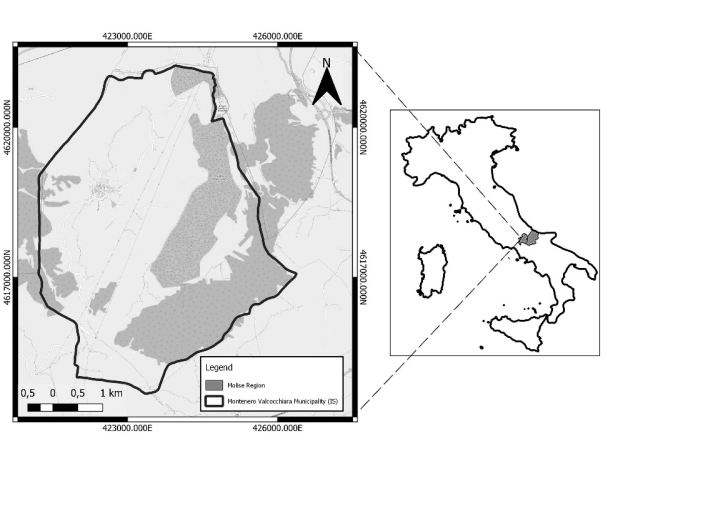
7] where horses can locally reach 40% of wolf diet [4]. According to the ISPRA (Italian Institute for Environmental Protection and Research, 2022) survey [8, 9] a number of around 950 specimens is estimated in the Alpine regions, while there are almost 2400 those distributed along the rest of the peninsula, for a total of about 3300 wolves in Italy. The recovery of the wolf population in Italy is associated with a negative impact both from an economic and social point of view, sometimes even very high, such as those situations that involve some endangered and rare population of feral horses. In Spain and Portugal there are similar situations: the Galician ponies in Spain (Cabalo de Pura Raza Galega) and Garrana ponies in Portugal [10, 11, 12, 13]. It is therefore necessary to better manage the presence of the wolf, with the aim of minimizing the impacts to the detriment of livestock activities but being careful with the compromission of the survival of the wolf. The wolf is a protected species regulated by national and international laws [14]. The wolf, being a predatory carnivore, also represents a problem for the livestock sector [15, 16, 17]. In fact, the losses of domestic livestock and wild ungulates caused by the wolf are increasingly significant, with important economic losses. This threat is also experienced in the Italian Molise region especially (Italian Southern Apennines) in the Montenero Val Cocchiara Municipality (Isernia) (Figure1) where the main prey of the wolf is the Pentro horse, a rare endangered equine population of Molise Region with its owns genetic characterisation [18].
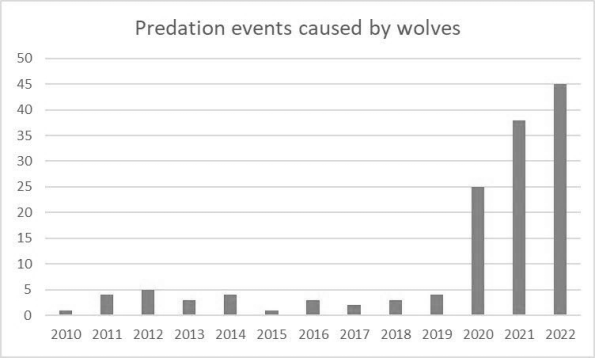
The losses of horses caused by this predator increase exponentially from year to year (Figure 2). Considering the very low number of Pentro Horses, any prey represents a loss of biodiversity and an obstacle to the selection of this population; consequently, those horses that could be interesting from a morphological and genetic point of view for selection are lost. In fact, wolf predations are one of the threats to the preservation and selection of the Pentro Horse. With reference to the predations of the Pentro horse, a Database was created with the aim of monitoring, analyzing and preventing predatory phenomena and consequently to keep under control the number of predatory events by the wolf. In this way it will be possible to have a broader and more precise vision of the losses that farmers have suffered and suffer over the years to provide a digital archive with data on horse depredations in recent years and to prevent any future predations.
Methods: Database Processing
The database was processed by collection of data concerning:
- When the predation take place
- Age of the preyed equines
- Type of injury and parts of the body injured or removed by the wolf
- Body location of the damage
- Recognition and value of money compensation In addition to the trend of wolf predatory phenomena over the years other important information were extrapolated from the reports analyzed: this allows to better understand the behavioral habits of the wolf and this represents an aid element for a better control of the presence of this species on livestock activities and possibly prevent attacks. A section of the Database is reserved to the surveys on carcasses which are carried out during the inspections for the compilation of the compensation reports. In the digital sheets, for each predation event, the type of injury caused to the prey and the parts of the body injured or removed from the animal were indicated. In addition to the data on the surveys of the carcasses, the data relating to the surveys on the body position of the damage were also entered in the database; other data concern the geographical characteristics, such as name of the area, altitude, longitude, latitude, type of environment, etc. referred to each predatory event. The meteorological aspects and any evidence regarding the predation event were then indicated.
Results
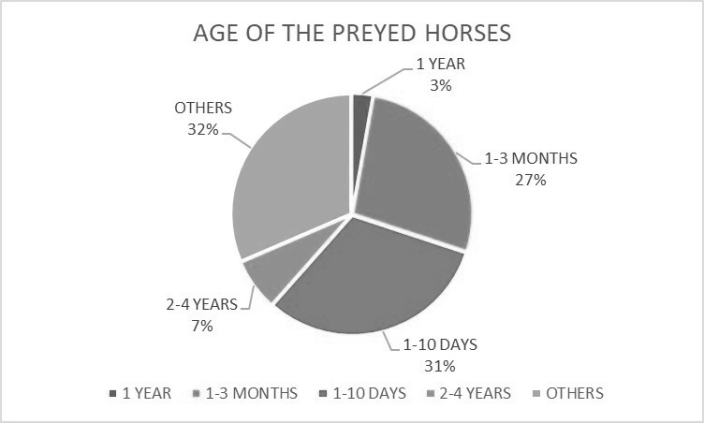
Predatory events increased in the years 2020-2022 (Figure 2). The predations usually take place at night or during the dawn hours; rarely wolf attacks were detected during the day, it is therefore a prevalent nocturnal animal. The inspection takes place the same day of the damage; this is important to ensure an accurate analysis of the predatory phenomenon. From the analysis of the Database, it was also observed that predatory phenomena are concentrated in the spring/summer period from April to September because it corresponds to the presence of foals which generally born between April and May onwards. A certain number of predations were also recorded in the months of October and November, but in a smaller percentage. The recognition of the presence of the wolf in this case is revealed by the presence of footprints in mud or excrement, therefore thanks to indirect indications of presence of the animal, since, as mentioned before, the wolf acts mainly at night therefore it is difficult to spot it directly. A further aspect that can be found in the Database is the age of the horses preyed upon by wolves (Figure 3). The subjects preyed on are mainly foals under the age of two, starting from the first days of age. The wolf reaches its prey by pursuit, taking advantage of its high resistance manages to run for a very large amount of time coming to exhaust the prey. Foals are the favorite prey because of their physical structure and musculature they do not allow him to move very quickly as a consequence they are prey easily reachable by the predator. In fact, the wolf carries out a real selection on the physical characteristics of the prey: generally, the most vulnerable animals (old, weak, newborn, sick, injured, debilitating) have a better chance of being reached and preyed upon [19]. From an ecological point of view, this generally represents a fundamental factor since the weak links are eliminated from the population, keeping it healthy and vigorous.
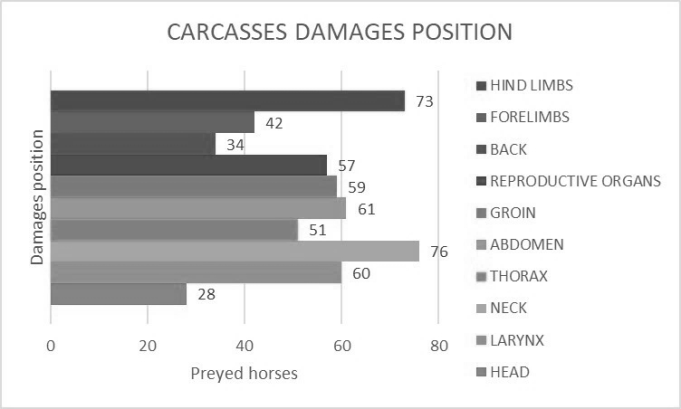
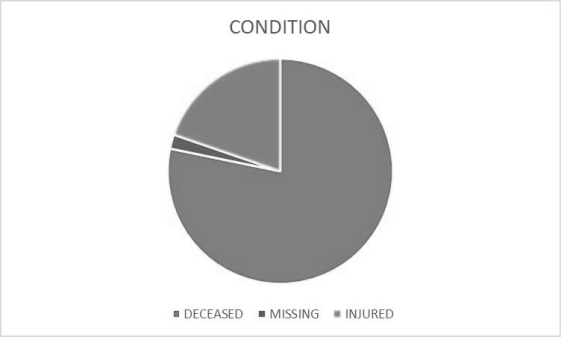
In most of the predatory events the wolf attacked the prey causing lacerations and bites; the parts of the preyed equines most affected by the wolf are: the abdomen, the hind limbs, the chest and the neck. The sheet dedicated to the findings on the carcass also contains notes regarding any remains left in the area of depredations or bloody traces on the ground, which represent evidence for the compensation (Figure 4). Figure 5 shows the outcomes of official assessments of alleged wolf attacks on horses which highlights that in most part of cases the preyed horses are deceased.
Discussion and Conclusions
The presence of the wolf is increasingly significant in Italy; if, on the one hand, this situation represents a recovery of the wolf from an ecological point of view, it has a significant impact on livestock activities. Since the wolf is a species of fundamental importance for ecological recovery, it is important to implement measures that allow to mitigate and prevent the damage caused by it favoring the coexistence between man and wolf. In this study the role of the wolf was approached in relation to the effect of predation on a rare population of feral horses, the Pentro Horses, located in a rural area of Southern Italian Apennines. The predation phenomena represent a considerable limit to the selection and maintenance of these horses which benefits from special protection contributions. The current compensation system fails to alleviate the economic losses of these free-ranging horses because it is difficult to implement damage prevention measures in free-ranging husbandry systems; sometimes there is a difficulty in finding carcasses, particularly of foals that are consumed quickly and also a difficulty in finding kill marks on carcasses to confirm the cause of death. Moreover, the low levels of compensation create difficulties for owners to replace lost animals in order to benefit from subsidies for livestock production. The digitization of reports of predatory events has allowed us to have a broader and more complete vision of the losses that farmers have suffered and suffer over the years. The Database has been made available to the municipality with the aim of providing a digital archive with data on horse depredations in recent years; the Database will then be updated with data on any future predatory phenomena. These monitoring and estimates represent a valid element for controlling the presence of the wolf in the various territories and preventing the damages caused. There is a need for innovative approaches to properly mitigate predation and support the traditional free-ranging husbandry system with its high ecological and cultural value. Wolf predation on free-ranging horses involves economic losses for their owners, who are often financially disadvantaged [20, 21]. Effective management measures should be implemented, such as: increasing the abundance and diversity of wild ungulates to reduce wolf predation pressure, particularly on foals; preventing the removal of horses that die of natural causes to allow wolves to scavenge on their carcasses; applying damage prevention measures compatible with free-ranging horse husbandry systems; adjusting economic compensation policies to traditional socioeconomic costs related to wolf predation [15]. Some of these measures will mitigate the impact of wolf predation on free-ranging horses, encouraging horse owners to maintain this traditional husbandry practice which has important cultural and ecological roles. The assessment of socioeconomic traits associated with predation on livestock is essential for supporting management practices to minimize conflicts with breeders [22], particularly when endangered breeds are involved.
Acknowledgements
We thank the Municipality of Montenero Valcocchiara and the breeders of Pentro horses for their availability in finding the data concerning the wolf attacks.
References
-
Gazzola A, Capitani C, Scandura M, Mattioli L, Appolonio M, et al. (2007) Livestock damage and wolf presence, in a rural area of Northeastern Appenines, Tuscany, Italy. Hystrx It J Mamm 1: 310.
-
Imbert C, Caniglia R, Fabbri E, Milanesi P, Randi E, et al. (2016) Why do wolves eat livestock? Factors influencing wolf diet in northern Italy. Biol Conserv 195: 156-168.
-
Meriggi A, Dagradi V, Dondina O, Perversi M, Milanesi P, et al. (2015) Short term responses of wolf feeding habits to changes of wild and domestic ungulate abundance in northern Italy. Ethology Ecology & Evolution 27(4): 389- 411.
-
Fico R, Morosetti G, Giovannini A (1993) The impact of predators on livestock in the Abruzzo region of Italy. Rev Sci Tech 12(1): 39-50.
-
Ciucci P, Artoni L, Crispino F, Tosoni E, Boitani L, et al. (2018) Interpack, seasonal and annual variation in prey consumed by wolves in Pollino National Park, Southern Italy. European Journal of Wildlife Research 64: 5.
-
Ciucci PL, Boitani L, Falco M, Maiorano L (2018) Hierarchical, multi-grain rendez vous site selection by wolves in Southern Italy. The Journal of wildlife management 5(82): 1049-1061.
-
Meriggi A, Lovari S (1996) A review of wolf predation in Southern Europe: does the wolf prefer wild prey to livestock. J Appl Ecol 33(6): 1561-1571.
-
ISPRA (2022) The wolf: the Italian population is increasing.
-
Aragno P, Salvatori V, Caniglia R, De Angelis D, Fabbri E, et al. (2022) La popolazione di lupo nelle regioni dell’Italia peninsulare 2020/2021. 2022. Relazione tecnica realizzata nell’ambito della convenzione ISPRA- Ministero della transizione ecologica “Attività di monitoraggio nell’ambito del piano di azione del lupo”.
-
Lagos L, Blanco P (2021) Testing the use of dogs to prevent wolf attacks on free-ranging ponies in New Iberia. CDP News 23: 20-27.
-
Casimiro VJG (2017) Wolf predation on livestock in relation to husbandry practices and wild prey availability: regional and temporal patterns. MSc thesis, University of Porto, Porto, Portugal, pp: 97.
-
Freitas J (2019) Patterns and behavioral determinants related to wolf predation on free-ranging horses. MSc thesis, University of Porto, Porto, Portugal, pp: 107.
-
Lagos L, Bárcena F (2018) Spatial variability in wolf diet and prey selection in Galicia (NW Spain). Mammal Res 63(2): 125-139.
-
Linnell JDC, Cretois B (2018) Research for AGRI Committee - The revival of wolves and other large predators and its impact on farmers and their livelihood in rural regions of Europe. European Parliament, Policy Department for Structural and Cohesion Policies, Brussels, Belgium, pp: 106.
-
Freitas J, Lagos L, Álvares F (2021) Horses as prey of wolves: worldwide patterns and management implications. CDP News 23: 1-11.
-
Newsome TM, Boitani L, Chapron G, Ciucci P, Dickman CR, et al. (2016) Food habits of the world’s grey wolves. Mamm Rev 46(4): 255-269.
-
Solmsen EH, Bathen M, Grüntjens T, Hempel E, Klose M, et al. (2021) Protecting horses against wolves in Germany. CDP News 23: 12-19.
-
Iamartino D, Fidotti M, Miraglia N, Pilla F (2004) Genetic characterisation of Pentro young horses by microsatellites markers. 55th EAAP Conference, Bled, Slovenia, pp: 310.
-
Iannaccio M (2016) Il ritorno dei grandi carnivori in Italia ed in Europa:gestione sostenibile,convivenza ed effetti sulla zootecnia di montagna. Tesi di Laurea, Università degli studi del Molise.
-
Hovens JPM, Tungalaktuja KH, Todgeril T, Batdorj D (2000) The impact of wolves Canis lupus (L., 1758) on wild ungulates and nomadic livestock in and around the Hustain Nuruu Steppe Reserve (Mongolia). Lutra 43(1): 39-50.
-
Milheiras S, Hodge I (2011) Attitudes towards compensation for wolf damage to livestock in Viana do Castelo, North of Portugal. Innov 24(3): 333-351.
-
Dickman AJ (2010) Complexities of conflict: the importance of considering social factors for effectively resolving human–wildlife conflict. Animal Conservation 13(5): 458-466.
- Lessons to Learn: Trees are More than the Lungs of the World
- Community Forestry Enterprises as a Model for Sustainable Forest Development: The Case Of The "Baja Tarahumara" in Chihuahua, Mexico
- Ecological and Socio-Economic Impacts of Chromolaena odorata and Mesosphaerum suaveolens, Two Invasive Alien Species in Central and Southern Benin, West Africa
- Epigenetic Sustainability: Modeling the Human Factor as a Natural Resource through Science 4.0 and the NR3C1 Biological Pilot
- Growth-at-Risk: A Framework for Assessing Economic Vulnerability
- The Rural Territory as a Socioecological System for the Management of Public Policy for Sustainable Rural Development