
Assessing Threats to the Drill monkey (Mandrillus leucophaeus) and other Primate Species in Selected Ranges of Cross River National Park, Nigeria
The population of the endangered drill monkey (Mandrillus leucophaeus) and other primate species have continued to decline in Cross River National Park (CRNP), Nigeria. The current threats responsible for the population decline was assessed in four selected ranges (Anape, Aking Orem and Nsofang) through administrative park record, interview of hunters and field observations that spanned 194days (between July, 2021 – August, 2022) covering a distance of 997km. A total of 58 interviews of hunters were conducted in seven communities (Anape, Aking, Osomba, Orem, Ntebachot, Nsofang and Mkpot). Ninetyfive (95%) reported a decline in the population of the drill monkey as (65%) stated a rare encounter. Also, 90% reported to hunt primates with 64% reporting to hunt drill monkey even though they are aware of the existence of CRNP. However, 79% expressed their willingness to stop hunting if an alternative livelihood was provided. Thirteen threat indicators were recorded in both season (wet and dry), distributed across the four ranges surveyed. Spent cartridge (dry=12.75±10.41; wet=6.25±5.91), wire snare (dry=8.25±4.73; wet=8.5±3.42) and logging (dry=3.75±3.61; wet=3.50±2.65) were the highest threat indicators and correlated with the administrative record on threat in a ten year period (2012 -2021) (hunting 34.3% and logging 35.5%). Encounter rate of threat was highest in Nsofang (dry=0.78/km; wet=0.76/km) which harbours an enclave community (Mkpot) and lowest at Anape (dry=0.05/km; wet=0.18/km) suggesting more protection of this area considering the conservation interest in the region. The Park authority is therefore implored to intensify protection efforts in these other areas with high anthropogenic activities while considering the possibility of a joint forest management with host communities.
Introduction
The Cross River National Park (CRNP), in the south- eastern part of Nigeria has an exceptional biological distinctiveness and it is home to one of the oldest tropical rainforests in Africa, and the remaining rainforest in Nigeria [1]. Even with the increasingly evident forest disturbance and fragmentation caused by factors such as illegal logging and land conversion for agricultural purposes [2], the survival of the critically endangered Cross-River gorilla (Gorilla gorilla diehli) [3], Nigeria–Cameroon chimpanzees (Pan troglodytes ellioti)) and the endangered drill (Mandrillus leucophaeus) are still highly dependent on these remaining forest in which they find refuge. Sixty-five percent of all primate species are threatened with extinction (i.e., Vulnerable, Endangered, or Critically Endangered) [4].
In Nigeria, just as with many large species of mammals in West and Central Africa, hunting and habitat degradation are the main threats to drill monkeys, which are currently listed as Endangered on the IUCN Red Data List [4, 5] and also listed by the IUCN as the highest conservation priority of all African primates [6]. Hunting with guns and snares and habitat loss from agricultural expansion, logging, and raising livestock are the primary direct threats to primates’ worldwide [7]. These threats have adversely affected the ability of primates to survive in the near future and are more evident on the drill monkeys because of its restricted range (the rainforest zone north of the Sanaga Rivers in Cameroon, Cross Rivers in Southeast Nigeria and on the Island of Bioko in Equatorial Guinea).
Monitoring the population status and threats to primate species is therefore an important element for effectively conserving and managing them. This usually requires scientific based methods that measure biodiversity and threat status with the objective to inform successful conservation decisions and actions [8] and to ultimately enhance recovery of threatened species.
Materials and Methods
Study area
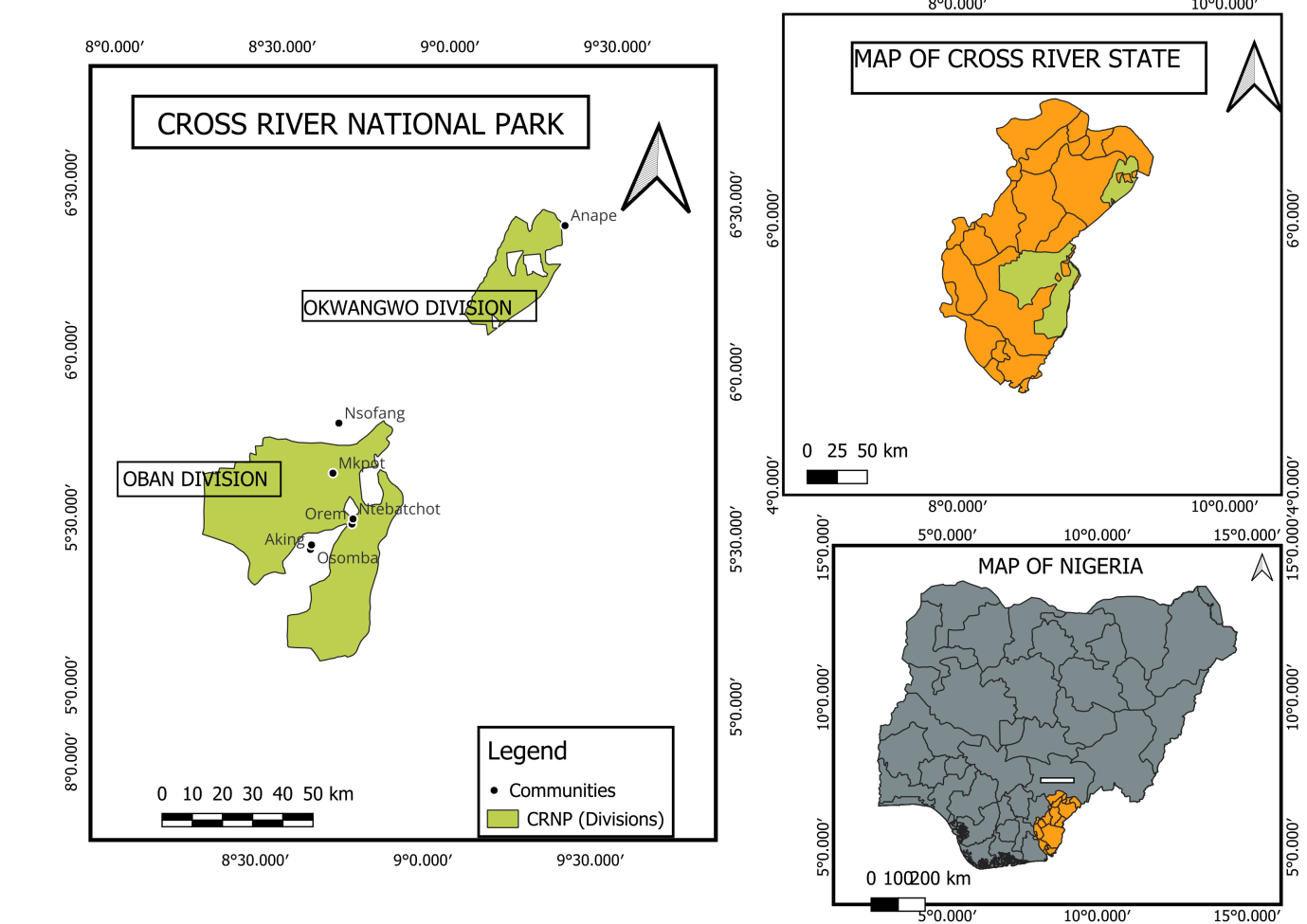
The Cross River National Park (CRNP) covers a total area of 4000 km² which is segmented into two non-contiguous divisions. The Oban hills in the southern part covering 3000km² and the Okwangwo division in the northern part covering 1000km² (Figure 1). The Park ecosystem consists of primary moist tropical rainforests in the north and central parts, while the southern parts contain mangrove swamps on the coastal zones. The Cross River National Park has one of the oldest rainforests in Africa, and has been identified as a biodiversity hotspot [9].
Data collection
Both primary and secondary data were used for this study. Primary sources of data were gathered through hunter interview and field survey of threats. During the field observation, a total distance of 977km was covered in 194 days (between July, 2021 – August, 2022) in four selected ranges (Anape, Aking, Orem and Nsofang). Threats were identified directly (hunters’ camp, hunting traps, snares, spent cartridges, logging activities, individuals encountered etc.) and the GPS coordinates were taken and recorded. The secondary sources of data include reports and administrative record on threat (2012 -2021) in the park.
Data analysis
Data generated from the interview were categorized and recorded into Microsoft excel sheet and then analyzed using R statistical software.
Encounter rates of threats per kilometre walked was calculated as
Encounter rate (ER). = (n/L) Where n = number of observed objects L = total length travelled
Results
Threats to Conservation in Cross River National Park (2012 – 2021)
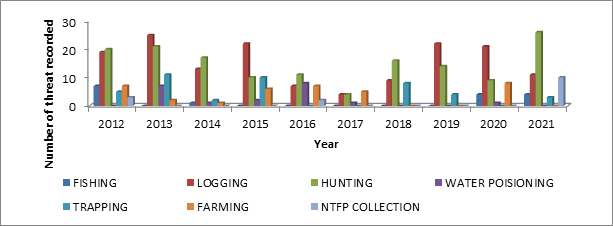
The administrative record on threats in Cross River National Park (CRNP) shows seven threat indicators (fishing, logging, hunting, water poisoning, trapping, farming and NTFP collection) to conservation in the park between 2012 to 2021 (Figure 2). In each year, the highest threat indicators were hunting and logging (2012; hunting 32.8%, logging 31.1%; 2013; hunting 31.8%, logging 37.9%; 2014; hunting 48.6%, logging 37.1%; 2015; hunting 20.0%, logging 44.0%; 2016; hunting 31.4%, logging 20.0%; 2018; hunting 48.5%, logging 27.3%; 2019; hunting 35.0%, logging 35.0%; 2020; hunting 20.9%, logging 48.8%; 2021; hunting 48.1%, logging 20.4%;) except in 2017 (farming 35.7%, hunting 28.6% and logging 28.6%) where farming was the highest.
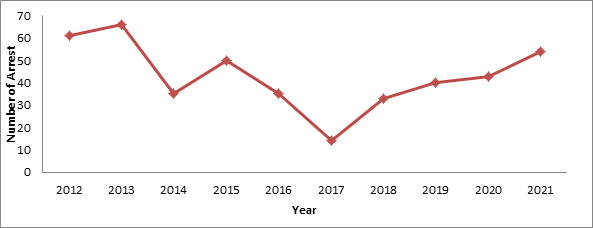
Also, in the ten year period, the highest threat levels were recorded in 2013 (66), 2012 (61), 2021 (54) and 2015 (50).
The year 2019 (40) and 2020 (43) recorded almost similar threat level, this was the same for 2014 (35), 2016 (35) and 2018 (33). However, the least threat level was recorded in 2017.
Furthermore, the overall assessment of threats during this period (2012 – 2021), showed that logging (35.5%), hunting (34.3%), trapping (10.0%) and farming (8.4%) ranked as the highest threat indicator, while water poisoning (4.6%,), fishing (3.7%) and NTFP collection (3.5%) ranked the lowest.
Hunter’s interview
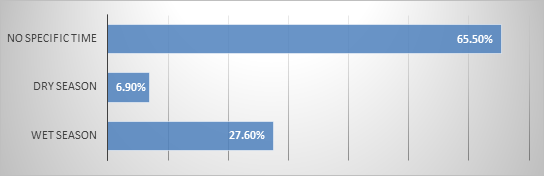
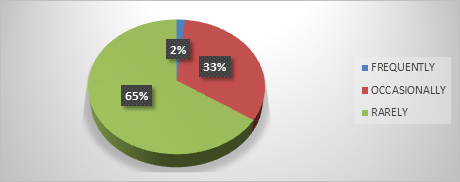
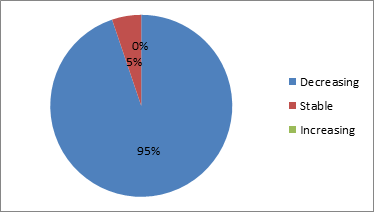
The hunters interviewed all had knowledge of primates and could mention names (mostly local names) of primates in their locality (Mona monkey, Putty-nosed monkey, Preuss’s monkey, Gorilla, Chimpanzee, Red eared guenon, Red colobus monkey and Drill monkey). However, only 83% could give a good description of the drill monkey and 65% stated the rarity of drill monkey encounter. There was no specific time for drill monkey encounter as reported by (65.5%) of the hunters although few (27.6%) stated they were encountered more in the wet season. Majority of the respondents (29.3%) stated to have encountered the drill last between 3 to
6months with (12.1%) stating to have encountered it in less than 3months correlating with the rarity of encounter and suggesting a decline in the population as stated by (95.5%). The drill monkey was not reported to be seen within the vicinity of farmlands or the community and therefore not part of the primates responsible for crop raiding unlike the putty-nosed monkey and Mona monkey. Although most of the hunters (90%) stated that they sometimes hunt primates, only 64% stated they hunted drill monkey even though they were aware of the existence of CRNP. However, majority (79%) reiterated their willingness to stop hunting if a viable alternative is provided.
| Yes (%) | No (%) | |
|---|---|---|
| Do you know primates? | 100 | 0 |
| Do you know the drill monkey (Osum/Sumbo)? | 90 | 10 |
| Can you describe the drill monkey? | 83 | 17 |
| Do you sometimes hunt monkeys/primates? | 90 | 10 |
| Do you hunt the drill monkey? | 64 | 36 |
| Do you see drill monkeys close to farmlands/vicinity of community? | 0 | 100 |
| Are you aware of the existence of Cross River National Park (CRNP)? | 100 | 0 |
| Are you willing to support the conservation of drill monkey and other primate species? | 79 | 21 |
Table 1: Hunters Response to Interview Questions.
Threat indicators to primate species recorded during the field survey
Thirteen threat indicators were identified and recorded at all the ranges during the survey period (Table 2). These threats are wire snare, spent cartridge, farms, logging, poachers shed, gunshot, NTFPs collection, bush clearing, chainsaw heard, tractor trail, animal carcass, individual (s) encountered in the park and dog (s) encountered. At both seasons, spent cartridge (Dry=12.75±10.41, Wet=8.5±3.42), wire snare (Dry=8.25±4.73, Wet=6.25±5.91) and logging (Dry=3.75±3.61, Wet= 3.50±2.65) were the highest threat indicators, while tractor trail (Dry=1.00±0.58, Wet=0.50±0.58) was the lowest.
Distribution of threats in the selected Ranges of CRNP
The highest mean threat abundance in the dry season was recorded at Nsofang (5.92±5.56) with an encounter rate of 0.78/km, followed by Aking (5.84±5.31) with an encounter rate of 0.70/km and Orem (2.92±1.85) with an encounter rate of 0.42/km. The lowest mean threat abundance was however recorded at Anape (0.69±1.44) with an encounter rate of 0.05/km. In the wet season, Nsofang (5.15±3.85) also had the highest mean threat abundance with an encounter rate of 0.76/km while Anape (0.62±1.26) with an encounter rate of 0.18/km had the lowest mean threat abundance.
| Dry (Mean±SD) | Wet (Mean±SD) | |
|---|---|---|
| Wire snare | 8.25±4.73 | 8.5±3.42 |
| Spent cartridge | 12.75±10.41 | 6.25±5.91 |
| Farms | 2.25±2.00 | 2.00±1.83 |
| Logging | 3.75±3.61 | 3.50±2.65 |
| Poachers shed | 2.25±1.00 | 2.25±0.50 |
| Gunshot | 3.25±2.00 | 2.00±2.16 |
| NTFPs collection | 3.50±1.53 | 3.25±1.26 |
| Bush clearing | 1.00±1.00 | 1.75±1.26 |
| Chainsaw heard | 1.50±1.00 | 1.00±0.82 |
| Tractor trail | 1.00±0.58 | 0.50±0.58 |
| Animal carcass | 2.75±1.15 | 1.50±1.73 |
| Individual (s) encountered | 2.75±1.73 | 2.00±2.71 |
| Dog (s) encountered | 3.25±2.00 | 1.75±1.71 |
Table 2: Threat indicators to the Drill monkey and other Primates in CRNP.
| Season | Dry Season | Wet Season | ||
|---|---|---|---|---|
| Range | Mean±SD | Encounter rate/km | Mean±SD | Encounter rate/km |
| Nsofang | 5.92±5.56 | 0.78 | 5.15±3.85 | 0.76 |
| Anape | 0.69±1.44 | 0.05 | 0.62±1.26 | 0.18 |
| Aking | 5.31±5.84 | 0.70 | 2.77±2.89 | 0.68 |
| Orem | 2.92±1.85 | 0.42 | 2.62±1.94 | 0.22 |
Table 3: Distribution of Threats in the selected Ranges of CRNP in both seasons (Wet and Dry).
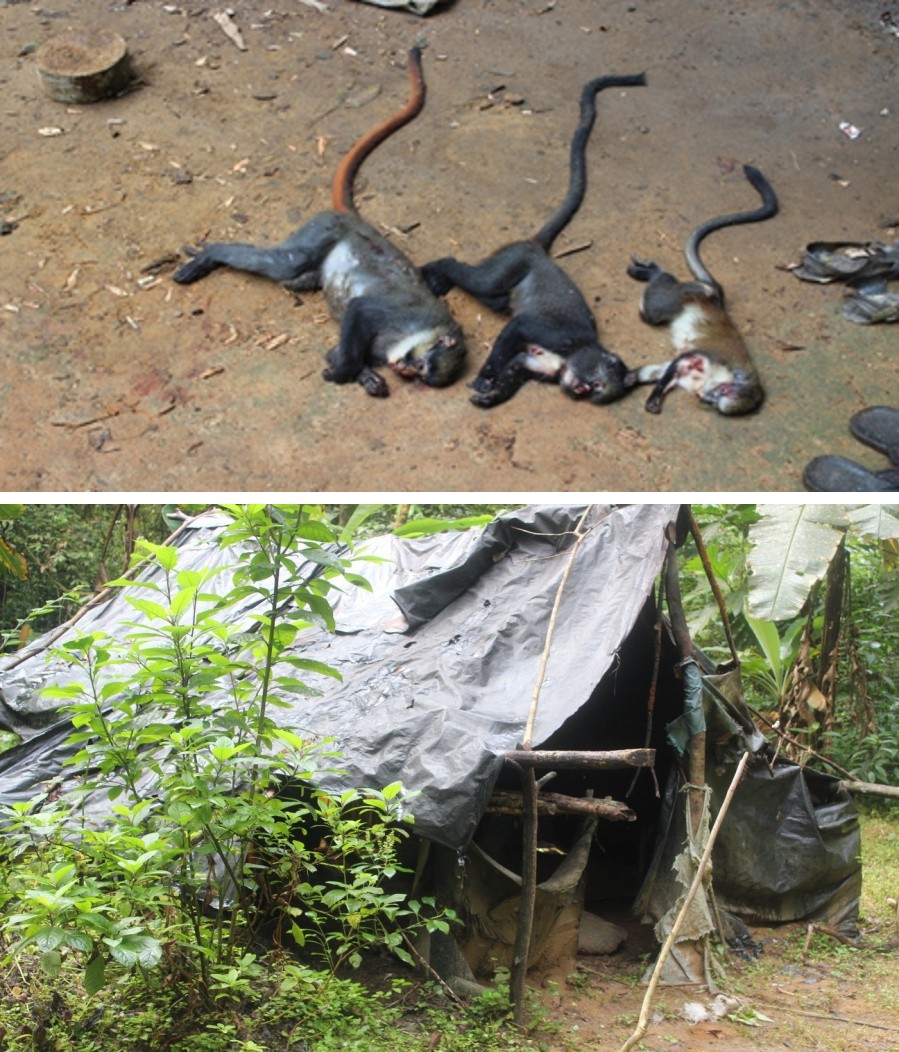
Plate 1: Image of monkeys killed by a hunter in Nsofang range, Oban division, CRNP. From left to right: Cercopithecus erythrotis, Cercopithecus nictitans and Cercopithecus mona
Plate 2: Hunters shed at Nsofang range, Oban division, CRNP.
Discussion
Threats to the Drill Monkey and Other Primates in Selected Ranges of Cross River National Park
Native ecologies of wildlife habitats are changing precipitously due to human encroachment. Thus, almost half of the known non-human primates are faced with impending threat of extinction as many occupies fragile ecosystems [10]. The major pressures causing species decline and local extinction is over exploitation of natural resources [11, 12]. According to Alejandro E [13] unsustainable human activities are driving non-human primate species to extinction. This study identified several threat indicators which include wire snare, spent cartridges, farms, logging, poachers shed, gunshots heard, NTFP’s collection, bush clearing, chainsaw heard, tractor trail, animal carcass, individuals encountered and dogs encountered. These threat indicators were similar to those identified by Adetola BO [14] in a study evaluating mitigation measures to threats in CRNP. The increasing human population has continuously led to increase demand for natural resources [15]. Also, the review of administrative record on threats to conservation in the park over a period of 10 years (2012 – 2021) shows clearly that logging (35.5%), hunting (34.3%) and trapping (10.0%) pose the greatest threat in the park [16]. This did not differ significantly from the findings from this study which showed that in both dry and wet seasons, spent cartridge (dry; 12.75±10.41; wet; 6.25±5.91), wire snare (dry; 8.25±4.73; wet; 8.5±3.42) and logging (dry; 3.75±3.61; wet; 3.50±2.56) were the greatest threat. This is not surprising as the major occupation of rural dwellers is farming, hunting and logging. They often see the natural resources around them as their heritage and only means of survival.
Anthropogenic activities were pervasive in three (Nsofang, Aking and Orem) of the four ranges of the park surveyed and least prevalent in Anape range. The highest threat indicator for both wet (5.15±3.85) and dry (5.92±5.56) season was recorded in Nsofang range with an encounter rate (ER) of (0.76/km) and (0.78/km). This high threat level can be attributed to the fact that this range is host to an enclave community (Mkpot community). The community largely depend on park resources for their livelihood which have negative effect on the forest ecosystem and the wildlife therein. For most forest-living communities, non-timber forest products (NTFPs) either serve as the main source of income or act as an important safety net during seasons of low agricultural productivity [17]. The negative impacts of forest loss and hunting activities across tropical forests are sources of concern, as it affects the continued existence of endangered primates. According to Estrada A [7] a recent evaluation of primate species worldwide indicated that more than half are facing near-term extinction due to unsustainable human activities.
However, anape range recorded the least threat both in the wet (0.62±1.26; ER =0.18/km) and dry (0.69±1.44; ER= 0.05/km) season. The low level of threat recorded in this range is most likely as a result of the frequent park patrol which is supported by Wildlife Conservation Society (WCS) a Non-Governmental Organization in this area of the park. The continuous presence of law enforcement in protected areas has a positive effect on the persistence of fauna species within protected areas [18]. Conversely, inadequate law enforcement, including insufficient training, number of rangers, equipment, patrols and funding enables poaching and other illegal activities [19]. The use of gun hunting with dogs was also not recorded in this range (anape) of the park during the entire survey. However, gun hunting accompanied by dogs which is a major threat to drill monkeys was high in Nsofang and Aking. The use of dogs in shotgun hunting has been recognized as the primary threat to the continued existence of drill monkeys throughout most of their range [20, 21]. Since drill monkeys are inept at arboreal movement as compared to other monkeys throughout their range, hunters with the use of dogs can force an entire group of drill monkey into trees where they can shoot a large number in the group at a time [20]. According to some of the hunters’ interviewed in Nsofang and Aking range, drill monkey was hunted because of their large body size, especially the males since they give good profit when sold unlike some smaller primates. It is therefore suggested that to counter gun hunting and other human activities the management of CRNP should consider introducing the use of Passive Acoustic Monitoring (PAM) to assess gun hunting activities as it is more cost effective. According to Astaras C [22], PAM has proven to provide more accurate estimate of gun hunting patterns than the traditional forest patrol. Also, in estimating the daily cost of implementing PAM it was 23% less expensive than the cost of funding forest patrol exercises, thereby reducing by 80% the annual park cost.
There were no reports of drill monkeys in farmlands and also no encounter of drill monkeys in the vicinity of human habitation during this study. Drill monkeys were not reported as crop raiders unlike the putty-nosed monkey that we encountered a couple of times in the vicinity of farmlands and were also reported by hunters as a primary crop raider. This is tandem with Astaras C [20] assertion that drill monkeys are closed-canopy forest specialists and do not readily cross marginal habitats or intensively cultivated farmlands.
Conclusion
The population of the drill monkey and other primates is threatened especially by hunting and habitat destruction through logging and farming. Spent cartridge, wire snares and logging were the highest threat indicators recorded during the study. Hunters reported to hunt drill monkey and other primates even though they were aware of the existence of CRNP. However, they also expressed their willingness to stop hunting if an alternative means of livelihood is provided. This study highlights the influence conservation NGO’s can have in the protection and management of our forests. The result also draw attention to areas of the park were anthropogenic activities are prevalent and needs urgent attention. It therefore behoves on the park management to take appropriate measures to halt further loss of primate species occasioned especially by hunting. These measures should include introduction of PAM in monitoring gun hunting activities, strengthening the conservation education unit of the park and involving the local people in the management of park resources.
Acknowledgement
The authors are immensely grateful to the management of the Nigeria National Park Service for granting approval for this study and the management and staff of CRNP for the assistance provided in the field. We also appreciate the cooperation of the hunters group and leaders of the communities visited.
Funding
We are grateful to the Ideawild foundation for the equipment grant provided for the research
References
-
Olory CS (2018) Contributions of Cross River National Park to National Development: Prospects and challenges. In: Proceedings of 6th NSCB Biodiversity Conference, University of Uyo, Nigeria, pp: 309-315
-
Ogunjobi JA, Meduna AJ, Oni SO, Inah EI, Enya DA (2010) Protection Staffs’ Job Perception in Cross River National Park, Southern Nigeria. Middle- East Journal of Scientific Research 5(1): 22-27.
-
Bergl RA, Dunn A, Fowler A, Imong I, Ndeloh D, et al. (2016) _Gorilla gorilla_ssp. diehli. The IUCN red list of threatened species 2016.
-
IUCN (2020) The IUCN Red List of Threatened Species.
-
Oates, JF, Butynski TM (2008) _Mandrillusleucophaeus_. In IUCN 2011. IUCN Red List of Threatened Species.
-
Gadsby E, Cronin DT, Astaras C, Imong I (2020) “Mandrillusleucophaeus” IUCN Red Lsit of Threatened Species 2020.
-
Estrada A, Garber PA, Rylands AB, Roos C, Fernandez- Duque E, et al. (2017) Impending extinction crisis of the world’s primates: Why primates matter. Science Advances 3: e1600946.
-
Parrish JD, Braun DP, UnnaschRS (2003) Are we conserving what we say we are? Measuring ecological integrity within protected areas. BioScience 53(9): 851- 860.
-
BirdLife International (2012) Important Bird Areas factsheet: Cross River National Park: Oban Division.
-
Zainab FM, Kivai SM (2019) Socio-economic and Ecological implications of human and non-human primates interaction in the Lower Tana River, KenyaBook of Abstract 2nd African Primatological Society Conference: Primate Conservation in Africa: Challenges and Opportunities Edited by Moses, C., Chris, B., Deborah, B., Lawrence, M., Ekwoge, et al. pp: 119.
-
Maxwell SL, Fuller RA, Brooks TM Watson JEM (2016) The ravages of guns, nets and bulldozers. Nature 536: 143-145.
-
Ducatez S, Shine R (2017) Drivers of extinction risk in terrestrial vertebrates. Conserv Lett 10(2): 186-194.
-
Alejandro E, Paul A, Garber B, Rylands, Christian R, Eduardo F, Duque, Anthony D (2017) Impending extinction crisis of the world’s primates: Why primates matter. Science Advances 3(1): e1600946.
-
Adetola BO, Ofuya EE (2021) Evaluating the Mitigation Measures to Biodiversity Threats in Cross River National Park, Nigeria. Int J Conserv Sci 12(1): 237-246.
-
Brandt, M, Rasmussen K, Peñuelas J, Tian F, Schurgers G, et al. (2017) Human population growth offsets climate- driven increase in woody vegetation in sub-Saharan Africa. Nature Ecology & Evolution 1(0081).
-
Cross River National Park (2022) Report on threat activities in CRNP from 2012 -2021.
-
Ingram VJ, Ndoye O, Iponga DM, Tieguhong JC and Nasi R (2012) Non Timber Forest Products, contribution to national economy and strategies for sustainable management.
-
Tranquilli, S, Abedi‐Lartey M, Amsini F, Arranz L, Asamoah A, et al_._ (2012) Lack of conservation effort rapidly increases African great ape extinction risk. Conservation Letters **5**(1): 48-55.
-
Laurance WF, Useche, DC, Rendeiro J, Kalka M, and Bradshaw CJ (2012) Averting biodiversity collapse in tropical forest protected areas. Nature 489(7415): 290- 294.
-
Astaras C (2009) Ecology and status of the drill (Mandrillusleucophaeus) in Korup National Park: Implications for conservation. Ph.D. thesis, Georg- August-UniversitätGöttingen, Göttingen, Germany.
-
Morgan BJ, Abwe EE, Dixson AF, Astaras C (2013) The Distribution, Status and Conservation Outlook of Drill (_Mandrillusleucophaeus_) in Cameroon. Int J Primatol 34: 281-302.
-
Astaras C, Linder JM, Wrege P, Orume RD, Macdonald DW (2017) Passive acoustic monitoring as a law enforcement tool for Afrotropical rainforests. Frontiers in Ecology and the Environment 15(5): 233-234.
- Lessons to Learn: Trees are More than the Lungs of the World
- Community Forestry Enterprises as a Model for Sustainable Forest Development: The Case Of The "Baja Tarahumara" in Chihuahua, Mexico
- Ecological and Socio-Economic Impacts of Chromolaena odorata and Mesosphaerum suaveolens, Two Invasive Alien Species in Central and Southern Benin, West Africa
- Epigenetic Sustainability: Modeling the Human Factor as a Natural Resource through Science 4.0 and the NR3C1 Biological Pilot
- Growth-at-Risk: A Framework for Assessing Economic Vulnerability
- The Rural Territory as a Socioecological System for the Management of Public Policy for Sustainable Rural Development